
广义货币(M2)

Search documents
货币市场日报:12月12日
Xin Hua Cai Jing· 2025-12-12 12:33
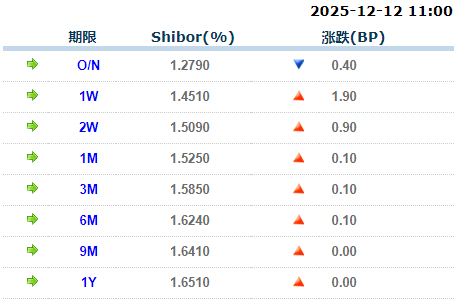
银行间质押式回购市场方面,隔夜品种微跌,7D、141D品种小幅上涨。具体看,DR001、R001加权平均利率分别下行0.2BP、0.4BP, 报1.2747%、1.3473%,成交额分别增加490亿元、618亿元;DR007、R007加权平均利率分别上行1.8BP、1.1BP,报1.4691%、1.5075%, 成交额分别减少32亿元、416亿元;DR014、R014加权平均利率分别上行1.1BP、1.9BP,报1.5073%、1.5476%,成交额分别减少2亿元、 211亿元。 货币市场利率(12月12日) 来源:全国银行间同业拆借中心 新华财经北京12月12日电(高二山)人民银行12日开展1205亿元7天期逆回购操作,操作利率为1.40%,与此前持平;鉴于当日有1398亿 元7天期逆回购到期,公开市场实现净回笼193亿元。本周人民银行共进行6685亿元逆回购操作,因当周有6638亿元逆回购到期,公开市 场合计实现净投放47亿元。 上海银行间同业拆放利率(Shibor)隔夜品种微跌,7天和14天品种上涨。具体来看,隔夜Shibor下跌0.40BP,报1.2790%;7天Shibor上 涨1.90BP,报1. ...

前11个月社会融资规模增量超去年全年
Yang Shi Wang· 2025-12-12 11:48
Core Viewpoint - The People's Bank of China reported that the social financing scale increased by 33.39 trillion yuan in the first eleven months, surpassing the total for the previous year [1] Group 1: Monetary Indicators - As of the end of November, the broad money supply (M2) reached 336.99 trillion yuan, reflecting an 8% year-on-year growth [1] - Both the broad money supply and social financing scale remain at high levels, creating a favorable monetary environment for economic recovery [1] Group 2: Loan Growth - The balance of RMB loans stood at 271 trillion yuan at the end of November, with a year-on-year increase of 6.4% [1] - Loan growth remains reasonable, and the credit structure continues to optimize [1] - Inclusive small and micro loans and medium to long-term loans for the manufacturing sector grew by 11.4% and 7.7% year-on-year, respectively, both exceeding the growth rate of other loan categories [1]
11月金融数据出炉:贷款增速趋势性放缓 政府部门加杠杆支撑社融增长
Di Yi Cai Jing· 2025-12-12 11:04
12月12日,央行发布最新数据,M2和社会融资规模增速均保持在较高水平,持续为经济回升向好创造 适宜的货币金融环境。 具体来看,11月末,广义货币(M2)余额336.99万亿元,同比增长8.0%,比上年同期高0.9个百分点, 在上年同期基数提高的背景下,仍保持较高增速;社会融资规模存量440.07万亿元,同比增长8.5%,比 上年同期高0.7个百分点;1-11月,社会融资规模增量为33.39万亿元,同比多3.99万亿元。 综合融资成本持续维持在低位,充分体现了适度宽松的货币政策状态。第一财经从央行获悉,贷款利率 保持在低位水平。11月份企业新发放贷款(本外币)加权平均利率约为3.1%,比上年同期低约30个基 点;个人住房新发放贷款(本外币)加权平均利率约为3.1%,比上年同期低约3个基点。 政府加杠杆支撑社融增长 随着财政赤字率提升,政府债券对社会融资规模的贡献度明显提高。 初步统计,2025年前11个月,社会融资规模增量累计为33.39万亿元,比上年同期多3.99万亿元。其中, 政府债券净融资13.15万亿元,同比多3.61万亿元。 业内专家表示,今年以来,宏观政策加大逆周期调节力度,对提振内需、稳定经济发 ...
中国11月末M2同比增长8%
Zhong Guo Xin Wen Wang· 2025-12-12 10:34
Group 1 - The People's Bank of China reported that as of the end of November, the broad money supply (M2) reached 336.99 trillion yuan, reflecting a year-on-year growth of 8% [1] - The narrow money supply (M1) stood at 112.89 trillion yuan, with a year-on-year increase of 4.9%, while the currency in circulation (M0) was 13.74 trillion yuan, growing by 10.6% year-on-year [1] - In the first eleven months, a net cash injection of 917.5 billion yuan was recorded [1] Group 2 - In terms of loans, the total increase in RMB loans for the first eleven months was 15.36 trillion yuan, with household loans rising by 533.3 billion yuan, short-term loans decreasing by 732.8 billion yuan, and medium to long-term loans increasing by 1.27 trillion yuan [1] - Corporate loans increased by 14.4 trillion yuan, with short-term loans up by 4.44 trillion yuan and medium to long-term loans rising by 8.49 trillion yuan, alongside a 1.31 trillion yuan increase in bill financing [1] - Non-bank financial institution loans decreased by 33.2 billion yuan [1] Group 3 - Experts indicate that the slowdown in loan growth reflects the transition of economic drivers from traditional investment to consumption, with reduced reliance on bank loans for new growth points [1] - The marginal benefits of traditional investment-driven models are diminishing, and the orderly resolution of local debt risks is underway [1] - Economic growth is shifting towards consumption-driven models, with daily consumer spending largely relying on personal funds, leading to lower financing demands [1]
半两财经|央行:前11个月我国社融规模增量超去年全年
Sou Hu Cai Jing· 2025-12-12 10:08
Group 1 - The total social financing scale in China for the first eleven months reached 33.39 trillion yuan, exceeding the total for the previous year [1] - By the end of November 2025, the social financing scale stock was 440.07 trillion yuan, showing a year-on-year growth of 8.5% [1] - The balance of RMB loans to the real economy was 267.42 trillion yuan, with a year-on-year increase of 6.3% [1] Group 2 - The broad money supply (M2) at the end of November was 336.99 trillion yuan, reflecting an 8% year-on-year growth [1] - The narrow money supply (M1) was 112.89 trillion yuan, with a year-on-year increase of 4.9% [1] - The cash in circulation (M0) reached 13.74 trillion yuan, showing a year-on-year growth of 10.6% [1] Group 3 - The total deposits in both domestic and foreign currencies at the end of November amounted to 334.46 trillion yuan, with a year-on-year increase of 8% [2] - The balance of RMB deposits was 326.96 trillion yuan, reflecting a year-on-year growth of 7.7% [2] - Foreign currency deposits reached 1.06 trillion USD, with a year-on-year increase of 28.3% [2] Group 4 - The total loans in both domestic and foreign currencies at the end of November were 274.84 trillion yuan, with a year-on-year growth of 6.3% [2] - The balance of RMB loans was 271 trillion yuan, showing a year-on-year increase of 6.4% [2] - Household loans increased by 533.3 billion yuan, with short-term loans decreasing by 732.8 billion yuan and medium to long-term loans increasing by 1.27 trillion yuan [2]
前11个月新增社融33.39万亿元,11月末M2同比增长8%
Sou Hu Cai Jing· 2025-12-12 09:27
Core Insights - The People's Bank of China reported that the social financing scale reached 440.07 trillion yuan by the end of November, marking an 8.5% year-on-year increase [1] - The total increment of social financing for the first eleven months was 33.39 trillion yuan, which is 3.99 trillion yuan more than the same period last year [3] Monetary Supply - The broad money supply (M2) stood at 336.99 trillion yuan at the end of November, reflecting an 8% year-on-year growth [1] - The narrow money supply (M1) was 112.89 trillion yuan, with a year-on-year increase of 4.9% [3] - The cash in circulation (M0) reached 13.74 trillion yuan, showing a 10.6% year-on-year growth [3] Deposits and Loans - The total deposits in both domestic and foreign currencies amounted to 334.46 trillion yuan, with a year-on-year increase of 8% [4] - The balance of RMB loans to the real economy was 267.42 trillion yuan, up 6.3% year-on-year [2] - The total RMB loans increased by 15.36 trillion yuan in the first eleven months, with household loans rising by 533.3 billion yuan [5] Foreign Currency Loans - The balance of foreign currency loans was 542.9 billion USD, which represents a year-on-year decline of 1.6% [6] - The total increment of foreign currency loans for the first eleven months was 800 million USD [6] Financial Market Activity - The average weighted interest rate for interbank RMB market lending in November was 1.42%, which is 0.03 percentage points higher than the previous month [7] - The total transaction volume in the interbank RMB market reached 187.7 trillion yuan in November, with a daily average of 9.38 trillion yuan [7] Cross-Border Transactions - The cross-border RMB settlement amount under the current account was 1.49 trillion yuan in November, with 1.19 trillion yuan from goods trade [8] - The direct investment cross-border RMB settlement amounted to 0.71 trillion yuan, with 0.26 trillion yuan for outward direct investment and 0.45 trillion yuan for foreign direct investment [8]
央行:11月末广义货币(M2)余额336.99万亿元,同比增长8%
Sou Hu Cai Jing· 2025-12-12 09:21
Group 1 - The total social financing scale reached 440.07 trillion yuan by the end of November 2025, showing a year-on-year growth of 8.5% [1] - The balance of RMB loans to the real economy was 267.42 trillion yuan, with a year-on-year increase of 6.3% [1] - The balance of foreign currency loans to the real economy, converted to RMB, was 1.13 trillion yuan, reflecting a year-on-year decrease of 16.5% [1] Group 2 - The cumulative increase in social financing for the first eleven months of 2025 was 33.39 trillion yuan, which is 3.99 trillion yuan more than the same period last year [3] - The net financing from corporate bonds was 2.24 trillion yuan, an increase of 3.125 trillion yuan year-on-year [3] - Government bond net financing reached 13.15 trillion yuan, which is 3.61 trillion yuan more than the previous year [3] Group 3 - The broad money supply (M2) was 336.99 trillion yuan at the end of November, with a year-on-year growth of 8% [4] - The narrow money supply (M1) was 112.89 trillion yuan, showing a year-on-year increase of 4.9% [4] - The cash in circulation (M0) was 13.74 trillion yuan, reflecting a year-on-year growth of 10.6% [4] Group 4 - The total RMB deposits increased by 24.73 trillion yuan in the first eleven months, with household deposits rising by 12.06 trillion yuan [5] - The balance of foreign currency deposits was 1.06 trillion USD, showing a year-on-year increase of 28.3% [5] - The total balance of deposits in both domestic and foreign currencies was 334.46 trillion yuan, with a year-on-year growth of 8% [5] Group 5 - The total RMB loans increased by 15.36 trillion yuan in the first eleven months, with household loans rising by 533.3 billion yuan [6] - The balance of foreign currency loans was 542.9 billion USD, reflecting a year-on-year decrease of 1.6% [6] - The balance of total loans (both RMB and foreign currency) was 274.84 trillion yuan, with a year-on-year growth of 6.3% [6] Group 6 - The weighted average interest rate for interbank RMB market lending in November was 1.42%, which is 0.03 percentage points higher than the previous month [7] - The total transaction volume in the interbank RMB market was 187.7 trillion yuan, with an average daily transaction of 9.38 trillion yuan [7] - The average interest rate for pledged bond repos was 1.44%, which is 0.04 percentage points higher than the previous month [7] Group 7 - The cross-border RMB settlement amount under the current account in November was 1.49 trillion yuan, with goods trade accounting for 1.19 trillion yuan [8] - The direct investment cross-border RMB settlement amount was 0.71 trillion yuan, with foreign direct investment contributing 0.45 trillion yuan [8] - The settlement amounts indicate a robust engagement in cross-border transactions, reflecting the growing use of RMB in international trade [8]
央行:11月末广义货币(M2)余额336.99万亿元,同比增长8%
Zheng Quan Shi Bao Wang· 2025-12-12 09:11
Core Viewpoint - The People's Bank of China released the financial statistics report for November 2025, indicating significant growth in various monetary aggregates, reflecting the central bank's monetary policy stance and economic conditions [1] Group 1: Monetary Aggregates - As of the end of November, the broad money supply (M2) stood at 336.99 trillion yuan, representing a year-on-year growth of 8% [1] - The narrow money supply (M1) reached 112.89 trillion yuan, with a year-on-year increase of 4.9% [1] - The currency in circulation (M0) amounted to 13.74 trillion yuan, showing a year-on-year growth of 10.6% [1] Group 2: Cash Injection - In the first eleven months of the year, a net cash injection of 917.5 billion yuan was recorded [1]
新华社权威快报丨前11个月我国社融规模增量超去年全年
Xin Hua Wang· 2025-12-12 09:11
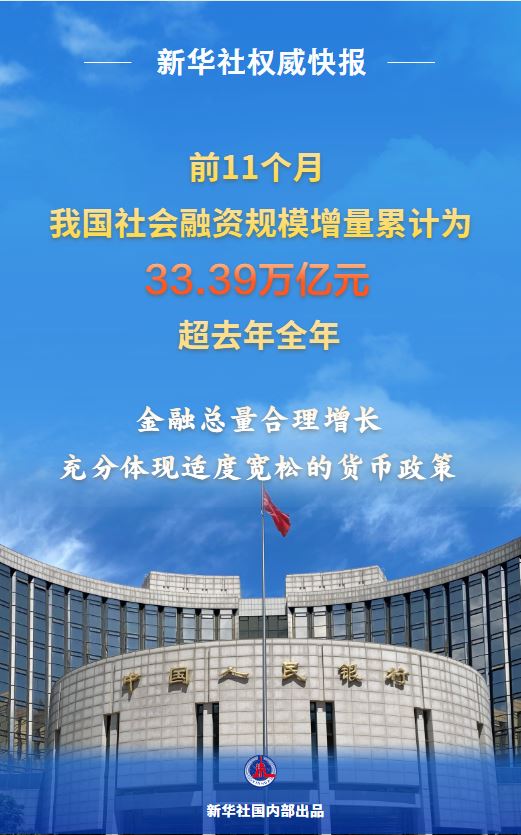
Group 1 - The core viewpoint of the article highlights that the People's Bank of China reported a significant increase in social financing, with a cumulative increment of 33.39 trillion yuan in the first 11 months, surpassing the total for the previous year [2] - As of the end of November, the broad money supply (M2) reached 336.99 trillion yuan, reflecting a year-on-year growth of 8% [2] - The total amount of RMB loans stood at 271 trillion yuan, showing a year-on-year increase of 6.4%, indicating a reasonable growth in financial volume that demonstrates a moderately accommodative monetary policy [2]
宏观数据观察:东海观察10月社融需求放缓,政策性工具效果尚待显现
Dong Hai Qi Huo· 2025-11-14 07:31
Group 1: Report Industry Investment Rating - Not provided in the given content Group 2: Core Viewpoints of the Report - China's M2 in October decreased but was slightly higher than expected, mainly due to a decrease in household and corporate deposits and an increase in government department deposits. The overall M2 continued to remain at a reasonable level, and the monetary policy remained loose. The year-on-year decline in new social financing was mainly due to a decrease in household credit demand and fiscal financing demand, and the transmission from loose money to loose credit slowed down. Given the current slowdown in domestic economic growth and reduced external shock risks, the monetary policy will continue to be moderately loose. With the completion of the投放 of new policy-based financial instruments in October, the boosting effect on social financing may become more apparent, and the transmission from loose money to loose credit is expected to gradually accelerate. In the short term, financial data indicates a slowdown in overall domestic demand, which is negative for domestic risk assets and the RMB exchange rate. In the medium to long term, the process of loose credit is expected to accelerate further [2]. - M1 slightly declined, while M2 remained at a high level. Currently, the overall capital supply remains stable, the supply of base money increases, and the monetary policy remains loose. With the acceleration of debt resolution, the implementation of fiscal policies, and the investment of policy-based financial instruments, the demand for credit creation is expected to pick up, and M2 is expected to maintain a relatively high growth rate in the short term [2]. - The new RMB loans in October were lower than expected and decreased year-on-year, mainly due to a significant decline in household sector loans. The new corporate loans increased year-on-year, but the new medium - and long - term corporate loans were affected by factors such as local government debt repayment and the yet - to - be - realized boosting effect of new policy - based financial instruments. The new bill financing increased significantly year - on - year [3]. - The new social financing scale in October was lower than expected and decreased year - on - year. The financing demand of the real economy decreased year - on - year, mainly due to the decline in the financing demand of the household and government sectors. In the short and medium term, government financing may continue to slow down but maintain relatively high demand. The financing demand of the corporate sector is expected to gradually improve in the medium to long term, while the financing demand of the household sector will continue to be dragged down by weak real estate demand. The process of loose credit is expected to accelerate in the medium to long term [4]. Group 3: Summary by Relevant Catalogs Macroeconomic Data - In October, the new RMB loans were 22 billion yuan (expected 50 billion yuan, previous value 129 billion yuan), the new social financing scale was 814.9 billion yuan (expected 1165 billion yuan, previous value 3529.6 billion yuan), and the year - on - year growth rate of M2 was 8.2% (expected 8.1%, previous value 8.4%) [1][2]. - M1 year - on - year growth rate was 6.2% (expected 7.0%, a 1% decline from the previous month), M0 year - on - year growth rate was 10.6% (a 0.9% decline) [2]. RMB Loans - New household short - term loans were - 28.66 billion yuan, a year - on - year decrease of 33.56 billion yuan; new household medium - and long - term loans were - 7 billion yuan, a year - on - year decrease of 18 billion yuan [3]. - New corporate loans were 35 billion yuan, a year - on - year increase of 22 billion yuan. Among them, short - term loans were - 19 billion yuan, the same as the previous year; medium - and long - term loans were 3 billion yuan, a year - on - year decrease of 14 billion yuan; new bill financing was 50.06 billion yuan, a year - on - year increase of 33.12 billion yuan [3]. Social Financing Scale - The new social financing scale in October decreased year - on - year. From the perspective of the structure of new social financing, the credit financing demand of the real economy decreased year - on - year, household and corporate credit declined, corporate bond financing increased, government bond issuance slowed down significantly, and non - standard financing demand decreased slightly [4]. - New credit in October was - 2.01 billion yuan, a year - on - year decrease of 31.66 billion yuan. Non - standard assets (trust loans, entrusted loans, and undiscounted bank acceptance bills) decreased by 10.86 billion yuan in total, a year - on - year decrease of 3.58 billion yuan. Corporate bond financing increased by 24.69 billion yuan, a year - on - year increase of 14.82 billion yuan. Government bond net financing was 48.93 billion yuan, a year - on - year decrease of 56.02 billion yuan under a high base [4].