
宽货币向宽信用传导

Search documents
货币宽松,居民存款搬家
泽平宏观· 2026-02-13 16:33
Group 1: Core Insights - The social financing growth rate in January is 8.2%, slightly down from 8.3% in the previous month, indicating overall stability in financing conditions [3][6] - New social financing reached 7.22 trillion yuan, a year-on-year increase of 165.4 billion yuan, marking a historical high for the same period [6][9] - The monetary policy remains accommodative, with expectations for potential reserve requirement ratio (RRR) cuts and interest rate reductions in the first half of the year [4][5] Group 2: Financial Data Characteristics - The credit growth rate has slowed, with the year-on-year growth of credit balance at 6.1%, down 0.3 percentage points from the previous month [3][12] - M2 and M1 growth rates have both increased, with M2 at 9.0% and M1 at 4.9%, indicating a narrowing gap between the two [4][15] - Government bond net financing increased by 976.4 billion yuan, supporting social financing growth [9] Group 3: Credit and Financing Structure - The structure of financing shows a shift, with government bonds and bills providing support while on-balance sheet credit and direct financing are still adjusting [3][8] - New loans in January amounted to 4.9 trillion yuan, a decrease of approximately 320 billion yuan year-on-year, reflecting weaker credit expansion [12] - Short-term loans for residents increased significantly, while medium- and long-term loans faced pressure, indicating a cautious approach to long-term borrowing [13]

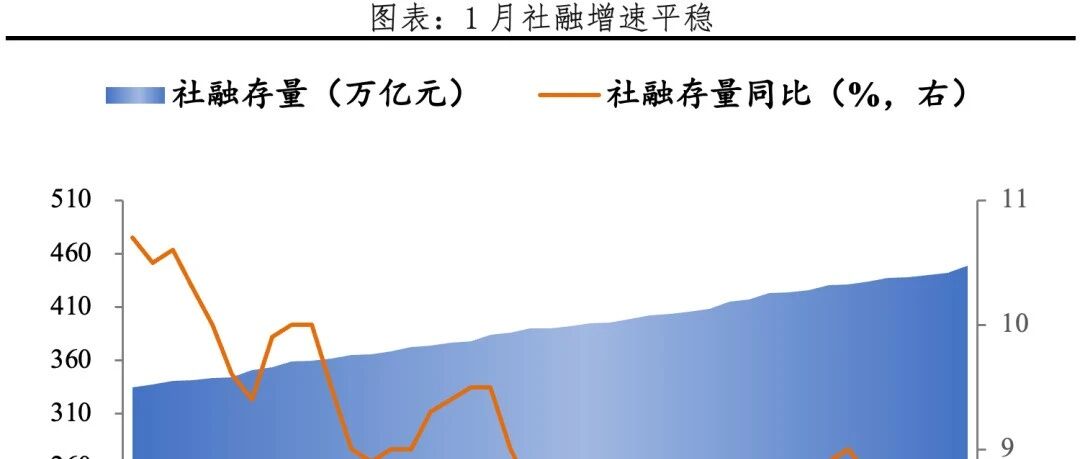
东海期货宏观数据观察:12月社融数据超预期,企业融资改善
Xin Lang Cai Jing· 2026-01-16 03:13
邮箱:mingdy@qh168.com.cn 主要观点: 从业资格证号:F03092124 投资咨询证号:Z0018827 电话:021-68758786 东海期货分析师:明道雨 数据及事件要点: 1、2026年1月15日,央行举行新闻发布会。人民银行推出八项结构性货币政策措施,并强调在实施过程 中,将与财政贴息、担保和风险成本分担等财政政策协同配合。正通过下调结构性货币政策工具利率、 扩大再贷款额度、优化政策工具结构等多项举措,进一步加大对实体经济的精准支持力度,为经济稳定 增长和结构转型营造宽松适宜的货币金融环境。 2、12月新增人民币贷款9100亿元,预期8000亿元,前值3900亿元。12月社会融资规模增量为22075亿 元,预期19000亿元,前值为24926亿元,同比少增6462亿元;12月末,社会融资规模存量为442.12万亿 元,同比增长8.3%,较上月下降0.2%。12月M2同比增长8.5%,预期8.0%,前值8.0%,M2较上月上升 0.5%。 主要观点: 12月新增人民币贷款9100亿元,预期8000亿元,前值3900亿元;新增社会融资规模22075亿元,预期 19000亿元,前值为24 ...

宝城期货国债期货早报-20251210
Bao Cheng Qi Huo· 2025-12-10 01:51
Report Summary 1. Report Industry Investment Rating No relevant information provided. 2. Core Viewpoints - The short - term view of TL2603 is to oscillate, the medium - term view is to oscillate, and the intraday view is weak, with an overall view of oscillatory consolidation. The short - term probability of interest rate cuts is low, but there are still long - term easing expectations [1]. - For financial futures in the bond index sector including TL, T, TF, and TS, the intraday view is weak, the medium - term view is to oscillate, and the reference view is oscillatory consolidation. Although there are expectations of interest rate cuts in the long term, there is supply pressure on long - term bonds in the short term and institutional profit - taking needs at the end of the year, so there is insufficient upward momentum in the short term [5]. 3. Summary by Related Catalogs 3.1 Variety Viewpoint Reference - Financial Futures Stock Index Sector - For TL2603, the short - term is oscillatory, the medium - term is oscillatory, the intraday is weak, and the view is oscillatory consolidation. The core logic is that the short - term probability of interest rate cuts is low, while there are still long - term easing expectations [1]. 3.2 Main Variety Price Market Driving Logic - Financial Futures Stock Index Sector - Yesterday, treasury bond futures oscillated and rebounded. The Politburo meeting indicates that in 2026, a more proactive fiscal policy and a moderately loose monetary policy will continue to be implemented, so there are still expectations of interest rate cuts in the long term, providing strong support for treasury bond futures. However, considering the front - loaded fiscal efforts in the first quarter and the supply pressure of long - term bonds, as well as institutional profit - taking needs at the end of the year, the short - term upward momentum of treasury bond futures is insufficient. Overall, treasury bond futures are under pressure and support, and will mainly oscillate and consolidate in the short term [5].
宏观数据观察:东海观察10月社融需求放缓,政策性工具效果尚待显现
Dong Hai Qi Huo· 2025-11-14 07:31
Group 1: Report Industry Investment Rating - Not provided in the given content Group 2: Core Viewpoints of the Report - China's M2 in October decreased but was slightly higher than expected, mainly due to a decrease in household and corporate deposits and an increase in government department deposits. The overall M2 continued to remain at a reasonable level, and the monetary policy remained loose. The year-on-year decline in new social financing was mainly due to a decrease in household credit demand and fiscal financing demand, and the transmission from loose money to loose credit slowed down. Given the current slowdown in domestic economic growth and reduced external shock risks, the monetary policy will continue to be moderately loose. With the completion of the投放 of new policy-based financial instruments in October, the boosting effect on social financing may become more apparent, and the transmission from loose money to loose credit is expected to gradually accelerate. In the short term, financial data indicates a slowdown in overall domestic demand, which is negative for domestic risk assets and the RMB exchange rate. In the medium to long term, the process of loose credit is expected to accelerate further [2]. - M1 slightly declined, while M2 remained at a high level. Currently, the overall capital supply remains stable, the supply of base money increases, and the monetary policy remains loose. With the acceleration of debt resolution, the implementation of fiscal policies, and the investment of policy-based financial instruments, the demand for credit creation is expected to pick up, and M2 is expected to maintain a relatively high growth rate in the short term [2]. - The new RMB loans in October were lower than expected and decreased year-on-year, mainly due to a significant decline in household sector loans. The new corporate loans increased year-on-year, but the new medium - and long - term corporate loans were affected by factors such as local government debt repayment and the yet - to - be - realized boosting effect of new policy - based financial instruments. The new bill financing increased significantly year - on - year [3]. - The new social financing scale in October was lower than expected and decreased year - on - year. The financing demand of the real economy decreased year - on - year, mainly due to the decline in the financing demand of the household and government sectors. In the short and medium term, government financing may continue to slow down but maintain relatively high demand. The financing demand of the corporate sector is expected to gradually improve in the medium to long term, while the financing demand of the household sector will continue to be dragged down by weak real estate demand. The process of loose credit is expected to accelerate in the medium to long term [4]. Group 3: Summary by Relevant Catalogs Macroeconomic Data - In October, the new RMB loans were 22 billion yuan (expected 50 billion yuan, previous value 129 billion yuan), the new social financing scale was 814.9 billion yuan (expected 1165 billion yuan, previous value 3529.6 billion yuan), and the year - on - year growth rate of M2 was 8.2% (expected 8.1%, previous value 8.4%) [1][2]. - M1 year - on - year growth rate was 6.2% (expected 7.0%, a 1% decline from the previous month), M0 year - on - year growth rate was 10.6% (a 0.9% decline) [2]. RMB Loans - New household short - term loans were - 28.66 billion yuan, a year - on - year decrease of 33.56 billion yuan; new household medium - and long - term loans were - 7 billion yuan, a year - on - year decrease of 18 billion yuan [3]. - New corporate loans were 35 billion yuan, a year - on - year increase of 22 billion yuan. Among them, short - term loans were - 19 billion yuan, the same as the previous year; medium - and long - term loans were 3 billion yuan, a year - on - year decrease of 14 billion yuan; new bill financing was 50.06 billion yuan, a year - on - year increase of 33.12 billion yuan [3]. Social Financing Scale - The new social financing scale in October decreased year - on - year. From the perspective of the structure of new social financing, the credit financing demand of the real economy decreased year - on - year, household and corporate credit declined, corporate bond financing increased, government bond issuance slowed down significantly, and non - standard financing demand decreased slightly [4]. - New credit in October was - 2.01 billion yuan, a year - on - year decrease of 31.66 billion yuan. Non - standard assets (trust loans, entrusted loans, and undiscounted bank acceptance bills) decreased by 10.86 billion yuan in total, a year - on - year decrease of 3.58 billion yuan. Corporate bond financing increased by 24.69 billion yuan, a year - on - year increase of 14.82 billion yuan. Government bond net financing was 48.93 billion yuan, a year - on - year decrease of 56.02 billion yuan under a high base [4].
经济压力显现,股指高波动收敛
Dong Zheng Qi Huo· 2025-09-26 07:11
Report Information - Report Title: Economic Pressure Emerges, Convergence of High Volatility in Stock Indexes - Company: Shanghai Orient Futures Co., Ltd., Orient Derivatives Research Institute - Analyst: Wang Peicheng, Senior Macro Analyst - Analyst Qualification: F03093911 (Practicing Qualification Number), Z0017305 (Investment Consulting Number) [1] Investment Rating - Not provided in the report Core Views - In the fourth quarter, domestic economic pressure will increase, and the annual economic growth rate is expected to be 4.8 - 5%. The inflation trend is upward, with the PPI expected to be -1.9% and the CPI +0.5%. The fiscal deficit rate will continue to rise, and the government will increase spending. The transmission from loose money to loose credit in monetary policy is不畅, and the central bank may cut reserve requirements and interest rates in the fourth quarter. The domestic economy is in a "great differentiation" stage, and the restart of the economic cycle depends on the repair of the private sector's balance sheet. A-share performance has been good since the third quarter, with large sector differentiation. The rise of A-shares is mainly driven by valuation, and the long-term valuation center is declining. The entry of the national team and technological breakthroughs provide positive expected returns for the stock market, and high-risk preference funds are the first to enter the market. In the fourth quarter, the volatility of stock indexes may decrease, and attention should be paid to the opportunities in sub - sectors and sub - industries [4][7][14][62][69] Summary by Directory Fourth - Quarter Domestic Macroeconomic Outlook - **Economic Growth**: Domestic economic indicators have declined significantly since June. The demand - side indicators of social retail and fixed - asset investment are both below 5%, and fixed - asset investment has been negative for three consecutive months. Due to the high GDP growth rate in the fourth quarter of last year, the growth rate in the fourth quarter of this year will be suppressed. The annual economic growth rate is expected to be 4.8 - 5% [7] - **Inflation**: The anti - involution policy's impact on inflation is still in the early stage. Upstream resource industries have improved the most, while mid - and downstream manufacturing industries have shown no obvious improvement. In the fourth quarter, the inflation trend is upward. The narrowing of the tail - end factor forms a low - base effect, the anti - involution policy promotes the marginal improvement of PPI, and consumer subsidies and the winter tourism season boost CPI. The expected PPI in the fourth quarter is -1.9%, the CPI is +0.5%, and the deflator is -0.7%, an increase of about 0.75% compared with the third quarter [8][14] - **Fiscal Policy**: The domestic economy still relies on fiscal support. As of August, fiscal revenue growth has turned positive, and expenditure growth remains high. The average generalized deficit rate in the third quarter was 9.37%, an increase of 0.37% compared with the second quarter. The government bond financing is an important support for fiscal expenditure. The issuance of national bonds this year is earlier, with 1 - 9 months' net financing of 5.4 trillion yuan, accounting for 72.4% of the annual total. The issuance of local bonds is slower, with only 68% of the annual progress completed in the first three quarters, leaving room for acceleration in the fourth quarter. Fiscal expenditure is tilted towards the people's livelihood and consumption fields, and the policy concept is transforming to "investing in people", with the policy structure tilting towards the "demand side" [15][26][30] - **Monetary Policy**: The transmission from loose money to loose credit is不畅. The growth rate of social financing excluding government bonds in the first eight months was only about 6%, and the credit balance growth rate has dropped to 6.8%. There is still a strong need for interest rate cuts. On the one hand, the current loose money in the country has a weak driving effect on credit expansion. On the enterprise side, the real return rate is still declining, and the housing mortgage rate is still relatively high. In the fourth quarter, monetary policy will cooperate with fiscal policy, be precise and targeted. The central bank may cut reserve requirements and interest rates to provide liquidity, and 50 billion yuan of new policy - based financial instruments will be accelerated for establishment and investment [31][38][50] - **Economic Structure**: The domestic economy is in a "great differentiation" stage, with significant differences in nominal and real growth rates at the aggregate level, cycle fluctuations and structural growth at the structural level, and growth rates between traditional and new industries at the industrial level. The restart of the economic cycle depends on the repair of the private sector's balance sheet. Currently, the inventory cycle has a long duration but low height, and the cycle is flattened due to the real - estate market and private - enterprise cash - flow pressure [51][56][57] Fourth - Quarter Stock Index Outlook - **Overall Performance**: Since the third quarter, A - shares have truly outperformed the global market. Although the macro - environment has fluctuated greatly this year, global stock markets have performed well, and A - shares have achieved excess returns since the third quarter [65][69] - **Sector Differentiation**: The trading volume of A - shares has increased, with the 5 - day average turnover exceeding 3 trillion yuan, but it has declined since September. There is large differentiation among sectors, with the difference between the best - performing ChiNext Index and the worst - performing SSE 50 Index reaching nearly 40% [76] - **Deviation from Fundamentals**: The rise of global stock markets is supported by fundamentals, such as the upward - trending manufacturing PMI in four continents. However, China's manufacturing PMI has been below the boom - bust line since April, and macro - indicators have declined in the second quarter. Historically, A - share bull markets have been accompanied by fundamental repairs, and the current ROE of the whole A - share market is flat, while that of the ChiNext and Sci - tech Innovation Board is rebounding [80][85] - **Driving Factors**: The rise of A - shares is mainly driven by valuation. In the third quarter, the expected price - to - earnings ratio has risen significantly and returned to the 2021 level, while the expected profit level has been revised down after the earnings season. In the long term, the valuation center of A - shares is declining, and short - term valuation increases will lead to a greater return to fundamentals in the medium term [86][96] - **Positive Factors**: The entry of the national team and technological breakthroughs in the technology industry provide positive expected returns for the stock market. Residents have about 44.3 trillion yuan in excess deposits. The entry of residents' deposits into the stock market is in the early stage, and high - risk preference funds are the first to enter, such as margin - trading funds. The abnormal increase in non - bank deposits and the rapid expansion of margin - trading balances occurred from July to August [97][108] - **Outlook and Strategy**: In September, the A - share market fluctuated at a high level, and the sector differences further widened. In the fourth quarter, the stock index is in a high - valuation area, and more funds are needed to maintain its strength. The national team will control market fluctuations. The volatility of the stock market will decrease in the fourth quarter, and opportunities in sub - sectors and sub - industries may be boosted by the "15th Five - Year Plan". The Shanghai Composite Index is expected to range from 3674 to 4000 points, corresponding to a space of about [-4%, +4%]. For hedging, short - hedging positions can be gradually opened; for unilateral trading, IF, IC, and IM should be evenly allocated; for arbitrage, a combination of long IM and short IF/IC can be selected [118]