
思政教育

Search documents
人民日报刊文:守正创新提升思政教育质效
Bei Jing Ri Bao Ke Hu Duan· 2025-09-25 01:13
Core Viewpoint - The article emphasizes the importance of ideological and political education (IPE) in cultivating socialist builders and successors, highlighting the need for innovation and effectiveness in IPE to meet the demands of contemporary youth [1][2][4]. Group 1: Importance of IPE - IPE is a fundamental task of education, crucial for the future of the Party and the nation [1]. - The construction of IPE has been prioritized by the central leadership since the 18th National Congress, with a focus on Marxism and the achievements of socialism with Chinese characteristics [1][2]. - The political guiding function of IPE is essential for its development, requiring a balance between theoretical depth and political relevance [3][4]. Group 2: Challenges in IPE - There exists a gap between current IPE practices and the needs of youth, with some courses being overly didactic and failing to engage students effectively [2][4]. - The need for IPE to respond to contemporary issues and resonate with students' interests is highlighted, as traditional methods may lack appeal [9][10]. Group 3: Innovative Approaches - Innovative educational methods are necessary to enhance the relevance and attractiveness of IPE, including interactive and experiential learning [7][10]. - The use of multimedia resources, such as short videos, can make theoretical concepts more accessible and engaging for students [10][11]. - Activities that combine IPE with practical applications, such as community service and historical projects, can deepen students' emotional connections to the material [11][12]. Group 4: Role of Youth - Youth are seen as a vital force in the dissemination of political theory, with their active participation being crucial for effective IPE [14][15]. - Engaging youth in innovative formats, such as peer-led discussions and creative presentations, can enhance the impact of IPE [14][15]. Group 5: Practical Integration - The integration of IPE with real-world experiences is essential for fostering a sense of responsibility and mission among students [13][17]. - Encouraging students to engage with their communities and apply theoretical knowledge in practical settings can lead to a more profound understanding of their roles in society [13][17].
守正创新提升思政教育质效(深入学习贯彻习近平新时代中国特色社会主义思想)
Ren Min Ri Bao· 2025-09-24 23:22
Core Viewpoint - The fundamental task of education is to cultivate moral integrity and nurture successors for the Party and the nation, with ideological and political education (IPE) being a key course to achieve this goal [1][4][16] Group 1: Importance of IPE - IPE is essential for fostering a generation of socialist builders and successors, and the Party has prioritized its development since the 18th National Congress [1][3] - The political guiding function of IPE is crucial, requiring a balance between theoretical depth and political relevance to effectively engage students [3][4] Group 2: Current Challenges in IPE - There exists a gap between IPE teaching methods and the needs of contemporary youth, with some courses being overly didactic and failing to engage students effectively [2][8] - The need for IPE to adapt to the interests and realities of students is emphasized, advocating for innovative teaching methods that resonate with their experiences [9][10] Group 3: Innovative Approaches in IPE - Zhejiang province has developed a model for IPE that integrates innovation, local collaboration, and practical engagement, utilizing historical and cultural resources to enhance learning [6][7] - Activities like the "Portraits of Martyrs" project allow students to actively participate in IPE, fostering emotional connections and a deeper understanding of historical significance [11][12] Group 4: The Role of Youth in IPE - Youth are seen as a vital force in the dissemination of Party theory, with initiatives encouraging them to become active participants in promoting ideological education [13][14] - The integration of practical experiences with theoretical learning is highlighted as a means to deepen students' understanding and commitment to socialist values [15][16]
红色娘子军文化大讲堂琼海开讲
Hai Nan Ri Bao· 2025-09-22 01:05
在红色娘子军纪念园重新开园2周年之际,园区特别启动红色娘子军文化大讲堂活动。在专家主旨 报告中,海南大学教授、博士生导师、国务院政府特殊津贴专家赵康太作了精彩分享。他深入探讨了红 色娘子军的历史地位、精神实质及其时代价值。他指出,思政课应该根据不同学段特点(小学讲故事、 中学讲历史、大学讲精神)进行差异化、一体化设计,将红色娘子军革命精神作为琼崖精神的重要组成 部分,融入思政教育,真正实现以文化人、以德育人的目标。 展望未来,红色娘子军纪念园管理中心副主任利泽表示,纪念园将以本次思政课为契机,精心打造 红色娘子军文化大讲堂,推动红色娘子军革命文化深入人心、革命精神代代相传。 海南日报嘉积9月21日电(海南日报全媒体见习记者 陈美如)9月21日,一场以"传承红色基因 点亮思 政课堂"为主题的文化大讲堂在琼海市红色娘子军纪念馆举办。 本次活动由海南省委宣传部、海南省教育厅指导,琼台师范学院、海南软件职业技术学院、海南省 大中小幼一体化德育研究基地、海南省教育研究培训院、红色娘子军纪念园管理中心主办,琼海市教育 局协办。 如何让不同学段的青少年都能深刻感悟红色娘子军革命精神?这堂主题思政课通过"寻琼花根脉,传 红色 ...
上好有温度有厚度的思政课
Ren Min Ri Bao· 2025-09-19 22:08
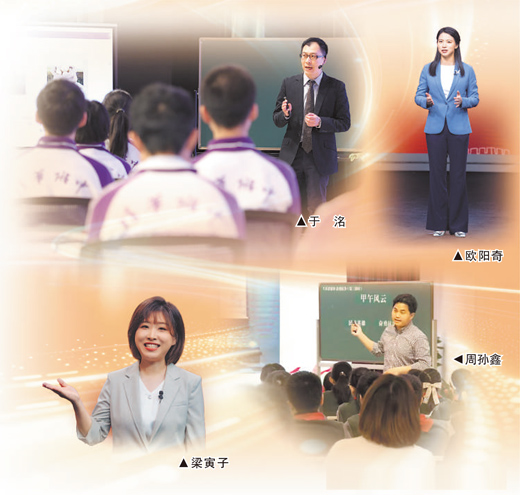
Core Viewpoint - The article discusses a nationwide ideological and political education class themed "Promoting the Great Anti-Japanese War Spirit and Being Proud Chinese," aimed at students across various educational levels, emphasizing the importance of historical education and emotional engagement in teaching [2]. Group 1: Event Overview - The ideological class was organized by the Ministry of Education, in collaboration with several national agencies, and was broadcasted from September 15 to 18, reaching over 150 million students and teachers across more than 20,000 schools [2]. - The class was divided into four segments tailored for different educational levels: elementary, middle, high school (including vocational), and university [2]. Group 2: Teaching Methodologies - Teachers employed a "concrete material - story carrier - cognitive ladder" approach to make the grand historical themes accessible to younger students, using impactful stories and immersive experiences [3]. - The teaching emphasized balancing historical depth with the cognitive abilities of children, ensuring that complex ideas were presented in relatable ways [3][4]. Group 3: Teacher Insights - Teachers highlighted the importance of using relatable stories and emotional connections to engage students, with a focus on experiential learning through community involvement and historical site visits [5][6]. - The integration of social resources, such as museums and community service, was noted as a way to enhance the relevance and impact of ideological education [6][9]. Group 4: Curriculum Development - The curriculum design for university students focused on instilling a sense of national pride and responsibility, linking historical understanding with contemporary societal contributions [10][11]. - Collective lesson planning across different educational levels was emphasized to ensure a cohesive ideological education framework [9][11].

办好没有围墙的思政课(编辑手记)
Ren Min Ri Bao· 2025-09-19 22:08
Core Viewpoint - The innovative approach to ideological and political education (思政课) has attracted over 150 million teachers and students nationwide, showcasing its appeal and effectiveness in engaging youth [1] Group 1: Educational Innovation - The course utilizes new storytelling methods and diverse communication channels to enhance the attractiveness of ideological education [1] - Teachers employ relatable explanations and targeted content to make lessons engaging and relevant for students [1] Group 2: Expanding Educational Formats - There is a need to continuously expand the forms, content, and mediums of ideological education [1] - Integrating outdoor learning and creative activities with traditional classroom settings enhances immersion and experiential learning [1] - Utilizing modern media, artificial intelligence, and virtual reality technologies can extend the reach of ideological education [1] Group 3: Long-term Commitment - Ideological education is described as a long-term endeavor, emphasizing the importance of making lessons relatable and impactful for youth development [1]
万名师生共悟“延安精神” 沉浸式“大思政课”燃动青春
Yang Guang Wang· 2025-09-16 09:20
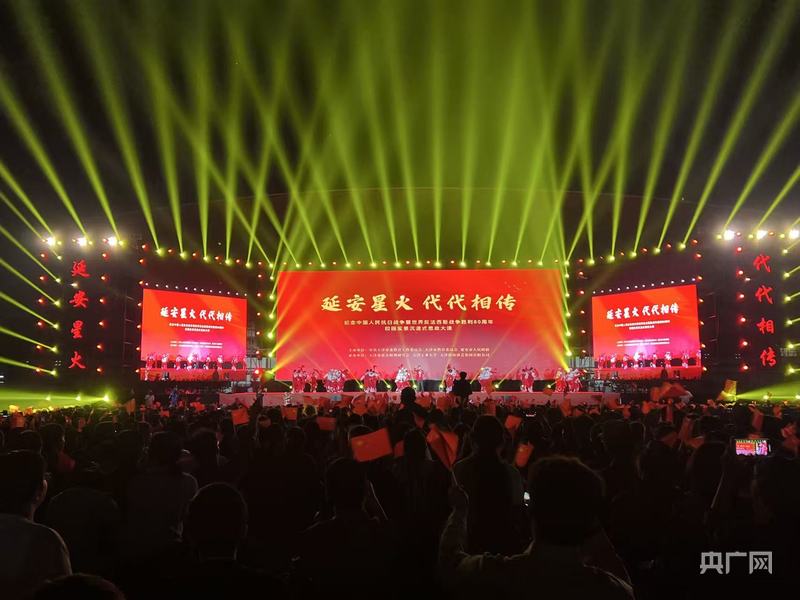
这场沉浸式课程以延安精神为核心内涵,精心设计了《胜利会师·西安事变》《熔炉·识字班里的"光"与"情"》等九 个主题实景,场景变换、层层递进,引领师生穿越时空,沉浸式感受中国革命走向胜利的热血与激情。 央广网天津9月16日消息(记者韩雨晨 周思杨 实习记者王婧瑜)9月15日晚,夜幕悄然降临,天津工业大学励志广 场的灯光却骤然亮起,校园实景沉浸式思政大课《延安星火 代代相传》在天津工业大学、北京师范大学天津附属 中学、北辰区北仓小学师生代表等近万名师生的注视中拉开帷幕。这场以夜色为幕、以实景为台的大思政课,让 延安精神在光影交织中完成了与青春的深度对话。 "我们想把标志性的红色文化元素引入校园,让同学们在熟悉的环境里获得真实的感受。"天津工业大学教师、 《延安星火 代代相传》校园实景沉浸式思政大课执行导演陈亚桥说,以往的"行走的大思政课"师生常奔赴延安等 红色基地,而此次则将图书馆、宿舍前的小树林等校园空间变为实景舞台,"熟悉的场景突然成为历史叙事的载 体,我们希望借此能够激发起同学们对于爱国主义情怀的强大认同感。" 传统与现代完美融合,是本次活动的一大亮点。无人机编队在空中绘就"延安精神 代代相传"等壮丽图案, ...
校馆弦歌|开在历史现场的“大思政课”
Ren Min Ri Bao· 2025-09-15 03:51
Group 1 - The article highlights the importance of integrating historical education with contemporary values, particularly through immersive experiences in significant historical sites [1][3][4] - Various universities, including Peking University and Fudan University, are engaging students in red culture and revolutionary history to instill a sense of mission and responsibility [1][3] - The activities include guided tours, storytelling, and volunteer service, aimed at fostering a deeper understanding of historical events and their relevance to modern society [3][4][9] Group 2 - The narrative emphasizes the role of educational institutions in promoting patriotism and ethical values among students, as seen in the initiatives at Hunan First Normal University and Xi'an Jiaotong University [5][9] - Historical figures and events are used as teaching tools to inspire students to contribute positively to society and uphold national interests [6][10] - The article also mentions the significance of preserving and sharing historical narratives through museums and educational programs, which serve as a bridge between past and present [11]
开在历史现场的“大思政课”(校馆弦歌)
Ren Min Ri Bao· 2025-09-14 22:03
Group 1 - The article highlights the importance of historical education in universities, emphasizing the role of various historical sites and museums in fostering a sense of national identity and values among students [1][3][4] - Universities are integrating immersive experiences into their curricula, allowing students to engage with historical narratives and red culture, thereby enhancing their ideological education [1][3][8] - The article mentions specific initiatives, such as the "Starfire" volunteer service team at Fudan University, which promotes the study of Marxism and the history of the Communist Party through innovative teaching methods [3][4][5] Group 2 - The narrative includes the historical significance of various universities, such as Hunan First Normal University, where Mao Zedong studied, and the impact of the "Westward Migration" movement on the development of higher education in China [6][7][9] - The article discusses the establishment of memorials and museums at universities like Xi'an Jiaotong University and Yunnan Normal University, which serve as platforms for students to learn about and share revolutionary history [9][10][11] - The commitment of students and faculty to uphold the spirit of patriotism and dedication to national service is emphasized, showcasing how historical legacies continue to inspire current generations [10][11][12]
扣好人生第一粒扣子——广东如何讲好“大思政课”
Xin Hua She· 2025-09-14 17:07
Core Viewpoint - The article discusses the innovative approaches taken by Guangdong province to enhance ideological and political education (思政课) in schools, emphasizing the integration of these lessons across various subjects and activities to cultivate a sense of national responsibility among students [1][3][4]. Summary by Sections Ideological and Political Education Development - Guangdong has introduced a comprehensive framework for ideological and political education, focusing on the integration of these lessons into all subjects and educational stages, thereby creating a "Big Ideological and Political Class" [1][3]. - The province aims to cultivate a new generation capable of shouldering the responsibilities of national rejuvenation through effective ideological education [1][3]. Innovative Teaching Methods - Schools in Guangdong are adopting creative methods such as "Archaeology + Ideology" courses, outdoor classrooms under the stars, and mobile classrooms via red buses to make ideological education more engaging [2][3]. - The integration of ideological education into various subjects, including mathematics and history, is being emphasized to foster a deeper understanding of national culture and unity among students [2][3]. Community and Practical Engagement - The educational approach extends beyond the classroom, with students participating in community activities and research projects that connect them with local history and social issues [6][7]. - Guangdong has established 24 provincial-level "Big Ideological and Political Class" practical teaching bases to enhance experiential learning opportunities for students [6][7]. Leadership and Institutional Support - The provincial government has prioritized the construction of a comprehensive ideological education system, with various initiatives aimed at improving the quality and reach of these programs across all educational levels [11][12]. - There is a strong emphasis on leadership involvement, with provincial leaders regularly teaching ideological classes to set an example and reinforce the importance of this education [12].
大连师生赴疆开展“行走的思政课”活动
Liao Ning Ri Bao· 2025-09-05 01:08
Core Viewpoint - The article highlights a cultural and educational exchange program between students from Dalian and local students in Xinjiang, emphasizing the importance of national unity and historical awareness through immersive learning experiences [1][2]. Group 1: Educational Activities - Over 20 students and teachers from Dalian traveled to Shihezi, Xinjiang, for an 8-day immersive study program focused on the theme of "Tracing the Military and Agricultural History and Inheriting the Spirit of the Anti-Japanese War" [1]. - Activities included paying respects at the Zhou Enlai Memorial, visiting museums, and participating in hands-on cultural activities such as making military-themed clay sculptures [1]. Group 2: Cultural Exchange - Students from Dalian shared stories of the Northeast Anti-Union's struggles, while Shihezi students presented the contributions of various ethnic groups in supporting the war effort, fostering a deeper understanding of shared history and cultural diversity [2]. - The exchange allowed students to appreciate the sacrifices made for their homeland, reinforcing the idea that both regions' lands are protected by the lives of heroes [2]. Group 3: Educational Initiatives - The Dalian Municipal Education Committee has been focusing on the construction of a "Big Ideological and Political Course," exploring integrated paths for education that extend beyond traditional classrooms into broader societal contexts [2].