房地产行业转型

Search documents
“两个转向”为房地产业指明方向
Jing Ji Ri Bao· 2025-08-05 22:13
Group 1 - The core viewpoint of the article is that China's urbanization is transitioning from a rapid growth phase to a stable development phase, which will provide new opportunities for the real estate industry [1] - The real estate market will enter a stable development stage as urbanization continues, with significant opportunities arising from the ongoing migration of rural populations to cities [1][2] - The demand for high-quality housing is increasing, and the market is calling for better housing supply to meet the evolving needs of the population [1] Group 2 - The real estate industry is required to accelerate the construction of a new development model, focusing on optimizing the housing supply system and increasing the supply of affordable housing [2] - A new mechanism for element linkage will be established to promote balance between supply and demand in the real estate market, ensuring stability [2] - The industry will also push for reforms in the commodity housing sales system and enhance the safety management of housing throughout its lifecycle [2][3] Group 3 - High-quality urban renewal is essential for transforming the real estate industry and constructing a new development model [3] - The focus will be on improving housing design, construction, and maintenance, as well as upgrading old neighborhoods and enhancing community facilities [3] - Real estate companies will shift their roles towards service and operation, engaging in public service construction and community management [3][4] Group 4 - The transformation of the real estate industry is underway, moving from a focus on development revenue to service-oriented revenue [4] - Companies need to adapt to this trend by emphasizing technological innovation and improving service efficiency to meet diverse urban development and resident needs [4]
1元甩卖资产!负债473亿,管理层震荡!巨头宣告退出房地产
21世纪经济报道· 2025-06-18 12:54
Core Viewpoint - The central theme of the article revolves around the significant asset sale by *ST Zhongdi, where the company is divesting its real estate development business to China Communications Real Estate Group for a symbolic price of 1 yuan, reflecting its dire financial situation and the need to address substantial liabilities [1][4][5]. Group 1: Asset Sale Details - *ST Zhongdi announced the sale of its real estate development business, including related assets and liabilities, for a nominal price of 1 yuan, indicating a strategic move to alleviate financial burdens [1]. - The transaction involves 51 companies, with total assets valued at 434.7 billion yuan and liabilities at 473.9 billion yuan, resulting in a net asset value of -39 billion yuan [5]. - The company has been facing severe financial distress, with a significant drop in net profit and a high debt-to-asset ratio, leading to a risk of delisting [17][29]. Group 2: Financial Performance - Over the past two years, *ST Zhongdi has reported cumulative losses of 6.8 billion yuan, with a net loss of 16.73 billion yuan in 2023, which expanded to 51.79 billion yuan the following year [8][14]. - The company's sales figures have drastically declined, with total sales of 458.82 billion yuan in 2022 and further dropping to 373.61 billion yuan in 2023 [13]. - The cash and cash equivalents at the end of the previous year were only 7.5 billion yuan, while the non-current liabilities due within one year reached 11.9 billion yuan, indicating a pressing short-term debt repayment challenge [17]. Group 3: Corporate Restructuring - The management of *ST Zhongdi has undergone significant changes, with a restructuring aimed at improving operational efficiency and focusing on light asset businesses such as property services and asset management [22][25]. - The company has initiated a major organizational overhaul, reducing the number of city companies from 16 to 9, and streamlining management layers [22]. - The leadership transition has seen key figures resign, including the former chairman, indicating a shift in strategic direction and management focus [24][29]. Group 4: Market Context and Future Outlook - The real estate market has been undergoing a significant adjustment, prompting many listed companies to exit the real estate sector, with *ST Zhongdi's 1 yuan sale price drawing considerable attention [7][28]. - The company aims to complete the restructuring process successfully to maintain its listing status and potentially remove the "*ST" designation, which requires meeting regulatory requirements and ensuring a positive net asset position by the end of the year [29][30].



李庚南:如何从信贷数据透析房地产市场运行态势?
Sou Hu Cai Jing· 2025-06-10 10:56
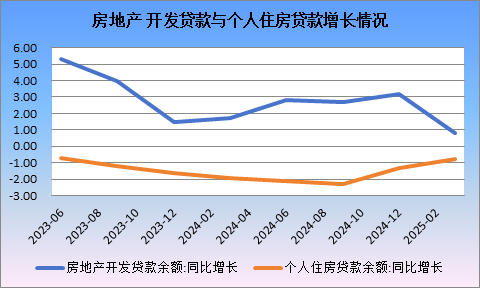
Core Viewpoint - The real estate market is influenced by three interconnected factors: finance, land, and population, with funding being the underlying driver. Recent credit data from the central bank provides insights into the current state of the real estate market [1]. Group 1: Loan Data Overview - As of the end of Q1 2025, the total balance of RMB real estate loans reached 53.54 trillion yuan, a year-on-year increase of 0.04%, with a quarterly increase of 619.7 billion yuan [2]. - Real estate development loans amounted to 13.87 trillion yuan, showing a year-on-year growth of 0.8%, while personal housing loans totaled 37.9 trillion yuan, reflecting a year-on-year decline of 0.8% [2]. - The contrasting trends of increasing development loans and decreasing personal housing loans suggest a recovery in developer confidence but a decline in consumer purchasing intent [2][4]. Group 2: Factors Behind Loan Trends - Real estate development loans have shown a declining trend, with growth rates dropping from 5.3% in mid-2023 to 0.8% in Q1 2025, indicating a cautious lending environment [5]. - Regulatory measures aimed at reducing high leverage in the real estate sector have pressured developers to lower their debt levels, leading to an increased reliance on self-raised funds, which rose from 29.89% to 33.6% of total funding sources [6]. - Banks have become more risk-averse, tightening lending standards for developers, particularly for smaller firms facing significant debt pressures [7]. Group 3: Personal Housing Loan Dynamics - Personal housing loans are showing signs of marginal recovery due to policy stimuli and improved market expectations, with the decline in loan balances narrowing from -2.3% to -0.8% [12]. - The easing of early repayment pressures and a series of supportive policies have contributed to stabilizing the housing market, particularly in core cities where prices have begun to recover [9][10]. - Despite these improvements, the ongoing issue of unfinished projects and buyer payment defaults continues to dampen consumer confidence in the housing market [11]. Group 4: Market Signals and Future Outlook - The divergence in loan trends indicates that while policy effects are beginning to show, the real estate market has not yet fully stabilized, with significant challenges remaining [13]. - The market is experiencing regional disparities, with first-tier cities showing signs of recovery while lower-tier cities continue to struggle with high inventory levels [14]. - The real estate sector is undergoing a transformation, shifting from expansion to survival mode, with a focus on high-quality, low-density housing rather than high-turnover, low-quality developments [15].
房地产行业毛利率下降至10%
3 6 Ke· 2025-06-03 02:20
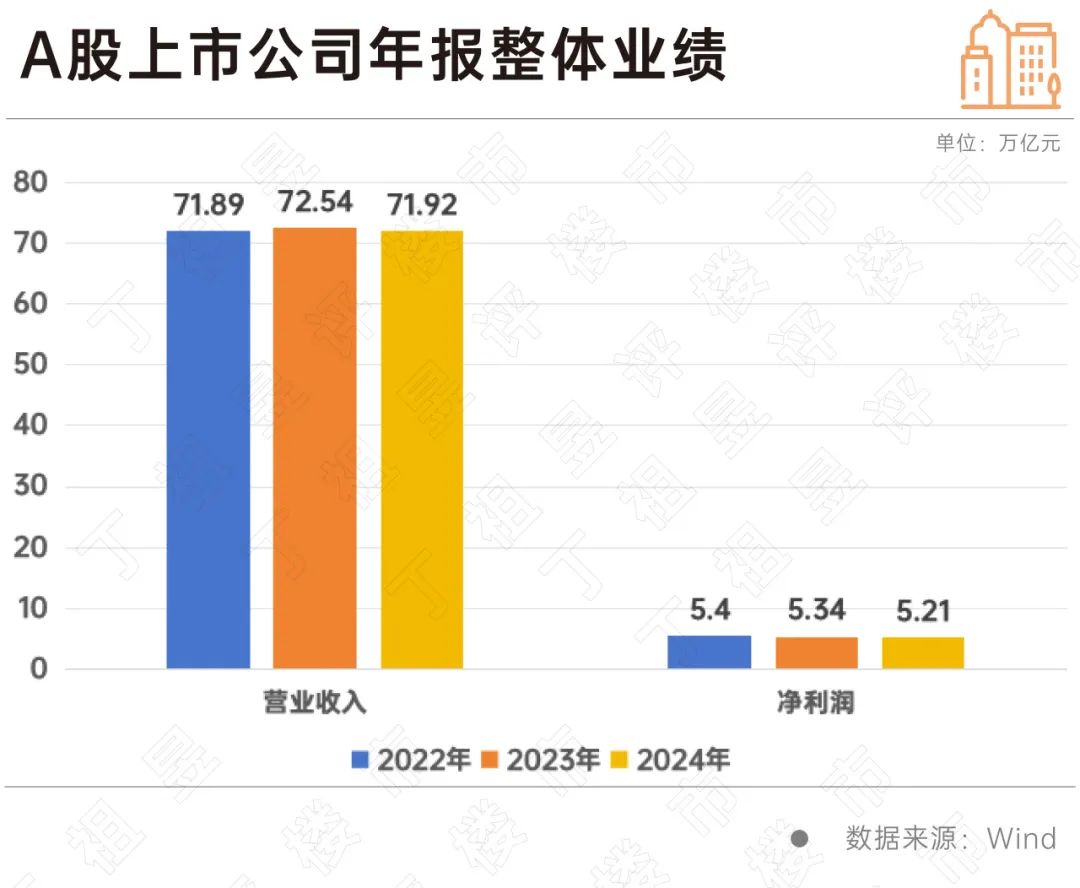
Core Viewpoint - The overall performance of A-share listed companies in 2024 shows a slight decline in revenue and profit, with significant industry performance divergence, particularly in the real estate sector which remains under pressure [1][2][5]. Industry Performance Summary - A total of 5402 listed companies reported a revenue of 71.92 trillion yuan in 2024, a year-on-year decrease of 0.23%, and a net profit of 5.21 trillion yuan, down 2.98% [2][5]. - The information technology sector led with an 11% revenue growth, while the real estate sector experienced the largest decline at -21% [1][5][6]. - Among the listed companies, 4029 achieved profitability, representing 75% of the total, with 2567 companies showing a year-on-year profit increase [2][5]. Real Estate Sector Analysis - The real estate sector's typical listed companies saw a revenue drop of 17% in 2024, with a gross profit margin of 10%, down 2 percentage points from the previous year [10][13]. - The sales area of new residential properties fell by 12.9%, and sales revenue decreased by 17.1%, indicating ongoing market challenges [9]. - The decline in profitability is attributed to high land costs, increased sales pressure, and the need for price reductions to stimulate sales [14][17]. Future Outlook - The real estate market is expected to stabilize in 2025 after three years of adjustment, with companies focusing on strategic transformations to enhance profitability [1][19]. - Companies are shifting their focus towards operational efficiency, project selection, and product quality to navigate through the current downturn [17][19]. - Several firms are exploring new growth avenues, such as property management and diversified business models, to ensure sustainable development [18][19].
高盛最新研判:新房下行不可逆转,存量房流通效率成关键
Sou Hu Cai Jing· 2025-05-25 22:33
Core Insights - The report by Goldman Sachs highlights the transition of China's real estate market from new development to existing property management, driven by policy and housing upgrade demands, predicting a total addressable market (TAM) of 5.7 trillion RMB by 2035, a 70% increase from 2024 [1] Group 1: Key Conclusions for the Real Estate Industry by 2035 - Housing demand is expected to reach 60% of the peak level in 2017, with necessity, improvement, and renewal demands contributing equally. The share of demand from first and second-tier cities will rise from 60% in 2024 to approximately 70% [4] - Government and developers will adjust land supply based on demand, leading to further consolidation in the developer industry. The top ten developers are projected to capture about 50% of the national market share by sales by 2035, with new housing market size significantly shrinking, averaging 40% lower than 2024 levels [5] - The second-hand housing market will account for 66% of total sales volume and 64% of total value due to reduced new housing supply, aligning with levels seen in developed markets [6] - Renovation will emerge as a key driver, with an expected renovation rate of about 1% by 2035, leading to a total building area of over 110 billion square meters, with renovated areas nearly doubling to represent about 60% of total building area [7] Group 2: Four Core Trends Reshaping the Industry Landscape - A structural shift in housing demand is anticipated, with total demand expected to fall to 60% of the 2017 peak, but with a significant change in demand structure, where improvement and old housing renewal demands will rise, contributing to 70% of the demand from first-tier and new first-tier cities [8] - Both land supply and developer concentration are expected to increase, with government land supply favoring high-demand areas and leading developers accelerating expansion into T-1/2 cities. The market share of the top ten developers is projected to rise from 21% in 2024 to 50% by 2035 [10] - The rise of the second-hand housing market will counterbalance the decline in new housing, with second-hand transactions expected to account for 66% of total transactions and 64% of total transaction value by 2035, aligning with developed market standards [11] - Renovation will become a core driver, with an annual renovation rate increasing to 1%, leading to a demand for the renovation of over 20 billion square meters by 2035, driven by policies promoting upgrades and quality of living [12] Group 3: Opportunities and Challenges in the Industry Chain - Demand for construction products will diversify, with strong cyclical categories like glass and ceramics facing short-term pressure, while demand for energy-saving materials and aging-friendly renovations will partially offset declines, with market size expected to decrease by 10%-15% by 2035 [14] - The renovation market is projected to experience explosive growth, driven by existing property renovations and second-hand transactions, with the home decoration industry expected to exceed 3 trillion RMB, accounting for 32% of the total industry chain [14] - The expansion of property management and brokerage services is anticipated, with active second-hand transactions and asset preservation needs leading to an expected revenue scale of 2.7 trillion RMB in property management and brokerage, representing 30% of the industry chain [14]
*ST中地(000736) - 000736*ST中地投资者关系管理信息20250508
2025-05-08 09:04
Group 1: Company Restructuring and Financial Health - The company plans to complete its restructuring by 2025, aiming for a positive net asset value to apply for "delisting risk removal" [2][4] - The company has seen a significant decline in stock value, dropping over 60% since last year, prompting a focus on maintaining market value through improved operational performance and governance [2][4] - The restructuring involves transferring real estate-related debts to a more creditworthy real estate group, ensuring better protection for creditors [3][4] Group 2: Business Strategy and Market Position - Post-restructuring, the company will focus on property services and asset management, transitioning from traditional heavy asset development to light asset operations [5][6] - The company aims to leverage its unique competitive advantages in the property management sector, emphasizing differentiated competition strategies and expanding its service scale [2][5] - The property management industry is expected to face increased competition, with a focus on high-quality services and sustainable business models [6] Group 3: Market Outlook and Industry Trends - The real estate market is showing signs of stabilization, with a projected recovery in 2025, supported by government policies aimed at maintaining market stability [5][6] - Recent data indicates a mixed performance in the housing market, with sales area changes of -3.04%, +28.50%, and +8.63% in the first quarter of 2025, alongside a price decline of 5.15% [5][6] - The property management sector is expected to evolve, with a shift towards high-quality service offerings and the integration of smart technology [6]
深振业A2024年营收60.65亿元 净亏损15.68亿元
Xi Niu Cai Jing· 2025-05-08 07:51
Core Viewpoint - Shenzhen Zhenye A (深振业A) reported significant revenue growth in 2024, but also faced substantial net losses due to the ongoing challenges in the real estate market [4]. Financial Performance - The company achieved operating revenue of 6.06 billion yuan in 2024, a year-on-year increase of 115.79% [4]. - The net loss attributable to shareholders was 1.57 billion yuan, representing a 95.40% decline compared to the previous year [4]. - The net profit after deducting non-recurring gains and losses was also a loss of 1.57 billion yuan, worsening from a loss of 805 million yuan in 2023 [2]. - The basic and diluted earnings per share were both -1.1618 yuan, compared to -0.5 yuan in 2023 [2]. - The weighted average return on equity was -25.35%, a significant drop from -10% in the previous year [2]. Asset and Inventory Management - Total assets at the end of 2024 were approximately 17.23 billion yuan, down from 25.92 billion yuan at the end of 2023 [2]. - The net assets attributable to shareholders decreased to about 5.40 billion yuan from 6.97 billion yuan [2]. - The company recorded a provision for inventory impairment of 1.57 billion yuan, contributing to the net loss [3]. - Inventory levels decreased by 36.72% to 10.78 billion yuan compared to the beginning of the year [3]. Strategic Adjustments - In response to the challenging market, the company has adjusted its strategic direction, successfully winning four urban village renovation projects in 2024 [3]. - The company’s subsidiary, Huashe Apartment, was recognized as a benchmark project for "New Era Urban Builders," indicating a focus on expanding affordable housing operations [3]. - The company has also engaged in a light-asset transformation, acquiring 22 construction and consulting projects [3]. Industry Context - The performance of Shenzhen Zhenye A reflects the broader transformation pains within the real estate industry, highlighting the need for a balance between inventory reduction and the expansion of new business ventures [5]. - The ongoing support from policies is acknowledged, but the management emphasizes that restoring market confidence will take time [3].


行业数据:房地产市场延续回稳态势,行业转型成效进一步显现
克而瑞研究中心· 2025-04-03 01:00
Investment Rating - The report indicates a positive outlook for the real estate industry, suggesting a recovery trend supported by policy effectiveness and structural improvements in supply and demand [4][22]. Core Insights - The real estate market continues to stabilize, with signs of recovery evident in key indicators such as new housing sales and investment levels. The report highlights a dual engine of recovery driven by policy support and a stabilizing housing price environment [4][5][22]. - In the first two months of 2025, new residential sales area and sales amount in 40 monitored cities increased by 1.3% and 7.1% year-on-year, respectively, indicating a narrowing decline in core indicators [5][9]. - The report emphasizes the importance of government policies aimed at stabilizing the housing market, including measures to boost demand and improve financing conditions for developers [11][22]. Summary by Sections Macroeconomic Overview - The macroeconomic environment shows signs of improvement, with industrial production and retail sales growth accelerating in early 2025. Industrial added value increased by 5.9% year-on-year, while retail sales grew by 4.0% [6]. - The monetary policy remains accommodative, with M2 growth at 7.0% and M1 showing a slight increase, reflecting a stable financial environment conducive to recovery [7][8]. Market Transactions - The new housing market transaction volume has shown a positive trend, with significant increases in major cities like Shanghai and Shenzhen, where transaction areas rose to three times and two times the previous year's levels, respectively [9]. - Nationally, the sales area of new commercial housing reached 1.07 million square meters, with sales amounting to 1.03 trillion yuan, marking the lowest decline in this adjustment cycle [9][10]. Construction and Investment - The report notes a significant reduction in new construction starts, with a 29.6% year-on-year decline in new housing starts, indicating a rapid decrease in inventory pressure [13][19]. - Real estate development investment in early 2025 was 1.072 trillion yuan, down 9.8% year-on-year, but the decline is less severe than in previous periods, suggesting a recovery in developer confidence [19][20]. Future Outlook - The report anticipates continued policy support for the real estate sector throughout 2025, with a focus on stabilizing asset prices and enhancing housing supply and demand dynamics [22][23]. - It is expected that the sales area and amount of commercial housing will accelerate in the first half of 2025, with major cities likely to see positive signals in housing prices and transaction volumes [23][25].
业绩未企稳,中海地产、华润置地如何破除利润下滑局面
2 1 Shi Ji Jing Ji Bao Dao· 2025-04-02 11:53
Core Insights - Leading real estate companies, China Overseas Land & Investment (COLI) and China Resources Land, are facing challenges in achieving expected growth despite their market positions as top players in the industry [1][2] - Both companies are exploring growth opportunities beyond traditional development, focusing on operational business and service quality [2][6] Financial Performance - In 2024, COLI reported a contract sales amount of 310.69 billion yuan, a slight increase of 0.3% year-on-year, with a sales area of 11.49 million square meters, down 14% [1] - COLI's net profit for 2024 was approximately 17.787 billion yuan, a decline of 34.24% year-on-year, with attributable net profit down 38.95% to about 15.636 billion yuan [1] - China Resources Land achieved contract sales of approximately 261.1 billion yuan in 2024, a decrease of 15% year-on-year, while its total revenue reached 278.799 billion yuan, an increase of 11% [1][3] - The attributable net profit for China Resources Land was 25.577 billion yuan, down 18.45% year-on-year [1][3] Profitability Trends - Both companies have seen significant fluctuations in profitability, with COLI's operating revenue dropping from 202.52 billion yuan in 2023 to 185.15 billion yuan in 2024, and a gross margin decline of 2.62 percentage points to 17.7% [3][4] - China Resources Land's gross margin also decreased by 3.6 percentage points to 21.6%, with its development sales gross margin at 16.8%, down 3.9% [3][4] Strategic Focus - Both companies are maintaining investment intensity while focusing on high-tier cities, with China Resources Land emphasizing a strategy of urban concentration and optimization of resources [4][6] - COLI plans to continue its investment strategy in first-tier and strong second-tier cities, with a focus on project certainty and cash flow [4][7] Transition to Operational Business - China Resources Land has established a strong operational business model, contributing significantly to its profits, with recurring revenue reaching 41.6 billion yuan in 2024, up 6.6% year-on-year [6][7] - COLI is in the process of developing its operational business, with commercial revenue of 7.13 billion yuan in 2024, a year-on-year increase of 12.1% [6][7] Future Outlook - China Resources Land aims for its recurring income to contribute over 45% to core net profit by 2025, with a long-term goal of achieving a balanced contribution of around 50% from both development and operational businesses [6][7] - COLI is expected to enhance its operational income and profit levels as quality properties come into operation, while also planning to establish public REITs [7][8]