
投资者教育

Search documents
线上如何开通?银河期货展示原油期货开户的数字化步骤
Sou Hu Cai Jing· 2025-12-15 08:41
Core Viewpoint - The Shanghai Futures Exchange's crude oil futures have become a significant product connecting domestic and international markets, highlighting the regulatory emphasis on investor protection in the trading process [1][3]. Group 1: Investor Requirements - Individual investors must meet several conditions to apply for crude oil futures trading, including maintaining a minimum balance of 500,000 RMB or equivalent foreign currency in their margin account for five consecutive trading days [3]. - Investors are also required to have a certain level of trading experience, which includes a specified number of days of simulated or real trading records [3]. Group 2: Brokerage Selection - Investors should prioritize choosing reputable futures companies approved by the China Securities Regulatory Commission for account opening [3]. - An example is Galaxy Futures, which has a nationwide branch network and provides standardized account opening services for eligible investors [3]. Group 3: Trading Education - Completing the account opening process is just the beginning, as crude oil prices are influenced by complex factors such as global supply and demand, geopolitical issues, and macroeconomic conditions, leading to high volatility [3]. - Investors are encouraged to actively learn about trading rules, contract details, and specific risk characteristics associated with crude oil futures before participating in trading [3][4]. Group 4: Role of Futures Companies - Futures companies play a crucial role in investor education by providing market analysis and hosting knowledge seminars to enhance clients' understanding of the products [4]. - The industry is collectively working to shift the market focus from merely "opening accounts" to "rational understanding," promoting the stable operation of the crude oil futures market and better serving the real economy [4].


投教宣传进校园 赋能河北资本市场发展—“河北资本市场高校行”第四站之走进河北金融学院
Quan Jing Wang· 2025-12-15 05:16
Group 1 - The event "Hebei Capital Market University Tour" aims to enhance financial literacy among university students and strengthen the influence of Hebei's capital market [1][2] - The Hebei Securities Regulatory Bureau highlighted the achievements of the capital market over the past 30 years and its role in supporting national strategies, emphasizing the need for collaboration to cultivate young talent in finance [1] - The signing of the "Investor Education Cooperation Memorandum" by four parties indicates a commitment to long-term collaboration in areas such as investor education, curriculum development, and internship opportunities [2] Group 2 - The event included a lecture on "Capital Market Reform and Development," which received positive feedback from students and faculty, showcasing the engagement of nearly 40 market entities in recruitment and educational activities [2] - Future plans involve continuing the "Capital Market Lecture Series" at local universities, offering both required and elective courses, and inviting industry experts to enhance students' understanding of capital market policies and developments [2]
央广网|徐州开展“宪法护权益金融惠民生”宣传周活动
Xin Lang Cai Jing· 2025-12-11 14:07
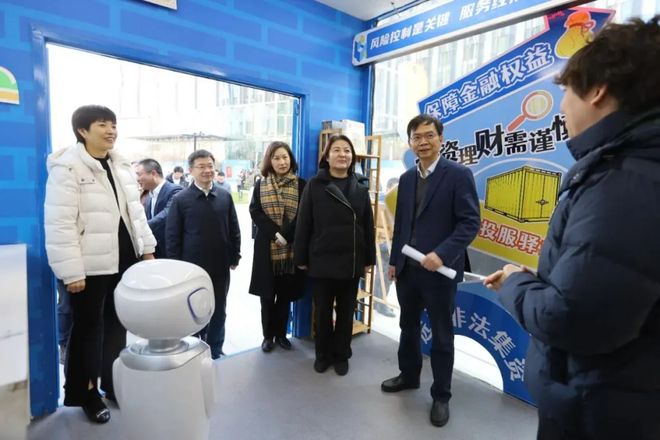
Core Viewpoint - The event held in Xuzhou focused on constitutional promotion and investor education in the futures market, emphasizing the importance of legal awareness and risk management for investors [1][3][4]. Group 1: Event Overview - The event was themed "Constitution Protects Rights, Finance Benefits People's Livelihood" and was organized by multiple regulatory and financial institutions [1]. - Over 200 participants, including industry enterprises, investors, students, and local citizens, attended the event [1]. Group 2: Government and Regulatory Insights - Xuzhou's Deputy Mayor Guo Xiaomin highlighted the importance of legal education and investor protection, calling for a dual focus on legal awareness and investor education [3]. - Lu Qiansong, Deputy Director of the Jiangsu Regulatory Bureau of the China Securities Regulatory Commission, emphasized the need for a comprehensive service platform for investor education, promoting rational investment and risk awareness [4]. Group 3: Educational Initiatives - The New Era Futures Investor Education Base was inaugurated, featuring a 400 square meter exhibition area with various educational sections, making it the first physical investor education base in Northern Jiangsu and the Huaihai Economic Zone [6]. - The base includes areas for futures history, risk warnings, and interactive learning, aimed at enhancing public understanding of the futures market [6].
公募、券商“投教”进阶 护好百姓“钱袋子”重建行业“声誉资产”
Zhong Guo Jing Ying Bao· 2025-12-10 10:16
Core Viewpoint - The Chairman of the China Securities Regulatory Commission, Wu Qing, emphasized the importance of reputation management in the securities industry, advocating for the integration of corporate culture and values into brand building [1] Group 1: Investor Education Initiatives - Securities firms are accelerating their investor education efforts this year, utilizing diverse activities and innovative models to promote sound financial concepts among investors, thereby safeguarding their financial assets and rebuilding the industry's reputation [1] - A series of public welfare activities were launched by various institutions in Shenzhen, including a "no-sense investor education" model, aimed at naturally integrating financial knowledge into community settings such as cafes and parks [1] - The collaboration includes major players like China Merchants Securities, China Merchants Futures, and Tencent, with support from multiple financial institutions, attracting significant community participation [1] Group 2: Focus on Specific Demographics - Guolian Fund has focused on the theme of "fund industry discussing pensions" since 2025, targeting different demographic groups such as youth in schools, elderly in communities, and the general public in business districts to address their pension financial needs [2] - The fund employs customized content, immersive experiences, and interactive activities to comprehensively disseminate knowledge about pension funds and guide various age groups in establishing sound retirement financial concepts [2] - These initiatives aim to promote scientific financial literacy, foster a healthy and rational investment mindset, and create a culture of compliance, integrity, professionalism, and stability within the industry [2]

“踔厉奋发新征程 投教服务再出发”深交所走进上海辖区上市公司
Quan Jing Wang· 2025-12-10 08:35
Group 1 - The event "New Journey of Investment Education Services" was successfully held in Shanghai, enhancing communication and trust between investors and listed companies [1] - The event featured visits to companies such as Zhongying Electronics, Pinwo Foods, and Wangsu Technology, providing investors with a platform to understand corporate development [1] Group 2 - Zhongying Electronics showcased its strategic planning and future development direction, emphasizing R&D investment and product innovation during the investor interaction session [2] - Investors were able to experience Zhongying Electronics' technological strength in chip design through a company tour, highlighting its resilience and competitiveness in the semiconductor industry [2] Group 3 - Pinwo Foods focused on protecting investor rights and discussed its brand building and supply chain optimization strategies during the event [3] - The management team addressed investor inquiries regarding product operations and brand promotion, reinforcing confidence in the company's future development [3] Group 4 - Wangsu Technology emphasized its strategy of technological innovation and global layout in the context of the digital economy during the event [4] - The company presented its advantages in edge computing and cloud security, with a focus on practical applications and case studies [4] - Investors engaged in discussions about liquid cooling technology and AI market competitiveness, furthering their understanding of the company's innovations [4]



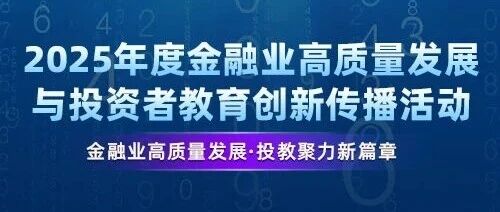
2025投教新浪潮!金融业高质量发展与投资者教育创新传播活动来了!
Zhong Guo Ji Jin Bao· 2025-12-10 03:01
Core Insights - The financial industry is undergoing a transformation in investor education, shifting from simple knowledge dissemination to deeper "value empowerment" in the context of capital market reforms and digitalization [1][2] Group 1: Investor Education Initiatives - The "Financial Industry High-Quality Development and Investor Education Innovation Communication Activity" has been launched, involving over 150 major asset management institutions to collect high-quality educational materials [2] - The educational materials include short videos, long videos, in-depth articles, creative posters, and public welfare practices, showcasing the asset management industry's exploration and achievements in investor education [2] Group 2: Short Video Content - Short videos are becoming a key channel for investors to acquire knowledge, with various themes such as long-term investment concepts and asset allocation explained through engaging narratives and cultural references [3] - Examples include the series "Investment Road with Jingli" promoting long-term investment and "Asset Allocation Classroom" using traditional culture to explain key concepts [3] Group 3: Long Video Content - Long videos address the demand for in-depth content, providing comprehensive analyses of industries and investment logic, such as the competitive landscape of solid-state batteries and the evolution of intelligent robots [5] - These videos aim to guide investors from chasing short-term trends to understanding underlying investment logic [5] Group 4: In-Depth Articles - In-depth articles focus on building a cognitive moat for investors, covering strategies, market dynamics, and psychological aspects of investing [7] - Topics include quantitative investment strategies, asset allocation techniques, and the impact of macro policies on investment decisions [7] Group 5: Creative Posters - Creative posters serve as an important medium for investor education, utilizing visual elements to simplify complex concepts and convey investment philosophies [8] - Examples include posters that explain net asset values and investment principles through engaging designs and cultural references [8] Group 6: Public Welfare Practices - Financial institutions are expanding the boundaries of investor education through public welfare initiatives, such as educational programs targeting youth and rural communities [10] - These initiatives aim to enhance financial literacy and support sustainable development in various demographics [10]

2025投教新浪潮!金融业高质量发展与投资者教育创新传播活动来了!
中国基金报· 2025-12-10 02:41
Core Viewpoint - The article emphasizes the transformation of investor education in the financial industry, moving from simple knowledge dissemination to deeper "value empowerment" through innovative communication activities [2]. Group 1: Investment Education Initiatives - The China Fund News, in collaboration with over 150 major asset management institutions, launched a campaign for high-quality investment education, inviting submissions of educational works across various formats [2]. - The campaign includes short videos, long videos, in-depth articles, creative posters, and public welfare practices, showcasing the industry's exploration and achievements in investment education [2]. Group 2: Short Video Education - Short videos have become a vital channel for investors to acquire knowledge in a fragmented information era, transforming complex investment concepts into engaging visual content [4]. - Examples include warm narrative videos that convey long-term investment principles and humorous interpretations that make serious topics more accessible [7]. - Cultural integration is highlighted through videos that combine regional cultural characteristics with investment education, making the content more relatable [7]. Group 3: Long Video Education - Long videos address the demand for in-depth content, providing comprehensive analyses of industries and investment trends [9]. - Topics include competitive landscapes in solid-state batteries and the evolution of intelligent robots, offering forward-looking perspectives for investors [11]. - The content aims to guide investors from chasing short-term trends to understanding underlying investment logic [11]. Group 4: Deep Articles - Deep articles focus on building cognitive frameworks for investors, emphasizing the importance of deep thinking in an information-overloaded market [13]. - Topics cover quantitative investment strategies, practical asset allocation techniques, and insights into market dynamics, helping investors navigate complex environments [17]. - The articles also explore investment psychology and innovative educational models, aiming to instill a long-term investment perspective [17]. Group 5: Creative Posters - Creative posters serve as an important medium for investment education, utilizing visual communication to simplify complex concepts [18]. - Examples include visual comparisons of different net asset values and cultural integrations that merge traditional wisdom with modern investment philosophy [21]. - The posters also focus on risk warnings and the transmission of core investment principles, enhancing investor awareness [21]. Group 6: Public Welfare Practices - Financial institutions are expanding the boundaries of investment education through public welfare initiatives, contributing to the high-quality development of the financial industry [22]. - Activities include sustainable public welfare projects and educational programs targeting youth and rural communities, aiming to enhance financial literacy [24]. - These initiatives reflect a commitment to protecting investor rights and promoting financial knowledge across various demographics [24].
三十年股市激荡:从《股疯》的人性考验,到九方智投AI股票机的“认知铠甲”
Di Yi Cai Jing Zi Xun· 2025-12-09 11:03
Core Insights - The article reflects on the evolution of China's capital market, highlighting its growth to become the world's second-largest market with a total market value exceeding 100 trillion yuan and over 5,000 listed companies [1] - It emphasizes the ongoing challenge for ordinary investors to navigate information asymmetry and knowledge gaps, which remains relevant despite the passage of time [1][2] Group 1: Investment Education and Market Development - The proportion of residents' equity assets is only about 15%, indicating a significant potential for asset management and wealth management needs [3] - The regulatory framework is increasingly focused on investor education, aiming to cultivate a mature and rational investor base as a foundation for a transparent and resilient capital market [3] - The intersection of policy direction and market demand has led to the emergence of new solutions, with a shift from fragmented learning to systematic and intelligent education becoming essential [3] Group 2: Technological Integration in Investment - The integration of finance and technology is not just about efficiency but represents a profound revolution in investor cognition, exemplified by innovative products like the AI stock machine from Jiufang Zhitu [5] - The AI stock machine aims to address the challenges of information, knowledge, and cognitive gaps faced by investors, transforming previously exclusive research and data analysis capabilities into accessible services [5][7] - This product features a comprehensive ecosystem that includes hardware, software, content, and services, designed to enhance users' financial literacy and practical skills through various modules [7] Group 3: Future of Capital Markets - The emergence of tools like the AI stock machine signifies a response to the deep-seated rules of financial markets, contributing to the healthy development of capital markets and ensuring that investors can share in economic growth [9] - The article posits that technology, particularly AI, is becoming a crucial force in balancing market efficiency and fairness, fostering a more rational and robust capital market ecosystem [9]

三十年股市激荡:从《股疯》的人性考验,到九方智投AI股票机的“认知铠甲”
第一财经· 2025-12-09 10:12
Core Viewpoint - The article reflects on the evolution of China's capital market over the past three decades, highlighting the challenges faced by ordinary investors in navigating information asymmetry and the need for enhanced financial literacy and education [1][4][5]. Group 1: Market Development - China's capital market has grown to become the second largest globally, with a total market value exceeding 100 trillion yuan and over 5,000 listed companies [1]. - The challenge for investors has shifted from merely having access to investment options to making informed choices amidst a rapidly expanding array of options [3]. Group 2: Investor Education - The proportion of equity assets, such as stocks and funds, in residents' portfolios is only about 15%, indicating a significant potential for growth in asset management and wealth management [5]. - There is a pressing need for investment education to enhance the financial literacy of over 240 million individual A-share investors, which is crucial for the high-quality development of the industry [5]. Group 3: Technological Integration - The integration of finance and technology is leading to a paradigm shift in investor cognition, with products like the AI stock machine from Jiufang Zhituo representing this transformation [7]. - The AI stock machine aims to address the challenges of information, knowledge, and cognitive gaps faced by investors by providing a comprehensive ecosystem that includes hardware, software, content, and services [9]. Group 4: Features of AI Stock Machine - The AI stock machine integrates various services, including professional market analysis, trading execution, live investment advice, and risk monitoring, to meet diverse and personalized investment needs [10]. - Its core highlights include a nine-dimensional course system, an AI intelligent learning system, and a proprietary investment tool matrix, all designed to assist decision-making and enhance investor cognition [10]. Group 5: Future Implications - The emergence of tools like the AI stock machine reflects a response to the deep-seated rules of the financial market, aiming to balance market efficiency and fairness while enhancing investor rights [11]. - The ultimate goal of a healthy capital market is to serve the high-quality development of the real economy and allow investors to share in its growth, with technology playing a key role in this process [11].

合力提升资本市场内在稳定性
Sou Hu Cai Jing· 2025-12-08 22:33
Group 1 - The core viewpoint emphasizes the importance of enhancing the inherent stability of the capital market to prevent significant fluctuations and align with the strategic deployment of building a financial powerhouse in China [1] - The recent International Investor Conference highlighted the need for comprehensive financial regulation, improved institutional mechanisms, and enhanced regulatory capabilities to ensure stable market operations [1] - The capital market in China has shown significant progress, with expanding market size, active product innovation, and improved returns for listed companies, while also steadily advancing in terms of openness [1] Group 2 - A long-term, collaborative institutional framework is essential for enhancing capital market stability, focusing on solid foundational systems, guiding long-term capital into the market, and strengthening regulatory enforcement [2] - The quality and effectiveness of information disclosure are critical for stable market operations, evolving towards a combination of simplified and detailed disclosures to provide relevant and readable information [2] - The regulatory focus is on promoting long-term capital to mitigate short-term speculative activities, with policies aimed at increasing the scale of equity capital from social security and insurance [2] Group 3 - The stability of the market relies on the improvement and effective execution of regulatory systems, with ongoing optimization of the top-level design of capital market regulation since the 14th Five-Year Plan [3] - Despite the introduction of stringent regulatory policies, there is a need to enhance the comprehensive accountability system across civil, administrative, and criminal aspects [3] - Strengthening information disclosure to enhance market transparency and maintaining a high-pressure stance against illegal activities are crucial for preventing significant market fluctuations [3]