数字治理

Search documents
算法公示的治理启示
Ren Min Ri Bao· 2025-09-11 08:17
Group 1 - The core viewpoint of the articles emphasizes the importance of algorithm transparency and accountability in addressing the issues associated with the "black box" nature of algorithms [1][2][3] - The initiative by the Beijing Cyberspace Administration to require major platforms like Douyin, Baidu, and Meituan to disclose their algorithm rules is a significant step towards creating a transparent and fair algorithm governance system [1][2] - The social dangers of algorithm "black boxes" include the manipulation of user preferences, potential privacy violations, and the spread of harmful information, which can lead to a loss of diverse viewpoints and extreme emotional responses [1][2] Group 2 - Opening the "black box" of algorithms is essential for effective governance, as it allows for scrutiny and accountability, ensuring that algorithms are fair, reasonable, and secure [2][3] - The public disclosure of algorithms not only facilitates oversight but also encourages platforms to self-regulate and embed compliance requirements into their technical designs [2][3] - The move towards algorithm transparency represents an innovative regulatory model that enhances social, industry, and professional supervision, creating a multi-faceted governance structure involving government oversight, corporate self-discipline, and public monitoring [3] Group 3 - The significance of algorithm disclosure lies in its potential to prevent and reduce social risks associated with algorithm "black boxes," offering a more efficient and cost-effective governance approach [3] - Future efforts should focus on enhancing the depth, breadth, and comprehensibility of algorithm disclosures, along with establishing robust auditing and accountability mechanisms [3] - This initiative marks a meaningful practice of applying legal thinking and methods to digital governance, contributing to the development of a high-quality digital economy and a fairer digital future for users [3]
算法公示的治理启示(金台锐评)
Ren Min Ri Bao· 2025-09-10 22:07
Core Viewpoint - The recent initiative by Beijing's Cyberspace Administration to require major online platforms like Douyin, Baidu, and Meituan to disclose their algorithm rules marks a significant step towards addressing the long-criticized "black box" nature of algorithms, aiming to create a transparent, fair, and accountable algorithm governance system [1][2]. Group 1: Social Implications of Algorithm "Black Box" - The "black box" of algorithms poses serious social risks, as it subtly shapes user preferences and limits exposure to diverse viewpoints, leading to a phenomenon known as the "information cocoon" [1]. - Users may suffer from unfair pricing strategies like "big data price discrimination," where personalized pricing can lead to higher costs for individuals [1]. - The "black box" can also exacerbate the spread of harmful information, such as online rumors and violence, as algorithms often prioritize sensational and emotional content to maximize user engagement [1]. Group 2: Importance of Algorithm Disclosure - Opening the "black box" is essential for governance, as platforms have previously used "technical confidentiality" as a shield against regulation and social oversight [2]. - Public disclosure of algorithms compels platforms to evaluate the fairness, reasonableness, and safety of their algorithms, embedding compliance requirements into their technical designs [2]. - Transparency is a prerequisite for accountability; without disclosure, regulatory bodies cannot effectively hold platforms accountable for discriminatory or unjust outcomes [2]. Group 3: Innovative Regulatory Model - Algorithm disclosure represents an innovative regulatory approach that allows for deeper regulatory engagement, addressing the challenges posed by rapidly evolving and complex algorithm technologies [3]. - This model facilitates early intervention to prevent and mitigate social risks associated with the "black box," offering a more cost-effective and efficient governance strategy [3]. - The initiative opens avenues for social, industry, and expert oversight, creating a multi-faceted governance framework that includes government regulation, corporate self-discipline, industry autonomy, and public supervision [3]. Group 4: Future Directions - While algorithm disclosure is a starting point, further efforts are needed to enhance the depth, breadth, and comprehensibility of disclosures, along with establishing auditing and accountability mechanisms [3]. - This initiative is a valuable practice in applying legal thinking and methods to digital governance, marking a solid step towards improving the digital governance system and supporting high-quality development of the digital economy [3].
余杭为1155家小药店、小诊所、小美容店建起“数字档案”
Mei Ri Shang Bao· 2025-08-26 22:24
Core Viewpoint - The article highlights the efforts of the Yuhang District Market Supervision Administration to enhance drug safety regulation in small pharmacies, clinics, and beauty shops, focusing on protecting public health through targeted governance measures [1][2]. Group 1: Regulatory Measures - The Yuhang District Market Supervision Administration has initiated a special governance campaign targeting "three smalls" (small pharmacies, small clinics, small beauty shops) to address drug safety concerns [1]. - A dynamic electronic file system has been established for 1,155 "three smalls" units, including 313 small pharmacies, 182 small clinics, and 660 small beauty shops, integrating various regulatory data for precise monitoring [2]. - The administration has identified 79 key regulatory targets, increasing the frequency and rigor of inspections for these entities [2]. Group 2: Compliance and Rectification - A closed-loop mechanism has been created, consisting of a subject information list, problem list, and rectification list, ensuring that all issues are tracked and resolved online [4]. - The administration has conducted eight inspection campaigns, resulting in legal penalties for 30 entities, including 14 beauty shops, 9 clinics, and 7 pharmacies, to enforce accountability [4]. - A total of 132 identified issues have been fully rectified, demonstrating the commitment to drug safety [4]. Group 3: Support for Operators - The Yuhang District has organized training and collective discussions for over 400 operators of "three smalls," clarifying key regulations such as the Drug Administration Law and negative lists [4]. - The administration has implemented measures to strengthen social supervision, including signing responsibility agreements and providing public reporting channels [4]. - The approach combines digital governance with human-centered guidance to foster trust in drug safety [4].
大城善治重在“绣花功夫”
Jing Ji Ri Bao· 2025-08-19 22:04
Core Viewpoint - China's urbanization is transitioning from rapid growth to stable development, focusing on improving existing urban quality rather than expanding new areas [1] Group 1: Urbanization and Governance - The urbanization rate in China is projected to reach 67% by the end of 2024, reflecting significant achievements in urban development [1] - Challenges such as traffic congestion, housing imbalance, and urban flooding have emerged due to rapid urban growth, alongside issues like aging population and diverse public demands [1] Group 2: Technological Integration in Urban Governance - The digital era requires robust technological support for smart city construction, enhancing digital governance applications and establishing intelligent urban management systems [2] - Utilizing big data and cloud computing can improve governance efficiency by enabling data sharing and early detection of urban risks [2] Group 3: Community-Centric Governance - Modernizing urban governance should prioritize the concerns of the public, focusing on enhancing their sense of gain, happiness, and security [3] - Innovative local measures have been implemented to improve urban living conditions, such as renovating old neighborhoods and optimizing public transport [3] Group 4: Collaborative Governance - Effective urban management cannot rely solely on government efforts; it requires collaboration among government, market, society, and citizens to address complex urban challenges [3]
“电鸡”未停地铁口划线区域将统一迁移
Nan Fang Du Shi Bao· 2025-08-18 13:46
Core Viewpoint - Longhua District is initiating a special rectification action to address the issue of electric bicycle parking chaos in super-large cities, utilizing AI 3D modeling technology for intelligent recognition and governance [1][2][7]. Group 1: Governance Strategy - The special rectification action will implement a tiered and categorized governance system, designating strict management zones around eight key subway stations [1][4]. - The governance approach includes a phased strategy: pilot phase, deepening phase, and comprehensive rollout, ensuring effective management while considering citizen convenience [4][5][8]. - The first phase targets strict management areas, with bicycles parked outside designated zones or for over three days being relocated to temporary parking areas [4][5]. Group 2: Technological Innovation - The AI 3D modeling technology employed is a cutting-edge real-time 3D scene reconstruction technique that offers high precision and low computational overhead, enabling accurate identification of bicycle parking locations and durations [3][6]. - This technology supports dynamic target tracking and updates, providing essential data for scientific governance [3][6]. Group 3: Community Involvement - The governance of electric bicycles requires collective participation from society to build a shared governance framework [2][7]. - Citizens can report long-term idle bicycles through online channels, facilitating timely management actions [6][8]. Group 4: Long-term Goals - The long-term objective is to optimize the overall urban appearance and enhance residents' quality of life through systematic governance of electric bicycles [5][6]. - The initiative aims to improve the urban environment significantly, addressing the challenges posed by the rapid increase in electric bicycle ownership [2][6].
创新纵览|数字时代的城市治理
2 1 Shi Ji Jing Ji Bao Dao· 2025-06-30 08:17
Group 1: Smart City Development - The concept of smart cities is emerging as a crucial approach for policymakers and managers to address challenges such as population growth, resource constraints, and service pressures [1] - Smart cities integrate advanced technologies like big data, artificial intelligence, and the Internet of Things to create a data-driven governance system that enhances overall urban efficiency [1] - The core of smart governance lies in improving system collaboration and responsiveness, enabling more precise resource allocation, efficient decision-making, and resilient public service systems [1] Group 2: Case Studies in Urban Innovation - Ciudad 3D in Buenos Aires is a digital platform that provides a 3D representation of community construction, optimizing resource allocation and reducing construction approval times [2] - The Legal Support Program in São Paulo simplifies the licensing process for informal workers, enhancing transparency and efficiency in government operations [3] - The Weyonje app in Kampala allows citizens to order sanitation services via mobile, ensuring safe waste transport and compliance with public health standards [4] Group 3: Public Health Monitoring - The yellow fever monitoring project in São José dos Campos utilizes the SISS-Geo platform to track non-human primate behavior as an early warning system for virus spread, enabling timely vaccination efforts [6][7] - The SISS-Geo platform collects and processes data to inform public health decisions, demonstrating the importance of citizen participation in improving public policy and sustainability [7] Group 4: Infrastructure Efficiency - Dubai's new smart system for infrastructure and utility land services automates project approval processes, significantly reducing the time and human resources required for approvals [8] - The system allows government units to upload projects and access land data instantly, transforming the approval mechanism for infrastructure projects [8]
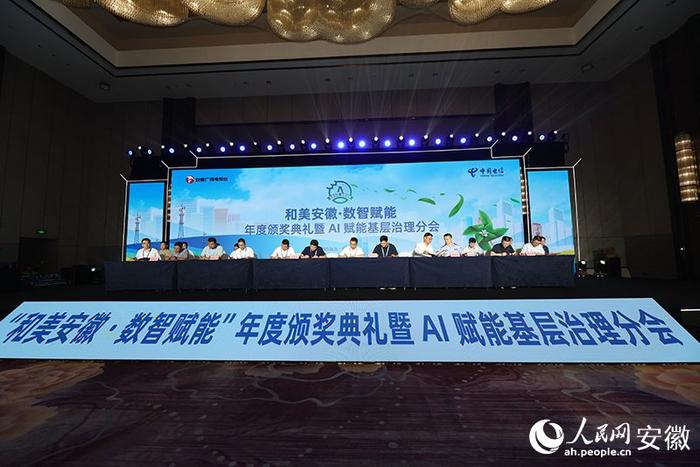
“和美安徽·数智赋能”年度颁奖典礼暨AI赋能基层治理主题会议成功举办
Ren Min Wang· 2025-06-27 01:42
Core Points - The "He Mei Anhui · Digital Empowerment" annual award ceremony and the 2025 Anhui Telecom Digital Technology Ecological Conference focused on AI empowering grassroots governance [1][5] - The event highlighted the achievements in building "smart communities" and "digital villages" across 16 cities in Anhui, with over 4 billion online views related to the promotional activities [1][3] Group 1 - China Telecom Anhui Company is actively utilizing digital technology to enhance grassroots governance and rural revitalization [3][5] - The company has established a video governance network for over 1,100 grassroots police stations and more than 200 market supervision offices, significantly improving efficiency in handling cases such as theft and traffic accidents [3][5] - The event recognized 60 "model smart communities" and 60 "model digital towns/villages," showcasing the progress in community and rural development [3][5] Group 2 - The conference featured expert presentations on AI's role in grassroots governance and shared practical experiences from various local representatives [5][6] - The ongoing promotional activities have evolved from "Beautiful Countryside" to "Digital Empowerment," reflecting the integration of AI in public service and social governance [5][6] - The collaboration between Anhui Broadcasting and China Telecom aims to transition traditional governance methods to digital governance, contributing to the modernization of government governance systems [5][6]


新高考首年咋报志愿?听招生老师细说端详
Zheng Zhou Ri Bao· 2025-06-22 00:29
Core Viewpoint - The new college entrance examination policy in Henan province introduces the "college major group" system, allowing students to fill in parallel volunteer applications for their preferred colleges and majors, enhancing their chances of admission and aligning their interests with their chosen fields of study [2][3][4]. Group 1: Understanding the "College Major Group" - The "college major group" is a new system that allows students to select a college and a corresponding group of majors based on their chosen subjects, differing from the previous model where students selected a college first and then a major [2]. - Each college can set up multiple "college major groups," each containing various majors that share the same subject requirements, which aims to improve students' satisfaction with their chosen majors [2][3]. Group 2: Filling in the "College Major Group" Applications - Students should carefully analyze the subject requirements of their target colleges to ensure compatibility with their chosen subjects, as different colleges may have varying requirements for the same major [3][4]. - It is recommended that students adopt a "reach, stable, and safety" strategy when selecting their college major groups to maximize their chances of admission while minimizing the risk of being rejected [4]. Group 3: New Opportunities and Challenges - The new policy allows each student to fill in 48 college major group applications, with the ability to select 6 majors within each group, significantly increasing their options [5]. - The Ministry of Education has introduced 29 new undergraduate majors, including fields like artificial intelligence and digital governance, providing students with more contemporary and interdisciplinary choices [5][6]. Group 4: Parental Guidance and Student Autonomy - Experts emphasize the importance of students choosing majors based on their interests and abilities rather than following trends, advising parents to support their children's decisions without imposing their preferences [6]. - The decision-making process regarding college applications should primarily rest with the students, as their interests are crucial for their academic success and future career prospects [6]. Group 5: Utilizing Historical Admission Data - Historical admission data can provide insights into the competitiveness of colleges and majors, helping students make informed decisions about their applications [8]. - Students are advised to analyze past admission trends to gauge the potential admission cut-off lines for their chosen college major groups, ensuring they select options that align with their scores [8]. Group 6: Practical Steps for Application Preparation - Students should familiarize themselves with the new examination policies and the specific admission guidelines of their target colleges to ensure a well-informed application process [9][10]. - A structured approach to selecting colleges and majors, including understanding the relationship between majors and career paths, is essential for making effective choices [10][11].
规治“定制V”等新业态乱象,要压实平台主体责任丨法经兵言
Di Yi Cai Jing· 2025-06-09 11:56
Core Viewpoint - The balance between encouraging innovation and regulating development is crucial for digital governance, particularly in the context of platform enterprises that serve as both market competitors and governance responsibility bearers [1] Group 1: Platform Responsibilities and Risks - Platform enterprises are essential for the digital economy, providing personalized products and services driven by technological innovation, but they also face risks related to user privacy and financial security due to some services operating in a "grey area" [1][2] - The "customized V" service represents a new business model that includes third-party applications that add unauthorized features to WeChat, which can lead to privacy breaches, account bans, and financial losses [2][3] - Users may face challenges in seeking redress for damages caused by "customized V" services due to difficulties in tracing the developers and the cross-border nature of some services, complicating the enforcement of legal rights [4] Group 2: Regulatory Challenges - Current regulatory capabilities in "precise identification" and "graded classification" are insufficient to address the complexities of new business models [6] - A one-size-fits-all regulatory approach can harm legitimate innovations while failing to adequately address harmful services, necessitating a nuanced understanding of different types of plugins and their implications [7][8] - The decentralized nature of plugin distribution complicates regulatory enforcement, as many plugins evade traditional app store scrutiny, leading to challenges in identifying and addressing violations [8] Group 3: Future Regulatory Directions - There is a need for specialized legislation to define, classify, and regulate plugins, establishing a comprehensive regulatory framework that balances innovation and safety [9] - Regulatory bodies should adopt agile and collaborative approaches to monitoring and enforcement, utilizing technology to enhance the detection and management of unauthorized plugins [10] - Platforms must clearly delineate their responsibilities and actively engage in compliance, ensuring they do not facilitate the sale of unauthorized plugins while also addressing user needs for legitimate features [11][12]
破解村居并行治理难题 门头沟永定镇解决589件民生问题
Xin Jing Bao· 2025-06-04 10:54
Core Viewpoint - The establishment of a large party committee in the Yongding Town area has effectively addressed community governance issues, leading to improved living conditions and enhanced community services for residents from both urban and rural backgrounds [1][4][8]. Group 1: Community Governance Challenges - Yongding Town's Huikang and Huirun areas are the largest resettlement communities in the Mentougou District, comprising 13 administrative villages and 6 residential communities, which have historically faced governance challenges and conflicts [1][2]. - The community's governance issues stem from the coexistence of urban and rural residents, leading to unclear responsibilities and resource allocation conflicts among different villages and communities [5][6]. Group 2: Implementation of the Large Party Committee Model - In 2023, a new governance model was initiated in Yongding Town, establishing large party committees to centralize decision-making and enhance community governance [8][9]. - The large party committee integrates village committees, community committees, property management companies, and volunteers, creating a unified governance structure that addresses community issues more effectively [8][9]. Group 3: Improvements in Community Services - The large party committee's centralized management has led to the addition of nearly 30,000 square meters of parking space and 4,528 parking spots, improving the parking ratio from 1:0.14 to 1:0.4 [9]. - The property service fee collection rate in the Huirun area increased from 62% to 99.5%, reflecting enhanced community satisfaction and service efficiency [9]. Group 4: Digital Governance Initiatives - Yongding Town has developed a digital governance network, including a smart command center and a four-level grid system, to improve community service delivery and issue resolution [13][14]. - The "Smart Yongding" platform integrates various functions, achieving a problem resolution rate of over 95% in trial communities, demonstrating the effectiveness of digital tools in community governance [14][15]. Group 5: Future Directions - Yongding Town is exploring new paths for urban-rural integration and community governance, leveraging technology to enhance efficiency and support sustainable development [15].