
新业态

Search documents
多种经营主体稳定增长(锐财经)
Ren Min Ri Bao· 2025-08-12 20:10
Group 1: New Business Entities - In the first half of the year, a total of 13.278 million new business entities were established in China, including 4.62 million new enterprises, 8.629 million new individual businesses, and 29,000 new farmers' cooperatives, indicating stable growth across various business types [1] - The number of newly established private enterprises reached 4.346 million, representing a year-on-year increase of 4.6% [2] - The number of newly established foreign-funded enterprises was 33,000, with a year-on-year growth of 4.1% [2] Group 2: Foreign Investment - Actual foreign investment in the manufacturing sector amounted to 109.06 billion yuan, while the service sector attracted 305.87 billion yuan [2] - High-tech industries saw actual foreign investment of 127.87 billion yuan, with significant growth in e-commerce services (127.1%), pharmaceutical manufacturing (53%), aerospace equipment manufacturing (36.2%), and medical device manufacturing (17.7%) [2] - Investment from ASEAN countries increased by 8.8%, while Switzerland, Japan, the UK, Germany, and South Korea saw respective increases of 68.6%, 59.1%, 37.6%, 6.3%, and 2.7% [2] Group 3: Economic Structure and Growth - The growth in new business entities reflects a shift in economic structure, with 601,000 new entities in the primary industry, 965,000 in the secondary industry, and 1.1712 million in the tertiary industry [3] - By the end of June, there were 25.361 million registered "new economy" enterprises, accounting for 40.2% of the total, with a year-on-year growth of 6.6% [3] - The value added by the "new economy" in 2024 was projected at 24.2908 trillion yuan, growing by 6.7% year-on-year, and accounting for 18.01% of GDP [3] Group 4: Cultural Industry Highlights - The cultural industry showed significant growth, with new enterprises in the "cultural, sports, and entertainment" sector increasing by 17.5%, leading all sectors of the national economy [5] - Revenue from large-scale cultural and related industries reached 71.292 billion yuan, a year-on-year increase of 7.4%, while total profits grew by 19.3% to 6.298 billion yuan [6] - The cultural new economy, characterized by 16 sub-sectors, generated 31.564 billion yuan in revenue, growing by 13.6% year-on-year, outpacing the overall growth of large-scale cultural enterprises by 6.2 percentage points [6]
上海三毛:下属进出口贸易、安防服务、物业园区租赁板块业务有序开展
Mei Ri Jing Ji Xin Wen· 2025-08-06 10:20
Core Viewpoint - Shanghai Sanmao (600689.SH) announced that its production and operational activities are normal despite recent stock trading fluctuations [1] Group 1: Company Operations - The company conducted a self-inspection and confirmed that its business activities, including import and export trade, security services, and property park leasing, are progressing smoothly [1] - The internal operational order of the company remains normal [1] - The main business operations have not involved new technologies, new industries, new business formats, or new models [1]

“三新”经济动能澎湃 成为激活经济“新”引擎
Yang Shi Wang· 2025-08-01 06:56
Core Insights - The "Three New" economy in China achieved a value-added of 242,908 billion yuan in 2024, growing by 6.7% compared to the previous year, which is 2.5 percentage points higher than the GDP growth rate [1] - The share of the "Three New" economy in GDP reached 18.01%, an increase of 0.43 percentage points from the previous year [1] Group 1: Definition and Components - The "Three New" economy consists of new industries, new business formats, and new business models [2] - New industries are characterized by the application of new technologies and innovations, leading to the emergence of new economic activities [2] - New business formats arise from diverse consumer demands and technological innovations, creating new operational forms and service models [2] - New business models integrate various elements to achieve user value and sustainable profitability, often combining internet technology with traditional industries [2] Group 2: Growth Trends - The value-added of the "Three New" economy has been increasing annually since its first official release in 2018, surpassing 20 trillion yuan in 2022 [3] - The proportion of the "Three New" economy in GDP has also risen consistently, from 15.7% in 2017 to over 18% in 2024 [4] Group 3: Expert Analysis - The increasing share of the "Three New" economy indicates an accelerated optimization of the economic structure and improved supply-demand matching [5] - New industries provide additional growth points, while mature new business formats expand market opportunities for sustainable development [5] - The "Three New" economy serves as a testing ground for technological advancements, enhancing the alignment between technology development and practical needs [5] Group 4: Future Development Strategies - To ensure the sustainable development of the "Three New" economy, efforts should focus on establishing clear industry standards, optimizing business models, and promoting technological innovation [6] - Government should maintain fair competition and effective regulation, while the market should facilitate resource allocation [6] - Key areas for development include standard-setting, application scenario optimization, and accelerating the industrialization of technology [6]

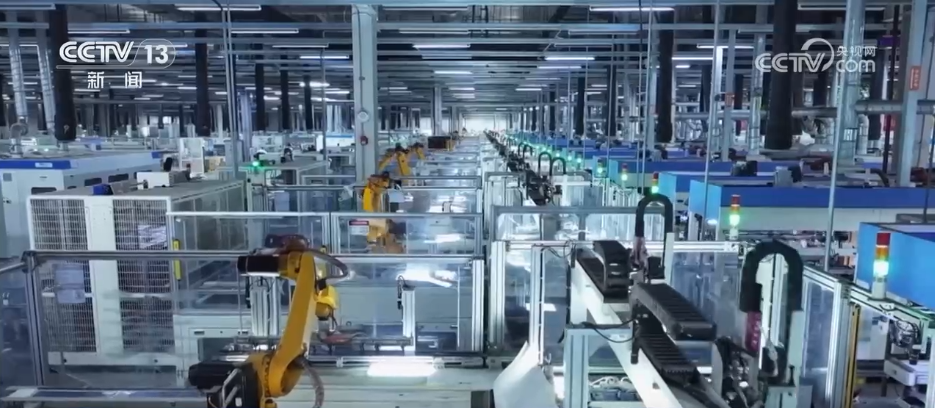
国家统计局:去年“三新”经济增加值占GDP比重为18.01%
Qi Huo Ri Bao Wang· 2025-07-31 03:37
Core Insights - The "Three New" economy in China achieved a value-added of 242,908 billion yuan in 2024, reflecting a growth of 6.7% compared to the previous year, which is 2.5 percentage points higher than the GDP growth rate [1] - The "Three New" economy accounted for 18.01% of GDP, an increase of 0.43 percentage points from the previous year [1] Group 1: New Industries - New industries are defined as economic activities formed by applying new technological achievements and emerging technologies at a certain scale [1] - These include industries directly spawned by the industrialization of new technology applications, traditional industries adopting modern information technology, and new industries arising from the differentiation, upgrading, and integration of industries due to technological advancements [1] Group 2: New Business Formats - New business formats emerge in response to diversified, varied, and personalized product or service demands, relying on technological innovation and application [1] - This includes business activities conducted with the support of the internet, innovations in business processes, service models, or product forms, and the provision of more flexible and personalized services [1] Group 3: New Business Models - New business models involve the integration and reorganization of various internal and external factors of a business to achieve user value and sustainable profitability [2] - This is characterized by the fusion of the internet with industrial innovation, the incorporation of hardware into services, and the provision of one-stop services for consumption, entertainment, leisure, and other services [2] Group 4: Measurement of Value-Added - The value-added of the "Three New" economy measures the increase in value created by all resident units engaged in "Three New" economic production activities within a specific period [2]
去年“三新”经济增加值占GDP比重为18.01%
Zheng Quan Ri Bao Wang· 2025-07-31 03:03
Group 1 - The core viewpoint of the article highlights that the "Three New" economy in China achieved a value-added of 242,908 billion yuan in 2024, reflecting a growth of 6.7% compared to the previous year, which is 2.5 percentage points higher than the GDP growth rate [1][2] - The "Three New" economy accounts for 18.01% of the GDP, an increase of 0.43 percentage points from the previous year, indicating its growing significance in the overall economic landscape [1] - The "Three New" economy encompasses new industries, new business formats, and new business models, focusing on innovative economic activities driven by technology and market demands [1][2] Group 2 - New industries are defined as economic activities that utilize new technological achievements and emerging technologies, including industries directly spawned by new technology applications and traditional industries adopting modern information technology [1] - New business formats arise from the diversification and personalization of product or service demands, leveraging technological innovation to create new activities and chains within existing industries [1] - New business models involve the integration and reorganization of various internal and external factors to achieve user value and sustainable profitability, characterized by the fusion of the internet with industrial innovation and the provision of one-stop services [2]
2024年我国“三新”经济增加值占GDP比重超18%
Yang Shi Xin Wen Ke Hu Duan· 2025-07-31 01:51
Group 1 - The core viewpoint of the article highlights that the "Three New" economy in China achieved a value-added of 242,908 billion yuan in 2024, reflecting a growth rate of 6.7%, which is 2.5 percentage points higher than the GDP growth rate during the same period [1] - The "Three New" economy accounted for 18.01% of the GDP, an increase of 0.43 percentage points compared to the previous year [1] - The breakdown of the "Three New" economy's value-added shows that the primary industry contributed 9,485 billion yuan with a growth rate of 6.7%, the secondary industry contributed 100,459 billion yuan with a growth rate of 5.5%, and the tertiary industry contributed 132,964 billion yuan with a growth rate of 7.7% [3] Group 2 - The "Three New" economy is defined as a collection of economic activities centered around new industries, new business formats, and new business models [4] - New industries are characterized by the application of new technological achievements and emerging technologies, leading to the creation of new economic activities [4] - New business formats arise from the diversification and personalization of product or service demands, leveraging technological innovation to create new links, chains, and activity forms within existing industries [4] - New business models involve the integration and reorganization of various internal and external factors of a business to achieve user value and sustainable profitability, often combining internet technology with industry innovation [4]
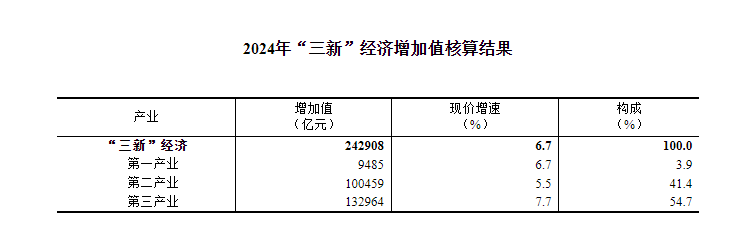
2024年我国“三新”经济增加值占国内生产总值的比重为18.01%
Guo Jia Tong Ji Ju· 2025-07-31 01:32
Core Insights - The "Three New" economy in China achieved a value-added of 242,908 billion yuan in 2024, reflecting a growth rate of 6.7% compared to the previous year, which is 2.5 percentage points higher than the GDP growth rate during the same period [1][3] - The "Three New" economy accounted for 18.01% of the GDP, an increase of 0.43 percentage points from the previous year [1] Group 1: Economic Performance - The value-added of the "Three New" economy is 242,908 billion yuan, with a current price growth rate of 6.7% [3] - The first industry contributed 9,485 billion yuan with a growth rate of 6.7%, representing 3.9% of the total [3] - The second industry contributed 100,459 billion yuan with a growth rate of 5.5%, accounting for 41.4% of the total [3] - The third industry contributed 132,964 billion yuan with a growth rate of 7.7%, making up 54.7% of the total [3] Group 2: Definition and Scope - The "Three New" economy encompasses new industries, new business formats, and new business models, focusing on economic activities driven by technological innovation and modern information technology [4] - New industries are characterized by the application of new technologies and the transformation of traditional industries through modern information technology [4] - New business formats arise from diverse consumer demands and technological innovation, leading to new operational forms and service models [4] - New business models integrate various elements to create efficient and competitive operational frameworks [4] Group 3: Accounting Methodology - The value-added of the "Three New" economy is calculated based on national economic census data, statistical data, and national economic accounting data, employing various methods including value-added rate and related indicator estimation [6] - The classification of the "Three New" economy's value-added follows the guidelines established in the "Statistical Classification of New Industries, New Formats, and New Business Models (2018)" [5]
17个新职业、42个新工种正式发布 新赛道涌现新职业勃发(大数据观察)
Ren Min Ri Bao· 2025-07-22 21:48
Core Points - The Ministry of Human Resources and Social Security officially released the seventh batch of new occupations, including 17 new professions such as elderly service providers and cross-border e-commerce operation managers, along with 42 new job types and adjustments to 9 existing occupations [1][2] - Since 2019, a total of 110 new occupations have been published, reflecting the emergence of new employment opportunities driven by economic and social development, technological advancements, and industrial restructuring [2][4] Group 1: Characteristics of New Occupations - The new occupations are characterized by three "new" aspects: new technology-driven, new business models catalyzing job creation, and new consumer demands fostering new job types [4] - New technology, such as artificial intelligence and big data, has led to the emergence of digital professions like generative AI system testers and digital twin application technicians [4] - The development of new business models has reshaped the job market, creating roles like drone swarm flight planners, which attract many young professionals [4] - Increasing consumer demands for quality of life and health management have given rise to new professions in modern service sectors, such as indoor environment managers and sleep health managers [4] Group 2: Process of Establishing New Occupations - The establishment of new occupations involves a multi-step process, including public solicitation of new occupation suggestions, expert evaluations, and final approval [2][3] - The Ministry receives around 400 new occupation proposals annually, more than double the number from two years ago, indicating a growing interest in new job types [2] Group 3: Examples of New Occupations - Elderly service providers are transitioning from basic care to professional services, gaining more social recognition and enhancing their sense of job value [6][7] - Cross-border e-commerce operation managers are crucial for analyzing market trends and optimizing product offerings, reflecting the increasing demand for specialized roles in international trade [8][9] - Drone swarm flight planners are responsible for monitoring and managing multiple drones, ensuring safe and efficient operations in various applications, including emergency medical deliveries [10][11]
17个新职业,正式发布!
券商中国· 2025-07-22 07:51
Core Viewpoint - The release of the seventh batch of new occupations and new job types reflects the rapid growth in demand for talent in various sectors, driven by emerging technologies, new consumer needs, and evolving business models [6][7]. Group 1: New Occupations - The seventh batch includes 17 new occupations such as inspection and testing management engineering technicians, elderly service specialists, cross-border e-commerce operation managers, and drone swarm flight planners [2]. - Other notable new occupations include home service managers, power reliability administrators, and carbon fiber product molding workers [2]. Group 2: New Job Types - A total of 42 new job types have been introduced, including specialized rescue roles under the firefighter profession, such as special rescue personnel and forest firefighting equipment maintenance personnel [3]. - Additional job types include emergency rescue roles for building collapse and hazardous chemical incidents [3][4]. - The logistics sector sees the introduction of the smart warehouse operation and maintenance personnel [5]. Group 3: Characteristics of New Occupations - The new occupations and job types are characterized by three "new" aspects: the rapid growth of job demand and talent supply, significant talent gaps in certain fields, and the need for standardized training and evaluation [6]. - The emergence of digital new occupations is driven by the rapid development and application of technologies like artificial intelligence and big data [7]. - New consumer demands for quality of life, health management, and personalized services are also contributing to the creation of new professions [7]. - The development of new business models is reshaping the job market, leading to the emergence of occupations with high technical content and contemporary relevance [7].

第七批新职业正式发布 包括17个新职业、42个新工种
news flash· 2025-07-22 06:00
第七批新职业正式发布 包括17个新职业、42个新工种 金十数据7月22日讯,从人力资源社会保障部的发布会上了解到,今天第七批新职业正式发布,包括17 个新职业、42个新工种。这次发布的新职业和新工种,主要特点体现为三个"新":新技术驱动。人工智 能、大数据等新兴技术的快速发展和深度应用,催生了大量数字新职业、新工种。新消费孕育。人们对 生活品质、健康管理、精神文化、个性化服务需求日益增长,新消费催生新的职业。新业态催化。新业 态的发展正在深刻重塑就业市场,催生出一批兼具技术含量与时代特色的新职业、新工种。 (央视新 闻) ...