
普惠保险

Search documents
保险业织密普惠保险保障网
Jin Rong Shi Bao· 2025-08-08 08:01
Core Insights - The development of inclusive insurance is significantly improving the lives of various demographics, including farmers, urban workers, the elderly, and disabled groups, with notable participation rates and product enhancements [1][4][5] Policy Support - The inclusive insurance sector is receiving strong policy backing, with the government emphasizing the need for comprehensive insurance coverage for vulnerable groups such as the disabled, veterans, and economically disadvantaged students [2][3] - Recent policies aim to expand coverage, improve product quality, and enhance efficiency, ensuring that insurance services are accessible and affordable for a broader population [2] Product Innovation - The "惠民保" (Huiminbao) products are evolving with lower entry barriers, richer coverage, and higher insurance amounts, transitioning from growth to quality enhancement [4][5] - New iterations of "沪惠保" (Shanghai Huibao) and "北京普惠健康保" (Beijing Inclusive Health Insurance) have expanded their drug coverage and reduced deductibles, making healthcare more accessible [5][6] Market Expansion - The inclusive insurance ecosystem is expanding beyond traditional health coverage to include diverse products like urban customized home insurance, which addresses the needs of new citizens and gig economy workers [6][7] - Innovative products such as "沪儿保" (Shanghai Child Insurance) and "沪骑保" (Shanghai E-bike Insurance) are being introduced, reflecting a comprehensive approach to meet various insurance needs across different demographics [7]
让普惠保险之“普”不缩水,“惠”可持续
Jin Rong Shi Bao· 2025-08-08 08:00
Core Viewpoint - The recent notification from the Financial Regulatory Bureau aims to establish rules for the operation of urban commercial health insurance, ensuring its long-term and stable development [1] Group 1: Current Status of Urban Commercial Health Insurance - Urban commercial health insurance has rapidly gained popularity across the country due to its low threshold, low premium, and high coverage, becoming an important part of the multi-tiered medical security system [1] - Over 200 products have been launched across 30 provinces, with an average of 150 million insured participants [1] - By 2024, more than 90% of urban commercial health insurance products will cover specific high-cost drug claims, affecting 160 innovative drug varieties and covering 89 types of indications [1] Group 2: Challenges Faced - Issues include imprecise product pricing due to a lack of reliable historical data on disease incidence, claim rates, and cost rates, which affects the sustainability of insurance companies and consumer trust [2] - Market competition is chaotic, with some companies engaging in unfair low-price competition and misleading sales practices, disrupting the market environment [2] Group 3: Balancing Coverage and Affordability - Achieving broad coverage ("普") and effective benefits ("惠") requires a careful balance; excessive focus on coverage may lead to reduced benefits, while an emphasis on affordability may compromise product sustainability [3] - The notification mandates insurance companies to define insurance responsibilities and exclusions based on customer needs and to set premium rates using sufficient data science, adhering to the principle of risk pricing [3] Group 4: Market Order and Competition - The notification emphasizes maintaining market order, requiring insurance companies to adhere to fair competition principles and avoid price wars and monopolistic practices [3] - This shift encourages companies to enhance product and service diversity, moving from price competition to offering higher quality and personalized protection plans [3] Group 5: Sustainable Development of Inclusive Insurance - Sustainable development of inclusive insurance cannot rely solely on insurance companies reducing profits; it requires a comprehensive assessment and evaluation mechanism to stimulate market vitality [4] - Technological empowerment, such as big data and AI, is crucial for accurately analyzing risk profiles and needs, improving underwriting efficiency, and simplifying the application process [4] - Collaborative development with health management and elderly care sectors can transform inclusive insurance from mere risk compensation to a comprehensive "prevention-coverage-service" model [4] Group 6: Conclusion - The regulated development of urban commercial health insurance is a key exploration for the maturity of inclusive insurance, requiring solid institutional design, technological innovation, and collaborative efforts to achieve a virtuous cycle of coverage and benefits [4]
中国人寿以普惠金融之笔绘就民生保障新图景
Yang Guang Wang· 2025-08-08 07:25
Core Viewpoint - China Life Insurance Co., Ltd. emphasizes the importance of inclusive insurance as a key component of financial services, aiming to support the modernization of China and enhance the quality of life for its citizens [1][2][3] Group 1: Development of Inclusive Insurance - China Life has been a pioneer in inclusive insurance since the 1980s, introducing simplified life insurance products and expanding its offerings to include various health and pension plans [3][4] - The company has provided coverage for 1.4 billion elderly individuals and 27 million new citizens in 2024, demonstrating its commitment to serving key demographics [4] - China Life has participated in over 200 major illness insurance projects and 80 long-term care insurance projects, showcasing its extensive involvement in the insurance sector [4] Group 2: Comprehensive Service Network - The company has established a multi-channel sales and service network, ensuring that inclusive insurance services are accessible to a wide range of customers [5][6] - With 18,000 branches nationwide, China Life has created a five-tier service system that allows residents in remote areas to easily access insurance services [5] Group 3: Technological Empowerment - China Life leverages technology to enhance operational efficiency and customer service, achieving a 96.7% online claims usage rate and automating over 70% of claims processing [7][8] - The company has implemented advanced algorithms to streamline claims processing, significantly improving operational efficiency and customer experience [8] Group 4: Quality of Service - In 2024, China Life processed nearly 25 million claims with a total payout of 60.39 billion yuan, maintaining industry-leading claims processing times [9] - The company has developed a senior-friendly service system, providing tailored services to over 27 million elderly individuals [9] Group 5: Sustainable Development Strategy - China Life focuses on a sustainable development strategy for inclusive insurance, emphasizing effective protection and affordability [10][11] - The company aims to enhance its service offerings by integrating health management services and improving customer retention [11] Group 6: Commitment to High-Quality Development - China Life is committed to advancing inclusive finance through four key principles: prioritizing people, fostering innovation, adopting a systematic approach, and maintaining a long-term perspective [12] - The company aims to enhance its risk management capabilities and consumer protection measures to ensure that inclusive insurance is both accessible and beneficial [12][13]

首信保险代理“众享保·百万医疗”,0免赔也能免健告
Zhong Guo Jing Ji Wang· 2025-08-08 07:05
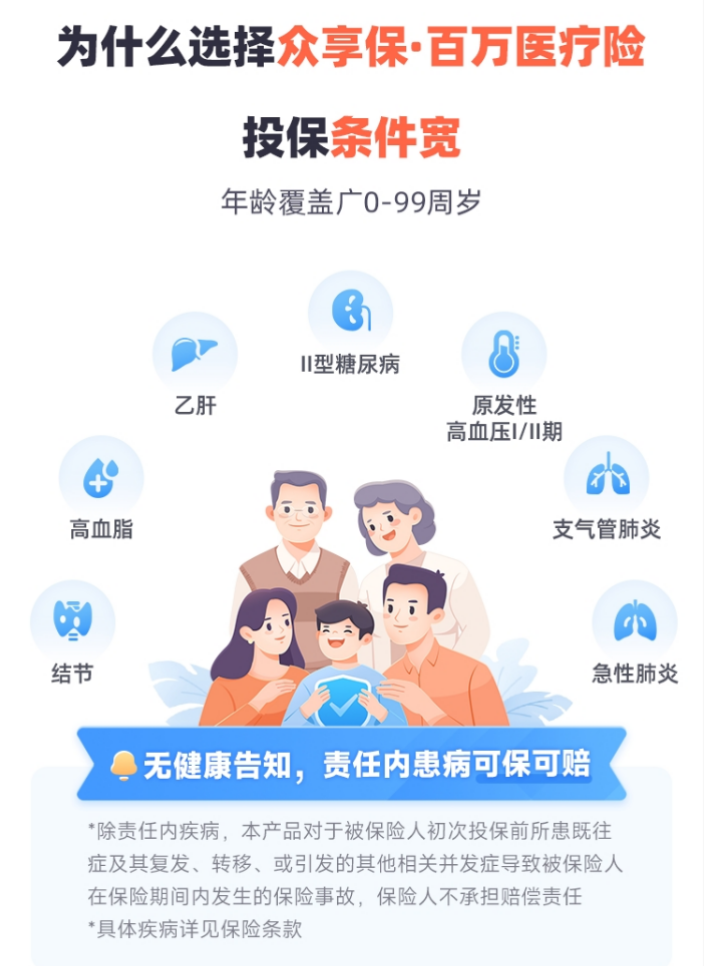
近日,首信保险代理推出免健康告知的百万医疗险——"众享保·百万医疗",结节、三高、乙肝等 既往症人群也能顺利投保,产品责任内包含500万元住院医疗保障,并支持肿瘤特药、先进疗法质子重 离子医疗报销。此外,该产品可选择"0免赔"方案,住院医疗费用经社保报销后,1万元以内按60%赔 付,超1万元部分按90%赔付,大幅降低用户自费压力,开创百万医疗险普惠新篇章。 在保障范围上,该产品覆盖从日常就医到大病治疗的全场景需求。除上文提到的住院医疗费用1元 起赔外,针对大病癌症治疗,该产品提供 85 种特药保障(含CAR-T疗法)和质子重离子医疗费用报 销,赔付比例均为100%,让患者无需因高昂治疗费用放弃希望,有效避免 "因病返贫"。此外,产品还 贴心纳入住院津贴和救护车费用保障,让住院治疗更无后顾之忧。 传统百万医疗险通常要求投保人履行健康告知义务且核保严格,导致患有既往症的人群无法投保。 据中国保险行业协会数据,2024年非标体人群医疗险渗透率不足5%。首信保险代理"众享保·百万医 疗"精准聚焦非标体群体核心需求,以免健康告知为核心亮点,并配合"0免赔"设计,整合住院医疗、特 药保障、先进疗法、住院津贴、救护车费用五 ...

从赤脚医生到白血病战士:元保托起山东退休村医的新生
Qi Lu Wan Bao· 2025-07-29 01:58
Core Insights - The article highlights the critical role of rural doctors and health workers in China, with over 660,000 practitioners serving approximately 490 million rural residents [2] - It discusses the challenges faced by these healthcare providers, particularly in accessing medical care themselves, as illustrated by the story of a retired village doctor diagnosed with acute leukemia [3][5] - The narrative emphasizes the importance of health insurance, showcasing how a combination of new rural cooperative medical care and commercial insurance significantly alleviated the financial burden of medical treatment [5][6] Group 1: Rural Healthcare Workforce - The number of rural doctors and health workers in China exceeds 660,000, distributed across 34,000 township health centers and 587,000 village clinics [2] - These healthcare providers are responsible for delivering basic public health and medical services to a vast rural population [2] Group 2: Personal Case Study - A retired village doctor, after a long career of serving his community, faced a personal health crisis with a diagnosis of acute leukemia [5] - The financial implications of his treatment amounted to 137,000 yuan, with insurance covering a significant portion of the costs, leaving the family with less than 5,000 yuan out-of-pocket [5] Group 3: Insurance Impact - The insurance company, Yuanbao, has responded to national policies promoting inclusive insurance, with nearly 70% of its claimants coming from third-tier cities and below [7] - The average personal expense ratio for medical claims is only 4.8%, and claims under 10,000 yuan are processed quickly, averaging 3.6 days, with some as fast as 3.7 minutes [7]
赔付件数超1214万件!中国人寿2025年上半年寿险理赔服务报告重磅发布
Cai Jing Wang· 2025-07-14 02:47
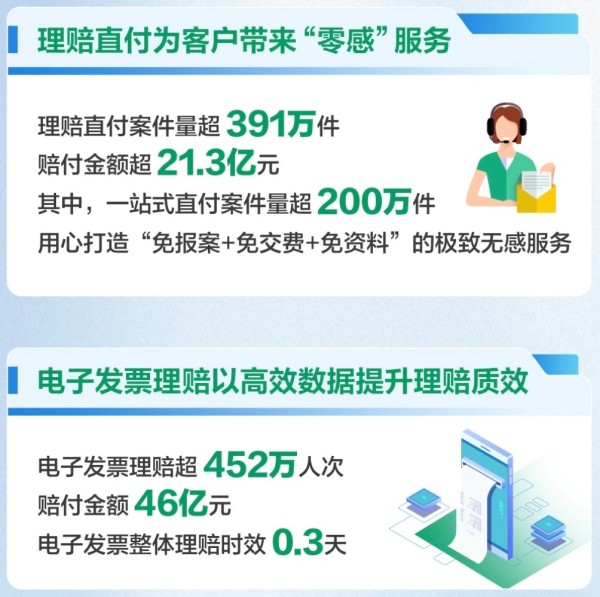
Core Insights - China Life Insurance Company released its claims service report for the first half of 2025, highlighting over 12.14 million claims and a payout exceeding 30.2 billion yuan, with a claim approval rate of 99.6% [1] Group 1: Claims Service Performance - In the first half of 2025, China Life served nearly 2.24 million rural residents with payouts exceeding 7.9 billion yuan, and assisted over 53,000 disabled clients with payouts over 8.8 million yuan [2] - The company processed over 3.91 million direct payment claims, with payouts exceeding 2.13 billion yuan, emphasizing a "zero-sense" service experience [3][6] - The introduction of electronic invoices in claims processing resulted in over 4.52 million claims with payouts of 4.6 billion yuan, achieving an average claim processing time of only 0.3 days [6] Group 2: Innovative Services - China Life launched a rapid claims service for critical illnesses, covering high-incidence diseases like malignant tumors, with nearly 114,000 claims processed and payouts exceeding 5.17 billion yuan in the first half of 2025 [10] - The company has implemented a pre-payment service for claims, with over 390 million yuan disbursed, receiving positive feedback from clients [8] - The integration of medical insurance and commercial insurance data has improved claims processing efficiency, with over 25% of cases in pilot areas processed without human intervention [3] Group 3: Customer-Centric Approach - The company responded to over 60 emergency incidents in the first half of 2025, establishing emergency response teams to provide timely support to clients affected by disasters [13] - Analysis of claims data indicates a need for improved critical illness insurance coverage, with an average payout of approximately 40,000 yuan per claim, which is insufficient compared to high treatment costs [14] - The report highlights the importance of educating families about accident prevention, particularly for minors, as data shows high incidences of animal injuries and drowning during summer [14]
发挥好普惠保险稳定器功能
Jing Ji Ri Bao· 2025-07-13 22:01
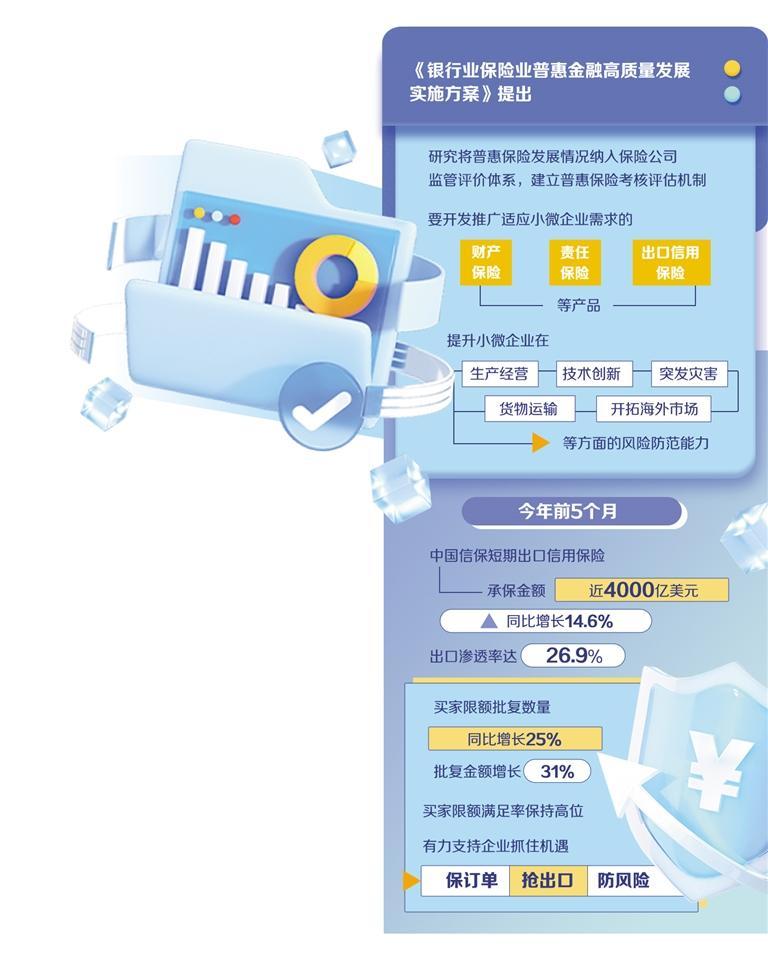
Group 1: Core Insights - The implementation plan for high-quality development of inclusive finance in the banking and insurance sectors aims to strengthen the inclusive insurance system, enhance product offerings, and improve service quality over the next five years [2][10] - Recent policies have led to the development of affordable and accessible insurance products tailored for specific groups, addressing the needs of chronic disease patients and new urban residents [3][4] Group 2: Product Development and Innovation - ZhongAn Insurance has improved its medical insurance product to provide long-term medication coverage for chronic disease patients, focusing on their specific needs [3] - Taiping Life launched a targeted accident insurance product for new urban residents, covering high-risk occupations and enhancing the insurance safety net for this demographic [4] Group 3: Support for Small and Micro Enterprises - The implementation plan emphasizes the development of insurance products that cater to the needs of small and micro enterprises, enhancing their risk management capabilities [5] - China Export Credit Insurance Corporation has established a unified insurance platform to support small foreign trade enterprises, facilitating access to financial resources and professional support [6][7] Group 4: Sustainable Development of Inclusive Insurance - The sustainable development of inclusive insurance requires a balance between affordability and quality, with a focus on effective risk measurement and service coverage [9] - Companies are encouraged to optimize pricing models, enhance service offerings, and leverage digital technologies to improve operational efficiency and reduce costs [9] Group 5: Regulatory and Evaluation Mechanisms - The plan includes integrating the development of inclusive insurance into the regulatory evaluation system for insurance companies, establishing assessment mechanisms for inclusive insurance products and services [10] - The importance of setting scientific standards for evaluating inclusive insurance products is highlighted, emphasizing the need for transparency and consumer protection [10]

2025年度“深圳惠民保”参保人数突破615万 3年超1800万人次参保
Shen Zhen Shang Bao· 2025-07-13 00:29
Core Insights - The 2025 Shenzhen Huimin Insurance program has seen a record participation of over 6.15 million individuals, with coverage extending from July 1, 2025, to June 30, 2026, providing a full year of protection [1] - The program maintains its inclusive nature by allowing participation without restrictions on age, occupation, or health status, and now includes Shenzhen residents with cross-regional medical insurance [1] - The insurance premium has remained stable at 88 yuan per person per year for three consecutive years, while significant upgrades to coverage have been introduced for the 2025 plan [2] Participation and Coverage - The program has attracted participation from nearly 26,000 enterprises, covering over 1.05 million employees, reflecting corporate commitment to employee welfare [2] - The maximum age of participants has reached 113 years, while the youngest is just five days old, showcasing the program's broad demographic reach [1] Benefit Enhancements - The 2025 plan features a substantial reduction in deductibles, with some treatment deductibles lowered by 4,000 yuan compared to the previous year, and a maximum reduction of 28.6% for continuous participants [2] - New coverage includes self-paid hospitalization treatments, with specific advanced medical procedures now eligible for claims, and the reimbursement limit for rare diseases has been increased to 600,000 yuan per year [2] Claims and Payouts - The program has already facilitated claims for participants, with the first payout occurring the day after the coverage became effective, indicating a lower threshold for claims [3] - A notable case involved a participant with significant medical expenses, where the insurance covered 31,066.26 yuan after the initial reimbursement from Shenzhen medical insurance [3][4]
东吴证券:推进普惠保险体系建设 预计其长期发展空间广阔
智通财经网· 2025-07-10 03:03
Group 1: Inclusive Insurance Development - The core viewpoint is that inclusive insurance is a crucial part of a multi-tiered social security system and has seen rapid growth due to policy support, with significant long-term development potential [1] - Currently, the inclusive insurance market is underdeveloped, with a substantial risk protection gap; it is estimated that by 2030, premium income could exceed 900 billion yuan [1] - The report suggests that inclusive insurance should primarily adopt a government-enterprise cooperation model to enhance business sustainability through expansion, risk diversification, and technological empowerment [1] Group 2: Agricultural Insurance - Agricultural insurance is recognized as an essential tool for managing agricultural risks, with the scale of agricultural insurance growing from 0.9 trillion yuan in 2012 to 5.22 trillion yuan in 2024 [2] - Significant achievements have been made in implementing the national inclusive finance strategy, with major grain crop insurance coverage exceeding 70% across the country [2] - The "insurance + futures" model has emerged as an important financial innovation, covering 18 agricultural products and benefiting nearly 7 million households [2] Group 3: Health Insurance - Huiminbao - Huiminbao is a new type of health insurance model characterized by low thresholds, low premiums, and high coverage, making it a significant part of the multi-tiered medical security system [3] - As of 2023, there are 215 Huiminbao products with 170 million insured individuals, and the premium income reached 17.8 billion yuan in 2022, totaling 32 billion yuan [3] - Huiminbao effectively expands the coverage of traditional commercial health insurance, particularly for the elderly, alleviating the medical burden on society [3] Group 4: Critical Illness and Long-term Care Insurance - Critical illness insurance provides coverage for high medical expenses for severe illnesses, with 21 commercial insurance companies managing this business, covering 1.2 billion people by June 2024 [4] - Long-term care insurance has seen a 69.2% increase in participants since 2020, reaching 183 million in 2023, with fund surpluses exceeding 10 billion yuan in both 2022 and 2023 [4] - The number of designated service institutions and personnel for long-term care insurance has grown annually by 18.6% and 16.6% respectively from 2020 to 2023 [4]

东吴证券晨会纪要-20250710
Soochow Securities· 2025-07-09 23:30
Macro Strategy - The report indicates that the US non-farm payrolls for June exceeded expectations, leading to a delay in interest rate cut expectations to September. The 10-year US Treasury yield rose by 6.89 basis points to 4.346% during the week [1][15][17] - The ISM services PMI returned above the expansion line, reflecting strong economic data, while the unemployment rate decreased, contributing to a positive market sentiment [1][15][17] - The signing of Trump's "One Big Beautiful Bill" (OBBB) increased the debt ceiling by $5 trillion to $41 trillion, which may lead to a "buy the rumor, sell the news" trading pattern [1][15][17] Fixed Income - In the week of June 30 to July 4, 12 green bonds were issued in the interbank and exchange markets, totaling approximately 34.961 billion yuan, an increase of 3.531 billion yuan from the previous week [4] - The secondary market saw a total trading volume of green bonds amounting to 56.2 billion yuan, a decrease of 17.3 billion yuan from the previous week [4] Industry Analysis Robotics and Automation - The report highlights that the human-like robot sector is entering a year of mass production, with supply chain adjustments and component innovations being crucial. Tesla's Musk has set a production target of 5,000 to 10,000 units for the year [7][8] - The report emphasizes the importance of component innovations such as dexterous hands and lightweight materials in enhancing robot capabilities [7][8] Insurance Industry - The insurance sector is expected to see improvements on both the liability and asset sides, with low valuations and low holdings providing a balanced risk-reward profile. The estimated valuation for the insurance sector is between 0.61-0.96 times PEV and 0.98-2.21 times PB, indicating historical lows [9] REITs - The report discusses the potential of REITs in a low-interest-rate environment, highlighting the importance of policy support and structural optimization to enhance investment value. The diversification of asset types is expected to accelerate, with new assets like data centers and wind power emerging [10] Engineering Machinery - The domestic engineering machinery market is at the beginning of an upward cycle, with a projected demand growth of 0-3% for the year. The report notes that the export market remains strong, contributing to high industry sentiment [11] Unmanned Forklift Industry - The report suggests that the unmanned forklift sector is poised for rapid growth driven by AI technology and smart logistics. It recommends investing in leading companies in the smart forklift space [12] Consumer Services - The analysis of consumer spending in China indicates that the overall consumption rate is low, with both service and goods consumption needing improvement. The service consumption rate in China was 21.1% in 2019, compared to an average of 28.4% across 43 countries [20][21]