
税制改革

Search documents
官方披露:查处网络主播偷逃税360余起,查补30多亿元
凤凰网财经· 2025-07-28 15:51
Core Viewpoint - The article discusses the tax reform and development during the "14th Five-Year Plan" period in China, highlighting significant increases in tax revenue and the impact of tax policies on improving people's livelihoods [2][3]. Tax Revenue and Economic Growth - During the "14th Five-Year Plan" period, the total tax revenue collected by tax authorities is expected to exceed 155 trillion yuan, accounting for approximately 80% of total fiscal revenue [2] - Tax revenue (excluding export tax rebates) is projected to surpass 85 trillion yuan, which is an increase of 1.3 trillion yuan compared to the total tax revenue during the "13th Five-Year Plan" period [2] Personal Income Tax Insights - The number of individuals benefiting from special additional deductions in personal income tax has reached 119 million, marking a 55% increase compared to the initial tax settlement in 2020 [2] - The total amount of tax reductions has grown by 156.5%, increasing from 116 billion yuan in 2020 to nearly 300 billion yuan this year [2] - Among those benefiting from personal income tax deductions, over 80% are middle-aged individuals aged 30-55, who are often responsible for both elderly and child care [3] Tax Compliance and Enforcement - The tax authorities have intensified efforts to combat tax evasion, particularly targeting high-income individuals, including over 360 cases of tax evasion involving internet celebrities since 2021, recovering over 3 billion yuan in tax [5] - A total of 21,800 cases of fraudulent or improper tax benefit claims have been investigated, recovering 26.9 billion yuan in tax during the "14th Five-Year Plan" period [5]


官方披露:查处网络主播偷逃税360余起,查补30多亿元
中国基金报· 2025-07-28 05:57
Core Viewpoint - The article discusses the tax reform and development during the "14th Five-Year Plan" period in China, highlighting the significant increase in tax revenue and the impact of tax policies on improving people's livelihoods [2][4]. Tax Revenue and Economic Growth - During the "14th Five-Year Plan" period, the total tax revenue is expected to exceed 155 trillion yuan, accounting for approximately 80% of total fiscal revenue [4] - Tax revenue (excluding export tax rebates) is projected to surpass 85 trillion yuan, an increase of 13 trillion yuan compared to the total tax revenue during the "13th Five-Year Plan" [4] Personal Income Tax Reforms - The number of individuals benefiting from special additional deductions in personal income tax has reached 119 million, a 55% increase compared to early 2020, with the total tax reduction amount growing by 156.5%, from 116 billion yuan in 2020 to nearly 300 billion yuan this year [5] - For the 2021-2024 personal income tax declaration data, the top 10% of earners contribute about 90% of the total personal income tax, while individuals with annual income below 120,000 yuan generally do not pay taxes after the settlement [6] Tax Compliance and Enforcement - The tax authorities have strengthened the enforcement of tax laws, collaborating with multiple departments to combat tax-related crimes, particularly focusing on high-income individuals such as internet celebrities and entertainers [7] - Since 2021, over 360 cases of tax evasion by internet celebrities have been investigated, recovering more than 3 billion yuan in tax [7] - A total of 21,800 cases of fraudulent tax benefits have been identified, recovering 26.9 billion yuan in tax during the "14th Five-Year Plan" period [9]

高质量完成“十四五”规划|“十四五”期间经济增长带动税费征收累计将超155万亿元
Sou Hu Cai Jing· 2025-07-28 04:31
Group 1 - The core viewpoint is that during the "14th Five-Year Plan" period, China's tax revenue is expected to exceed 155 trillion yuan, accounting for about 80% of total fiscal revenue [1] - The tax revenue, excluding export tax rebates, is projected to surpass 85 trillion yuan, while the cumulative revenue from social insurance fees and land transfer fees is expected to exceed 70 trillion yuan [1] - A series of tax reduction and fee reduction policies have been implemented, with an estimated total of 10.5 trillion yuan in new tax cuts and fee reductions, and export tax rebates expected to exceed 9 trillion yuan [1] Group 2 - Tax data serves as a barometer for economic and social development, with manufacturing sales revenue maintaining a 29% share of total sales revenue, and high-tech industry sales revenue growing at an annual rate of 13.9% [2] - The private economy's sales revenue accounted for 71.7% of total sales revenue in the first half of this year, an increase of 2.8 percentage points compared to 2020 [2] - The tax system reform and tax reduction measures have significantly supported the improvement of people's livelihoods, with the number of individuals enjoying special additional deductions in personal income tax rising to 119 million, a 55% increase [2]
国税总局:今年个税汇算1.19亿人享受专项附加扣除,减税总额比2020年初次汇算增长156.5%
Sou Hu Cai Jing· 2025-07-28 03:26
Group 1 - The core viewpoint of the news is that the tax reform and development during the "14th Five-Year Plan" period have achieved positive results, showcasing significant accomplishments in China's high-quality economic and social development [1][3][4] Group 2 - The national financial foundation has further strengthened, with total tax and fee revenue expected to exceed 155 trillion yuan, accounting for about 80% of total fiscal revenue. Tax revenue (excluding export tax rebates) is projected to exceed 85 trillion yuan, an increase of 13 trillion yuan compared to the "13th Five-Year Plan" period [3] - The economic and social vitality has been enhanced, with cumulative tax reductions and fee cuts expected to reach 10.5 trillion yuan, and export tax rebates projected to exceed 9 trillion yuan. The number of tax-related business entities has surpassed 100 million, an increase of 30 million since 2020 [3][4] - The market business environment has been optimized, with the tax authority reducing 50% of tax filing materials and over 25% of paper submissions. Additionally, 97% of tax matters and 99% of tax declarations can be handled online or via mobile [5] Group 3 - The legal governance system has been further improved, with a robust tax governance system being established. Since the beginning of the "14th Five-Year Plan," the tax authority has investigated 62,100 illegal taxpayers, recovering 571 billion yuan in various tax losses [5]
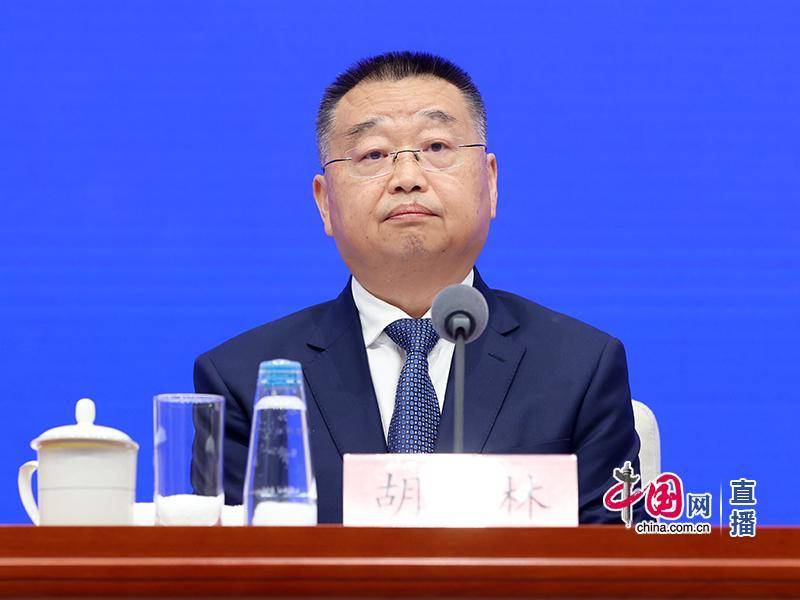
国家税务总局:“十四五”以来国家财力基础进一步壮大,经济社会活力进一步增强
Di Yi Cai Jing· 2025-07-28 02:42
Group 1 - The core viewpoint of the article highlights the significant achievements in tax revenue collection during the "14th Five-Year Plan" period, with total tax revenue expected to exceed 155 trillion yuan, accounting for approximately 80% of total fiscal revenue [1] - The tax revenue (excluding export tax rebates) is projected to surpass 85 trillion yuan, which is an increase of 13 trillion yuan compared to the total tax revenue during the "13th Five-Year Plan" period [1] - The tax department's collection of social insurance fees and land transfer fees is expected to exceed 70 trillion yuan, further solidifying the financial foundation for economic and social development [1] Group 2 - The economic and social vitality has been enhanced, with a cumulative reduction in taxes and fees expected to reach 10.5 trillion yuan, and export tax rebates anticipated to exceed 9 trillion yuan [2] - The number of tax-related business entities has surpassed 100 million, reflecting strong market vitality and resilience, with a net increase of 30 million entities since 2020 [2] - The sales revenue of the private economy accounted for 71.7% of total sales revenue in the first half of this year, an increase of 2.8 percentage points compared to 2020 [2] Group 3 - The business environment has improved, with the tax department implementing measures that have reduced the required tax filing materials by 50% and paper submissions by over 25% [3] - By 2024, the World Bank's assessment indicates that the annual tax payment time for enterprises in China has been reduced by 78.2% compared to the last evaluation in 2019 [3] - The tax environment has seen positive progress in terms of marketization, rule of law, and internationalization [3] Group 4 - The legal governance system for tax collection has been further improved, with the formal issuance of the Value-Added Tax Law and the comprehensive revision of the existing tax collection law after 24 years [4] - New regulations have been introduced to support the digital economy, including the implementation of the revised Invoice Management Measures and the introduction of tax information reporting regulations for internet platform enterprises [4] - The tax department has investigated 62,100 cases of tax violations, recovering 571 billion yuan in tax losses, and has increased public awareness of tax law and the importance of legal fairness [4]
【新华解读】上半年财政运行总体平稳,下半年有何看点?
Xin Hua Cai Jing· 2025-07-25 15:11
Core Insights - The overall fiscal performance in China for the first half of 2025 shows a slight decline in public budget revenue and an increase in expenditure, indicating a stable fiscal environment despite economic pressures [1][2]. Revenue Summary - Total public budget revenue reached 115,566 billion yuan, a year-on-year decrease of 0.3% [2]. - Tax revenue amounted to 92,915 billion yuan, down 1.2% year-on-year, while non-tax revenue increased by 3.7% to 22,651 billion yuan [2]. - Central government revenue was 48,589 billion yuan, a decline of 2.8%, while local government revenue rose by 1.6% to 66,977 billion yuan [2]. - Monthly tax revenue has shown a recovery since April, with growth rates of 1.9% in April, 0.6% in May, and 1% in June [2]. Expenditure Summary - Total public budget expenditure was 141,271 billion yuan, reflecting a year-on-year increase of 3.4% [4]. - Central government expenditure grew by 9% to 19,914 billion yuan, while local government expenditure increased by 2.6% to 121,357 billion yuan [4]. - Key areas of expenditure included social security and employment (up 9.2%), education (up 5.9%), and science and technology (up 9.1%), while spending on urban and rural communities, agriculture, and transportation saw declines [4]. Future Outlook - Analysts expect favorable conditions for fiscal revenue in the second half of the year, driven by policies aimed at economic recovery and infrastructure investment [3]. - The introduction of new policy financial tools is anticipated to accelerate infrastructure recovery, benefiting sectors with significant accounts receivable [3]. - The government has substantial room for borrowing, with manageable debt levels and a large deficit space compared to international standards [3]. Key Areas of Focus - The government issued 26,000 billion yuan in new local government bonds to support major projects in the first half of the year [4]. - The upcoming "15th Five-Year Plan" will focus on tax system reforms, which may include adjustments to consumption tax collection and local government incentives to improve the consumption environment [5].
毕马威:税制改革及虚拟资产监管政策等巩固香港亚洲资管中心地位
Zhi Tong Cai Jing· 2025-07-18 06:14
Group 1 - The core viewpoint of the report is that despite global economic uncertainties and geopolitical tensions, Hong Kong is strengthening its position as an asset management hub in Asia through targeted tax reforms, a robust IPO market, and progressive virtual asset regulation [1][2] - The total assets under management in Hong Kong's asset and wealth management sector are projected to increase by 13% in 2024, reaching HKD 35.1 trillion [1] - Recent optimizations to the Unified Fund Exemption (UFE) regime in Hong Kong have expanded the exemption scope to include private credit and other alternative assets, enhancing the competitiveness of Hong Kong [1][2] Group 2 - Hong Kong is actively working to establish a clear regulatory framework for virtual assets, with significant progress expected by 2025 as the number of local virtual asset trading platforms increases [1] - The report highlights Hong Kong's potential to act as a "super connector" by optimizing cross-border initiatives, thereby deepening ties with mainland Chinese investors [2] - The ongoing development of cross-border mutual recognition is significant, allowing Hong Kong advisory firms to offer a wider range of products in mainland China, positioning Hong Kong asset management firms favorably to serve emerging markets [2]
24小时环球政经要闻全览 | 7月16日
Ge Long Hui· 2025-07-16 02:19
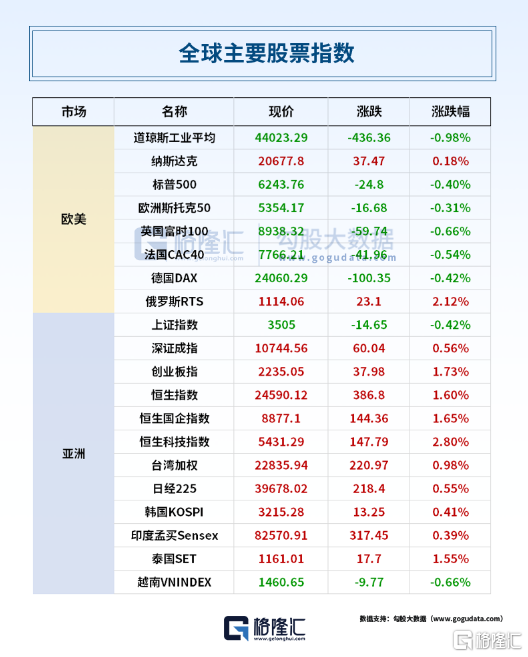
Group 1: Market Performance - Major stock indices showed mixed results, with the Dow Jones Industrial Average down by 436.36 points (-0.98%) at 44023.29, while the Nasdaq increased by 37.47 points (0.18%) to 20677.8 [1] - The S&P 500 decreased by 24.8 points (-0.40%) to 6243.76, while the Hang Seng Index rose by 386.8 points (1.60%) to 24590.12 [1] - The Nikkei 225 increased by 218.4 points (0.55%) to 39678.02, and the KOSPI rose by 13.25 points (0.41%) to 3215.28 [1] Group 2: U.S.-China Trade Relations - U.S. Treasury Secretary stated that the current negotiations between the U.S. and China are in a "good state," with flexibility regarding the upcoming tariff ceasefire deadline [2] - President Trump announced that tariff letters to smaller countries will be sent soon, with rates expected to be "slightly above 10%" [3] Group 3: Trade Investigations - The U.S. Trade Representative initiated an investigation into Brazil's trade practices under Section 301 of the Trade Act of 1974, focusing on unfair restrictions on U.S. exports [4] Group 4: Economic Indicators - U.S. core inflation data showed that the Consumer Price Index (CPI) rose by 0.3% month-over-month and 2.7% year-over-year, with core CPI increasing by 0.2%, below the 0.3% market expectation [5] Group 5: Oil Demand Outlook - OPEC indicated that global economic performance in the second half of the year may exceed expectations, supporting oil demand due to high refinery crude absorption [6] Group 6: Corporate Investments - Apple is expected to announce a $500 million investment in MP Materials, the only rare earth mining operator in the U.S. [7] Group 7: Financial Performance - JPMorgan Chase reported Q2 revenue of $45.7 billion, exceeding market expectations, but down from $51 billion year-over-year, with net income of $15 billion [8] - CEO Jamie Dimon noted that tax reform and potential deregulation are favorable for economic outlook, despite existing risks from tariffs and trade [9] Group 8: Technology Developments - Nvidia's stock rose by 4.04% to $170.7, reaching a market capitalization of $4.17 trillion, following the approval of H20 chip sales to China [10]


摩根大通(JPM.N)CEO戴蒙:税制改革的最终确定和潜在的放松管制对经济前景有利。
news flash· 2025-07-15 10:36
Group 1 - The core viewpoint is that the finalization of tax reform and potential deregulation are beneficial for the economic outlook [1] Group 2 - JPMorgan Chase's CEO Jamie Dimon emphasizes the positive impact of tax reform on economic growth [1] - The potential for deregulation is also highlighted as a factor that could enhance economic prospects [1]
加拿大央行行长麦克勒姆:由于税制改革,我们更关注的是税后通货膨胀。
news flash· 2025-06-18 17:05
Core Viewpoint - The Bank of Canada's Governor, Macklem, emphasizes a shift in focus towards after-tax inflation due to tax reforms [1] Group 1 - The central bank is adjusting its attention to after-tax inflation as a result of recent tax system changes [1] - This shift indicates a broader concern about how tax policies impact overall inflation metrics [1] - The comments suggest that the central bank may alter its monetary policy approach in response to these changes [1]