空铁联运

Search documents
T3航站楼启用在即 广州白云机场“升维”冲击全球航空枢纽
Nan Fang Du Shi Bao· 2025-10-23 09:22
Core Insights - The Guangzhou Baiyun International Airport (referred to as "Baiyun Airport") is set to unveil its T3 terminal, significantly enhancing its capacity and role as a key international aviation hub [2][5][14] - Baiyun Airport's strategic location in South China positions it as a vital gateway to Southeast Asia and Oceania, facilitating rapid connectivity [2][9] - The T3 terminal will increase the airport's annual passenger throughput capacity to over 120 million and cargo capacity to 3.8 million tons, placing it among the world's leading airports [2][5][14] Infrastructure Development - The T3 terminal and associated projects have recently passed construction acceptance, marking a critical step towards operational readiness [5][6] - Baiyun Airport's expansion includes a comprehensive transportation hub that integrates air and rail services, enhancing connectivity within the Guangdong-Hong Kong-Macao Greater Bay Area [6][7][14] - The airport's infrastructure is designed to support high passenger volumes, with projections of daily inbound and outbound traffic reaching approximately 52,000 during peak periods [4][6] Economic Impact - The 138th China Import and Export Fair (Canton Fair) is expected to drive significant international traffic to Baiyun Airport, with a notable increase in passenger numbers from Southeast Asia [3][4] - The airport's strategic initiatives align with China's Belt and Road Initiative, enhancing its role in global trade and commerce [11][12] Competitive Landscape - Baiyun Airport has been recognized as one of the busiest airports in China, competing closely with Beijing and Shanghai airports, each with distinct geographical advantages [8][9][10] - The airport's focus on Southeast Asian markets and its strategic partnerships aim to bolster its international connectivity and competitiveness [11][12] Future Prospects - The T3 terminal is anticipated to facilitate a seamless integration of air and rail transport, significantly improving travel efficiency and expanding the airport's catchment area [7][14] - Baiyun Airport's ongoing development is expected to enhance its capacity to support high-value, time-sensitive logistics, reinforcing its position as a modern trade center [14]


空铁联运有望行李直挂和“一张票”
Jie Fang Ri Bao· 2025-10-20 01:37
Group 1 - The core idea of the news is the exploration of innovative railway ticketing systems and the optimization of air-rail intermodal services, including the design of a unified ticketing system for passengers and the introduction of luggage carriages on high-speed trains [1] - The North Bund International Shipping Forum serves as a platform for industry stakeholders to discuss future developments, featuring participation from experts across various sectors, including rail and aviation [1] - The Hi-Dolphin shipping model is the first vertical large model in the domestic shipping industry, providing essential support for the digital transformation of the shipping sector [2] Group 2 - The "COSCO Shipping Libra" vessel's methanol dual-fuel retrofit project is the world's first large container ship to implement a methanol dual-fuel system, offering a replicable solution for low-carbon transformation in the shipping industry [2] - The Shanghai Port Cross-Border E-Commerce Operation Center has been established, creating a new model for cross-border e-commerce shipping in China, featuring integrated terminal and dock operations for efficient service [2]
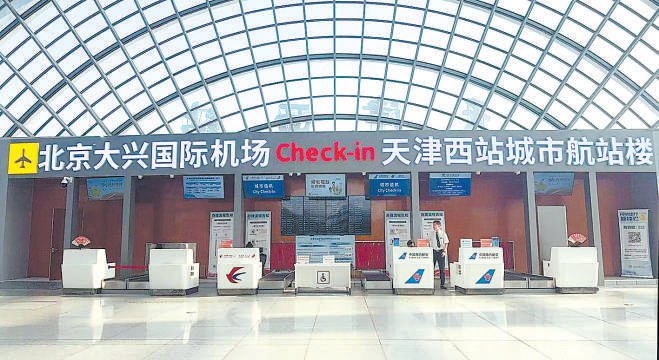
京津冀三座城市航站楼先行一体化
Bei Jing Ri Bao Ke Hu Duan· 2025-10-11 09:46
Core Points - The establishment of city terminals in the Beijing-Tianjin-Hebei region enhances convenience for travelers, allowing them to check in and handle luggage at local stations before heading to the airport [1][13] - The city terminals at Daxing Airport and Capital Airport serve to promote economic integration in the Beijing-Tianjin-Hebei area, with over 2.54 million passengers served since their operation [1][5] Group 1: City Terminal Operations - The Tianjin West Station city terminal began trial operations in June 2023, allowing travelers to complete check-in and luggage handling at the high-speed rail station, significantly improving travel efficiency [2][3] - The city terminal at Tianjin West Station has processed 7,849 passengers and handled 3,303 pieces of luggage in its first three months of operation [2] - The city terminal in Langfang serves as a hub for three airports, providing local residents with access to multiple flight options [5][7] Group 2: Transportation Connectivity - The upcoming Tianjin-Xing City Railway will provide direct high-speed rail service to Daxing Airport, reducing travel time to 40 minutes for Tianjin residents [3] - The Langfang city terminal offers free bus services to Daxing Airport, with a frequency of every 30 minutes, enhancing accessibility for local travelers [7] - The Grass Bridge city terminal in Beijing allows seamless transfers via the subway, with an average travel time of 19 minutes to Daxing Airport [8][9] Group 3: Future Developments - Two additional city terminals are under construction to further enhance the "air-rail" network in the Beijing-Tianjin-Hebei region, improving connectivity [10][12] - The future Xiong'an city terminal will feature advanced facilities and aims to provide a "zero-burden" travel experience for passengers [12][13]
家门口到登机口畅享便捷出行
Bei Jing Wan Bao· 2025-10-10 06:53
Core Points - The establishment of city terminals in the Beijing-Tianjin-Hebei region enhances travel convenience for passengers, allowing them to check in and handle luggage at local stations before heading to the airport [1][6][12] - The integration of high-speed rail and airport services, particularly at Tianjin West Station, has significantly improved travel efficiency and passenger experience [3][5][8] - The city terminals support the economic integration of the Beijing-Tianjin-Hebei region by providing seamless transportation options [1][12] Summary by Sections City Terminals Overview - City terminals in the Beijing-Tianjin-Hebei region, including those at Daxing Airport, provide one-stop services for check-in and luggage handling, benefiting local residents [1][6] - The terminals have served over 2.54 million passengers since their operation, enhancing accessibility and convenience for travelers [1] Tianjin West Station Terminal - The Tianjin West Station city terminal began trial operations in June 2023, allowing passengers to complete check-in and luggage handling in under two minutes [3][4] - In three months, the terminal processed 7,849 passengers and handled 3,303 pieces of luggage, significantly improving travel efficiency [3][5] Langfang City Terminal - The Langfang city terminal is unique as it serves as a hub for Daxing Airport, Capital Airport, and Tianjin Binhai Airport, providing local residents with multiple travel options [6][7] - It has served approximately 697,000 passengers and processed 62,000 pieces of luggage, with free bus services to the airport enhancing affordability and convenience [7] Grass Bridge City Terminal - The Grass Bridge city terminal, operational since September 2019, connects directly to the Daxing Airport via the subway, allowing for efficient transfers [8][9] - It has served 1.4 million passengers and handled 496,000 pieces of luggage, with plans to introduce international luggage check-in services in June 2024 [9] Future Developments - New city terminals are under construction to further enhance the connectivity between Beijing and Xiong'an, with the goal of creating a seamless transportation network [10][11] - The integration of various transport modes at these terminals aims to improve the overall travel experience and support regional economic development [12]
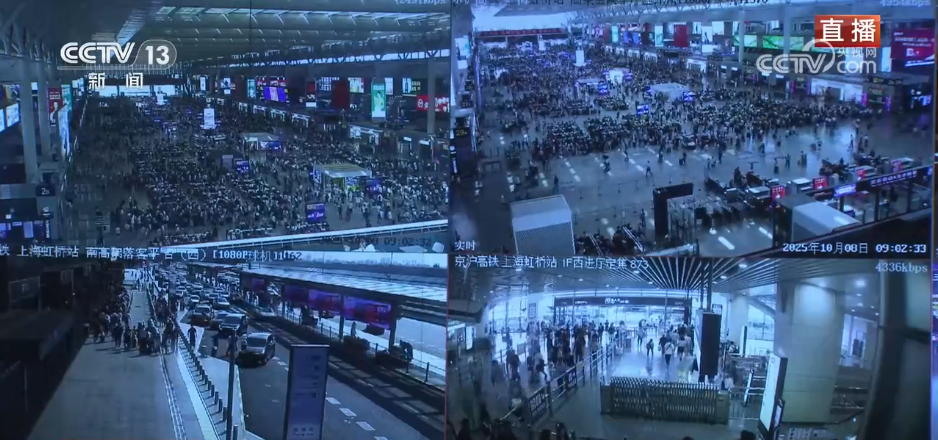
各地迎来返程高峰 多维暖心服务“上线”全力应对大客流考验
Yang Shi Wang· 2025-10-08 03:19
Core Insights - The National Day and Mid-Autumn Festival holiday has seen a significant increase in travel, with over 3.08 billion people expected to travel, marking an 18.3% year-on-year growth [1] - On the last day of the holiday, the national railway is expected to send 21.75 million passengers, with a total of over 160 million passengers transported since the holiday began [3][5] Transportation Sector - The railway sector is responding to the surge in passenger flow by adding 2,189 additional trains on the last day of the holiday, with specific increases in regions like Guangzhou and Shanghai [3][5] - In response to adverse weather conditions, such as low temperatures and rain in northern regions, there is a shift of some travelers from road and air transport to rail [5][19] Passenger Flow Management - Major railway stations, such as Taiyuan South Station, are experiencing peak passenger flow, with a significant increase in the number of travelers compared to the previous year, indicating strong travel demand [9] - The airport sector, particularly Harbin Taiping International Airport, is also facing a peak in passenger flow, with over 400 flights planned and an expected 80,000 passengers on the last day of the holiday [13][15] Weather Impact - Weather forecasts predict low temperatures and rain in several regions, which may affect travel plans and lead to increased rail usage as travelers seek alternatives to road and air travel [5][19] - The railway and airport authorities are implementing measures to ensure safety and efficiency in operations, including dynamic monitoring of equipment and passenger flow [7][15]
沪苏湖高铁、常泰长江大桥等迎来通车后首次国庆“大考”路网协同,畅享新基建“一路生花”
Xin Hua Ri Bao· 2025-10-06 23:30
Core Viewpoint - The recent infrastructure developments in Jiangsu, including the opening of the Suzhou-Huzhou High-Speed Railway and the Changtai Yangtze River Bridge, have significantly improved transportation efficiency and enhanced the travel experience for citizens during the National Day holiday [1][5]. Group 1: Infrastructure Impact - The Suzhou South Station saw a total of 114,000 passengers from September 29 to October 6, while Shengze Station recorded 43,000 passengers, indicating strong demand for the new high-speed rail services [2]. - The Changtai Yangtze River Bridge managed an average daily traffic of 90,374 vehicles, with peak traffic on the first day of the holiday reaching 100,000 vehicles [2][3]. - The Ningyang Yangtze River Bridge experienced an 850% increase in traffic on October 1, with peak vehicle counts reaching approximately 19,000 [2]. Group 2: Operational Efficiency - Jiangsu's transportation department implemented ten measures to ensure smooth traffic flow, including a smart operation management platform that integrates various monitoring systems [3]. - The province has become the first in China to offer free towing and recovery services on highways, enhancing the overall travel experience [3]. - The Changtai Yangtze River Bridge has identified over 200 abnormal events with an accuracy rate exceeding 95%, demonstrating effective incident management [3]. Group 3: Service Enhancements - The Ningyang Yangtze River Bridge has upgraded its toll stations to mini service areas, providing amenities such as hot meals and electric vehicle charging stations [4]. - Cultural performances at the Shengze Station during the holiday period enriched the travel experience, showcasing local cultural heritage [4]. - The overall improvements in transportation infrastructure not only reduced travel times but also added a sense of warmth and community to the travel experience [4][6].
神州租车进驻广州南站 国庆开业构筑大湾区“3小时自驾圈”
Zheng Quan Ri Bao Wang· 2025-09-30 07:49
Core Insights - Shenzhou Car Rental has opened a new outlet at Guangzhou South Station during the National Day holiday, marking a significant step in its expansion within the Greater Bay Area [1] - The company aims to enhance its high-speed rail rental service network, creating an integrated travel service model that combines air and rail transport [1][2] - The introduction of the "随心还" cross-city rental service is expected to boost demand for cross-city orders, tapping into the potential of the Greater Bay Area's three-hour self-driving circle [1][2] Group 1 - Guangzhou South Station, as the largest high-speed rail hub in South China, will serve as a key support for Shenzhou Car Rental's "air-rail intermodal" self-driving model [2] - The company has launched a large-scale new vehicle deployment plan, introducing tens of thousands of new cars across the country, including nearly 30 models ranging from economy cars to high-end vehicles [2] - Shenzhou Car Rental is focusing on family travel by offering spacious 7-seater models and catering to younger customers with smart electric vehicles [2][3] Group 2 - A strategic partnership with BYD has been established, focusing on vehicle procurement plans for 2025 and enhancing the selection of new energy vehicles in the rental fleet [2][3] - The company is expanding beyond traditional car rental services, aiming to become a comprehensive mobility service provider [3] - The collaboration with BYD will also include cooperation in areas such as vehicle networking technology and used car business, indicating a shift towards a more integrated service model [3]
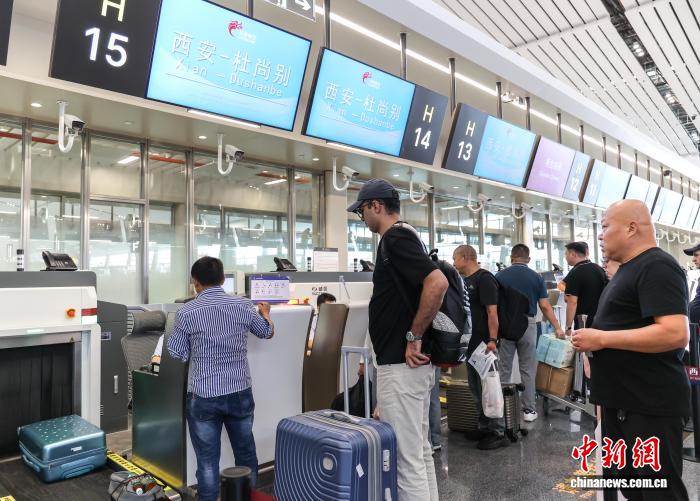
西安开通直飞杜尚别国际航线
Zhong Guo Xin Wen Wang· 2025-09-16 13:43
Core Points - Xi'an has launched a direct international flight route to Dushanbe, Tajikistan, with flights operating every Tuesday and Friday [1] - The new route is part of Xi'an Xianyang International Airport's strategy to enhance its international connectivity, which now includes 59 international passenger routes to 52 cities across 25 countries [2] - The airport aims to strengthen its logistics services, achieving a 116.1% year-on-year increase in international cargo volume, reaching 44,000 tons as of August [2] Group 1 - The direct flight GJ8557 departs from Xi'an at 11:10 AM and arrives in Dushanbe at 1:30 PM local time, while the return flight GJ8558 leaves Dushanbe at 3:00 PM and arrives back in Xi'an at 10:30 PM local time [1] - Xi'an Xianyang International Airport has established connections to eight cities in Central Asia, covering all five Central Asian countries [2] - The airport is focusing on expanding its international flight network, particularly targeting routes to Europe and enhancing connections to major cities like London, Paris, and Milan [2]
打造新时代出行超级枢纽 “空铁联运”任务清单发布
Zhong Guo Qing Nian Bao· 2025-09-10 23:18
Core Viewpoint - The integration of air and rail transport, known as "air-rail intermodal transport," is effectively unlocking consumer potential and enhancing accessibility to aviation services for residents in smaller cities [2][13]. Group 1: Development and Growth - The air-rail intermodal transport products have gained popularity across various regions in China since 2024, with new hub cities added and coverage extending to over 50 cities [2][4]. - The number of passengers using air-rail intermodal transport has significantly increased, with over 550,000 travelers served since its launch in August 2022, marking a year-on-year growth of over 130% in the first half of 2024 [4][13]. - The air-rail intermodal transport model is seen as a transformative approach to modern transportation, contributing to domestic demand expansion, regional coordination, and green low-carbon transition [3][14]. Group 2: Infrastructure and Services - The Shanghai Hongqiao comprehensive transportation hub exemplifies seamless integration, allowing passengers to transfer from air to rail in under 10 minutes, with daily passenger flow exceeding one million [5]. - The introduction of a unified ticketing system and mutual recognition of security checks has significantly improved the efficiency of passenger transfers [6][10]. - The recent "Task List" issued by the Civil Aviation Administration of China and the National Railway Group outlines key tasks to enhance air-rail intermodal transport, focusing on service standards, information sharing, and technical support [10][12]. Group 3: Economic Impact - Air-rail intermodal transport is crucial for expanding the reach of aviation services to smaller cities, stimulating potential consumer demand and enhancing tourism [13][14]. - The model is reshaping regional economic geography by connecting remote areas to national and global networks, thus providing more development opportunities [14]. - The development of air-rail intermodal transport aligns with the goals of building a modern, efficient, and sustainable transportation network in China, as outlined in national planning documents [14].

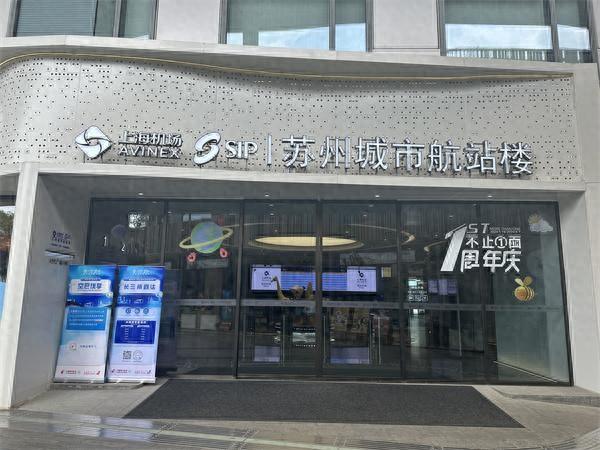
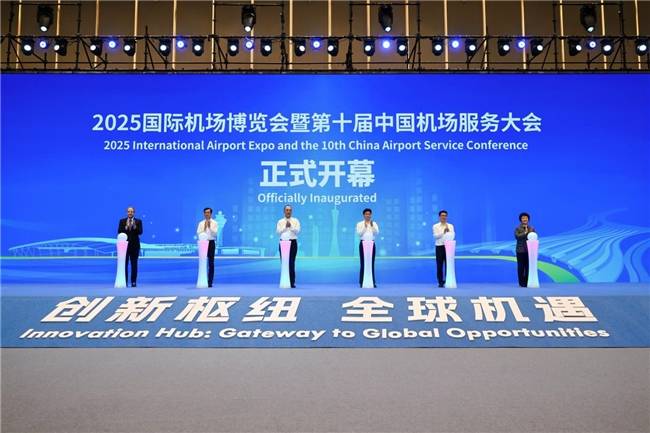
悦途出行Priority Pass亮相国际机场博览会,以AI与生态融合重塑空铁出行新未来
Sou Hu Cai Jing· 2025-09-10 11:15
Core Viewpoint - The 2025 International Airport Expo in Guangzhou highlights the integration of AI and digital solutions in enhancing air-rail travel experiences, with a focus on creating a seamless travel ecosystem [1][3][5]. Group 1: Event Overview - The expo is set to take place from September 8 to 10, 2025, and is recognized as the most influential civil aviation event in the Asia-Pacific region, gathering top decision-makers from global airport groups and industry experts [1]. - The event aims to discuss new blueprints for smart travel development [1]. Group 2: Company Initiatives - Yutu Group's Priority Pass, in collaboration with Collinson, showcased a comprehensive digital solution centered around AI for air-rail intermodal travel, emphasizing the theme of "reshaping air-rail travel experience" [3][5]. - The company aims to redefine the "door-to-door" seamless travel experience by leveraging AI as a new engine and air-rail intermodal transport as a new scenario [5]. Group 3: Technological Innovations - The "Hub Comprehensive Service AI Intelligent Body" was highlighted, which integrates data from Alipay and Yutu's travel scenarios to provide multi-language customer service and seamless travel assistance [8][10]. - The AI system supports various functions, including information consultation, navigation, and travel recommendations, enhancing the overall travel experience [8][10]. Group 4: Strategic Partnerships and Market Reach - Priority Pass has established a service network covering 145 countries, 725 cities, and over 1,700 airport lounges, serving more than 30 million high-net-worth individuals annually [8]. - The company has deep partnerships with major airlines and railway authorities, ensuring comprehensive service offerings [8]. Group 5: Future Outlook - Yutu Group is positioned as a key player in the smart transportation era, aligning with national strategies for digital and transportation advancements [18][19]. - The company plans to deepen collaborations with global airports, airlines, and tourism units to foster a new era of smart, integrated, and user-centric travel [19].