
系统治理

Search documents
多走一米 多听一事 多出一力 静安寺街道“多格合一”破解社区治理难题
Jie Fang Ri Bao· 2025-06-23 01:45
Core Viewpoint - The article highlights the successful implementation of a collaborative governance model in Jing'an District, which addresses long-standing issues through a multi-departmental approach, improving local community services and enhancing business operations [1][2][3]. Group 1: Problem Identification and Resolution - The non-motorized vehicle parking line in front of Jiubai Food City was a significant issue affecting pedestrian traffic and local businesses, which was resolved through the "multi-grid integration" mechanism [1][2]. - The initial problem was identified as a misalignment between the parking line's planning and the current road conditions, prompting a coordinated effort to adjust the parking line [2]. - A secondary issue arose with delivery riders navigating through a residential area, leading to safety concerns, which was addressed by implementing a "half-open iron gate" solution and speed reduction signage [2][3]. Group 2: Systematic Problem Solving - The approach evolved from addressing individual complaints to tackling root causes, emphasizing the importance of discovering issues within the grid and coordinating resources effectively [4]. - A case involving a restaurant suffering from severe odor issues was resolved by identifying a shared, neglected sewage pipeline, leading to a collaborative solution involving multiple stakeholders [4][5]. - The grid's proactive strategy included organizing joint meetings with relevant parties to agree on a comprehensive solution for the sewage maintenance problem [5]. Group 3: Expanding Governance Radius - The governance model is adapting to increasingly complex issues that span multiple departments and sectors, moving from isolated actions to systematic collaboration [6]. - A specific case of overflowing and improperly sorted garbage at the intersection of two districts prompted a detailed investigation, revealing improper waste disposal practices among local businesses [6]. - The grid's response included a joint action plan with neighboring districts to optimize waste management practices and educate businesses on compliance with local regulations [6][7].
中华环保世纪行2025年宣传活动在四川举行,采访团实地探寻绿色答案 护一江清水 行有锐度心有温度
Si Chuan Ri Bao· 2025-06-15 00:41
Core Viewpoint - The article highlights the successful implementation of ecological protection measures in Sichuan, showcasing significant improvements in water quality and biodiversity, as well as innovative legal frameworks for environmental governance [1][4]. Group 1: Water Quality Improvement - The water quality of the Jinjiang River has improved from a poor level (Class V) to a good level (Class III and above) over the past several years, with a current excellent rate of 100% [2]. - The ecological restoration efforts have led to an increase in fish species in the Jinjiang River from 23 to 49 since the beginning of the 13th Five-Year Plan [2]. - In the Xilong Lake area, water quality has improved from Class IV in 2017 to Class III and II in some areas, with aquatic plant coverage increasing from 5.28% to 75.3% [2]. Group 2: Water Source Protection - In Luzhou, the drinking water source protection area has implemented 45 high-definition monitoring devices linked to law enforcement, enhancing the safety of local drinking water [3]. - The water quality in the protected area is maintained at Class II, ensuring the safety of local residents' water supply [3]. Group 3: Legal Framework and Governance - The establishment of the Chengdu Environmental Resource Court has led to the acceptance of 319 environmental resource cases, promoting judicial fairness and balance in sentencing for environmental crimes [5]. - The court has introduced innovative practices such as "wildlife rehabilitation" and established a climate change judicial response research center, extending legal protection to the entire ecological restoration process [6]. - Sichuan has pioneered a collaborative legal framework for cross-province river basin governance, exemplified by the joint decision-making model for the protection of the Chishui River [6]. Group 4: Economic and Cultural Development - The number of fish species in the Yibin section of the Yangtze River has increased from 48 to 92 since the fishing ban, indicating a successful ecological recovery [8]. - Yibin is developing a complete bamboo industry chain, with 334,000 acres of bamboo forests contributing to both ecological protection and economic growth, providing jobs for 150,000 people and increasing farmers' annual income by 3,200 yuan [9].
江西深化以案促改促治推进重点领域源头治理
Zhong Yang Ji Wei Guo Jia Jian Wei Wang Zhan· 2025-06-15 00:31
Group 1 - The article highlights the efforts of the Jiangxi Provincial Discipline Inspection and Supervision Commission in addressing corruption and financial mismanagement in various sectors, particularly focusing on township financial management issues [1][2] - The commission has implemented comprehensive plans to clean up township financial funds and improve regulatory frameworks to prevent misuse and misappropriation of funds [1][2] - A total of 10 cases involving 10 individuals have been investigated and dealt with, including disciplinary actions against 7 individuals, showcasing a commitment to tackling corruption at the local level [1][2] Group 2 - The Jiangxi Provincial Discipline Inspection and Supervision Commission emphasizes a systematic approach to governance, moving from individual case investigations to broader systemic reforms to address common and deep-rooted issues in various sectors [2][4] - The commission has analyzed over 400 serious disciplinary violations to identify common problems across 16 sectors, including finance, education, and public health, aiming to enhance regulatory measures and prevent future misconduct [2][3] - Continuous monitoring and follow-up on the rectification of identified issues are planned, ensuring that local governments and relevant departments are held accountable for implementing corrective measures [4]
苏州无锡两市人大常委会开展太湖流域城乡生活污水治理工作协同视察
Su Zhou Ri Bao· 2025-06-14 00:24
Core Viewpoint - The collaborative inspection of urban and rural sewage treatment in the Taihu Lake basin by the Suzhou and Wuxi Municipal People's Congress highlights the importance of ecological governance and the shared responsibility of both cities in protecting the lake's water quality [1][2]. Group 1: Inspection and Findings - The inspection team visited various locations including Zhushan Lake and Yixing Wetland Park to assess the effectiveness of sewage treatment and water quality improvement efforts in the Taihu Lake basin [1]. - The meeting that followed included reports from ecological environment, water, and municipal departments from both cities, discussing the progress and challenges in sewage treatment [1]. Group 2: Governance and Future Plans - Suzhou has been implementing Xi Jinping's directives on Taihu governance, promoting integrated management of factories, networks, rivers, and lakes to enhance sewage treatment quality and efficiency [1]. - Wuxi emphasized the need for high-level promotion and systematic governance, aligning with the "14th Five-Year Plan" to create a comprehensive "water management blueprint" [2]. - Both cities aim to enhance information sharing and digital management to ensure stable water quality across the Taihu basin [2].
强化系统思维,推动构建多维协同生态治理体系
Zhong Guo Huan Jing Bao· 2025-06-13 03:12
Core Viewpoint - The traditional single-factor governance model is inadequate for addressing the increasingly complex systemic challenges in ecological environment governance, necessitating a shift towards a multi-dimensional collaborative governance system that emphasizes stakeholder interaction, spatial coordination, and integrated tools [1] Group 1: Constructing Ecological Governance Community - The complexity of ecological governance calls for collaborative governance among multiple stakeholders, driven by institutional innovation [2] - Government should enhance rigid constraints and strategic guidance, utilizing technologies like satellite remote sensing and drone inspections for real-time monitoring of ecologically sensitive areas [2] - Market mechanisms should stimulate green transformation by mandating ESG information disclosure and promoting "ecological banking" models to create tradable ecological asset packages [2] Group 2: Enhancing Public Participation - Channels for public participation and supervision need to be improved, including lowering the threshold for environmental public interest litigation and establishing a robust environmental damage assessment mechanism [3] - A public ecological supervision points system should be implemented to encourage community involvement in environmental protection activities [3] - An ecological governance information platform should be established to regularly publish environmental quality data and pollution monitoring results, ensuring public access to information [3] Group 3: Building a Collaborative Governance Network - Ecological governance must transcend administrative boundaries, creating a multi-scale, cross-regional collaborative governance network [4] - Watershed governance should adopt a holistic approach, integrating various ecological protection and restoration projects [4] - Cross-border cooperation should be deepened through joint monitoring and early warning mechanisms for transboundary rivers, sharing data on water quality and quantity [4] Group 4: Establishing Support Systems for Ecological Governance - Effective ecological governance requires institutional innovation, technological empowerment, and market mechanisms to create a multi-chain support system [5] - Institutional tools should be strengthened, including the establishment of ecological compensation standards and promoting ecological product value realization policies [5] - Technological tools should leverage IoT, blockchain, and AI to create an ecological environment big data platform for precise pollution source tracing [5] Group 5: Advancing Towards Systematic Governance - The construction of a multi-dimensional collaborative ecological governance system hinges on the deep integration of stakeholders, spatial coordination, and tool application [7] - Government, market, and society must clarify responsibilities and facilitate interaction through institutional design to form a cohesive governance engine [7] - Breaking down administrative barriers and utilizing technology to bridge geographical gaps is essential for creating a comprehensive ecological governance network [7]
业务聚焦丨增强以案促改促治实效
Zhong Yang Ji Wei Guo Jia Jian Wei Wang Zhan· 2025-06-11 00:10
Group 1 - The article emphasizes the importance of addressing the "second half" of case handling in anti-corruption efforts, focusing on problem analysis and effective rectification suggestions to prevent corruption from taking root [1][2] - The Dehua County Discipline Inspection Commission and Supervisory Committee adopts a "full-cycle management" approach, integrating case handling with subsequent measures to enhance governance effectiveness [1] - The focus is on strengthening case investigations, particularly in key areas such as state-owned enterprises, healthcare, education, and engineering bidding, to combat "micro-corruption" [1][2] Group 2 - The article highlights the need for in-depth case analysis, advocating for a systematic view to understand both individual cases and broader systemic issues that contribute to corruption [2] - The Dehua County Discipline Inspection Commission emphasizes the importance of analyzing the political ecology, internal control mechanisms, and management processes of the units involved in corruption cases [2] - The article discusses the implementation of targeted rectification measures based on the issues identified in cases, ensuring a closed-loop process for case handling and systemic improvement [3] Group 3 - The article outlines a dual approach to governance: addressing issues revealed by cases while also proactively preventing future occurrences through education and awareness initiatives [3] - The Dehua County Discipline Inspection Commission aims to create a robust mechanism for moral and legal education, utilizing various methods such as warning education conferences and court observation [3] - The focus is on building a strong ideological barrier against corruption by leveraging case resources and promoting accountability [3]
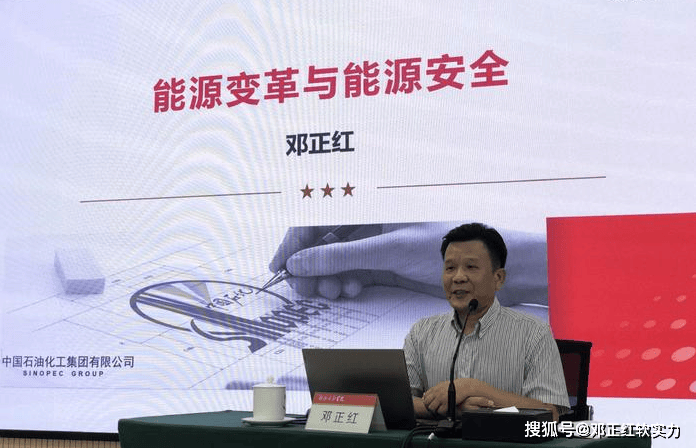
邓正红能源软实力:欧佩克连续第三个月增产 从“捍卫油价”转向“主动压价”
Sou Hu Cai Jing· 2025-06-01 07:16
Core Insights - OPEC has increased oil production for the third consecutive month by 411,000 barrels per day, shifting from "defending oil prices" to "actively lowering prices," which has deepened internal rifts and diluted its soft power value [1][2] - Saudi Arabia has ignored opposition from member countries like Russia and has pushed for this increase, revealing the failure of the alliance's coordination mechanism [1][2] - This strategy may lead to a significant drop in oil prices, potentially falling to the $50 per barrel range, creating a vicious cycle of "increased production - price drop - fiscal deterioration" [1][2] Group 1: Internal Governance and Soft Power - The punitive increase in production has exposed deepening divisions within the alliance, with countries like Russia and Algeria advocating for a halt to production increases [2] - Saudi Arabia's actions highlight the limitations of its leadership, sacrificing price control to maintain organizational discipline, which undermines the soft power foundation of the alliance [2] - The current global oil surplus is estimated at 2.2 million barrels per day, and the July production increase is expected to exacerbate this surplus, potentially triggering a significant price correction [2] Group 2: Strategic Misjudgment and External Dependencies - Saudi Arabia's production increase partly aligns with U.S. demands to lower oil prices, reflecting its passive position in geopolitical dynamics [3] - OPEC faces three major challenges: the erosion of pricing power due to financial instruments, decision-making constraints imposed by major power politics, and the erosion of rule-making authority as Western nations restructure energy regulations [3] Group 3: Pathways for Soft Power Reconstruction - OPEC needs to move beyond the simplistic logic of "increase-decrease" in production and build a composite soft power system [3] - Recommendations include enhancing internal governance resilience, establishing transparent production data mechanisms, and balancing short-term and long-term values [3] - There is a need to diversify energy sources and accelerate energy transformation to reduce systemic risks associated with oil price dependence [3]

从7只到1.1万只,朱鹮保护带来哪些启示?
Zhong Guo Huan Jing Bao· 2025-05-19 01:51
Core Viewpoint - The successful conservation of the endangered Chinese crested ibis, which has grown from just 7 individuals in 1981 to over 11,000 today, exemplifies China's systematic approach to ecological civilization and offers a model for global endangered species protection [1]. Group 1: Systematic Governance - The conservation network for the Chinese crested ibis has evolved from legal frameworks to multi-stakeholder governance, enhancing ecological safety [2]. - Legal foundations include the Wildlife Protection Law and the Nature Reserve Regulations, which establish a species protection hierarchy and rigid ecological barriers [2]. - The implementation of ecological red lines in Hanzhong and the "Four Prohibitions" policy in Yangxian have effectively curtailed ecological damage [2]. - International cooperation has been strengthened, with China exporting 7 ibises to Japan in 1999, leading to the establishment of a wild population of over 500 ibises by 2024 [2]. Group 2: Digital Empowerment - Technological advancements have transformed conservation efforts into precise and intelligent actions, integrating monitoring and analysis throughout the protection process [3]. - The "Huan Tian Yi Fen" monitoring platform and the upgraded "5G + Wild Ibis Monitoring and Analysis Platform" utilize IoT and AI to track population dynamics and habitat patterns [3]. - The establishment of the world's first ibis gene bank in Zhejiang and the use of Beidou tracking technology in Jiangsu have provided scientific support for breeding and habitat restoration [3]. - New technical guidelines for artificial incubation and disease prevention have shifted health management from experience-based to data-driven approaches [3]. Group 3: Symbiotic Development - The conservation of the Chinese crested ibis has led to sustainable development, aligning ecological protection with local economic benefits [4]. - Yangxian's organic rice fields and ibis-themed tourism have attracted 6.38 million visitors, generating over 4 billion yuan in revenue [4]. - The establishment of an organic product certification system and cooperative models has created a value chain that benefits local farmers, yielding an annual output value of 1.64 billion yuan [4]. - In Luo County, a multi-layered protection network has activated ecological resource value, with local residents benefiting from eco-tourism and agricultural initiatives, leading to an average annual income increase of 20,000 yuan per household [4].
得意之笔 | 从个案查处向系统治理拓展成都专项整治土地储备领域突出问题
Zhong Yang Ji Wei Guo Jia Jian Wei Wang Zhan· 2025-04-27 23:43
Core Viewpoint - The Chengdu Municipal Commission for Discipline Inspection and Supervision is focusing on combating corruption in the land reserve sector, implementing systematic governance to improve the political ecology and development environment in this area [2][3]. Group 1: Corruption Issues and Responses - The Chengdu Municipal Commission has identified significant corruption issues in land reserve management, including bribery and misuse of authority by officials [4][5]. - A notable case involved the former director of the Land Reserve Center, who was found guilty of corruption, receiving a total of 180,000 yuan in bribes [4]. - The Commission has initiated a comprehensive review of risk positions and key individuals in the land reserve sector, leading to 16 public officials voluntarily confessing to their misconduct [4][6]. Group 2: Systematic Governance and Oversight - The Commission is employing a systematic approach to governance, focusing on the entire lifecycle of land reserves, from acquisition to temporary use [3][9]. - A total of 141 potential issues have been identified through a thorough review of complaints and reports, with 21 new problem leads discovered [6]. - The Commission has implemented a collaborative approach, integrating various departments to enhance oversight and accountability in land management [5][10]. Group 3: Land Utilization and Community Impact - The transformation of a 7.8-acre land reserve into a community parking lot has significantly alleviated local parking issues, generating additional revenue for the community [7]. - In 2024, the relevant departments have developed and utilized 82 land reserves, totaling over 850 acres, to meet municipal and public needs [7][9]. - The Commission emphasizes transparency in land use, ensuring that the management and usage details of temporary parking lots are publicly accessible [9][10]. Group 4: Mechanisms for Long-term Governance - The Commission is focused on establishing long-term mechanisms to prevent corruption, including revising management regulations and enhancing internal controls [11][14]. - A total of 12 corruption risk points have been identified, with 29 preventive measures developed to address these vulnerabilities [13][14]. - The Commission is promoting a culture of accountability and continuous improvement through regular training and awareness programs for officials [12][14].
