
经济不确定性

Search documents
《穿Prada的女王2》,20年后不时髦了?
Huan Qiu Wang· 2025-11-03 03:27
Core Viewpoint - The discussion surrounding the aesthetic "downgrade" in fashion, particularly in the context of the upcoming "The Devil Wears Prada 2," reflects deeper societal anxieties and shifts in consumer behavior rather than a mere decline in taste [7][30]. Group 1: Changes in Fashion and Identity - The protagonist Andy's clothing style evolves significantly from the first film to the second, mirroring her professional journey from a fashion assistant to a journalist, indicating that personal identity and professional roles influence external expressions [8][9]. - By the end of the first film, Andy's style transitions from "exquisite" to "casual," symbolizing her departure from the high-fashion world of "Runway" [13][9]. Group 2: Economic Context and Cultural Reflection - The financial struggles of "Runway" magazine and Miranda's declining career in the sequel suggest a broader commentary on the fashion industry's current challenges [16]. - The shift in fashion representation from luxurious and extravagant to more comfortable and minimalist styles reflects societal responses to economic uncertainty and cultural shifts [22][26]. Group 3: Nostalgia and Consumer Behavior - The nostalgia for the economic boom era is evident, as past fashion trends are romanticized, contrasting sharply with today's more pragmatic consumer attitudes [32][33]. - The current economic climate has led to a reevaluation of luxury and success, with a growing preference for stable investments over extravagant spending [28][30]. Group 4: Future Expectations - There is anticipation regarding whether Andy will return to "Runway" and how her interactions with Miranda will evolve in the sequel, highlighting ongoing interest in the dynamics of fashion and identity [15]. - The expectation for "The Devil Wears Prada 2" to capture the vibrant and imaginative fashion world of the past remains unfulfilled, indicating a disconnect between audience desires and current portrayals [36].


Wall Street outlook: 5 factors that could shape the week ahead
Invezz· 2025-11-01 11:15
Group 1 - Wall Street is facing a pivotal week characterized by economic uncertainty and policy ambiguity, which may significantly influence market direction [1]

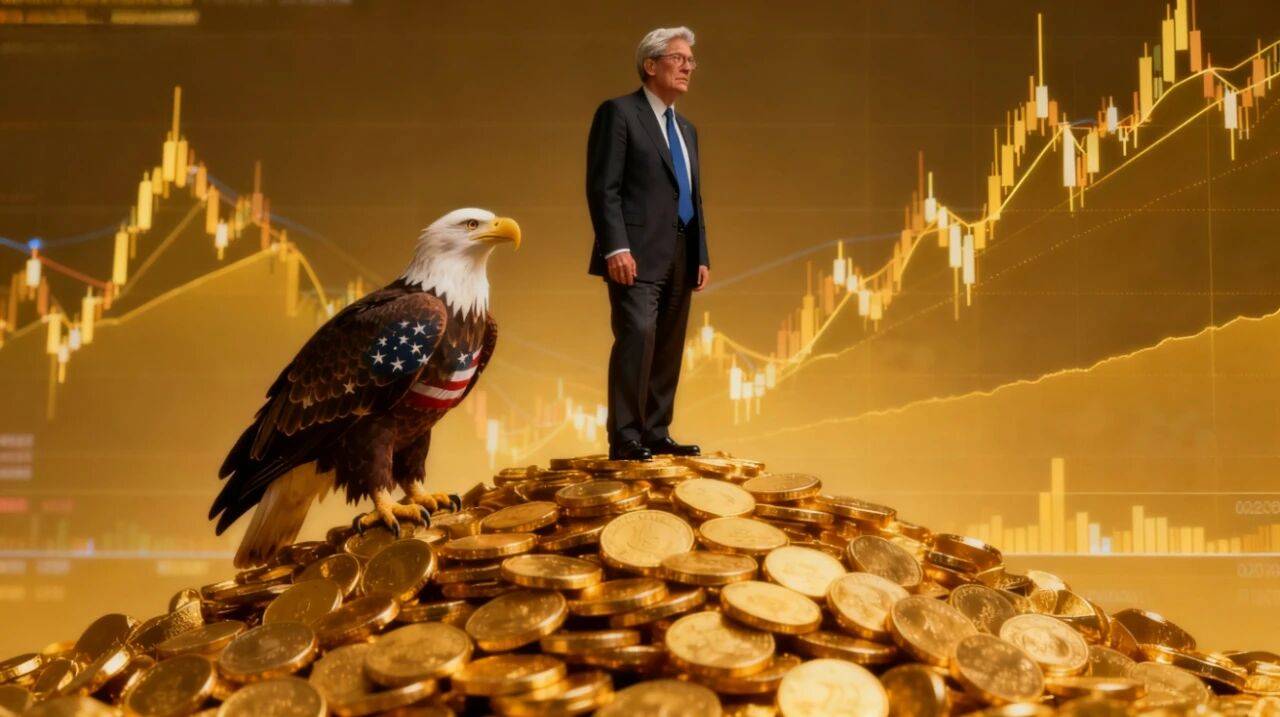
香港第一金:鲍威尔鹰声嘹亮,黄金的“高压天花板”形成?
Sou Hu Cai Jing· 2025-10-30 10:44
Core Points - Federal Reserve Chairman Jerome Powell's recent speech maintained a "hawkish hold" stance, indicating a commitment to high interest rates without signaling an acceleration in tightening measures [2][3] Summary by Sections Inflation Concerns - Powell reiterated that despite a significant decline from peak inflation levels, recent data suggests a stagnation in the downward trend, with inflation still too high and the final push to the 2% target being particularly challenging [3] Interest Rate Outlook - He emphasized the need for patience regarding interest rate cuts, stating that the Fed will only consider lowering rates once there is greater confidence in inflation returning to the 2% target, dispelling market hopes for imminent rate cuts [3] - Future policy decisions will be entirely data-dependent, particularly on inflation, employment, and economic growth metrics, with no pre-set path [3] Potential for Further Rate Hikes - Although not the baseline scenario, Powell indicated that if inflation pressures accelerate again, the Fed is prepared to raise rates further, leaving open the possibility for additional tightening [3] Impact on Gold Market - Powell's remarks created a "mixed impact" on the gold market, contributing to current price fluctuations [4] Bearish Factors for Gold - The expectation of "higher for longer" interest rates due to Powell's firm stance suggests a prolonged high-rate environment, increasing the opportunity cost of holding gold, which is a non-yielding asset, thus suppressing gold's upward momentum [5] - The hawkish tone supported the US dollar, making gold more expensive for holders of other currencies, which could dampen demand [6] Bullish Factors for Gold - Acknowledgment of persistent inflation and a data-dependent approach implies economic uncertainty, leading to continued demand for gold as a traditional safe-haven asset amid fears that prolonged high rates could eventually harm the economy [7] - Powell's lack of strong hints towards immediate rate hikes was interpreted as a sign that the most hawkish period may be over, alleviating some of the pressure on gold as long as rates do not increase [7] Overall Conclusion - Powell's speech established a "high-pressure ceiling" for the gold market, eliminating expectations for early rate cuts while simultaneously providing support through concerns about economic risks and uncertainties, preventing significant declines in gold prices [8] - The gold market is likely to experience a period of high-level fluctuations, with direction dependent on forthcoming key economic data and clearer policy signals from Fed officials [8] Trading Strategies - Aggressive traders are advised to enter positions if gold prices stabilize around 3950-3955, with a stop loss below 3940 and targets set at 3980 and 4000 [9] - Conservative traders should wait for a clear breakout above 3970 before entering long positions, with a stop loss below 3955 and targets in the 3985-4000 range [9] - For short positions, if gold fails to break through the 3965-3970 range multiple times, a light short position may be considered with a stop loss above 3980 and targets at 3945 and 3930 [9]
综述丨国际金价面临下行压力
Xin Hua Wang· 2025-10-28 08:21
Core Viewpoint - International gold prices are facing downward pressure following a week of significant sell-offs, with New York gold futures dropping below $4000 per ounce, indicating potential further declines in the short term [1]. Group 1: Market Trends - After a period of consolidation, international gold prices rose from around $3300 per ounce to over $4000, reaching a historical high of $4381.21 on October 20, driven by geopolitical changes, global economic uncertainty, Federal Reserve rate cuts, and increased central bank gold purchases [2]. - The most actively traded December gold futures on the New York Mercantile Exchange fell approximately 2.9% to close at $4019.70 [1]. Group 2: Influencing Factors - The recent decline in gold prices is attributed to reduced short-term driving factors, profit-taking by investors following previous price increases, alleviated concerns over international trade tensions, and a rise in investor risk appetite [1]. - Analysts from Citigroup suggest that expectations of trade agreements between the U.S. and other countries, along with the potential resolution of the U.S. government shutdown, may exert downward pressure on gold prices, with a possibility of falling back to $3800 within the next three months [1]. - John Reed from the World Gold Council noted that demand for gold from central banks has weakened compared to previous levels, indicating that a deeper market adjustment could provide some breathing space for professional traders [1].
【环球财经】贵金属跌势延续 纽约金价27日跌超3%收盘至4000美元下方
Xin Hua Cai Jing· 2025-10-28 00:45
Group 1 - The core point of the article highlights a significant decline in gold and silver prices due to improved market risk appetite following preliminary consensus on key economic issues between China and the U.S. [1] - The most actively traded December 2025 gold futures price dropped by $129.9, closing at $3997 per ounce, marking a decline of 3.15% [1]. - Silver futures for December delivery fell by $1.58, closing at $46.830 per ounce, with a decrease of 3.26% [2]. Group 2 - The upcoming Federal Reserve monetary policy meeting is expected to result in a second consecutive 25 basis point rate cut to support the unstable job market, although this expectation may have already been priced in [1]. - Despite a shortage of physical gold, analysts suggest that the adjustment in the gold market may continue for some time due to weakened short-term driving factors [1]. - Some analysts believe that ongoing economic uncertainty will be the primary factor supporting gold prices, with expectations that gold could reach $5000 per ounce next year [1]. Group 3 - U.S. Treasury Secretary confirmed a shortlist of five candidates to succeed Federal Reserve Chairman Jerome Powell, with a decision expected from President Trump by the end of the year [2].
Annual gold price to top $4K per ounce for first time next year: analysts
New York Post· 2025-10-27 16:57
Core Insights - The annual average price of gold is projected to exceed $4,000 per ounce for the first time in 2026, with an average forecast of $4,275, significantly up from $3,400 predicted in July [1][3] - Gold prices have surged over 50% this year, reaching a record high of $4,381.58, marking the best performance since 1979 [3][14] - Analysts have also raised silver price forecasts, expecting an average of $38.45 per ounce in 2025 and $50 in 2026, up from previous estimates [14] Gold Market Dynamics - The current economic climate, characterized by inflation concerns, high interest rates, and a weaker US dollar, has driven investors towards gold as a safe haven [9][12] - The Federal Reserve's recent interest rate cuts are expected to make gold more attractive, as lower Treasury yields enhance its appeal [11] - Gold is increasingly viewed as a key portfolio asset rather than a speculative investment, reflecting a shift in investor sentiment [12] Silver Market Insights - Silver has experienced a 65% increase this year, reaching an all-time high of $54.47, driven by strong demand in solar technology, electric vehicles, and AI data centers [15] - Analysts predict that silver will continue to face structural supply deficits, supporting its price growth into 2026 [15][16] - Silver is seen as a more affordable alternative to gold, maintaining its demand among investors [16]

美国9月成屋销售量创七个月新高 抵押贷款利率下降提振市场
Xin Hua Cai Jing· 2025-10-24 06:18
Core Insights - The National Association of Realtors (NAR) reported a 1.5% month-over-month increase in existing home sales for September, reaching an annualized rate of 4.06 million units, the highest level since February this year, aligning with market expectations [1] - Year-over-year, existing home sales rose significantly by 4.1%, with growth observed in the Northeast, South, and West regions, while the Midwest experienced a decline [1] Sales and Pricing Analysis - The median sales price for existing homes in September was $415,200, marking a 2.1% year-over-year increase, continuing a streak of 27 consecutive months of price growth [1] - The median price for single-family homes was $420,700, up 2.3% year-over-year, while the median price for condos and co-ops was $360,300, showing a slight decline of 0.6% [1] Market Dynamics - The inventory of homes for sale surged by 14% year-over-year to 1.55 million units, although this level remains below pre-pandemic benchmarks [1] - The median time from listing to sale increased to 33 days, compared to 31 days last month and 28 days a year ago [2] Financing Conditions - The average 30-year fixed mortgage rate decreased to 6.35% in September, down from 6.59% in August, providing support to the market [2] - The typical monthly mortgage payment is now $2,556, reflecting a modest year-over-year increase of 0.6%, the smallest rise in three months [2] Buyer Behavior - First-time homebuyers accounted for 30% of sales, while cash transactions remained at 30%, and investors and second-home buyers dropped to 15% [2] - Despite improved purchasing power, potential buyers are still adopting a wait-and-see approach, as the number of signed contracts for existing homes fell by 0.7% year-over-year as of October 19 [2] Economic Outlook - NAR's Chief Economist Lawrence Yun indicated that declining interest rates and improved income conditions could provide momentum for sales in the fourth quarter, but economic uncertainties pose potential risks [2]
敏感时刻,今晚美国CPI“姗姗来迟”
Hua Er Jie Jian Wen· 2025-10-23 01:05
Core Insights - Investors are anxiously awaiting the delayed September CPI inflation report, which is the only key economic data available during this data vacuum period [1][2] - The U.S. Bureau of Labor Statistics is set to release the September CPI data, with Goldman Sachs predicting a month-on-month increase of 0.33% and a year-on-year increase of 3.02% [1][3] - The ongoing government shutdown has led to a lack of regular data releases, causing market tension and uncertainty regarding the economic outlook [2] Economic Data Impact - The anticipated CPI data could lead to fluctuations in long-term bond yields, with potential upward pressure if the data exceeds expectations [1][3] - The 10-year U.S. Treasury yield has declined this year, reflecting risk-averse sentiment, partly due to credit concerns related to regional banks [3] - Analysts suggest that if the 10-year Treasury yield falls below 3.75%, it may indicate doubts about the U.S. economy achieving a "soft landing" [3] Market Sentiment - The current lack of hard data has left the market in a state of anxiety, as investors are missing critical economic indicators that typically provide insights into the economic direction [2] - There is a strong potential buying interest in the bond market, driven by increasing economic uncertainty [3]
国际金价反弹收复4100美元整数关口,全球黄金ETF总规模创历史新高
Huan Qiu Wang· 2025-10-23 01:03
Group 1 - The core viewpoint of the articles highlights the rising prices of precious metals, particularly gold and silver, driven by multiple factors including EU sanctions on Russia, liquidity release from the Federal Reserve, and uncertainties in U.S. fiscal policy [1] - COMEX gold futures increased by 0.18% to $4116.60 per ounce, while COMEX silver futures rose by 1.00% to $48.18 per ounce [1] - The World Gold Council reported that global physical gold ETFs saw the largest monthly inflow in history in September, totaling $26 billion, contributing to a record total inflow of $26 billion for the third quarter [1] Group 2 - As of the end of the third quarter, global gold ETF assets under management reached a historical high of $472 billion, with total holdings increasing by 6% to 3,838 tons, just 2% below the historical peak [1] - The article mentions that gold sales tend to increase significantly during times of economic uncertainty, as anxious investors view gold as a safe haven for their funds [1] - Analysts caution that precious metal prices may experience volatility, with potential price corrections expected due to the current overbought conditions and high market volatility [2]
Gold prices soared above $4,300 this week. What’s driving the surge?
Yahoo Finance· 2025-10-18 18:00
Core Insights - Gold prices have reached a record high, with New York spot closing at $4,326 per troy ounce, driven by economic uncertainty and investor demand for safe-haven assets [1][2] - The ongoing U.S. government shutdown and trade tensions, particularly with China, have contributed to the rising gold prices as investors seek stability [2][5][6] - Gold futures have increased nearly 60% since the beginning of 2025, reflecting a significant shift in investor sentiment towards precious metals [3][4] Economic Context - The rise in gold prices is closely linked to the economic turmoil stemming from President Trump's trade wars, which have imposed steep tariffs and strained global economies [5] - The U.S. government shutdown has exacerbated economic anxieties, delaying key economic data and affecting federal employees, further driving investors towards gold [6] - The prospect of lower interest rates is making gold a more attractive investment option, as it typically gains appeal during periods of economic uncertainty [2]