苹果税

Search documents
苹果喊冤:我帮你们赚了1.3万亿美元,自己才提成200来亿
Sou Hu Cai Jing· 2025-06-22 05:51
Group 1 - The core argument revolves around the "Apple Tax," with Apple defending its commission structure as reasonable for maintaining the App Store ecosystem, while app developers and users argue that the 30% fee is excessive for merely providing a download platform [1][3] - Over the years, there has been ongoing contention between Apple and various stakeholders regarding the "Apple Tax," leading to legal battles and concessions from Apple, such as lowering commission rates and allowing third-party payment options in certain regions [3][5] - Recently, Apple commissioned a report claiming that the App Store facilitated $1.3 trillion in transactions in 2024, with only 10.11% ($131 billion) attributed to digital goods, which is the only segment subject to Apple's commission [5][7] Group 2 - Of the $1.3 trillion in transactions, 78.3% ($1.01 trillion) were for physical goods, for which Apple does not collect a commission, and $150 billion was from in-app advertising revenue, which developers retain entirely [7][9] - Apple's report aims to argue that its commission is minimal, suggesting that it only takes a small fraction (around $200 billion) from the total transactions, which is less than 2% [7][9] - The report implies that Apple's contribution to the overall transaction volume is overstated, as the transactions would likely occur regardless of Apple's involvement, indicating a potential self-serving narrative in the report [9]



如何看待鸿蒙PC不允许侧载?
Xin Lang Cai Jing· 2025-06-09 03:24
Core Viewpoint - Huawei's HarmonyOS PC restricts sideloading, allowing only app installations from its official app store, aiming to create a secure and monitored software environment [1][5][14] Group 1: Security and Software Quality - The restriction on sideloading is intended to prevent malware and unwanted software, providing a safer experience for users who may not be tech-savvy [5][7] - Applications available on Huawei's app store undergo official review, theoretically ensuring quality and compliance with standards [5][7] - The unified software experience is optimized for HarmonyOS, potentially reducing crashes and improving performance [7] Group 2: Developer and User Considerations - While the strict management of the app ecosystem can enhance security, it may limit user choices and lead to higher costs for software, raising concerns about affordability [7][9] - There is a potential risk of introducing a "tax" similar to Apple's model, which could deter users if software becomes expensive and limited [9][14] - To attract developers, Huawei should consider a transparent and friendly approach regarding fees, especially in the initial stages of the platform [11][14] Group 3: Market Positioning - Huawei's strategy mirrors Apple's closed ecosystem, but to effectively compete with Windows, it must balance security with affordability and openness [14] - The success of HarmonyOS PC will depend on its ability to offer a rich, user-friendly experience without becoming an expensive "premium cage" [14]

苹果App Store生态年收入1.3万亿美元 超九成归开发者无需缴佣金
Sou Hu Cai Jing· 2025-06-06 04:13
Core Insights - Apple's recent report indicates that the App Store ecosystem is projected to generate $1.3 trillion in revenue and sales in 2024, with over 90% of this revenue going directly to developers without paying any commission to Apple [1][3]. App Store Revenue Structure and "Apple Tax" Controversy - The commission Apple collects is limited primarily to digital goods and services, which account for $131 billion, approximately 10.11% of the total revenue [3]. - Physical goods and services represent the largest share at $1.01 trillion, making up 78.3% of the total [3]. - In-app advertising revenue is reported at $150 billion, constituting 11.58% of the total [3]. - Apple's commission policy employs a tiered structure, where developers earning over $1 million pay a 30% commission, while small and medium developers pay a reduced rate of 15% [3]. - In China, the App Store ecosystem's sales reached 3.76 trillion yuan in 2023, with the commissionable digital goods and services making up only 3.85% [3]. - More than half of the Chinese developers paying commissions qualify for the 15% reduced rate, and large game developers often have an effective commission rate below 20% [3]. Global Regulatory Pressure and Policy Adjustment Trends - The "Apple Tax" faces unprecedented regulatory challenges globally, with 18 countries and regions initiating over 20 regulatory actions, including investigations, legislation, and lawsuits [4]. - The European Union has taken significant steps, imposing a €1.84 billion fine on Apple in March 2024 due to its dominant position in the music streaming market, leading to adjustments in commission rates [4]. - The U.S. courts have ruled against Apple's restrictions on developers directing users to external purchase links [4]. - Japan plans to implement new tax regulations in April 2025, requiring Apple to collect a 10% consumption tax on transactions for non-Japanese developers [4]. - Other countries, including Azerbaijan, Peru, and Slovakia, are also adjusting tax policies that will affect developers' actual earnings [4]. Implications of Regulatory Actions - Regulatory bodies believe that limiting the "Apple Tax" will enhance fairness in the digital market and promote competition [5]. - While lowering fees and reducing restrictions on third-party payments may impact Apple's profitability, it is expected to foster innovation and provide users with more choices, benefiting developers [5]. - Apple maintains that the App Store offers essential channels, ecosystems, and tools for developers to launch products, attract users, and generate profits, justifying its commission structure [5].
分析师点评“苹果税”禁令:苹果(AAPL.US)每股收益或下滑2%至3%
Zhi Tong Cai Jing· 2025-06-06 02:43
Core Viewpoint - A federal appeals court upheld a ruling requiring Apple Inc. (AAPL.US) to allow "link payment" support in its App Store, which may lead to a 2% to 3% decline in earnings per share, although the revenue impact may not be as significant as feared [1][2]. Group 1: Financial Impact - Evercore ISI estimates that Apple's App Store generates approximately $21 billion in annual sales, with a potential risk of $7 billion in revenue from U.S. developers due to the ruling [2]. - If the entire $7 billion were to disappear, it would imply a 6% reduction in earnings per share, but the actual impact is expected to be lower [2]. - Morgan Stanley's survey indicated that 28% of respondents are "very likely" to bypass the App Store payment process, which could risk 2% of Apple's earnings per share [2]. Group 2: Market Response - In May, Apple's App Store total revenue grew by 13%, with a 10% increase in the U.S. market, suggesting that developers may not immediately leave the Apple ecosystem [1]. - The gaming segment accounts for 65% of U.S. App Store revenue, with many purchases being one-time transactions, indicating that a shift to other payment platforms could result in higher fees than Apple's current 27% cut [2]. Group 3: Developer Perspective - Apple emphasizes that over 90% of transactions through its App Store in 2024 will not incur any commission for developers, highlighting the platform's value to developers [3].
苹果称App Store生态营业额超九成归开发者 全球反垄断浪潮下,“苹果税”何去何从?
Mei Ri Jing Ji Xin Wen· 2025-06-06 02:09
Core Viewpoint - The report highlights the significant economic impact of the App Store, generating $1.3 trillion in developer revenue in 2024, with over 90% of this revenue going to developers without paying any commission to Apple [1][2]. Group 1: App Store Economic Impact - The App Store ecosystem has created new business opportunities and growth potential for developers globally [1]. - Over the past five years, the revenue and sales facilitated by the App Store have more than doubled in regions like the US, China, and Europe [2]. - The App Store attracts over 813 million visits weekly, providing a global platform for developers [2]. Group 2: Controversy Surrounding "Apple Tax" - "Apple Tax" refers to the 15%-30% commission Apple charges on digital content sales through the App Store, which has faced significant scrutiny and regulatory actions in 18 countries [1][4]. - Developers argue that "Apple Tax" increases operational costs, particularly affecting small teams and individual developers [1]. - The current commission rates in China are among the highest globally, with standard rates of 30% for large enterprises and 15% for small developers [3]. Group 3: Legal Challenges and Changes - A recent US court ruling prohibits Apple from charging commissions on purchases made through external channels, allowing developers to direct users to alternative payment methods [6][8]. - This ruling is a result of a long-standing antitrust lawsuit initiated by Epic Games, which claims Apple maintains a monopoly in the app distribution market [7]. - The ruling could weaken Apple's control over its App Store ecosystem, providing developers and users with more choices [8]. Group 4: Regulatory Actions and Global Response - The European Union has also taken action against Apple, imposing a €500 million fine for restricting developers from directing users to third-party payment options [9]. - Apple's service revenue, including App Store fees, has been increasing, with a reported $26.34 billion in service revenue for Q1 2025, reflecting a 14% year-over-year growth [9].
Epic打了五年官司,苹果败了,但是开发者赢了吗?
3 6 Ke· 2025-05-15 23:20
Core Points - The U.S. Northern District Court of California ruled against Apple in the Epic Games lawsuit, stating that Apple violated a 2021 order prohibiting anti-competitive pricing practices, requiring Apple to stop restricting developer and user communications and not charge commissions on external purchases [1][3] - Following the ruling, the U.S. App Store opened up to third-party payment options, allowing developers to add buttons and links to direct users to external payment channels without additional authorization [1][3] - The ongoing legal battle, which began in August 2020, has significant implications for developers and the App Store's business model, with a more open App Store era on the horizon [3][4] Legal Background - The dispute began when Apple removed the popular game Fortnite from the App Store after Epic Games introduced a direct purchase option to bypass Apple's 30% commission [4][8] - Epic Games accused Apple of monopolistic practices that harm developers, estimating that Apple's App Store profits reached nearly 80%, which they claimed created an unfair competitive advantage [7][8] - In the initial ruling in September 2021, the court sided with Apple on most counts but found that Apple's restrictions on directing users to external payment options violated California law [8] Recent Developments - The court's recent ruling indicates a crack in the "Apple tax," but it did not mandate a reduction in the 30% commission rate, which Epic Games had hoped to change [8][9] - Apple has been found to intentionally defy the court's orders regarding the anti-steering provisions, leading to a new, stricter injunction against the company [9][10] - Epic Games views the latest ruling as a significant victory, allowing them to reapply for Fortnite's return to the App Store after its removal in 2020 [9][10] Global Context - The "Apple tax" has faced scrutiny globally, with various countries and regions challenging Apple's App Store rules [10][11] - The European Union is actively legislating against platform monopolies through the Digital Markets Act, which will require Apple to allow third-party app stores and payment systems [10][11] - In South Korea, legislation has already been passed to allow third-party payment systems, with Apple complying but still imposing a reduced commission of 26% [13][14] Implications for Developers - The ongoing legal battles and regulatory changes may lead to a more favorable environment for developers, as the traditional 30% commission model faces increasing scrutiny [15][20] - Developers in China have expressed mixed feelings about the "Apple tax," with some viewing the 30% fee as reasonable compared to historical rates in the industry [19][20] - The evolving landscape suggests that rules governing app distribution and payment processing are not fixed and may continue to change as developers advocate for more equitable practices [20][21]
库克又输了,“苹果税”最后的基地,只剩下中国了?
Sou Hu Cai Jing· 2025-05-14 07:32
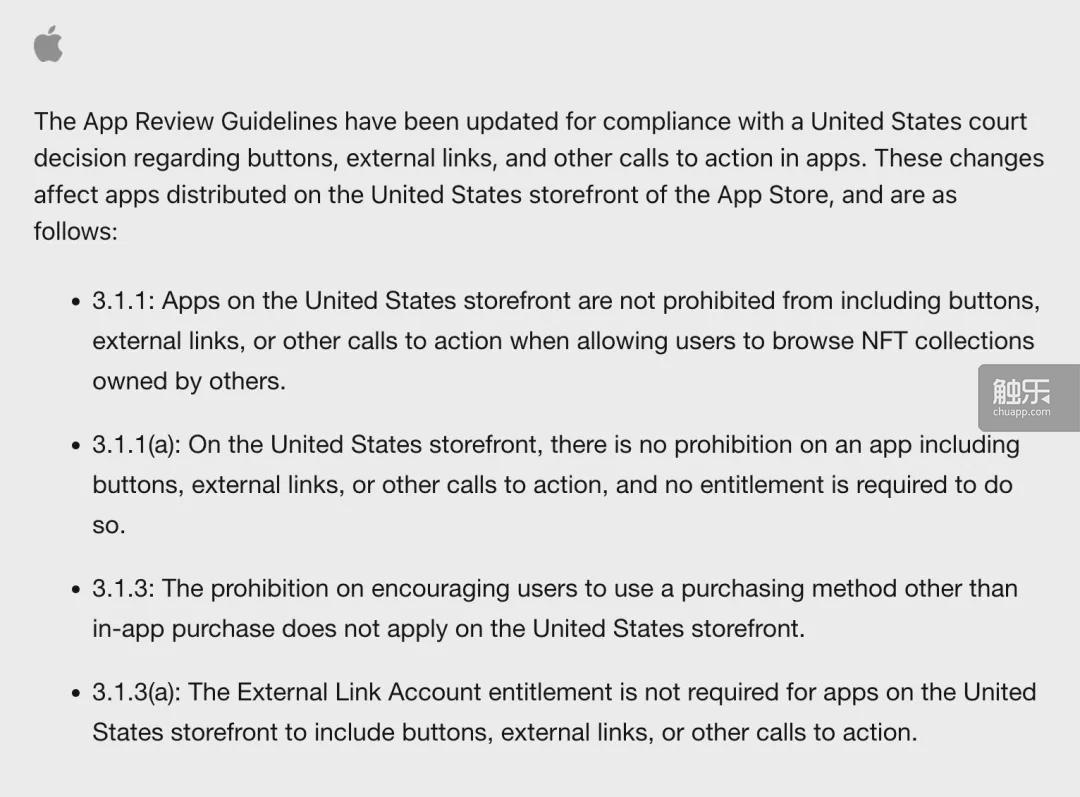
Core Viewpoint - Apple has lost a significant legal battle against Epic Games, with a U.S. court ruling that Apple violated a previous order by not allowing external payment options in the App Store [1][5]. Group 1: Legal Outcomes - The court has mandated that Apple must not restrict developers from directing users to external purchases and cannot charge commissions on these transactions [1][3]. - Apple has faced multiple legal defeats in the past, leading to some adjustments in its commission structure, such as reducing the standard commission from 30% to 27% in the U.S. [5][8]. Group 2: Market Implications - With the ruling, it is expected that developers will increasingly utilize third-party payment options to avoid Apple's commission, which could significantly impact Apple's revenue from the App Store [3][5]. - Apple has now lost legal battles in two of its largest markets, the U.S. and Europe, while still maintaining its 30% commission policy in China [7][9]. Group 3: Regional Commission Structures - In Europe, Apple has reduced its commission rate from 30% to 17% and allowed third-party payments and sideloading of apps [8][9]. - The commission rates for different regions are as follows: - China: 30% for standard enterprises - U.S.: 27% for standard enterprises using third-party payment channels - Europe: 17% for standard enterprises [9].
未知机构:小段子汇总202505061鸿蒙在3月份的华为PuraX-20250507
未知机构· 2025-05-07 02:50
Summary of Key Points from Conference Call Records Industry or Company Involved - **Huawei and its HarmonyOS**: Huawei's transition to HarmonyOS with the upcoming launch of Harmony computers in May 2025 [1] - **Intelligent Systems**: Companies like Huiwei Intelligent and its collaboration with Tongxin and Kirin in the operating system sector [1] - **Tianyuan Dike**: Involvement in the sales of Huawei's Ascend computing products through its subsidiary [2] - **Spring Autumn Electronics**: Business relationship with Huawei in laptop structural components [3] - **BrainCo**: Development of non-invasive brain-machine interface technology [4] - **Tesla**: Plans to produce thousands of Optimus robots by 2025 [7] - **Apple**: Legal issues regarding App Store practices and potential profit increases for local developers [9] Core Points and Arguments - **Huawei's HarmonyOS Launch**: Huawei's terminal business is fully entering the HarmonyOS era, with the first Harmony computers expected to debut in May 2025, indicating a significant shift in their product strategy [1] - **Strategic Collaborations**: Huiwei Intelligent is actively investing in open-source Harmony-related product technology development through partnerships with Tongxin and Kirin [1] - **Tianyuan Dike's Revenue Expectations**: The overall expectation for Tianyuan Dike's super fusion business is projected to exceed 1 billion yuan in 2023 [2] - **Spring Autumn Electronics' Collaboration**: The company has an ongoing business relationship with Huawei in the laptop component sector, indicating a strong partnership [3] - **BrainCo's Market Impact**: BrainCo's non-invasive brain-machine interface technology is gaining attention, with collaborations for product training and development [4] - **Tesla's Production Plans**: Tesla aims to produce thousands of robots by 2025, showcasing its commitment to robotics and automation [7] - **Apple's Legal Challenges**: A recent court ruling against Apple may lead to a 30% profit increase for local developers, highlighting the potential for increased market competition [9] Other Important but Possibly Overlooked Content - **Price Increases in Rare Earth Elements**: Significant price increases in dysprosium and terbium in the European market, with prices rising by over 210% [8] - **R32 Refrigerant Market Trends**: Overall production of air conditioning units is increasing, with refrigerant prices rising unexpectedly [8] - **H-Acid Market Dynamics**: Tight market supply and rising prices for active dyes due to upstream cost increases [8] - **Technological Advancements in Brainwave Interaction**: Companies like Dineike are focusing on non-invasive brainwave interaction technologies, particularly in health and rehabilitation sectors [8] - **Electric Motor Production Capabilities**: Company producing electric motor cores for robots and electric vehicles, with significant production capacity [10] This summary encapsulates the key insights and developments from the conference call records, providing a comprehensive overview of the involved companies and industries.
渠道退潮时:美国法院裁定苹果违反禁令,iOS外部支付或迎深度开放
2 1 Shi Ji Jing Ji Bao Dao· 2025-05-06 12:33
Core Viewpoint - The recent ruling by the California District Court against Apple regarding its App Store practices has significant implications for developers and the competitive landscape of digital payments, allowing developers to direct users to external payment channels without incurring Apple's commission [1][3][4]. Legal Developments - The court found that Apple failed to comply with previous orders to provide developers with external payment options and imposed a ban on charging commissions for purchases made through these channels [1][2]. - The ruling highlighted Apple's attempts to maintain its revenue through anti-competitive practices, including imposing new barriers and discouraging users from using alternative payment methods [2][3]. Impact on Developers - Developers within the iOS ecosystem are now authorized to guide users towards external payment options, potentially increasing their revenue by avoiding Apple's 27% commission on external purchases [3][4]. - Companies like Epic Games have already announced plans to eliminate fees for developers on their platform, indicating a shift towards more favorable terms for developers [6][10]. Market Dynamics - The ruling is expected to reshape the competitive landscape, as developers may increasingly adopt external payment methods, leading to a decline in Apple's control over app distribution and payment processing [3][4][9]. - Chinese developers are also closely monitoring the situation, with some considering implementing external payment options for their games in the U.S. market [9][10]. Regulatory Environment - The ruling comes amid increasing scrutiny and regulatory actions against major tech companies, including a recent €5 billion fine imposed by the EU on Apple for similar anti-competitive practices [10][11]. - The evolving regulatory landscape is likely to pressure dominant platforms like Apple and Google to lower their commission rates and adapt to new market conditions [11].
苹果不能再躺平赚钱了
投中网· 2025-05-06 07:13
Core Viewpoint - Apple is facing significant challenges in the global consumer electronics market, particularly in the Greater China region, which has seen a decline in sales despite overall revenue growth in the first quarter of the year [4][5][6]. Financial Performance - In Q1, Apple's total net revenue reached $95.359 billion, a 5% increase from $90.753 billion year-over-year, while net profit rose to $24.780 billion, up from $23.636 billion, also a 5% increase [5]. - Revenue from the Greater China region was $16.002 billion, down 2% from $16.372 billion in the same quarter last year, making it the only major market to experience a decline [6][10]. Market Dynamics - Apple's stock price has dropped approximately 15% this year, resulting in a market capitalization loss of over $600 billion, with the stock closing at $205.35 [6]. - The introduction of the lower-priced iPhone 16e has not significantly boosted sales in China, where competition from domestic brands remains strong [8][10][11]. Regional Performance - Revenue growth was observed in four out of five major markets, with the Americas generating $40.315 billion, Europe $24.454 billion, Japan $7.298 billion, and the Asia-Pacific region $7.290 billion [10]. - In contrast, the Greater China region's revenue decline is notable, especially when compared to a previous quarter where the decline was 11% [11]. Product and Service Revenue - Apple's product revenue was $68.714 billion, a 4.1% increase, while service revenue was $26.645 billion, growing 12% but falling short of analyst expectations [15][19]. - The iPhone generated $46.841 billion in revenue, a 1.9% increase, despite a drop in shipment volume compared to Samsung [17]. Challenges and Future Outlook - The uncertainty surrounding tariffs is expected to increase costs by $900 million in the upcoming quarter, impacting profitability [6][23]. - Apple's service revenue faces challenges due to regulatory scrutiny and potential fines, which could significantly affect its income from the App Store [19][20][21]. - Future product innovations, including a new design for the iPhone 17 and a potential foldable iPhone, are anticipated to help maintain sales momentum [18][24].