
金融风险防控

Search documents
稳健筑基 活力跃动:数览大国金融“十四五”答卷
Shang Hai Zheng Quan Bao· 2025-10-14 18:25
Core Insights - The Chinese financial industry has demonstrated significant growth and resilience during the "14th Five-Year Plan" period, with total banking assets reaching nearly 470 trillion yuan, making it the largest in the world [1][2] - The financial sector has seen a comprehensive deepening of reforms and modernization of governance capabilities, enhancing service efficiency and risk management [1][3] Group 1: Financial Sector Growth - As of mid-2023, the total assets of the banking and insurance sectors exceeded 500 trillion yuan, with an average annual growth rate of 9% over the past five years [2][3] - The number of financial institutions has increased, with over 4,000 banks and more than 230 insurance companies, showcasing a mature and diversified institutional framework [3][4] Group 2: Internationalization and Attractiveness - The "14th Five-Year Plan" has seen an increase in foreign financial institutions entering the Chinese market, with 13 new foreign-controlled securities and fund institutions approved to operate [4] - By July 2023, the number of foreign institutions in the interbank bond market grew from around 200 in early 2016 to 1,171, reflecting an annual growth rate of approximately 6.5% [4] Group 3: Support for the Real Economy - The banking and insurance sectors provided an additional 170 trillion yuan in funding to the real economy over the past five years, with infrastructure loans increasing by 62% [6][7] - The capital market has become a crucial funding source for enterprises, with total financing through stock and bond markets reaching 57.5 trillion yuan [6] Group 4: Risk Management and Stability - The establishment of the National Financial Supervision Administration marks a significant step in enhancing financial regulation and risk management [9][10] - The financial system has effectively mitigated risks, with a notable reduction in high-risk small institutions and a significant decrease in local government financing platform risks [11][12] Group 5: Technological Innovation Support - The banking sector's loans for scientific research and technology have grown at an average annual rate of 27.2%, with high-tech enterprise loans reaching nearly 19 trillion yuan [8] - The capital market has increasingly supported technology-driven companies, with over 90% of new listings being tech-related [8]
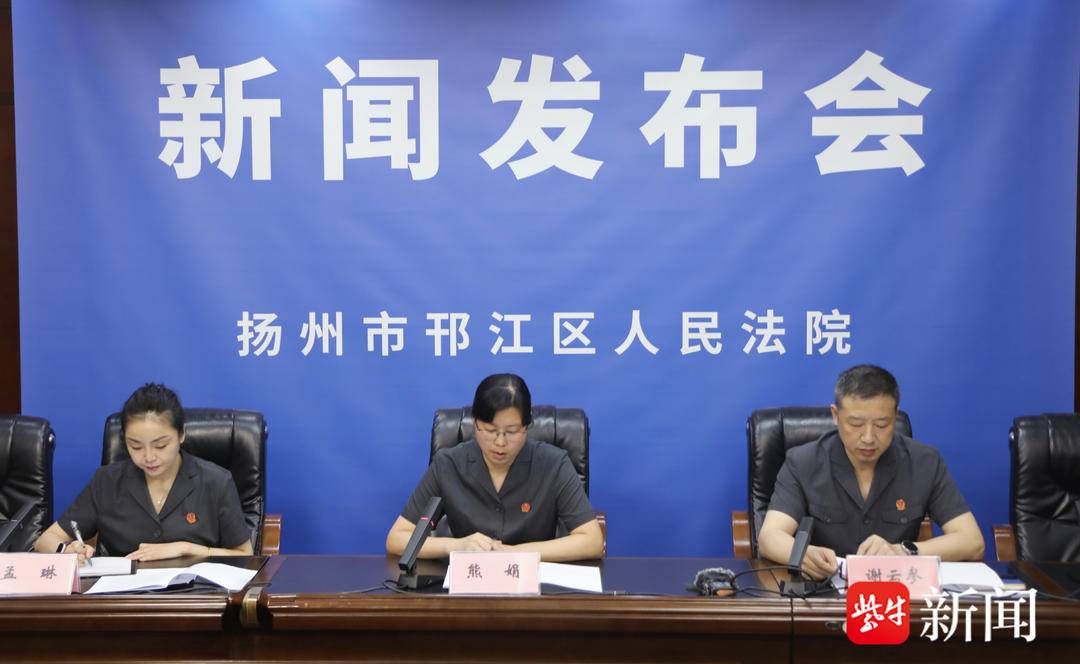
案件类型多样化集中化,扬州邗江法院金融审判案件量高位运行,结案率保持在较高水平
Yang Zi Wan Bao Wang· 2025-09-25 10:07
Core Insights - The financial court in Yangzhou's Hanjiang District has seen a high volume of financial litigation cases since last year, with a diverse range of case types, primarily focusing on financial loans and credit card disputes [1][3] - The court has established a specialized team for financial cases, achieving a high case resolution rate and significantly reducing the average case processing time to 34 days [3][4] Group 1: Case Statistics - From January 2024 to August 2025, the court resolved 2,268 financial loan disputes through judgments, accounting for 81.49% of cases, while 513 cases were resolved through mediation, making up 18.43% [3] - The court successfully mediated 523 cases in 2024 and 435 cases from January to August 2025, indicating a significant year-on-year increase in pre-litigation mediation success [3] Group 2: Mediation and Resolution Strategies - The court has implemented a "green channel" for financial cases to expedite the processes of filing, mediation, and adjudication, enhancing the efficiency of dispute resolution [3][4] - The court emphasizes the importance of understanding the operational challenges faced by small and micro enterprises, facilitating flexible repayment agreements to support their survival and development [3][5] Group 3: Risk Management and Consumer Protection - Financial institutions are urged to strengthen internal supervision and risk management, including thorough pre-loan investigations and differentiated collection policies for overdue clients [4] - Consumers and investors are encouraged to adopt a cautious investment approach, ensuring proper contract review and personal information protection during financial transactions [4]

中国银行业总资产位居世界第一
Ren Min Ri Bao Hai Wai Ban· 2025-09-23 09:06
Core Insights - The Chinese banking industry has achieved significant growth and stability during the "14th Five-Year Plan" period, with total assets exceeding 500 trillion yuan, solidifying its position as the world's largest credit market and the second-largest insurance market [3][4] Group 1: Financial Development Achievements - The financial services to the real economy have improved significantly, with annual growth rates for loans to technology-based SMEs, inclusive microfinance, and green loans exceeding 20% [3] - Over the past five years, the banking and insurance sectors have provided an additional 170 trillion yuan in funding to the real economy, with the insurance industry paying out 9 trillion yuan, a 61.7% increase compared to the "13th Five-Year Plan" period [3] - The A-share market has shown resilience, with the Shanghai Composite Index's annualized volatility decreasing by 2.8 percentage points to 15.9% [3] Group 2: Risk Management Enhancements - Key regulatory indicators such as non-performing loans, capital adequacy, and solvency have remained stable and within healthy ranges, with a 40% increase in the disposal of non-performing assets compared to the previous five-year period [4] - The total capital and provisions for risk resistance in the industry have exceeded 50 trillion yuan, with significant improvements in regulatory frameworks and digitalization [4][5] - The number of financing platforms has decreased by over 60%, and the scale of financial debt has dropped by more than 50% since the beginning of 2023 [4] Group 3: Support for High-Quality Economic Development - Financial support for infrastructure projects has been substantial, with over 3.6 billion yuan provided for the Baotou-Huinong high-speed rail project, exemplifying the financial sector's role in supporting the real economy [6] - The balance of infrastructure loans has reached 54.5 trillion yuan, a 62% increase from the end of the "13th Five-Year Plan" [6] - Direct financing through stock and bond markets has totaled 57.5 trillion yuan, with the proportion of direct financing rising to 31.6%, an increase of 2.8 percentage points from the end of the previous five-year period [6] Group 4: Foreign Exchange and Trade Facilitation - The State Administration of Foreign Exchange has advanced deep reforms and high-level openness in the foreign exchange sector, enhancing the efficiency of trade foreign exchange receipts and payments [7] - Since the beginning of the "14th Five-Year Plan," over 5.6 billion transactions have been processed to support cross-border e-commerce and other trade activities [7] - Overall, financial risks remain controllable, and the financial system is operating steadily, providing strong support for high-quality economic development [7]

锐财经|“十四五”期间金融体系稳健运行 中国银行业总资产位居世界第一
Ren Min Ri Bao Hai Wai Ban· 2025-09-23 04:00
Group 1 - As of June 2023, China's banking sector total assets reached nearly 470 trillion yuan, ranking first in the world, with stock and bond market sizes ranking second globally [1] - During the "14th Five-Year Plan" period, the average annual growth rate of loans to technology-based SMEs, inclusive finance for small and micro enterprises, and green loans exceeded 20% [2] - The banking and insurance sectors provided an additional 170 trillion yuan in funding to the real economy over the past five years, with the insurance industry paying out 9 trillion yuan, a 61.7% increase compared to the "13th Five-Year Plan" period [2] Group 2 - The banking and insurance sectors have shown improvement in key regulatory indicators such as non-performing loans, capital adequacy, and solvency, all remaining within a "healthy range" [3] - The total scale of capital and provisions to resist risks in the industry exceeded 50 trillion yuan, with a more than 40% increase in the disposal of non-performing assets compared to the "13th Five-Year Plan" [3] - The number of financing platforms decreased by over 60% and the scale of financial debt dropped by over 50% compared to the beginning of 2023 [3] Group 3 - Financial resources have been optimized to support high-quality economic development, with infrastructure loan balances reaching 54.5 trillion yuan, a 62% increase compared to the end of the "13th Five-Year Plan" [4] - The total financing through stock and bond markets reached 57.5 trillion yuan over the past five years, with the proportion of direct financing increasing by 2.8 percentage points to 31.6% [5] - The foreign exchange bureau has facilitated over 5.6 billion transactions related to cross-border e-commerce since the beginning of the "14th Five-Year Plan," enhancing the efficiency of trade foreign exchange receipts and payments [5]
服务向“实” 发展向“稳” 开放向“深”——“十四五”金融业交出高质量答卷
Sou Hu Cai Jing· 2025-09-23 01:27
Core Insights - The article highlights the achievements of China's financial industry during the "14th Five-Year Plan" period, emphasizing high-quality development and effective risk management [1][2][4] Financial Industry Strength - As of June 2025, China's banking sector assets are expected to reach nearly 470 trillion yuan, ranking first globally; the stock and bond markets are the second largest in the world [1] - The total assets of the banking and insurance sectors have surpassed 500 trillion yuan, with an annual growth rate of 9% over the past five years [2] - The asset management of trust, wealth management, and insurance institutions has doubled compared to the end of the "13th Five-Year Plan," reaching nearly 100 trillion yuan [2] Support for the Real Economy - During the "14th Five-Year Plan," the banking and insurance sectors provided an additional 170 trillion yuan in funding to the real economy through various financial instruments [2] - Loans for scientific research, manufacturing, and infrastructure have seen average annual growth rates of 27.2%, 21.7%, and 10.1%, respectively [2] - The balance of loans to small and micro enterprises has reached 36 trillion yuan, 2.3 times that of the end of the "13th Five-Year Plan," with interest rates decreasing by 2 percentage points [2] Risk Management - The financial management departments have made significant progress in risk prevention and control, with a focus on stabilizing the overall situation and coordinating efforts [3][4] - A mechanism for coordinating real estate financing has been established, with credit support exceeding 7 trillion yuan for nearly 2 million housing units [3] - The number of local government financing platforms has decreased by over 60%, and the scale of financial debt has dropped by more than 50% compared to early 2023 [3] Governance and Market Stability - There have been breakthroughs in corporate governance regulation, with over 3,600 illegal shareholders removed and significant improvements in the governance efficiency of financial institutions [4] - The stability of the financial market has been enhanced, with the RMB exchange rate remaining stable and low bond default rates [4] - The People's Bank of China is exploring new monetary policy tools to maintain capital market stability [4] Internationalization and Openness - By the end of July, foreign institutions and individuals held over 10 trillion yuan in domestic stocks, bonds, and deposits, indicating active cross-border investment [6] - The RMB has become the largest settlement currency for China's external payments and ranks among the top three trade financing and payment currencies globally [6] - The financial industry has made systematic progress in opening up, with enhanced risk prevention capabilities in the context of a more open financial environment [6][7] Future Outlook - The foreign exchange management system will be further improved to facilitate a more convenient, open, secure, and intelligent foreign exchange management mechanism [7]
“十四五”期间金融体系稳健运行——中国银行业总资产位居世界第一
Xin Hua Wang· 2025-09-22 23:35
Core Insights - The Chinese banking sector has achieved significant growth and stability during the "14th Five-Year Plan" period, with total assets reaching nearly 500 trillion yuan, solidifying its position as the world's largest credit market and second-largest insurance market [2][3]. Financial Development Achievements - Financial services to the real economy have improved significantly, with annual growth rates exceeding 20% for loans to technology-based SMEs, inclusive small and micro loans, and green loans [2]. - Over the past five years, the banking and insurance sectors have provided an additional 170 trillion yuan in funding to the real economy, with the insurance industry paying out 9 trillion yuan in claims, a 61.7% increase compared to the previous five-year period [2]. - The A-share market has shown resilience, with the annualized volatility of the Shanghai Composite Index at 15.9%, a decrease of 2.8 percentage points from the previous five-year period [2]. Risk Management Enhancements - Key regulatory indicators such as non-performing loans, capital adequacy, and solvency have remained stable and within healthy ranges [3]. - The disposal of non-performing assets has increased by over 40% compared to the previous five-year period, with total capital and provisions for risk exceeding 50 trillion yuan [3]. - Regulatory frameworks have been strengthened, with a focus on early identification and management of financial risks, leading to a reduction of financing platforms by over 60% and a decrease in financial debt by over 50% compared to the beginning of 2023 [3]. Support for High-Quality Economic Development - Financial support for infrastructure projects has been significant, exemplified by over 3.6 billion yuan in financing for the Baotou-Huinong high-speed rail project, which will significantly reduce travel time [4]. - The balance of infrastructure loans has reached 54.5 trillion yuan, a 62% increase from the end of the previous five-year period [4]. - Direct financing through stock and bond markets has totaled 57.5 trillion yuan over the past five years, with the proportion of direct financing rising to 31.6%, an increase of 2.8 percentage points from the previous five-year period [4]. Foreign Exchange and Trade Facilitation - The State Administration of Foreign Exchange has advanced reforms and high-level openings in the foreign exchange sector, enhancing the efficiency of trade foreign exchange receipts and facilitating cross-border investment and financing [5]. - Since the beginning of the "14th Five-Year Plan," over 5.6 billion transactions have been processed to support cross-border e-commerce, reflecting the adaptation to new trade patterns [5]. - Overall, the financial risks in China are manageable, and the financial system is operating robustly, providing strong support for high-quality economic development [5].
中国银行业总资产位居世界第一(锐财经)
Ren Min Ri Bao· 2025-09-22 21:04
Core Insights - The Chinese banking industry has achieved significant growth, with total assets nearing 470 trillion yuan, ranking first globally, and the insurance market solidifying its position as the second largest [1][2] - The financial sector has effectively supported the real economy, with annual growth rates for loans to technology SMEs, inclusive small and micro enterprises, and green loans exceeding 20% [2][3] - The financial risk management capabilities have improved, with key regulatory indicators such as non-performing loans and capital adequacy remaining stable and within healthy ranges [3][4] Financial Development Achievements - Over the past five years, the banking and insurance sectors have provided an additional 170 trillion yuan in funding to the real economy, with insurance payouts reaching 9 trillion yuan, a 61.7% increase from the previous five-year period [2][3] - The A-share market has shown resilience, with the Shanghai Composite Index's annualized volatility decreasing by 2.8 percentage points compared to the previous five years [2][3] - The total assets of the banking and insurance sectors have surpassed 500 trillion yuan, reinforcing China's position as the largest credit market globally [2] Risk Management Enhancements - The disposal of non-performing assets has increased by over 40% compared to the previous five-year period, with total capital and provisions exceeding 50 trillion yuan [3] - Regulatory frameworks have been strengthened, with a focus on early identification and management of financial risks, leading to a reduction of financing platforms by over 60% and a decrease in financial debt by over 50% [3] - The China Securities Regulatory Commission has intensified efforts to combat financial fraud, establishing a comprehensive deterrent system against such activities [3] Support for High-Quality Economic Development - Financial support for infrastructure projects has been significant, with over 36 billion yuan provided for the Baotou to Huinong high-speed rail project, reducing travel time significantly [4] - The balance of infrastructure loans has grown by 62% compared to the end of the previous five-year period, reaching 54.5 trillion yuan [4] - Direct financing through stock and bond markets has totaled 57.5 trillion yuan, with the proportion of direct financing increasing by 2.8 percentage points to 31.6% [4] Foreign Exchange and Trade Facilitation - The State Administration of Foreign Exchange has enhanced the efficiency of foreign exchange services and facilitated cross-border investment, processing over 5.6 billion transactions since the beginning of the current five-year period [5] - The financial system has maintained overall stability, supporting high-quality economic development during the "14th Five-Year Plan" period [5]
中共中国农业银行股份有限公司委员会关于二十届中央第三轮巡视整改进展情况的通报
Zhong Yang Ji Wei Guo Jia Jian Wei Wang Zhan· 2025-09-22 10:39
Core Viewpoint - The Central Inspection Team conducted a routine inspection of Agricultural Bank of China from April 16 to July 20, 2024, and provided feedback on October 21, 2024, emphasizing the importance of rectification and improvement in governance and operations [1] Group 1: Rectification Responsibility - The Agricultural Bank's Party Committee has taken the rectification as a serious political task, integrating it with reform and strict governance [2][3] - A rectification leadership group was established, with the Party Secretary as the head, to oversee the entire rectification process [3] - Regular meetings are held to assess and guide the rectification efforts, ensuring accountability at all levels [3] Group 2: Key Issues Addressed - The bank is focusing on enhancing financial support for rural revitalization and agricultural development, aligning with national policies [6][7] - Specific measures have been implemented to prevent large-scale poverty and support vulnerable regions through tailored financial services [7][8] - The bank is improving its network and customer service capabilities in rural areas, including expanding branch locations and enhancing staff training [8] Group 3: Risk Management - The Party Committee is actively leading risk prevention efforts, with a focus on reducing non-performing loan ratios, which have declined for four consecutive years [9] - Strategies are in place to manage real estate and local government debt risks, ensuring compliance with regulations [9] - Strengthening credit management practices is a priority, with enhanced procedures for loan approvals and monitoring [9] Group 4: High-Quality Development - The bank is reforming its performance evaluation system to align with high-quality development goals, reducing unnecessary burdens on grassroots operations [11] - Efforts are being made to streamline operational indicators and improve the efficiency of credit services to the real economy [12] Group 5: Party Governance - The bank is committed to strict party governance, enhancing accountability and oversight mechanisms to ensure compliance with party regulations [14][15] - Initiatives are in place to address issues related to corruption and misconduct, with a focus on maintaining integrity within the organization [14] Group 6: Future Plans - The Agricultural Bank plans to establish a long-term rectification mechanism, ensuring ongoing compliance with central directives and continuous improvement [23][24] - The bank aims to convert rectification outcomes into tangible results that support high-quality development and enhance financial services for rural areas [25]

房地产“白名单”贷款超7万亿!支持近两千万套住房建设交付
Nan Fang Du Shi Bao· 2025-09-22 08:53
Core Viewpoint - The Chinese financial regulatory authority emphasizes that the risks associated with small and medium-sized banks are under control, with a significant reduction in the number of high-risk institutions and high-risk asset scales compared to their peak levels [2][3]. Group 1: Risk Management in Financial Institutions - The financial regulatory authority has prioritized the prevention and resolution of financial risks, particularly focusing on the orderly handling of risks in small and medium-sized financial institutions [3]. - A significant reduction in the number of high-risk institutions and high-risk asset scales has been achieved, with many provinces reporting a "dynamic zero" status for high-risk small and medium-sized institutions [3][4]. - The number of banking financial institutions in China decreased from 4,490 at the end of 2023 to 4,295 by the end of 2024, reflecting the implementation of policies aimed at reducing and improving small and medium-sized banks [4]. Group 2: Support for Real Estate and Local Debt Risk Resolution - The financial regulatory authority has actively supported the resolution of real estate risks, with over 7 trillion yuan in loans issued under the "white list" project, facilitating the construction and delivery of nearly 20 million housing units [6][7]. - Various measures have been taken to stabilize financing for key housing projects, with over 1.6 trillion yuan allocated for affordable housing and a 52% annual growth in loans for rental housing [6]. - The establishment of a city real estate financing coordination mechanism aims to provide financing support based on project development status and the qualifications of developers, promoting fair and just financing practices [7].

吴清:稳妥推动重点领域风险持续收敛
Zheng Quan Shi Bao· 2025-09-22 08:07
Group 1 - The core viewpoint emphasizes the steady reduction of risks in key areas of the financial industry during the "14th Five-Year Plan" period, with a focus on controlling new risks and stabilizing existing ones [1] - The bond default rate in the exchange market remains low at around 1%, indicating effective risk management [1] - Approximately 7,000 zombie institutions have been cleared out as part of the private equity fund risk rectification efforts, and the growth of "pseudo-private equity" risks has been effectively curbed [1] Group 2 - The closure of gold exchanges and "pseudo-gold exchanges" has shown significant results, with all 27 identified exchanges having their qualifications revoked [1] - Over a hundred identified "pseudo-gold exchanges" have been completely cleaned up, further enhancing the integrity of the financial market [1]