区块链技术

Search documents
美国SEC推出“加密项目” 推动金融市场走向链上
Hua Er Jie Jian Wen· 2025-07-31 21:08
Group 1 - The SEC has launched a "crypto project" aimed at modernizing securities regulations to adapt to cryptocurrency-based trading models [1] - SEC Chairman Paul Atkins emphasized the need to evaluate the potential benefits and drawbacks of transitioning from off-chain to on-chain environments [1] - The concept of "tokenization" is gaining interest, which involves issuing digital certificates on blockchain networks that represent publicly traded securities or real assets [1] Group 2 - Crypto trading platforms like Robinhood, Gemini, and Kraken have opened tokenized stock services to non-U.S. users, while Coinbase is seeking SEC approval to offer similar services in the U.S. [2] - Atkins highlighted the importance of "super apps," which integrate multiple services into one mobile application, and called for efficient licensing structures to avoid overlapping regulations [3] - The U.S. government’s digital asset market working group released a report proposing frameworks to enhance the U.S.'s dominance in the digital asset market, which Atkins has directed the SEC's crypto task force to implement [3]

我店模式新平台半年出圈?揭秘某店模式背后的分金池陷阱
Sou Hu Cai Jing· 2025-07-31 08:46
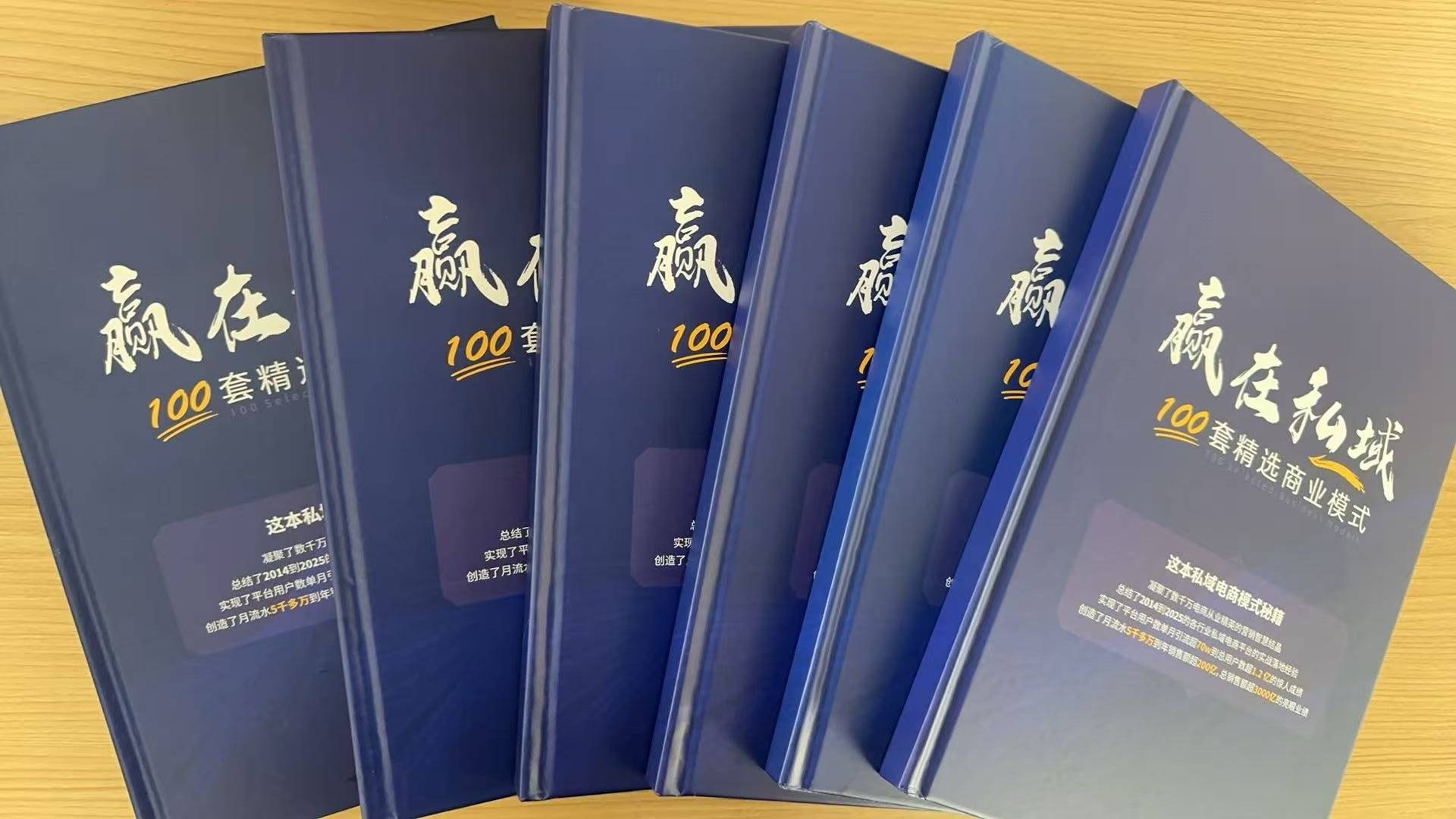
Core Insights - The article discusses a business model that has enabled several companies to rapidly gain market visibility within six months, emphasizing the importance of operational understanding and strategic implementation [1][5]. Group 1: Business Model Overview - The model is based on a "36-40 period points logic," "agent pool strategy," and "dynamic acceleration mechanism," which are considered the three key components for success [1][5]. - Each consumer transaction generates points that grow over time, with a portion of the transaction amount (20%) entering a platform fund, which is then divided into consumer and operational reserves [3][5]. - Points are released dynamically over 36-40 periods, with the release rate tied to platform performance, allowing for quicker access to cash vouchers as sales increase [3][4]. Group 2: Agent System and Risk Management - The agent system employs a three-tier pool and regional isolation strategy, categorizing agents into provincial, county-level, and merchant pools, each with different commission structures [4]. - The provincial agent pool requires a high franchise fee (e.g., 1.2 billion) and offers a commission of 15%-20%, while county-level agents focus on lower-tier markets with a 4% commission [4]. - Each regional fund operates independently to mitigate risks, ensuring that losses in new markets do not affect established ones [4]. Group 3: Consumer and Merchant Engagement - The model transforms consumers from mere buyers into profit distributors, while merchants become ecosystem builders, fostering a collaborative environment [5]. - The acceleration mechanism allows for faster point release when regional sales grow by 15%, creating a positive feedback loop that stimulates consumption [4]. - Cross-store profit sharing incentivizes merchants to drive traffic to the platform, increasing user engagement by over 30% [4]. Group 4: Technology and Market Concerns - The platform utilizes AI to analyze user behavior and push targeted coupons, achieving a conversion rate of 18%, significantly higher than the industry average of 5% [6]. - There are concerns regarding the sustainability of the points system, with questions raised about potential risks of becoming a "Ponzi scheme" if new merchants do not join [6]. - Legal and ethical debates surround the profit-sharing model, questioning the distinction between legitimate agency and potential pyramid schemes [6].

微算法科技(NASDAQ:MLGO)应用区块链联邦学习(BlockFL)架构,实现数据的安全传输
Zhong Guo Chan Ye Jing Ji Xin Xi Wang· 2025-07-31 02:53
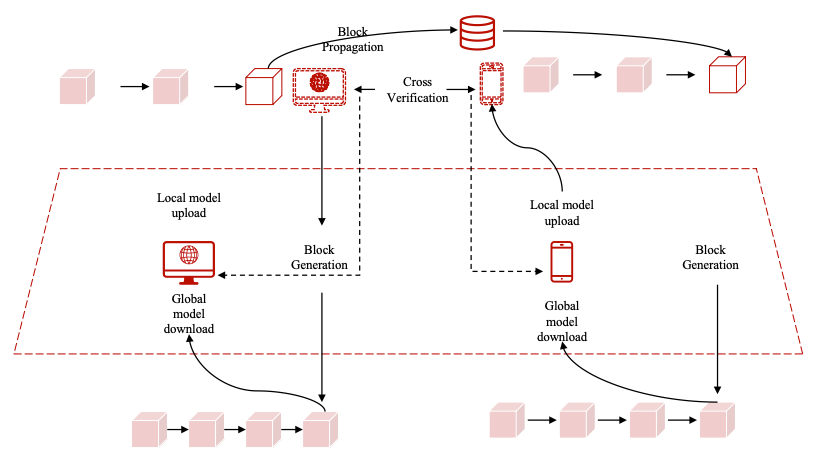
Core Viewpoint - The rapid development of big data and artificial intelligence has highlighted data security and privacy issues, with traditional data transmission methods posing significant risks. The introduction of blockchain technology offers new solutions, exemplified by MicroAlgorithm Technology's innovative BlockFL architecture, which ensures secure, efficient, and privacy-protecting data transmission [1][6]. Group 1: BlockFL Architecture - BlockFL architecture utilizes blockchain networks to achieve efficient data exchange and synchronization in federated learning, allowing devices to upload local model updates and download global model updates quickly and effectively [2]. - The decentralized nature and high concurrency of blockchain ensure that all devices receive the same global model updates, maintaining consistency and accuracy in model training [2]. Group 2: Process Overview - Initialization involves the system administrator creating an initial model and broadcasting it to all participating nodes while the blockchain records metadata of the federated learning activity [4]. - Each node trains the model on its local dataset without exposing original data, thus protecting data privacy [4]. - Nodes upload encrypted model parameters to the blockchain, where smart contracts validate their effectiveness and integrity, preventing malicious actions [4]. - Once verified, a central server or designated aggregation node extracts parameters from the blockchain, averages them, and generates a new version of the global model [4]. - The updated global model is then broadcasted to all nodes for the next training round, with the blockchain ensuring traceability of all operations [4]. - An incentive and penalty mechanism is integrated into BlockFL to encourage participation and quality data contribution, with smart contracts automatically executing rewards and penalties [4]. Group 3: Applications and Future Prospects - BlockFL architecture can be applied across various sectors, including healthcare, financial risk control, smart manufacturing, and smart cities, facilitating data collaboration while maintaining security and privacy [5]. - In healthcare, BlockFL enables hospitals to collaboratively train diagnostic models while protecting patient privacy; in finance, it allows institutions to identify fraud without sharing sensitive information; in smart manufacturing, it promotes collaboration between factories; and in smart cities, it supports inter-departmental cooperation without compromising sensitive data [5]. - The combination of blockchain and federated learning in BlockFL addresses traditional data transmission challenges, enhancing efficiency and accuracy in model training, positioning it as a significant technological support in data transmission and machine learning in the future [6].

以区块链技术重塑计算广告生态
Xin Hua Ri Bao· 2025-07-30 23:33
Core Insights - The article discusses the integration of blockchain technology into the digital advertising sector, particularly in computational advertising, highlighting its potential to address issues such as user privacy and data integrity [1][4]. Group 1: Blockchain Applications in Computational Advertising - Smart contracts facilitate automated ad placement and performance verification, enhancing settlement efficiency and providing reliable data for ad effectiveness assessment [2][3]. - Distributed ledger technology helps break down information silos by allowing encrypted user data to be stored on the blockchain, thus improving data privacy and enabling advertisers to create accurate user profiles [2][3]. - Blockchain technology enables precise targeting and strategy optimization by analyzing various data points, allowing advertisers to adjust their strategies based on real-time feedback [3]. Group 2: Enhancing Transparency and Trust - The application of blockchain increases data transparency and credibility, allowing all parties to verify the authenticity and completeness of ad performance data [4]. - Blockchain's consensus mechanism ensures that only verified data is recorded, promoting fairness and integrity in advertising transactions [4]. Group 3: Addressing Fraud and Inefficiencies - Blockchain technology effectively identifies and eliminates fraudulent ad placements and invalid traffic by recording key exposure data and employing verification mechanisms [5]. - The technology streamlines the digital advertising supply chain by simplifying collaboration processes and enabling real-time information sharing among stakeholders [6]. Group 4: Optimizing Advertising Expenditure - Blockchain provides advertisers with precise expenditure management tools, allowing for real-time analysis of ad spending and automatic budget adjustments based on performance [6]. - The dynamic budget management approach enhances the effectiveness of advertising investments by directing funds to the most successful strategies [6]. Conclusion - Overall, blockchain technology presents significant opportunities for the computational advertising industry by addressing existing challenges and enhancing operational efficiency, transparency, and trust [6].
BRILLIANT ACQUIS(BRLIR) - Prospectus(update)
2025-07-29 21:27
As filed with the Securities and Exchange Commission on July 29, 2025. Registration No. 333-284880 UNITED STATES SECURITIES AND EXCHANGE COMMISSION Washington, D.C. 20549 Amendment No. 4 to the FORM S-1 REGISTRATION STATEMENT UNDER THE SECURITIES ACT OF 1933 Nukkleus Inc. (Exact name of registrant as specified in its charter) Delaware 6770 38-3912845 (State or jurisdiction of (Primary Standard Industrial (I.R.S. Employer incorporation or organization) Classification Code Number) Identification Number) Menac ...

PayPal将接受加密货币支付
Bei Jing Shang Bao· 2025-07-29 16:18
金融科技巨头PayPal将在不久后推出一项新的支付功能,允许商家在结账时接受超过100种加密货币。 据悉,这一功能预计将在未来几周内上线,商家将可以接受比特币、以太坊、泰达币、美元币等加密货 币,并支持来自Coinbase、OKX、Phantom、MetaMask和Exodus等钱包的支付。当消费者使用加密货币 支付时,资金将自动转换为法币或PayPal的稳定币PYUSD,并存入商家的账户。美股周一盘中,PayPal 股价微涨0.3%。 根据PayPal的说法,"加密支付"功能将使交易即时结算,初期每笔交易的费用为0.99%。此外,选择将 资金转换为PYUSD的商家可以从这些余额中获得约4%的收益。 Keller表示:"虽然这一领域仍处于初期阶段,但消费者对加密支付的需求增长速度令人惊讶。"他补充 道:"当PayPal推出这一功能时,它能够为用户带来信任。" 展望未来,PayPal的目标是将数字资产和区块链技术更深入地融入其开放平台中。"我们意在向外界表 明,PayPal对加密货币赛道是长期投入,"Keller强调,"我们想在这一领域发挥更大作用,而要实现这 一目标,我们需要将其规模化,进入支付基础设施的核心 ...
光彩上合陈江涛:稳定币锚定文物价值,以区块链破解文博数字化难题(二)
Sou Hu Cai Jing· 2025-07-29 13:48
Core Viewpoint - The integration of stablecoins, cultural relics valuation, and blockchain technology represents an innovative practice in the "cultural heritage + technology + finance" cross-industry fusion, aimed at addressing trust issues in the circulation of cultural relics and promoting digital transformation in the cultural heritage industry [1][3]. Group 1: Stablecoin Mechanism Design - The stablecoin can be anchored to cultural relics' value, utilizing a hybrid anchoring mechanism that combines traditional assets like gold and government bonds with digital rights of cultural relics [4]. - A dual approach of dynamic valuation and on-chain rights confirmation is proposed, where blockchain technology is used to create a unique digital identity (NFT) for each cultural relic, storing valuation data on-chain for traceability [5]. - Cultural contributions from users, such as knowledge dissemination and creative development, can earn rewards in stablecoins, enhancing the linkage between cultural and economic value [6]. Group 2: Blockchain Applications in Cultural Heritage - Blockchain technology provides a reliable infrastructure for digitalization, with applications including provenance tracking and anti-counterfeiting measures for cultural relics [7]. - A blockchain-based IP authorization and trading platform can streamline copyright distribution and revenue sharing for derivative content related to cultural relics [8]. - Stablecoins can facilitate cross-border transactions of digitalized cultural assets, reducing exchange rate risks and settlement costs [9]. Group 3: Benefits of Stablecoin Implementation - The issuance of stablecoins can incentivize cultural heritage institutions and private capital to engage in the digital protection of cultural relics, linking stablecoin issuance to restoration projects [11]. - A closed-loop ecosystem of "cultural relic digitalization - stablecoin circulation - creative development" can extend the cultural heritage industry beyond traditional exhibition models [12]. - The international issuance of stablecoins can enhance the global recognition of Chinese culture, using cultural symbols as anchors for stablecoins [13]. Group 4: Challenges and Future Trends - Establishing a cross-disciplinary evaluation committee is necessary to address valuation and regulatory compliance issues, ensuring adherence to laws like the Cultural Relics Protection Law [14]. - Security measures against technological risks and user education are essential for the successful implementation of blockchain systems [15]. - Balancing cultural ethics and sustainable development is crucial to avoid over-commercialization of cultural heritage [16]. - Future trends include the improvement of regulatory frameworks, deeper technological integration of AI and blockchain, and the expansion of international cooperation in cultural asset digitalization [16].

PayPal新支付功能来袭,超百种加密货币“入局”
Huan Qiu Wang· 2025-07-29 05:52
Group 1 - PayPal is set to launch a new payment feature allowing merchants to accept over a hundred cryptocurrencies, including Bitcoin and Ethereum, with the feature expected to go live in the coming weeks [3][4] - The new feature will enable automatic conversion of cryptocurrency payments into fiat currency or PayPal's stablecoin PYUSD, facilitating instant settlement for transactions [3] - PayPal's initiative aims to tap into the $3 trillion cryptocurrency market, with 650 million users, providing small and medium-sized enterprises access to a large consumer base [3][4] Group 2 - The initial transaction fee for the new cryptocurrency payment feature will be $0.99, which is lower than the average credit card processing fee of 1.57% expected in 2024 [3] - PayPal's stablecoin PYUSD has seen a market cap increase of approximately 70% since the beginning of 2023, currently valued at around $850 million [4] - The company is accelerating its efforts in the digital asset space, driven by the recovery of the cryptocurrency market and favorable regulatory conditions [4]


亮相香港数据峰会!微众科技助力本地金融机构高效核验跨境数据
Zhong Guo Jing Ji Wang· 2025-07-28 11:28
Core Insights - The Hong Kong Monetary Authority (HKMA) hosted the 2025 Data Summit, showcasing the Shenzhen-Hong Kong Cross-Boundary Data Validation Platform (DVP) as a key initiative for secure and efficient cross-border data verification services [1][2] Group 1: DVP Overview - DVP is a new cross-border service infrastructure developed under the guidance of multiple regulatory bodies, utilizing blockchain technology for secure and traceable data verification without transferring original data files [2] - The platform currently supports various types of data verification, including personal and corporate credit reports, catering to the needs of residents and businesses operating across the Shenzhen-Hong Kong border [2] Group 2: CDI and Financial Inclusion - The Commercial Data Interchange (CDI) is part of HKMA's "Fintech 2025" strategy, aimed at enhancing the banking system's role in financial intermediation and promoting financial inclusion in Hong Kong [2] - CDI provides member institutions with data interfaces to reduce connection costs with commercial data sources, facilitating safer and more convenient data sharing [2] Group 3: DVP Implementation and Impact - As of now, DVP has served over 10 scenario institutions, being applied in cross-border credit verification and financing [3] - Representatives from Fubon Bank and ICBC Asia shared positive outcomes from their integration with DVP, highlighting significant loan approvals for SMEs in the Greater Bay Area [3] - Future plans include using DVP for personal loan services to better assess borrowers' credit status, supporting talent introduction initiatives [3] Group 4: Future Developments - The DVP is set to officially launch in May 2024, with plans to connect to a wider range of data sources to enhance connectivity within the Guangdong-Hong Kong-Macao Greater Bay Area [4]
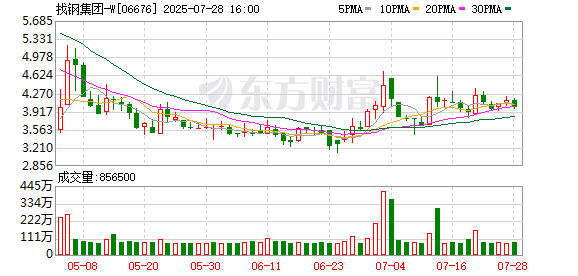
找钢集团与圆币科技达成战略合作,找钢国际将全面支持稳定币结算
Xin Hua Cai Jing· 2025-07-28 10:26
Group 1 - The core viewpoint of the news is the strategic partnership between Zhaogang Group and Yuanbi Technology, focusing on the integration of stablecoins and blockchain technology into the digital trading platform for bulk commodities [2][3] - Zhaogang Group is the largest third-party online steel trading platform in China, with a projected annual trading volume exceeding 50 million tons and a GMV of 188 billion yuan in 2024, capturing 40% of China's steel e-commerce third-party trading volume [2] - Zhaogang International, a subsidiary of Zhaogang Group, has seen significant growth, with a revenue increase of 168.4% year-on-year, reaching 593 million yuan, and a trading tonnage growth of 174.5% [2] Group 2 - Yuanbi Technology is one of the first three companies included in the Hong Kong Monetary Authority's stablecoin issuer "sandbox," allowing it to authorize partners to issue and redeem HKDR stablecoins, which are pegged 1:1 to the Hong Kong dollar [3] - The collaboration aims to enhance the transparency and efficiency of bulk commodity trading, with a focus on reducing transaction costs through the use of compliant stablecoins [2][3] - The implementation of the Hong Kong "Stablecoin Regulation" marks a shift towards the compliant development of stablecoins, with Zhaogang Group committed to tracking policy dynamics and exploring applications in cross-border payments and asset tokenization [3]