
新型城镇化

Search documents
筑博设计股价下跌2.12% 大宗交易折价超18%
Jin Rong Jie· 2025-08-05 19:21
Group 1 - The stock price of Zhuzhou Design on August 5 was 17.57 yuan, down 2.12% from the previous trading day, with a trading volume of 202 million yuan [1] - The opening price on that day was 17.91 yuan, reaching a high of 18.09 yuan and a low of 17.39 yuan, with a fluctuation of 3.90% [1] - Zhuzhou Design operates in the engineering consulting services industry, covering areas such as architectural design and urban planning, and is registered in Tibet [1] Group 2 - On August 5, Zhuzhou Design executed two block trades totaling 400,000 shares, amounting to 5.744 million yuan, with an average transaction price of 14.36 yuan, which was a discount of 18.27% compared to the closing price [1] - The buyers were from Northeast Securities, while the sellers were from CITIC Securities and Shenwan Hongyuan [1] Group 3 - On that day, Zhuzhou Design experienced a net outflow of main funds amounting to 23.7021 million yuan, with a cumulative net outflow of 78.3981 million yuan over the past five days [1]
以“江南水乡”为特色 杭州商业再添亮色
Mei Ri Shang Bao· 2025-08-05 03:09
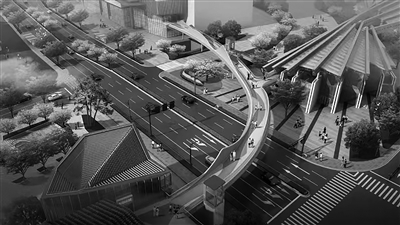
Group 1 - The core project "Qinwang Water Street" in Fuyang District is set to open on September 30, enhancing the commercial landscape in southwest Hangzhou [3] - The project features a total length of 430 meters and a building area of 45,000 square meters, with 25,000 square meters above ground and 20,000 square meters underground [3] - The current occupancy rate of Qinwang Water Street has reached 90%, with over 80% of merchants already in construction, covering diverse sectors such as specialty dining, cultural retail, and life services [3] Group 2 - The pedestrian bridge, part of the "City Eye" urbanization project, has completed 45% of its total construction, including the installation of the main steel box girder structure [4] - The bridge, designed with a curved shape, will connect Qinwang Water Street, the Science Museum, and Qinwang Square, enhancing connectivity and pedestrian safety [4] - The bridge is expected to be completed by the end of September, coinciding with the opening of Qinwang Water Street, and aims to improve traffic efficiency and support commercial prosperity in the area [4]

千岛湖镇社区奏响 新型城镇化共富强音
Hang Zhou Ri Bao· 2025-08-05 02:58
"新型城镇化不是简单的'农民变市民',而是要让每个人都能在城市里找到归属感。"吴其敏表示, 将继续以"绣花功夫"打磨服务细节,让庄天岭的幸福图景延伸到更多角落。 从"乡事城办"的政务革新到"共富工坊"的就业赋能,从邻里温情的悄然生长到"共享菜园"的田园睦 邻,在城东社区,进城家庭的"安居梦"正与城市的"发展梦"深度交融,同频共振,奏响了共同富裕的动 人乐章。 为打破安置小区"对门不相识"的隔阂,社区着力打造"线上+线下"融合的互动平台。线上,依托楼 道微信群,社区每日推送就业信息、政策解读;线下,社区每月举办至少2场的健康养生讲座、趣味竞 技赛等文体活动,还通过人大代表集中接待选民等活动,有效推动了"共富工坊"、邻里中心建设等民生 问题的解决。 同时,聚焦陪读家长"就业难、顾家难"痛点,社区在县妇联指导下建成两家"共富工坊"。工坊引入 饰品加工、家纺缝纫等低门槛、灵活性的就业项目,并配套儿童临时托管区,有效解决了家长的后顾之 忧。目前,工坊已稳定吸纳58人就业,今年3月至6月累计发放加工费超过32万元,成为居民增收的重要 渠道。 今年以来,淳安县人大代表、千岛湖镇城东社区党总支书记吴其敏带领团队,通过"乡事城 ...
汇通集团股价下跌2.05% 盘中现快速反弹行情
Jin Rong Jie· 2025-08-04 15:13
Group 1 - The stock price of Huitong Group closed at 6.22 yuan on August 4, down 0.13 yuan, a decrease of 2.05% from the previous trading day [1] - The opening price on August 4 was 6.26 yuan, with a highest price of 6.40 yuan and a lowest price of 6.13 yuan, with a trading volume of 233,100 hands and a transaction amount of 146 million yuan [1] - On August 4, around 9:37 AM, Huitong Group's stock price experienced a rapid rebound, increasing over 2% within 5 minutes, reaching a price of 6.31 yuan with a transaction amount of 28.15 million yuan [1] Group 2 - Huitong Group's main business includes highway, municipal, and housing construction engineering, with its registered location in Hebei Province [1] - The company operates within the engineering construction sector, involving concepts related to the Hebei region and new urbanization [1] Group 3 - On August 4, the net outflow of main funds was 1.3752 million yuan, accounting for 0.05% of the circulating market value [1] - Over the past five trading days, the cumulative net inflow of main funds was 21.5692 million yuan, representing 0.75% of the circulating market value [1]

森赫股份涨6.63%,成交额1.23亿元,今日主力净流入763.24万
Xin Lang Cai Jing· 2025-08-04 08:22
Core Viewpoint - Senhe Elevator Co., Ltd. has shown a significant increase in stock price and trading volume, indicating positive market sentiment and potential growth opportunities in the elevator manufacturing sector [1][3]. Company Overview - Senhe Elevator Co., Ltd. was established on December 7, 2007, and went public on September 7, 2021. The company specializes in the research, manufacturing, and sales of elevators, escalators, and moving walkways, along with related installation, debugging, and maintenance services [6]. - The company's revenue composition includes: 84.67% from elevators, 8.88% from installation services, 3.92% from escalators and moving walkways, 1.69% from parts sales, and 0.83% from other services [6]. Market Activity - On August 4, the stock price of Senhe increased by 6.63%, with a trading volume of 1.23 billion yuan and a turnover rate of 5.76%, leading to a total market capitalization of 3.305 billion yuan [1]. - The main net inflow of funds today was 7.6324 million yuan, accounting for 0.06% of the total, with a continuous increase in main funds over the past three days [3][4]. International Business - The company has a significant international presence, with major overseas clients in Bangladesh, Russia (Far East region), Kuwait, Uzbekistan, and Mexico. Bangladesh, Russia, and Kuwait are identified as the primary foreign sales regions [2]. - Senhe actively responds to the "Belt and Road" initiative, exporting products to countries such as Bangladesh, Kuwait, and Mexico [2]. Technological Advancements - The company integrates IoT cloud services with its elevator products to support new urbanization initiatives, enabling remote monitoring and management of elevator operations through big data and cloud computing technologies [2]. - Senhe is developing new technologies in biometric recognition (voice, facial, and fingerprint recognition) and IoT applications for elevators, including remote call and QR code recognition [2]. Financial Performance - For the period from January to March 2025, Senhe reported a revenue of 102 million yuan, a year-on-year decrease of 44.51%, and a net profit attributable to shareholders of 16.4698 million yuan, down 42.22% year-on-year [6][7]. - Since its A-share listing, the company has distributed a total of 227 million yuan in dividends, with 173 million yuan distributed over the past three years [8].

在白洋淀,张国华连发三问
Zhong Guo Ji Jin Bao· 2025-08-03 13:19
Core Viewpoint - The meeting focused on enhancing the tourism environment and quality at Baiyangdian, emphasizing ecological protection while developing tourism and rural revitalization strategies [1][2]. Group 1: Tourism Development - Baiyangdian is recognized as a significant asset for Xiong'an, and tourism development must prioritize ecological protection while considering resource endowments and infrastructure [1]. - The meeting highlighted the need for high tourist satisfaction and experience, with a commitment to improving the quality of tourism at Baiyangdian [2]. - Innovative tourism industry models, such as the "company + farmer" approach, are to be promoted to enhance rural tourism [2]. Group 2: Governance and Management - Strengthening tourism market governance and establishing a robust regulatory framework are essential for the healthy development of the tourism sector [2]. - Emphasis was placed on enhancing grassroots governance capabilities and community engagement to address public concerns effectively [3]. - The meeting called for a dual approach of positive guidance and institutional constraints to foster a civilized social atmosphere [2].
专题回顾|2025中国城市房地产投资发展前景报告
克而瑞地产研究· 2025-08-03 02:08
Core Viewpoints - The real estate market in China is showing signs of stabilization despite challenges such as high inventory and price declines, supported by government policies aimed at market stabilization [2][3][4] - The demand for housing in the top 20 cities is expected to remain strong, with an annual incremental demand of approximately 300 million square meters driven by population growth and housing improvement needs [3][36] - The supply of residential land is projected to decrease by 20% year-on-year by 2025, which is expected to help balance supply and demand [4][10] Group 1: Market Structure - Shanghai and Beijing continue to dominate the real estate market, with the top 50 cities accounting for over half of the new housing sales and GDP [1][22] - The demand-side support has led to rising rankings for some coastal cities, with Hainan province particularly benefiting from favorable policies [2][28] - The top 20 cities are projected to have an annual incremental demand of 300 million square meters due to population concentration and improvement needs [3][36] Group 2: Supply and Inventory - The supply of residential land is expected to decrease by 20% year-on-year by 2025, which will help to alleviate inventory pressure and promote market balance [4][10] - Inventory issues vary significantly across cities, necessitating tailored approaches to inventory management [4][10] - The broad and narrow inventory indicators are showing improvements, indicating a reduction in overall inventory pressure [2][19] Group 3: Demand Dynamics - The top 20 cities are expected to see a robust annual incremental housing demand of 300 million square meters, driven by population growth and housing quality improvements [3][36] - The demand for housing in first-tier cities remains stable, with significant improvement in high-end residential markets [39][46] - The demand dynamics in second-tier cities are also promising, with cities like Hangzhou and Chengdu showing strong market performance [47][52] Group 4: City Rankings and Performance - The rankings of cities have shown significant changes, with second-tier cities like Tianjin and Nanjing improving due to better inventory management [30][32] - Coastal cities, particularly in Hainan, have seen notable improvements in rankings due to strong demand-side support [28][30] - The overall performance of the top 50 cities reflects a concentration of population and economic activity, with these cities accounting for 34% of the national population and 50% of GDP [26][30]
森赫股份涨2.20%,成交额9514.39万元,近3日主力净流入1577.25万
Xin Lang Cai Jing· 2025-08-01 09:00
Core Viewpoint - Senhe Elevator Co., Ltd. is experiencing a rise in stock price and has a significant market presence in various international markets, particularly in the context of new urbanization and the Belt and Road Initiative [1][2]. Company Overview - Senhe Elevator Co., Ltd. was established on December 7, 2007, and went public on September 7, 2021. The company specializes in the research, manufacturing, and sales of elevators, escalators, and moving walkways, along with related installation, debugging, maintenance, and aftermarket services [6]. - The company's revenue composition includes: elevators (84.67%), installation services (8.88%), escalators and moving walkways (3.92%), parts sales (1.69%), and other services (0.83%) [6]. Market Activity - On August 1, the stock price of Senhe increased by 2.20%, with a trading volume of 95.14 million yuan and a turnover rate of 4.73%, leading to a total market capitalization of 3.1 billion yuan [1]. - The main net inflow of funds today was 848,800 yuan, accounting for 0.01% of the total, with the industry ranking at 39 out of 193. This marks the third consecutive day of net inflow from main funds [3][4]. International Presence - The company has a significant international customer base, primarily in Bangladesh, Russia (Far East region), Kuwait, Uzbekistan, and Mexico, with Bangladesh, Russia, and Kuwait being the main foreign sales regions [2]. - Senhe actively responds to the Belt and Road Initiative, exporting products to countries such as Bangladesh, Kuwait, and Mexico [2]. Technological Development - The company integrates its GRPS passenger elevators, GRE escalators, and GRM moving walkways with the SICE IoT cloud service platform to support new urbanization initiatives [2]. - Senhe is developing new technologies in biometric recognition (voice, facial, and fingerprint recognition) and IoT applications for remote elevator calling and QR code recognition [2]. Financial Performance - For the period from January to March 2025, Senhe reported a revenue of 102 million yuan, a year-on-year decrease of 44.51%, and a net profit attributable to shareholders of 16.47 million yuan, down 42.22% year-on-year [6][7]. - Since its A-share listing, the company has distributed a total of 227 million yuan in dividends, with 173 million yuan distributed over the past three years [8].
21专访|尹稚:未来人口规模仍然较大,倒逼城市走集约化道路
2 1 Shi Ji Jing Ji Bao Dao· 2025-07-29 13:05
Core Insights - The central urban work conference marks a significant shift in China's urbanization from rapid growth to stable development, emphasizing quality over quantity in urban development [1][4][12] - The focus will shift towards optimizing the modern urban system, enhancing the comprehensive carrying capacity of cities, and promoting high-quality urban renewal [5][22][27] Group 1: Urban Development Challenges - Urbanization has reached a turning point, with population growth entering a negative phase and urbanization growth stabilizing, necessitating a focus on quality improvement and intrinsic development [4][12] - Key challenges include insufficient social services relative to economic growth, unsustainable land finance models, and the need for resilient urban infrastructure to cope with climate change [7][9][10] - The dual flow of urban and rural factors faces barriers, and urban governance lacks coordination, complicating the response to multi-objective governance needs [9][11] Group 2: New Urban Development Goals - The conference outlines a goal of building innovative, livable, beautiful, resilient, civilized, and smart modern cities, with a shift towards a people-centered development approach [5][18] - Emphasis will be placed on efficient and intensive urban development, with a focus on improving living conditions and addressing long-term needs in employment, education, and healthcare [14][27] - The transition from a focus on quantity to quality in urban development signifies the end of the era of rapid capital turnover in real estate, moving towards sustainable and gradual profit generation [12][13][30] Group 3: Urban System Optimization - Optimizing the modern urban system is prioritized to address the fundamental spatial structure of urbanization, promoting coordinated development among large, medium, and small cities [22][24] - The development of urban clusters and metropolitan areas is essential to alleviate the pressure of population concentration in individual cities, fostering a networked urban development model [25][26] - Enhancing the comprehensive carrying capacity of cities is crucial, focusing on increasing land value and efficiency while reducing per capita resource consumption [22][24] Group 4: Urban Renewal Strategies - High-quality urban renewal must address both existing issues and future demands, integrating various objectives beyond mere housing improvements [27][28] - The approach to urban renewal will shift from a singular focus on housing conditions to a more comprehensive strategy that includes infrastructure and public service enhancements [27][28] - The need for a stable housing rental system is emphasized, particularly for new urban residents, to adapt to increasing residential mobility and demand for rental properties [30]

滨州:上半年交出了“产城人”深度融合的优异答卷
Zhong Guo Fa Zhan Wang· 2025-07-29 07:01
Core Viewpoint - Shandong Province's Binzhou City is advancing a people-centered new urbanization strategy, aiming for high-quality urbanization development by 2025, focusing on key areas and breakthroughs in the integration of industry, city, and population [1] Group 1: Development Achievements - The integration of industry and city is deepening, with a GDP growth of 6.1%, surpassing the provincial average by 0.5 percentage points, ranking fourth in the province [2] - The per capita disposable income for residents reached 20,743 yuan, with a growth rate of 5.8%, the highest in the province [2] - Urban residents' per capita disposable income was 25,098 yuan, growing by 5.2%, while rural residents' income was 14,789 yuan, with a growth of 6.1%, narrowing the urban-rural income gap to 1.7 [2] - A total of 20,216 new urban jobs were created, significantly enhancing population agglomeration effects [2] Group 2: Urban and Rural Quality Improvement - Significant progress in urban renewal, with 220 million square meters of new green buildings and 34 old community renovation projects initiated [3] - The rural land transfer rate reached 64.3%, and county logistics shared delivery rate was 100% [3] - Basic public service levels improved, with six county-level medical service centers established and 715 new childcare positions created [3] Group 3: Pilot Construction and Integration - The development matrix for characteristic towns is being established, with eight towns generating over 7.73 billion yuan in revenue and employing 67,000 people [4] - The urban-rural integration pilot areas are promoting coordinated development, with a platform output value of 2.3 billion yuan [4] - The capacity of county towns is being enhanced, with a focus on developing leading industries and a three-dimensional aluminum industry ecosystem in Zouping City [4] Group 4: Potential Areas Urbanization - The implementation of urbanization level enhancement actions in potential areas is underway, with a focus on tailored strategies for each county [5] - The city plans to continue promoting new urbanization and urban-rural integration, leveraging the national-level pilot in Huimin County to optimize population structure and accelerate the urbanization of agricultural transfer populations [5]