碳达峰碳中和

Search documents
中国提出全经济减排目标 全国碳市场覆盖主要高排放行业
2 1 Shi Ji Jing Ji Bao Dao· 2025-09-25 15:21
Group 1: Nationally Determined Contributions (NDC) Goals - China announced new NDC goals aiming for a 7%-10% reduction in greenhouse gas emissions by 2035 compared to peak levels, with a target for non-fossil energy consumption to exceed 30% of total energy consumption [1] - The total installed capacity for wind and solar power is expected to reach over 360 million kilowatts, which is more than six times the capacity in 2020 [1] - The NDC goals are seen as a strong commitment to reducing global greenhouse gas emissions and will enhance the efficiency of the national carbon market [1] Group 2: Carbon Market Development - The national carbon market has been operational for over four years, covering more than 2,200 key emission units in the power sector, making it the largest carbon market globally in terms of greenhouse gas emissions coverage [2] - As of August 2024, the cumulative trading volume in the carbon market reached nearly 700 million tons, with a transaction value of approximately 48 billion yuan [2] - The carbon market is expected to expand to include the steel, cement, and aluminum industries by 2025, adding over 1,300 new key emission units and increasing the controlled carbon emissions by about 3 billion tons [7] Group 3: Future Plans and Recommendations - The Ministry of Ecology and Environment plans to steadily expand the carbon market's coverage and enhance trading varieties and methods [3] - A central document was released outlining a roadmap for the carbon market's development, aiming for comprehensive coverage of major industrial sectors by 2027 [4] - Experts suggest establishing a total control system for carbon emissions and setting net-zero growth targets for the 14th Five-Year Plan period [5][6] Group 4: International Cooperation and Standards - China is actively working to enhance its international influence in carbon markets and is exploring cross-border carbon trading mechanisms [10] - The upcoming COP30 in Brazil is seen as a critical point for advancing the implementation of the Paris Agreement, with expectations for increased international cooperation [9] - China's carbon market has been recognized as a model for emerging economies, with its innovative carbon intensity control being referenced by countries like Turkey, Brazil, and Indonesia [11]
中国提出全经济减排目标,全国碳市场覆盖主要高排放行业
2 1 Shi Ji Jing Ji Bao Dao· 2025-09-25 12:03
Group 1: Nationally Determined Contributions (NDC) Goals - China announced a new round of NDC goals aiming for a 7%-10% reduction in greenhouse gas emissions by 2035 compared to peak levels, with a target for non-fossil energy consumption to exceed 30% of total energy consumption [1] - The NDC goals detail China's commitments to climate change, providing strong support for global greenhouse gas reduction efforts [1] - The establishment of a national carbon market is expected to enhance efficiency in price discovery and control emissions in major high-emission industries [1] Group 2: Carbon Market Development - The national carbon market has been operational for over four years, covering more than 2,200 key emission units in the power sector, making it the largest carbon market globally in terms of greenhouse gas emissions coverage [2] - As of August 2024, the carbon market has recorded a cumulative trading volume of nearly 700 million tons, with a transaction value of approximately 48 billion RMB, marking a new annual high for 2024 [2] - The carbon market's design and policy framework have been continuously improved, with over 60% of total CO2 emissions effectively controlled [2][3] Group 3: Future Expansion and Industry Inclusion - By 2025, the carbon market will expand to include the steel, cement, and aluminum industries, adding over 1,300 new key emission units and increasing the controlled emissions by approximately 3 billion tons [7] - The Ministry of Ecology and Environment plans to gradually include additional sectors such as aviation, petrochemicals, chemicals, and paper manufacturing into the carbon market [7][8] - The carbon market aims to establish a total control system for emissions, with a focus on stabilizing emissions in certain industries by 2027 [4][6] Group 4: International Cooperation and Standards - China is actively working to enhance the international influence of its carbon market and participate in the formulation of global carbon market rules [9][10] - The upcoming COP30 in Brazil is seen as a critical point for advancing the implementation of the Paris Agreement, with China expressing a commitment to multilateral cooperation in climate action [9] - The success of China's carbon market is being recognized globally, with other developing countries looking to China as a model for their own carbon market development [11][12]
数字储能新纪元:全球首座百兆瓦时电站的内蒙古实践
Sou Hu Cai Jing· 2025-09-25 09:51
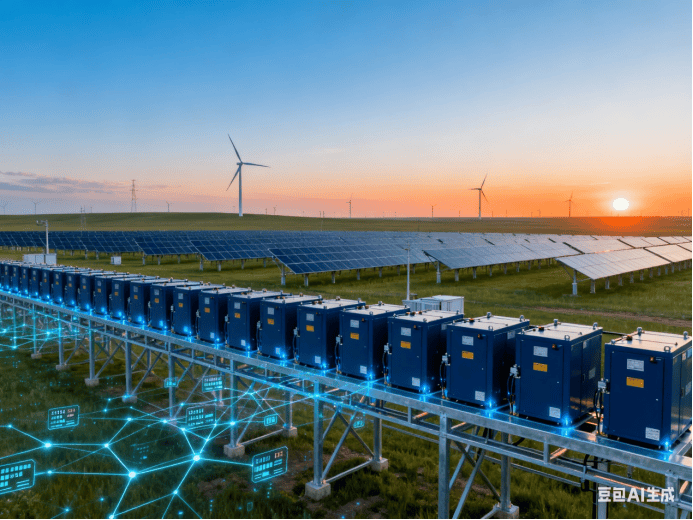
Core Insights - The world's first 100 MWh digital energy storage demonstration project has been completed, marking a significant advancement in energy storage technology and providing a new "Chinese solution" for global energy transition [1][5] Group 1: Technological Breakthroughs - The digital energy storage station features three core components: digital energy exchange system, digital storage integration system, and energy management and intelligent operation platform, enabling millisecond-level dynamic switching [3] - The system utilizes intelligent algorithms to dynamically balance power and temperature among modules, optimizing strategies to extend the lifecycle of battery clusters and the entire storage station [3] - This technological architecture supports the large-scale application of low-cost, long-lifetime digital storage technology [3] Group 2: Scalable Applications - The demonstration project consists of 46 storage containers with a capacity of 1.075 MW/2.15 MWh, totaling 50 MW/100 MWh, and has been operational for over a year since its successful grid connection test in June 2024 [4] - The project has effectively alleviated the flexibility adjustment pressure on the grid and enhanced the region's clean energy consumption levels by supporting 2 million kW of wind and solar power generation [4] Group 3: Promoting Green and Low-Carbon Energy Transition - The successful implementation of this digital storage project provides valuable experience for the large-scale construction of new energy storage in China, aligning with national policies aimed at improving new energy storage scheduling capabilities [5] - The project has been recognized as a "typical case of energy green and low-carbon transition" and a "new energy storage pilot demonstration project," with its successful experience being promoted nationwide [5] - The breakthrough in digital storage technology signifies a profound digital transformation in the energy sector, contributing to the achievement of carbon peak and carbon neutrality goals [5]

"十四五"以来云南绿色能源产业产值突破4000亿元
Zhong Guo Xin Wen Wang· 2025-09-25 07:07
Group 1 - The core viewpoint is that Yunnan Province is leveraging its green energy resources to support high-quality economic development, with significant growth in green energy capacity and industry value since the start of the 14th Five-Year Plan [1][2] - Since the beginning of the 14th Five-Year Plan, Yunnan has added over 60 million kilowatts of green energy capacity, reaching a total scale of 150 million kilowatts, with an industry output value exceeding 400 billion yuan [1] - Yunnan's green electricity generation and installed capacity account for over 90%, while non-fossil energy makes up 46% of primary energy consumption, ranking among the top in the country [1] Group 2 - Yunnan has become an important energy base for the "West-to-East Power Transmission" project, with cumulative electricity delivery exceeding 2 trillion kilowatt-hours, saving 666 million tons of standard coal and reducing carbon dioxide emissions by 1.73 billion tons [2] - The province is accelerating the construction of the "Green Aluminum Valley," with the establishment of 15 provincial-level zero-carbon parks and the creation of 136 national-level green factories [2] - The industrial green transformation in Yunnan is being significantly enhanced, with the development of green supply chain management enterprises and the establishment of 10 green industrial parks [2]
专家解读丨2035年国家自主贡献目标:我国能源转型持续发力 彰显应对气候变化责任担当
国家能源局· 2025-09-25 04:43
Core Viewpoint - The article emphasizes the significance of green and low-carbon energy transition in achieving China's carbon peak and carbon neutrality goals, highlighting the country's commitment to sustainable development and international cooperation in addressing climate change [2][6][8]. Group 1: Achievements in Energy Transition - China's energy consumption reached 5.96 billion tons of standard coal in 2024, maintaining its position as the world's largest energy consumer. The country has made remarkable progress in energy green and low-carbon transition under strong leadership [3]. - Energy efficiency and cleanliness have improved, with energy consumption per unit of GDP decreasing by 11.6% compared to the end of the 13th Five-Year Plan. The share of non-fossil energy consumption reached 19.8%, an increase of 7.8 percentage points since 2015, with expectations to exceed the 20% target by 2025 [3]. - The electrification rate of end-use energy has reached around 30%, with over one-third of electricity being green energy, reflecting a significant shift in energy consumption structure [3]. Group 2: Strengthening Non-Fossil Energy Supply - China has the world's largest and fastest-growing renewable energy system, with installed capacities for hydropower, wind, solar, and biomass power leading globally. By July 2025, the total installed capacity for wind and solar power reached 1.68 billion kilowatts, accounting for nearly half of the global total [4]. - The country has consistently approved over 10 nuclear power units annually, leading the world in operational and under-construction nuclear power capacity. The average power supply reliability reached 99.924% in 2024 [4]. Group 3: Growth of Clean Energy Industry - Since 2015, China's share of global clean energy investment has increased from 26% to around 34%, making it the largest investor in energy transition. The country leads in the production of photovoltaic products, lithium batteries, and new energy vehicles, contributing over 80% of global photovoltaic modules and 70% of lithium batteries [5]. - China's exports of wind and solar products have significantly supported global climate change efforts, reducing carbon emissions by approximately 4.1 billion tons since 2020 [5]. Group 4: National Contribution Goals for 2035 - China's 2035 national contribution goals reflect its commitment to addressing climate change and establishing a fair global energy governance system. The country aims to achieve a non-fossil energy consumption share of over 30% by 2035, demonstrating its responsibility as a major power [6][7]. - The country acknowledges the challenges of achieving significant reductions in carbon intensity while facing rising energy demand, emphasizing its commitment to the principle of "common but differentiated responsibilities" in global climate governance [6][8]. Group 5: Strategies for Achieving Goals - The strategy for achieving carbon peak and carbon neutrality includes constructing a green and resilient energy consumption system, promoting structural changes in energy consumption, and implementing dual control over total carbon emissions and intensity [9]. - The focus on non-fossil energy development will be intensified, with plans to expand the multi-source supply system for non-fossil energy and develop a new power system that integrates various energy forms [9][10]. - Emphasis will be placed on technological innovation in energy, market reforms, and international cooperation to enhance the effectiveness of energy transition efforts [10].

“十四五”以来云南绿色能源产业产值突破4000亿元
Zhong Guo Xin Wen Wang· 2025-09-25 00:54
Core Viewpoint - Yunnan Province is significantly advancing its green energy sector, with over 60 million kilowatts of new green energy capacity added since the start of the 14th Five-Year Plan, contributing to a total capacity of 150 million kilowatts and an industry output value exceeding 400 billion yuan [1] Group 1: Green Energy Development - Yunnan has a total potential for green energy development of 200 million kilowatts, accounting for approximately 20% of the national total [1] - The province's green electricity generation and installed capacity exceed 90%, with non-fossil energy making up 46% of primary energy consumption, ranking among the top in the country [1] - The green aluminum and silicon photovoltaic industries have each surpassed 100 billion yuan in output value, while the new energy battery industry is rapidly emerging [1] Group 2: Energy Collaboration and Environmental Impact - Yunnan has sent over 2 trillion kilowatt-hours of electricity through the "West-to-East Power Transmission" project, saving 665 million tons of standard coal and reducing carbon dioxide emissions by 1.73 billion tons [2] - The province is accelerating the construction of the "Green Aluminum Valley" and has initiated the establishment of 15 provincial-level zero-carbon parks, with 136 national-level green factories and 10 green industrial parks created [2] - The level of industrial greening in Yunnan has significantly improved, supported by the continuous expansion of the "green electricity + advanced manufacturing" advantage [2]
国家标准走基层 赋能甘肃企业“减碳变现”
Zhong Guo Xin Wen Wang· 2025-09-24 20:24
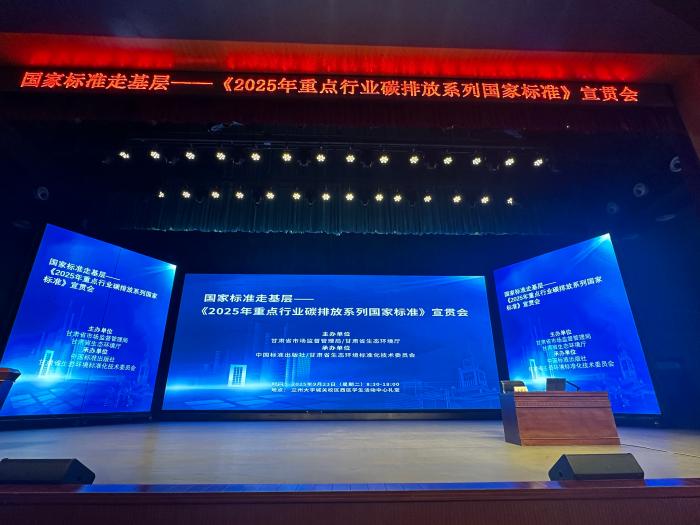
中新网9月24日电(记者左雨晴)记者从市场监管总局获悉,9月23日,"国家标准走基层——甘肃省重点 行业碳排放系列国家标准宣贯会"在甘肃兰州举行。 会议针对五项最新发布的国家标准开展权威解读与系统宣贯。邀请参与标准制定的国家级技术专家团队 亲临现场,聚焦能源、化工、有色、新材料等五大关键领域的碳排放量化方法、监测规范、报告要求及 核查要点进行了专业解读。 碳市场平稳有序运行的关键在于统一、公平、可量化、可交易的标准体系。若无明确标准支撑,碳市场 将陷入数据混乱、交易失序的困境,难以发挥市场化减排作用。那么,碳排放标准的实施,如何具体赋 能甘肃企业参与碳市场,实现"减碳变现"? 9月23日,"国家标准走基层——甘肃省重点行业碳排放系列国家标准宣贯会"在甘肃兰州举行。 甘肃碳排放第三方核查机构之一的兰州金石资源环境科技有限公司,近年来深度参与了全国碳市场特别 是甘肃重点行业企业的技术服务工作。据相关负责人介绍,《碳排放核算与报告要求》等系列国家标准 的发布,是该公司一切技术服务工作的"基石"和"准绳",确保了开展碳核查工作的科学性、规范性和公 信力。 "在过去,企业自行填报碳排放基础数据时往往存在统计口径不一致、 ...
生态环境部李高:加快建设全国统一碳市场 稳步扩大市场覆盖范围
2 1 Shi Ji Jing Ji Bao Dao· 2025-09-24 15:45
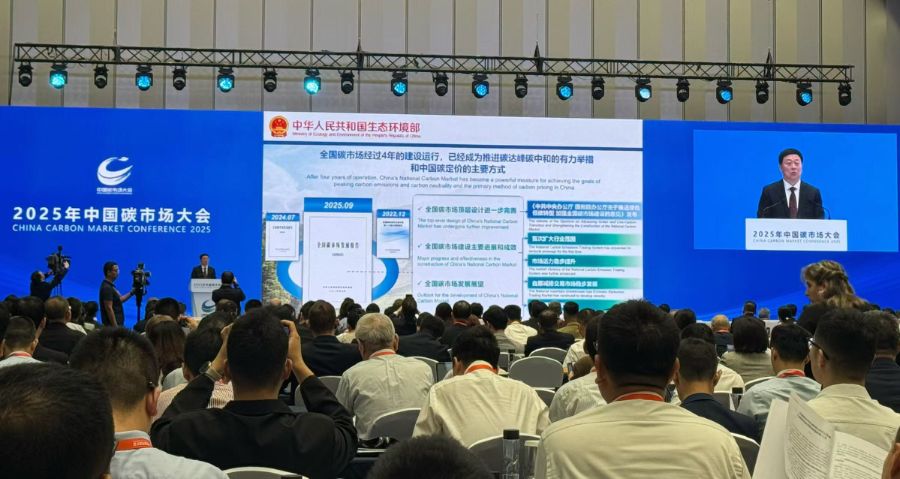
碳市场首份中央文件制定发展目标 李高表示,全国碳市场顶层设计已进一步完善。今年8月25日,中共中央办公厅、国务院办公厅发布《关于推进绿色低碳转型加 强全国碳市场建设的意见》(下称"《意见》"),这是我国碳市场领域第一份中央文件,对全面推进全国碳市场建设作出系统 部署,明确碳市场的基本定位、总体要求,制定了全国碳市场发展目标和重点工作任务。 "中国碳市场经过四年运行,已经成为推动碳达峰碳中和的有力举措,已经成为碳定价的主要方式。"9月24日,生态环境部副部 长李高在2025年中国碳市场大会现场发布了《全国碳市场发展报告(2025)》,介绍了2024年以来全国碳市场的进展和成效。 生态环境部副部长李高,本报记者摄 李高表示,碳市场是一项复杂的系统工程,尽管全国碳市场建设取得积极的进展,但距离建成更加有效、更有活力、更具国际 影响力的国际碳市场有很多工作要做。下一步,生态环境部将加快建设全国统一碳市场,持续完善全国碳市场制度体系,稳步 扩大市场覆盖范围,进一步提升市场活力,不断丰富交易品种、主体和方式,加强国际合作与交流,更好发挥市场功能,激发 全社会绿色低碳发展内生动力和创造力。 《意见》提出,碳市场是利用市场机 ...
明确重点排放单位的碳排放计量管理、 计量人员等 这项规范发布
Yang Shi Wang· 2025-09-24 07:46
该计量审查规范的正式发布和实施,是我国建立健全碳达峰碳中和标准计量体系的关键举措,为重 点排放单位碳计量管理工作提供了清晰的"路线图",也为碳排放权市场的公平、公正交易提供坚实的数 据保障,将助力实现碳达峰碳中和目标。 据市场监管总局网站消息,近日,市场监管总局发布《重点排放单位碳计量审查规范》,将于明年 3月8日起施行。这标志着我国重点排放单位碳计量工作有了明确、统一的计量审查规范指引,将有力推 动和指导重点排放单位碳计量体系建设,切实提升碳计量能力和水平。 2025年《政府工作报告》提出"积极稳妥推进碳达峰碳中和",而碳排放数据的准确性、一致性和可 靠性是支撑碳减排统计核算体系、护航碳排放权交易市场健康运转的重要基础。 该计量审查规范对重点排放单位的碳排放计量管理、计量人员、计量器具、计量数据等进行了规 范,明确了碳排放计量范围包括化石燃料燃烧温室气体排放,生产、废物处置等过程发生的温室气体排 放,净购入的电力、热力消费引起的温室气体排放等。 ...
道生天合IPO:风电环氧树脂全球龙头 赋能绿色能源与新材料产业升级
Sou Hu Cai Jing· 2025-09-24 02:13
Core Viewpoint - The new energy industry chain is entering a golden development period amid the global energy transition and "dual carbon" goals, with Daosheng Tianhe Materials Technology (Shanghai) Co., Ltd. officially launching its public offering to strengthen its leading position in the new materials sector [2][5]. Group 1: Company Overview - Daosheng Tianhe, established in 2015 and headquartered in Shanghai, focuses on high-performance thermosetting resin materials, with three core product lines: materials for wind turbine blades, new composite resin materials, and adhesives for new energy vehicles and industrial applications [3][5]. - The company has achieved a global leading position in the wind turbine blade epoxy resin market, with sales expected to reach 143,100 tons in 2024, and ranks second in China and third globally for wind blade structural adhesives [3][5]. Group 2: Financial Performance - Daosheng Tianhe has maintained steady financial growth, with revenues of 3.436 billion yuan, 3.202 billion yuan, 3.238 billion yuan, and 1.785 billion yuan from 2022 to the first half of 2025, and net profits of 108 million yuan, 152 million yuan, 155 million yuan, and 85 million yuan during the same period [5]. - The company anticipates significant growth in the first three quarters of 2025, with revenue expected to increase by 22.32% to 27.03% year-on-year and net profit projected to rise by 41.03% to 51.88% [5]. Group 3: Strategic Initiatives - The funds raised from the public offering will primarily be allocated to a project for producing 56,000 tons of high-end adhesives and high-performance composite resin systems for new energy and power batteries, as well as repaying bank loans [2][5]. - Daosheng Tianhe has a strong patent portfolio with 69 patents, including 38 invention patents, and has received certifications for automotive and aerospace quality systems, positioning itself for further growth in the green low-carbon economy [5].