
人形机器人

Search documents
具身科技CEO冯振宇:加速跑 助人形机器人早日“进厂”
Zhong Guo Zheng Quan Bao· 2026-02-10 22:33
Core Insights - The humanoid robot industry is rapidly evolving, with Sichuan-based company "Jushen Technology" launching multiple products within a year, including two industrial-grade humanoid robots "Tianxingzhe" and an emotional interaction robot "Aiqiao" [1][2] Group 1: Company Overview - Jushen Technology was founded over a year ago and has quickly developed a strong product lineup, showcasing its capabilities in humanoid robotics [1] - The company is led by CEO and CTO Feng Zhenyu, who emphasizes the importance of efficiency and rapid development to compete with coastal industry leaders [1][2] Group 2: Technological Innovations - The emotional interaction robot "Aiqiao" utilizes optimized 3D ultra-short throw projection technology, allowing for 59 degrees of freedom in facial expressions and achieving an emotional recognition accuracy of over 85% [2][3] - The company has established a unique ELA model (Emotion-Language-Action) as its core technology direction, focusing on motion control, spatial intelligence, and emotional intelligence [2][3] Group 3: Product Development - Jushen Technology has successfully launched three robots in less than a year, including the first commercial humanoid robot in Sichuan, "Tianxingzhe 1," and its upgraded version "Tianxingzhe 2" [4] - The company aims to release a new product every quarter, emphasizing rapid iteration and resource allocation to meet project demands [4][5] Group 4: Market Position and Challenges - Despite the promising developments, Jushen Technology's products have not yet fully entered manufacturing environments, with current clients primarily being research institutions and data collection factories [6] - The humanoid robot industry faces challenges such as high costs, insufficient decision-making capabilities, and the need for significant technological advancements before achieving widespread practical application [6][7] Group 5: Industry Trends - The humanoid robot sector is gaining global attention, with expectations for significant growth and resource aggregation, although many companies still struggle with practical implementation [6][7] - Cities like Chengdu are facilitating the commercialization of humanoid robots by organizing real-world validation activities and developing comprehensive solutions for the tourism sector [7]

敏实集团(0425.HK):拟成立美国机器人合资公司
Ge Long Hui· 2026-02-10 20:38
Core Viewpoint - The company is accelerating its global expansion in the robotics sector through strategic partnerships, with a focus on humanoid robot joint modules and battery box business, which is expected to see significant growth due to rising demand in Europe [1][3]. Group 1: Robotics Business Expansion - On February 9, 2026, the company signed a framework agreement with Green Harmonic to establish a joint venture in the U.S. for humanoid robot joint module assembly, with a 60% stake for the company and a 40% stake for Green Harmonic, involving an investment of $10 million [1]. - In December 2025, the company entered a three-year strategic cooperation with a leading robotics firm in Europe for the production and distribution of general-purpose embodied intelligent robots [1]. - The company possesses global production capacity and industrialization capabilities, complemented by Green Harmonic's core technology in harmonic reducers, which is expected to meet local demand from North American robotics companies [1]. Group 2: New Business Developments - In the liquid cooling sector, the company's subsidiary Precision Industries received orders for immersion cooling cabinets and liquid cooling systems from a Taiwanese AI server manufacturer, with expected mass delivery by the end of 2025 [2]. - In the low-altitude economy sector, the company is strategically positioning itself in the eVTOL airframe and rotor system market, having signed a strategic cooperation agreement with EHang in July 2025, which includes production intent orders [2]. - The company granted 2.4 million shares of zero-cost stock options, with 820,000 shares directed towards core R&D personnel in new sectors such as robotics, AI, liquid cooling, and low-altitude economy, demonstrating its long-term strategic commitment [2]. Group 3: Battery Box Business Growth - The battery box business is entering a harvest phase, with global sales accelerating; in the first half of 2025, revenue reached 3.582 billion yuan, a year-on-year increase of 49.8%, with a gross margin of 23.0%, up 2.4 percentage points [3]. - The growth of the battery box business is significantly supported by the increasing penetration of new energy vehicles in Europe, with the company supplying 8 out of the top 15 best-selling EV models in Europe for the first half of 2025 [3]. - The company has also successfully expanded its chassis structural components, securing orders from major European automakers such as Toyota, General Motors, Great Wall, and Geely [3]. Group 4: Financial Forecast and Valuation - The company maintains its previous profit forecasts, expecting revenues of 27.8 billion yuan, 32 billion yuan, and 36.9 billion yuan for 2025-2027, with net profits of 2.85 billion yuan, 3.43 billion yuan, and 4.07 billion yuan respectively [3]. - Based on comparable company PE valuations, the company is assigned a PE of 15.2 times for 2026, with a target price of 49.71 HKD, and a corresponding U.S. stock target price of 127.13 USD [3].
加速跑 助人形机器人早日“进厂”
Zhong Guo Zheng Quan Bao· 2026-02-10 20:22
Core Insights - The humanoid robotics industry is rapidly evolving, with Sichuan Jushen Humanoid Robotics Technology Co., Ltd. (referred to as "Jushen Technology") launching two industrial-grade humanoid robots, "Tianxing" and an emotional interaction robot, "Ai Qiu" [1] - The CEO of Jushen Technology, Feng Zhenyu, emphasizes the challenges faced by companies in central and western China in competing with leading firms in coastal regions due to resource, funding, and talent constraints [1] - The industry is on the brink of mass production, but significant technological and supply chain hurdles remain to be overcome before widespread adoption can occur [1][6] R&D Strength - Jushen Technology has developed the emotional interaction robot "Ai Qiu," which utilizes innovative 3D ultra-short throw projection technology to manage 59 degrees of freedom in facial expressions, achieving an emotional recognition accuracy of over 85% for at least 15 emotions [2] - The company's core technology focuses on robot motion control, spatial intelligence, and emotional intelligence, establishing the ELA model (Emotion-Language-Action) as its technical route [2][3] - Jushen Technology boasts a robust R&D team, including over 30 national-level experts and more than 100 master's and doctoral researchers, enabling a comprehensive self-research capability from core algorithms to precision manufacturing [3] Product Innovation Acceleration - Within a year, Jushen Technology has successfully developed and launched three robots, including the first commercial humanoid robot in Sichuan, "Tianxing 1," and its upgraded version "Tianxing 2," along with "Ai Qiu" [4] - The company aims to release a new product every quarter, focusing on rapid iteration and efficient resource allocation to maintain a competitive edge [4] - Jushen Technology integrates local cultural elements into its products, drawing inspiration from the unique species "Wenchuan Dragon Lizard" to enhance the emotional value of its robots [4] Industry Empowerment Potential - Humanoid robots are seen as a key component in the transition of "physical AI" into reality, with the "Tianxing" series currently in collaboration with various factories for validation [6] - Despite high market expectations, many humanoid robots still lack autonomous decision-making capabilities, indicating that the industry is still in its early stages of development [6] - The complexity of humanoid robots, compared to electric vehicles, requires a long-term commitment to development, with a timeline of 3 to 5 years for product iteration [6] Commercialization Efforts - Cities like Chengdu are facilitating the commercialization of humanoid robots by organizing real-world validation activities and developing comprehensive solutions for the tourism sector [7] - These initiatives aim to bridge the gap between technological breakthroughs and industrial applications, enhancing the overall quality and efficiency of the robotics industry [7]
特斯拉领导层最新变动 任命欧洲高管负责全球电动汽车销售
Xin Lang Cai Jing· 2026-02-10 17:44
特斯拉方面尚未对此事作出回应。 对Ward的任命恰逢特斯拉正面临美国电动汽车需求全面放缓以及欧洲销量大幅下滑之际。首席执行官 马斯克优先投资人工智能、自动驾驶和人形机器人。随着2025年交付量下滑,特斯拉将全球电动汽车销 量冠军的地位拱手让给了比亚迪。 特斯拉任命其欧洲业务的一位负责人来负责全球电动汽车销售,这是该公司陷入困境的汽车业务的最新 领导层变动。 据知情人士透露,特斯拉欧洲、中东和非洲(EMEA)业务副总裁Joe Ward将领导公司的销售、服务和 交付组织。 对Ward的任命恰逢特斯拉正面临美国电动汽车需求全面放缓以及欧洲销量大幅下滑之际。首席执行官 马斯克优先投资人工智能、自动驾驶和人形机器人。随着2025年交付量下滑,特斯拉将全球电动汽车销 量冠军的地位拱手让给了比亚迪。 沃德自2010年以物流实习生身份加入特斯拉以来,在该公司的销售部门步步高(维权)升。根据他的领 英个人资料,他于2022年被任命为EMEA副总裁。 责任编辑:丁文武 特斯拉任命其欧洲业务的一位负责人来负责全球电动汽车销售,这是该公司陷入困境的汽车业务的最新 领导层变动。 据知情人士透露,特斯拉欧洲、中东和非洲(EMEA)业务副 ...



四十余载的坚守与突破 立中集团:“铝”中“淘”金
Zheng Quan Ri Bao· 2026-02-10 15:46
Core Viewpoint - Lichong Group has transformed from a small family workshop into a leading global player in the aluminum alloy industry, achieving over 30 billion yuan in revenue through a focus on innovation and a complete industrial chain [1][2][8]. Group 1: Company History and Development - Founded in the early 1980s in Baoding, Hebei, Lichong Group started as a family-run workshop focused on waste aluminum recycling and processing [2][3]. - The company capitalized on the booming demand for aluminum during China's economic reforms, achieving a net profit of over 9 million yuan in 1988 as aluminum prices surged from 7,000 yuan/ton to over 18,000 yuan/ton [2][3]. - Lichong Group avoided diversification and focused on the aluminum alloy sector, which allowed for deep exploration and innovation in production processes [3]. Group 2: Technological Innovation - The company has invested heavily in R&D to overcome initial technological barriers, leading to the development of high-purity aluminum-silicon-magnesium-titanium alloys, breaking foreign monopolies [4]. - Lichong Group's latest innovation, a heat treatment-free aluminum alloy, enhances manufacturing efficiency and reduces costs, marking a significant technological breakthrough [4][6]. - The company has established a comprehensive technical system covering alloy materials, wheel manufacturing, and new material applications, with a total of 984 patents, including 181 invention patents [6]. Group 3: Global Expansion and Market Strategy - Lichong Group has built overseas production bases in Thailand and Mexico, creating a supply chain network across Southeast Asia, Europe, and America, which helps mitigate trade barriers and respond quickly to international orders [7][8]. - The company emphasizes a complete industrial chain from waste aluminum recycling to new energy materials, achieving a resource closed loop that significantly reduces energy consumption and carbon emissions [7]. - Lichong Group's products span various sectors, including automotive, rail transportation, robotics, aerospace, and high-end manufacturing, enhancing its resilience against market fluctuations [7][8]. Group 4: Future Outlook - The company plans to continue focusing on aluminum alloy new materials and automotive lightweight strategies while exploring emerging fields such as humanoid robots and solid-state batteries [5][8]. - Lichong Group aims to strengthen its position in both traditional and new industries, striving for high-quality development in the aluminum alloy sector [8].

人形机器人企业纷纷启动IPO 行业资本化提速
Zheng Quan Ri Bao· 2026-02-10 15:28
Core Insights - The humanoid robot industry is transitioning from technological validation to commercial realization, as evidenced by multiple companies initiating IPO processes [1][2][3] Group 1: Industry Development - The humanoid robot sector in China is expected to exceed 140 companies and produce over 330 products by 2025 [2] - The industry is evolving from basic movement capabilities to practical applications in homes and factories [2] - The market is witnessing a surge in IPO preparations, with several companies completing share reforms and moving towards public listings [2][3] Group 2: Capital Market Dynamics - The current wave of IPOs in the humanoid robot sector aligns with the cyclical nature of industry development and capital market support [3] - The introduction of the "1+6" reform by the China Securities Regulatory Commission has created a conducive environment for hard-tech companies to list [4] - The fifth set of listing standards on the Sci-Tech Innovation Board is particularly suited for humanoid robot companies, which typically require significant upfront investment and have long profit cycles [4][5] Group 3: Market Expectations and Focus Areas - The global humanoid robot market is projected to reach 17 billion RMB by 2025, with China accounting for over 50% of this market [6] - Key focus areas for investors include core technology barriers, commercialization capabilities, financial rationality, and risk management [6][7] - The emphasis is on the originality of algorithms, self-sufficiency in key components, and the ability to adapt to market changes [7] Group 4: Post-IPO Considerations - Listing is viewed as a new starting point for high-quality development, with ongoing R&D investment being crucial for long-term success [7] - The stability of team dynamics, long-term strategic orientation, and effective management of market expectations will significantly influence the companies' valuations post-IPO [7]
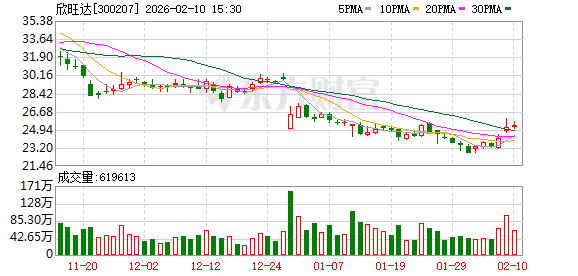
欣旺达:公司未与特斯拉洽谈人形机器人电池的供应
Mei Ri Jing Ji Xin Wen· 2026-02-10 14:43
每经AI快讯,有投资者在投资者互动平台提问:贵司是否有和特斯拉洽谈Optimus人形机器人电池供 应? 欣旺达(300207.SZ)2月10日在投资者互动平台表示,您好!感谢您对公司的关注与支持。公司未与其 洽谈人形机器人电池的供应,谢谢。 (文章来源:每日经济新闻) ...

突发!美国一家人形机器人企业倒闭
机器人大讲堂· 2026-02-10 14:02
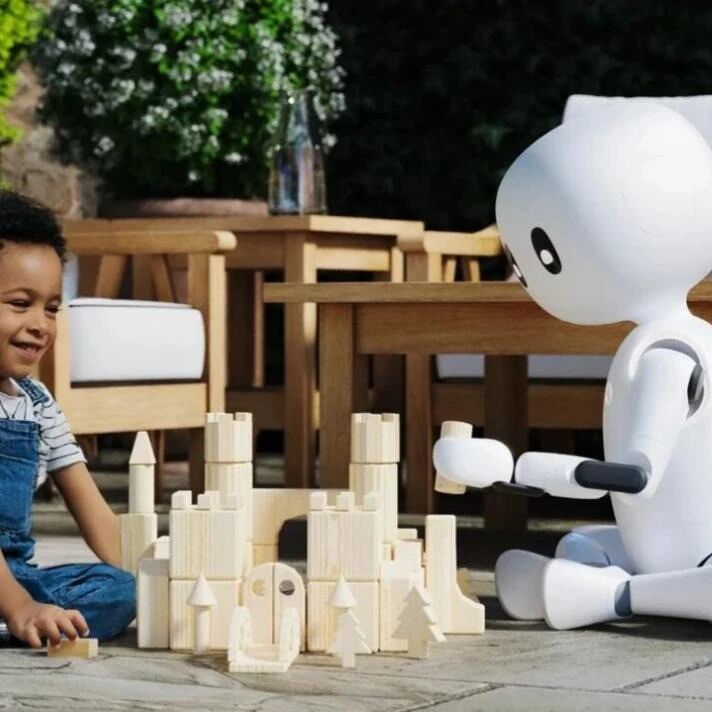
Core Viewpoint - Cartwheel Robotics, a US-based humanoid robot startup, announced its closure due to a funding crisis after four years of development, highlighting the challenges faced by startups in the humanoid robotics sector [1][11]. Group 1: Company Overview - Founded in 2022, Cartwheel Robotics focused on creating "companion" robots with emotional interaction capabilities, differentiating itself from mainstream industrial robots through its unique design [3][10]. - The flagship product, Yogi, featured a "child-like" design aimed at fostering a friendly and approachable image, which garnered significant attention from the public and investors [10]. Group 2: Technological Achievements - Prior to its closure, Cartwheel showcased its core technology, a proprietary "motion language model" (MLM) that allowed the robot to interpret human text or voice commands into expressive actions, overcoming traditional limitations of robotic movements [5][16]. - The company successfully developed Yogi within a year, utilizing a small team of seven and $3 million in external funding to create a complete humanoid robot platform [8]. Group 3: Challenges and Industry Context - Despite its innovative approach, Cartwheel Robotics struggled to secure suitable capital partners, which ultimately led to its downfall, emphasizing the critical role of funding in hardware startups [11][16]. - The humanoid robotics industry faces significant barriers, including high production costs, with the average bill of materials (BOM) for humanoid robots projected to be around 400,000 RMB ($60,000) in 2025, which is double the target price for achieving mass-market viability [15][16]. - The closure of Cartwheel Robotics reflects broader industry challenges, as similar startups like K-Scale Labs have also failed due to financing issues, indicating a trend of high development costs and difficulties in scaling operations [12][16].
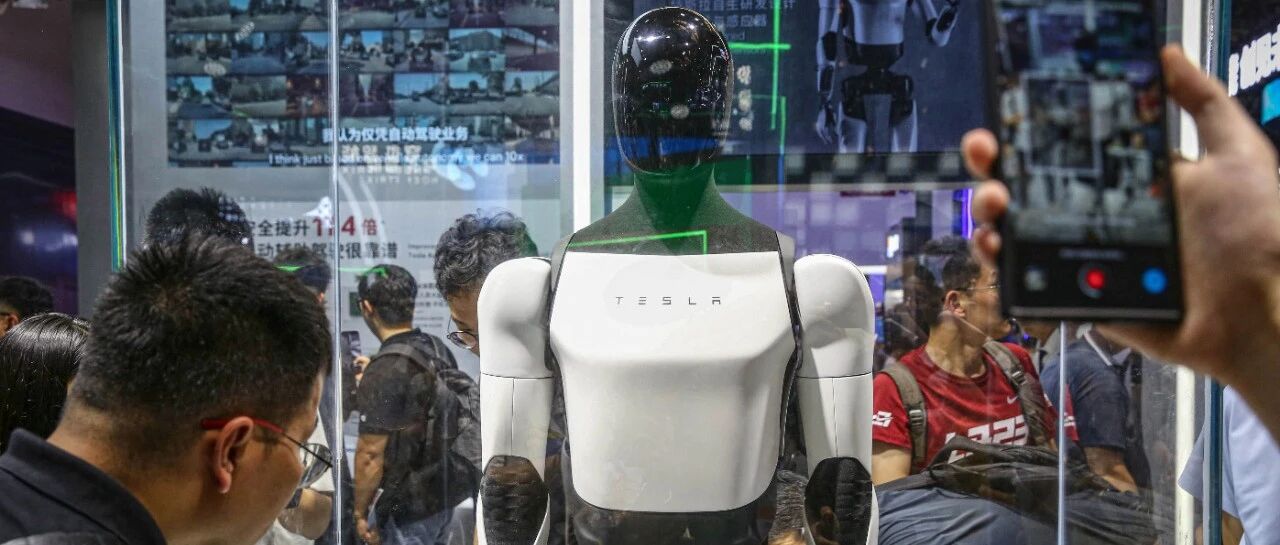
成本压到 13.9 万元!特斯拉 Optimus Gen 3年底启动量产计划!
机器人大讲堂· 2026-02-10 14:02
Core Viewpoint - Tesla is undergoing a significant strategic transformation in 2026, shifting focus from traditional automotive production to becoming a $25 trillion AI company, with a strong emphasis on the mass production of the humanoid robot Optimus Gen 3 [1][14]. Group 1: Optimus Gen 3 Development - The Optimus Gen 3 robot is set to debut in Q1 2026, featuring significant advancements over previous models, including a new high-flexibility hand design and an upgraded AI brain capable of autonomous learning through observation of human actions [3][11]. - The production line is being restructured to accommodate the modular assembly of robots, with a target to achieve mass production by the end of 2026, aiming for an annual output of one million units [13][17]. - The cost of producing each Optimus Gen 3 unit is projected to be under $20,000, approximately 139,000 RMB, due to in-house developed actuators and a vertically integrated supply chain [13][14]. Group 2: Market Challenges and Strategic Shifts - Tesla's Model S and Model X, once flagship models, now contribute only 3% to total deliveries, prompting a strategic pivot towards the Optimus robot as a new growth driver [14][17]. - In 2025, Tesla faced significant performance pressures, with a 3.1% decline in Q4 revenue and an 8.6% drop in annual deliveries, necessitating the search for new growth avenues [17][19]. - The company is investing $2 billion in xAI to enhance its AI capabilities, focusing on the core algorithms for autonomous driving and humanoid robots, indicating a deep commitment to AI as a strategic priority [23]. Group 3: Competitive Landscape - Tesla identifies China as its main competitor in the humanoid robot sector, with projections indicating that Chinese humanoid robot sales could reach 28,000 units in 2026, a 133% increase year-over-year [20][21]. - The company plans to invest over $20 billion in 2026, focusing on AI infrastructure, battery supply chains, and AI chip development, positioning itself to leverage its technological advantages in the AI domain [23].
战略数据研究|专题报告:春节配置,谁主沉浮
Changjiang Securities· 2026-02-10 13:43
Group 1: Market Analysis - The report recommends maintaining a medium to high position in stocks during the holiday, emphasizing strict structural optimization[2] - Historical data shows a high probability of A-shares rising in the 10 trading days after the Spring Festival, with a style shift from large-cap defensive to small-cap growth[2] - As of February 6, 2026, the PE-TTM of the Shanghai Composite Index is approximately 14.59, at the 86.46th percentile of the past 10 years, indicating a shift from "cheap" to "reasonably expensive" for large-cap stocks[5][19] Group 2: Investment Strategy - Investors are advised to focus on AI applications, humanoid robots, and cyclical sectors benefiting from price increases, anticipating a "spring excitement" phase post-holiday[8][39] - The report highlights that the small-cap index (CSI 1000) has a significantly higher probability of gains post-holiday, with an average increase of 3.15%[24] - Defensive strategies should include high-dividend sectors like banks and operators, which can hedge against external uncertainties during the holiday[41] Group 3: Risk Factors - The analysis is based on historical data and does not guarantee future performance, highlighting the potential for market volatility due to domestic and international policy changes[9][43] - The report notes that the current market is influenced by a "weak volume, rising price" scenario, with a lack of strong stimulus expected during the policy vacuum period[36]