
粮食安全

Search documents
深度关注丨共同奔向中国式现代化的美好未来
Zhong Yang Ji Wei Guo Jia Jian Wei Wang Zhan· 2025-09-24 01:29
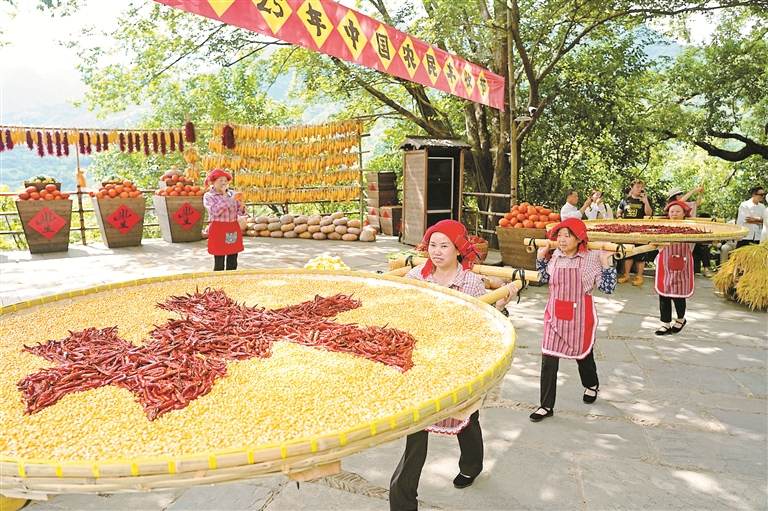
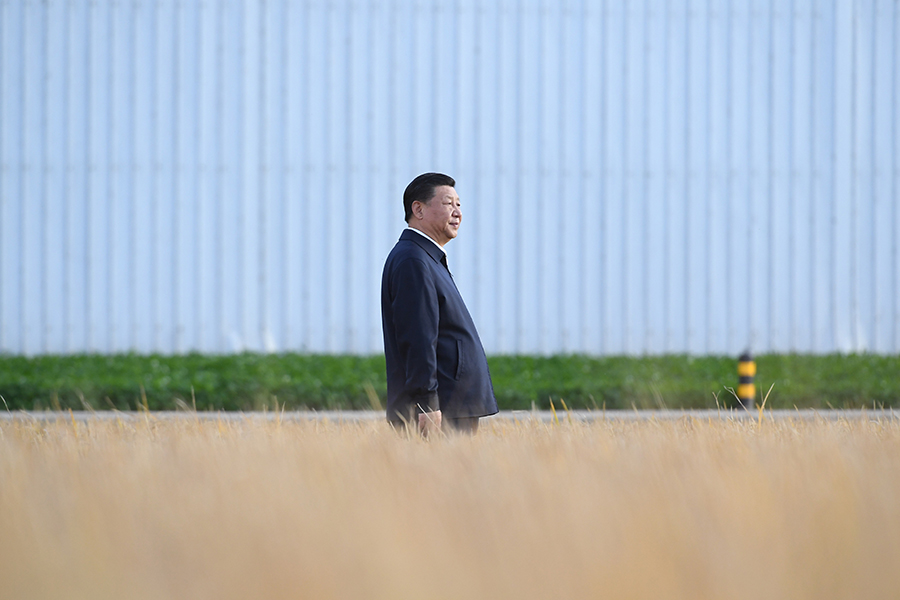
透过"中国农民丰收节"问候,感悟总书记深情厚望 共同奔向中国式现代化的美好未来 中央纪委国家监委网站 李灵娜 今年9月23日是第八个"中国农民丰收节",各地通过农民丰收巡游、农耕技艺体验、民俗文化展演等活动,同 享秋收喜悦,感受中国乡土的蓬勃生机。图为农民在江西省婺源县篁岭景区进行晒丰收巡游。新华社记者 万 象 摄 "希望广大农民群众充分发挥主动性创造性,社会各界积极支持参与,努力建设宜居宜业和美乡村,共同奔向 中国式现代化的美好未来。"在第八个"中国农民丰收节"到来之际,中共中央总书记、国家主席、中央军委主 席习近平代表党中央,向全国广大农民和工作在"三农"战线上的同志们致以节日祝贺和诚挚问候。 透过连续八年的"中国农民丰收节"节日问候,可以感受到习近平总书记对农业、农村、农民的深情厚望。这 些殷殷关切、深深期望,蕴含着温暖和力量,激励大家把粮食安全的主动权牢牢掌握在自己手中。 关心—— 总书记亲自推动设立"中国农民丰收节",营造全社会关注农业、关心农村、关爱农民的浓厚氛围 "中国农民丰收节"是习近平总书记亲自倡导、亲自推动为农民设立的一个节日。 强国必先强农,农强方能国强。犹记得第一个"中国农民丰收节"刚 ...

学习进行时丨习近平总书记心系农民丰收的故事
Xin Hua Wang· 2025-09-23 23:37
Core Viewpoint - The establishment of the "Chinese Farmers' Harvest Festival" highlights the importance of agricultural work and aims to boost farmers' confidence and income [3][4][7]. Group 1: Significance of the Harvest Festival - The "Chinese Farmers' Harvest Festival" was established in 2018 to celebrate farmers' contributions and achievements in agriculture [3][4]. - This festival is the first national-level holiday dedicated to farmers, emphasizing the foundational role of agricultural work in the country [4]. Group 2: Focus on Farmers' Income - President Xi Jinping emphasizes that increasing farmers' income is the key task in agricultural and rural work, urging efforts to broaden income channels for farmers [6][7]. - During various inspections, Xi has engaged with farmers to understand their income situations and promote agricultural modernization to enhance their earnings [9][12][15]. Group 3: Agricultural Modernization and Technological Development - The government is focusing on the development of high-standard farmland and the use of technology to improve agricultural productivity [29][31]. - The establishment of modern agricultural practices, such as the cultivation of salt-tolerant crops, is seen as essential for utilizing marginal lands effectively [17][20][22]. Group 4: Achievements in Agricultural Production - The total grain production in Henan province has remained stable at over 1.3 trillion jin for eight consecutive years, supported by high-standard farmland construction [29]. - The national grain yield per mu has increased by 12.5 kg compared to the end of the 13th Five-Year Plan, reflecting improvements in agricultural practices [31].
公安机关依法严打危害粮食安全犯罪
Ren Min Ri Bao· 2025-09-23 22:33
Core Viewpoint - The Chinese police have intensified efforts to combat crimes related to the illegal occupation of farmland and the destruction of black soil resources, achieving significant results in protecting agricultural land and ensuring food security [1][2]. Group 1: Crime Prevention and Law Enforcement - The police have launched the "Kunlun" special operation and "Jinfeng" action, focusing on regions such as Inner Mongolia, Liaoning, Jilin, and Heilongjiang to combat crimes that damage black soil resources [1]. - Over 4,600 cases of illegal occupation of farmland and destruction of black soil resources have been filed this year, along with more than 200 cases related to the production and sale of counterfeit agricultural materials [1]. - The Ministry of Public Security has taken over 13 major cases for supervision, implementing strict measures to protect farmland and support grain production [1]. Group 2: Comprehensive Crime Control Measures - The police are implementing the strictest farmland protection policies, targeting issues such as illegal occupation, soil theft, seed infringement, and the illegal addition of harmful substances in agricultural products [2]. - A new policing model combining "professional + mechanism + big data" has been established to enhance monitoring and early warning systems [2]. - Collaboration with administrative departments has been strengthened to improve mechanisms for information sharing, case transfer, and inspection, creating a coordinated approach to combat agricultural crimes [2].
“十四五”时期,我国粮食综合生产能力持续提升 中国饭碗端得更稳
Ren Min Ri Bao· 2025-09-23 22:18
Core Insights - China's grain production has consistently remained above 1.3 trillion jin since the 14th Five-Year Plan, with projections for 2024 to exceed 1.4 trillion jin for the first time [1] - The summer grain harvest has reached the second-highest record in history, with early rice yields surpassing 400 kg per mu, indicating a solid foundation for the upcoming harvest season [1] Group 1: Grain Production and Policies - The central government's focus on food security is underscored by continuous policy support, including the implementation of the Food Security Guarantee Law and targeted financial investments [3] - Since the 14th Five-Year Plan, grain planting areas have consistently increased, with 26 out of 31 provinces expected to see production increases in 2024, totaling a rise of 74 billion jin compared to 2020 [3] - The contribution of agricultural technology to grain production has reached 63.2%, highlighting its role as a key driver for food security [6] Group 2: Agricultural Practices and Innovations - Farmers are adopting advanced agricultural practices, such as the use of drip irrigation and precision fertilization, which have led to improved crop yields and reduced costs [4][6] - The integration of technology, including satellite remote sensing and big data, is enhancing agricultural productivity and efficiency [6] - The establishment of over 10 million acres of high-standard farmland has bolstered the resilience of grain production against extreme weather events [3] Group 3: New Agricultural Models - The emergence of new agricultural operators, including family farms and cooperatives, is transforming the agricultural landscape and enhancing food security [9] - The cultivation of high-quality farmers has reached over 9 million, contributing to the development of new agricultural business models [9] - The focus on ecological farming practices is yielding both environmental benefits and economic returns for farmers [4][5] Group 4: Global Responsibility and Food Security - China plays a significant role in global food security, producing over 20% of the world's grain with only 9% of the world's arable land [10] - The country has implemented numerous food aid projects in over 30 countries, demonstrating its commitment to international cooperation in food security [10] - The ongoing efforts to ensure food security reflect China's responsibility as a major global player in agriculture [10]
中国饭碗端得更稳
Ren Min Ri Bao· 2025-09-23 22:12
Core Insights - China's grain production has consistently remained above 1.3 trillion jin since the 14th Five-Year Plan, with projections for 2024 to exceed 1.4 trillion jin for the first time [1][3] - The summer grain harvest has reached the second-highest record in history, with early rice yields surpassing 400 kg per mu, indicating a solid foundation for the upcoming autumn harvest [1][3] Group 1: Grain Production and Policies - The central government's policies have prioritized food security, with the implementation of the Food Security Guarantee Law and increased financial support for disaster prevention and production stabilization [3][4] - The total grain planting area has been increasing, with 26 out of 31 provinces expected to see production increases in 2024, resulting in a total output increase of 74 billion jin compared to 2020 [3][4] Group 2: Technological Advancements - Agricultural technology has significantly contributed to grain production, with the contribution rate of agricultural technology reaching 63.2%, enhancing food security and supply [6][10] - New technologies, such as satellite remote sensing and precision irrigation, have been widely adopted, leading to an increase in average grain yield to 394.7 kg per mu, a rise of 12.5 kg compared to the end of the 13th Five-Year Plan [6][10] Group 3: Sustainable Practices - The implementation of protective farming practices in Northeast China has improved soil health and crop yields, with over 1.12 million acres under such practices [4][5] - The promotion of eco-friendly farming techniques has resulted in reduced fertilizer usage and increased profitability for farmers, with green rice fetching higher market prices [4][5] Group 4: New Agricultural Models - The emergence of new agricultural entities, such as family farms and cooperatives, has transformed agricultural practices, with over 900 million high-quality farmers trained and more than 1.1 million operational entities providing social services [9][10] - The integration of modern farming techniques and community-based initiatives is enhancing rural economies and food security [9][10]
公安机关依法严打危害粮食安全犯罪 今年共立案侦办相关案件4800余起
Ren Min Ri Bao· 2025-09-23 21:59
Core Points - The article highlights the ongoing efforts by public security agencies in China to combat crimes related to the illegal occupation of agricultural land and the destruction of black soil resources, as part of the "Kunlun" special operation and "Jinfeng" action [1][2] - In 2023, over 4,600 cases of illegal occupation of agricultural land and destruction of black soil resources have been filed, along with more than 200 cases related to the production and sale of counterfeit agricultural materials [1][2] Group 1 - Public security agencies are implementing the strictest farmland protection system, focusing on issues such as illegal occupation, destruction of farmland, and counterfeit agricultural products [2] - A new policing model combining "professional + mechanism + big data" is being utilized to enhance monitoring and early warning systems [2] - The collaboration between public security and administrative departments aims to strengthen the mechanisms for reporting leads, transferring cases, and sharing information related to agricultural crimes [2]
大国粮仓正丰收
Yang Shi Wang· 2025-09-23 16:15
"十四五"期间,我国全方位夯实粮食安全根基,产量连续4年保持高位增长,2024年首次迈上1.4万 亿斤新台阶,达到14130亿斤,比2020年增加740亿斤,人均粮食占有量首次超过1000斤。14亿多中国人 的饭碗端得更牢。 央视网消息:燕将明日去,秋向此时分。9月23日是秋分,也是第八个中国农民丰收节。时下,稻 谷金黄、瓜果飘香,神州大地满是收获的幸福。 ...
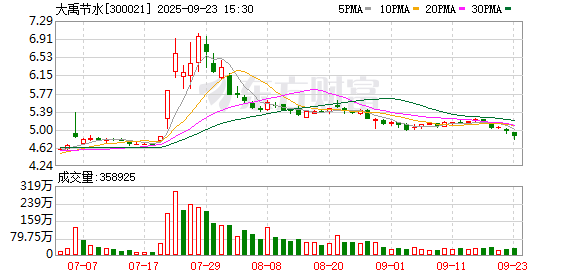
大禹节水子公司联合体预中标1.06亿元高标准农田建设项目
Zheng Quan Ri Bao· 2025-09-23 14:09
Group 1 - The company announced that its wholly-owned subsidiary, Gansu Dayu Water Saving Group Hydropower Engineering Co., Ltd., has become the first candidate for the bid of the first section of the Jinta County 2025 high-standard farmland construction project, with a bid price of 106 million yuan [2] - The project involves the construction of high-standard farmland covering 36,427 acres, land consolidation of 35,856 acres, efficient water-saving systems (pipe irrigation, drip irrigation) for 36,494 acres, as well as environmental protection measures, water storage facilities, and road improvements [2] - The company aims to respond to national policies on rural revitalization, food security, and agricultural strength, showcasing its integrated comprehensive solution capabilities [2] Group 2 - Successful implementation of the project is expected to enhance the company's technical level and comprehensive solution capabilities in high-standard farmland construction [3] - The project will further expand the company's influence in Gansu Province, improving its core competitiveness and brand impact [3]

“粮食安全看山东”之发达面粉集团:保障粮食安全,推动节粮减损
Zhong Guo Fa Zhan Wang· 2025-09-23 08:16
Core Viewpoint - The company, a large grain processing group established in 1999, emphasizes food safety and efficiency in grain processing, aiming to enhance grain utilization and reduce waste through innovative technologies and practices [1]. Group 1: Company Overview - The company is headquartered in Dezhou, Shandong, with eight subsidiaries in Shandong and one wholly-owned subsidiary in Foshan, Guangdong, employing over 950 staff [1]. - It has a total wheat processing capacity of 10,000 tons per day, distributing products across 30 provinces in China [1]. - The company has received positive evaluations in the "Good Grain and Oil" selection from 2017 to 2019 [1]. Group 2: Grain Storage and Transportation - The company has implemented an advanced information procurement system for raw grain, allowing suppliers to place orders autonomously and facilitating automatic detection and weighing [2]. - During transportation, measures such as strict sealing of truck compartments and covering with tarps are employed to ensure food safety [2]. - In storage, the company maximizes control over moisture levels and uses ventilation techniques to minimize microbial contamination and toxin production, ensuring the cleanliness and stability of wheat quality [2]. Group 3: Technological Investment - The company invests in new technologies and equipment to maintain advanced and effective grain processing techniques, ensuring alignment with global industry standards [3]. - It operates 16 world-class milling production lines from Switzerland and Italy, with automated computer control throughout the production process [3]. - The introduction of color sorters and air purifiers significantly enhances product quality by removing impurities from wheat [3]. Group 4: Research and Development - The company collaborates with several research institutions to enhance technological innovation and industry development [4]. - A self-developed milling process has increased the overall flour yield from approximately 77% to 79%, significantly improving raw material utilization and generating additional annual benefits of nearly 10 million yuan [4]. - Innovations in product packaging, such as the use of bulk powder tankers and ton bags, have reduced losses from flour sticking to bags [4].
“粮食安全看山东”之齐河:探索保障粮食安全新路径
Zhong Guo Fa Zhan Wang· 2025-09-23 08:13
Core Viewpoint - Food security is a crucial component of national security, and Shandong Province's Qihe County is actively exploring new pathways to ensure food security [1] Group 1: Local Reserve Management - Qihe County has implemented strict management of local reserve grain and oil, ensuring storage safety and meeting the grain reserve standards of "three months in production areas and six months in sales areas" [2] - The county has established a regular supervision mechanism for reserve grain management, conducting monthly inspections to ensure the authenticity and quality of stored grain [2] - Information technology is being utilized to enhance grain supervision, achieving comprehensive coverage of dynamic monitoring for reserve grain and oil [2] Group 2: Emergency Supply System - Qihe County has built a food emergency supply system with 16 supply points, including a demonstration point at the county government and 15 grassroots points in townships [3] - Regular emergency supply drills are conducted, with a recent drill on August 20 focusing on fire safety and emergency grain supply, enhancing the county's emergency response capabilities [3] Group 3: Market Regulation and Risk Prevention - Strengthened enforcement checks are in place to maintain order in the grain circulation market, focusing on key areas such as grain collection, storage, and sales [4] - The county conducts monthly statistical reporting on grain circulation data to support macro-control and market monitoring [4] - Risk prevention measures are being implemented to protect the interests of grain farmers, enterprises, and consumers [4] Group 4: Innovation and Waste Reduction - Qihe County is promoting grain loss reduction across the entire supply chain while ensuring high yields [5] - The establishment of comprehensive grain service centers and smart storage facilities has significantly reduced post-harvest losses, with a drying capacity of 11,000 tons per day [5] - The county is actively promoting awareness campaigns on grain conservation and anti-food waste initiatives [5] Group 5: Future Plans - Qihe County aims to strengthen local reserve grain management, improve emergency supply systems, and enhance circulation regulation to ensure the stability of the grain market [6] - The focus will be on maintaining the authenticity, quality, and safety of local reserve grain, while effectively utilizing these reserves for government macro-control [6]