绿色低碳转型

Search documents
在推动发展方式绿色低碳转型上取得更大突破、争做西部示范
Shan Xi Ri Bao· 2025-12-07 00:10
Core Viewpoint - The modernization in China emphasizes harmonious coexistence between humans and nature, with green development being a prominent feature of this modernization [1] Group 1: Green Development Goals - The 14th Provincial Committee's Ninth Plenary Session proposed achieving greater breakthroughs in green and low-carbon transformation, aiming to set an example in the western region [1][3] - The implementation of these goals is expected to inject more green momentum into the high-quality development of Shaanxi [1] Group 2: Ecological Environment Protection - Shaanxi's ecological environment protection is crucial for its own development quality and sustainability, as well as for the national ecological environment [2] - Since the 14th Five-Year Plan, Shaanxi has fully implemented Xi Jinping's ecological civilization thoughts, achieving significant results in ecological civilization construction [2] - Water quality in the Yellow River has maintained a Class II standard for three consecutive years, and the ecological quality index in the Qinling area is at a first-class national level [2] - The province has achieved a water and soil conservation rate of 70.81%, with a continuous decrease in both the area and intensity of soil erosion [2] Group 3: Pollution Control and Green Economy - From January to October, the PM2.5 concentration in ten national monitoring cities improved by 13.7% year-on-year, indicating ongoing improvements in air quality [2] - Shaanxi has completed afforestation tasks covering 1.976 million acres and has effectively managed desertification in the "Three North" project area [2] - The province has participated in the national carbon market with a cumulative transaction amount of 2.703 billion yuan, and the trading volume of four major pollutants reached 573 million yuan [2] Group 4: Future Development Strategies - The upcoming 15th Five-Year Plan emphasizes ecological environment protection and green low-carbon transformation as key areas for development [3][4] - There is a focus on strengthening ecological safety barriers, reducing total emissions of major pollutants, and achieving carbon peak targets [3] - The relationship between ecological protection and economic development is highlighted, with an emphasis on converting ecological advantages into developmental advantages [3] Group 5: Systematic Governance and Energy Transition - Ecological environment governance is a systematic project that requires a comprehensive approach, balancing local and overall interests [4] - The need for coordinated governance of multiple pollutants and regional collaboration is emphasized to enhance integrated protection of natural resources [4] - The construction of a new energy system is prioritized, focusing on maintaining energy security while achieving carbon peak goals [5] - The integration of traditional and renewable energy sources is essential for promoting a green and low-carbon economy [5]
姜岩:在年金投资制度上完善、机制上创新,满足养老金长期保值增值的需求
Xin Lang Cai Jing· 2025-12-06 11:11
专题:中国社会科学院社会保障论坛暨《中国养老金发展报告2025》发布式 12月6日金融一线消息,中国社会科学院社会保障论坛暨《中国养老金发展报告2025》发布会今日召 开,中国人民养老保险有限责任公司发展企划部副总经理姜岩出席并参加圆桌论坛。 从耐心资本的角度,如何通过优化投资机制来提升年金的资产效能?姜岩指出,现在年金的投资其实有 更多利用的瓶颈,但是还需要我们在投资制度上完善、机制上创新,才能满足养老金长期保值增值的需 求,满足资本市场的需求。 第一,重塑长期投资理念。年金决策更应该立足于国家宏观经济的长期周期的发展优势,产业结构的深 度调整以及社会发展的根本需求,确保投资目标与负债久期的紧密匹配,深化价值投资内核,拥抱未来 导向的战略布局,要将资金配置于国家长期战略紧密融合,在严控风险的情况下,要逐步审慎提高对人 工智能科技创新、绿色低碳转型等具有长期增长潜力和战略意义的投资品种。 第二,优化年金的治理结构。委托代理机制,避免权责错位和利益冲突,提高投资决策的长期性和稳健 性。强化受托人的战略资产配置抉择和专业投资能力,在清晰界定风险和战略资产配置的框架下赋予投 资管理人更大的战术资产配置权,具有投资决 ...

事关节能降碳工作!国常会:充分发挥政策效应,不断完善市场机制
券商中国· 2025-12-05 15:01
Core Viewpoint - The article emphasizes the importance of energy conservation and carbon reduction as key strategies for achieving carbon peak and carbon neutrality, while also promoting a green transformation of the economy [2][3]. Group 1: Energy Conservation and Carbon Reduction - The meeting highlighted the need for higher quality and level in energy conservation and carbon reduction efforts, aiming to enhance internal motivation and leverage policy effects to create a green production and lifestyle [2][3]. - The State Council plans to issue the "2024-2025 Energy Conservation and Carbon Reduction Action Plan," which will focus on ten key areas including energy, industry, construction, transportation, public institutions, and energy-using equipment [3]. - The establishment of a national carbon emissions trading market is expected to effectively mobilize societal participation in emission reduction [3]. Group 2: Administrative Law Enforcement - The meeting reviewed the progress of the special action to standardize administrative law enforcement related to enterprises and approved the draft of the "Administrative Law Enforcement Supervision Regulations" [5]. - It was emphasized that enhancing the standardization of administrative law enforcement is crucial for optimizing the business environment and stabilizing market expectations [5]. - The regulations aim to clarify the boundaries of law enforcement authority and responsibilities, ensuring accountability for abuses of power and arbitrary enforcement [5]. Group 3: Legal Protection for Enterprises - The Supreme People's Court has been focusing on protecting the rights of enterprises and entrepreneurs through various judicial processes, including criminal, civil, and administrative cases [6]. - Future efforts will include expediting the introduction of judicial interpretations related to company law and improving the judicial protection system for intellectual property [6].

国常会,最新部署!
证券时报· 2025-12-05 14:21
Group 1: Core Views - The meeting chaired by Premier Li Qiang emphasized the importance of energy conservation and carbon reduction as key strategies for achieving carbon peak and carbon neutrality goals, and for accelerating the green transformation of development methods [1] - It was highlighted that enhancing the internal motivation for energy conservation and carbon reduction is crucial, alongside leveraging policy effects and continuously improving market mechanisms [3] Group 2: Energy Conservation and Carbon Reduction - The meeting outlined the need for higher quality and level in energy conservation and carbon reduction efforts, with a focus on promoting green transformation through economic development [3] - The State Council plans to issue the "2024-2025 Energy Conservation and Carbon Reduction Action Plan," which will cover ten key areas including energy, industry, construction, transportation, public institutions, and energy-using equipment [3] - Experts pointed out that there is significant potential for energy conservation and carbon reduction in key sectors and industries, and suggested optimizing the market mechanisms for green factors like carbon emission rights and energy rights [4] Group 3: Administrative Law Enforcement - The meeting reviewed the report on the special action to standardize administrative law enforcement related to enterprises and approved the draft of the "Administrative Law Enforcement Supervision Regulations" [6] - It was emphasized that improving the standardization of administrative law enforcement is essential for optimizing the business environment and stabilizing market expectations [5][6] - The meeting called for a focus on key challenges and long-term systemic solutions, aiming to enhance the level of administrative law enforcement through comprehensive supervision and accountability measures [6][7]

侯安贵会见法孚集团董事会主席兼总裁弗雷德里克·桑切斯
Xin Lang Cai Jing· 2025-12-05 12:49
Core Viewpoint - The meeting between Baowu's General Manager Hou Angui and Voestalpine's Chairman and CEO Friedrich Santner focused on collaboration in metallurgy equipment, technological innovation, green low-carbon transformation, and digital development in the steel industry [1][7]. Group 1: Company Developments - Baowu and Voestalpine shared updates on their respective business developments and reviewed their past cooperation [4][10]. - Both companies expressed their commitment to deepen strategic cooperation based on long-term friendly relations [4][10]. Group 2: Strategic Initiatives - The two companies aim to expand cooperation areas and innovate collaboration models [4][10]. - There is a focus on strengthening metallurgy equipment and technological innovation to promote green low-carbon transformation and digital development in the steel industry [4][10].


中法联合声明:两国继续就加快全球可再生能源部署加强合作
Xin Hua She· 2025-12-05 09:26
Core Viewpoint - The joint statement between the People's Republic of China and the French Republic emphasizes the commitment to enhance cooperation in addressing global climate and environmental challenges, focusing on renewable energy deployment and a transition away from fossil fuels [1][3]. Group 1: Commitment to Climate Agreements - Both countries reaffirm their dedication to effectively implement previous agreements such as the 2019 Beijing Initiative on Biodiversity Conservation and Climate Change, the 2024 Joint Statement on Biodiversity and Oceans, and the 2025 Joint Statement on Climate Change marking the tenth anniversary of the Paris Agreement [1]. - The commitment to multilateralism and addressing global challenges is reiterated, particularly in relation to the foundational legal frameworks like the Rio Conventions, the Kyoto Protocol, and the Paris Agreement [2]. Group 2: Renewable Energy and Emission Reduction - The countries aim to triple global nuclear power capacity by 2050 and recognize the importance of controlling methane emissions through existing technologies and innovative solutions [3]. - There is a commitment to accelerate the deployment of global renewable energy and to contribute to a fair transition away from fossil fuels [3]. Group 3: Biodiversity and Environmental Protection - The statement acknowledges the interconnectedness of climate change, biodiversity loss, pollution, and land degradation, emphasizing the need for collective efforts to halt deforestation and land degradation by 2030 [4]. - Both nations express support for global marine governance and welcome the upcoming implementation of the agreement on the conservation and sustainable use of marine biodiversity beyond national jurisdiction [4]. Group 4: Plastic Pollution and Sustainable Development - The countries support negotiations for a legally binding international instrument to end plastic pollution and encourage research into sustainable plastic alternatives [5]. - There is a commitment to assist developing countries in achieving sustainable development and enhancing their access to climate and environmental funding by 2035 [5]. Group 5: Future Cooperation - Both nations are willing to explore the establishment of a working group to address climate and environmental challenges, with a meeting planned for the first half of 2026 [5].
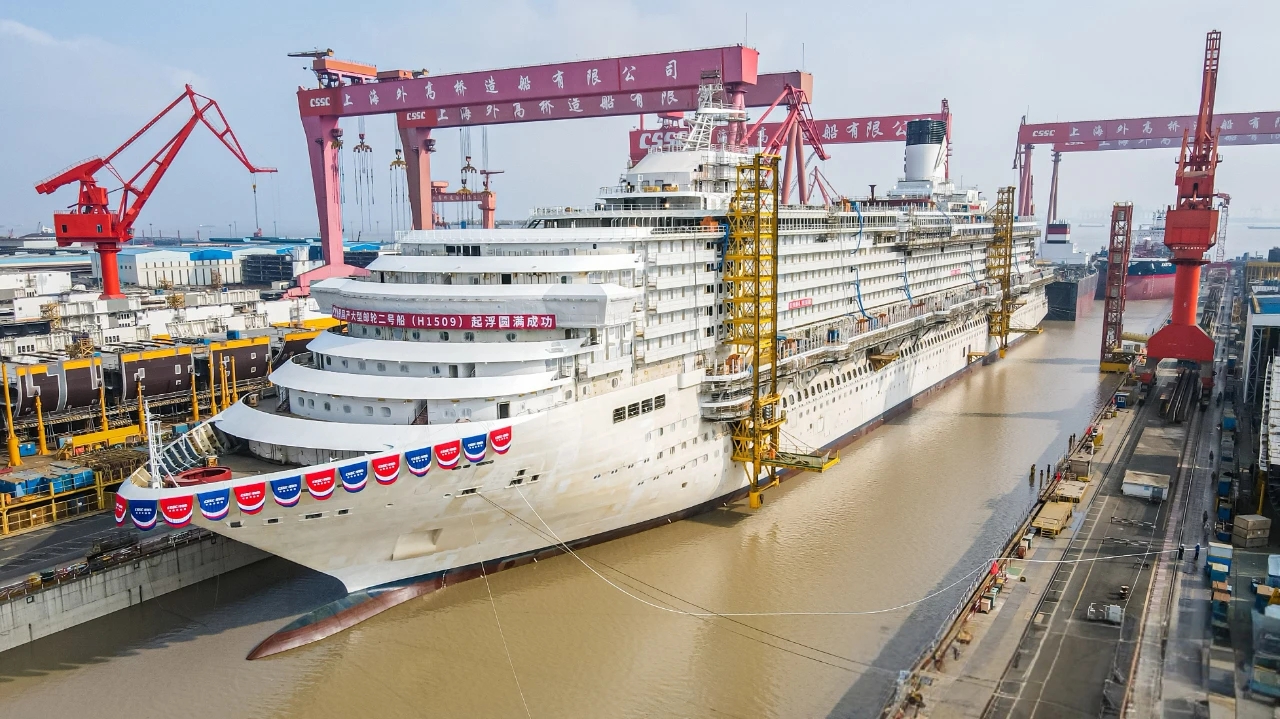
全球新造船成交量预计大跌,替代燃料船舶订单仍在增长
第一财经· 2025-12-05 08:10
Core Viewpoint - The global new shipbuilding market is expected to see a significant decline in transaction volume this year, although new ship prices will remain relatively high historically [3]. Group 1: Market Trends - Since 2021, the global new shipbuilding market has experienced five years of continuous growth, leading to a tight shipbuilding capacity situation. Clarkson's statistics indicate that global new ship orders are expected to reach around 120 million deadweight tons, which is still at a historically good level [3]. - The anticipated decline in new ship transaction volume is attributed to idle shipbuilding capacity and global economic uncertainties. However, factors such as the dismantling of old ships, the release of demand for green ship updates, and the short-term inability to significantly expand quality shipbuilding capacity will continue to support new ship prices at relatively high historical levels [3]. Group 2: Green Transition - During the maritime exhibition, several shipbuilding companies showcased their main ship types, including the release of eight self-developed ship types by Guangzhou Shipyard International and the display of a model of a nuclear-powered container ship by Jiangnan Shipyard [5]. - The global cruise market currently holds 72 cruise ship orders, with mainstream shipbuilding companies securing large orders for cruise ships this year. Additionally, alternative fuel vessels are increasingly occupying a larger share of new ship orders, with new orders for alternative fuel vessels expected to grow by 78% in the first half of 2025 compared to the entire year of 2024 [5]. - The shipping industry is in the early stages of a significant transition towards net-zero emissions, with many shipping companies exploring various alternative fuel ship types, such as LNG and methanol-powered vessels, which are rapidly increasing in order volume [5]. Group 3: Digital Empowerment - The trend of digital empowerment in the shipping industry is becoming prominent, with global shipping giants actively promoting the development of digital technologies. For instance, Maersk is exploring autonomous driving technology and improvements in shipping supply chain efficiency [8]. - In China, since the 13th Five-Year Plan, the government has placed significant emphasis on the development of smart shipping, implementing a series of supportive policies. Companies like COSCO Shipping Group and China Merchants Group are actively practicing in the vertical modeling of shipping [8]. - During the maritime exhibition, COSCO Shipping (Hong Kong) Co., Ltd. launched an intelligent management solution for the entire lifecycle of ship services, significantly reducing inventory check times from one month to two hours [8]. Group 4: Challenges in Digitalization - Industry insiders have pointed out that the industrialization of new digital technologies in the shipping industry faces several challenges, including the need for a stronger digital technology standard system and a lack of data sharing and governance mechanisms [9]. - There are suggestions to accelerate the revision of digitalization-related standards in shipping and to establish unified data and standard specifications to promote data interconnectivity among port enterprises, shipping companies, and trade enterprises [9].

推动“双碳”目标落地,多方建议推进标准化体系建设
Di Yi Cai Jing· 2025-12-05 06:23
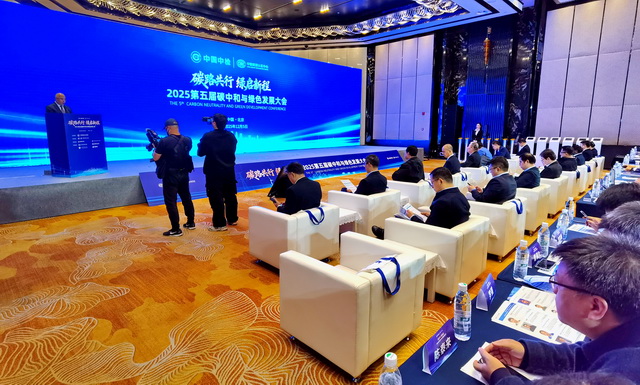
Group 1 - The establishment of a patent standard quality certification integration system is necessary to create a national-level data warehouse for patent standard certification, addressing institutional bottlenecks, data gaps, and interest barriers [1] - This year marks the 5th anniversary of China's "dual carbon" goals, with experts urging the acceleration of standardization system construction to support green and low-carbon transformation of Chinese enterprises [1] - The current energy consumption intensity in China is 1.5 times the world average, and fossil energy per capita consumption is high, with energy demand expected to continue growing rigidly until 2035 [1] Group 2 - Central enterprises are seen as the backbone of the national economy and play a crucial role in promoting green development and achieving "dual carbon" goals [2] - From 2022 to 2024, central enterprises are expected to invest over 60 billion RMB in overseas clean energy projects, with increasing green content in their international operations [2] - A green supply chain management system for central enterprises is being developed, providing decision-making references for sustainable practices and enhancing corporate governance [2] Group 3 - The construction and development of China's carbon market are critical not only for achieving its "dual carbon" goals but also for influencing global climate governance [3] - The carbon trading market is a key tool for optimizing the allocation of limited emission space resources, increasingly becoming a primary policy tool for countries to achieve carbon peak and carbon neutrality [3] Group 4 - The carbon pricing system influences investment, financing, product sales, and technological innovation across various industries [4] - The carbon market promotes deep transformation of traditional industries and fosters new productive forces through a mechanism where emissions incur costs and reductions yield benefits [4] - There is a need to establish a patent standard quality certification integration system to overcome the limitations of current single-line operations in related fields [4] Group 5 - The essence of carbon neutrality is to replace traditional resource-consuming energy with advanced new energy manufacturing [5] - The "Belt and Road" Green Development International Alliance has established a platform for cooperation in green investment and financing, addressing bottlenecks in project implementation [5] - The Ministry of Ecology and Environment is collaborating with the People's Bank of China to enhance the management and service capabilities of green development financing partnerships [5] Group 6 - Three national standards related to greenhouse gas product carbon footprint quantification were released at the 2025 Fifth Carbon Neutrality and Green Development Conference [6] - The International Carbon Accounting Verification Council (ICAVC) published two standards for carbon management software and data center carbon efficiency evaluation [7]
全球新造船成交量预计大跌 替代燃料船舶订单仍在增长
Di Yi Cai Jing· 2025-12-05 06:04
Core Insights - The global new shipbuilding market is expected to see a significant decline in transaction volume this year, although new ship prices will remain relatively high historically [1] - The shipbuilding industry is undergoing a major transition towards green and low-carbon solutions, with increasing orders for alternative fuel vessels [2] - Digital transformation is becoming a new trend in the shipping industry, with major shipping companies actively exploring digital technologies [4][5] Group 1: Market Trends - The global new ship order volume is projected to reach approximately 120 million deadweight tons, which is considered a relatively good historical level despite the anticipated decline in transaction volume [1] - Factors contributing to the expected decline in new ship transactions include idle shipbuilding capacity and global economic uncertainties [1] - The demand for scrapping old vessels and the need for green ship upgrades are expected to support new ship prices at historically high levels [1] Group 2: Green Transition - Several shipbuilding companies showcased their main ship types at the maritime exhibition, with a notable increase in orders for large cruise ships and alternative fuel vessels [2] - The global cruise market currently holds 72 cruise ships in backlog orders, indicating strong demand [2] - Orders for alternative fuel vessels are expected to grow significantly, with a projected 78% increase in new orders for alternative fuel vessels in the first half of 2025 compared to the entire year of 2024 [2] Group 3: Digital Transformation - Major shipping companies are actively promoting the development of digital technologies, focusing on areas such as autonomous navigation and supply chain efficiency [4] - In China, the government has prioritized the development of smart shipping since the 13th Five-Year Plan, leading to various supportive policies [5] - Challenges remain in the industrialization of digital technologies in the shipping sector, including the need for improved digital standards and data sharing mechanisms [5] Group 4: Alternative Fuels - The shipping industry is exploring various alternative fuels, with methanol emerging as a viable option due to its existing technology and infrastructure [3] - Methanol fuel systems have reached a high level of maturity, with China accounting for 43% of the global planned low-emission methanol production capacity [3] - However, the future development of methanol and other alternative fuels is constrained by regulatory, economic, and operational factors [3]
全球新造船成交量预计大跌,替代燃料船舶订单仍在增长
Di Yi Cai Jing· 2025-12-05 05:54
Core Insights - The global shipping industry is experiencing a significant transformation driven by both green initiatives and digital technology advancements [1][8] - The new shipbuilding market is expected to see a substantial decline in transaction volume this year, although new ship prices are projected to remain historically high [1] - The demand for alternative fuel vessels is increasing, with new orders for such ships expected to rise by 78% in the first half of 2025 compared to the entire year of 2024 [5] Group 1: Green Transition - The global shipping industry is in the early stages of a major transition towards net-zero emissions, with many shipping companies exploring various alternative fuel types such as LNG and methanol [6] - The global cruise market currently holds 72 ships in hand orders, indicating a strong demand for large cruise vessels [4] - The cost and availability of alternative fuels remain significant barriers, with the average price of bio-methanol projected to be around $2,500 per ton by 2025, nearly three times that of marine diesel [7] Group 2: Digital Empowerment - Major shipping companies are actively promoting the development of digital technologies, with Maersk exploring advancements in autonomous driving, supply chain efficiency, and smart systems [8] - In China, state support for smart shipping has been evident since the 13th Five-Year Plan, with companies like COSCO and China State Shipbuilding Corporation implementing intelligent management solutions [9] - Challenges remain in the industrialization of digital technologies in shipping, including the need for improved digital standards and data-sharing mechanisms [9]