贸易战

Search documents
特朗普宣布月底和中方见面,关键时刻,普京改口,宣布不反美元
Sou Hu Cai Jing· 2025-10-04 19:40
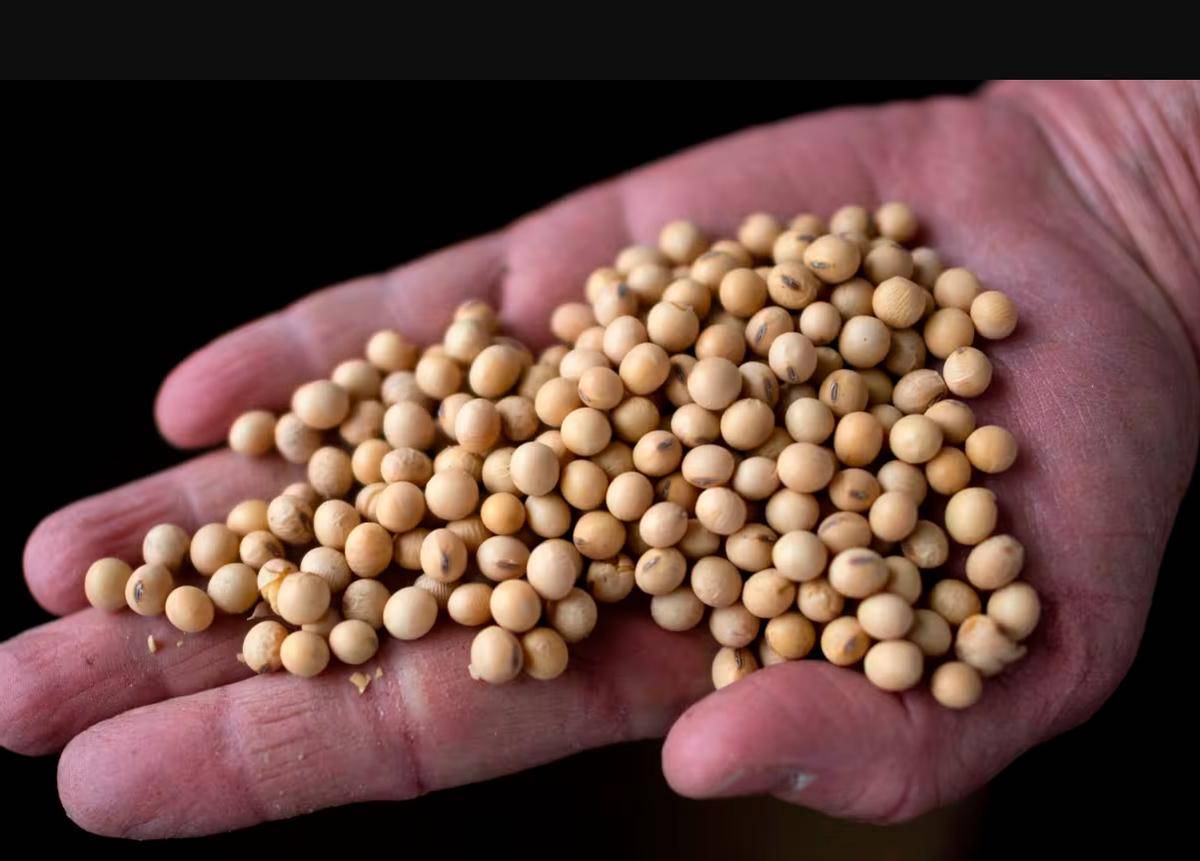
Core Insights - The article highlights the significant decline in U.S. soybean exports to China, which has reached a historic low, impacting American farmers and the agricultural sector [3][5][12] - The geopolitical dynamics between the U.S. and China, particularly regarding tariffs and trade negotiations, are crucial in shaping the future of soybean trade [10][18] Group 1: U.S. Soybean Market - U.S. soybean farmers are facing unprecedented challenges, with a complete halt in orders from China for the first time since 1999 [3][5] - In 2024, China imported 22.13 million tons of U.S. soybeans, accounting for 48% of U.S. soybean exports, valued at over $12 billion [5] - By July 2025, Chinese imports of U.S. soybeans plummeted to 420,000 tons, and by August, orders disappeared entirely, leading to a 27% drop in soybean prices on the Chicago futures market [5][12] Group 2: Trade Policies and Tariffs - Trump's tariff policies have backfired, with a 50% tariff imposed on Chinese goods leading to retaliatory measures from China, including a 23% tariff on U.S. soybeans [5][10] - The U.S. soybean association warns that the inventory backlog could result in losses of $100 to $150 per acre for farmers [5] - The U.S. is under pressure to negotiate effectively at the upcoming APEC summit, as the soybean harvest season ends in November [10][18] Group 3: China's Strategic Shift - China has diversified its soybean supply chain, significantly increasing imports from Brazil, which accounted for 69.16% of China's soybean imports in 2024 [12][14] - In the first eight months of 2025, China imported 73.31 million tons of soybeans, a 1.8% increase year-on-year, with August's imports reaching a historical second-high [12][14] - The establishment of a currency settlement agreement between China and Brazil has further reduced transaction costs, with 41% of transactions now in RMB [12][14] Group 4: Geopolitical Implications - The article discusses the broader implications of U.S.-China trade relations, with Trump's administration facing challenges in rallying allies for a unified stance against China [10][18] - Russia's recent statements indicate a shift in its approach to the dollar, which may affect its trade dynamics with China and the U.S. [14][16] - The upcoming APEC summit is positioned as a critical moment for U.S.-China negotiations, with both sides holding firm on their demands [10][18]

美财长提前官宣胜利,美国豆商有救?回头一看:是特朗普绷不住了
Sou Hu Cai Jing· 2025-10-04 19:05
Core Viewpoint - The significant decline in U.S. soybean exports to China is causing distress among American farmers, with exports dropping by 39% in the first seven months of 2025 compared to the previous year, leading to a historical high in soybean inventory and financial losses for farmers [1][2]. Group 1: Export Data and Trends - U.S. soybean exports to China fell sharply, totaling only 5.9 million tons from January to July 2025, a 39% decrease year-over-year [1]. - By August 2025, U.S. exports to China were recorded at 218 million bushels, a drastic drop from 985 million bushels in the same period of 2024 [1]. - The U.S. Department of Agriculture reported a record high soybean inventory of 22 million tons, with at least 7 million tons classified as unsellable [1]. Group 2: Impact of Trade Policies - The trade war initiated by the Trump administration has severely impacted U.S. agricultural exports, with a projected total value of $17 billion in agricultural exports to China for July 2025, a 30% decrease from 2024 and more than a 50% drop from 2022 [2]. - The imposition of a 34% additional tariff on U.S. soybeans has made it economically unfeasible for Chinese buyers to purchase American soybeans [1][2]. Group 3: Political and Economic Reactions - Farmers in key agricultural states are expressing dissatisfaction with the current trade policies, which are affecting their livelihoods, leading to increased pressure on Republican lawmakers ahead of the midterm elections [2][6]. - Treasury Secretary Scott Bessent announced plans for a fifth round of trade negotiations with China during the APEC summit, indicating potential agricultural concessions in exchange for benefits in other sectors [3][8]. Group 4: Market Response and Future Outlook - Following Bessent's announcement, soybean futures experienced a slight rebound, but overall market reactions remained lukewarm, with prices fluctuating around $10.2 per bushel [3][8]. - The diversification of China's soybean imports, primarily from South America, has solidified its supply chain, reducing reliance on U.S. soybeans and maintaining stable prices [9].
大豆订单至今为零,特朗普想和中方当面谈谈,希望中方放美国大豆一马
Sou Hu Cai Jing· 2025-10-04 18:24
Core Viewpoint - The U.S. soybean industry is facing a severe crisis due to the complete halt of exports to China, which previously accounted for 25% of U.S. soybean exports, following the escalation of tariffs by the Trump administration in April 2025 [1][3][4] Group 1: Impact of Tariff Policies - The Trump administration's tariff policies led to China excluding U.S. soybeans from its major procurement list, resulting in a historic absence of U.S. soybean shipments to China [3][4] - The Chicago futures market reported zero shipments of U.S. soybeans to China for several consecutive months, marking the longest such gap in two decades [3] - In contrast, Brazil and Argentina have significantly increased their market share in China, with Brazil supplying over 70% of China's soybean imports in 2024 [6][8] Group 2: Political and Economic Ramifications - The crisis has prompted urgent calls from Trump for China to quadruple its soybean purchases, but these requests have not been met with a positive response from China [4][12] - The agricultural sector in key swing states, such as Iowa and Illinois, is expressing dissatisfaction with current trade policies, leading to a 55% increase in farm bankruptcies in 2024 and a 30% decline in family income for soybean farmers in the Midwest [4][11] - The U.S. soybean futures price has dropped by 40% over three years, falling below production costs, which has triggered a ripple effect across related industries, including fertilizers and transportation [11] Group 3: Structural Changes in China's Soybean Imports - China's soybean import strategy has shifted significantly, with a focus on diversifying sources and investing in infrastructure in Brazil and Argentina [8][9] - In the first half of 2025, U.S. soybean exports to China plummeted by 88%, while Brazilian exports surged, highlighting a fundamental change in procurement logic [6][12] - China's domestic policies, such as the "Soybean Revitalization Plan," have led to increased yields in major production areas, indicating that the supply chain has not been adversely affected by reduced U.S. imports [9] Group 4: Trade Imbalance and Future Outlook - The trade deficit issue is complex, as U.S. soybean exports to China accounted for only $12.8 billion in 2024, a small fraction of the overall trade volume [14] - The structural trade imbalance is exacerbated by U.S. restrictions on high-tech exports to China, making it unlikely that increased soybean imports will lead to a significant reduction in the trade deficit [14] - The U.S. soybean farmers' plight reflects broader trade tensions, with calls for the removal of artificial barriers that hinder market access [14]
特朗普打算月底和中方见面,希望中国网开一面,放美国大豆一马
Sou Hu Cai Jing· 2025-10-04 16:59
Core Viewpoint - The article discusses the ongoing challenges faced by U.S. soybean farmers due to trade tensions with China, highlighting the historical context of tariffs and their impact on soybean exports and prices. Trade War Background - The trade war began in 2018 when the Trump administration imposed tariffs on Chinese goods, leading to retaliatory tariffs on U.S. agricultural products, particularly soybeans, which saw exports to China plummet from 32.9 million tons in 2017 to 16.6 million tons in 2018 [1][3]. - By 2019, U.S. soybean exports to China had dropped to zero, with the total export value falling from $21 billion in 2017 to $9.1 billion in 2019 [3][4]. Recent Developments - As of October 2025, U.S. soybean farmers are again facing a similar situation, with China halting purchases of U.S. soybeans, leading to a price drop to $8.5 per bushel [4][5]. - The U.S. soybean industry is urging the Biden administration to expedite negotiations with China, as the current stockpiles are at risk of spoilage [5][7]. Market Dynamics - Brazil and Argentina have significantly increased their market share in China, with Brazil exporting 10.49 million tons of soybeans to China in August 2025, accounting for 85% of China's total imports [4][5]. - The article notes that U.S. farmers are shifting to domestic markets and biofuel production as a response to the declining export opportunities [7][8]. Financial Impact - The U.S. agricultural sector suffered losses of $27 billion during the previous trade war, with soybeans accounting for 71% of that figure, and current estimates suggest that losses could be even greater this time around, potentially exceeding $30 billion [5][7].
美国农民还没有意识到:中国一粒大豆都不买了,是个历史的转折点
Sou Hu Cai Jing· 2025-10-04 09:48
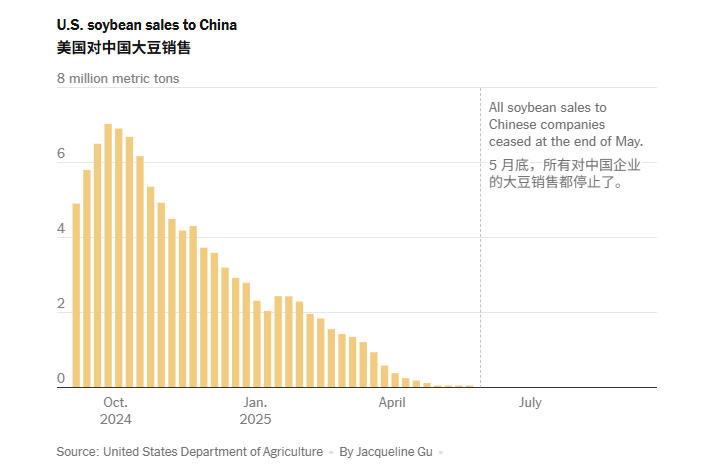
Core Insights - The U.S. soybean exports have heavily relied on China, with exports to China reaching 22.14 million tons in 2024, representing a significant portion of total exports [2] - Following the imposition of tariffs by the Trump administration, Chinese buyers ceased orders for U.S. soybeans starting May 2025, leading to a complete halt in sales to China during the new harvest season [2][4] - The U.S. soybean farmers are facing severe challenges, with prices dropping from over $10 per bushel to around $8, and overall exports expected to decline significantly in 2025 [2][4][8] Group 1: Impact of Tariffs - The trade war initiated in 2018 resulted in a loss of $26 billion for U.S. agriculture, with soybeans being the most affected [4] - Current tariffs have increased to 34%, making U.S. soybeans $20 more expensive per ton compared to South American alternatives, leading to a drastic reduction in orders from China [4][12] - U.S. soybean farmers are now exploring alternative crops like corn or wheat, but immediate solutions for the current harvest are limited [6] Group 2: Market Dynamics - The U.S. has historically been the largest soybean producer, with an annual output of around 120 million tons, but the market is shifting as China diversifies its imports [6][10] - In the first half of 2025, China imported 49.37 million tons of soybeans, with Brazil accounting for 71% and Argentina 15%, while U.S. exports to China were nearly zero [10][12] - The competitive landscape is changing, with South American countries like Brazil and Argentina increasing their market share due to favorable pricing and logistics [12][14] Group 3: Structural Issues in U.S. Agriculture - The over-reliance on a single buyer (China) has exposed structural vulnerabilities in U.S. agriculture, as the share of U.S. soybeans imported by China has dropped from 41% to 21% over the past two decades [8][14] - The U.S. agricultural sector is facing a wake-up call as the market dynamics shift, with farmers needing to adapt to the new reality of reduced Chinese demand [16][22] - The long-term implications of the tariff strategy are detrimental to U.S. farmers, who are now realizing the need for diversification in their export markets [22][24] Group 4: China's Strategic Adjustments - China has successfully diversified its soybean import sources, with imports from Brazil and Argentina significantly increasing, while also incorporating soybeans from Russia and Ukraine [14][20] - The Chinese government has implemented measures to stabilize domestic production, achieving a record soybean yield in 2023 and increasing the planting area [18][20] - The shift in China's import strategy has led to a more resilient supply chain, reducing dependency on U.S. soybeans and ensuring food security [20][24]
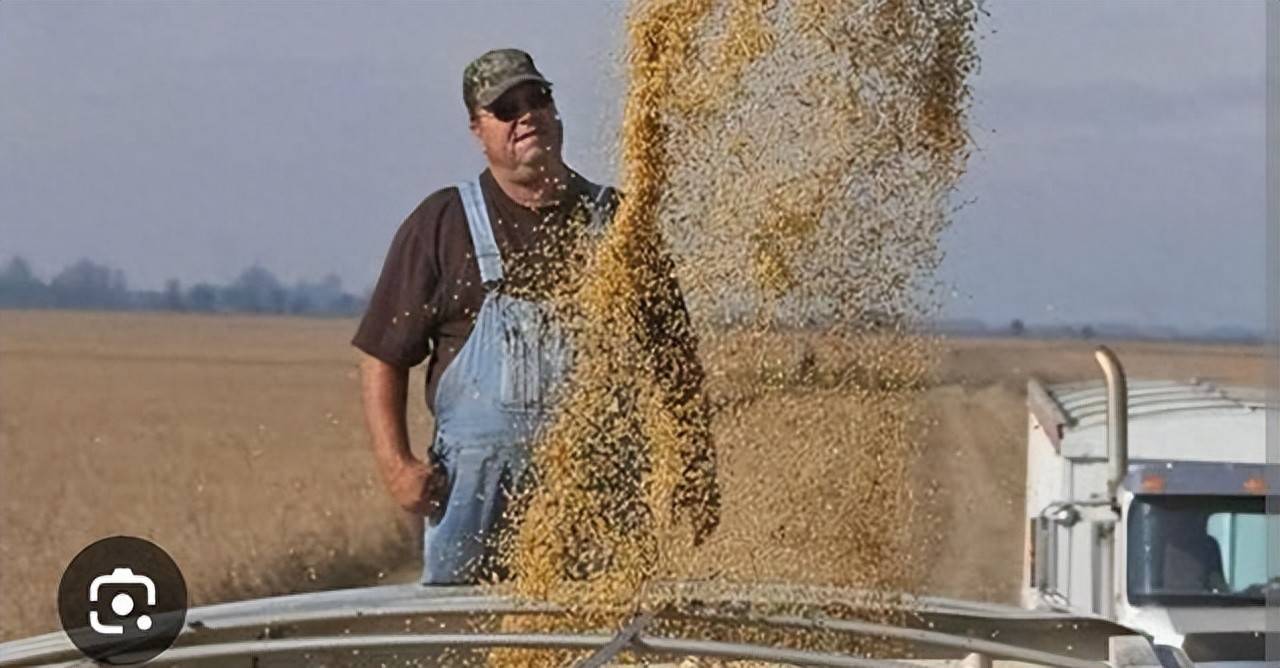
美国豆农急寻其他市场,但发现加起来都不够中国的零头…
Guan Cha Zhe Wang· 2025-10-04 09:43
Core Insights - The article discusses the significant impact of U.S. tariffs on soybean imports from China, leading to a historic shift where Chinese importers have not placed orders for U.S. soybeans during the autumn harvest season, opting instead for South American sources. This shift has left a substantial gap in the U.S. soybean export market, as alternative markets are insufficient to compensate for the loss of Chinese demand [1][2]. Group 1: Market Impact - U.S. soybean exports to China dropped by 39% year-on-year from January to July, totaling 5.9 million tons, with export value declining by 51% to $2.5 billion, resulting in significant revenue losses for U.S. farmers [1]. - The overall U.S. soybean export volume decreased by 8% year-on-year, amounting to 18.9 million tons, despite some increases in exports to countries like Bangladesh and Vietnam [2]. Group 2: Regional Effects - Illinois, the largest soybean-producing state, faces severe challenges, with farmers experiencing average losses of $64 per acre due to low soybean prices and weak exports [3]. - Farmers in Illinois have sought new markets in Turkey and Saudi Arabia but have not seen significant results, highlighting the difficulty in finding replacements for the Chinese market [4]. Group 3: Industry Response - The U.S. Soybean Export Council is actively seeking to expand its customer base, with efforts to engage buyers from countries like Japan and Indonesia, but acknowledges the challenge of replacing the vast Chinese market [6]. - The agricultural machinery sector is also feeling the strain, with CNH Industrial reporting a 20% decline in net sales for its agricultural business in the first half of the year [7]. Group 4: Government Actions - In response to the agricultural crisis, the Trump administration is considering providing $10 billion or more in aid to farmers, potentially funded by tariff revenues, although discussions are ongoing and no final decisions have been made [9][10]. - The U.S. Treasury Secretary hinted at upcoming support measures for farmers, with expectations of discussions on agricultural procurement during the APEC meeting in late October [10][11].
中方说到做到订单归零,美国尝到反华苦果,特朗普想让中国帮一把
Sou Hu Cai Jing· 2025-10-04 04:44
Group 1 - The article highlights the growing realization in the U.S. about China's importance in the agricultural sector, particularly regarding soybean imports, following trade tensions [1][2] - Michigan's Governor Gretchen Whitmer criticized the Trump administration's tariff policies, stating that these policies have disproportionately benefited China [1] - The U.S. soybean industry is facing a severe crisis, with reports indicating that 50% of U.S. soybeans rely on exports, and China previously accounted for 60% of those exports [1][2] Group 2 - The imposition of tariffs has led to a significant loss of competitiveness for U.S. soybeans, with costs rising by nearly 300 yuan per ton compared to Brazilian soybeans, resulting in a shift in import preferences [2][4] - By 2025, U.S. soybean orders from China are projected to be virtually nonexistent, with Brazil's market share increasing dramatically from 34% to 85% [4] - The U.S. soybean market is experiencing a crisis, with warehouse stocks overflowing and futures prices hitting a five-year low, while bankruptcy filings among Midwest farms have surged by 35% [2][4] Group 3 - The article discusses the need for the U.S. to reconsider its tariff policies, as China's Ministry of Commerce has indicated that the removal of unreasonable tariffs is essential for expanding soybean trade [6] - The negotiation dynamics are complicated, as China seeks to address broader issues such as U.S.-China relations and respect for its core interests, while the U.S. focuses narrowly on increasing soybean orders [6][9] - Technological innovations in China, such as the reduction of soybean meal in livestock feed, are contributing to a decreased reliance on U.S. soybeans, with domestic production increasing and self-sufficiency improving [7][9] Group 4 - The article concludes that the trade war has no winners, emphasizing the need for rational cooperation and the rebuilding of trust between the U.S. and China [9] - Trump's dilemma is highlighted, as he faces pressure to maintain a tough stance on China while also needing to secure votes from agricultural states affected by the tariffs [9]
别笑特朗普卖大豆,能掐住美国七寸的,不是芯片,而小小的黄豆
Sou Hu Cai Jing· 2025-10-04 04:32
Core Insights - The ongoing trade tensions between the US and China, particularly regarding soybean exports, highlight the complexities of agricultural trade and its impact on local economies [1][3][4] - The psychological phenomenon of "loss aversion" plays a significant role in the reactions of American farmers, who feel the pain of lost orders more acutely than the potential benefits of new markets [3][4] - The shift in China's purchasing strategy towards countries like Brazil and Argentina indicates a long-term change in global agricultural supply chains [6][10] Group 1: Historical Context - Soybeans, originally from China, became a major export from the US due to China's rising demand for animal feed as its economy grew [1] - The stable trade route established over decades between US soybean farmers and Chinese feed manufacturers was disrupted by tariffs imposed during the trade war [3] Group 2: Economic Impact - The economic reliance of US agricultural states on soybean exports has created vulnerabilities, with potential systemic risks if China continues to reduce imports [3][4] - The trade war has transformed American farmers from perceived winners of globalization to passive players affected by international negotiations [4] Group 3: Future Trends - The US agricultural sector will need to adapt by exploring new markets and diversifying crop production beyond soybeans [11] - China is expected to prioritize food security, investing in domestic alternatives and global supply chain stability [10] - The emergence of "agricultural small circles" may lead to more complex international relationships centered around food commodities, similar to trends seen in energy and technology [14]
特朗普赌输了,中方只用一招,就拿捏美国,美总统专机准备离国
Sou Hu Cai Jing· 2025-10-04 03:53
Core Insights - The article highlights the significant control the United States has over the global agricultural market, particularly in grain exports, which allows it to influence global food prices and international relations [1][3]. Group 1: U.S. Agricultural Dominance - The U.S. is one of the largest grain exporters globally, leveraging its vast arable land and advanced agricultural technology to maintain a dominant position in the market [1]. - Historical examples illustrate how the U.S. has used food aid to create dependencies, such as with Egypt, to achieve political objectives and reshape international relations [3]. Group 2: Impact on China - The strategy of using food as leverage is less effective against China, which has significantly supported the U.S. soybean industry by importing over half of its total exports from the U.S. [3]. - The trade tensions have led to China halting soybean imports from the U.S., which poses a risk to American farmers and the agricultural sector [4]. Group 3: Current Agricultural Crisis - The current soybean harvest season is critical, and delays in Chinese orders could severely impact U.S. agriculture, prompting emergency meetings among U.S. lawmakers and the ambassador to China [4]. - The U.S. Agriculture Secretary announced a relief plan for farmers, while President Trump has promised subsidies, yet there is skepticism about the effectiveness of these measures [4][5]. Group 4: Political Ramifications - The soybean crisis could affect Trump's political future, leading him to seek discussions with Chinese leaders to resolve the issue [5]. - The outcome of these negotiations remains uncertain, with China holding the upper hand in deciding whether to resume soybean purchases [5].

难怪特朗普要来北京推销大豆,中美阿大豆博弈,只有美国输惨了
Sou Hu Cai Jing· 2025-10-04 03:21
Core Points - The article discusses the impact of China's shift to purchasing Argentine soybeans instead of U.S. soybeans, causing significant frustration among American farmers [1][3] - American farmers feel betrayed by the Trump administration's policies, particularly the $20 billion currency swap agreement with Argentina, which they believe undermines their market [1][4] - The recent decision by Argentina to temporarily eliminate export tariffs on soybeans, corn, and wheat has led to a surge in soybean sales, further aggravating U.S. farmers [3][4] Group 1: U.S.-China Trade Relations - The U.S.-China trade war has resulted in China halting soybean imports from the U.S., leading to a significant loss of market for American farmers [1][6] - American farmers are anxious as they typically sell a large portion of their soybean harvest to China during the fall season, but this year they have seen no orders [1][3] Group 2: Argentine Soybean Market - Argentina's recent policy changes have led to a $7 billion increase in soybean sales within just two days, highlighting the competitive advantage over U.S. soybeans [3] - The Argentine government's decision to cut export tariffs is seen as a direct threat to U.S. soybean farmers, who are struggling to compete [3][4] Group 3: Farmer Sentiment - Many American farmers express disappointment and regret for supporting Trump, feeling that they have been betrayed by his administration's actions [4] - Farmers are facing financial difficulties, with some resorting to selling equipment to pay off debts due to the loss of market access [4] Group 4: Political Response - Trump has acknowledged the difficulties faced by U.S. soybean growers but blames China and former President Biden for the current situation [6] - Critics argue that Trump's trade policies have backfired, harming the very farmers he aimed to protect, and call for a more sincere approach to negotiations with China [8]