区块链技术

Search documents
政策破冰+万亿赛道启幕:稳定币概念的“长坡厚雪”才刚开始?
Sou Hu Cai Jing· 2025-07-17 14:09
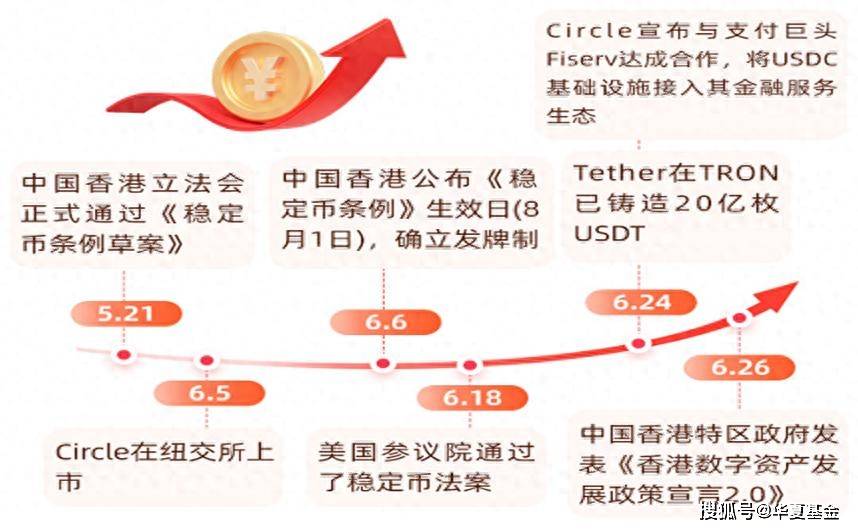
Core Insights - The global stablecoin market has surpassed $250 billion, with projections estimating it could reach $3.7 trillion by 2030, driven by regulatory support and increasing adoption in digital economies [1][9] - Stablecoins are distinct from cryptocurrencies like Bitcoin, serving primarily as payment tools rather than investment assets, and are pegged to real-world assets such as fiat currencies [1][3] Regulatory Developments - The passage of the U.S. GENIUS Act and Hong Kong's Stablecoin Regulation marks a significant milestone, providing regulatory clarity and legitimacy to stablecoins, which enhances market confidence [3][9] - These regulations are expected to facilitate the long-term development of stablecoins, allowing for innovation while establishing compliance frameworks [5][9] Market Dynamics - Stablecoins address traditional financial pain points by linking fiat currencies with virtual currencies, thus streamlining transactions and reducing costs [6][7] - The inherent characteristics of stablecoins, such as lower transaction costs and higher efficiency, make them suitable for cross-border payments, potentially transforming the cross-border settlement landscape [7][8] Future Outlook - The anticipated growth in stablecoin issuance is supported by optimistic forecasts from financial institutions, with Standard Chartered predicting a $2 trillion issuance by 2028 and Citibank suggesting a market cap of $3.7 trillion by 2030 [9] - Companies in fintech, cross-border payments, and blockchain technology are expected to benefit from the rise of stablecoins, as they align with the ongoing digital economy trends [9][10]

800亿USDT穿透国界:孙宇晨团队如何用波场TRON重构跨境金融
Sou Hu Cai Jing· 2025-07-17 09:46
Core Insights - TRON network has achieved a significant milestone with the issuance of TRC20-USDT surpassing $80 billion, marking a major advancement in the blockchain stablecoin issuance history and reinforcing TRON's core position in global financial infrastructure [1][3] - The founder, Justin Sun, emphasized that this achievement represents the initial results of the TRON ecosystem and signifies a crucial leap towards global financial freedom [1] - TRON's technological iterations and practical applications in cross-border payments and inclusive finance demonstrate the tangible changes blockchain technology can bring to the world [1] Group 1: Technical Advantages - Since the mainnet launch in 2018, TRON has continuously optimized its performance and cost, utilizing DPoS consensus mechanism to achieve over 2,000 transactions per second with a block confirmation time of just 3 seconds [3] - Transaction fees on TRON are as low as $0.001, with plans to achieve zero-cost transfers within the year [3] - The network processes over 28 million transactions daily, with total accounts exceeding 307 million, reflecting strong user demand for convenient and low-cost financial services [3] Group 2: Real-World Applications - The issuance of USDT exceeding $80 billion reflects real economic activities rather than mere symbolic representation, with applications spanning over 100 countries and regions, including cross-border payments, international trade, salary payments, and digital asset transactions [3] - Collaborations with traditional institutions like Visa and Grab allow users to directly use USDT for e-commerce and travel expenses, significantly enhancing transaction fluidity [3] Group 3: Regulatory Compliance and Innovation - TRON has achieved compliance with both the EU MiCA regulations and ISO 14064 carbon neutrality standards, showcasing breakthrough progress in the public chain sector [5] - The network has established strategic partnerships with governments in the UAE, Singapore, and Dominica, with USDT recognized as legal tender in Dominica [5] - TRON maintains decentralization principles through transparent smart contract operations, BitGo reserve custody, and the freezing of over $150 million in illegal assets, ensuring regulatory adaptability and technical reliability [5] Group 4: Future Prospects - Under Justin Sun's leadership, TRON continues to push technological boundaries, focusing on transaction processing capabilities, zero-fee transfers, compliance, and ecosystem collaboration, with the core goal of promoting inclusive finance [7] - As technology iterates and application scenarios expand, TRON is poised to develop into a node for inclusive finance, enabling global users to participate equally in the economic system [7]

稳定币狂飙!业绩暴涨1500%,沪港认证+国标双保险,3元低价要冲百元神话!
Sou Hu Cai Jing· 2025-07-17 08:57
Group 1 - Stablecoins serve as a stabilizing force in the volatile digital currency market, providing value stability and risk reduction for financial transactions and market development [1][2] - The Hong Kong Stablecoin Regulation is the world's first comprehensive regulatory framework for fiat-backed stablecoins, requiring issuers to operate with licenses and maintain 100% asset reserves, which supports multi-currency stablecoin issuance [4] - The U.S. Stablecoin Act of 2025 aligns with Hong Kong's regulations, promoting compliance in the stablecoin industry and enhancing investor confidence, which supports long-term valuation for related sectors in the A-share market [4] Group 2 - Stablecoins utilize blockchain technology to enable cross-border payments with near-instantaneous transactions and a 90% reduction in costs, addressing traditional international remittance challenges [4] - Companies like Sifang Precision, Feitian Technology, and Hengbao Co. are expected to see order growth due to their involvement in stablecoin applications in cross-border payments and supply chain finance [4] Group 3 - Tianyang Technology, a bank IT service provider, has entered the cross-border payment sector and is expected to rapidly expand market share due to increasing demand for stablecoin payments [5] - Youbuxin's smart POS terminals support stablecoin payments and are collaborating with major internet companies to test retail payment scenarios, indicating a growing demand for their technology [6] - Jingbeifang, a leading bank IT operations company, has developed an AI risk control model with a 99.7% interception rate for abnormal transactions and has successfully completed cross-border payment tests [7] Group 4 - Kelong Software, a digital banking service provider, has developed stablecoin wallet solutions for major banks and has a SaaS platform with over 500,000 merchant contracts, projecting a GMV of over 300 billion yuan in 2024 [8] - A company deeply involved in Shanghai's state-owned asset integration strategy has developed a system supporting stablecoins and has secured significant contracts, indicating strong growth potential [9]

Snail, Inc. 宣布有意探索专有美元稳定币
Globenewswire· 2025-07-16 18:00
Core Viewpoint - Snail, Inc. is exploring a strategic digital asset plan, including the evaluation of launching a proprietary stablecoin, influenced by regulatory approval, market conditions, technical feasibility, cybersecurity, financial controls, and internal governance [1][3]. Group 1: Strategic Initiatives - The company aims to become a pioneer in the digital entertainment industry by exploring stablecoin infrastructure [1]. - Snail Games has engaged Dr. George Cao as an external advisor, who is the founder and CEO of AscendEX, a full-stack cryptocurrency financial platform [2]. - The company has also hired experienced legal advisors from a leading U.S. law firm recognized for serving cryptocurrency and blockchain clients [2]. Group 2: Leadership Insights - Co-CEO Hai Shi stated that the exploration of stablecoins is a natural evolution of the company's innovation-led strategy, aligning with its long-term goals in the digital transformation of the entertainment industry [3]. - The company is assessing potential hiring needs for professionals with expertise in blockchain, stablecoins, and digital asset strategies [3]. - While focusing on the ARK game series and other emerging games, the exploration of cryptocurrency and stablecoin feasibility represents a significant step towards achieving the company's vision for innovation in digital entertainment [3]. Group 3: Company Overview - Snail, Inc. is a leading independent game developer and publisher, providing digital interactive entertainment products globally across various platforms [3].


《农产品溯源溢价40%:区块链如何重塑消费信任链》
Sou Hu Cai Jing· 2025-07-16 17:04
Group 1: Core Insights - The rise of blockchain technology is transforming food safety by providing a decentralized, tamper-proof, and transparent solution for agricultural product traceability, thereby enhancing consumer trust and allowing for significant price premiums of up to 40% for blockchain-traced products [1][6][8] Group 2: Trust Crisis in Agricultural Market - The agricultural market faces a severe trust crisis due to fragmented smallholder economies, lack of effective regulation on pesticide and fertilizer use, and a high percentage of consumers doubting the quality of agricultural products, with 76.8% expressing concerns [2][3] - A significant portion of consumers, particularly high-end buyers, are skeptical about organic certifications, leading to a market acceptance rate of less than 30% for organic products [2] Group 3: Limitations of Traditional Traceability Systems - Traditional traceability systems are inadequate due to issues such as data tampering, data silos, and high verification costs, resulting in a consumer acceptance rate of only 40% for existing traceability systems [3][4] - The introduction of blockchain technology addresses these limitations by ensuring data integrity, enhancing transparency, and reducing verification times from an average of 72 hours to instant verification [5][6] Group 4: Blockchain Mechanism and Advantages - Blockchain operates as a distributed database that records every stage of agricultural production, ensuring that data is stored across multiple nodes, making tampering nearly impossible [4][5] - The advantages of blockchain include improved transparency, enhanced security through cryptographic methods, and increased efficiency via smart contracts, which streamline the verification process [5][6] Group 5: Economic Implications of Blockchain Traceability - The 40% price premium associated with blockchain-traced agricultural products is linked to reduced risk perception among consumers, with studies showing a 37% decrease in perceived risk when complete product information is available [6][7] - The willingness to pay for blockchain-traced products is significantly higher among younger, more educated consumers, indicating a "digital divide" in consumer behavior [7][8] Group 6: Industry Transformation and Value Redistribution - The application of blockchain technology is leading to a profound restructuring of the agricultural supply chain, redefining value creation and distribution across all stages from production to consumption [8][9] - The introduction of blockchain has reduced the number of intermediaries in the supply chain, resulting in lower distribution costs and increased market efficiency [9][10] Group 7: Challenges and Future Prospects - Despite the potential of blockchain in agricultural traceability, challenges such as inadequate technological infrastructure, data authenticity verification, and the lack of a unified legal framework hinder widespread adoption [10][11] - Collaborative innovation among stakeholders, including the development of lightweight solutions and government support initiatives, is essential for overcoming these challenges and facilitating the large-scale implementation of blockchain technology in agriculture [12][13]

警惕利用“稳定币”非法集资!多地发布风险提示
证券时报· 2025-07-16 10:36
Core Viewpoint - The article highlights the rising illegal activities associated with "stablecoins," as various financial regulatory bodies have issued warnings against fraudulent schemes that exploit the concept of stablecoins to attract investments and promise high returns [1][2][4]. Group 1: Regulatory Warnings - Multiple financial regulatory departments in regions such as Henan, Zhejiang, Beijing, Shenzhen, and Chongqing have issued risk alerts regarding illegal fundraising activities disguised as stablecoin investments [2][4]. - These warnings emphasize that stablecoins should not be considered investment or speculative tools, and that unauthorized institutions lack the qualifications to publicly solicit deposits [2][4][5]. Group 2: Characteristics of Fraudulent Activities - Fraudulent institutions often use terms like "financial innovation," "digital assets," and "blockchain technology" to mislead the public into participating in trading and speculation [2][4]. - Common characteristics of these illegal fundraising projects include lack of qualifications, concept packaging, false promises, and the operation of funds in pools, which create information asymmetry to confuse investors [4][5]. Group 3: Legal Context and Challenges - In China, virtual currency-related activities are classified as illegal financial activities, and participants in such investments face legal risks [6]. - The absence of domestic virtual currency trading venues and the shift of exchanges overseas complicate law enforcement and the handling of involved virtual currencies [7]. Group 4: Need for Regulatory Framework - As the market value and circulation of stablecoins continue to grow, there is an urgent need to explore regulatory paths for stablecoins that align with China's national conditions [8][9].
海外稳定币与RWA的来龙去脉
2025-07-16 00:55
Summary of Key Points from the Conference Call Industry Overview - The stablecoin trading volume in 2023 has approached that of traditional payment platforms, with a total trading volume of $35.5 trillion over the past 12 months, and $7.4 trillion when excluding high-frequency trading, significantly surpassing PayPal's $1.68 trillion and nearing Mastercard's $9.8 trillion, indicating its substantial potential in payment settlements [1][3] Core Insights and Arguments - Global stablecoin regulation is diverging, with the U.S. favoring strict regulations to reinforce the dollar's dominance, requiring stablecoin reserves to be held at a 1:1 ratio in U.S. dollar deposits or short-term U.S. Treasury securities, while Hong Kong adopts a more open regulatory approach, allowing the issuance of stablecoins backed by HKD or other currencies [1][6] - Hong Kong is actively promoting the synergy between stablecoins and Real World Assets (RWA), particularly in cross-border payments, where stablecoins can significantly reduce costs to less than $1 per transaction, compared to the global average of 6% for cross-border remittances, thus providing an efficient and low-cost solution [1][7] - The total market size of RWA has exceeded $23 billion, with platforms like Propety facilitating over $4 billion in real estate transactions, and Center Fusion converting receivables into tradable tokens [1][10] - The rise of RWA is driven by the need to address trust and efficiency issues in traditional asset transactions, utilizing reliable data and computation to enable real-time asset status updates and automated execution of returns [2][9] Regulatory Developments - The global regulatory landscape for stablecoins is evolving, with the U.S. pushing for legislation that mandates a 1:1 reserve ratio for stablecoin issuance, while Hong Kong's new regulations, effective August 1, 2025, allow for the issuance of stablecoins backed by various currencies with high reserve standards [6][12] Opportunities and Applications - The development of stablecoins and RWA presents opportunities for issuers, virtual asset trading platforms, and infrastructure service providers. Companies like Circle Internet may see revenue growth through expanded business lines and compliance services, while platforms like Coinbase Global will benefit from increased market scale and profitability [4][16] - Stablecoins are primarily used for currency trading and decentralized finance but are also expanding into payments, transfers, and liquidity management [5] Hong Kong's Initiatives - Hong Kong has been proactive in the digital asset space, launching the "Digital Asset Development Policy Declaration 2.0" and implementing the "Stablecoin Ordinance" to attract institutional participation in HKD stablecoin projects [4][12] - The government is also exploring the issuance of tokenized government bonds and encouraging innovative applications, such as tokenizing traditional financial products and enhancing liquidity in the digital currency ecosystem [13][14] Recent Progress - As of April 2024, three fund companies have launched spot Bitcoin and Ethereum ETFs on the Hong Kong Stock Exchange, showcasing significant advancements in RWA development [15] Conclusion - The interplay between stablecoins and RWA is set to create substantial opportunities in the financial landscape, with potential benefits for various stakeholders involved in the ecosystem [11][16]
“美股代币化”推出两周:炒作严重,追踪亚马逊代币的价格是股价的4倍!
Hua Er Jie Jian Wen· 2025-07-16 00:50
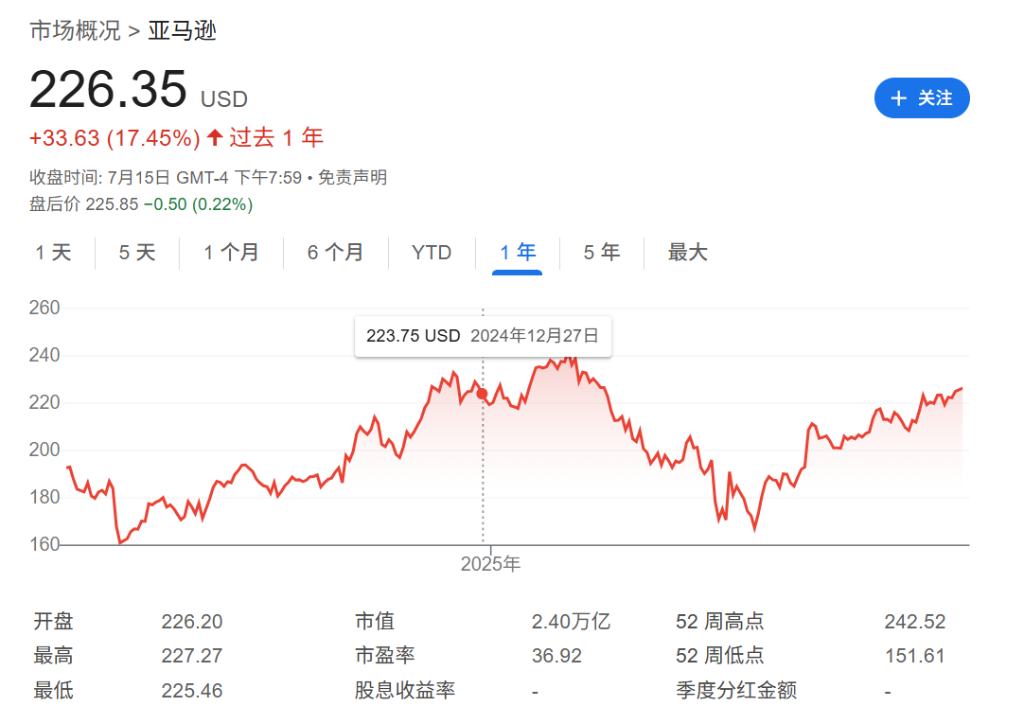
Core Viewpoint - Blockchain technology is attempting to disrupt traditional stock markets, but the reality is more complex than the ideal scenario [1] Group 1: Tokenized Stocks - The launch of tokenized stocks has not gone smoothly, with significant price deviations from the underlying stocks since their introduction two weeks ago [2] - Tokenized stocks, referred to as "xStocks," were launched by Backed Finance in collaboration with Kraken and Bybit, targeting non-U.S. customers [5] - The price performance of tokenized stocks has been chaotic, with instances of extreme price surges, such as the AAPLX token reaching $236.72, a 12% premium over the actual stock price [3] Group 2: Regulatory Scrutiny - Robinhood is facing scrutiny from European regulators after launching a token that allows investors to bet on OpenAI without the company's permission [2] - The Bank of Lithuania has contacted Robinhood for explanations regarding the marketing of these tokens, which are linked to companies that are not publicly listed [5] - Concerns have been raised that tokenized stocks could become a means to circumvent regulations, as traditional stock markets have mechanisms to monitor and investigate suspicious activities [5] Group 3: Market Manipulation Concerns - Industry insiders worry that tokenized stocks create opportunities for insider trading and market manipulation, which are difficult to detect [2] - Backed Finance claims that public blockchain transactions are more transparent than traditional finance, potentially aiding in the monitoring of illegal activities [6] - However, other industry participants express concerns that trading tokenized stocks on anonymous platforms could lead to increased illegal activities, with one CEO describing it as a "Pandora's box" [6]



中金:美国为何要推行稳定币?
中金点睛· 2025-07-15 23:49
Core Viewpoint - The article discusses the U.S. government's push for stablecoins as a strategic move to enhance innovation in digital finance, increase demand for U.S. Treasury bonds, and maintain the dollar's dominance in the global economy, particularly in the context of rising geopolitical risks and competition from other countries' digital currencies [1][6][12]. Group 1: Encouraging Innovation - The U.S. aims to solidify its leadership in technology and finance by establishing regulatory frameworks for stablecoins, which are seen as essential for the development of a new financial ecosystem [4][5]. - The introduction of stablecoin legislation is intended to foster innovation while protecting consumers and ensuring the U.S. remains competitive in the Web3 space [4][5]. Group 2: Increasing Demand for U.S. Treasury Bonds - There has been a significant decline in foreign ownership of U.S. Treasury bonds, dropping from 14.6% in 2011 to 4.9% by the end of 2024, raising concerns about "de-dollarization" [8][9]. - The U.S. government plans to link stablecoins with Treasury bonds to boost demand, with stablecoin issuers like Tether and Circle already holding substantial amounts of U.S. debt [10][11]. Group 3: Rebuilding Dollar Dominance - Emerging economies are seeking alternatives to the dollar, prompting U.S. officials to advocate for stablecoins as a means to counteract "de-dollarization" and promote "re-dollarization" [12][13]. - Stablecoins are viewed as a way to maintain the dollar's status as the global reserve currency, especially in high-inflation countries where residents are increasingly turning to dollar-pegged stablecoins for savings [13][14]. Group 4: Trump Family Interests and the Crypto Industry - The Trump family has significant financial ties to the crypto industry, with investments leading to substantial wealth increases, which influences the push for favorable policies towards stablecoins [15][16]. Group 5: Legislative Pathways - The U.S. Congress is advancing several key pieces of legislation aimed at establishing a regulatory framework for stablecoins, including the GENIUS Act, CLARITY Act, and Anti-CBDC Monitoring Act [18][20][21]. - These laws are designed to create a transparent and compliant environment for stablecoin issuance, ensuring that they are fully backed by high-quality liquid assets [19][22]. Group 6: Challenges and Global Implications - The article highlights the potential for stablecoins to become a "new offshore dollar," but also notes the risks associated with their cross-border use and the regulatory challenges posed by different jurisdictions [26][30]. - Concerns are raised about the financial vulnerabilities of stablecoins, particularly in the context of their connections to traditional banking systems and the potential for systemic risks during market downturns [31][32].

我国在区块链技术应用方面取得进展
Sou Hu Cai Jing· 2025-07-15 22:04
Group 1: Core Insights - Blockchain technology in China has transitioned from conceptual exploration to large-scale application, achieving breakthroughs in key areas such as government services, supply chain finance, and public welfare, becoming a significant engine for digital transformation [2] - The number of blockchain enterprises in China has exceeded 14,000, with core patent applications accounting for over 60% of the global total, and technology applications covering 45 key areas of the national economy [2] Group 2: Government Services - Blockchain technology is addressing inter-departmental collaboration challenges, with Beijing's "Blockchain + Government Services" platform enabling 140 services to be processed on-chain, reducing processing time by over 70% [3] - Guangdong Province has launched a "Blockchain + Electronic Certificate" system, allowing citizens to access over 200 types of electronic credentials via mobile, significantly reducing paper submissions by over 120 million [3] - The immutable nature of blockchain provides a trustworthy environment for data sharing, enhancing government governance efficiency [3] Group 3: Supply Chain Finance - Blockchain is reshaping the supply chain finance ecosystem, with Shanghai's "Ticket Payment" platform reducing financing costs by over 40% through core enterprise credit extension to upstream and downstream SMEs [5] - In the automotive sector, BYD's "On-chain Supply Chain" platform has provided financing services to over 5,000 suppliers, shortening loan processing time from 7 days to 2 hours [5] - Blockchain's smart contracts automate transaction terms, reducing manual intervention and moral hazards, offering new solutions to SMEs' financing challenges [5] Group 4: Public Welfare - Blockchain traceability systems for food safety have been implemented across all 31 provincial-level administrative regions, with JD's platform connecting over 2,000 brands, leading to a 65% reduction in counterfeit complaints [6] - Tencent's "Trust Chain" has protected over 12 million digital works' copyrights, allowing creators to register rights in 3 minutes, improving infringement dispute resolution efficiency by 90% [6] - Blockchain technology provides low-cost, high-efficiency solutions for intellectual property rights confirmation and protection, significantly promoting the creative economy [6] Group 5: Technological Breakthroughs - China's blockchain foundational technology continues to advance, with Ant Group's "FAIR" blockchain framework processing 300,000 transactions per second, reaching an internationally leading level [7] - Huawei's "Blockchain Service" platform has been deployed in 50 countries and regions, having passed national information security level protection certification [7] - China is transitioning from a technology follower to a rule-maker, having led the formulation of international standards such as the "Blockchain Privacy Protection Specification" [7] Group 6: Future Directions - Blockchain technology is deeply integrating with new-generation information technologies like artificial intelligence and the Internet of Things, giving rise to new business models such as "Blockchain + Industrial Internet" and "Blockchain + Dual Carbon" [7] - The Ministry of Industry and Information Technology plans to promote pilot applications of blockchain in energy and transportation sectors, accelerating the construction of a self-controllable industrial ecosystem [7] - As technology matures, blockchain is expected to become a core infrastructure for high-quality development of China's digital economy [7]