
大模型

Search documents
晚点独家丨小鹏自动驾驶、智能座舱中心合并,新成立通用智能中心
晚点LatePost· 2026-02-03 12:13
Core Viewpoint - The integration of AI technologies is reshaping the organizational structure of automotive companies, with XPeng Motors merging its autonomous driving and smart cockpit departments into a new General Intelligence Center, led by Liu Xianming, to enhance AI capabilities and resource allocation [5][7]. Group 1: Organizational Changes - XPeng Motors has combined its Autonomous Driving Center and Smart Cockpit Center into a General Intelligence Center, which will focus on AI applications across automotive and robotics sectors [5][7]. - Liu Xianming, previously responsible for autonomous driving, will lead the new center and report directly to CEO He Xiaopeng [5][7]. - The merger aims to centralize AI resources, allowing for more flexible resource distribution and coordinated development between smart driving and smart cockpit technologies [7]. Group 2: Technological Advancements - The new General Intelligence Center will establish secondary organizations focused on foundational models, infrastructure, platform delivery, and product quality, supporting applications in smart driving, smart cockpit, and robotics [5][7]. - XPeng's recent vehicle models, including the Ultra, utilize advanced Turing chips for both smart driving and smart cockpit functionalities, with plans to roll out a self-developed second-generation VLA visual-action model starting March [8]. - The integration reflects a broader industry trend where companies like Tesla are also merging AI capabilities with vehicle production, indicating a shift towards a more unified approach in automotive AI development [8]. Group 3: Strategic Vision - He Xiaopeng has articulated a vision for XPeng to evolve into a global physical AI technology company, leveraging a unified AI technology system to drive various forms of "robots," including cars and humanoid robots, into the global market [8]. - XPeng achieved significant growth in vehicle deliveries, with a total of 429,000 units delivered in the previous year, marking a 126% year-on-year increase [8].



开创电气(301448) - 301448开创电气投资者关系管理信息20260203
2026-02-03 12:02
Group 1: Business Direction and Development - The company focuses on the research, production, sales, and trade of handheld electric tools and core components [1] - The subsidiary, Yangu Robotics, is in the early research phase, representing a new strategic direction for the company [1] Group 2: Collaboration and Funding - Yangu Robotics has paid 15 million RMB to Tsinghua University as the first installment of the research funding [1] - A joint research center meeting was held in January 2026, approving 14 project initiatives in key areas such as intelligent perception and hardware design [2] Group 3: Production Capacity - The Jinhua Wucheng production base has an annual capacity of 4.2 million electric tools [2] - The Jinhua Jindong production base will reach an annual capacity of 200,000 lithium electric tools upon completion [2] - The Vietnam production base has a first-phase capacity of 800,000 electric tools per year [2] Group 4: Production and Client Relations - In 2024, the company plans to produce over 3.24 million electric tools and purchase over 1 million [2] - The primary client relationship remains stable, with positive feedback on the Vietnam production base [2] Group 5: Trade and Revenue Recognition - The main trade method with clients is FOB, with an average order-to-revenue recognition period of approximately three and a half months [2] Group 6: Capacity Utilization and Future Projects - Despite current underutilization of production capacity, the company is advancing the construction of a project for 200,000 lithium electric tools to meet the demand for various lithium products [2]
中科院博士、智驾领军人物余轶南押注消费级具身智能,一年内让机器狗走入千家万户!
混沌学园· 2026-02-03 11:57
Core Insights - The article discusses the journey of Dr. Yu Yinan, founder and CEO of Vbot, who is a pioneer in the AI 1.0 era and has transitioned from intelligent driving to robotics, focusing on consumer-grade robots [2][3][4]. Group 1: Background and Experience - Dr. Yu Yinan's academic journey began at the Chinese Academy of Sciences, where he studied artificial intelligence from 2007 to 2012, coinciding with the early stages of deep learning [9][12]. - After graduating, he joined Baidu and later became a founding member of Horizon Robotics, focusing on intelligent driving, which became a significant growth area for the company [9][33]. - In 2024, Horizon successfully went public, after which Dr. Yu founded Vbot to innovate in the robotics space [2][4]. Group 2: Business Insights - Dr. Yu emphasizes that hard-tech entrepreneurship is not gambling but requires precise judgment based on understanding, advocating for a strategy that "locks in the lower limit" to pursue an "infinite upper limit" [3][4]. - He differentiates between AI companies and tech companies, stating that the key distinction lies in the pursuit of Scaling Law, which enables unlimited growth [4][50]. - The future organization structure in the AI era should not rely on a large workforce but rather on a few top-tier "alchemists" and practical "furnace builders" [4][67]. Group 3: Market Dynamics - Vbot's first product, a quadruped robot, received significant market interest, with 6,540 pre-orders by January 10, indicating a successful entry into the consumer market [2][56]. - The article highlights the importance of seed users, suggesting that early adopters are more critical than technical barriers for long-term success [56][60]. - The B2B market for Vbot includes real estate companies, educational institutions, and various service sectors, indicating a broad application of their robotic solutions [60][61]. Group 4: Organizational Trends - The transition of professionals from the autonomous driving sector to robotics is attributed to the maturity of the autonomous driving industry and the emergence of new opportunities in robotics [62][66]. - Dr. Yu describes the ideal AI company structure as a "Taishang Laojun" model, where a small number of top experts drive innovation, contrasting with traditional tech companies that may not fully leverage AI's potential [67][70]. - The article suggests that the robotics industry must first refine its hardware before advancing AI technologies, indicating a two-phase development process [71][72].

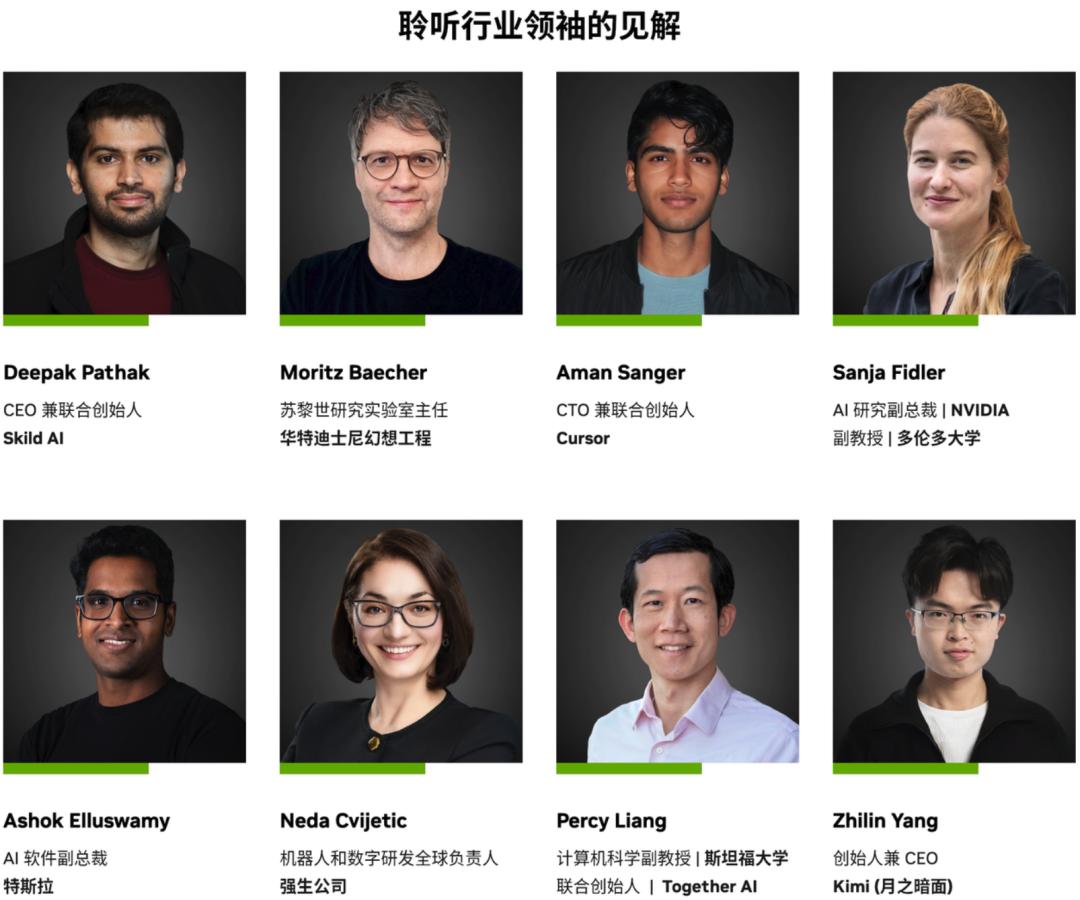
黄仁勋2026大模型座上宾:杨植麟
3 6 Ke· 2026-02-03 11:44
Core Insights - Yang Zhilin, founder and CEO of Moon's Dark Side, has been invited as a keynote speaker at NVIDIA's GTC 2026, marking a significant recognition for him and his Kimi models [1] - The invitation reflects NVIDIA's strategy of identifying emerging trends and endorsing key players in the AI industry [6][7] - Yang's presence at GTC indicates a shift in focus towards the need for advanced reasoning capabilities in AI, moving beyond mere computational power [14] Group 1: Yang Zhilin and Kimi's Journey - Yang Zhilin represents a new pain point in AI development, as the industry seeks to move past the limitations of previous models and explore deeper cognitive capabilities [14] - Kimi faced significant challenges in 2025 due to competition from DeepSeek, which disrupted its business model and led to a decline in user engagement [15][17] - After a period of silence and strategic retreat, Kimi re-emerged with the launch of Kimi K2, showcasing advanced capabilities and reaffirming its position in the market [18][21] Group 2: Market Dynamics and Financial Position - Kimi's recent funding round raised $500 million, bringing its post-money valuation to $4.3 billion, indicating strong investor confidence in its technology and long-term vision [21] - The successful IPOs of competitors in the same sector signal a pivotal moment for AI startups, with Kimi positioned to leverage its cash reserves for continued research and development [21] - Yang Zhilin's focus on technology over marketing has allowed Kimi to regain traction and recognition in the AI community, particularly through its open-source initiatives [21]

量化看市场系列之四:使用OpenClaw搭建属于自己的私域AI助理
Huachuang Securities· 2026-02-03 10:45
- The report primarily discusses OpenClaw, an open-source AI intelligent agent developed by Peter Steinberger, which operates locally and provides high system permissions for automation tasks such as email processing, coding, social media posting, and shopping[1][9][10] - OpenClaw supports integration with multiple global AI models like Claude, GPT, Gemini, DeepSeek, xAI, Perplexity, and others, offering persistent memory capabilities to learn user preferences and project details[2][10] - OpenClaw is designed to be deployed on local hardware environments such as Mac, Windows, and Raspberry Pi, with users often opting for devices like Mac mini for operation[1][9] - Unlike cloud-based AI models, OpenClaw operates locally, ensuring high data privacy and enabling direct interaction with the user's operating system, which is not possible with cloud models[10][11] - OpenClaw's deployment process involves using cloud computers like Alibaba Cloud's enterprise version of Shadow Cloud, which provides a sandbox-like isolated environment for secure operation[13][14][16] - The configuration of OpenClaw includes setting up API keys on platforms like Alibaba Cloud's model service, ensuring secure access and avoiding unexpected token costs[16] - OpenClaw supports integration with IM platforms such as DingTalk, QQ, and Feishu, enabling real-time interaction with users through bots and applications[20][25][28] - The report highlights OpenClaw's core capabilities, including skill encapsulation, script execution, web interaction, and intelligent dialogue with long-term memory, which are tailored for personalized user experiences[39][40] - OpenClaw's innovative applications include email management, file handling, remote programming, personal assistant creation, and integration with financial software for investment analysis[40] - The report emphasizes the importance of deploying OpenClaw on cloud computers to mitigate risks associated with its high system permissions, such as accidental file deletion[41]
黄仁勋2026大模型座上宾:杨植麟
量子位· 2026-02-03 10:35
Core Insights - Yang Zhiling, founder and CEO of Moon's Dark Side, has been invited as a keynote speaker at NVIDIA's GTC 2026, marking a significant recognition for him and his Kimi models [1][2][27] - The invitation reflects NVIDIA's strategic foresight in identifying emerging trends within the AI industry, as Huang Renxun (NVIDIA's CEO) typically selects speakers who align with future market directions [7][11] Group 1: Yang Zhiling and Kimi's Journey - Yang Zhiling represents a new pain point in AI development, as the industry faces challenges with existing models and the need for innovative solutions [28][30] - Kimi faced significant challenges in 2025 due to the impact of DeepSeek, which threatened its business model and user engagement [33][35] - After a period of silence and strategic retreat, Kimi re-emerged with the launch of Kimi K2, showcasing advanced capabilities and reaffirming its position in the market [38][39] Group 2: Market Position and Financial Developments - Kimi K2.5 was launched in January 2026, demonstrating superior performance in various benchmarks compared to competitors like GPT-5.2 and Claude 4.5 Opus [41][42] - Kimi's successful C-round financing raised $500 million, leading to a post-money valuation of $4.3 billion, indicating strong investor confidence and financial stability [46] - The cash reserves exceeding 10 billion yuan position Kimi well for continued research and development, aiming for leadership in the global SOTA (state-of-the-art) landscape [46]

中科创达:公司与火山引擎的合作始于2024年
Zheng Quan Ri Bao· 2026-02-03 09:45
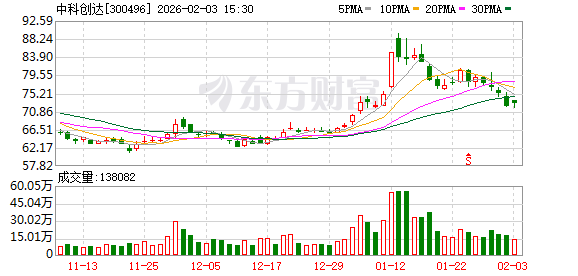
Core Viewpoint - The collaboration between the company and Volcano Engine has been evolving since 2024, focusing on the development of AI solutions for the smart automotive sector [2] Group 1: Partnership Development - The partnership began with the company's inclusion in the Volcano Engine Automotive Large Model Ecological Alliance [2] - A joint laboratory was established, and the company received HiAgent delivery authorization, indicating an upgrade in their collaboration [2] Group 2: Technological Advancements - The company leverages Volcano Engine's HiAgent and the Kouzi platform, combined with its own operating system technology, to create a comprehensive solution covering the entire chain [2] - In the smart automotive field, the company has launched an AI cockpit solution that enables real-time interaction between the vehicle and cloud brain, achieving a 500ms voice feedback response time and multimodal recognition and recommendation features [2] Group 3: User Experience Enhancement - The GUI Agent developed based on the Volcano Ark Mass platform can autonomously plan, reason, and execute UI interaction operations, significantly enhancing the cockpit interaction experience [2]

字节、阿里、腾讯AI大战全记录:一场影响命运的战争
创业邦· 2026-02-03 09:09
Core Insights - The article discusses the competitive landscape among major Chinese tech companies, particularly focusing on their advancements in AI and large language models, highlighting Tencent, Alibaba, and ByteDance's strategies and developments in this space [5][7][10]. Group 1: Tencent's Strategy - Tencent has been cautious in its AI investments over the past two years but began to change its approach in 2025 by hiring top talent and restructuring its AI teams, with the recruitment of Yao Shunyu marking a significant turning point [5][6][10]. - Yao Shunyu identified issues with Tencent's existing large language model, "Hunyuan," noting that its performance was compromised by data contamination from leaderboard-focused training [4][5]. - Tencent's "Yuanbao" AI product, initially lagging behind competitors, saw a significant increase in daily active users after integrating the DeepSeek model, achieving a tenfold growth in just one week [27][44]. Group 2: Alibaba's Approach - Alibaba introduced the concept of "Tongyun," integrating AI, cloud computing, and chip development, positioning itself as a full-stack AI company [7][10]. - Despite lower profitability compared to its competitors, Alibaba plans to increase its investment in AI infrastructure from 380 billion to 480 billion yuan over the next three years [7][10]. - The "Qianwen" app, previously known as "Tongyi," has become a central player in Alibaba's AI strategy, rapidly iterating and developing capabilities to compete with ByteDance's "Doubao" [54][62]. Group 3: ByteDance's Competitive Edge - ByteDance's "Doubao" became the first AI product in China to surpass 100 million daily active users by the end of 2025, showcasing its rapid growth and user engagement [9][33]. - The company has focused on aggressive investment in AI talent and infrastructure, aiming to become a global leader in large models, with a target to rank at least third worldwide [10][66]. - ByteDance's strategy includes leveraging its existing platforms like TikTok to enhance user acquisition for its AI products, demonstrating a strong synergy between its core business and new AI initiatives [9][59]. Group 4: Industry Dynamics - The competition among these tech giants is likened to a "Midway battle," where losing could mean losing the future, emphasizing the high stakes involved in AI development [16][17]. - The article highlights the importance of internal collaboration and resource sharing among different business units within these companies to enhance their AI capabilities [56][58]. - The talent war in AI is intensifying, with companies like Tencent actively recruiting from competitors to bolster their AI teams, reflecting the critical role of human resources in this technological race [66][70].


港股收评:恒指涨0.22%,科指跌1.07%,大模型及黄金概念股走强,科技股表现疲软,东鹏饮料IPO首日涨超1%
Jin Rong Jie· 2026-02-03 08:25
Market Overview - The Hong Kong stock market showed a slight rebound after a dip, with the Hang Seng Index closing up 0.22% at 26,834.77 points, while the Hang Seng Tech Index fell 1.07% to 5,467.26 points [1] - Major tech stocks generally declined, with Alibaba down 1.41%, Tencent down 2.92%, and JD.com down 0.72% [1] - Gold stocks rebounded significantly, with WanGuo Gold Group rising over 13% and Zijin Mining International up over 7% [1] Company News - Cloud Factory (02512.HK) secured a contract for the second phase of an AI industrial base project valued at RMB 520 million [2] - ZTE Corporation (00763.HK) plans to invest RMB 117 million in the Jianxing Zhanlu Fund to support a broader range of innovative businesses and supply chain enterprises [2] - XPeng Motors (09868.HK) delivered 20,011 new vehicles in January [3] - LaJin Network Entertainment (08172.HK) received authorization from Ant Group to become an official service provider for "Ant Treasure Box" [4] - JunDong Holdings (08277.HK) signed a timber harvesting and sales agreement with Jinda Forestry [5] - Global Medical (02666.HK) plans to issue corporate bonds totaling up to RMB 1 billion [6] - Blue River Holdings (00498.HK) entered into a cooperation framework agreement with Energy Storage Investment Company [7] - China Merchants Jinling (00978.HK) reported a contract sales total of approximately RMB 32.308 billion for 2025, a year-on-year decrease of 23.91% [8] Institutional Insights - Huatai Securities noted a significant pullback in A-shares and Hong Kong stocks, driven by the "Wash Trade" phenomenon, indicating a technical and emotional adjustment rather than a fundamental shift [9] - Galaxy Securities highlighted ongoing geopolitical risks and a decrease in expectations for U.S. Federal Reserve rate cuts, predicting continued volatility in the Hong Kong market [9] - Recommendations include focusing on the technology sector, which is expected to benefit from price increases, domestic substitution, and accelerated AI applications [9] - Consumer sectors are anticipated to rebound as they are currently undervalued and may benefit from increased consumption policies leading up to the Spring Festival [9]

阶跃星辰发布Step 3.5 Flash开源模型
Guo Ji Jin Rong Bao· 2026-02-03 08:11
阶跃星辰在大模型研发与应用落地领域的快速发展,离不开上海完善的人工智能产业生态与国资力 量的强力支撑。今年以来,上海市人工智能企业轮番登陆资本市场,上海市政府主导的国家资本早已在 该赛道提前布局,且上海国资敢于在企业发展关键阶段扮演领投方角色,以此吸引更多社会资本入局, 形成合力共同支持硬科技企业发展。 目前,上海国资已在沪逐步构建起覆盖底层芯片算力、中间层模型工具、上层行业应用的完整AI 生态版图。 2月2日,阶跃星辰正式发布新一代开源Agent基座模型Step 3.5 Flash。该模型专为实时Agent工作流 场景打造,实现了推理速度、智能水平与使用成本的兼顾,在单请求代码类任务中,其最高推理速度可 达每秒350个token,为市场提供了"更快更强更稳"的Agent底层模型选择。 据悉,Step 3.5 Flash采用稀疏MoE架构设计,模型总计拥有1960亿参数,且每个token仅激活约110 亿个参数,在保障模型核心能力的同时,实现了推理效率的显著提升,也为Agent类应用打造了更高 效、更具性价比的底层模型方案。目前,华为昇腾、沐曦股份、壁仞科技、燧原科技、天数智芯、阿里 平头哥等多家头部芯片厂商 ...