
新型储能

Search documents
7月84项新型储能政策发布,6地136细则出台,10地电价调整
中关村储能产业技术联盟· 2025-08-13 09:43
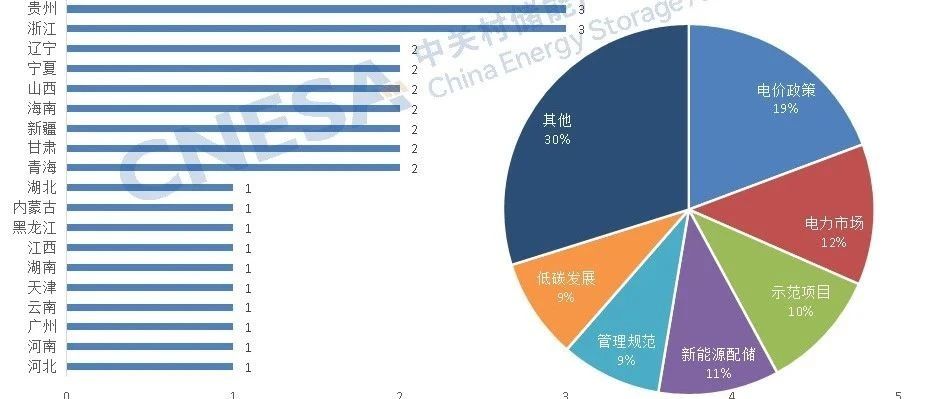
Policy Overview - In July 2025, a total of 84 energy storage-related policies were released or solicited for opinions, with 9 at the national level and 32 from local regions such as Sichuan, Shanxi, and Shanghai [3][4] - Among these, 58 policies were classified as very important, accounting for 69% of the total, with significant contributions from provinces like Sichuan and Shandong [3] National Policies - The National Development and Reform Commission and the State Administration for Market Regulation released a draft amendment to the Price Law, refining standards for identifying unfair pricing behaviors [4] - The Ministry of Commerce published a list of technologies restricted for export, including lithium iron phosphate battery preparation technology and lithium extraction technologies [4] - A notification was issued to support the construction of zero-carbon parks, with pilot projects recommended by local regions [6][4] Local Policies - The Xi'an Development and Reform Commission issued guidelines for the development of new energy storage power stations, planning to initiate three projects by 2025 [8] - The Hebei Development and Reform Commission released implementation rules for distributed photovoltaic power generation, allowing energy storage facilities to be integrated with local grids [10] - The Shandong Development and Reform Commission published a plan for zero-carbon park construction, promoting integrated projects for energy generation and storage [10] Pricing Policies - The Sichuan Power Trading Center outlined arrangements for user-side energy storage projects, allowing operators to negotiate revenue calculations [25] - The Hainan Development and Reform Commission proposed a market-oriented reform plan for renewable energy pricing, with specific price ranges for different types of projects [26] - Shanxi's plan for renewable energy pricing reform includes mechanisms for both existing and new projects, ensuring competitive pricing [26] Demand Response Policies - The Guizhou Energy Bureau introduced a demand response trading scheme, categorizing market participants and setting compensation price limits for peak shaving and valley filling [32] - The Sichuan Development and Reform Commission maintained a standard for active peak load response pricing [33] Green Electricity Trading Policies - The Qinghai Energy Bureau published a plan for green electricity direct connection projects, emphasizing self-consumption ratios and renewable energy utilization [35] - The Yunnan Development and Reform Commission outlined measures to enhance the capacity of connected projects through energy storage [35] Low-Carbon Development Policies - The Shandong Development and Reform Commission's zero-carbon park plan encourages the development of various energy storage technologies [38] - Notifications from Shanghai and Hubei support the establishment of national-level zero-carbon parks [38] Demonstration Project Policies - The Guizhou government listed 41 major projects related to energy storage, including 23 new energy storage power station projects with a total capacity of 2.65GW [40] - The Sichuan Development and Reform Commission's project list includes 27 energy storage projects totaling 3022.5MW [41]

融和元储为何能逆势融资过亿?
Sou Hu Cai Jing· 2025-08-13 01:09
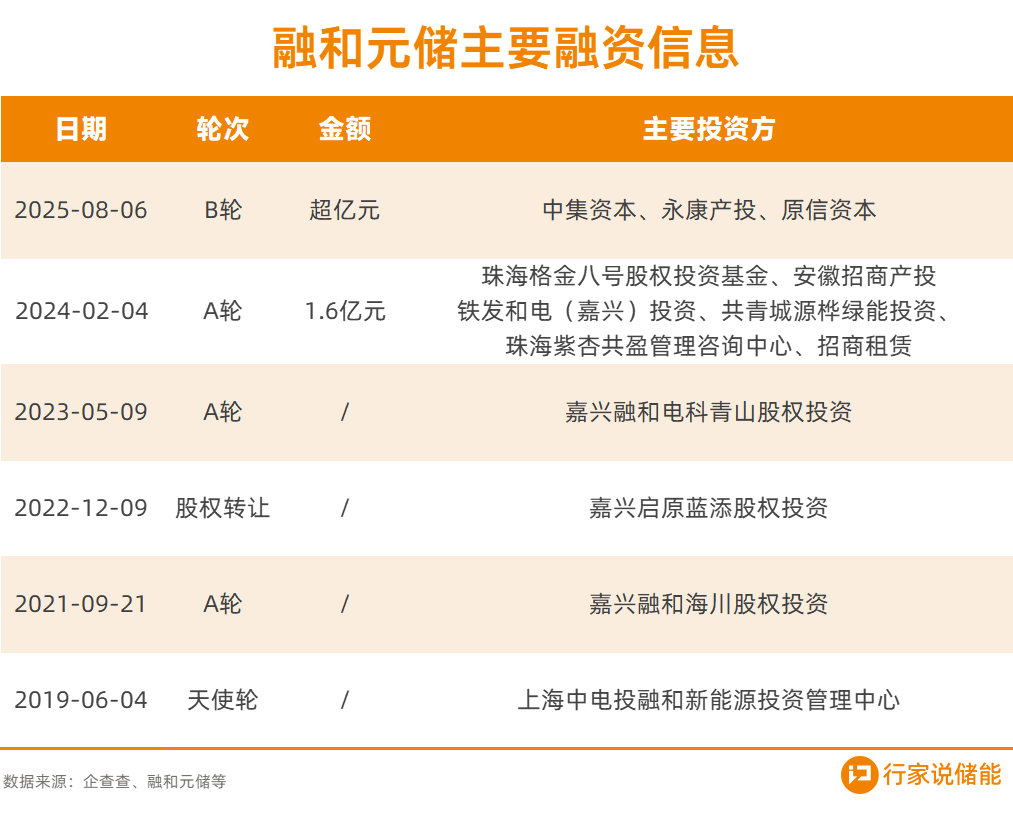
Group 1 - The core focus of the news is on the financing activities of the energy storage sector, highlighting significant investments and trends in the industry [2][4][6] - Ronghe Yuanchu, a key player in the energy storage market, secured over 100 million yuan in a Series B funding round on August 6, 2025, with major investors including CIMC Capital, Yongkang Industrial Investment, and Yuanshin Capital [2][6] - The financing landscape for energy storage has shown substantial growth from 2015 to 2025, with a notable increase in both the number of financing rounds and the total amount raised [5][6] Group 2 - In August 2025, several new energy storage companies also raised significant funds, including Xinjie Energy, which raised several hundred million yuan, and Green Woltis, which received several million dollars in strategic investment [6][8] - The financing data indicates a trend of increasing investment in the energy storage sector, with various companies at different stages of funding, from angel rounds to Series B [6][8] - The overall financing amount and the number of financing rounds in the energy storage industry have shown a remarkable increase, reflecting growing investor interest and market potential [5][6]
中原证券晨会聚焦-20250813
Zhongyuan Securities· 2025-08-13 01:00
分析师:张刚 登记编码:S0730511010001 zhanggang@ccnew.com 021-50586990 晨会聚焦 资料来源:聚源,中原证券研究所 -5% 1% 7% 13% 19% 25% 31% 37% 2024.08 2024.12 2025.04 2025.08 上证指数 深证成指 | 国内市场表现 | | | | --- | --- | --- | | 指数名称 | 昨日收盘价 | 涨跌幅(%) | | 上证指数 | 3,665.92 | 0.50 | | 深证成指 | 11,351.63 | 0.53 | | 创业板指 | 2,022.77 | -0.47 | | 沪深 300 | 4,143.83 | 0.52 | | 上证 50 | 2,443.97 | -0.52 | | 科创 50 | 891.46 | 0.14 | | 创业板 50 | 1,924.26 | -0.67 | | 中证 100 | 3,919.53 | 0.43 | | 中证 500 | 6,418.16 | 0.41 | | 中证 1000 | 6,116.76 | 0.33 | | 国证 2000 | 7 ...

融和元储为何能逆势融资过亿?
行家说储能· 2025-08-12 10:30
Core Viewpoint - Despite the tightening financing environment and increased competition in the energy storage industry, companies like Ronghe Yuanchu have successfully completed over 100 million yuan in Series B financing, indicating strong investor confidence and market potential [2][3][10]. Financing Details - Ronghe Yuanchu recently completed over 100 million yuan in Series B financing, with investments from CIMC Capital, Yongkang Industrial Investment, and Yuanshin Capital [3][5]. - The company has undergone six rounds of financing, consistently raising over 100 million yuan in the past two years, attracting a strong lineup of investors including Tefa Capital and State Power Investment [3][5]. Industry Context - The new energy storage sector has shifted from capital enthusiasm to deep adjustment, with significant price fluctuations and increased regulatory scrutiny affecting project financing and operational stability [7][10]. - The tightening of capital has led to a preference for companies with strong profitability and stable business models, making Ronghe Yuanchu's successful financing noteworthy [7][10]. Company Performance - Founded in 2019, Ronghe Yuanchu is recognized as a leading zero-carbon energy operator, ranking among the top ten global energy storage companies as of 2023 [11][12]. - As of Q1 2025, the company has shipped over 14 GWh of energy storage systems and has an operational asset scale exceeding 7.2 GWh, maintaining a top position in domestic shipment rankings [11][12]. Future Plans - The recent financing will enable Ronghe Yuanchu to enhance product and technology innovation, deepen lifecycle management capabilities, and accelerate expansion into overseas markets, further solidifying its competitive edge in the global energy storage sector [3][12].

智库要览丨“中国绿”持续照亮全球能源未来
Sou Hu Cai Jing· 2025-08-12 04:59
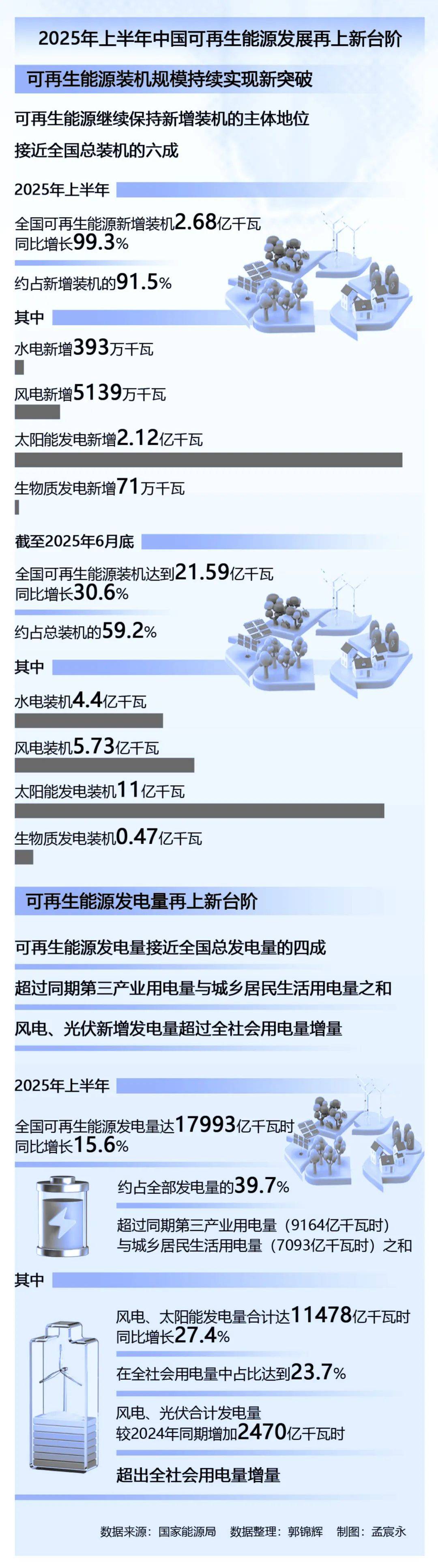
Group 1: China's Green Energy Transition - China is leading the global green and low-carbon energy transition, with significant growth in renewable energy installations in 2025 [1][30] - By the end of June 2025, China's renewable energy installed capacity reached 2.159 billion kilowatts, accounting for approximately 59.2% of total installed capacity [10][21] - In the first half of 2025, renewable energy installations totaled 268 million kilowatts, a year-on-year increase of 99.3%, with wind and solar power contributing significantly [9][20] Group 2: Renewable Energy Cost Competitiveness - The International Renewable Energy Agency reported that renewable energy helped avoid $467 billion in fossil fuel expenditures globally in 2024, confirming its cost-effectiveness [3][25] - The levelized cost of electricity (LCOE) for new utility-scale onshore wind projects was $0.034 per kWh, making it the cheapest renewable energy source [3][26] - The total installed cost (TIC) for solar photovoltaic technology is projected to drop to $388 per kilowatt in the next five years [3][26] Group 3: Global Energy Market Restructuring - The global energy market is undergoing significant restructuring due to rising geopolitical risks and the need for energy security, with countries reevaluating their energy strategies [2][5] - Six structural changes are identified as reshaping the energy market, including the impact of Middle Eastern conflicts on oil prices and the push for LNG diversification [5][6] - The International Energy Agency forecasts a slowdown in global natural gas demand growth in 2025, followed by an acceleration in 2026 [7][8] Group 4: Energy Storage and Technological Advancements - China's new energy storage industry is transitioning from early commercialization to large-scale development, with significant increases in installed capacity [18][19] - The average storage duration for new energy storage projects in China has increased to 2.3 hours, reflecting advancements in technology [19][34] - The integration of artificial intelligence in energy management is expected to enhance efficiency while also increasing energy consumption [6][27] Group 5: Future Projections and Challenges - By the end of 2025, non-fossil energy generation capacity in China is expected to reach approximately 240 million kilowatts, accounting for about 61% of total installed capacity [20][21] - The rapid expansion of renewable energy brings challenges such as volatility in generation, insufficient storage facilities, and limited grid capacity [16][31] - The report suggests building a multi-layered, diversified energy supply system to mitigate energy security risks [17][32]
镇江上半年新签约亿元以上项目总投资额同比增长5.9%项目提速蓄动能 产业集聚势如虹
Xin Hua Ri Bao· 2025-08-11 23:05
Group 1: Financial Support and Economic Growth - Zhenjiang's financial institutions have provided an additional special credit of 28 billion yuan to the aerospace industry chain [1] - Since 2022, Zhenjiang has released six batches of financial support lists, benefiting 775 enterprises with a total credit exceeding 220 billion yuan [1] - In the first half of this year, Zhenjiang's GDP grew by 5.9%, with fixed asset investment growth ranking third in the province [1] Group 2: Major Projects and Investment - The high-precision metal mask project in Jurong Economic Development Zone has completed its main structure and is expected to produce 100,000 units annually after phase one [2] - Zhenjiang has signed new industrial projects with a total investment of 115.8 billion yuan in the first half of the year, a year-on-year increase of 5.9% [3] - 19 provincial major projects in Zhenjiang completed 56.9% of their annual investment plan, exceeding the provincial average by 1.6 percentage points [2] Group 3: Technological Upgrades and Innovations - Jiangsu Ruilong Ding Industrial Co., Ltd. has improved production efficiency by 12% and reduced labor costs by 42% through automation [4] - Zhenjiang is focusing on 54 provincial major industrial projects and 163 municipal key industrial technology upgrade projects to enhance growth and transformation [4] - The city plans to implement 200 key manufacturing intelligent transformation projects annually over the next three years [5] Group 4: Collaboration and Research - The "Science and Technology Innovation Zhenjiang" event facilitated collaboration between Nanjing University and over 30 local biopharmaceutical companies [6] - Zhenjiang has promoted over 260 collaborative projects between industry and academia in the first half of the year [6] - High-tech industries in Zhenjiang accounted for 55.6% of the total industrial output value, surpassing the provincial average by 3.8 percentage points [6] Group 5: Future Industry Focus - Zhenjiang is concentrating on key future industries such as artificial intelligence, low-altitude economy, new energy storage, and hydrogen energy [7] - The city aims to address weak links in the industrial chain and focus on breakthroughs in common technologies [7]
湖南31个储能电站亏损2000万,揭开了储能市场最真实的一角
3 6 Ke· 2025-08-11 03:39
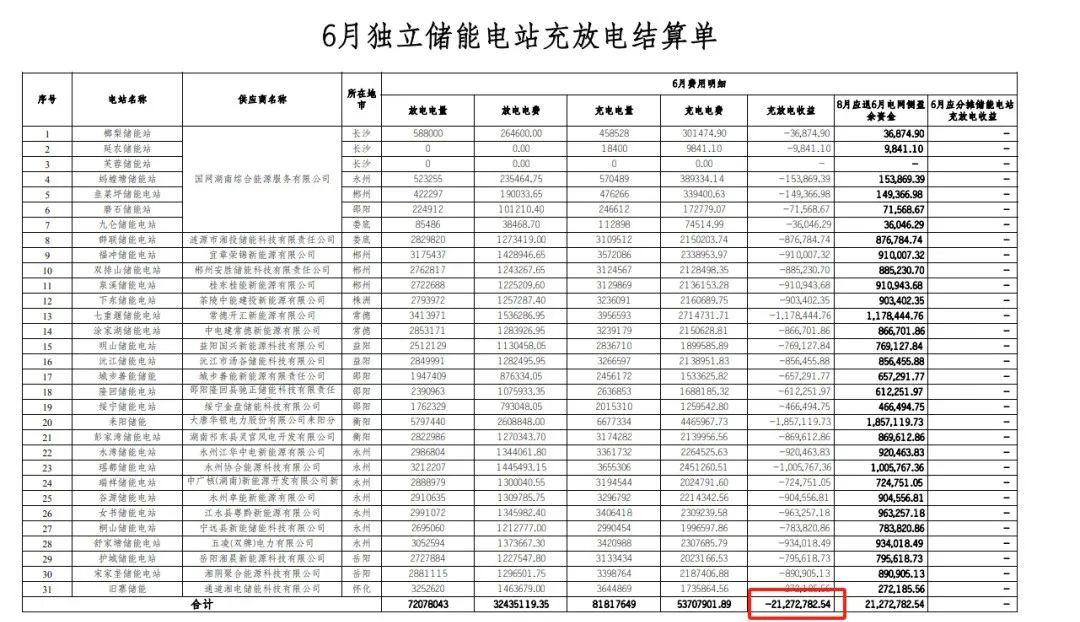
Core Viewpoint - Hunan Province, a leading region in energy storage capacity, is facing significant financial losses in its energy storage projects, raising concerns about the sustainability and profitability of the energy storage industry in China [1][2]. Group 1: Financial Performance - In June, Hunan's independent energy storage stations reported a total charging and discharging revenue of -21.27 million yuan, indicating widespread financial losses across 31 energy storage stations [1][3]. - The average charging price was approximately 0.66 yuan/kWh, while the average discharging price was only 0.45 yuan/kWh, leading to a negative price differential [7][8]. - Companies like Xue Tian Salt Industry and Hua Zi Technology have reported significant losses, with Xue Tian terminating a major energy storage project due to poor revenue expectations [5][6]. Group 2: Market Conditions - The energy storage market in Hunan is characterized by oversupply and intense competition, with low rental prices for capacity leading to reduced revenues for energy storage projects [8][9]. - The weighted average rental price for capacity in Hunan dropped from 126 yuan/kWh·year in the first half of 2023 to 60 yuan/kWh·year in 2024, reflecting a significant decline in market value [9][14]. - The rapid increase in energy storage installations has resulted in a supply surplus, with Hunan's new energy storage capacity reaching 273.3 MW by September 2024 [9]. Group 3: Industry Implications - The widespread losses in Hunan's energy storage sector serve as a warning for the national energy storage industry, highlighting the risks of over-investment and the need for regulatory intervention [11][12]. - Other provinces, such as Guangdong, are beginning to implement restrictions on new energy storage projects to prevent oversaturation in the market [12][13]. - The decline in capacity rental prices across various regions indicates a broader trend that could threaten the profitability of energy storage investments nationwide [14].


2025中国新型储能发展报告
Sou Hu Cai Jing· 2025-08-10 12:26
Core Insights - The report highlights the rapid growth and development of new energy storage in China, emphasizing its leading position globally and the promising future of the industry [1][4]. Global Competition: Policy and Market Drivers - New energy storage has become a core area in the global energy transition, with countries increasing strategic investments through policy incentives and market innovations. The global installed capacity of new energy storage reached 180 million kilowatts in 2024, nearly doubling from 2023, with significant contributions from the US, UK, and Australia [2][3]. Technological Exploration - Various countries are making breakthroughs in energy storage technologies, including lithium-ion battery applications in Australia and metal-air batteries in Japan and the US. Major projects are being implemented globally, expanding the application scenarios for new energy storage [3]. China's Leadership: Scale and Quality - In 2024, China's new energy storage development showcased significant policy improvements, rapid scale growth, diverse technologies, and deepened applications. China has built an installed capacity of 73.76 million kilowatts, accounting for over 40% of the global total, with a 130% increase from 2023 [4][5]. Application Scenarios - The application of new energy storage focuses on three main areas: independent and shared storage (46%), renewable energy integration (42%), and significant improvements in utilization efficiency, with an average annual equivalent utilization of 911 hours [5][6]. Technological Breakthroughs - China's new energy storage technology is characterized by a leading mainstream (lithium-ion batteries) and diverse breakthroughs. Lithium-ion batteries account for 96.4% of the market, with significant advancements in capacity and safety [6][7]. Industry Expansion: Scale and Cost Optimization - The lithium-ion battery production in China reached 1.17 billion kilowatt-hours in 2024, with a total output value exceeding 1.2 trillion yuan. The production of energy storage batteries has been increasing for three consecutive years [7][8]. Future Outlook: Clear Path for High-Quality Development - By 2025, new energy storage is expected to transition to high-quality development, with a focus on large capacity, low cost, and long-duration storage. The report emphasizes the importance of technological innovation and international cooperation in achieving these goals [9].
华为、腾讯、汇川……储能相关头部厂商已就位
行家说储能· 2025-08-08 08:13
Core Viewpoint - The new energy storage industry is accelerating its transformation under the dual drive of policies and market forces, with a focus on high-quality development and innovation in storage technologies as 2025 approaches [2]. Group 1: Industry Trends - The year 2025 marks a critical transition point for the new energy storage sector, coinciding with the end of the "14th Five-Year Plan" and the beginning of the "15th Five-Year Plan" [2]. - Multiple new policies related to the energy storage industry have been released at both national and local levels, clarifying the direction of industry transformation [2]. - The market for energy storage is expanding through diverse applications of "storage + X" scenarios, indicating a broadening of market boundaries [2]. Group 2: Market Opportunities - The growth of renewable energy installations, direct green electricity connections, zero-carbon parks, green data centers, and power market reforms are driving the emergence of new, valuable, and large-scale energy storage markets [2]. - The industry is urged to deeply understand transformation trends, clarify development positioning, and proactively seize opportunities to avoid being overwhelmed by the waves of industrial upgrades [2]. Group 3: Event Details - The 2025 EESA Energy Storage Summit will be held on August 12, 2025, at the Shanghai International Convention Center, gathering global experts and leaders in the energy storage field [3][21]. - The summit will feature a series of keynote speeches, roundtable discussions, and signing ceremonies focused on sustainable development and energy transition [4][12][16].






中国首个储能强制性国标正式实施
Zhong Guo Chan Ye Jing Ji Xin Xi Wang· 2025-08-06 22:47
Group 1 - The implementation of the mandatory national standard GB44240-2024 for lithium batteries used in energy storage systems marks a significant improvement in China's energy storage safety standard system [1] - GB44240-2024 focuses on product safety features, introducing additional testing items such as vibration, impact, puncture, and forced discharge, while tightening certain testing requirements [1] - The standard establishes safety "hard thresholds" across the entire supply chain, from battery design and manufacturing to transportation, installation, operation, and recycling [1] Group 2 - Over 20 companies with more than 40 models have passed or are undergoing testing for GB44240, including leading battery manufacturers such as Ningde Times and Haicheng Energy [2] - As of the first half of 2025, the installed capacity of new energy storage in China reached 94.91 million kilowatts (22.2 billion kilowatt-hours), representing a growth of approximately 29% compared to the end of 2024 [2] - The implementation of GB44240 is expected to challenge manufacturers with insufficient safety redundancies to redesign their products, accelerating the elimination of low-quality capacity and promoting a shift in the industry from "cost-first" to "safety-first" high-quality transformation [2]
