
生成式人工智能

Search documents
高金和嘉信理财联合发布第九年度中国新富人群财富健康指数
Zhong Zheng Wang· 2025-09-19 10:25
Core Insights - The ninth annual Wealth Health Index for China's new affluent population was jointly released by Shanghai Jiao Tong University's Shanghai Advanced Institute of Finance and Charles Schwab, indicating a shift towards diversified investment strategies among this demographic [1][2] Group 1: Investment Trends - The average allocation of cash and fixed deposits in the asset configuration of the new affluent population has decreased for the first time to 52.5% [1] - The participation rate in fund investments has reached a five-year high, with the average allocation of funds in investment portfolios rising to 12.4% [1] - Nearly 40% (38.8%) of respondents expressed interest in overseas asset allocation, highlighting a growing preference for international investments [1] Group 2: Financial Literacy and Education - Financial literacy remains a critical factor for converting diversification efforts into long-term, stable investment returns, as highlighted by a professor from the Shanghai Advanced Institute of Finance [2] - The industry is encouraged to focus on the needs and behavioral changes of the new affluent population while developing targeted investor education systems [2] Group 3: AI in Financial Services - The new affluent population in China shows a significantly higher trust in AI-generated investment advice compared to overseas markets, with nearly 70% expressing strong or moderate trust [2] - More aggressive investors tend to have higher trust in AI, while those with over 15 years of investment experience prefer human advisors [2] - The new affluent population recognizes AI's advantages in technical analysis, while human advisors excel in emotional support and understanding client needs [2]
知识产权护航民营企业“出海”(人民网)
Ren Min Wang· 2025-09-19 03:23
Group 1 - Intellectual property (IP) is a core competitive advantage and important asset for private enterprises, directly impacting their internationalization and sustainable development [1] - Approximately one-third of global patents are related to digital technology, with China applying for nearly 70% of patents in the generative artificial intelligence sector [1] - In the first half of this year, domestic applicants submitted PCT international patent applications and Hague design applications, increasing by 12.7% and 23.2% year-on-year, respectively [1] Group 2 - Companies face inevitable IP risks when expanding internationally, necessitating a strategic approach that integrates standards and regulations [2] - There is a shift from passive compliance to proactive IP management, enabling companies to establish technological advantages and transition from following to leading in their sectors [2] - Effective IP management is essential for innovation and differentiation, which are critical for breaking away from cost competition in manufacturing [3] Group 3 - Patent strategies should be aligned with business strategies, considering legal, technical, commercial, and international perspectives [3] - Companies like CATL are focusing on competitive IP layouts, differentiated risk management, and talent development in IP to enhance their global resource allocation [3]

生成式人工智能在民间美术中的创新运用
Xin Hua Ri Bao· 2025-09-19 02:56
Core Viewpoint - The integration of generative artificial intelligence (AI) into the preservation and innovation of the Three Gorges folk art is transforming its digitalization, education, and creative design, enhancing its cultural significance and accessibility [1][8]. Digital Transformation of Three Gorges Folk Art - Generative AI injects new momentum into the digital development of Three Gorges folk art, utilizing computer vision to identify and categorize various materials, creating a structured database for preservation [2]. - The AI's data analysis capabilities allow for in-depth study of folk art characteristics, establishing a three-dimensional art gene bank that clarifies the evolution of different styles [2][3]. Resource Activation and Development - The digital database enriches generative AI's learning, enabling it to understand and creatively engage with Three Gorges folk art, including restoring damaged artifacts and generating high-fidelity images and models [3]. - Generative AI can transform static art into dynamic experiences, allowing users to interact with and create their own art in virtual spaces [3]. Educational Support for Heritage Transmission - Generative AI can design tailored educational programs for folk art transmission, creating interactive characters that provide real-time feedback and immersive learning experiences [4]. - The technology facilitates the establishment of virtual art workshops, enabling skill acquisition without geographical constraints, thus promoting the training of heritage inheritors [4]. Innovation in Design - Trained generative AI can create new artistic works that adhere to traditional styles while integrating modern design elements, fostering a blend of retro and contemporary aesthetics [5][6]. - The AI's efficiency in generating design concepts allows for rapid adaptation to market demands, producing culturally and functionally relevant products [6]. Expanding Communication Dimensions - Generative AI enhances the dissemination of Three Gorges folk art by transforming traditional content into engaging formats, increasing public interest [7]. - The incorporation of VR and AR technologies creates immersive experiences that deepen emotional connections to the art, while collaborative design platforms enable customized solutions based on user preferences [7][8]. Conclusion - Generative AI is a crucial tool for improving the quality and efficiency of the digital transformation of Three Gorges folk art, facilitating its preservation, education, innovation, and broader dissemination [8].
《中国新富人群财富健康指数》:持有基金的受访者比例创五年来新高
Jing Ji Guan Cha Wang· 2025-09-18 12:03
Core Insights - The wealth health index of China's new affluent population is projected to slightly decline from 70.51 to 70.35 in 2025, indicating a decrease in wealth confidence, financial planning, and investment participation sub-indices [1] - Despite the overall decline, the asset management sub-index has shown improvement, reflecting a growing maturity in wealth management and asset allocation behaviors among the new affluent [1] Group 1: Wealth Management Trends - Nearly 48.6% of respondents have retirement planning, with significant increases observed among the 25-44 age group and high-income earners [1] - The average allocation of cash and fixed deposits in the asset configuration of the new affluent has decreased to 52.5%, marking a shift towards more diversified investment strategies [1] - The participation rate in fund investments has reached a five-year high, with the average allocation of funds in investment portfolios rising to 12.4% [1] Group 2: Investment Preferences - There is a notable interest in overseas asset allocation, with nearly 38.8% of respondents expressing interest in this area [1] - The new affluent population is increasingly active in exploring diverse investment paths, particularly in the context of declining risk-free interest rates [1] Group 3: Attitudes Towards AI in Financial Services - The new affluent population in China shows a significantly higher trust in AI-generated investment advice compared to overseas markets, with nearly 70% expressing strong or moderate trust [2] - More aggressive investors tend to have higher trust levels in AI, while those with over 15 years of investment experience prefer human advisory services [2] - AI is recognized for its strengths in technical analysis, while human advisors excel in emotional support and understanding client needs [2]
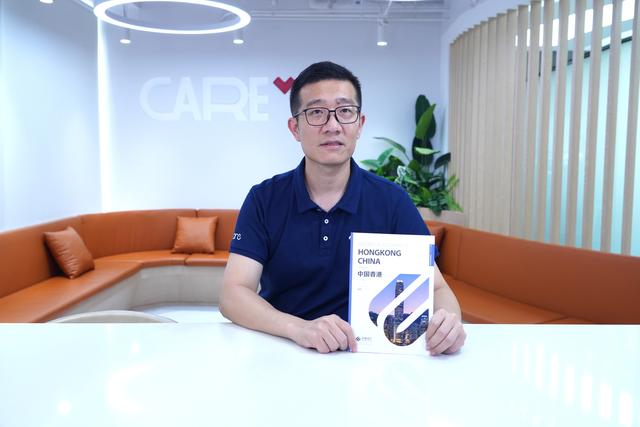
启德教育发布《2025中国香港求学报告》:各校内地招生要求差异明显,硕士录取以“八大”为主
Huan Qiu Wang· 2025-09-18 11:03
Core Insights - The report released by Qidi Education provides a comprehensive guide for students and parents interested in studying in Hong Kong, based on nearly 9,000 admission data for the 2025 academic year [1] Group 1: Education Landscape in Hong Kong - Hong Kong has 16 higher education institutions, including 8 public universities known as the "Hong Kong Eight," and is home to 5 of the world's top 100 universities according to the 2026 QS World University Rankings [3] - The number of non-local students in Hong Kong's higher education institutions has been growing at an annual rate of over 15% since 2020, projected to reach 92,000 by the 2024/25 academic year [3] - The highest proportion of non-local students is in taught master's programs, accounting for 53.4%, followed by bachelor's degree programs at 25.3% [3] Group 2: Admission Policies and Trends - Starting from the 2024/25 academic year, the quota for non-local students in public universities' bachelor's degree programs will increase from 20% to 40%, resulting in an actual increase of about 3,000 students [7] - There is a significant tiered difference in admission scores for mainland students, with top universities requiring scores significantly above local thresholds [8] - The A-Level curriculum dominates the international course system for undergraduate admissions, accounting for 68% of the total [8] Group 3: Master's Program Admission Insights - In the 2025 admission season, 93.68% of taught master's admissions were from the "Hong Kong Eight," with the top five universities accounting for 66.01% of admissions [10] - The highest admission rates were observed in engineering and science disciplines, which accounted for 35.33% of admissions, followed by humanities and social sciences at 32.32% [10] Group 4: Employment Trends and Skills Demand - The "Shenzhen-Hong Kong-Guangzhou" cluster has topped the global innovation cluster rankings, highlighting Hong Kong's role as a key hub in the global innovation network [13] - Over half of senior and HR respondents indicated plans to recruit talent from mainland China, with digital skills becoming increasingly essential in the job market [14] - The employment rate for non-local graduates in Hong Kong has increased from 48.7% in 2023 to 50.8% in 2024, with a notable rise in those choosing to continue their studies in Hong Kong [14]

华为发布面向智能世界2035十大技术趋势
机器人圈· 2025-09-18 09:02
Core Insights - Huawei's "Intelligent World 2035" report outlines key technological trends and their impacts on various industries over the next decade, emphasizing the transformative potential of generative AI and the need for a forward-looking vision in technology [2][4]. Group 1: Key Technological Trends - Trend 1: AGI is expected to be the most transformative force in the next decade, but significant challenges must be overcome to achieve AGI breakthroughs [5]. - Trend 2: AI agents will evolve from execution tools to decision-making partners, driving industrial revolutions [5]. - Trend 3: Development models will change, with human-AI collaboration becoming mainstream, allowing humans to focus on design and innovation while AI handles coding tasks [5]. - Trend 4: Interaction methods will shift from graphical interfaces to natural language and multi-modal interactions, enhancing user experiences [5]. - Trend 5: Mobile apps will transition from standalone functions to AI-driven service nodes, providing users with seamless experiences [5]. - Trend 6: L4+ autonomous vehicles will become part of daily life, creating a "mobile third space" [5]. - Trend 7: By 2035, total computing power is projected to increase by 100,000 times, leading to disruptive innovations in computing architecture and paradigms [5]. - Trend 8: Data will become the "new fuel" for AI development, with storage needs expected to grow 500 times by 2025, accounting for over 70% of AI storage requirements [5]. - Trend 9: The number of connected entities will expand from 9 billion people to 900 billion intelligent agents, marking a shift from mobile internet to intelligent agent internet [5]. - Trend 10: Energy will be a critical factor for AI development, with renewable energy expected to surpass 50% of total generation by 2035 [5]. Group 2: Societal Impact and Governance - By 2035, AI is anticipated to help prevent over 80% of chronic diseases, shifting health management from reactive to proactive approaches [5]. - Over 90% of Chinese households are expected to have smart robots, indicating a shift towards immersive technological experiences in daily life [5]. - AI-driven autonomous decision-making organizations will reshape production paradigms, with AI application rates exceeding 85% and productivity improvements of 60% [5]. - The integration of "AI for all" and "AI for good" into governance frameworks is essential for humanity to maintain control over technology and build a human-centered intelligent world [6]. Group 3: Global Digitalization Index - Huawei has upgraded the Global Digital Index (GDI) to the Global Intelligence Index (GDII), which evaluates digital economic development through new production factors: data, ICT talent, and intelligent production tools [8]. - The GDII model includes key indicators such as data scale, application levels, network connectivity, computing power, and ICT skills, providing a comprehensive assessment for countries to navigate the digital economy [8]. - The report aims to offer insights for countries to develop precise industrial strategies and advance in the wave of digitalization [8].
推动党报评论融合发展取得新突破
Ren Min Ri Bao· 2025-09-17 22:22
Core Points - The article emphasizes the importance of effective news and public opinion work in governance and national stability, as highlighted by General Secretary Xi Jinping [1] - It discusses the systematic reform of mainstream media, focusing on the role of party newspaper commentary in unifying thought and mobilizing strength for national rejuvenation [2] - The article stresses the need for content development to enhance the competitiveness of mainstream media, asserting that content remains the foundation regardless of technological advancements [2] - It highlights the integration of new technologies, such as generative artificial intelligence, in news commentary processes while ensuring cybersecurity [2] - The article calls for a deeper understanding and promotion of Xi Jinping's cultural thought to seize opportunities and drive transformative development in party newspaper commentary [3] Summary by Sections News and Public Opinion Work - The article outlines the fundamental guidelines for news and public opinion work in the new era, emphasizing the need for innovation and digital empowerment [1] Systematic Reform of Mainstream Media - It advocates for a strategic approach to party newspaper commentary, focusing on political tasks and the integration of the party's principles with public sentiment [2] Content Development - The article asserts that content is the cornerstone of mainstream media, and efforts will be made to enhance service to central work and improve public opinion guidance [2] Technological Integration - It discusses the importance of leveraging new technologies in the news commentary process while maintaining a strong cybersecurity framework [2] Cultural Thought Promotion - The article encourages a thorough understanding of Xi Jinping's cultural thought to foster new breakthroughs in party newspaper commentary and amplify positive narratives [3]
世界知识产权组织:中国在全球的创新力排名首次跻身前十
Xin Hua Cai Jing· 2025-09-17 09:31
Core Insights - The World Intellectual Property Organization (WIPO) released the 2025 Global Innovation Index (GII), showing that China has risen to 10th place globally, marking its first entry into the top ten [1] - The GII evaluates nearly 140 economies based on around 80 indicators, including R&D expenditure, venture capital transactions, high-tech exports, and intellectual property applications [1] - China maintains its leading position among middle-income economies and shows strong momentum in R&D spending, high-tech exports, and innovation output [1] Group 1: Global Rankings and Performance - The top ten most innovative economies in 2025 are Switzerland, Sweden, the United States, South Korea, Singapore, the United Kingdom, Finland, the Netherlands, Denmark, and China [1] - China has 24 global top 100 technology innovation clusters, leading the world for three consecutive years, with the "Shenzhen-Hong Kong-Guangzhou" cluster ranking first globally for the first time [1] Group 2: Regional Insights - Southeast Asia, East Asia, and Oceania continue to be the driving forces of global innovation, with six economies in the top 25 [2] - South Korea and Singapore lead in corporate R&D, education, and innovation infrastructure, while Japan and Hong Kong have also improved their rankings [2] Group 3: Future Innovation Indicators - R&D growth is projected to drop to its lowest level since 2010 in 2024 [3] - Due to high inflation, actual corporate R&D spending growth has slowed to 1%, significantly below the past decade's average of 4.6% [3] - Venture capital saw a rebound with a 7.7% increase in transaction volume in 2024, driven by significant deals in the U.S. and a surge in generative AI investments [3] - Technological advancements remain strong, with decreasing battery prices, improved supercomputer efficiency, and lower costs in genome sequencing [3] Group 4: Overall Innovation Landscape - The report titled "2025 Global Innovation Index: Innovation at a Crossroads" indicates that while innovation drives progress, it currently faces resistance [3] - R&D investment is losing momentum, and the decline in venture capital activity highlights the need for sustained upstream investment and funding support for innovation [3]
向世界讲好秘鲁的故事
人民网-国际频道 原创稿· 2025-09-17 07:32
Group 1 - China and Peru share commonalities as ancient civilizations and are committed to a win-win development approach, with the Belt and Road Initiative serving as a significant integration link [1] - The Peruvian newspaper, "El Peruano," is approaching its 200th anniversary, marking it as the oldest daily newspaper in South America, and is adapting to technological advancements to engage a new generation [1] - The media industry faces challenges in effectively utilizing technology, particularly artificial intelligence, to combat misinformation while adhering to journalistic principles [1] Group 2 - Both China and Peru are recognized as cradles of world civilization, showcasing a blend of diverse cultures, with Spanish as the official language alongside indigenous languages [2] - The preservation of ancestral cultural heritage, including the protection of indigenous languages, is deemed crucial, with efforts to leverage high technology for cultural preservation and storytelling [2]
华为发布!未来十年十大技术趋势
Zhong Guo Zheng Quan Bao· 2025-09-17 04:58
未来十年十大技术趋势 《智能世界2035》报告展望了未来十年十大技术趋势。 趋势一:AGI(通用人工智能)将是未来十年最具变革性的驱动力量,但仍需克服诸多核心挑战,方能 实现AGI奇点突破。因此,走向物理世界是AGI形成的必由之路。 趋势二:随着大模型的发展,AI智能体将从执行工具演进为决策伙伴,驱动产业变革。 趋势三:开发模式迎来变革,人机协同编程成为主流。人类将更专注于顶层设计和创新思考,而把繁琐 的编码执行工作,交给高效的AI来完成。 趋势四:交互方式正从图形界面转向自然语言,并向着融合人类五感的多模态交互演进。用户通过语 音、手势等方式与数字世界互动,获得深度沉浸的体验。 趋势五:手机App正从独立的功能实体,转变为由AI智能体驱动的服务节点。用户只需给出指令,AI智 能体将调用相关服务节点,为用户提供极致体验。 9月16日,华为发布《智能世界2035》系列报告,展望了未来十年的关键技术趋势以及这些技术对教 育、医疗、金融、制造、电力等行业带来的改变和影响。 华为认为,AGI(通用人工智能)将是未来十年最具变革性的驱动力量。华为还预测,2035年全社会的 算力总量将增长10万倍。 趋势八:2035年数 ...