
海外资产

Search documents
配置半夏,押注李蓓
Xin Lang Cai Jing· 2026-02-04 08:36
Core Viewpoint - The performance of the funds under the company has been strong this year, with recent fluctuations in various fund types, but the company's funds have shown resilience and reached new net asset value highs [16]. Group 1: Investment Strategy - The current asset allocation among high-net-worth individuals and wealth management institutions is concentrated in four categories: quantitative long positions, all-weather funds, science and technology innovation funds, and overseas assets [6][22]. - The existing allocation structure is heavily skewed and crowded, which carries significant risks [7][22]. - The key trigger for risk is whether housing prices and consumer prices can bottom out and recover [8][23]. Group 2: Economic Scenarios - Two potential future economic scenarios are outlined: - Scenario A: A reversal of deflation, leading to a significant rise in the company's investments and a lackluster performance from heavily weighted strategies in the wealth market [10][25]. - Scenario B: Continued deflation, resulting in mediocre performance for the company's investments while the wealth market's four major strategies continue to rise [11][26]. Group 3: Recommendations - It is suggested that allocating a portion of investments to the company and betting on its performance could be a wise choice to hedge risks and improve the risk-return profile of the investment portfolio [12][27]. - The recent confirmation of a major turning point in the Chinese real estate market supports the decision to invest in the company, transitioning from a protective strategy to a more aggressive investment approach [14][30].


李蓓“等风来”
Hu Xiu· 2025-12-18 11:22
Core Viewpoint - The article discusses the response of Li Bei, founder of Hanxia Investment, to a critical piece published by Huxiu, highlighting the strong influence and performance of Li Bei in the private equity sector. The discussion revolves around the risks in current asset allocation strategies and the potential for investment opportunities in a changing economic landscape [1][2]. Group 1: Current Market Risks - Li Bei identifies significant risks in mainstream asset allocation, which is heavily concentrated in four strategies: quantitative enhancement, sci-tech funds, all-weather strategies, and overseas assets. Each of these strategies carries distinct risks, such as the impact of small-cap factors and the potential fallout from the AI bubble in the U.S. [2] - The current valuations of these strategies are considered high, and the crowded positions pose substantial risks, particularly if economic conditions shift [2][7]. Group 2: Investment Strategy - Hanxia's current portfolio is characterized by a "deep value" approach, focusing on industry leaders with an average PE of 8 times, PB of 0.8 times, and a dividend yield of 5%. Approximately 80% of the holdings exhibit strong cyclical characteristics [3][4]. - The portfolio also includes strategies to steepen the yield curve by buying medium- to short-term government bonds while shorting long-term bonds, which is expected to mitigate losses during prolonged deflation [5][6]. Group 3: Economic Outlook - Li Bei categorizes the future economic scenario into two possibilities: a reversal of deflation, which would negatively impact the mainstream strategies but benefit Hanxia's investments, and a continuation of deflation, where Hanxia may experience slight losses or gains while mainstream strategies continue to rise [6][10]. - The article notes that the current market's asset concentration poses a significant risk, as evidenced by past instances of severe sell-offs in crowded trades, such as in the renewable energy sector [7]. Group 4: Market Dynamics - The future market dynamics may not simply be a binary outcome of either technology growth or cyclical recovery. If AI technology continues to evolve and applications expand, the tech market may persist, while cyclical sectors could also gain recognition if their fundamentals improve [8]. - The article emphasizes that even in a recovering economic environment, both cyclical and tech sectors could thrive simultaneously, depending on market conditions and investor sentiment [8][10]. Group 5: Investment Philosophy - Li Bei's investment philosophy suggests that diversifying into Hanxia's products, which are inversely correlated with mainstream assets, can effectively reduce overall portfolio volatility. The low valuation and high dividend characteristics of Hanxia's holdings provide strong downside protection in volatile markets [9]. - However, this strategy relies heavily on accurate macroeconomic predictions, and if deflation persists longer than expected, the appeal of these cyclical assets may diminish for short-term investors [10].
蓓姐还是太懂了
Xin Lang Cai Jing· 2025-12-18 07:08
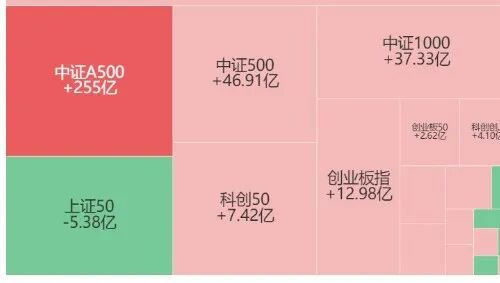
Group 1 - The article highlights the current asset allocation trends among high-net-worth individuals, focusing on four main areas: quantitative enhancement, science and technology innovation funds, all-weather strategies, and overseas assets [1][2][3][4][5] - Quantitative enhancement involves significant investments in small-cap stocks, with risks associated with size factors and non-linear factors [1][3] - Science and technology innovation funds face risks from domestic interest rate increases leading to style shifts and potential AI bubble bursts due to revised capital expenditure expectations in the U.S. [1][3] - All-weather strategies are at risk from rising interest rates causing losses in bond holdings and declining gold prices [1][3] - Overseas assets are influenced by the RMB exchange rate and U.S. AI developments [2][4] Group 2 - The article provides insights into the scale of various investment vehicles, noting that since September 2022, the total margin financing balance has increased by 1.1 trillion, primarily directed towards the TMT sector [3][21] - By the end of 2024, the total scale of private equity funds is projected to reach 5.21 trillion, with a significant increase of 1.8 trillion observed this year [3][21] - The total scale of ETFs is expected to surge from approximately 3.73 trillion at the beginning of 2025 to 5.74 trillion, marking a growth of over 2 trillion and a growth rate exceeding 53% [3][21] - The A500 ETF has seen a net inflow of 255 billion in the past week and 367 billion in the past month, indicating strong market interest [3][21] Group 3 - The performance of investment vehicles shows that quantitative private equity funds have achieved over 40% returns this year, marking the third consecutive year of outperforming subjective strategies [8][26] - Mixed equity funds have recorded a 32% return this year, rebounding after three years of underperformance [8][26] - Broad market indices have generally yielded returns above 20%, with the A500 ETF at 22% and the CSI 300 ETF at 18% [8][27] Group 4 - The global fund manager survey indicates a peak in macro optimism since August 2021, with the stock and commodity allocation ratio reaching its highest since February 2022 [9][27] - Cash levels among fund managers have dropped to a historical low of 3.3%, down from 3.7% [9][27] - The survey also reveals that 37% of managers view the AI bubble as the biggest tail risk, while 40% believe private credit is the most likely source of credit events [12][30] Group 5 - The article raises questions about whether the trends observed in 2024 can be extrapolated into 2025, particularly regarding crowded positions and potential trend reversals [15][34] - It discusses the implications of rising interest rates on real estate and the effectiveness of macro hedging as a strategy for style switching [15][34] - The narrative suggests that the current market dynamics, influenced by a weak dollar and AI industry expansion, have led to an "asset shortage" and "capital bull" scenario [15][33]
《中国新富人群财富健康指数》:持有基金的受访者比例创五年来新高
Jing Ji Guan Cha Wang· 2025-09-18 12:03
Core Insights - The wealth health index of China's new affluent population is projected to slightly decline from 70.51 to 70.35 in 2025, indicating a decrease in wealth confidence, financial planning, and investment participation sub-indices [1] - Despite the overall decline, the asset management sub-index has shown improvement, reflecting a growing maturity in wealth management and asset allocation behaviors among the new affluent [1] Group 1: Wealth Management Trends - Nearly 48.6% of respondents have retirement planning, with significant increases observed among the 25-44 age group and high-income earners [1] - The average allocation of cash and fixed deposits in the asset configuration of the new affluent has decreased to 52.5%, marking a shift towards more diversified investment strategies [1] - The participation rate in fund investments has reached a five-year high, with the average allocation of funds in investment portfolios rising to 12.4% [1] Group 2: Investment Preferences - There is a notable interest in overseas asset allocation, with nearly 38.8% of respondents expressing interest in this area [1] - The new affluent population is increasingly active in exploring diverse investment paths, particularly in the context of declining risk-free interest rates [1] Group 3: Attitudes Towards AI in Financial Services - The new affluent population in China shows a significantly higher trust in AI-generated investment advice compared to overseas markets, with nearly 70% expressing strong or moderate trust [2] - More aggressive investors tend to have higher trust levels in AI, while those with over 15 years of investment experience prefer human advisory services [2] - AI is recognized for its strengths in technical analysis, while human advisors excel in emotional support and understanding client needs [2]
高金和嘉信理财发布第九年度《中国新富人群财富健康指数》
Zheng Quan Ri Bao Wang· 2025-09-18 08:46
Core Insights - The "Wealth Health Index" for China's new affluent population shows a slight decline in 2025, indicating a decrease in wealth confidence, financial planning, and investment participation, while asset management awareness is improving [1][2] Group 1: Wealth Health Index - The Wealth Health Index for new affluent individuals in China decreased from 70.51 to 70.35 in 2025, with sub-indices for wealth confidence, financial planning, and investment participation declining by 0.26, 2.47, and 0.14 points respectively [1] - The asset management sub-index, after four years of decline, has shown an upward trend, indicating a maturation in wealth management and asset allocation behaviors among this demographic [1] Group 2: Investment Behavior - The average allocation of cash and fixed deposits in the asset configuration of new affluent individuals has dropped to 52.5%, marking the first decline in this category [2] - The participation rate in fund investments has reached a five-year high, with the average allocation to funds increasing to 12.4% [2] - Nearly 40% of respondents expressed interest in overseas asset allocation, reflecting a growing inclination towards diversified investment paths [2] Group 3: Risk Preferences and Financial Literacy - Despite an increase in the allocation to high-risk financial assets, the subjective risk preference of new affluent individuals remains conservative [2] - There is a noted shortfall in understanding the relationship between risk and return, highlighting the need for improved financial literacy [2] Group 4: AI in Financial Services - The study also focused on the new affluent population's attitudes towards AI-enabled financial services, revealing a significantly higher trust in AI-generated investment advice compared to overseas markets, with nearly 70% expressing strong or moderate trust [2] - More aggressive investors showed higher trust levels in AI, while those with over 15 years of investment experience preferred human services [2]

特朗普引发市场动荡下 亚洲的寿险公司面临数十亿美元帐面损失
news flash· 2025-05-15 08:56
美国总统特朗普的政策引发市场动荡,亚洲的寿险公司面临数十亿美元帐面损失。新台币飙升,让中国 台湾的保险公司持有的逾23万亿元台币 (7,620亿美元)海外资产承压。随着长期政府公债收益率飙升 至数十年来的最高水平,日本的保险公司也受到冲击。分析师警告称,保险业面临巨大风险,高盛估 计,光是中国台湾的保险公司帐面损失就可能达到约180亿美元。(彭博) ...