
元宇宙

Search documents
星网锐捷(002396):规模效应延续,全面推进多元业务布局
HTSC· 2025-10-23 02:55
Investment Rating - The report maintains a "Buy" rating for the company with a target price of RMB 39.16 per share [6][5]. Core Views - The company achieved a revenue of RMB 14.168 billion in the first nine months of 2025, representing a year-on-year increase of 19.2%, and a net profit of RMB 344 million, up 31.1% year-on-year, driven by accelerated data center construction in the internet sector [1][5]. - The company is expected to benefit from high demand in the data center sector and ongoing internal operational improvements, leading to accelerated performance release [1]. - The company continues to innovate in the data center switch market, maintaining a leading position in various segments, including 200G/400G data center switches and enterprise WLAN [2]. Summary by Sections Financial Performance - In Q3 2025, the company reported revenue of RMB 5.282 billion, a 15% increase year-on-year, but a net profit decline of 3.7% due to increased employee performance-related expenses [1]. - The overall gross margin for the first nine months of 2025 was 31.20%, a decrease of 1.20 percentage points year-on-year, while Q3 2025 gross margin improved to 32.46%, up 0.62 percentage points year-on-year [3]. Market Position and Innovation - The company holds the top market share in China for 200G/400G data center switches, Ethernet networks, and enterprise WLAN, with significant improvements in market share compared to 2024 [2]. - The company showcased new products and solutions at the 2025 Optical Expo, including a 51.2T CPO switch commercial interconnection solution and a new generation of lossless network solutions [2]. Future Outlook - The company is focusing on expanding its ICT, AI, and metaverse business lines, with plans to enhance AI capabilities and explore brain-computer interface business models [4]. - The company anticipates continued high demand for network equipment, particularly in data centers, and aims to leverage its subsidiaries for growth in emerging sectors [4].

园区行活动携首都学子漫步南中轴,邂逅“文化+科技”赋能新场景
Xin Jing Bao· 2025-10-22 14:27
Core Points - The event "‘京’彩文化 青春绽放" 2025 Park Tour was organized to showcase the transformation of the Dahongmen area from a clothing wholesale market to a cultural and technological hub [2][4] - The South Central Axis International Cultural Technology Park has undergone significant renovations since October 2022, evolving into a multifunctional cultural industry park [2][4] - The park integrates modern office spaces, commercial facilities, and talent apartments, emphasizing a blend of culture and technology [4][8] Group 1 - The park is located at 15 Nanyuan Road, Fengtai District, and was previously known as the Dahongmen Clothing Trade City, the largest wholesale market in the area [2][4] - The renovation includes the removal of illegal constructions and the addition of interactive spaces like indoor courtyards and outdoor rooftop gardens [2][4] - The park aims to create a vibrant waterfront architectural interface that harmonizes with the surrounding environment, attracting local residents and enhancing commercial vitality [4] Group 2 - Students from three universities participated in the event, experiencing advanced technologies such as digital humans and XR technology [1][6] - The XR Cloud Performing Arts Center showcased real-time rendering technology, allowing students to see how backgrounds can be automatically synthesized without the need for green screens [6] - The event provided students with insights into the integration of culture and technology, enhancing their understanding of modern industries [7][8]


星网锐捷20251021
2025-10-21 15:00
Summary of the Conference Call for Xingwang Ruijie Company Overview - The company discussed its performance for the first three quarters, highlighting a revenue of 14.1 billion yuan, a year-on-year increase of 19%, and a net profit of 340 million yuan, up 30% year-on-year [3][2][4]. Key Points Industry and Company Performance - The revenue growth was primarily driven by the rapid development of the data center switch business and overseas operations, although net profit saw a slight decline [2][3]. - Gross margin stood at 31.2%, a decrease of 1.2 percentage points year-on-year, while the expense-to-revenue ratio improved by 4% to 25.96% [2][3]. - Ruijie Network contributed significantly to the company's revenue, accounting for approximately 10.6 billion yuan in revenue and 680 million yuan in net profit [4]. Subsidiary Contributions - Other subsidiaries like Deep City Information, Deming Communications, and Smart Technology are expected to show significant improvement in revenue and profit contributions in the near future [2][4][7]. - The company is focusing on AI hardware infrastructure and applications, including switches and integrated machines, and is exploring the metaverse direction [4][12]. Strategic Initiatives - The company plans to accelerate its transformation towards AI and enhance its overseas business through organizational optimization, product line adjustments, and workforce development [2][8]. - In the financial innovation market, the company offers full-stack services and has deep cooperation with Huawei's HarmonyOS, with a market size expectation of around 20 billion yuan [2][9][10]. Future Outlook - The financial innovation sector's construction is expected to be completed by 2027-2028, with the company anticipating significant growth in this area [10]. - The company is actively seeking suitable acquisition targets, particularly in the optical communication and AI-related fields, to expand its overseas market presence [17]. AI and Emerging Technologies - The company is committed to AI-related hardware and industry applications, with plans to enhance operational efficiency in sectors like education, finance, and healthcare [12][26]. - The brain-computer interface project is in a mature experimental stage, with expectations to launch commercially by the end of this year or early next year [18]. Market Demand and Growth Drivers - Key growth drivers for the communication sector in 2026 include FTTO (Fiber To The Office) and the demand for all-optical network construction from operators [22]. - The company plans to leverage its established channels in the financial sector and expand into other industries for immersive experience products [24]. Shareholder Returns and Corporate Governance - The company aims to maximize shareholder returns by improving internal operational efficiency and maintaining good communication with investors [29]. Conclusion - Xingwang Ruijie is positioned to capitalize on the growing demand for AI and communication technologies, with a strategic focus on enhancing its product offerings and expanding its market reach both domestically and internationally [25][27].
香港创意联手内地研发互补破局 大湾区文投会促产业协同
2 1 Shi Ji Jing Ji Bao Dao· 2025-10-21 14:43
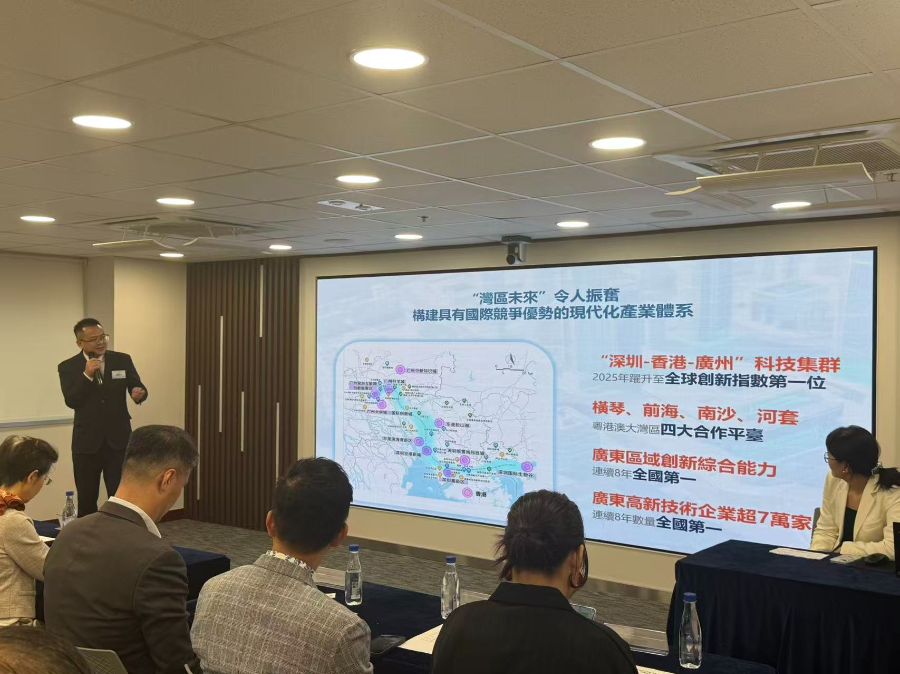
Core Insights - The "Cultural Industry Investment Conference of the Guangdong-Hong Kong-Macao Greater Bay Area" aims to facilitate the understanding of cultural industry innovation and cross-industry integration among Hong Kong cultural enterprises and investment institutions [1][2] Group 1: Event Overview - The conference will take place from November 26 to 28, 2025, at the Huangpu International Conference Center in Guangzhou, focusing on connecting funding with projects [2][3] - The event adopts a "3+365" model, providing three days of main activities and year-round financing support [2] Group 2: Investment Opportunities - The conference will feature a "1+8+N" activity system, including one main conference, eight investment roadshows, and various investment service activities [2] - Over 200 well-known investment institutions and more than 300 quality cultural enterprises are expected to participate, highlighting the event's role as a platform for investment and business collaboration [3][7] Group 3: Industry Insights - The conference emphasizes the complementary advantages between the gaming industries of mainland China and Hong Kong, with mainland strengths in R&D and cost control, while Hong Kong excels in international operations and market expansion [6] - The integration of culture and technology is a key focus, particularly in areas like AI, robotics, virtual reality, and the metaverse [6] Group 4: Policy Support - In May 2023, Guangdong Province released a policy package to promote high-quality development in the cultural industry, encompassing 87 specific measures across various sectors [7]
香港创意联手内地研发互补破局,大湾区文投会促产业协同
2 1 Shi Ji Jing Ji Bao Dao· 2025-10-21 12:13
Core Viewpoint - The "Cultural Industry Investment Conference of the Guangdong-Hong Kong-Macao Greater Bay Area" aims to enhance the understanding of cultural enterprises and investment institutions regarding the conference's background, core values, and project selection standards, facilitating efficient capital matching with quality cultural projects [1][2]. Group 1: Conference Structure and Goals - The 2025 conference will take place from November 26 to 28 in Guangzhou, featuring a "1+8+N" activity system, which includes one main conference, eight investment roadshows, and various investment service activities [2]. - The conference emphasizes the operational philosophy of "finding projects for funds and funds for projects," focusing on early-stage investments for startups in the cultural sector [2][3]. Group 2: Industry Collaboration and Opportunities - The conference serves as a platform for industry exchange and business cooperation, with past examples showing significant business growth for participating companies, such as a robotics project securing orders and a Hong Kong animation company’s market valuation increasing from under 500 million to 2 billion [2][4]. - There is a notable complementarity between the gaming industries in mainland China and Hong Kong, with mainland strengths in R&D and cost control, while Hong Kong excels in international operations and market expansion [3]. Group 3: Policy Support and Development - In May, Guangdong Province released a "policy package" to promote high-quality development in the cultural industry, comprising six policy documents with 87 specific measures across various sectors, including film, performing arts, and e-sports [5]. - The conference has successfully hosted two editions, with over 800 investment institutions and cultural enterprises participating in 2024, resulting in intended investment contracts worth 5.6 billion [4].
怀孕机器人:价值十万的骗局
3 6 Ke· 2025-10-21 11:36
Core Viewpoint - The news about the "world's first pregnancy robot expected to launch within a year" has sparked widespread discussion, bringing the concept of artificial wombs into the spotlight, despite its current status being largely theoretical and experimental [1][3]. Group 1: Company Background - The pregnancy robot is developed by Shenzhen Kaiwa Robotics, which aims to integrate gestational box technology into a robotic "abdomen" to simulate the entire human pregnancy process, from embryo implantation to delivery, with a projected price of no more than 100,000 yuan [3][8]. - Investigations into Kaiwa's background reveal that the company primarily focuses on hotel service robots and lacks patents in artificial wombs or bioengineering, indicating that their involvement in creating a pregnancy robot is limited to producing a humanoid robot shell without actual gestational capabilities [9][10]. Group 2: Public Reaction and Discussion - The announcement has led to polarized public opinions, with some professionals asserting that current technological capabilities make it nearly impossible to achieve robot-assisted pregnancy [3][10]. - The topic of artificial wombs has triggered broader societal discussions about women's reproductive rights, work-life balance, and the potential for technological advancements to alleviate traditional burdens on women [10][12]. Group 3: Technological Challenges - Despite public enthusiasm, the development of a true artificial womb remains a significant challenge, as current technologies are primarily focused on supporting the short-term development of already formed embryos rather than full-term gestation from fertilization [14][15]. - Key obstacles include the need for a system that can dynamically adjust to the fetus's changing nutritional and hormonal needs throughout pregnancy, which involves complex sensor technology and control systems that are not yet feasible [15][17]. Group 4: Media and Information Dynamics - The spread of information regarding the pregnancy robot has been fueled by algorithm-driven media dynamics, where sensationalized narratives overshadow factual discussions, leading to a chaotic public discourse [11][12]. - The initial claims about the robot's imminent launch were based on non-expert sources, highlighting the importance of verifying information from credible scientific institutions and experts [21][23].


耗资数亿美元 白宫进行“100多年以来最大规模扩建”
Yang Shi Xin Wen· 2025-10-21 11:26
美国总统特朗普20日说,在白宫东翼楼修建豪华宴会厅的工程已开工。据外媒报道,工程预计耗资约2.5亿美元,全部来自 私人资助。 特朗普稍后在社交媒体宣布开工消息。据他介绍,宴会厅面积达8300多平方米,可容纳约1000名宾客,将取代往常在白宫 南草坪搭建的临时帐篷,举行一些大型活动。 白宫东翼楼始建于1902年,1942年加盖了第二层。目前,东翼楼设施主要包括"第一夫人"办公室、一座小型电影院、白宫 宾客入口等。按照法新社说法,这项工程堪称一个多世纪以来白宫最大规模扩建。 综合多家外媒报道,特朗普当天在白宫接见路易斯安那州立大学棒球运动员时提及有关工程,并表示访客"可能会不时听到 施工声音"。现场画面显示,挖掘机拆除了东翼楼的外墙立面,砖块、碎石和钢筋散落一地。 美联社报道,在华盛顿新建政府建筑和或对其进行大规模改造需要国家首都规划委员会审批,不清楚白宫是否向这一机构 提交了方案。白宫没有就此回应。该委员会办公室目前关闭,也未就此回应。 特朗普20日表示,宴会厅工程由"慷慨的爱国者、了不起的美国企业"出资。但他此前声称,这项工程由他本人及捐助者"买 单"。 据法新社报道,特朗普上周末在白宫大宴宾客,以答谢他们捐 ...

光模块市场预期始现分歧,栢拓视觉(BLTG.US)“闪击美股”能否吃下市场红利?
Zhi Tong Cai Jing· 2025-10-21 10:22
Core Viewpoint - The contrasting perspectives of Goldman Sachs and Morgan Stanley on the optical module industry have sparked renewed market interest in this sector, particularly regarding two Chinese companies, Zhongji Xuchuang and Tianfu Communication, which Goldman Sachs has rated as "buy" with increased target prices, while Morgan Stanley has downgraded several related stocks, including a double downgrade for Xinyi Technology [1] Group 1: Company Overview - Baidu Vision, a domestic optical display technology company, focuses on the design, research and development, and sales of optical display modules and products [2][3] - The company operates in the upstream optical module industry chain, providing product design and OEM manufacturing services, targeting emerging industries such as VR/AR and consumer electronics [3][4] Group 2: Market Dynamics - The optical module industry is distinct from the optical display sector, with applications primarily in telecommunications and data centers for emerging technologies like AR/VR and AI [4] - The Chinese visual AI market is projected to reach 234 billion RMB in 2024, with a year-on-year growth of 18.6%, driven by new applications in VR/AR [4] Group 3: Financial Performance - For the fiscal years 2024-2025, Baidu Vision's revenue is expected to surge from $1.092 million to $2.620 million, reflecting a year-on-year increase of 139.9%, while gross profit is projected to rise from $61.6 million to $172.1 million, a growth of 179.3% [7] - Despite significant revenue growth, the company is still operating at a loss, with net losses of $1.69 million and $1.79 million for the fiscal years 2024 and 2025, respectively [8] Group 4: Cost Structure and R&D - The company's cost of revenues has also increased significantly, from $1.030 million to $2.448 million, a rise of 137.5%, indicating that revenue growth is accompanied by rising costs [9] - R&D expenses for the fiscal year 2025 are expected to reach $1.635 million, a 65.1% increase, highlighting the company's focus on innovation despite the pressure on short-term profitability [9] Group 5: Valuation and Market Position - Baidu Vision's current PS valuation is approximately 6.5 times, significantly lower than the average of 22 times for domestic peers, suggesting a strong margin of safety in its valuation [10] - The company's potential to achieve profitability could attract more investors in the US market, given the current favorable conditions in the optical module market [10]
美股新股前瞻|光模块市场预期始现分歧,栢拓视觉(BLTG.US)“闪击美股”能否吃下市场红利?
Zhi Tong Cai Jing· 2025-10-21 10:20
Core Viewpoint - The contrasting perspectives of Goldman Sachs and Morgan Stanley on the optical module industry have sparked renewed market interest in this sector, particularly regarding two Chinese companies, Zhongji Xuchuang and Tianfu Communication, which Goldman Sachs has rated as "buy" with increased target prices [1] Group 1: Market Dynamics - Goldman Sachs raised the 12-month target price for Zhongji Xuchuang from 442 RMB to 470 RMB and for Tianfu Communication from 398 RMB to 450 RMB [1] - Morgan Stanley, however, indicated that the positive fundamentals of the optical module industry have largely been reflected in stock prices after significant increases, leading to rating adjustments for several related stocks, including a downgrade for Xinyi [1] - The IPO of Cambridge Technology in Hong Kong has added further excitement to the optical module sector, while Baidu Vision's IPO in the U.S. has gone relatively unnoticed amid the market buzz [1] Group 2: Company Overview - Baidu Vision, a domestic optical display technology company, focuses on the design, research, and sales of optical display modules and products, providing one-stop solutions for various industries, including consumer electronics [2][3] - The company outsources production to third-party OEMs based on its design specifications, allowing it to cater to emerging industries like VR/AR [3] Group 3: Industry Context - The optical module industry, which facilitates high-speed data transmission, is distinct from Baidu Vision's focus on optical display technology, which is positioned in the upstream segment of the optical module supply chain [4] - The market for visual AI in China is projected to reach 234 billion RMB in 2024, with a year-on-year growth of 18.6%, driven by new applications like VR/AR [4] Group 4: Financial Performance - Baidu Vision's revenue is expected to surge from 10.92 million USD in FY 2024 to 26.2 million USD in FY 2025, reflecting a year-on-year increase of 139.9% [7][9] - Despite the revenue growth, the company is still operating at a loss, with net losses projected at 1.69 million USD for FY 2024 and 1.79 million USD for FY 2025, primarily due to rising costs [8][9] - The company's cost of revenues increased from 10.3 million USD to 24.5 million USD, a growth of 137.5%, indicating that revenue growth is closely tied to rising costs [9] Group 5: Valuation Insights - Baidu Vision's current PS ratio is approximately 6.5 times, significantly lower than the average of 22 times for domestic peers, suggesting a strong valuation margin [10] - If the company can achieve profitability, it may attract more investor interest in the U.S. market, given the current favorable conditions in the optical module sector [10]
丰源投资:钟情“文化+科技”领域,推动好项目广东落地生根
2 1 Shi Ji Jing Ji Bao Dao· 2025-10-20 11:08
Core Insights - The 2025 Guangdong-Hong Kong-Macao Greater Bay Area Cultural Industry Investment Conference aims to connect funding with projects, aligning with the needs of investment firms like Fengyuan Investment [1] Company Overview - Fengyuan Investment, established in 2022, focuses on equity investments in frontier technology commercialization, manufacturing transformation, and urban renewal [1] - The founder, Fu Zheng, has a background in investment banking and has previously worked with UBS and CVC Capital Partners, leading investments in various sectors [1] Industry Trends - The cultural industry is experiencing significant trends, particularly the integration of culture and technology, with areas like AIGC, metaverse, digital humans, and smart hardware reshaping product creation and consumption [3] - Guangdong has established itself as a cultural industry powerhouse, with a complete industry chain and a vibrant innovation atmosphere [3] Regional Advantages - Guangdong is the largest cultural industry province in China, with a total revenue of 2.5 trillion yuan from large-scale cultural enterprises in 2024, accounting for about one-sixth of the national total [4] - The province has introduced a new policy package to promote high-quality cultural industry development, releasing 87 policies to support new cultural business models [4] Investment Opportunities - The conference has successfully facilitated significant investment, with a total of 250 billion yuan in cultural industry investment funds announced over two sessions [4] - In 2023, the conference achieved an intended investment signing amount of 2 billion yuan, with actual financing reaching 1.51 billion yuan [4] Collaboration Expectations - Fengyuan Investment seeks precise recommendations for high-growth projects, guidance on product licensing in gaming and film, and opportunities to establish or participate in specialized funds for cultural technology [5]