大语言模型

Search documents
AI令一些人失业,但也让一些人工资大涨
财富FORTUNE· 2025-07-31 13:05
Core Viewpoint - The article discusses the transformative impact of AI on the labor market, particularly in recruitment and layoffs, highlighting significant job losses in the tech industry while also noting a surge in demand for AI skills across various sectors [1][2][3]. Group 1: Job Market Impact - The tech industry has seen massive layoffs, with statistics indicating that up to 80,000 employees have been affected, including 15,000 positions cut by Microsoft, which is simultaneously investing $80 billion in new AI projects [1]. - Despite the layoffs, there is a notable increase in salaries for non-technical positions requiring AI skills, with an average salary increase of 28%, equating to nearly $18,000 more annually [2][5]. Group 2: Growth of AI Skills Demand - AI skills are becoming essential across a broader range of industries, with over half of the positions requiring AI skills in 2024 coming from non-tech sectors, a significant shift from previous years [3][4]. - The demand for AI skills has exploded, with the number of job postings requiring GenAI skills increasing nearly fourfold to over 66,000 in 2024 [6]. Group 3: Skills and Competencies - The most sought-after AI skills include large language modeling and prompt engineering, with 19,500 job postings mentioning large language modeling [7]. - Companies are increasingly valuing hybrid talent that combines technical AI skills with soft skills such as communication, leadership, and problem-solving abilities [9][10]. Group 4: Economic Implications - The article suggests that while AI may disrupt traditional job roles, it also offers opportunities for higher salaries and new career paths for those who adapt [11]. - The ongoing demand for AI skills indicates a potential restructuring of salary levels, with high-paying tech roles being phased out while lower-paying roles see slight salary increases [11].



新一代青年与新一代人工智能 | 两说
Di Yi Cai Jing Zi Xun· 2025-07-31 10:01
Group 1 - The core viewpoint of the articles emphasizes the transformative impact of artificial intelligence (AI) on knowledge production and the learning processes of the new generation, highlighting the need for educational systems to adapt to these changes [1][4] - AI has reached a new stage where it is increasingly integrated into daily life, with universities offering AI literacy courses to help students effectively utilize AI [4][10] - The concept of "hallucination" in AI, where models generate incorrect or nonsensical outputs, is discussed as a challenge that requires users to discern between valid and invalid information [6][8] Group 2 - AI is seen as a tool that can bridge the gap between the humanities and sciences, with examples of humanities students successfully engaging in technical projects, indicating a blurring of traditional academic boundaries [10][13] - The open-source philosophy in AI promotes collaborative innovation, allowing young people to leverage AI technologies to enhance their skills and address societal issues [15][17] - The resurgence of interest in traditional games like Go, despite AI advancements, illustrates how AI can democratize knowledge and expand learning opportunities rather than eliminate them [17]

R2还没来,但DeepSeek的秘密武器已经“剧透”了
Hu Xiu· 2025-07-31 07:58
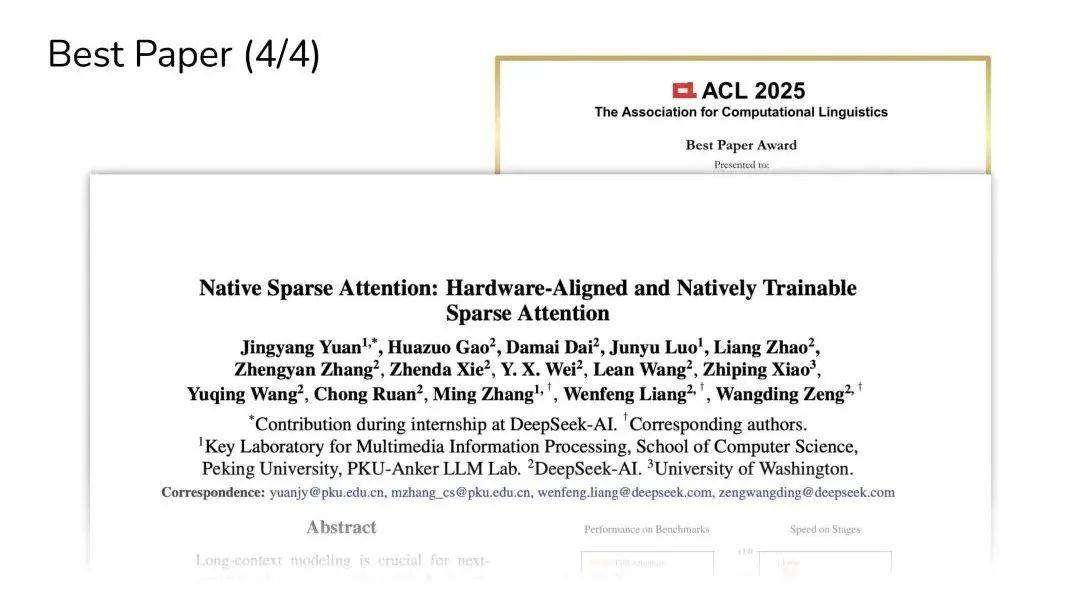
Core Insights - The top conference in the field of natural language processing, ACL, awarded the best paper to a joint work by DeepSeek and Peking University titled "Native Sparse Attention: Hardware-Aligned and Natively Trainable Sparse Attention" [4][3] - This paper introduces a significant advancement in the efficiency of large language models, achieving up to 11 times faster inference while maintaining model performance [5][34] Group 1: Technology and Innovation - The paper presents a novel approach to sparse attention, moving from theoretical reasoning to a complete training process, which is crucial for the future of large models [5][26] - The Native Sparse Attention (NSA) method mimics human reading strategies by compressing long texts, selecting relevant details, and maintaining a sliding window of recent context [26][30] - NSA is designed to be natively trainable, allowing the model to learn efficient attention distribution from the pre-training phase [32][51] Group 2: Performance Metrics - In various benchmark tests, the 27B model utilizing NSA outperformed traditional full attention models in 7 out of 9 metrics, particularly excelling in reasoning tasks [35][37] - The NSA method achieved a 100% information retrieval accuracy in long text comprehension tasks, demonstrating its effectiveness in handling extensive data [38][40] - Training speed improved significantly, with forward computation accelerated by 9 times and backward propagation by 6 times, while inference speed saw an impressive 11.6 times increase [44][45] Group 3: Market Implications - The advancements in NSA technology position DeepSeek as a potential leader in the AI application ecosystem, promising faster, more efficient, and cost-effective solutions for users [55][58] - The ability to process extensive documents and datasets without manual segmentation could revolutionize how users interact with AI, enhancing productivity and accessibility [54][59] - The competitive edge provided by NSA technology is expected to solidify DeepSeek's market position, transforming it from a price-driven player to a technology innovator [58][60]

英美情报界如何使用AI模型?
Guan Cha Zhe Wang· 2025-07-31 05:52
Core Insights - The emergence of DeepSeek's large language model (LLM) has raised concerns in the U.S. regarding China's advancements in AI, particularly in intelligence and military applications [1][8] - The Biden administration is responding by accelerating AI experimentation within intelligence agencies and the Department of Defense, collaborating with leading AI firms like Anthropic, Google, and OpenAI [1][2] - The U.S. intelligence community is increasingly utilizing AI models, with significant contracts awarded to companies for developing "agentic" AI models capable of executing complex tasks [1][2] Group 1: U.S. Developments - The Pentagon awarded contracts up to $200 million to companies like Anthropic and Google for testing agentic AI models [1] - All U.S. intelligence agencies are now widely using AI models, with firms customizing models based on specific agency needs [2] - Despite advancements, the application of AI in national security is still not meeting expectations, with agencies struggling to adapt existing technologies effectively [4] Group 2: European Initiatives - The UK intelligence community is also integrating advanced LLM capabilities, with companies like Mistral leading efforts in Europe [3] - Mistral's Saba model is specifically trained for regional language processing, enhancing its utility in intelligence operations [3] - The Israeli military has significantly increased its use of OpenAI's GPT-4 model, indicating a growing reliance on advanced AI technologies in military contexts [3] Group 3: Challenges and Concerns - Experts express concerns about the reliability and transparency of AI models, emphasizing the need for consistency in intelligence applications [6][7] - The current focus on developing advanced agentic models may overlook the necessity for models that can perform causal reasoning and understand real-world logic [7] - There are warnings that China may be advancing faster in AI applications for military and intelligence purposes, potentially outpacing U.S. efforts [7][8]

大厂不再重压ChatBot、“六小虎”声量分化、机器人不依赖绳索“吊着”|WAIC观察
Cai Jing Wang· 2025-07-31 03:53
Core Insights - The WAIC showcased significant advancements in AI and robotics, with over 350,000 attendees participating in the event [1] - Major tech companies shifted focus from basic large models to multi-modal applications and AI agents, indicating a competitive landscape [1][3] - The emergence of AI agents as a primary focus for companies, with various solutions being demonstrated across different sectors [6][7] Group 1: Event Overview - WAIC attracted approximately 350,000 attendees, highlighting the growing interest in AI and robotics [1] - The event featured over 800 exhibitors showcasing advancements in AI infrastructure, robotics, and multi-modal applications [1][2] - The shift from traditional humanoid robots to more interactive and functional robots was evident, with live demonstrations of various tasks [10][11] Group 2: Company Highlights - Alibaba's booth was the largest, featuring the Quark AI glasses and multiple open-source large models, emphasizing their commitment to AI agents [3][6] - Ant Group presented various AI solutions, including the financial reasoning model Agentar-Fin-R1, showcasing their focus on industry-specific applications [6][7] - The "Six Little Tigers" of large models showed a divergence in performance, with some companies like Baichuan Intelligence and Zero One falling behind [7][8] Group 3: Technological Developments - The AI agents market has surpassed $5 billion, with a growth rate of 40%, indicating a strong demand for practical applications [4] - Companies are increasingly focusing on integrating AI models with real-world business needs, as seen in the development of solutions for document proofreading and financial services [5][6] - The introduction of advanced components like six-dimensional force sensors is enhancing the capabilities of humanoid robots, allowing them to perform complex tasks autonomously [12][14] Group 4: Market Trends - The trend is shifting from "technology showcase" to "scene rehearsal," with a focus on practical applications of AI technology [14] - The competition is intensifying as companies strive to effectively integrate technology into products, moving beyond mere demonstrations [14] - The rapid growth in the humanoid robot market is creating both challenges and opportunities for component manufacturers, necessitating faster development cycles and higher standards [13][14]



刚刚,DeepSeek梁文锋NSA论文、北大杨耀东团队摘得ACL 2025最佳论文
机器之心· 2025-07-30 16:25
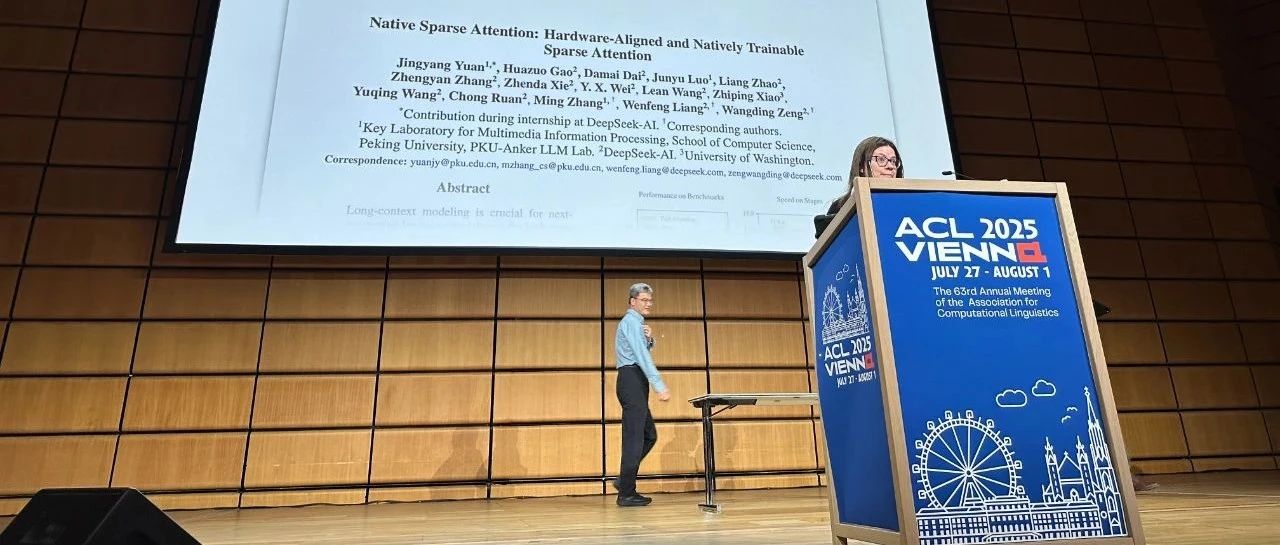
Group 1 - The ACL conference is a premier event in the field of computational linguistics and natural language processing, with the 63rd edition scheduled for July 27 to August 1, 2025, in Vienna, Austria [2] - This year, the total number of submissions reached a record high of over 8,000, compared to 4,407 last year, with acceptance rates of 20.3% for main conference papers and 16.7% for Findings [3] - Over half of the first authors of the submitted papers are from China (51.3%), a significant increase from last year's 30.6%, while the second-largest group of authors comes from the United States at 14.0% [4] Group 2 - Four best papers were awarded, including two from teams led by Liang Wenfeng and Yang Yaodong from Peking University, with the other two awarded to teams from CISPA Helmholtz Center for Information Security & TCS Research & Microsoft, and Stanford University & Cornell Tech [6][10] - The first best paper discusses a theory of response sampling in large language models (LLMs), highlighting the ethical concerns arising from biases in decision-making processes influenced by LLMs [11][15] - The second best paper focuses on algorithmic fairness, introducing a framework that emphasizes group discrimination awareness in specific contexts, demonstrating that existing bias mitigation strategies may be counterproductive [16][19] Group 3 - The third best paper reveals a structural inertia mechanism in large models that resists alignment during fine-tuning, indicating that achieving robust alignment is more challenging than previously thought [24][25] - The fourth best paper presents a new hardware-aligned and natively trainable sparse attention mechanism, which significantly improves efficiency in long-context modeling for LLMs [31][40] Group 4 - A total of 26 outstanding papers were recognized, covering various topics such as multilingual summarization, hate speech analysis, and the evaluation of large language models [42] - The best demo paper was awarded to OLMoTrace, a system capable of tracing language model outputs back to trillions of training tokens [46][48] Group 5 - The ACL 2025 conference also recognized two time-tested awards, celebrating foundational papers from 2000 and 2015 that have significantly influenced the field [65][73] - Kathy McKeown received the Lifetime Achievement Award for her extensive contributions to natural language processing over 43 years [86][90] - Julia B. Hirschberg was awarded the Distinguished Service Award for her long-standing service to the ACL and contributions to the field [96][98]
预见2025:《2025年中国人工智能代理行业全景图谱》(附市场现状、竞争格局和发展趋势等)
Qian Zhan Wang· 2025-07-30 14:39
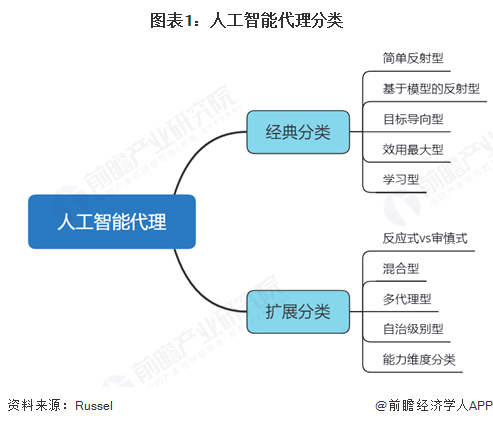
Industry Overview - The artificial intelligence agent industry in China is defined as software systems driven by large language models (LLMs) that integrate various plugins to make autonomous decisions and learn from their environment [1] - The industry has formed a complete system covering the foundational, technical, and application layers, with hardware and computing power providers at the base, model providers in the middle, and application developers and service providers at the downstream [2][5] Market Size and Growth - In 2023, the AI agent market in China reached 55.4 billion yuan, with projections to grow to 852 billion yuan by 2028, reflecting a compound annual growth rate (CAGR) of 72.7% [12] - The demand structure for AI agents is diverse and rapidly growing, with the intelligent customer service market exceeding 7 billion yuan in 2023 and expected to reach 18.13 billion yuan by 2027, a CAGR of over 27% [13] Development Trends - The AI agent industry is still in its early stages, evolving from simple chatbots to more complex agents capable of autonomous reasoning and decision-making [8] - The penetration rate of AI agents in enterprises is currently below 5% but is expected to rise to 25% for large enterprises and 15% for small and medium-sized enterprises by 2028 [15] Policy Background - Since 2015, the Chinese government has been promoting AI technology development and application through a comprehensive policy framework that includes ethical norms and data security [10][11] Competitive Landscape - The competitive landscape is characterized by a concentration of leading companies such as Alibaba, Tencent, and Baidu, which dominate the large model layer, while vertical players focus on specific industry applications [21][24] - Initial companies are leveraging technological breakthroughs and innovative models to disrupt the industry, with examples like Manus and Dify gaining significant traction [25] Future Outlook - The AI agent market is expected to experience significant growth, with industrial and medical applications showing strong potential due to the rapid release of smart manufacturing and automation needs [27] - Key technological breakthroughs in multi-modal interaction, autonomous decision-making, and multi-agent collaboration are critical for the industry's future development [30]




大厂不再重压ChatBot、“六小虎”声量分化、机器人不依赖绳索“吊着”
Cai Jing Wang· 2025-07-30 14:13
Core Insights - The WAIC event attracted approximately 350,000 attendees, showcasing advancements in AI technologies and applications from over 800 exhibitors [1] - Major tech companies like Baidu, Alibaba, Ant Group, and Tencent shifted focus from basic large models to multi-modal applications and AI agents, indicating a competitive landscape in AI applications [1][3] - The AI agents market has surpassed $5 billion globally, with a growth rate of 40% annually, highlighting the increasing demand for practical AI solutions [4] Group 1: AI Technologies and Applications - The event featured a variety of robots demonstrating real-world applications, categorized into entertainment, factory operations, and home services [2] - Alibaba's Quark AI glasses, equipped with the Qwen large model, attracted significant attention, although they are not yet commercially available [3] - Baidu showcased its GenFlow 2.0 platform, which integrates model scheduling and multi-agent collaboration, emphasizing the importance of practical AI applications [3] Group 2: Market Dynamics and Trends - The "Six Little Tigers" of large models have shown a divergence in performance, with some companies like Baichuan Intelligence and Zero One falling behind [7] - Ant Group introduced various AI solutions, including the financial reasoning model Agentar-Fin-R1, indicating a focus on industry-specific applications [6] - The competition among AI agents is intensifying, with companies exploring diverse applications across sectors like finance, governance, and legal [5][6] Group 3: Robotics and Hardware Innovations - The event showcased significant advancements in humanoid robots, which are now capable of performing tasks autonomously rather than being controlled by strings [10][11] - BlueDot Touch's six-dimensional force sensors have gained a substantial market share, indicating a growing demand for precision components in robotics [12][14] - The integration of AI and robotics is evolving, with companies focusing on creating versatile robots capable of complex tasks, enhancing their market presence [11][12]
综合性能领先 智谱GLM-4.5登顶HuggingFace Trending榜单
Zheng Quan Ri Bao Wang· 2025-07-30 12:50
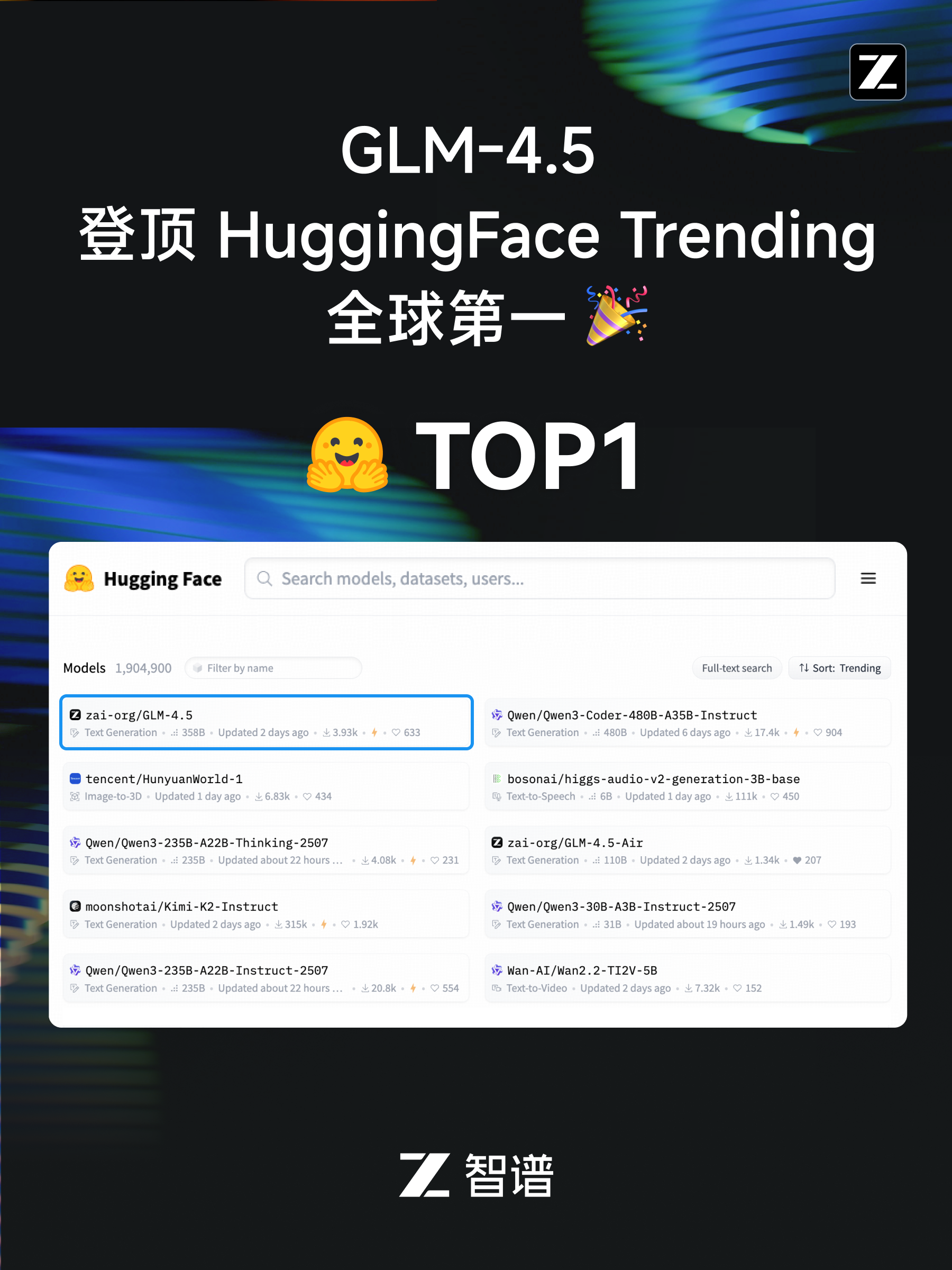
Core Insights - The GLM-4.5 model has half the parameter count of DeepSeek-R1 and one-third of Kimi-K2, yet it outperforms them in multiple benchmark tests due to higher parameter efficiency [3] - The API call pricing for GLM-4.5 is significantly lower than current mainstream models, with input costs at 0.8 yuan per million tokens and output costs at 2 yuan per million tokens [3] - In a performance evaluation covering 12 globally recognized hard tests, GLM-4.5 ranked third globally and first among all domestic and open-source models [3] Model Development - The goal of large language models is to achieve human-level cognition across a wide range of fields rather than being designed for specific tasks [4] - A successful large language model must possess core capabilities such as general problem-solving, generalization, common-sense reasoning, and self-improvement [4] - Current models are not truly general models, as they excel in specific areas like programming or mathematics but do not perform optimally across all tasks [4] Product Availability - The GLM-4.5 model series has been launched on the supercomputing internet AI community, including the base models GLM-4.5 and GLM-4.5-Air, as well as hybrid reasoning models and their FP8 versions [4] - Enterprises and developers can quickly download model files for deployment and fine-tuning from the AI community [4]
清华学者Nature Medicine发文:DeepSeek狂奔,已在近800家医院部署,应完善监管以保障安全
生物世界· 2025-07-30 09:10
Core Viewpoint - The emergence of DeepSeek-R1, an open-source large language model (LLM) developed by a Chinese startup, has revolutionized the deployment of AI in hospitals, significantly enhancing efficiency and reducing costs compared to existing models like ChatGPT [2][12]. Group 1: Deployment and Impact - DeepSeek-R1 was released in January 2025 and quickly became the most downloaded chatbot in the US Apple App Store, surpassing OpenAI's ChatGPT [2]. - As of May 8, 2025, DeepSeek-R1 has been deployed in over 755 hospitals across China, including top-tier hospitals and grassroots medical institutions, with more than 500 achieving local deployment [5][8]. - The model is capable of various tasks, including clinical services, hospital operations, and personal health management, providing significant support in diagnosis, treatment recommendations, and administrative tasks [13][21]. Group 2: Advantages of DeepSeek-R1 - The model's deployment cost is significantly lower than traditional AI systems, with a complete local deployment costing under $100,000, making it accessible for many smaller hospitals [21]. - DeepSeek-R1's advanced reasoning capabilities are comparable to top international models, essential for handling complex medical tasks [22]. - The open-source nature allows hospitals to customize and integrate the model into existing systems, enhancing its utility [22]. Group 3: Regulatory Challenges - The rapid deployment of DeepSeek-R1 has highlighted a regulatory "gray area," raising concerns about patient safety and the need for a robust regulatory framework [6][10]. - The lack of clear classification standards for AI applications in healthcare leads to ambiguity regarding which applications are considered high-risk [32]. - The current regulatory environment does not adequately address the unique challenges posed by large language models, necessitating immediate reforms [35]. Group 4: Recommendations for Regulation - The article calls for a risk-based classification system for AI applications in healthcare, distinguishing between high-risk and low-risk applications [35]. - High-risk applications should be regulated as medical devices, requiring stringent approval and monitoring processes [35]. - Continuous monitoring and evaluation of AI applications in real-world settings are essential to ensure safety and effectiveness [38].