耐心资本

Search documents
LP有耐心,GP才能耐心
投资界· 2025-07-07 14:36
Core Viewpoint - The discussion emphasizes the importance of patience in the relationship between General Partners (GPs) and Limited Partners (LPs) in the current investment climate, highlighting the need for mutual understanding and collaboration to navigate the challenges of the venture capital industry [2][5][21]. Group 1: Industry Trends - The 19th China Fund Partners Conference gathered key players in the investment industry to discuss the latest trends and dynamics in the LP market, focusing on the new cycle of venture capital [2][5]. - The current investment environment is characterized by a cooling period, necessitating GPs and LPs to work closely together and support each other [5][9]. Group 2: Company Insights - Dongfang Jiafu, a mixed-ownership technology investment institution, manages over 16 billion RMB in funds and focuses on early to mid-stage investments in sectors like intelligent manufacturing and life sciences [6]. - Shanghai Science and Technology Innovation Fund, established in 2017, has a management scale of 170 billion RMB and has invested in over 2,500 projects, with 159 companies listed [7]. - Yicun Capital, founded in 2015, has a management scale exceeding 300 billion RMB and focuses on sectors such as healthcare and artificial intelligence, with a strong emphasis on mergers and acquisitions [8]. Group 3: GP and LP Relationship Dynamics - The relationship between GPs and LPs has evolved, with LPs becoming more proactive and demanding, leading to a need for GPs to adapt their investment strategies accordingly [9][10]. - The collaboration between GPs and LPs is increasingly seen as a partnership, requiring shared goals and mutual understanding to achieve long-term success [14][20]. - The market has seen a significant shift, with state-owned LPs now accounting for approximately 80% of the total, indicating a change in the investment landscape [15][16]. Group 4: Patience Capital - The concept of "patience capital" is crucial in the current investment environment, where both GPs and LPs must cultivate trust and understanding to foster long-term relationships [21][22]. - The need for patience is particularly relevant in the context of technology innovation and early-stage investments, which require time to mature and yield returns [24][25]. - Effective communication and transparency between GPs and LPs are essential for building trust and ensuring that both parties can navigate the uncertainties of the market together [23][24].



0.4倍返投,这家科创母基金招GP
母基金研究中心· 2025-07-07 12:51
Core Viewpoint - The article discusses the establishment of the Hunan Jin Furong Investment Fund and the Changsha Government Guidance Fund to promote technology innovation and attract early-stage investments in Changsha Economic Development Zone [1] Group 1: Fund Structure and Objectives - The Changsha Economic Development Zone has initiated the Changsha Economic Development Science and Technology Innovation Industry Fund to recruit sub-funds, focusing on early-stage investments in technology [1] - The fund aims to stimulate social innovation and adjust financial funding guidance methods, concentrating on early-stage enterprise development through various incentive mechanisms [1] Group 2: Sub-Fund Categories - The sub-funds under the Science and Technology Innovation Fund are categorized into Seed Sub-Funds and Angel Sub-Funds [1] - Seed Sub-Funds will focus on technology transfer projects from universities, research institutes, and early-stage technology companies, with a minimum scale of 30 million yuan [1] - Angel Sub-Funds will target early-stage technology companies, requiring a minimum scale of 50 million yuan, primarily attracting social capital [1] Group 3: Investment and Return Requirements - During the fund's term, sub-funds must return at least 0.4 times the amount contributed by the Science and Technology Innovation Fund, adhering to specific investment stages and return implementation guidelines [2]

创投的历史性变革,机遇何在
母基金研究中心· 2025-07-06 08:55
Core Viewpoint - The current capital winter is seen as a precursor to future prosperity, emphasizing that failures in the venture capital industry provide valuable lessons that drive progress [2][4]. Group 1: Industry Trends and Changes - Since 2018, China's venture capital industry has entered a painful period, marked by significant events such as the collapse of shared bicycles and the P2P lending crisis, leading to a cautious financing environment [2][3]. - The shift from a "short-term profit" focus to "long-term value creation" is essential for the transformation of the venture capital industry, which will help cultivate innovative companies with core competitiveness and provide quality investment targets for the capital market [4][6]. Group 2: National Policy and State Capital - The establishment of a "national-level" venture capital guiding fund is expected to mobilize nearly one trillion yuan in social capital, focusing on strategic industries such as AI, quantum technology, and hydrogen energy [6][7]. - State-owned capital is increasingly playing a leading role in the venture capital market, with significant investments in strategic emerging industries, reflecting a shift from being mere fund providers to becoming long-term capital leaders and innovation resource integrators [11][12]. Group 3: Regional Innovation Models - Different cities in China are developing unique models for venture capital and innovation, with Hefei focusing on "industry-investment linkage," Hangzhou on "collaborative ecosystems," and Shenzhen on market-driven resource allocation [13][14][26]. - Hefei's approach, termed the "Hefei phenomenon," involves using fiscal funds to attract major investments, leading to the establishment of a robust display panel industry and significant investments in semiconductor technology [16][18]. - Hangzhou's model emphasizes institutional innovation, talent policies, and the integration of industry and academia, resulting in a vibrant innovation ecosystem that supports technology transfer and commercialization [19][23]. Group 4: Evolution of Investment Strategies - The venture capital industry is moving away from traditional "betting agreements" and quick exits, reflecting a broader recognition of the need for patience in funding hard technology projects that require longer development cycles [27][30]. - New investment philosophies are emerging, focusing on deep industry engagement and value discovery, while policies are being reformed to create a comprehensive investment ecosystem that supports research, transformation, and exit strategies [30][32]. Group 5: Future Outlook - The transformation in the venture capital landscape aims to make capital a true enabler of technological innovation, aligning investment cycles with the realities of innovation [33][34]. - The industry is witnessing a shift towards nurturing long-term relationships with projects, with a focus on cultivating technologies and supporting companies over extended periods, which is expected to yield significant returns in the future [34].

完善机制引导长期资金愿投敢投
Jing Ji Ri Bao· 2025-07-05 22:15
Group 1 - The core viewpoint emphasizes the need for patient capital to support the commercialization of technological innovation, which faces challenges such as long cycles, high investment, and high risks [1] - Developed countries like the US and Europe have established relatively mature patient capital supply systems through policy guidance and market mechanism innovation, providing valuable lessons [1][3] - The US government has set up venture capital guidance funds to attract private capital into early-stage tech startups, significantly impacting job creation and economic growth [1][2] Group 2 - Various measures have been taken to expand the sources of patient capital, including reforms to pension fund systems and favorable tax regulations to encourage long-term investments in venture capital [2] - The US has seen a substantial reduction in tax rates for venture capital, with the total tax rate dropping from 49% to 20%, stimulating the growth of venture capital [2] - In the UK, the 2017 Pension Reform Act allows pension funds to invest in high-risk assets, including venture capital, enhancing the flow of long-term capital into the market [2] Group 3 - Establishing a comprehensive entrepreneurial innovation ecosystem is crucial for enhancing the success rate of startups, with Silicon Valley serving as a prime example due to its conducive environment for transforming entrepreneurial spirit into technological innovation [3] - High-level research universities play a vital role in foundational research, exemplified by Stanford University’s model of collaboration with industry, leading to the creation of numerous companies [3] Group 4 - Promoting a patient capital mindset involves educating investors about the long-term value of investments and enhancing their professional capabilities in risk assessment and investment management [4] - A robust institutional environment is necessary for the development of patient capital, including improved evaluation systems and mechanisms to support long-term investments [4] Group 5 - Creating a favorable ecosystem for patient capital development requires stable and predictable policy support, as well as a market-oriented and legal environment [5] - Many attempts to replicate Silicon Valley's success have failed due to a limited understanding of its operational model, highlighting the importance of stable policies for fostering patient capital [5]
积极发展壮大耐心资本
Jing Ji Ri Bao· 2025-07-05 22:12
Core Viewpoint - The development of patient capital is crucial for enhancing technological innovation and improving innovation efficiency in China's financial market, which currently faces issues such as unreasonable financing structures and frequent short-term speculation [1][2]. Group 1: Importance of Patient Capital - Patient capital refers to long-term capital that has a high risk tolerance and is essential for supporting large-scale, stable, and medium-to-long-term funding for economic growth in China [2][4]. - The current financial structure in China is imbalanced, with significant disparities between the strengths of banking and non-banking financial institutions, as well as between indirect and direct financing [2][3]. - As of the end of 2024, the total assets of China's financial institutions reached 495.59 trillion yuan, with bank assets accounting for 444.57 trillion yuan, while the securities industry only had 15.11 trillion yuan [2]. Group 2: Characteristics and Functions of Patient Capital - Patient capital is characterized by its focus on medium-to-long-term returns, lower sensitivity to short-term market fluctuations, and support for projects that require extended periods to yield results, such as infrastructure and technology innovation [4][5]. - It aims to improve the structure and efficiency of financial institutions, markets, and products by optimizing the ratio of direct to indirect financing and the duration of funding sources [3][4]. Group 3: Role of Government Investment Funds - Government investment funds are a significant source of patient capital, designed to guide social capital towards supporting industry development and innovation [7][8]. - By the end of 2024, China had established 2,178 government-guided funds with a total target size of approximately 12.84 trillion yuan, of which 7.70 trillion yuan had been subscribed [9]. - The focus of these funds is primarily on industrial investment, with 78.8% of newly established funds in 2024 being industrial investment funds, targeting sectors like semiconductors, healthcare, and artificial intelligence [9][10]. Group 4: Regional Initiatives and Innovations - Cities like Beijing and Shanghai are leading the exploration of patient capital development, implementing various strategies to support innovation and entrepreneurship [12][14]. - Beijing has established multiple government investment funds totaling 1 trillion yuan, focusing on long-term support for small and innovative enterprises [14]. - Shanghai has introduced significant funds for key industries and has implemented policies to encourage long-term capital investment in technology innovation [15][16]. Group 5: Recommendations for Future Development - To effectively develop patient capital, it is essential to create a supportive policy environment that prioritizes long-term value and encourages diverse funding sources [17]. - Establishing a comprehensive support ecosystem that combines financial backing with auxiliary services is crucial for fostering a conducive environment for startups [17].
日本停滞35年,迎来“中国时刻”
创业家· 2025-07-05 09:59
以下文章来源于霞光社 ,作者岭南人鱼机 霞光社 . 赋能企业全球化 日本消费者的钱包,还有得赚。 来源: 霞光社 作者:岭南人鱼机 "经济上行的美"成为今年上半年的流行词,带着对昨日生机勃勃的浓烈怀旧气息,击中了无数 年轻人的心。 2025年Q1,日本GDP再次出现负增长,这意味着自1989年日本泡沫经济破裂后,经济停滞 的状态已经长达35年之久。期间,日本GDP全球占比从1989年的约15.3% [1] 降至2022年的 4.18%,GDP总量从位居全球第二,先后在2010年、2023年被中国、德国超越,跌至全球第 四。 而耐人寻味的是,在日本经济持续疲软的当下,多家中国新兴电商却开始将目的地看向这 一"失落地"。6月30日,TikTok宣布在日本推出TikTok Shop,购物功能正式上线,允许卖 家进军这一全球第三大电商市场 (据Statista Market Insights数据,日本以1690亿美元的 市场表现排在全球第三) 。此外,Temu、TAO (阿里巴巴旗下) 、京东日本站分别于 2023~2024年期间登陆日本,SHEIN也于2020年末在日本上线。 如果说"经济上行的美"是一种向前奔跑的 ...

吴中金控杨冬琴:耐心资本直击产业痛点,助力“全国机器人产业集群第一区”建设
证券时报· 2025-07-05 08:25
Core Viewpoint - The article discusses the establishment and growth of the Suzhou Wuzhong District Robot Industry Investment Fund, which aims to accelerate the incubation of technology enterprises, the transformation of scientific achievements, and the optimization of industrial chains in the region. The district is striving to become the "National Robot Industry Cluster No. 1" with significant capital investment driving this initiative [1][4]. Group 1: Fund Establishment and Scale - The Suzhou Wuzhong District Robot Industry Investment Fund was officially launched on July 1, with a total scale of 1.1 billion yuan [1]. - The district has previously established a 10 billion yuan robot industry fund group and a 5 billion yuan special fund for robots at the beginning of the year [1][4]. - The investment funds are structured using a "mother fund + direct investment" model, focusing on key industrial clusters such as "robotics + artificial intelligence" [1][4]. Group 2: Investment Strategy and Collaboration - The investment strategy involves collaborating with leading enterprises like Ecovacs and Zhimi Technology to expand Corporate Venture Capital (CVC) funds, enhancing the local robot industry's supply chain [4][5]. - The funds aim to address industry pain points by investing in early-stage and mature companies within the robotics sector [5][6]. - A partnership with Harbin Institute of Technology has led to the establishment of a 300 million yuan youth talent fund for intelligent robotics, aiming to bridge the gap between research and industry [6]. Group 3: Policy and Market Environment - The district's government report emphasizes the importance of nurturing "patient capital" and enhancing technology financial services to support early, small, and long-term investments in hard technology [8]. - The investment approach includes extending investment periods and implementing tiered profit-sharing mechanisms to encourage market-driven General Partners (GPs) to invest [8][9]. - The focus on supporting small and medium-sized enterprises and attracting investment is increasingly becoming a key evaluation criterion for state-owned capital investment institutions [8]. Group 4: Industry Development and Future Plans - By the end of 2024, the district expects to have over 1,100 "robotics + artificial intelligence" related enterprises, including 14 listed companies and 166 enterprises with over 100 million yuan in revenue [4]. - The district has established a complete innovation chain from basic research to application development and industrialization, with a significant share of the national service robot production [10]. - In the second half of the year, the focus will remain on the robotics industry, with plans to add three new direct investment management funds and recruit specialized teams for various industries, including robotics [11].



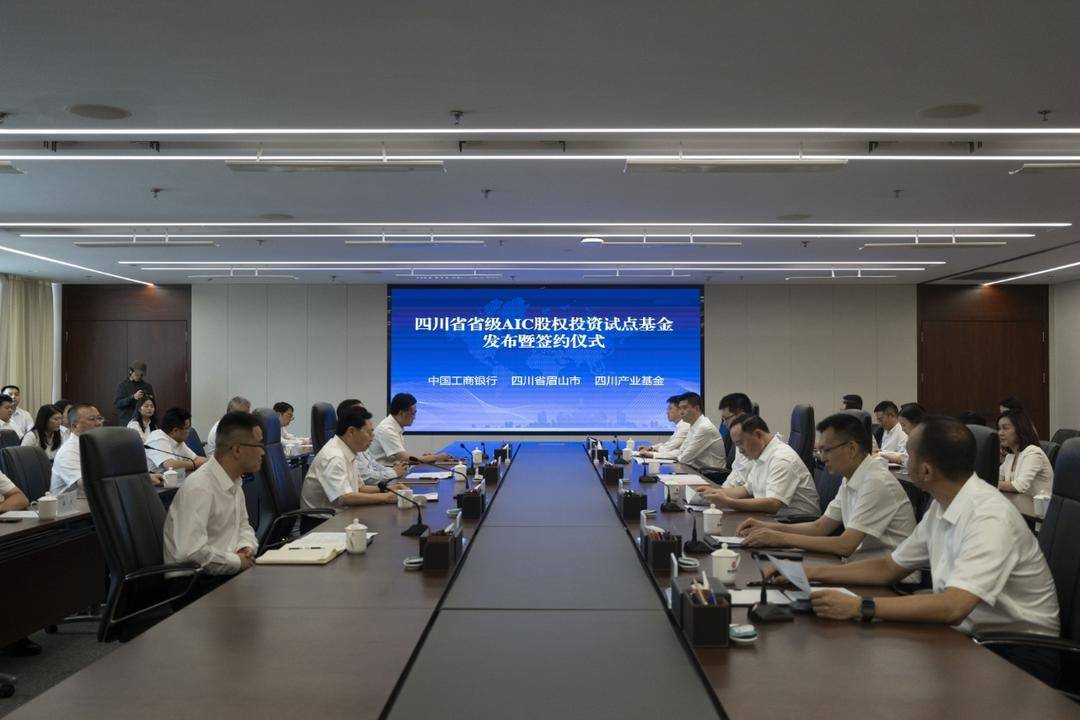
四川省首支省级AIC股权投资试点基金落地
Sou Hu Cai Jing· 2025-07-04 13:46
Group 1 - The core viewpoint of the article highlights the establishment of the first provincial AIC equity investment pilot fund in Sichuan, marking a significant step in activating new economic momentum in the region [1][3] - The fund, named Sichuan Xingmei Gongrong AIC Fund, has a total scale of 1 billion yuan, focusing on investment in sectors such as new energy, new materials, and electronic information [3] - The collaboration involves Sichuan Industrial Fund, Meishan Guidance Fund, ICBC Capital, and ICBC Investment, emphasizing a "patient capital" approach that supports long-term investments in hard technology [1][3] Group 2 - The fund's innovative model combines provincial and municipal state-owned enterprises with financial institutions, promoting a virtuous cycle of technology, industry, and finance [3] - The initiative aligns with national policies aimed at enhancing financial support for technological innovation and encourages the integration of technology, industry, and finance [3] - Future cooperation will focus on supporting Sichuan's strategic industrial chains and enhancing the resilience of its modern industrial system, contributing to national strategic goals [3]
最高出资80%,2000亿基金,这个直辖市出大招
母基金研究中心· 2025-07-04 09:32
Core Viewpoint - The article discusses Tianjin's "Action Plan for Promoting New Quality Productivity Development through Science and Technology Finance (2025-2027)", which aims to enhance the scale and effectiveness of science and technology investment funds, targeting a fund size exceeding 2 trillion yuan by 2027 [1][2]. Group 1: Investment Measures - Tianjin plans to implement 60 measures across 18 areas to support the development of new quality productivity [1]. - The plan includes a full-cycle equity investment enhancement initiative, which features significant incentives for venture capital institutions investing in unlisted technology companies [2][3]. - The single-level contribution cap for government funds is set at 70%, while the combined contribution cap for both levels is 80%, making it one of the most favorable policies nationwide [2][3]. Group 2: Government Fund Management - The action plan aims to optimize the management of government-owned capital funds, increasing the contribution limits for municipal and district-level funds [3][4]. - The plan aligns with the State Council's recent guidelines promoting high-quality development of government investment funds, encouraging the removal of restrictions on fund managers' registration locations and optimizing contribution adjustment mechanisms [2][8]. Group 3: Risk Tolerance Mechanisms - There is a growing trend among local governments to adopt risk tolerance mechanisms, allowing for significant losses in investments, with some regions permitting up to 100% loss on individual projects [11][12]. - The article highlights that the establishment of a robust error-tolerance mechanism is crucial for enhancing the performance and accountability of government investment funds [10][11]. Group 4: Future Expectations - The article expresses hope for more regions in China to optimize their government investment fund and state-owned capital fund incentive and error-tolerance mechanisms, promoting the development of long-term and patient capital [13].

未来新乐章|耐心资本培育的信托样本:上海信托解码金融供给的“长跑者逻辑”
Sou Hu Cai Jing· 2025-07-04 04:15
Core Viewpoint - The cultivation of new productive forces, driven by technological innovation and focusing on emerging fields such as digital economy, green economy, and bio-economy, is essential for industrial upgrading and innovation breakthroughs. Patient capital is identified as a key support for this development, emphasizing long-term investment and risk tolerance [1][2]. Group 1: Patient Capital and Trust Companies - Patient capital refers to capital that prioritizes long-term projects over short-term returns, providing essential support for technological transformation and industrial development [1]. - Trust companies, particularly Shanghai Trust, are evolving into value co-creators by leveraging their unique institutional advantages to combine capital and industry [2][3]. - Family trusts and wealth management trusts are emerging as significant sources of patient capital, enhancing clients' investment duration and risk tolerance [3]. Group 2: Investment Strategies and Projects - Shanghai Trust has made substantial investments in long-cycle assets, such as the New Hongqiao Health Industry Park and the Iron Lion Gate project, achieving high returns and establishing a strong foothold in the biopharmaceutical sector [4]. - The company is actively involved in various investment projects, including Pre-REITs structures and blind pool funds for new infrastructure, demonstrating a robust start in real estate equity investments [4][6]. - Shanghai Trust is focusing on core technology industrial parks and aims to provide long-term funding support for hard technology enterprises through innovative financial tools [7][9]. Group 3: ESG and Green Finance - Shanghai Trust is committed to developing green finance, with a current scale of approximately 18 billion yuan in green financial business, including green asset-backed securities and green bonds [9]. - The company is enhancing its inclusive financial products and services, aiming to improve financial service coverage and accessibility [9]. Group 4: Service Model and Ecosystem - The service model of Shanghai Trust emphasizes long-term support and cross-cycle management, moving beyond traditional transactional services to build a resilient service ecosystem [10][11]. - The company integrates its investment strategies with national strategic industries, aiming to mobilize social resources to meet funding needs in key sectors [11][13]. - Shanghai Trust is also innovating in knowledge property services, collaborating with hospitals and research institutions to promote the commercialization of clinical innovations [13].