
改革开放

Search documents
【滨州日报评论员文章】重点围绕“八个方面”提质增效
Xin Lang Cai Jing· 2026-01-11 15:08
Core Viewpoint - The main task of this year's economic work is to establish a "1+1388" work framework, focusing on enhancing quality and efficiency in eight key areas: expanding domestic demand, industrial upgrading, innovation-driven development, reform and opening up, coordinated development, green transformation, social welfare, and safety development [1][2][3]. Group 1: Expanding Domestic Demand - Emphasis on tapping into consumer potential, stimulating market vitality, and enhancing investment efficiency to promote demand expansion and quality improvement [1]. - Development of new consumption formats such as rural e-commerce and instant retail to encourage consumer spending [1]. Group 2: Industrial Upgrading - Support for the "5210N" modern industrial cluster to strengthen industrial groups and promote digital transformation [2]. - Focus on high-end traditional industries, large-scale emerging industries, and collaborative future industries to build a modern industrial system centered on advanced manufacturing [2]. Group 3: Innovation-Driven Development - Implementation of a "five-pronged" approach to enhance innovation capabilities and foster high-tech enterprises with significant R&D investment and market share [2]. - Development of production capacity tailored to local conditions and establishment of industry-education integration communities [2]. Group 4: Reform and Opening Up - Commitment to deepening reforms and expanding the open economy to enhance the business environment and stimulate high-quality development [2]. - Planning for new reform initiatives to inject vitality into the economy [2]. Group 5: Coordinated Development - Promotion of urbanization and rural revitalization, enhancing urban quality and strengthening county economies [2]. - Focus on regional integration and coordinated development across different areas [2]. Group 6: Green Transformation - Adherence to "dual carbon" goals and implementation of major national strategies to build a new energy system and promote pollution prevention [2]. - Efforts to create beautiful cities, villages, and rivers as part of a comprehensive green transformation [2]. Group 7: Social Welfare - Prioritization of social welfare to enhance public services and ensure high-quality population development [3]. - Continuous improvement of social security, medical insurance, and low-income support to increase public satisfaction [3]. Group 8: Safety Development - Focus on integrating safety into development and enhancing overall national security awareness [3]. - Strengthening social governance and risk prevention to build a resilient economy and society [3].
成渝地区双城经济圈不断提升发展能级 巴山蜀水共潮生
Ren Min Ri Bao· 2026-01-09 22:53
Core Viewpoint - The Chengdu-Chongqing economic circle is becoming a significant growth pole for high-quality development in China, with a population increase from 96 million to over 98 million and GDP share rising from 6.3% to 6.5% compared to 2019 [1] Group 1: Strategic Positioning and Collaboration - The Chengdu Supercomputing Center collaborates with Chongqing University to enhance computing power services, establishing over 1,700 application scenarios [2] - The integration of Chengdu and Chongqing aims to leverage their respective strengths, with Sichuan excelling in research and talent, while Chongqing has a robust manufacturing base [5] - A comprehensive development plan has been established to guide the integration of the two regions, focusing on becoming a major economic and technological center [5][6] Group 2: Infrastructure and Energy Projects - The 1000 kV ultra-high voltage AC project is a key initiative, capable of delivering 35 billion kWh of electricity annually, equivalent to the annual consumption of nearly 10 million households [10] - Major infrastructure projects, including the Chengdu-Chongqing high-speed rail and gas pipelines, are accelerating development and connectivity [10] Group 3: Agricultural and Technological Innovation - The establishment of an agricultural technology innovation alliance has led to the successful introduction of over 20 bean varieties in Sichuan, significantly increasing yields [12] - The integration of technology in traditional industries is evident, with advancements in robotics and biotechnology enhancing productivity and innovation [13][14] Group 4: Reform and Open Market Initiatives - The Chengdu High Bamboo New Area is pioneering cross-provincial tax management services, facilitating smoother business operations [21][23] - The establishment of the Chengdu Financial Court and joint river management offices exemplifies innovative governance and environmental cooperation [24][25] Group 5: Public Services and Quality of Life - The mutual recognition of professional qualifications between Sichuan and Chongqing has streamlined the process for talent mobility [29] - Public services have been enhanced, with over 355 high-frequency matters now manageable across provincial lines, improving efficiency in healthcare and library services [30] Group 6: Cultural and Tourism Development - The collaboration in cultural tourism, particularly in the stone carving arts, is fostering regional tourism growth and enhancing cultural exchange [34] - The joint promotion of tourism resources has led to increased visitor engagement in both cities, showcasing the cultural richness of the region [34]
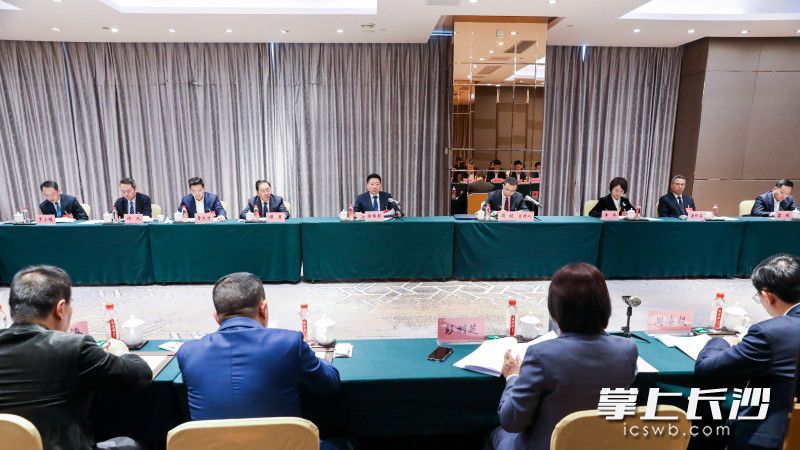
陈博彰参加岳麓区、长沙县代表团审议
Chang Sha Wan Bao· 2026-01-09 02:53
Group 1 - The government work report and the "14th Five-Year" planning outline draft are highly regarded for their comprehensive and objective summary of achievements, as well as a scientifically drawn blueprint for Changsha's development over the next five years, which has inspired and encouraged the representatives [2] - The focus areas for development include strengthening industrial clusters, optimizing spatial layout, and creating a high-quality development core growth pole [5] - Emphasis is placed on innovation-driven development, creating high-energy scientific and technological innovation platforms, and enhancing the overall innovation ecosystem [5] Group 2 - The priority is to stabilize growth by expanding effective demand, advancing project breakthroughs, and innovating investment attraction mechanisms [8] - There is a strong push for high-quality development in the manufacturing sector, consolidating the advantages of existing industries while actively cultivating future industries [8] - The government aims to improve urban functionality and quality of life, ensuring ecological safety and promoting urban-rural integration [8]

人民日报:向新向优发展,中国经济向好
Ren Min Ri Bao· 2026-01-08 08:48
Group 1 - China's economy is expected to grow by around 5% in 2025, maintaining its position among the world's major economies, with a total economic output projected to reach 140 trillion yuan [3] - The manufacturing sector shows positive trends, with the added value of equipment manufacturing and high-tech manufacturing increasing by 9.3% and 9.2% respectively in the first 11 months of 2025, outpacing overall industrial growth [3] - High-tech product exports have performed well, with integrated circuit exports reaching 1.29 trillion yuan, a growth of 25.6%, indicating strong innovation capabilities despite external pressures [3] Group 2 - The implementation of the Private Economy Promotion Law and the reduction of market access negative lists are part of ongoing reforms aimed at enhancing market competitiveness and promoting a unified national market [4] - China's ecological environment has seen significant improvements, with the PM2.5 concentration in the Beijing-Tianjin-Hebei region dropping to 31 micrograms per cubic meter, a 54% decrease from ten years ago [4] - Social security spending as a percentage of GDP has doubled from 4% in 2012 to approximately 8% now, aligning with levels seen in middle-income countries, reflecting a commitment to improving public welfare [5] Group 3 - Economic indicators such as the Consumer Price Index and industrial profits have shown signs of improvement, with industrial profits increasing by 0.1% year-on-year in the first 11 months of 2025 [6] - The Manufacturing Purchasing Managers' Index rose to 50.1 in December, indicating a return to expansion after eight months, while the non-manufacturing business activity index also rebounded [6] - The resilience of China's economy is attributed to strong leadership and unity under the Communist Party, providing confidence to navigate challenges [6]
钟才平:向新向优发展,中国经济向好
Ren Min Ri Bao· 2026-01-08 07:44
Core Viewpoint - China's economy is resilient and capable of overcoming significant challenges, with a focus on high-quality development and internal strengthening to address external pressures [1][3]. Group 1: Economic Performance - The expected economic growth for 2025 is around 5%, with a total economic output projected to reach 140 trillion yuan [3]. - Exports to ASEAN and the EU increased by 14.6% and 8.9% respectively, while exports to Belt and Road countries grew by 11.3% [2]. - Despite an 18.3% decline in exports to the US, total exports in dollar terms still grew by 5.4% [2]. Group 2: Industrial Development - The added value of equipment manufacturing and high-tech manufacturing industries grew by 9.3% and 9.2% respectively, outpacing overall industrial growth [3]. - The share of equipment manufacturing and high-tech manufacturing in total industrial output reached 36.4% and 16.7%, showing an increase from 2020 [3]. Group 3: Innovation and Reform - High-tech product exports, particularly integrated circuits, reached 1.29 trillion yuan, growing by 25.6% [4]. - New policies to promote the private economy and reduce market entry barriers have been implemented, enhancing the business environment [4]. Group 4: Environmental and Social Progress - Significant improvements in environmental quality, with PM2.5 concentration in the Beijing-Tianjin-Hebei region dropping to 31 micrograms per cubic meter, a 54% decrease from ten years ago [5]. - Social security spending as a percentage of GDP has doubled from 4% in 2012 to approximately 8%, aligning with levels in middle-income countries [5]. Group 5: Economic Indicators - The industrial profit of large enterprises increased by 0.1% year-on-year, maintaining growth for four consecutive months [6]. - The manufacturing purchasing managers' index rose to 50.1 in December, indicating expansion, while the non-manufacturing business activity index also returned to expansion territory [6].
连续两日,人民日报刊发钟才平文章
财联社· 2026-01-08 03:10
Core Viewpoint - The articles emphasize the resilience and growth of the Chinese economy, highlighting the importance of high-quality development and adaptability in response to international challenges [2][4]. Group 1: Economic Performance and Growth - The Chinese economy is expected to grow by around 5% in 2025, with a total economic output reaching 140 trillion yuan, maintaining its position among the world's major economies [4]. - Exports to ASEAN and the EU increased by 14.6% and 8.9% respectively in the first 11 months of 2025, while exports to the US decreased by 18.3%, yet total exports in dollar terms still grew by 5.4% [3][4]. Group 2: Industrial and Technological Advancements - The added value of equipment manufacturing and high-tech manufacturing industries grew by 9.3% and 9.2% respectively, outpacing overall industrial growth by 3.3 and 3.2 percentage points [4]. - High-tech product exports, particularly integrated circuits, reached 1.29 trillion yuan, marking a 25.6% increase [5]. Group 3: Policy and Reform Initiatives - The implementation of the Private Economy Promotion Law and the expansion of the negative list for market access are part of ongoing reforms to enhance the business environment [5]. - The establishment of a unified national market and the promotion of free trade zones are key steps in advancing high-level opening-up [5]. Group 4: Environmental and Social Progress - Significant improvements in environmental quality were noted, with PM2.5 concentrations in the Beijing-Tianjin-Hebei region dropping to 31 micrograms per cubic meter, a 54% decrease from a decade ago [6]. - Social security spending as a percentage of GDP has doubled from 4% in 2012 to approximately 8% now, aligning with levels seen in middle-income countries [6]. Group 5: Future Outlook and Confidence - The manufacturing purchasing managers' index rose to 50.1 in December, indicating expansion, while industrial profits increased by 0.1% year-on-year in the first 11 months [7]. - The leadership of Xi Jinping and the centralized guidance of the Party are seen as crucial for overcoming challenges and ensuring the sustained momentum of economic development [7].

向新向优发展,中国经济向好
Ren Min Ri Bao· 2026-01-07 22:27
Group 1 - China's economy is expected to grow by around 5% in 2025, maintaining its position among the world's major economies, with a total economic output reaching 140 trillion yuan [3] - The structure of the economy is continuously optimizing, with the added value of equipment manufacturing and high-tech manufacturing industries growing by 9.3% and 9.2% respectively in the first 11 months of 2025, outpacing the overall industrial growth [3] - High-tech product exports have shown significant performance, with integrated circuit exports reaching 1.29 trillion yuan, an increase of 25.6% [3] Group 2 - The implementation of the Private Economy Promotion Law and the reduction of the negative list for market access are steps towards deeper reforms and a unified national market [4] - China has established the world's largest renewable energy system, with one-third of electricity consumption coming from green energy [4] - Social security spending as a percentage of GDP has doubled from 4% in 2012 to approximately 8% now, aligning with levels in middle-income countries [5] Group 3 - The consumer price index has shown a rising trend for three consecutive months, and the profit of industrial enterprises has increased by 0.1% year-on-year in the first 11 months [6] - The manufacturing purchasing managers' index rose to 50.1 in December, indicating a return to the expansion zone after eight months [6] - The leadership of Xi Jinping and the centralized leadership of the Party are seen as the key factors in overcoming challenges and ensuring economic stability [6]
高原上的奋斗与荣光
Xin Lang Cai Jing· 2026-01-06 18:31
Core Viewpoint - The transformation of Qinghai from a remote and underdeveloped region into a modern regional center is highlighted, showcasing the resilience and efforts of its people under the leadership of the Communist Party of China [1]. Group 1: Historical Development - In the 1950s, the construction of the Qinghai-Tibet Highway, known as the "Heavenly Road," was a monumental effort that cost many lives, with an average of one builder per kilometer lost [2]. - The establishment of the 221 Factory in 1958 marked a significant achievement in China's nuclear weapons development, with the first atomic bomb successfully developed in 1964 under extreme conditions [2]. Group 2: Economic Growth and Modernization - The economic reforms initiated in the 1980s led to the emergence of individual businesses in Xining, with significant milestones such as the completion of the Qinghai Aluminum Plant in 1992 and the start of the second phase of the Qinghai-Tibet Railway in 2000 [3]. - By 2020, all 42 impoverished counties in Qinghai had been lifted out of poverty, and the province has become a leader in clean energy, particularly in the lithium and photovoltaic industries [3]. - The development of the Taratantan photovoltaic park symbolizes the transformation of barren land into a hub for renewable energy, reflecting the province's commitment to sustainable growth [3].
接力跑好四川改革开放新征程
Si Chuan Ri Bao· 2026-01-06 11:09
Group 1 - The core message emphasizes the commitment to continue reform and opening up, reflecting on the achievements and experiences gained over 40 years of reform in Sichuan [1][2] - Sichuan has transformed from a traditional agricultural province to an important economic province in the national context, contributing positively to the overall reform and opening up in the country [2] - The province is at a new historical starting point, facing a critical period of transformation, innovation, and leapfrog development, necessitating a strong commitment to reform and openness [2] Group 2 - Xi Jinping's "nine musts" encapsulate the valuable experiences accumulated over 40 years of reform and opening up, guiding future practices and promoting steady progress in Sichuan's modernization [3] - The necessity of adhering to the Party's self-revolution to drive social revolution is highlighted, emphasizing the importance of comprehensive and strict governance of the Party [4] - The call for inheriting and promoting the spirit of reform and innovation from previous generations is crucial for advancing Sichuan's development and contributing to the broader goals of national modernization and rejuvenation [4]
在春天的日子里
Si Chuan Ri Bao· 2026-01-06 11:09
Group 1 - The meeting highlighted the significant achievements of Sichuan over the past 40 years, with the province's economic total rising from "hundred billion" to "four trillion" [3] - The poverty rate in Sichuan has dramatically decreased from 39.9% to 2.7%, showcasing the effectiveness of reform policies [3] - Sichuan has become home to 347 Fortune Global 500 companies, indicating its growing economic importance [3] Group 2 - The meeting featured various speakers who shared personal stories of reform and innovation, emphasizing the spirit of perseverance and exploration among Sichuan's people [2][3] - The discussion included references to Sichuan's pioneering role in national reforms, such as the implementation of agricultural production responsibility systems and state-owned enterprise reforms [2] - The sentiment expressed by attendees reflects a strong commitment to continue advancing reforms and opening up, aiming for a prosperous future for Sichuan [3]