
机器人商业化

Search documents
2025机器人商业化破冰进行时
Zhong Guo Zheng Quan Bao· 2025-08-10 21:05
Core Insights - The article discusses the recent financial performance of a major company, highlighting a significant increase in revenue and net income compared to the previous year [1] Financial Performance - The company reported a revenue of $5 billion, representing a 20% increase year-over-year [1] - Net income reached $1 billion, which is a 25% increase compared to the same period last year [1] - Earnings per share (EPS) rose to $2.50, up from $2.00 in the previous year, indicating strong profitability growth [1] Market Position - The company has strengthened its market position, capturing an additional 5% market share in its sector [1] - Increased demand for its products has been a key driver of growth, particularly in emerging markets [1] Future Outlook - The company anticipates continued growth, projecting a revenue increase of 15% for the next fiscal year [1] - Strategic investments in technology and innovation are expected to enhance operational efficiency and product offerings [1]

破局千亿市场 北京机器人走出实验室
Bei Jing Shang Bao· 2025-08-07 15:39
Core Insights - Beijing is rapidly advancing in the humanoid robot market, transitioning from laboratory experiments to real-world applications with the opening of the world's first humanoid robot 4S store and a robot-themed restaurant [1][10] - The strategy of "scene verification + ecological collaboration" is being employed to unlock the commercial potential of humanoid robots, allowing for practical demonstrations of technology in real-life settings [1][5] Group 1: Commercialization Strategy - The 4S store creates a closed-loop experience of "scene experience - immediate sales - service delivery," enabling companies to validate robot performance in real scenarios [4] - The restaurant serves as a testing ground for robots to demonstrate their efficiency and integration into industry processes, addressing key operational questions [5] - The approach of running commercial models through real-life scenarios is breaking down barriers to technology transfer [5][6] Group 2: Industry Ecosystem - Beijing Economic-Technological Development Area has over 300 robotics and intelligent manufacturing companies, forming a robust ecosystem with a scale exceeding 100 billion [6][8] - Policies are being implemented to support the entire chain from research and development to application, including a 250,000 square meter robotics industrial park and a 10,000 robot innovation application plan [6][7] - The combination of demand-driven and technology-focused strategies is helping companies overcome challenges and uncertainties [7] Group 3: Future Projections - The global humanoid robot market is projected to reach 1.24 million units and a market size of 6.339 billion by 2025, with expectations of exceeding 400 billion by 2035 [9][10] - Beijing's initiatives are not only positioning itself to capture a significant share of the market but also providing a pioneering model for the global commercialization of humanoid robots [10]

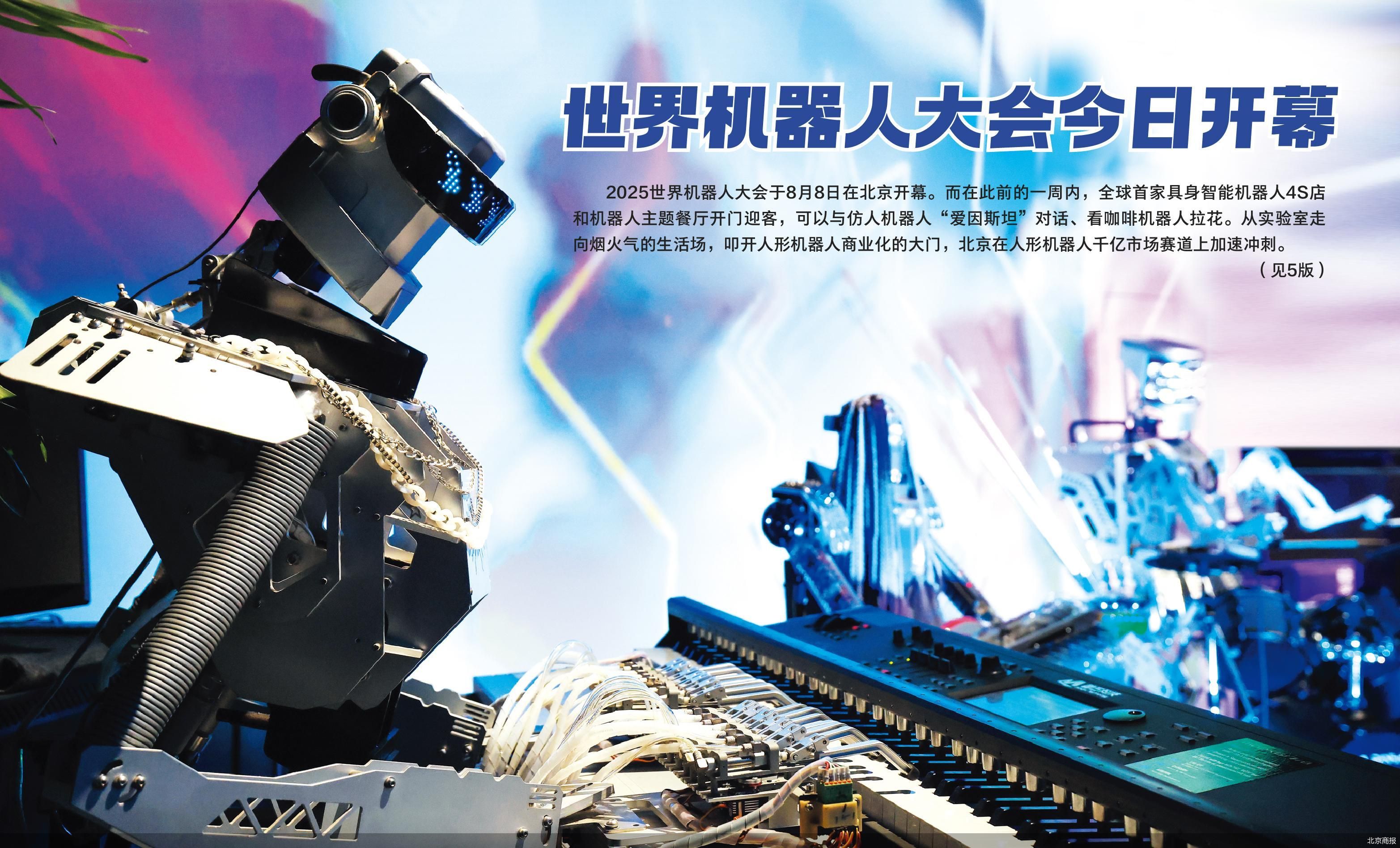
世界机器人大会|破局千亿市场 北京跑出机器人“第一程”
Bei Jing Shang Bao· 2025-08-07 14:40
Core Insights - The article highlights the transformation of robotics from experimental settings to commercial applications, exemplified by the opening of the world's first humanoid robot 4S store and a robot-themed restaurant in Beijing [1][2][3] Group 1: Commercialization of Robotics - The "Robot Mall" and "Robot Restaurant" serve as vivid examples of the robotics industry moving towards practical applications, allowing robots to create commercial value in real-world settings [2][4] - The restaurant aims to operate without human waitstaff, relying entirely on robots for customer service, showcasing a fully automated dining experience [1][3] Group 2: Technological Validation - The 4S store provides a "scene experience—immediate sales—service delivery" loop, enabling companies to validate robot performance in real scenarios, thus shortening the technology-to-market cycle [3][4] - The restaurant extends this validation to consumer scenarios, assessing robots' efficiency in food preparation and service, which is crucial for proving their commercial viability [3][4] Group 3: Ecosystem Development - Beijing's economic zone has attracted over 300 robotics and intelligent manufacturing companies, creating a robust ecosystem with a scale exceeding 10 billion [5][6] - The local government supports this ecosystem through policies that facilitate research, development, and application of robotics, including a 100 billion fund for core technology challenges [5][6] Group 4: Future Projections - The global humanoid robot market is projected to reach 1.24 million units and a market size of 6.339 billion by 2025, with expectations of exceeding 400 billion by 2035 [8][9] - Beijing's initiatives are positioned as a leading model for the global commercialization of humanoid robots, providing a strategic advantage in the emerging market [9]
破局千亿市场,北京跑出机器人“第一程”
Bei Jing Shang Bao· 2025-08-07 14:13
Core Insights - The article highlights the transformation of robotics from experimental settings to commercial applications, exemplified by the opening of the world's first humanoid robot 4S store and a robot-themed restaurant in Beijing [1][2][3] Group 1: Commercialization of Robotics - The "Robot Mall" and "Robot Restaurant" serve as vivid examples of the robotics industry moving towards practical applications, allowing robots to create commercial value [2][3] - The restaurant aims to operate without human waitstaff, relying entirely on robots for customer service, showcasing a fully automated dining experience [1][3] Group 2: Validation of Technology - The 4S store provides a "scene experience—immediate sales—service delivery" loop, enabling companies to validate robot performance in real-world scenarios [3][4] - The restaurant extends this validation to consumer settings, assessing robots' efficiency in food preparation and service [3][4] Group 3: Ecosystem and Policy Support - Beijing's economic development zone has attracted over 300 robotics and intelligent manufacturing companies, creating a robust ecosystem with a scale exceeding 100 billion [5][6] - Policies are in place to support the robotics industry, including a 25,000 square meter robotics industrial park and a 100 billion fund for core technology development [5][6] Group 4: Future Projections - The global humanoid robot market is projected to reach 1.24 million units and a market size of 6.339 billion by 2025, with expectations of exceeding 400 billion by 2035 [8][9] - Beijing's initiatives are seen as a leading model for the global commercialization of humanoid robots, providing a Chinese solution to the early-stage market [9]
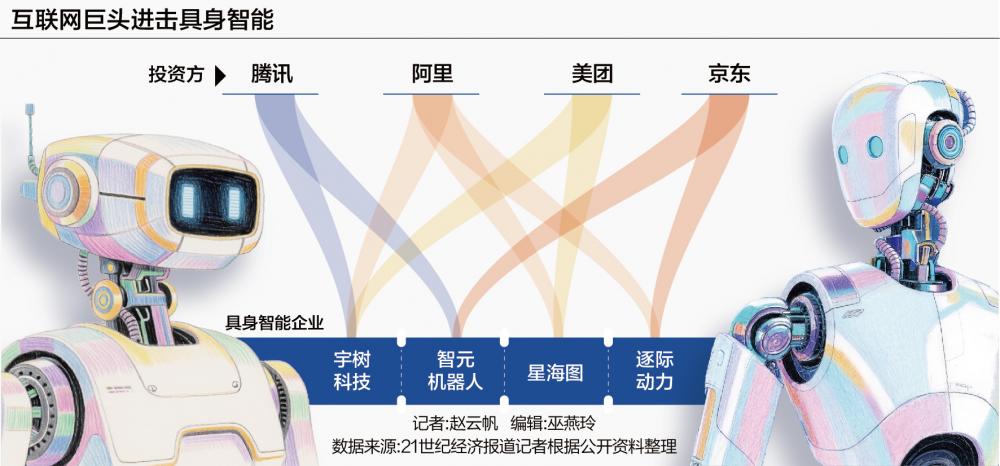
美团买下机器人“半壁江山”,腾讯阿里京东齐出手
21世纪经济报道· 2025-08-01 00:18
Core Viewpoint - The humanoid robot industry is experiencing a significant influx of investment from established internet giants, marking a potential turning point for commercialization and capital influx in the sector [2][4]. Group 1: Investment Trends - By mid-2025, the humanoid robot industry saw a rare wave of financing, primarily from well-known internet companies like JD.com, Tencent, and Alibaba [2]. - JD.com made substantial investments in four humanoid enterprises by the end of July, indicating a strategic expansion in the robotics sector [3][18]. - Meituan has invested in 30 robot-related companies over the past three years, positioning itself as a major player in the robotics landscape [6]. Group 2: Company Strategies - Meituan's investment strategy focuses on integrating technology into its business model, emphasizing the importance of hardware alongside software [7][8]. - Tencent aims to create an open collaborative ecosystem in the humanoid robot space, positioning itself as a facilitator rather than a direct competitor [10][12]. - Alibaba's approach is more subdued, with fewer investments in humanoid robots, focusing instead on foundational technologies like AI and cloud computing [14][16]. Group 3: Market Dynamics - The competition among internet giants has shifted from exclusivity to collaboration, with multiple companies investing in the same humanoid robot projects [24][25]. - The disparity in funding between leading humanoid robot projects and others is widening, with top firms securing significant investments while others struggle [24][25].



互联网巨头进击具身智能
2 1 Shi Ji Jing Ji Bao Dao· 2025-07-31 23:48
Group 1 - The humanoid robot industry is experiencing a rare wave of financing, primarily from established internet giants, marking a shift in investment dynamics [1][3] - Major players like JD.com, Tencent, and Meituan are actively investing in humanoid robotics, with JD.com making significant investments in multiple companies within a short timeframe [2][20] - Meituan has invested in around 30 robotics-related companies over the past three years, positioning itself as a dominant player in the robotics sector [5][6] Group 2 - Tencent is focusing on creating an open collaborative ecosystem in the humanoid robotics space, rather than competing directly in hardware development [9][10] - Tencent's Tairos platform aims to provide modular capabilities for robot manufacturers, emphasizing a supportive role in the industry [11][12] - Alibaba's approach to investment in humanoid robotics is more subdued, focusing on foundational technologies rather than direct competition in the hardware space [13][14][17] Group 3 - JD.com's strategy in humanoid robotics emphasizes scene collaboration and deep integration, leveraging its extensive supply chain for practical applications [22][24] - The company has launched its own brand, JoyInside, to enhance interaction capabilities in humanoid robots, indicating a comprehensive approach to the technology [23][25] - The investment landscape is evolving, with internet giants increasingly collaborating rather than competing, as seen in shared investments in key projects like Yushun Technology [27][30] Group 4 - The current financing environment in the humanoid robot industry shows a stark contrast between well-funded leading projects and those struggling to secure investment [31]


“切入”文娱市场 人形机器人商业化迎来新路径
Jing Ji Guan Cha Wang· 2025-07-30 05:11
Core Viewpoint - The strategic partnership between Giant Star Legend and Yushu Technology aims to develop and commercialize consumer-grade robots with strong IP attributes, particularly in the entertainment sector [1][4]. Group 1: Partnership Details - Giant Star Legend will handle IP planning, design, AI interaction, and global marketing strategies for the collaborative products, while Yushu Technology will focus on technology, hardware development, and application software [1]. - The collaboration is expected to accelerate the commercialization process of humanoid robots and provide a model for other companies in the robotics industry [2]. Group 2: Market Opportunities - The partnership is seen as a new path for the commercialization of humanoid robots, starting from entertainment and gradually moving into industrial and household applications [2]. - Yushu Technology recently secured significant orders, including a 124 million yuan contract with China Mobile, marking a substantial step towards the commercialization of humanoid robots [2][3]. Group 3: IP Integration and Business Model - The collaboration will leverage cultural IP to create a new ecosystem for robot products, enhancing the commercial value of robots in entertainment settings [4][5]. - Giant Star Legend plans to utilize its extensive fan base and IP resources to create immersive experiences and enhance its competitive edge in the market [4][5]. Group 4: Financial Performance - For the fiscal year 2024, Giant Star Legend reported a revenue of 584 million yuan, a year-on-year increase of 35.8%, with IP business revenue growing by 65.1% [6]. - Following the announcement of the partnership, Giant Star Legend's stock surged, reflecting positive market sentiment [6].
催化不断!宇树、特斯拉新动态追踪,这些公司卡位关键环节有望助力机器人量产进度加速
财联社· 2025-07-26 13:53
Core Viewpoint - The article highlights the active performance of the robotics sector, particularly driven by Tesla's Optimus project and significant contracts won by domestic companies, indicating a pivotal moment for commercialization in the humanoid robotics industry [1][4]. Group 1: Tesla's Optimus Project - Tesla's CEO Elon Musk announced the release of the third prototype of the humanoid robot Optimus by the end of this year, with mass production expected to start in 2026, aiming for an annual production of 1 million units within five years [1]. - The recent adjustments to the Optimus project are necessary to address technical challenges such as overheating of joint motors, low load capacity of dexterous hands, and short battery life [5]. - The leadership change in the Optimus project, with AI Vice President Akshay taking over, suggests a shift towards integrating AI capabilities more deeply into the hardware design [7]. Group 2: Industry Developments - The humanoid robotics sector has seen a surge in capital activity since 2025, with numerous companies filing for IPOs and significant acquisitions, indicating a transition from technology validation to commercial production [1]. - The contract won by Zhiyuan Robotics and Yushun Technology for a humanoid robot project with China Mobile, valued at 124 million yuan, marks a significant milestone in the domestic humanoid robotics industry [1][8]. - The integration of hardware, deployment scenarios, and data infrastructure is expected to accelerate technological iterations in the robotics sector, providing a competitive edge for Chinese companies [8]. Group 3: Commercialization Pathways - The commercialization of robotics is anticipated to follow a gradual path, starting with industrial manufacturing and smart logistics, where tasks are highly structured and repetitive [9]. - Successful deployment of specialized tasks will not only generate revenue but also provide valuable real-world data for training more generalized models, moving towards true versatility in robotics [10].


大盘3600点了,为什么还有人没赚到钱?
天天基金网· 2025-07-24 11:56
Core Viewpoint - The article discusses the recent positive trends in the Chinese stock market, highlighting the stabilization of the Shanghai Composite Index above 3500 points and the potential for it to surpass last year's high of 3674 points, while also noting the healthy increase in market volume and sentiment [1][4]. Group 1: Macro Environment - Investors are still stuck in outdated perceptions of the A-share market, such as the belief that it will remain around 3000 points, failing to recognize the changing macro narrative [4]. - Key factors influencing the macro environment include: - Diminished tariff expectations and reduced geopolitical risks [4]. - Anticipated fiscal policy support due to pressures on growth and declining exports [4]. - Increased policy support for the capital market, including initiatives like the "National Nine Articles" [4]. - A surge in domestic liquidity and a low-interest-rate environment leading to a shift of funds from deposits to equities [4]. - Expectations of easing from the Federal Reserve, benefiting emerging markets and particularly A-shares and H-shares [4]. Group 2: Investment Opportunities - The article identifies critical opportunities that investors may have missed, emphasizing the importance of being present in key moments and sectors [6]. - Notable phases of market uptrends this year include: - The emergence of domestic AI models in February, leading to a revaluation of technology stocks [7]. - The market recovery following a panic sell-off in April due to tariff concerns, supported by long-term funds [7]. - A structural rotation in June, with sectors like stablecoins and healthcare gaining traction [7]. - ETFs are highlighted as advantageous investment vehicles during market surges due to their high liquidity, low fees, and ability to mitigate individual stock volatility [7]. Group 3: Investment Strategies - Investors are cautioned against frequent trading and chasing trends, which can lead to losses [8]. - The article suggests that successful investment requires understanding the nature of industry rotations and focusing on high-potential sectors that have undergone significant corrections [8][10]. - The "Dumbbell Strategy" is recommended, which involves: - Allocating to high-growth sectors like AI and pharmaceuticals while also capturing short-term opportunities in undervalued sectors like finance and infrastructure [15][16]. - Maintaining defensive positions in stable, dividend-paying sectors to hedge against uncertainties [17].

优必选频繁融资揭示:机器人很火但“吃不饱”
Sou Hu Cai Jing· 2025-07-22 06:33
Core Viewpoint - The company UBTECH (09880.HK) has won a significant procurement project worth over 90 million yuan from Miyi (Shanghai) Automotive Technology Co., leading to a surge in its stock price. However, the announcement of a discounted share placement has dampened investor sentiment and caused a decline in stock value [2][3][4]. Group 1: Financial Actions and Implications - UBTECH plans to raise 2.473 billion HKD through a share placement at a price of 82.00 HKD per share, which is a 9.14% discount from the previous closing price of 90.25 HKD [3]. - The share placement will increase the total number of shares by 6.83%, reducing the public holding percentage from 59.29% to 55.51% [3]. - This is not the first instance of UBTECH engaging in share placements; the company has conducted four placements in the past 12 months, raising a total of approximately 19.56 million HKD for similar operational and debt repayment purposes [4]. Group 2: Operational Financial Health - In the fiscal year 2024, UBTECH reported cash receipts from sales and services totaling 854 million RMB, while cash payments for goods and services reached 804 million RMB, leading to a net cash outflow of 1.908 billion RMB for operational activities [5]. - Despite securing large orders, UBTECH's high operational costs indicate a need for time to achieve cash flow balance, which is a likely reason for its continuous financing through share placements [5]. Group 3: Industry Context and Trends - Other companies in the robotics sector, such as Yujiang (02432.HK) and Horizon Robotics (09660.HK), are also engaging in fundraising activities to support R&D and operational expansion [6]. - Several robotics firms have submitted IPO applications to broaden their financing channels, indicating a trend of increasing capital influx into the industry [6]. - Recent financing rounds for companies like Zhiqi Robot and Zhujidian Power highlight the growing interest from both industrial and financial investors in the robotics sector [7]. Group 4: Industry Challenges and Future Outlook - The robotics industry is showing signs of commercial viability, but high R&D and operational costs keep many companies in a state of financial dependency on external funding [8]. - For sustainable growth, companies must focus on technological advancements to reduce costs and enhance profitability, rather than relying solely on external financing [8]. - Investors should be cautious of the potential risks associated with frequent share placements, which can dilute ownership and suppress short-term stock prices [9].
