资产代币化

Search documents
华赢控股(NASDAQ:AXG)完成交易代码更新,加速构建资产代币化与稳定币基础设施
Ge Long Hui· 2025-10-10 10:25
Limited("AlloyX")及开发AX Coin稳定币,推进Ferion一站式RWA发行平台,全面聚焦Web3核心业务领 域。这一战略布局将公司定位于资产代币化与全球数字支付基础设施建设的前沿,从根本上重塑了公司 的业务结构与战略定位。 华赢控股首席执行官Peter Lok表示:"AXG代表着我们全新的愿景与战略方向。全球稳定币市场的发行 规模已达数千亿美元,而合规化、基础设施驱动的解决方案将成为下一阶段数字金融的核心。" AlloyX联合创始人兼首席执行官朱皓康博士表示:"我们的目标是支持与 AlloyX 生态形成强协同效应的 项目,进一步夯实可编程货币与数字资产超级应用(Super App) 的基础,加速 Web3 时代的到来。" 10月9日,华赢控股(NASDAQ:AXG)宣布已完成交易代码更新,其A类普通股自2025年10月10日(美国东 部时间)起,以新代码"AXG"于纳斯达克交易所交易,"SWIN"将停止使用。 "AXG"这一全新股票代码标志着华赢控股战略转型的正式落地。公司通过收购AlloyX ...
华赢控股变更股票交易代码为“AXG”,加速构建资产代币化与稳定币基础设施
Cai Fu Zai Xian· 2025-10-10 10:24
• Ferion RWA平台 除Solomon VA+ 外,华赢控股还推出了自主研发的Ferion现实世界资产(RWA)平台,提供从资产代币 化、区块链底层资产发行、合规管理到覆盖资产全生命周期的端到端数字资产解决方案。 华赢控股致力于持续拓展金融科技新领域。其全资子公司 Solomon JFZ (Asia) Holding Limited("Solomon")已获得香港证券及期货事务监察委员会(SFC)批准升级持有第1类、第4类及第9类牌 照提供虚拟资产相关服务。作为香港首批比特币与以太坊现货ETF的参与券商之一,Solomon已获批分 销私募代币化基金产品, 其客户虚拟资产持仓规模显著增长。 2025年10月9日,香港 —— 华赢控股(NASDAQ: AXG) 今日宣布,公司已完成交易代码更新,其 A 类普 通股自 2025年10月10日(美国东部时间) 起,以新代码 "AXG" 于纳斯达克交易所交易。公司股票交易代 码 "SWIN"将停止使用,华赢控股将以"AXG"开启资产代币化与稳定币基础设施新征程。 "AXG"这一全新股票代码标志着华赢控股战略转型的正式落地。公司通过收购AlloyX Limited ...
当黄金破顶,聪明资金正转向何处 XBIT指向RWA代币
Sou Hu Cai Jing· 2025-10-09 11:27
Core Insights - The unprecedented rise of gold prices, surpassing $4000 per ounce, signals growing investor anxiety towards dollar assets, reflecting a shift in wealth dynamics [1][3] - The increasing interest in Real World Asset (RWA) tokenization indicates a search for alternative asset allocations beyond traditional safe havens like gold [1][3] Group 1: Market Dynamics - The surge in gold prices is attributed to rising inflation expectations, geopolitical uncertainties, and deep concerns over U.S. debt, leading to a fracture in trust towards traditional dollar assets [3] - The adoption of stablecoins is expected to facilitate the inflow of trillions of dollars into the dollar, acting as a conduit for traditional capital into the crypto space [3] Group 2: Institutional Involvement - On the same day gold peaked, the crypto market saw significant institutional investment, with a record inflow of $1.19 billion into U.S. spot BTC ETFs, indicating a systematic entry of institutional investors into the market [5] - The launch of innovative financial products, such as structured protection ETFs and tokenization technology ETFs, reflects traditional finance's endorsement of the RWA sector [5][10] Group 3: RWA Tokenization - RWA tokens convert stable cash-flow assets like gold, government bonds, and real estate into blockchain-based tokens, addressing the volatility of native crypto assets and providing stable returns [7] - Companies like Prenetics are exemplifying RWA thinking by combining traditional business revenues with crypto asset reserves, showcasing the integration of traditional and digital asset strategies [8] Group 4: Future Outlook - The current moment is critical for investors to focus on the RWA sector, as the anticipated approval of tokenization technology ETFs and ongoing investments from major players like BlackRock could lead to a qualitative leap in liquidity and recognition [10] - The decentralized exchange XBIT is positioned as a key platform for trading RWA, emphasizing transparency and user control, which are essential for high-trust asset transactions [10]

当“最大传统金融交易所”入股“最大链上预测市场”,“资产代币化”进入主流视野
Hua Er Jie Jian Wen· 2025-10-08 01:50
Group 1 - The core concept of asset tokenization is evolving from a theoretical idea to a fundamental component of the next generation of financial market infrastructure, as evidenced by ICE's $2 billion strategic investment in Polymarket, which values the company at approximately $8 billion [1] - ICE will not only acquire financial stakes in Polymarket but will also become the global distributor of its event-driven data, indicating a significant collaboration aimed at developing new tokenization projects [1][3] - The partnership between ICE and Polymarket aims to address a critical gap in the tokenization ecosystem: the need for reliable data, which is essential for the value of digital twins of assets [3] Group 2 - Nasdaq, a major competitor to the NYSE, is also accelerating its transformation by planning to integrate tokenization and around-the-clock trading directly into its core stock market operations [5] - Nasdaq's CEO has expressed a cautious approach to embracing digital assets, emphasizing the need for regulatory clarity before fully committing to tokenized securities and crypto asset services [6] - The trend towards regulatory convergence is seen as a way to create conditions for institutional participation in the market, which aligns with the broader movement towards asset tokenization [6] Group 3 - The collaboration between established market leaders like ICE and innovative platforms like Polymarket is viewed as essential for unlocking the potential of new technologies such as tokenization [4] - The simplicity and accessibility of prediction markets, as noted by Nasdaq's CEO, highlight their potential to engage a broader audience in market price discovery, reinforcing the market potential behind ICE's investment in Polymarket [7]

Cathie Wood 旗下 ARK 投资约 1000 万美元入股 BlackRock 支持的...
Xin Lang Cai Jing· 2025-10-07 01:31
Core Insights - ARK Venture Fund, managed by Cathie Wood, has invested approximately $10 million in Securitize, representing about 3.25% of the fund's assets, making it the eighth largest holding [1] - Securitize is a tokenization platform supported by BlackRock and Hamilton Lane, having issued over $4.6 billion in tokenized assets [1] - The company operates BlackRock's BUIDL dollar digital liquidity fund, which has an asset size of approximately $2.8 billion [1]


美股异动|Robinhood股价飙升创历史新高资产代币化掀波澜
Xin Lang Cai Jing· 2025-10-02 22:44
Core Viewpoint - Robinhood Markets is experiencing significant stock price growth and is focusing on asset tokenization to transform global financial services [1][2] Group 1: Stock Performance - On October 2, Robinhood's stock price increased by 4.71%, reaching an all-time high during intraday trading [1] - The company's inclusion in the S&P 500 index has added positive momentum to its stock performance [1] Group 2: Business Strategy and Innovations - CEO Vlad Tenev highlighted that asset tokenization will profoundly impact financial services by lowering transaction barriers and expanding market potential [1] - Robinhood has launched a series of tokenized stock trading services in the European market, which has garnered significant attention [1] - The company is diversifying its growth paths, showing notable increases in net interest income, indicating the robustness of its core business [1] Group 3: Market Expansion - Robinhood is actively exploring new trading platforms in the UK and EU markets, enhancing its competitive edge in emerging markets [2] - The company is focusing on innovative investment opportunities and diversified tools to attract more users [2] - Future strategies will likely center on expanding in emerging markets and strengthening core business operations [2]

Avalanche’s First Nasdaq Firm Debuts With $550M Raise And A Plan for Staking AVAX – What to Expect?
Yahoo Finance· 2025-09-24 22:06
Core Viewpoint - AgriFORCE Growing Systems Ltd. is rebranding as AVAX One, aiming to become the first Nasdaq-listed company focused on maximizing ownership of AVAX, the native token of the Avalanche blockchain [1][3] Company Strategy - AVAX One plans to raise approximately $550 million to hold over $700 million in AVAX, positioning itself as a foundational player in the Avalanche ecosystem [1][4] - The funding strategy includes a $300 million private investment in public equity (PIPE) and an additional $250 million in future equity-linked instruments, pending shareholder approval [4] Industry Context - Avalanche secures over $6.2 billion in staked assets and is recognized as a leading institutional-grade blockchain, facilitating the tokenization of real-world assets [2] - Major global firms like KKR, Apollo, and J.P. Morgan have utilized Avalanche technology for launching customized, compliant blockchains [2] Leadership and Vision - Jolie Kahn, CEO of AVAX One, emphasizes the transformation of financial markets through programmable blockchains like Avalanche, providing public market investors with a managed vehicle for investment [3] - Matt Zhang, founder of Hivemind Capital and newly appointed chairman, envisions AVAX One as the "Berkshire Hathaway of the on-chain financial economy" [3] Advisory Board and Future Plans - AVAX One has established a high-profile advisory board co-led by Anthony Scaramucci and Brett Tejpaul, focusing on the tokenization of assets as a key theme for the next decade [5] - The company intends to stake the majority of its AVAX holdings to leverage high staking yields, aiming for positive cash flow from day one and growth in net asset value over time [5]
北大汇丰王小愚:中国AI投资具备三大优势,首要挑战在核心技术依赖与硬件短板
Xin Lang Cai Jing· 2025-09-22 02:02
Core Viewpoint - The central financial work conference emphasizes the importance of technology finance, green finance, inclusive finance, pension finance, and digital finance for promoting high-quality financial development. The integration of 5G, AI, and blockchain is reshaping the financial infrastructure and service landscape, presenting both opportunities and challenges for the banking industry [1][3]. Group 1: Technological Integration in Finance - The collaboration of 5G, AI, and blockchain is fundamentally restructuring the architecture and operational logic of financial systems, enhancing payment systems, investment management, and supply chain finance [3][4][5]. - Payment and settlement systems can achieve real-time and trustworthy transactions, with 5G enabling millisecond-level latency and blockchain ensuring transaction immutability and traceability [3][4]. - AI enhances investment advisory and asset management by analyzing user preferences and market data, leading to more personalized and transparent investment strategies [4][5]. Group 2: Challenges of Technological Integration - The integration of these technologies may increase complexity and systemic risks within the financial system, such as compatibility issues between distributed ledgers and centralized AI frameworks [2][7]. - Performance bottlenecks exist between blockchain's low transaction per second (TPS) capabilities and the high throughput demands of 5G [6][7]. - The potential for AI algorithm resonance could amplify market volatility, leading to systemic risks if similar AI models are widely adopted [7]. Group 3: Key Players in the Ecosystem - Two types of companies are likely to dominate the "5G + AI + blockchain" ecosystem: technology giants with integration capabilities and specialized financial technology service providers [7][8]. - Technology giants can leverage their vast user bases and data resources to create efficient technology linkages, while specialized firms can focus on specific industry needs, enhancing their competitive edge [8]. Group 4: Future Directions in AI Investment - AI investment in China is driven by scenario-based applications, policy support, and engineering efficiency, with key challenges including reliance on core technologies and hardware limitations [9][12]. - The future of AI in finance will focus on multi-agent systems for decision-making, democratization of investment through asset tokenization, and seamless cross-border payment solutions [9][10][11]. - The evolution of AI technology is expected to shift from large models to intelligent agents capable of autonomous decision-making, enhancing operational efficiency in various sectors [12]. Group 5: Current Trends and Risks in Blockchain Investment - The current blockchain investment landscape is characterized by a mix of technological innovation and speculative behavior, leading to a phenomenon where "bad money drives out good" [14][17]. - Regulatory actions have targeted misleading cryptocurrency investment practices, indicating a need for clearer distinctions between genuine technological advancements and speculative projects [17][18]. - The differentiation between technological innovation and speculative behavior is crucial, with a focus on projects that do not promise financial returns and adhere to regulatory standards [18].
我国房企信用风险、债务重组与相关建议
Zhong Guo Yin Hang· 2025-09-18 05:18
Financing Situation - The financing situation in China's real estate sector remains pessimistic, with a significant liquidity and repayment pressure as the peak of corporate debt maturity approaches[4] - From January to August 2025, the sales area and sales revenue of new commercial housing decreased by 4.7% and 7.3% year-on-year, respectively[6] - The total financing amount for 65 typical real estate companies from January to July 2025 was 241.379 billion yuan, a year-on-year decrease of 26.6%[6] Debt Restructuring Progress - Since 2025, the pace of debt restructuring among real estate companies has accelerated, with 42 companies disclosing restructuring situations by August 4, 2025[23] - The average interest rate for domestic bonds issued by real estate companies dropped to 2.63% in the first seven months of 2025, reflecting a trend of decreasing financing costs[9] - Debt restructuring plans are increasingly incorporating debt reduction measures, with some companies offering debt reduction ratios exceeding 70%[26] Future Outlook - The debt maturity scale for real estate companies in 2025 is projected to reach 525.7 billion yuan, surpassing the 482.8 billion yuan in 2024, indicating heightened repayment pressure[20] - The expectation for creditors regarding the repayment capacity of real estate companies is likely to continue declining, leading to larger debt reductions and longer extension periods in restructuring plans[42] - The introduction of asset tokenization is seen as a new approach to alleviate debt issues, allowing illiquid assets to be transformed into tradable digital assets[31]

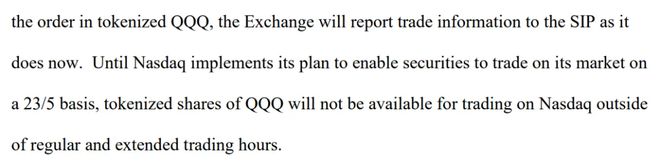
纳斯达克申请代币化股票交易:区块链进入华尔街核心?
Xin Lang Cai Jing· 2025-09-17 23:44
Core Viewpoint - Nasdaq has submitted a groundbreaking proposal to the SEC to modify exchange rules to allow the trading of tokenized securities on its market, potentially enabling major stocks like Apple and Amazon to be traded in token form, marking a significant integration of blockchain technology into Wall Street's core markets [1][12]. Proposal Key Points - The proposal includes a modification of the definition of "securities" to encompass both traditional and tokenized forms, emphasizing that tokenized securities are still considered securities [2][3]. - Tokenized securities must be fully fungible with their traditional counterparts, sharing the same CUSIP code and granting holders the same rights and privileges, such as voting and dividend rights [3][4]. - Nasdaq plans to integrate tokenized and traditional securities on the same order book, treating them equally during the trading process, while the settlement process will offer the option of using tokenized forms [4][5]. Trading and Settlement Mechanism - The trading mechanism will allow tokenized securities to be traded alongside traditional securities, ensuring price consistency and shared market depth [4][6]. - The settlement process will involve the DTC executing transactions through a blockchain system, providing a transparent and efficient method for ownership transfer [5][7]. - Nasdaq's approach aims to prevent liquidity fragmentation and ensure that the core mechanisms of price discovery and execution remain intact [6][8]. Market Implications - The introduction of tokenized securities is expected to enhance the efficiency of financial market infrastructure, potentially reducing settlement times from T+1 to near real-time [12][14]. - The global market for tokenized assets is projected to grow significantly, from approximately $2.1 trillion in 2024 to about $41.9 trillion by 2032, with a compound annual growth rate of 45.8% [12][14]. - Nasdaq's initiative is seen as a strategic move to attract more capital to the U.S. markets and to position itself competitively in the evolving landscape of digital assets [12][16]. Future Outlook - The proposal is anticipated to pave the way for further innovations in financial markets, including the potential for stocks to be used as collateral in decentralized finance (DeFi) and the automation of dividends and voting through smart contracts [13][14]. - Nasdaq's tokenized securities trading is expected to launch by the end of Q3 2026, pending SEC approval and the readiness of the DTC's distributed ledger technology [14][15]. - This development is viewed as a significant milestone in the commercialization of blockchain technology, marking its entry into mainstream finance and potentially transforming the traditional securities market [16].