资金管理

Search documents
希荻微: 希荻微关于使用部分闲置募集资金暂时补充流动资金的公告
Zheng Quan Zhi Xing· 2025-08-29 18:30
Core Viewpoint - The company plans to use up to RMB 200 million of idle raised funds to temporarily supplement its working capital, which is approved by the board and supervisory committee, ensuring compliance with relevant regulations [1][6][7] Group 1: Fund Usage - The company will use the idle funds for daily operations and business expansion related to its main business, with the usage period from September 22, 2025, to September 21, 2026, allowing for rolling use within this timeframe [1][4] - The total amount raised from the initial public offering (IPO) was RMB 1.343 billion, with a net amount of RMB 1.221 billion after deducting issuance costs [1][2] - The company has established a dedicated account management system for the raised funds, ensuring proper oversight and compliance [2] Group 2: Previous Fund Usage - In the previous year, the company also used up to RMB 200 million of idle funds for similar purposes, with a commitment to return the funds by September 21, 2025 [3][4] Group 3: Justification for Current Fund Usage - The decision to use idle funds is based on the need for working capital to support business growth, with an estimated potential interest savings of approximately RMB 3.6 million based on the current loan market rate [5] - The use of these funds will not affect the normal progress of the company's investment projects and will not change the intended use of the raised funds [5][7] Group 4: Approval Process - The board and supervisory committee have approved the use of idle funds, and the decision complies with legal and regulatory requirements, thus not requiring shareholder approval [6][7]

千亿独角兽IPO受阻,给所有中国出海企业的警示
Sou Hu Cai Jing· 2025-08-21 11:43
Core Insights - A Chinese unicorn company with a valuation exceeding 100 billion faced a delay in its IPO plans in the U.S. due to regulatory policy changes, signaling a warning for other Chinese companies looking to go global [2] - The tightening of overseas listing policies has raised concerns regarding data security, information disclosure, and foreign control, making it crucial for companies to prepare adequately [2][6] Regulatory Environment - Recent years have seen stricter overseas listing policies, with regulatory bodies focusing on financial audits, tax disclosures, and data security as key areas of scrutiny [2][6] - Companies must ensure compliance with financial auditing and tax regulations to maintain transparency in overseas investments and operations [6][12] Risk Management Strategies - Companies are advised to establish overseas company registrations, tax compliance, and international notarization as foundational steps to mitigate policy risks [4][12] - A client successfully optimized international payments through a Hong Kong company and overseas bank accounts, avoiding risks associated with policy changes [5] Financing and Investment Strategies - Delays or obstacles in IPOs can impact financing plans and lead to valuation reductions, highlighting the risks of relying solely on overseas financing or listings [6][8] - Companies should diversify their financing channels, combining overseas listings, offshore bonds, and private equity to spread risk [9] Comprehensive Outbound Strategy - Outbound strategies should encompass not just IPOs or financing but also international trade, brand protection, and tax compliance [8][12] - The recent IPO delay serves as a critical reminder for companies to avoid concentrating their hopes on a single market or business model [8] Recommended Actions - Companies should open overseas bank accounts to ensure liquidity and establish a controlled fund flow system [9][12] - A comprehensive plan should include company registration, bank account setup, financial auditing, tax compliance, and international notarization to ensure operational sustainability [11][12]


外汇交易要注意哪些方面?
Sou Hu Cai Jing· 2025-08-21 06:01
Group 1: Forex Market Overview - The forex market is a global decentralized market operating 24 hours a day, five days a week, with a vast trading volume involving various participants such as central banks, commercial banks, financial institutions, corporations, and individual investors [1] - Different currency pairs available for trading exhibit varying liquidity, volatility, and transaction costs, which traders should understand to select suitable pairs [1] Group 2: Trading Knowledge and Analysis - Understanding exchange rate determination theories, such as purchasing power parity and interest rate parity, aids in analyzing the reasons behind exchange rate fluctuations [1] - Combining technical analysis, which studies price charts and trading indicators, with fundamental analysis, which focuses on economic data and political factors, enhances trading decision accuracy [1] Group 3: Risk Management - Risk control is crucial in forex trading due to market uncertainties; setting reasonable stop-loss and take-profit levels helps manage potential losses and secure profits [2] - Monitoring economic data releases, such as GDP growth, inflation rates, unemployment rates, and interest rate changes, is essential as they directly impact exchange rates [2] - Political stability and central bank monetary policy adjustments significantly influence currency supply and demand, thereby affecting exchange rates [2] Group 4: Trading Platforms - Choosing a suitable trading platform is essential for compliant trading; legitimate platforms must be regulated and possess the necessary licenses to ensure fund safety and transparent trading rules [3] - Reliable trading platforms should offer stable systems with low latency and high stability to ensure timely execution of trading orders, along with comprehensive market data and professional customer service [3]
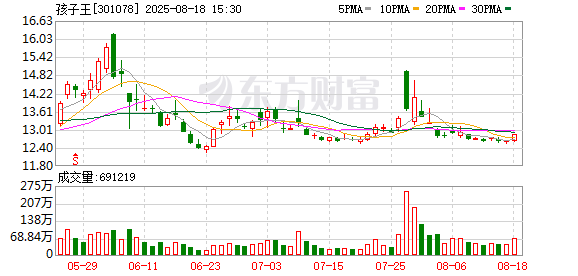
孩子王:关于增加使用闲置自有资金购买理财产品额度的公告
Zheng Quan Ri Bao· 2025-08-18 14:12
Group 1 - The company announced an increase in the limit for using idle self-owned funds to purchase financial products by 700 million RMB, bringing the total to 4.9 billion RMB [2] - This decision follows the completion of the acquisition of Zhuhai Siyi Industrial Development Co., Ltd., aimed at improving the efficiency of fund utilization and enhancing asset returns [2] - The financial products to be purchased will be low-risk and have good liquidity, ensuring that normal operations and fund safety are not affected [2]
峰岹科技: 2025年第二次临时股东大会会议资料
Zheng Quan Zhi Xing· 2025-08-06 16:21
Core Points - The company is holding a shareholders' meeting to ensure the rights of shareholders are protected and to facilitate their participation in decision-making [1][2] - The meeting will include voting on several key proposals, including the appointment of auditing firms for both A-shares and H-shares [5][6][7] - The company emphasizes the importance of maintaining order during the meeting and outlines the procedures for participation and voting [2][3][4] Meeting Procedures - Shareholders and their representatives must register at least 30 minutes before the meeting and present necessary identification documents [1][2] - The meeting will follow a specific agenda, allowing shareholders to express their opinions and vote on proposals [2][3] - Voting will be conducted both on-site and online, with results announced by the meeting host [3][4] Proposals - Proposal 1: Appointment of Zhongxinghua Accounting Firm as the A-share auditing institution for the year 2025, which has been approved by the board and supervisory committee [5][7] - Proposal 2: Appointment of Ernst & Young Hong Kong as the H-share auditing institution for 2025, highlighting its qualifications and experience [6][7] - Proposal 3: Authorization for the management to use idle funds for cash management, aiming to maximize shareholder value while ensuring operational safety [8]

做期货,他从20万到8000万!转战A股,一只票浮盈超4亿!
Sou Hu Cai Jing· 2025-08-04 13:36
Core Insights - Zhang Yaokun, known as "Tank," is a prominent futures investor who achieved remarkable investment performance, growing his capital from 200,000 to 80 million in just three years using his self-created trading system [1][3] Group 1: Trading Journey - Zhang began his trading career in 2006, facing significant losses until a turning point in 2012 when he capitalized on a soybean meal market surge, achieving a 30-fold return [3] - His trading strategy involved heavy leverage and concentrated positions, allowing him to maximize returns during market cycles [3][5] - By 2015, he had successfully grown his capital to 80 million through strategic trading in futures and stock index futures [3] Group 2: Tank Trend Trading System - The "Tank Trend Trading System" focuses on identifying opportunities during market consolidation phases after significant price movements, emphasizing bottom-fishing and top-picking rather than chasing trends [4][5] - Zhang's analysis relies solely on naked candlestick patterns, believing that most technical indicators are speculative and that understanding market fundamentals is crucial for success [5] Group 3: Investment in A-shares - Transitioning to the A-share market, Zhang's portfolio reached a market value of 1.617 billion by March 31, 2025, showcasing his prowess as a retail investor [7][8] - His investments include significant stakes in companies like Feilong Co. and Hongchuang Holdings, with notable profits from strategic buying and holding [8]


大行评级|花旗:维持恒隆地产“买入”评级 中期基本盈利符合预期
Ge Long Hui· 2025-07-30 07:55
Core Viewpoint - Citigroup's report indicates that Hang Lung Properties' basic profit for the first half of the year decreased by 8.5% year-on-year to HKD 1.587 billion, aligning with expectations and accounting for 53% of the bank's estimate for the current fiscal year [1] Financial Performance - Basic profit decreased by 8.5% to HKD 1.587 billion [1] - Rental income declined by 3% year-on-year [1] - Losses from property development and hotel operations widened [1] - Net financing costs increased by 11% year-on-year due to an expanded debt scale, despite a reduction in average financing costs [1] Dividend Information - Interim dividend per share is HKD 0.12 [1] - The implied interim dividend payout ratio is 36%, compared to 32% for the first half of 2024 [1] - The company continues to offer a scrip dividend option [1] Market Focus - The market is expected to focus on Hang Lung Properties' future dividend outlook, mainland retail sales/rental expectations, pre-leasing progress of the West Lake 66 project in Hangzhou, capital expenditure plans, and fund management [1] Investment Rating - Citigroup maintains a "Buy" rating for Hang Lung Properties with a target price of HKD 7.05 [1]

每周(7.21-7.25)大白外汇英语交易术语学习汇总we
Sou Hu Cai Jing· 2025-07-29 06:40
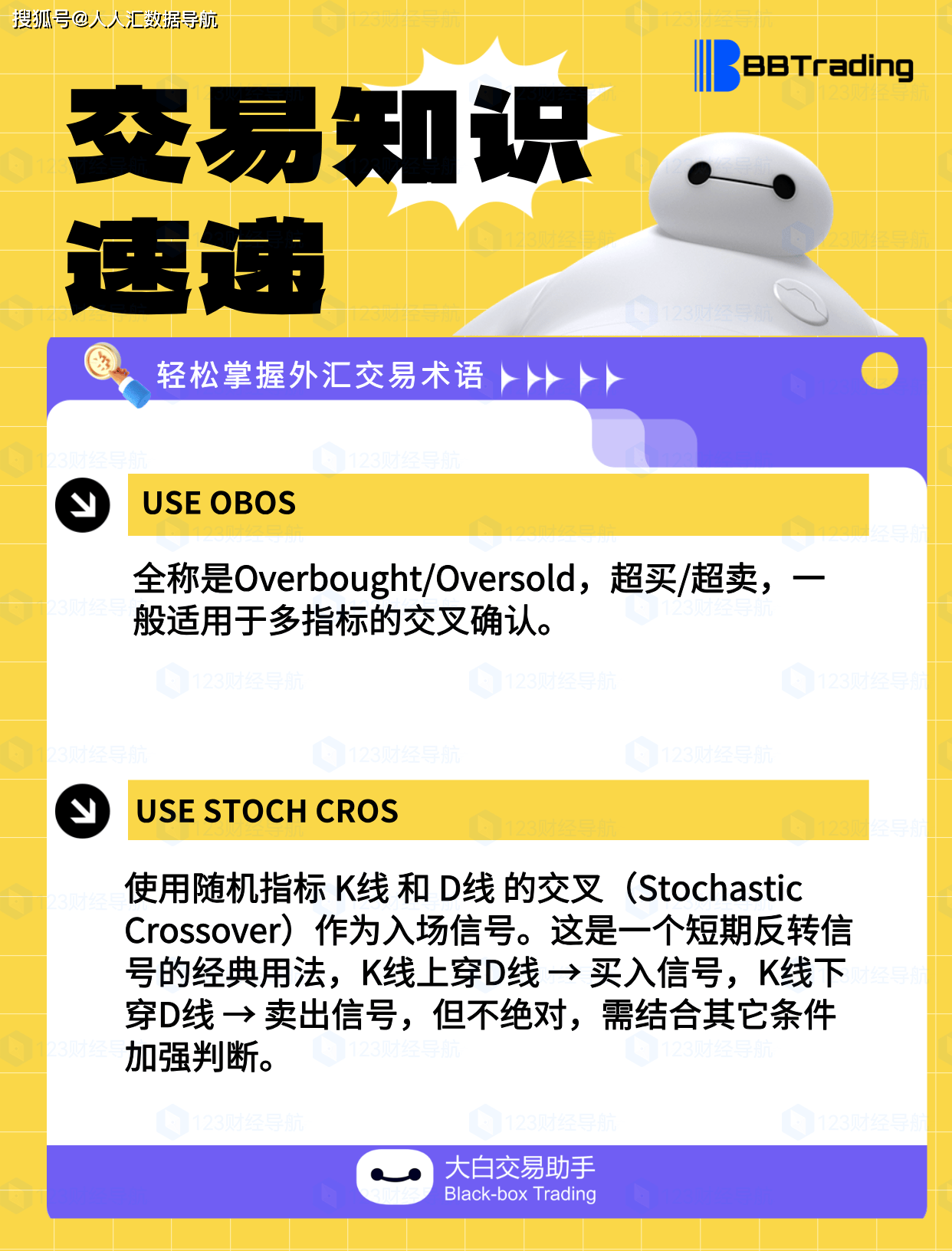
Core Insights - The articles provide a summary of various forex trading terms and concepts, focusing on technical indicators and risk management strategies. Group 1: Trading Terms - "Use obos" refers to Overbought/Oversold, applicable for multi-indicator cross-confirmation [1] - "Use stoch cros" involves Stochastic Crossover as an entry signal, indicating buy when K line crosses above D line and sell when K line crosses below D line [2] - "Optimal" denotes the ideal lot size for current account funds and risk, often calculated automatically by EA based on account balance [7] Group 2: Risk and Management - "Moderate" describes risk or trend intensity, used in settings like "moderate risk" or "moderate mode" [7] - "Opacity" refers to the degree of visual clarity in EA trading panels, allowing user customization [8] - "Capital management" involves built-in strategies in mature EAs for users to switch between different modes like Martingale, grid, or hedging [8] Group 3: Notifications and Formatting - "MQID© Push Notif" is a service in the MQL5 ecosystem for receiving alerts and notifications from EAs, useful for remote monitoring and mobile trading [9] - "Vertical spacing between lines" pertains to the line spacing in EA strategy displays, enhancing readability and user experience [9] Group 4: Economic Indicators - "FOMC" stands for Federal Open Market Committee, responsible for setting interest rates and monetary policy, significantly impacting markets [12] - "Federal Funds Rate" is the short-term borrowing rate between banks set by the Federal Reserve, crucial for influencing the dollar's movement and related assets [13]
股指期货怎么操作和交易:进阶实操指南
Sou Hu Cai Jing· 2025-07-23 14:05
Core Insights - The article emphasizes the importance of timing and price in stock index futures trading, comparing it to playing a musical instrument where both basic and advanced skills are necessary for success Group 1: Trading Techniques - Timing is crucial for stock index futures trading, with recommendations to avoid high volatility periods such as the market opening and to prepare for potential movements during the closing period [1] - Market orders are suitable for quick transactions during sudden market changes, while limit orders are recommended for specific target prices to avoid impulsive decisions [1] - The distinction between main and secondary contracts is highlighted, with a preference for main contracts due to their higher liquidity and lower transaction costs [1][2] Group 2: Day Trading Strategies - Day trading is suitable for investors sensitive to short-term fluctuations, with strategies to capitalize on small price movements [4] - Strict stop-loss measures are advised, limiting losses to no more than 3% of the margin and restricting daily trades to 3-5 to prevent overtrading [5] Group 3: Overnight Holding Strategies - Overnight positions carry risks from external news, suitable for clear trends or hedging against overnight risks [6] - A recommendation to reserve at least 50% of total funds as margin for overnight positions to manage unexpected volatility [6] Group 4: Simulation Trading - Simulation trading serves as a practice ground for beginners, allowing them to familiarize themselves with the trading process and test strategies [7] - A duration of 1-2 months of simulation trading is suggested before transitioning to real trading, ensuring consistent profitability [7] Group 5: Common Mistakes to Avoid - New traders often make three common mistakes: not setting stop-losses, over-leveraging, and trading against market trends [8] - A structured trading plan is recommended to mitigate these errors, akin to a student reviewing notes before an exam [8] Group 6: Capital Management Principles - The core principle of capital management is the "three-thirds rule," dividing total capital into three parts for trading, reserves, and emergencies [9] - Adjustments to positions should be made based on performance, with a cap on increasing positions after profits and a strategy to pause trading after consecutive losses [9]

把钱从银行取出来放在家里,究竟是好事还是坏事?答案来了
Sou Hu Cai Jing· 2025-07-17 05:51
Core Viewpoint - The article discusses the pros and cons of keeping cash at home versus depositing it in a bank, highlighting that both methods have their own advantages and can complement each other in personal finance management [1][7]. Group 1: Advantages of Keeping Cash - Cash provides a tangible sense of control over spending, helping individuals manage their finances better and avoid overspending, especially among younger generations who may lack discipline with digital payments [3]. - Cash is not dependent on external factors such as internet connectivity or electronic devices, making it a reliable payment method in remote areas or during emergencies when digital payment systems may fail [3][5]. - Having cash on hand serves as an emergency fund for unexpected situations, allowing individuals to respond quickly to urgent needs without the delays associated with bank transactions [5]. Group 2: Security and Cultural Aspects - In an unstable economic environment, cash is perceived as a stable asset that provides a sense of security compared to bank deposits, which may be subject to market fluctuations [5]. - Cash is culturally significant in certain traditions, such as giving red envelopes during celebrations, where physical cash is seen as more sincere than digital transfers [5]. Group 3: Risks and Recommendations - Keeping cash at home poses risks such as theft or damage, and it does not earn interest like bank deposits, which can provide a small return on savings [7]. - The article suggests a balanced approach to personal finance, recommending that individuals maintain a portion of their funds in a bank for interest and convenience while also keeping some cash at home for emergencies and specific needs [7].