
载人航天

Search documents
神舟二十一号载人飞船返回舱成功着陆 神舟二十号航天员乘组状态良好
Xin Lang Cai Jing· 2025-11-14 08:55
Core Viewpoint - The successful landing of the Shenzhou 21 manned spacecraft marks a significant achievement in China's space exploration efforts, highlighting advancements in human spaceflight capabilities and scientific research in microgravity environments [1] Group 1: Mission Details - The Shenzhou 21 spacecraft's return capsule successfully landed at the Dongfeng landing site on November 14, 2025, at 16:40 Beijing time [1] - The spacecraft's orbital module and return capsule successfully separated after the ground control issued the return command at 14:49 [1] - The return capsule was confirmed to have landed safely, with rescue teams promptly reaching the site [1] Group 2: Astronauts and Duration - The Shenzhou 20 crew, consisting of astronauts Chen Dong, Chen Zhongrui, and Wang Jie, spent a total of 204 days in orbit, setting a new record for the longest single crew duration in space for China [1] - During their mission, the crew conducted four extravehicular activities and multiple cargo transfer tasks [1] Group 3: Scientific Contributions - The mission involved extensive scientific experiments across various fields, including microgravity fundamental physics, space materials science, space life science, aerospace medicine, and aerospace technology [1]
神舟二十一号载人飞船顺利撤离空间站组合体 神舟二十号航天员乘组将踏上回家之路
Xin Hua She· 2025-11-14 04:33
Core Points - The Shenzhou-21 manned spacecraft successfully separated from the space station complex on November 14 at 11:14 AM [1] - The Shenzhou-20 astronauts, Chen Dong, Chen Zhongrui, and Wang Jie, are set to return home after the spacecraft's re-entry [1] - The China Manned Space Engineering Office reported that the Shenzhou-20 return capsule's window glass showed minor cracks, likely caused by external impacts from space debris, which do not meet the safety conditions for manned return [1] - The Shenzhou-20 spacecraft will continue to remain in orbit for related experiments [1]
定了!神二十航天员,今天返回
券商中国· 2025-11-14 01:04
Core Points - The Shenzhou 20 astronaut crew is scheduled to return on November 14, 2023, aboard the Shenzhou 21 spacecraft, with all crew members in good condition [1] - Preparations for the landing at the Dongfeng landing site are underway [1] - The launch of the Shenzhou 22 spacecraft is planned for a later date [1] Summary by Sections - **Return Mission Update** - The Shenzhou 20 mission was initially set to return on November 5, 2023, but was delayed due to a suspected impact from space debris, prompting a risk assessment [2] - The decision to postpone the return was made to ensure the safety and health of the astronauts [2]


X @外汇交易员
外汇交易员· 2025-11-05 01:59
Mission Update - Shenzhou-20 manned spacecraft return mission is postponed due to suspected impact from space debris [1] - The China Manned Space Engineering Office is conducting impact analysis and risk assessment [1] Safety Concerns - The decision to postpone is to ensure the health and safety of astronauts and the success of the mission [1]
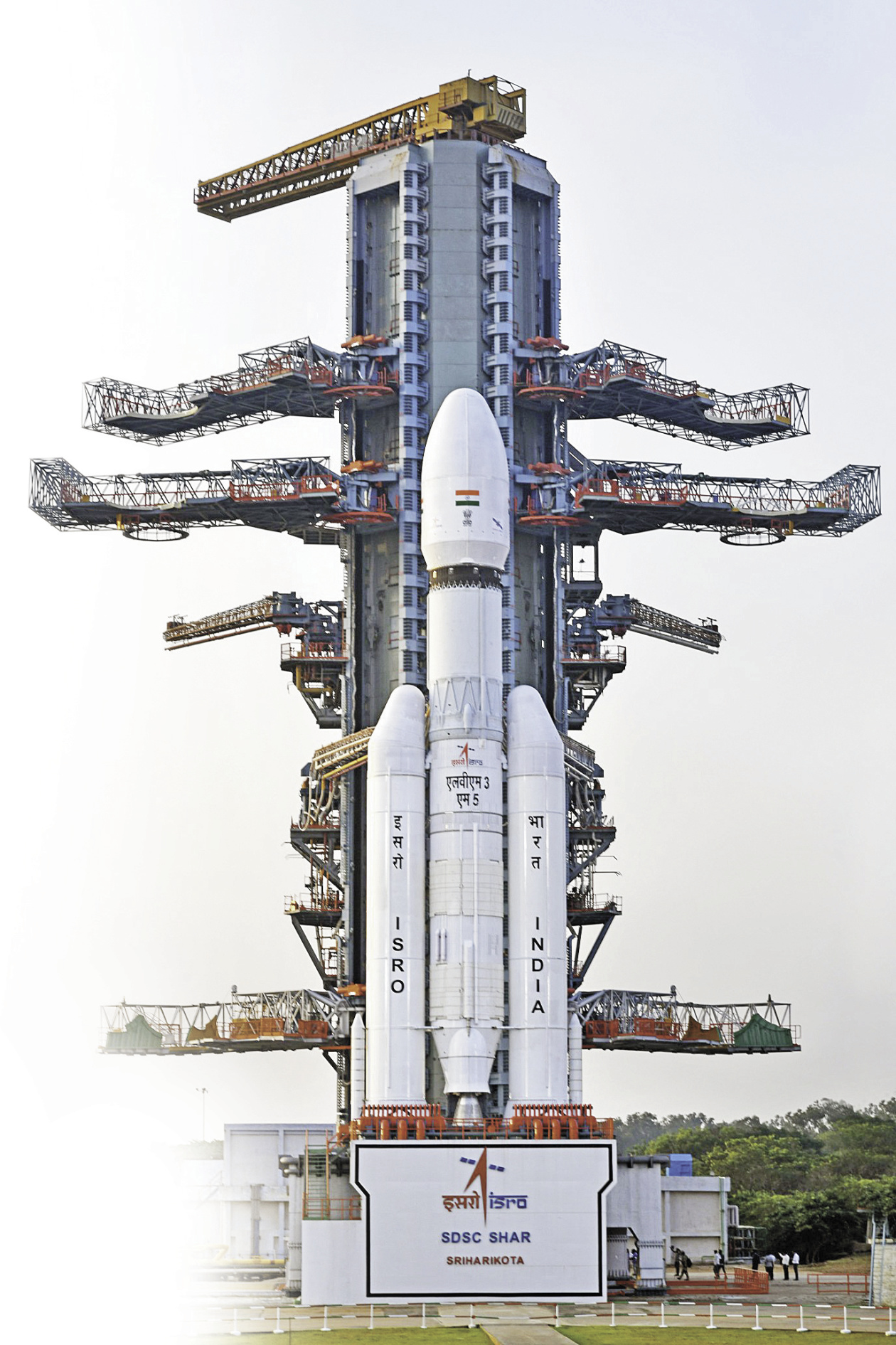
改进多个方面性能,印度试射最强火箭,备战载人计划
Huan Qiu Shi Bao· 2025-11-03 22:55
Core Insights - The Indian Space Research Organisation (ISRO) successfully launched a 4410 kg military communication satellite, CMS-03, into geosynchronous transfer orbit, marking the heaviest satellite launched by India using a domestic rocket [1][4] - The launch demonstrated the capabilities of the indigenous LVM3 rocket, which is expected to play a crucial role in India's manned space program [1][4] Launch Details - The CMS-03 satellite is an advanced multi-band communication satellite for the Indian Navy, designed to replace the GSAT-7 satellite launched in 2013 [5] - The satellite will enhance communication capabilities in the Indian Ocean region, supporting voice, data, and video links for naval operations [5] - The LVM3 rocket has improved its payload capacity by 10% for this mission, showcasing advancements in its performance [5][6] Technical Specifications - LVM3 is India's most powerful rocket, capable of carrying payloads over 4000 kg to geosynchronous transfer orbit and 8000 kg to low Earth orbit [6] - Since its first launch in 2014, LVM3 has successfully completed all eight missions, establishing itself as the preferred rocket for heavy payloads [6][8] Future Plans - The launch is a significant step towards reducing India's reliance on foreign technology for heavy satellite launches [6][8] - ISRO plans to conduct the first unmanned flight test of the Gaganyaan manned space program by March 2026, using the LVM3 rocket [8] - The organization aims to complete seven launches by March 2026, as part of a broader vision to conduct 50 launches in the next five years [8][9] Market Position - LVM3 and PSLV are the mainstay rockets for ISRO, handling multiple commercial launch tasks for international clients [9] - Despite its capabilities, India's rocket technology still lags behind leading space nations, particularly in comparison to reusable rockets like SpaceX's Falcon 9 [9]
深度关注丨让五星红旗在浩瀚太空绽放光彩
Zhong Yang Ji Wei Guo Jia Jian Wei Wang Zhan· 2025-11-02 00:49
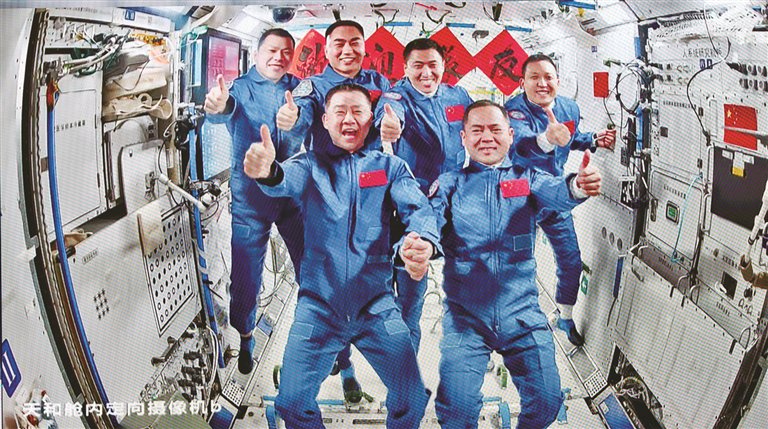
Core Points - The successful launch of the Shenzhou 21 manned spacecraft marks a significant milestone in China's space exploration, being the 37th flight mission since the initiation of the manned space program [3][4] - The Shenzhou 21 crew will stay in the Chinese space station for approximately six months, conducting various scientific and application tasks, including space experiments and public outreach activities [3][12] - The mission features a new crew composition strategy of "new and old pairing," enhancing the experience and expertise of the astronauts involved [4][11] Launch and Mission Details - The Long March 2F rocket successfully launched the Shenzhou 21 spacecraft from the Jiuquan Satellite Launch Center on October 31, 2023, with the spacecraft entering its designated orbit approximately 10 minutes post-launch [3][7] - The Shenzhou 21 mission is part of the application and development phase of the Chinese space station, representing the sixth manned flight in this phase [3][12] - The mission achieved a record 3.5-hour autonomous rapid rendezvous and docking with the space station, significantly reducing the waiting time for astronauts and energy consumption [7][8] Astronaut Crew Composition - The Shenzhou 21 crew consists of three astronauts: Zhang Lu (Commander), Wu Fei, and Zhang Hongzhang, representing the three types of active astronauts in China [4][11] - Wu Fei, the youngest astronaut at 30 years old, expressed gratitude for the opportunity to participate in this mission, highlighting the rapid development of China's space program [4][5] - Zhang Hongzhang, a researcher from the Dalian Institute of Chemical Physics, emphasized the significance of conducting innovative research in the space station environment [5][11] International Cooperation - Following a cooperation agreement signed in February, Pakistan has initiated the selection process for its astronauts, with plans for two Pakistani astronauts to train alongside Chinese astronauts [6][12] - The collaboration aims to enhance international cooperation in space exploration and share scientific advancements for mutual benefit [5][6] Scientific Research and Experiments - The Shenzhou 21 mission will conduct 27 new scientific and application projects, focusing on key scientific issues in fields such as space life sciences, aerospace medicine, and microgravity fluid physics [12][15] - The mission will also involve the first in-orbit experiment with domestic rodents, studying the effects of microgravity on behavior and physiology [11][12] Future Goals - The Chinese space program is targeting a manned lunar landing by 2030, with ongoing development of key technologies and systems necessary for this ambitious goal [10][14] - The program continues to emphasize the importance of collaboration and innovation to achieve significant milestones in space exploration [14][15]
2026年我们将迎来哪些航天“大事件”?120秒带你快速了解!
Yang Shi Wang· 2025-11-01 12:38
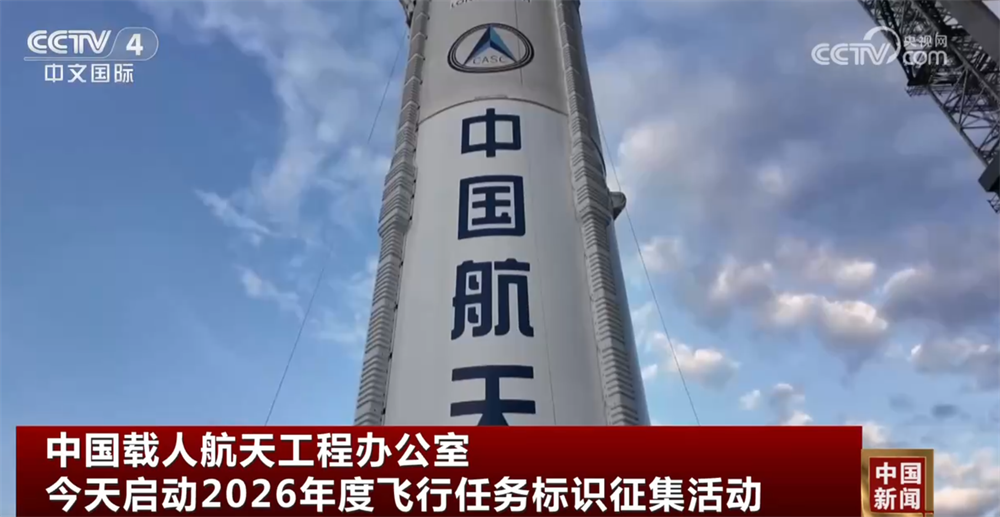
Core Points - The China Manned Space Engineering Office has launched a public call for design proposals for mission insignia for the 2026 flight missions [1][8] - Four flight missions are planned for 2026, including Tianzhou-10, Shenzhou-22, Shenzhou-23, and the first flight of the new generation crewed spacecraft, Mengzhou-1 [1][4] - Shenzhou-22 and Shenzhou-23 will continue to use a three-member crew model, with one astronaut from Shenzhou-22 conducting a long-term stay experiment of over one year [2] Group 1 - The Mengzhou-1 spacecraft will achieve its maiden flight in 2026, representing a comprehensive upgrade from the Shenzhou spacecraft, featuring a modular design [4][6] - The first flight of Mengzhou-1 will be an unmanned test to validate the spacecraft's full system operational status and various technical aspects [6] - The design of the mission insignia should reflect Chinese elements, manned spaceflight characteristics, and the specific features of the missions, while considering continuity with previous insignia [8]
总指挥为你讲述神舟飞天20年的技术跃迁
Yang Shi Wang· 2025-11-01 10:48
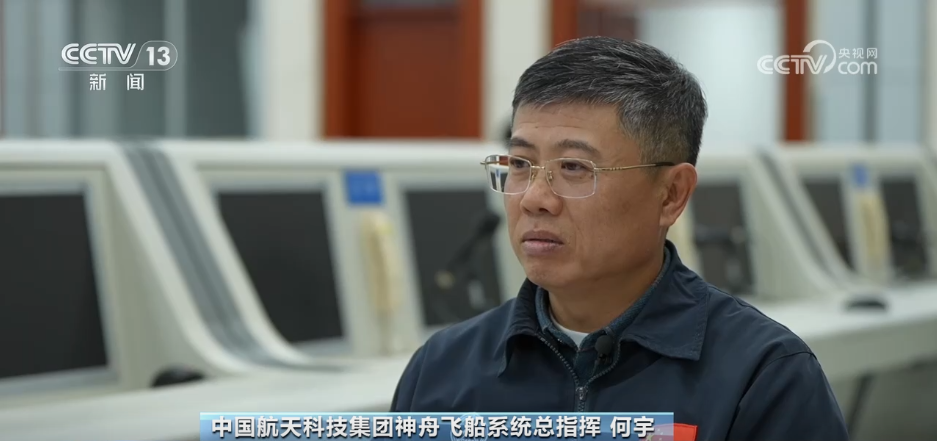
Core Viewpoint - The Shenzhou-21 manned spacecraft represents a significant technological advancement in China's space program, showcasing improvements in speed, capacity, and efficiency over the past two decades [10][12][14]. Group 1: Technological Advancements - The Shenzhou-21 is the first manned spacecraft to utilize a rapid rendezvous and docking scheme, reducing the docking time from two days to 3.5 hours [9][12]. - The spacecraft's return capability has also improved, allowing for a return time of approximately 5 hours after completing three orbits, compared to the previous one-day return time [12]. - Automation and remote testing have enhanced operational efficiency, reducing the preparation cycle for two spacecraft from 56 days to 45 days [7][5]. Group 2: Capacity Enhancements - The cargo capacity for upward transport has increased by 20%, while the downward transport capacity has doubled, with the cargo space tripling compared to earlier models [14]. - The Shenzhou spacecraft is now the only spacecraft in China capable of returning to Earth, supporting a wide range of scientific experiments [14]. Group 3: Leadership and Responsibility - The role of the chief commander has evolved from focusing solely on design to encompassing comprehensive management responsibilities, including technical oversight and logistical coordination [18][20]. - The commitment to excellence and innovation remains a core principle in the development and operation of the Shenzhou spacecraft [16][20].

我国明年将发射梦舟一号等4艘飞船 航天员开展1年以上长期驻留试验
Xin Hua She· 2025-11-01 07:45
Core Points - China plans to conduct four space missions in 2024, including the first flights of the Mengtian-1 crewed spacecraft and the Long March 10A rocket [1][2] - The Shenzhou-22 and Shenzhou-23 crewed spacecraft will be launched from the Jiuquan Satellite Launch Center, each carrying a crew of three astronauts [1] - The main objectives of the Shenzhou-22 mission include a long-term stay experiment, extravehicular activities, and various scientific experiments [1] - The Tianzhou-10 cargo spacecraft will be launched from the Wenchang Space Launch Site, aimed at delivering supplies and equipment to the space station [1][2] - The Mengtian-1 spacecraft is a new generation of crewed spacecraft designed for transportation to and from the space station, featuring a modular design [2] Mission Details - The Shenzhou-22 spacecraft will dock at the radial port of the space station's core module, while the Shenzhou-23 will dock at the forward port [1] - The Tianzhou-10 cargo spacecraft will deliver supplies, maintenance parts, and various payloads to ensure the safe operation of the space station [1] - The Mengtian-1 spacecraft will validate the full system operational status and deliver environmental evaluation equipment and research modules [2] Public Engagement - The Chinese Manned Space Engineering Office has initiated a public call for mission insignia for the upcoming crewed spaceflight missions [1][2] - Since the Shenzhou-5 mission in 2003, each crewed flight has featured a designated mission insignia, with public participation encouraged annually [2]
神舟二十一号航天员乘组顺利进驻“天宫”空间站
Yang Guang Wang· 2025-11-01 04:48
Core Points - China successfully launched the Shenzhou-21 manned spacecraft on October 31, achieving a record-fast docking with the Tianhe core module of the space station in approximately 3.5 hours [1] - The Shenzhou-21 mission marks the seventh "space rendezvous" in China's space history, with astronauts from both Shenzhou-20 and Shenzhou-21 successfully meeting in space [1] - The launch was conducted using the Long March 2F rocket from the Jiuquan Satellite Launch Center, with the spacecraft entering its designated orbit about 10 minutes post-launch [1] Group 1 - The rapid docking capability of 3.5 hours allows for year-round launch opportunities, reducing the need for mid-course orbital corrections and enhancing the ability to respond to major in-orbit failures [2] - During their stay at the space station, the Shenzhou-21 crew will conduct various experiments in fields such as space life and human research, microgravity physics, and new space technologies, along with multiple extravehicular activities [2] - Preparations for the Shenzhou-22 mission and its Long March 2F rocket have been completed, with the spacecraft in a state of readiness for emergency standby tasks [2] Group 2 - The successful completion of the Shenzhou-21 mission signifies the conclusion of China's manned space launch tasks for 2025 [3]