
梦舟一号载人飞船

Search documents
2026年,中国航天将带来惊喜连连
Xin Lang Cai Jing· 2026-01-02 17:26
Group 1: Achievements in China's Space Industry - The Long March series rockets have successfully surpassed 600 launches, marking a significant milestone for China's space endeavors [1] - The Shenzhou missions have completed emergency tasks, and the lunar exploration is progressing steadily, with the Tianwen-2 mission set to explore asteroid 2016HO3 [2] - The first crewed lunar landing mission is being prepared, with the Long March 10 rocket and the new crewed spacecraft, Dream Boat, set to conduct its maiden flight [1][2] Group 2: Future Plans and Developments - In 2023, the Shenzhou-23 mission will include a crew member conducting a long-term stay in space for over a year, a first in China's space history [1] - The Tianzhou-10 cargo spacecraft will continue to supply astronauts with necessary resources for various scientific experiments in the space laboratory [1] - The Chang'e-7 mission will aim to land on the Moon's south pole to explore environmental conditions and resources, particularly the presence of water [2] Group 3: Commercial Space Initiatives - The commercial space sector is expected to enhance its capabilities with the launch of new rockets like the Lijian-2 and Zhuque-3, focusing on reusable rocket technology [3] - Increased frequency and scale of commercial launches will support the rapid deployment of satellite constellations, contributing to the development of a sustainable space economy [3] - The industry aims to align with global space development trends and national strategic needs, viewing each completed mission as a stepping stone for future endeavors [3]
前瞻2026:“十五五”开局 主场外交受瞩目
Zhong Guo Xin Wen Wang· 2026-01-01 01:24
Group 1 - 2026 marks the beginning of the "15th Five-Year Plan," which is crucial for achieving socialist modernization and economic development in China [3][5] - The "15th Five-Year Plan" aims to lay a solid foundation for comprehensive development over the next five years, as outlined in the recommendations approved by the 20th Central Committee [3][5] Group 2 - China will host the second China-Arab States Summit and serve as the host for the APEC Leaders' Meeting in 2026, showcasing China's modernization achievements and promoting global cooperation [5][6] - The APEC meeting will take place in Shenzhen, marking China's third time hosting the event since 2001 and 2014 [5] Group 3 - The fourth national agricultural census will be conducted in 2026, providing a comprehensive overview of the agricultural sector and rural development in China [6] - This census is significant for formulating policies aimed at rural revitalization and agricultural modernization [6] Group 4 - A series of major national projects are anticipated in 2026, including the first launch of the new generation crewed spacecraft, "Dream Chaser," from the Wenchang Space Launch Site [9] - The Xinjiang Dashi Gorge Water Conservancy Project is expected to be completed and operational in 2026, setting a world record for concrete-faced rock-fill dams [9] Group 5 - The new Value-Added Tax Law will take effect on January 1, 2026, marking a significant step in tax law development in China [12] - The law aims to ensure fair competition and protect taxpayer rights [12] Group 6 - The revised Public Security Administration Punishment Law will also come into effect on January 1, 2026, addressing new social security issues and enhancing legal frameworks [15] - This includes penalties for activities such as leading pyramid schemes and harming public interests [15] Group 7 - The updated Cybersecurity Law will be implemented on January 1, 2026, focusing on enhancing cybersecurity responsibilities and promoting the development of artificial intelligence [17] - The law aims to support research and development in AI while ensuring ethical standards and risk management [17] Group 8 - 2026 marks the 90th anniversary of the victory of the Long March, a significant historical event in China [18] - The Long March is celebrated for its profound impact on Chinese history and the spirit it embodies [18] Group 9 - The 160th anniversary of Sun Yat-sen's birth will be commemorated on November 12, 2026, highlighting his contributions to Chinese democracy and nationalism [20] Group 10 - 2026 will also mark the 10th anniversary of the Yangtze River Protection initiative, which has led to significant environmental improvements along the river [22] - The initiative has resulted in enhanced ecological conditions and a shift towards sustainable development in the region [22]


2026载人航天任务标识征集中,梦舟载人飞船长这样
Huan Qiu Wang Zi Xun· 2025-12-16 06:44
Core Points - The article discusses the ongoing collection of design submissions for the 2026 manned spaceflight mission logo, emphasizing the importance of specific design elements [1][3]. Group 1: Design Elements - The logo must include the Chinese manned space program emblem, which symbolizes the "Zhong" character and the shape of the Chinese space station, incorporating a gradient of blue, gray, and white colors [1][3]. - The design should be simple and easy to format for production, typically using the English version of the logo [3]. - Specific color usage guidelines are provided, indicating which colors are standard and which are prohibited for the logo [4]. Group 2: Space Station Configuration - The Chinese space station, named "Tianhe," consists of the Tianhe core module, the Wentian experimental module, and the Mengtian experimental module, forming a "T" shape since its completion at the end of 2022 [5]. - The Tianhe core module features multiple docking ports, including forward, backward, and radial ports, as well as two side docking ports [5]. Group 3: Spacecraft Configurations - The Shenzhou spacecraft, used for transporting personnel and supplies, consists of an orbital module, a reentry module, and a propulsion module [7]. - The Tianzhou cargo spacecraft is designed with a cargo module and a propulsion module, responsible for resupplying the space station [10]. - The new generation of reusable crewed spacecraft, named "Mengzhou," is set to conduct its first flight test in 2026, featuring a modular design [13]. Group 4: Launch Vehicle Configurations - The current crewed launch vehicle, "CZ-2F," has successfully launched 22 Shenzhou missions and includes four boosters and a distinctive escape tower [16]. - The new medium-lift launch vehicle "CZ-7" is designed for cargo missions during the space station's construction phase [19]. - The "CZ-10" and "CZ-10A" launch vehicles are set to play significant roles in future lunar missions, with the CZ-10A being a reusable variant [22].

2026年我们将迎来哪些航天“大事件”?120秒带你快速了解!
Yang Shi Wang· 2025-11-01 12:38
Core Points - The China Manned Space Engineering Office has launched a public call for design proposals for mission insignia for the 2026 flight missions [1][8] - Four flight missions are planned for 2026, including Tianzhou-10, Shenzhou-22, Shenzhou-23, and the first flight of the new generation crewed spacecraft, Mengzhou-1 [1][4] - Shenzhou-22 and Shenzhou-23 will continue to use a three-member crew model, with one astronaut from Shenzhou-22 conducting a long-term stay experiment of over one year [2] Group 1 - The Mengzhou-1 spacecraft will achieve its maiden flight in 2026, representing a comprehensive upgrade from the Shenzhou spacecraft, featuring a modular design [4][6] - The first flight of Mengzhou-1 will be an unmanned test to validate the spacecraft's full system operational status and various technical aspects [6] - The design of the mission insignia should reflect Chinese elements, manned spaceflight characteristics, and the specific features of the missions, while considering continuity with previous insignia [8]
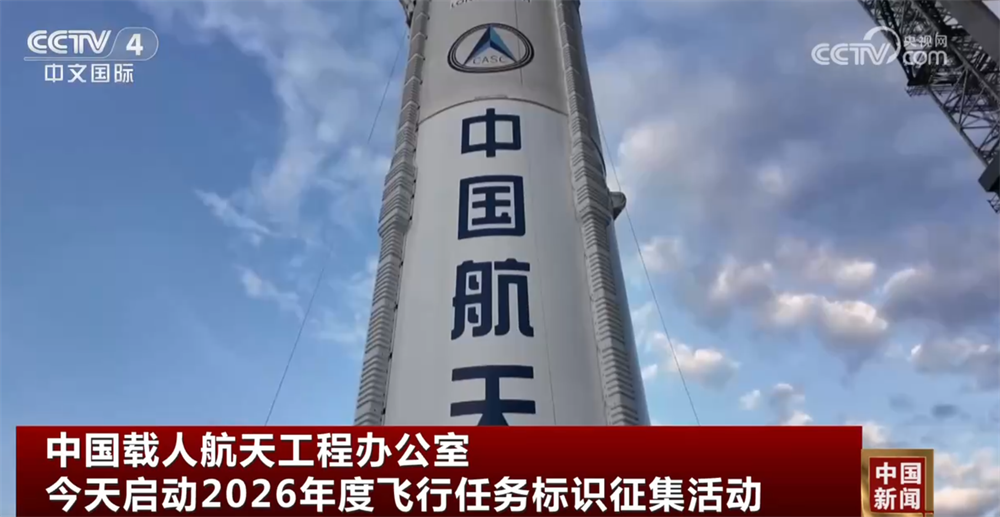
最新任务公布!代号MZ-1
Ren Min Ri Bao· 2025-11-01 11:14
Core Viewpoint - The China Manned Space Engineering Office has announced the basic situation of manned spaceflight missions for the year 2026, detailing various upcoming missions and their objectives [1]. Group 1: Tianzhou-10 Mission - Launch Location: Wenchang Space Launch Site [2] - Docking Method: Tianzhou-10 cargo spacecraft (code TZ-10) will dock at the rear port of the core module after launch [2]. - Main Tasks: The mission aims to transport supplies for astronauts, maintenance parts, propellants, various payloads, and samples for application tasks, as well as to dispose of space debris [2]. Group 2: Shenzhou-22 and Shenzhou-23 Manned Missions - Launch Location: Jiuquan Space Launch Site [3]. - Crew Composition: Each mission will consist of a crew of three astronauts [3]. - Docking Method: Shenzhou-22 (code SZ-22) will dock at the radial port of the core module, while Shenzhou-23 (code SZ-23) will dock at the forward port [3]. - Main Tasks: Shenzhou-22 will conduct a long-term stay experiment for over one year, perform extravehicular activities, continue space science experiments, and manage space station operations and astronaut support [3]. Group 3: Mengzhou-1 Mission - Launch Location: Wenchang Space Launch Site [4]. - Docking Method: Mengzhou-1 (code MZ-1, unmanned) will dock at the radial port of the core module after launch [4]. - Main Tasks: This mission will utilize the Long March 10A rocket (code CZ-10A) for the first flight of the Mengzhou manned spacecraft, which is a next-generation spacecraft based on the Shenzhou design. The mission will validate the overall system status and test various equipment and modules [4].

我国明年将发射梦舟一号等4艘飞船
Xin Hua She· 2025-11-01 09:45
Core Points - China will implement four spaceflight missions in 2024, including Tianzhou-10, Shenzhou-22, Shenzhou-23, and Mengzhou-1, with Mengzhou-1 being the first crewed spacecraft and the Long March 10A rocket also making its inaugural flight [1] Group 1 - The missions will be launched from the Jiuquan Satellite Launch Center, with Shenzhou-22 and Shenzhou-23 carrying crews of three astronauts each [1] - Shenzhou-22 will dock with the radial port of the space station core module, while Shenzhou-23 will dock with the forward port [1]
我国明年将发射梦舟一号等4艘飞船 航天员开展1年以上长期驻留试验
Xin Hua She· 2025-11-01 07:45
Core Points - China plans to conduct four space missions in 2024, including the first flights of the Mengtian-1 crewed spacecraft and the Long March 10A rocket [1][2] - The Shenzhou-22 and Shenzhou-23 crewed spacecraft will be launched from the Jiuquan Satellite Launch Center, each carrying a crew of three astronauts [1] - The main objectives of the Shenzhou-22 mission include a long-term stay experiment, extravehicular activities, and various scientific experiments [1] - The Tianzhou-10 cargo spacecraft will be launched from the Wenchang Space Launch Site, aimed at delivering supplies and equipment to the space station [1][2] - The Mengtian-1 spacecraft is a new generation of crewed spacecraft designed for transportation to and from the space station, featuring a modular design [2] Mission Details - The Shenzhou-22 spacecraft will dock at the radial port of the space station's core module, while the Shenzhou-23 will dock at the forward port [1] - The Tianzhou-10 cargo spacecraft will deliver supplies, maintenance parts, and various payloads to ensure the safe operation of the space station [1] - The Mengtian-1 spacecraft will validate the full system operational status and deliver environmental evaluation equipment and research modules [2] Public Engagement - The Chinese Manned Space Engineering Office has initiated a public call for mission insignia for the upcoming crewed spaceflight missions [1][2] - Since the Shenzhou-5 mission in 2003, each crewed flight has featured a designated mission insignia, with public participation encouraged annually [2]
6名航天员太空会师拍下全家福
Bei Jing Wan Bao· 2025-11-01 07:06
Core Points - The Shenzhou 21 manned spacecraft successfully docked with the space station in a record time of 3.5 hours, marking a significant improvement in China's autonomous docking capabilities [1][2] - This mission included the first in-orbit breeding and experimental research of mice, which will help fill gaps in China's research on small mammals in space [4] - The upcoming 2026 manned spaceflight missions will include four significant tasks, showcasing China's continued commitment to advancing its space exploration efforts [6][7] Group 1 - The Shenzhou 21 spacecraft launched from the Jiuquan Satellite Launch Center and achieved docking with the space station, creating a new record for the fastest docking time [1][2] - The autonomous docking capability has been enhanced through more precise launch and orbit control, allowing for fewer orbital adjustments [2] - The mission involved a reunion of two crew commanders, Chen Dong and Zhang Lu, who previously participated in China's first "space meeting" nearly three years ago [2][3] Group 2 - The mission also included the introduction of four experimental mice, which will be monitored for their behavior and physiological changes in space [4] - The mice were selected through rigorous testing to ensure their adaptability to the space environment, and their experiments will contribute to understanding biological processes in microgravity [4] - The research on amino acids using microfluidic chips will explore the chiral characteristics of amino acids, marking a world-first study in this area [5][6] Group 3 - The 2026 manned spaceflight plan includes the Tianzhou 10 cargo spacecraft, Shenzhou 22 and 23 missions, and the first flight of the Mengzhou 1 crewed spacecraft [6][7] - The Shenzhou 22 mission will feature a crew member conducting a long-term stay experiment of over one year, emphasizing the focus on extended human presence in space [7] - The design of mission insignias for these upcoming flights is open for public submission, reflecting a community engagement approach in China's space endeavors [8]

1名航天员驻留1年以上 梦舟一号首飞……2026年载人航天飞行任务公布
Yang Shi Xin Wen· 2025-11-01 04:31
Core Points - The Chinese manned space program will conduct four missions in 2026, including Tianzhou-10, Shenzhou-22, Shenzhou-23, and Mengzhou-1 [1][2] Group 1: Tianzhou-10 Mission - Launch Site: Wenchang Space Launch Site [1] - Docking Method: Tianzhou-10 cargo spacecraft will dock at the rear port of the core module [1] - Main Tasks: The mission will transport supplies for astronauts, maintenance parts, propellants, and various payloads, while also disposing of waste in orbit [1] Group 2: Shenzhou-22 and Shenzhou-23 Missions - Launch Site: Jiuquan Space Launch Site [1] - Crew Composition: Each mission will consist of a crew of three astronauts [1] - Docking Method: Shenzhou-22 will dock at the radial port, while Shenzhou-23 will dock at the forward port of the core module [1] - Main Tasks: Shenzhou-22 will conduct a long-term stay experiment for over one year, perform extravehicular activities, and continue space science experiments and technical trials [1] Group 3: Mengzhou-1 Mission - Launch Site: Wenchang Space Launch Site [2] - Docking Method: Mengzhou-1 will dock at the radial port of the core module in an unmanned state [2] - Main Tasks: This mission will utilize the Long March 10A rocket for the first flight of the Mengzhou spacecraft, validating the full system's operational status and conducting various technology verifications [2]
中国新一代载人飞船“梦舟”将于2026年首飞
Zhong Guo Xin Wen Wang· 2025-11-01 04:23
Core Points - China is set to launch its new generation crewed spacecraft "Dream Boat" in 2026, with the first flight taking place at the Wenchang Space Launch Site using the Long March 10A rocket [1] - The 2026 mission will include four flight tasks: Tianzhou-10, Shenzhou-22, Shenzhou-23, and Dream Boat-1, focusing on various space operations [1] - The Dream Boat spacecraft is an upgraded version of the Shenzhou spacecraft, featuring a modular design consisting of a return capsule and a service module for transportation to and from the space station [1] Mission Details - The Tianzhou-10 cargo spacecraft will be responsible for transporting supplies for astronauts, including extravehicular suits, maintenance parts, propellants, and various payloads for application tasks, while also managing the disposal of waste in orbit [2] - The Shenzhou-22 and Shenzhou-23 missions will involve extravehicular activities by astronauts, cargo airlock operations, and continued space science experiments and technology tests [1] - Notably, one astronaut from the Shenzhou-22 crew will participate in a long-term stay experiment lasting over one year [1]