
长征十号甲运载火箭

Search documents
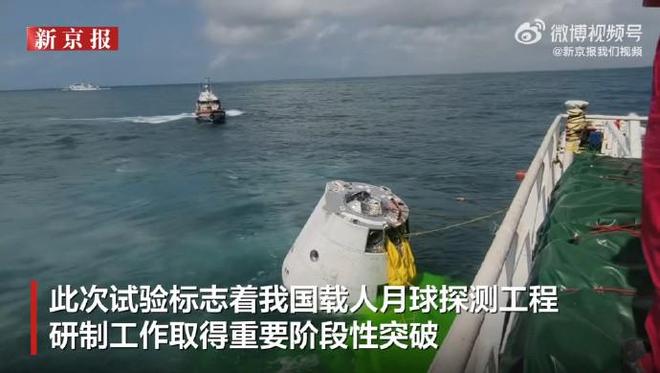
偏差不到10米,长征十号甲试验箭牛在哪里?
Guan Cha Zhe Wang· 2026-02-12 01:13
Core Viewpoint - The successful test of the "Chang Zheng 10A" rocket's maximum dynamic pressure escape system marks a significant advancement in China's space exploration capabilities, enhancing safety for future crewed lunar missions [1][8]. Group 1: Test Overview - The "Chang Zheng 10A" rocket was launched from the Wenchang Space Launch Site, and the test involved the escape system of the "Meng Zhou" spacecraft, which successfully triggered at 66 seconds into the flight [1][3]. - The escape system utilized four dual-thrust engines to detach the spacecraft from the rocket, followed by a series of parachutes for a safe landing in the sea [3][5]. Group 2: Technical Details - The maximum dynamic pressure occurs at approximately 10-12 kilometers altitude, where the rocket experiences the highest aerodynamic load [5][6]. - The test aimed to ensure the escape system's reliability under maximum dynamic pressure conditions, which is critical for crew safety during launch [7][8]. Group 3: Historical Context - Previous missions, such as NASA's Apollo program and SpaceX's Crew Dragon, have conducted similar maximum dynamic pressure escape tests, highlighting the importance of this procedure in ensuring astronaut safety [7][8]. - The "Chang Zheng 10A" rocket's design incorporates advanced features to manage dynamic pressure effectively, reflecting lessons learned from earlier space missions [8][9]. Group 4: Future Implications - The successful execution of this test lays a solid foundation for upcoming low-altitude flight tests and recovery missions, with the "Chang Zheng 10B" rocket's maiden flight anticipated in the near future [22][23]. - The ability to recover the first stage of the rocket is a key goal for future missions, potentially enhancing the cost-effectiveness of space exploration [22][23].

中国航天 更多精彩
Ren Min Ri Bao Hai Wai Ban· 2026-01-14 22:50
Core Viewpoint - China's space industry is experiencing significant advancements, with multiple successful missions and the introduction of new technologies, aiming to establish itself as a leading space power by 2026 [7][12][14]. Group 1: Manned Spaceflight Progress - The Shenzhou 21 crew has been working in orbit for over 70 days, conducting key training and scientific experiments [8]. - In 2025, China executed its first emergency launch mission in response to unexpected issues with the Shenzhou 20 spacecraft, demonstrating its capabilities [8]. - The Chinese space station has successfully conducted 265 scientific and application projects in three major fields by December 2025 [8]. Group 2: Deep Space Exploration - The Tianwen-2 mission successfully launched in 2025, marking China's first asteroid exploration and sample return mission, targeting asteroid 2016 HO3 [12]. - The mission aims to return to Earth by the end of 2027 after conducting scientific investigations on the asteroid and later on comet 311P [12]. - The Chang'e 7 mission is planned for 2026, focusing on lunar south pole exploration and ice detection [13]. Group 3: Commercial Space Development - In 2025, various commercial rockets, including Ceres-1 and Zhuque-3, were launched, indicating a surge in China's commercial space activities [14]. - The National Space Administration has initiated a plan to enhance the quality and safety of commercial space development from 2025 to 2027 [14]. - New generation rockets are expected to enter their maiden flights, supporting large-scale satellite networks and low-cost cargo transport [14].

生命、家园、深空与智能…… 今年可能迎来哪些关键性科技突破?
Xin Lang Cai Jing· 2026-01-12 18:00
Group 1: Scientific and Technological Advances - In 2026, significant breakthroughs in gene editing are anticipated, with clinical trials for personalized gene therapies for rare metabolic diseases planned in Philadelphia [8] - A major cancer detection clinical trial involving over 140,000 participants is expected to reveal results in 2026, potentially allowing for the detection of approximately 50 types of cancer through a single blood test [9] - AI is predicted to play a crucial role in the life sciences sector, particularly in biomarker detection, with the potential to move from detection to prediction [9] Group 2: Climate Change and Renewable Energy - The global average temperature is projected to exceed pre-industrial levels by 1.4 degrees Celsius in 2026, continuing a trend of rising temperatures [9] - Renewable energy is expected to surpass traditional energy sources in various sectors, with China leading the transition towards green and low-carbon energy [10] - China plans to add over 20 million kilowatts of wind and solar power capacity in 2026 as part of its commitment to increasing the share of renewable energy [10] Group 3: Space Exploration - 2026 is set to be a busy year for lunar exploration, with China's Chang'e 7 mission targeting the challenging lunar south pole [11] - Multiple crewed space missions are scheduled by China, including the Tianzhou 10 and Shenzhou 22 and 23 missions, marking significant advancements in their space program [11] - The European Space Agency plans to launch the Plato space telescope in late 2026 to monitor over 200,000 stars in search of habitable exoplanets [11] Group 4: AI in Research - AI is transforming research processes, with predictions of significant scientific breakthroughs driven by AI in 2026 [12] - The integration of multiple large language models for complex tasks is expected to become more common, reducing the need for human intervention [12] - Generative AI is leading technological change, with over two-thirds of chief economists anticipating its commercial value to materialize within the next year [12]

【新华社】探天探海探未来!这些进展值得期待
Xin Hua She· 2026-01-05 02:03
Group 1: Space Exploration and Technology - The successful launch of the Tianwen-2 mission marks China's first asteroid exploration and sample return journey, focusing on asteroid 2016 HO3 and later the main belt comet 311P [5] - The Chang'e 7 mission is expected to launch around 2026 to explore the lunar south pole and investigate water ice resources, carrying payloads from multiple countries [5] - China's new generation reusable crewed spacecraft, "Dream Chaser," is set for its first flight in 2026, designed for near-Earth space station operations and crewed lunar exploration [5][6] Group 2: Deep Sea Exploration - China's manned submersibles, including "Fendouzhe," "Shenhai Yongshi," and "Jiaolong," have completed over 1,700 dives, with expectations to surpass 2,000 by 2026 [9] - The "Fendouzhe" submersible successfully conducted manned deep-sea research in the Arctic, expanding China's deep-sea exploration capabilities [9] - The deep-sea research community anticipates increased international collaboration and scientific exploration during the 14th Five-Year Plan period [9] Group 3: Scientific Research and Innovation - China ranks prominently in global scientific research, with significant achievements in innovation and research output, described as entering an "innovation explosion period" [3] - The "first example of two-dimensional metal preparation" by a team from the Chinese Academy of Sciences was recognized as one of the top scientific breakthroughs of 2025 [10] - In the biopharmaceutical sector, 76 innovative drugs were approved in 2025, with total licensing transactions exceeding $130 billion, marking a historic high [10]
前瞻2026:“十五五”开局 主场外交受瞩目
Zhong Guo Xin Wen Wang· 2026-01-01 01:24
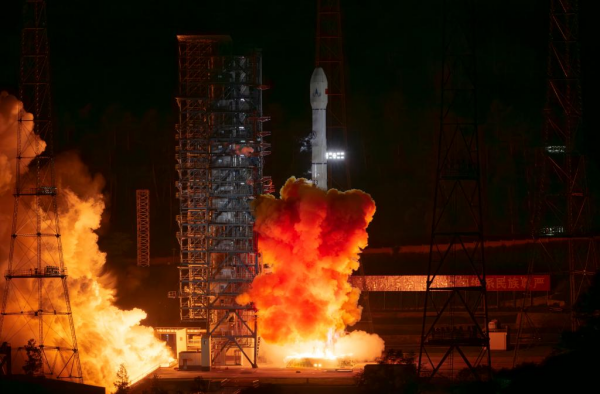
Group 1 - 2026 marks the beginning of the "15th Five-Year Plan," which is crucial for achieving socialist modernization and economic development in China [3][5] - The "15th Five-Year Plan" aims to lay a solid foundation for comprehensive development over the next five years, as outlined in the recommendations approved by the 20th Central Committee [3][5] Group 2 - China will host the second China-Arab States Summit and serve as the host for the APEC Leaders' Meeting in 2026, showcasing China's modernization achievements and promoting global cooperation [5][6] - The APEC meeting will take place in Shenzhen, marking China's third time hosting the event since 2001 and 2014 [5] Group 3 - The fourth national agricultural census will be conducted in 2026, providing a comprehensive overview of the agricultural sector and rural development in China [6] - This census is significant for formulating policies aimed at rural revitalization and agricultural modernization [6] Group 4 - A series of major national projects are anticipated in 2026, including the first launch of the new generation crewed spacecraft, "Dream Chaser," from the Wenchang Space Launch Site [9] - The Xinjiang Dashi Gorge Water Conservancy Project is expected to be completed and operational in 2026, setting a world record for concrete-faced rock-fill dams [9] Group 5 - The new Value-Added Tax Law will take effect on January 1, 2026, marking a significant step in tax law development in China [12] - The law aims to ensure fair competition and protect taxpayer rights [12] Group 6 - The revised Public Security Administration Punishment Law will also come into effect on January 1, 2026, addressing new social security issues and enhancing legal frameworks [15] - This includes penalties for activities such as leading pyramid schemes and harming public interests [15] Group 7 - The updated Cybersecurity Law will be implemented on January 1, 2026, focusing on enhancing cybersecurity responsibilities and promoting the development of artificial intelligence [17] - The law aims to support research and development in AI while ensuring ethical standards and risk management [17] Group 8 - 2026 marks the 90th anniversary of the victory of the Long March, a significant historical event in China [18] - The Long March is celebrated for its profound impact on Chinese history and the spirit it embodies [18] Group 9 - The 160th anniversary of Sun Yat-sen's birth will be commemorated on November 12, 2026, highlighting his contributions to Chinese democracy and nationalism [20] Group 10 - 2026 will also mark the 10th anniversary of the Yangtze River Protection initiative, which has led to significant environmental improvements along the river [22] - The initiative has resulted in enhanced ecological conditions and a shift towards sustainable development in the region [22]

2026年我们将迎来哪些航天“大事件”?120秒带你快速了解!
Yang Shi Wang· 2025-11-01 12:38
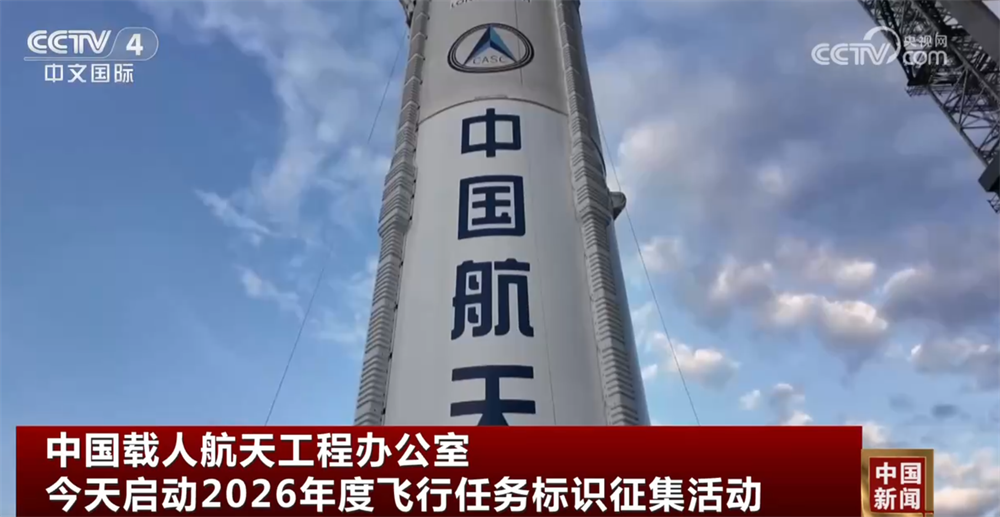
Core Points - The China Manned Space Engineering Office has launched a public call for design proposals for mission insignia for the 2026 flight missions [1][8] - Four flight missions are planned for 2026, including Tianzhou-10, Shenzhou-22, Shenzhou-23, and the first flight of the new generation crewed spacecraft, Mengzhou-1 [1][4] - Shenzhou-22 and Shenzhou-23 will continue to use a three-member crew model, with one astronaut from Shenzhou-22 conducting a long-term stay experiment of over one year [2] Group 1 - The Mengzhou-1 spacecraft will achieve its maiden flight in 2026, representing a comprehensive upgrade from the Shenzhou spacecraft, featuring a modular design [4][6] - The first flight of Mengzhou-1 will be an unmanned test to validate the spacecraft's full system operational status and various technical aspects [6] - The design of the mission insignia should reflect Chinese elements, manned spaceflight characteristics, and the specific features of the missions, while considering continuity with previous insignia [8]
最新任务公布!代号MZ-1
Ren Min Ri Bao· 2025-11-01 11:14
Core Viewpoint - The China Manned Space Engineering Office has announced the basic situation of manned spaceflight missions for the year 2026, detailing various upcoming missions and their objectives [1]. Group 1: Tianzhou-10 Mission - Launch Location: Wenchang Space Launch Site [2] - Docking Method: Tianzhou-10 cargo spacecraft (code TZ-10) will dock at the rear port of the core module after launch [2]. - Main Tasks: The mission aims to transport supplies for astronauts, maintenance parts, propellants, various payloads, and samples for application tasks, as well as to dispose of space debris [2]. Group 2: Shenzhou-22 and Shenzhou-23 Manned Missions - Launch Location: Jiuquan Space Launch Site [3]. - Crew Composition: Each mission will consist of a crew of three astronauts [3]. - Docking Method: Shenzhou-22 (code SZ-22) will dock at the radial port of the core module, while Shenzhou-23 (code SZ-23) will dock at the forward port [3]. - Main Tasks: Shenzhou-22 will conduct a long-term stay experiment for over one year, perform extravehicular activities, continue space science experiments, and manage space station operations and astronaut support [3]. Group 3: Mengzhou-1 Mission - Launch Location: Wenchang Space Launch Site [4]. - Docking Method: Mengzhou-1 (code MZ-1, unmanned) will dock at the radial port of the core module after launch [4]. - Main Tasks: This mission will utilize the Long March 10A rocket (code CZ-10A) for the first flight of the Mengzhou manned spacecraft, which is a next-generation spacecraft based on the Shenzhou design. The mission will validate the overall system status and test various equipment and modules [4].

我国明年将发射梦舟一号等4艘飞船
Xin Hua She· 2025-11-01 09:45
Core Points - China will implement four spaceflight missions in 2024, including Tianzhou-10, Shenzhou-22, Shenzhou-23, and Mengzhou-1, with Mengzhou-1 being the first crewed spacecraft and the Long March 10A rocket also making its inaugural flight [1] Group 1 - The missions will be launched from the Jiuquan Satellite Launch Center, with Shenzhou-22 and Shenzhou-23 carrying crews of three astronauts each [1] - Shenzhou-22 will dock with the radial port of the space station core module, while Shenzhou-23 will dock with the forward port [1]
我国明年将发射梦舟一号等4艘飞船 航天员开展1年以上长期驻留试验
Xin Hua She· 2025-11-01 07:45
Core Points - China plans to conduct four space missions in 2024, including the first flights of the Mengtian-1 crewed spacecraft and the Long March 10A rocket [1][2] - The Shenzhou-22 and Shenzhou-23 crewed spacecraft will be launched from the Jiuquan Satellite Launch Center, each carrying a crew of three astronauts [1] - The main objectives of the Shenzhou-22 mission include a long-term stay experiment, extravehicular activities, and various scientific experiments [1] - The Tianzhou-10 cargo spacecraft will be launched from the Wenchang Space Launch Site, aimed at delivering supplies and equipment to the space station [1][2] - The Mengtian-1 spacecraft is a new generation of crewed spacecraft designed for transportation to and from the space station, featuring a modular design [2] Mission Details - The Shenzhou-22 spacecraft will dock at the radial port of the space station's core module, while the Shenzhou-23 will dock at the forward port [1] - The Tianzhou-10 cargo spacecraft will deliver supplies, maintenance parts, and various payloads to ensure the safe operation of the space station [1] - The Mengtian-1 spacecraft will validate the full system operational status and deliver environmental evaluation equipment and research modules [2] Public Engagement - The Chinese Manned Space Engineering Office has initiated a public call for mission insignia for the upcoming crewed spaceflight missions [1][2] - Since the Shenzhou-5 mission in 2003, each crewed flight has featured a designated mission insignia, with public participation encouraged annually [2]
1名航天员驻留1年以上 梦舟一号首飞……2026年载人航天飞行任务公布
Yang Shi Xin Wen· 2025-11-01 04:31
Core Points - The Chinese manned space program will conduct four missions in 2026, including Tianzhou-10, Shenzhou-22, Shenzhou-23, and Mengzhou-1 [1][2] Group 1: Tianzhou-10 Mission - Launch Site: Wenchang Space Launch Site [1] - Docking Method: Tianzhou-10 cargo spacecraft will dock at the rear port of the core module [1] - Main Tasks: The mission will transport supplies for astronauts, maintenance parts, propellants, and various payloads, while also disposing of waste in orbit [1] Group 2: Shenzhou-22 and Shenzhou-23 Missions - Launch Site: Jiuquan Space Launch Site [1] - Crew Composition: Each mission will consist of a crew of three astronauts [1] - Docking Method: Shenzhou-22 will dock at the radial port, while Shenzhou-23 will dock at the forward port of the core module [1] - Main Tasks: Shenzhou-22 will conduct a long-term stay experiment for over one year, perform extravehicular activities, and continue space science experiments and technical trials [1] Group 3: Mengzhou-1 Mission - Launch Site: Wenchang Space Launch Site [2] - Docking Method: Mengzhou-1 will dock at the radial port of the core module in an unmanned state [2] - Main Tasks: This mission will utilize the Long March 10A rocket for the first flight of the Mengzhou spacecraft, validating the full system's operational status and conducting various technology verifications [2]