
天舟十号货运飞船

Search documents
2026年,中国航天将带来惊喜连连
Xin Lang Cai Jing· 2026-01-02 17:26
Group 1: Achievements in China's Space Industry - The Long March series rockets have successfully surpassed 600 launches, marking a significant milestone for China's space endeavors [1] - The Shenzhou missions have completed emergency tasks, and the lunar exploration is progressing steadily, with the Tianwen-2 mission set to explore asteroid 2016HO3 [2] - The first crewed lunar landing mission is being prepared, with the Long March 10 rocket and the new crewed spacecraft, Dream Boat, set to conduct its maiden flight [1][2] Group 2: Future Plans and Developments - In 2023, the Shenzhou-23 mission will include a crew member conducting a long-term stay in space for over a year, a first in China's space history [1] - The Tianzhou-10 cargo spacecraft will continue to supply astronauts with necessary resources for various scientific experiments in the space laboratory [1] - The Chang'e-7 mission will aim to land on the Moon's south pole to explore environmental conditions and resources, particularly the presence of water [2] Group 3: Commercial Space Initiatives - The commercial space sector is expected to enhance its capabilities with the launch of new rockets like the Lijian-2 and Zhuque-3, focusing on reusable rocket technology [3] - Increased frequency and scale of commercial launches will support the rapid deployment of satellite constellations, contributing to the development of a sustainable space economy [3] - The industry aims to align with global space development trends and national strategic needs, viewing each completed mission as a stepping stone for future endeavors [3]
中国航天,2026年日程排满
Zhong Guo Ji Jin Bao· 2026-01-01 14:17
Core Insights - In 2026, China's space program is expected to achieve significant breakthroughs, including crewed missions to the Chinese space station and the launch of new spacecraft [1][3]. Group 1: Crewed Space Missions - The Shenzhou 23 and Shenzhou 24 missions will send astronaut crews from the Jiuquan Satellite Launch Center to the Chinese space station [1]. - A crew member from the Shenzhou 23 mission will conduct a long-term stay experiment lasting over one year [3]. Group 2: New Spacecraft Developments - The new generation crewed spacecraft "Dream Boat" will make its maiden flight, designed for near-Earth space station operations and crewed lunar exploration [3]. Group 3: Lunar Exploration - The Chang'e 7 lunar probe will be launched to explore the Moon's south pole, focusing on surface environment surveys and water ice detection [5]. - If successful, China could become the first country to discover water on the Moon [5]. Group 4: Deep Space Exploration - The Tianwen-2 probe is set to reach asteroid 2016 HO3 for exploration and sample collection, with a return to Earth expected by the end of 2027 [6]. - Following this, the probe will conduct scientific exploration of main belt comet 311P [6]. Group 5: Commercial Space Development - 2026 will mark a year of accelerated development for China's commercial space sector, with the establishment of the Commercial Space Administration [8]. - New rocket developments, including Lijian-2, Tianlong-3, and Hyperbola-3, are highly anticipated [8].

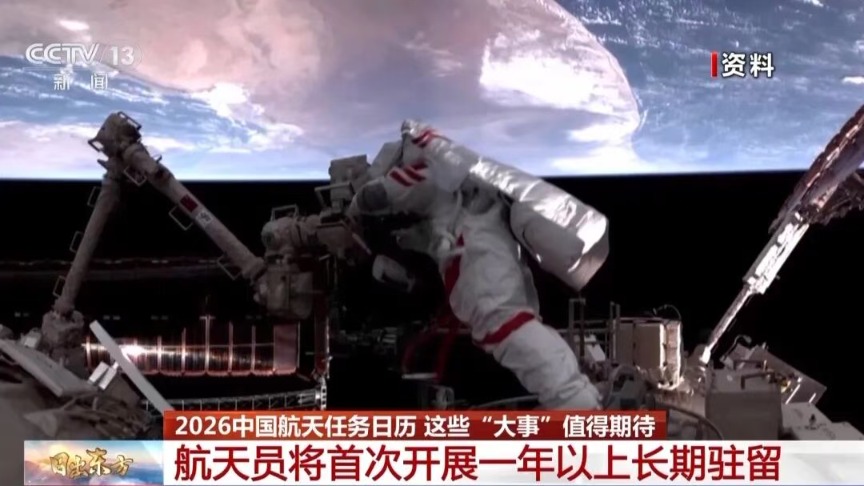
中国航天,2026年日程排满
中国基金报· 2026-01-01 14:14
Group 1 - In 2026, China's manned space program will see the launch of Shenzhou 23 and Shenzhou 24 missions, with astronauts departing from the Jiuquan Satellite Launch Center to the Chinese space station [2][4] - The Tianzhou 10 cargo spacecraft will also be launched, and one astronaut from the Shenzhou 23 crew will conduct a long-term stay experiment lasting over one year [4] - The new generation crewed spacecraft "Dream Boat" will make its maiden flight, designed for near-Earth space station operations and manned lunar exploration missions [4] Group 2 - The Chang'e 7 probe will be launched to the Moon's south pole for surface environment surveys and water ice detection, potentially making China the first country to discover water on the Moon [6] - The Tianwen 2 probe is set to reach asteroid 2016 HO3 for exploration and sample collection, with a return to Earth expected by the end of 2027 [6] - The next five years are anticipated to bring unprecedented development opportunities for China's space industry, contributing more Chinese wisdom to the peaceful use of space [9] Group 3 - 2026 will mark a year of accelerated development for China's commercial space sector, with the establishment of the Commercial Space Administration leading to more active launch activities [8] - The progress of new rockets such as Lijian 2, Tianlong 3, and Double Curve 3 is highly anticipated [8]
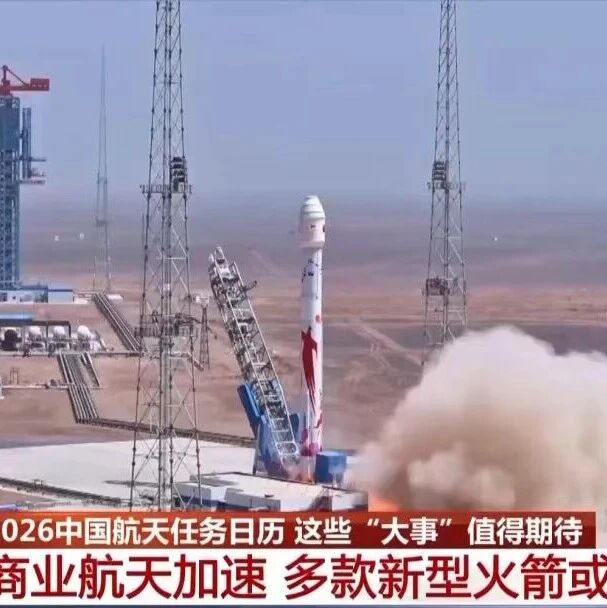
中国航天,2026年日程排满
财联社· 2026-01-01 11:08
Group 1 - In 2026, China's manned space program will see significant developments, including the launch of Shenzhou 23 and Shenzhou 24 missions, with astronauts departing from the Jiuquan Satellite Launch Center to the Chinese space station [1][3] - The Tianzhou 10 cargo spacecraft will also be launched, and one astronaut from the Shenzhou 23 crew will conduct a long-term stay experiment lasting over one year [3] - The new generation manned spacecraft "Dream Boat" will make its maiden flight, designed for near-Earth space station operations and crewed lunar exploration missions [3] Group 2 - The Chang'e 7 probe will be launched to explore the lunar south pole, focusing on surface environment surveys and water ice detection, potentially making China the first country to discover water on the moon [5] - The Tianwen 2 probe is set to reach asteroid 2016 HO3 for exploration and sample collection, with a return to Earth expected by the end of 2027, followed by scientific exploration of main belt comet 311P [5] Group 3 - 2026 will mark a year of accelerated development for China's commercial space sector, with the establishment of the Commercial Space Administration leading to increased launch activities [7] - New rocket developments such as Lijian 2, Tianlong 3, and Shuangkuo 3 are gaining attention [7] Group 4 - The next five years are anticipated to bring unprecedented opportunities for China's space industry, contributing significantly to the peaceful use of space and showcasing Chinese innovation [8]

中国航天2026年“大事记”值得期待 中国人的深空探测之旅正越走越远
Yang Shi Wang· 2026-01-01 02:36
Group 1 - In 2026, China's manned space program will see the launch of Shenzhou 23 and Shenzhou 24 missions, with astronauts departing from the Jiuquan Satellite Launch Center to the Chinese space station [1][3] - The new generation manned spacecraft "Dream Boat" will make its maiden flight in 2026, designed to replace Shenzhou for transporting astronauts to and from the space station and to facilitate manned lunar missions [3] - The Chang'e 7 lunar probe will be launched in 2026, targeting the lunar south pole for key scientific tasks, including the search for water ice, potentially making China the first country to discover water ice on the moon [6] Group 2 - The Tianwen-2 probe is set to reach asteroid 2016 HO3 for exploration and sample collection, with a planned return to Earth by the end of 2027, followed by scientific exploration of comet 311P [8] - 2026 will mark a significant year for China's commercial space sector, with the establishment of the Commercial Space Administration leading to increased launch activities and the debut of new rockets like Lijian-2, Tianlong-3, and Shuangquxian-3 [10] - The next five years are expected to present unprecedented development opportunities for China's space industry, contributing significantly to the peaceful use of outer space [10]
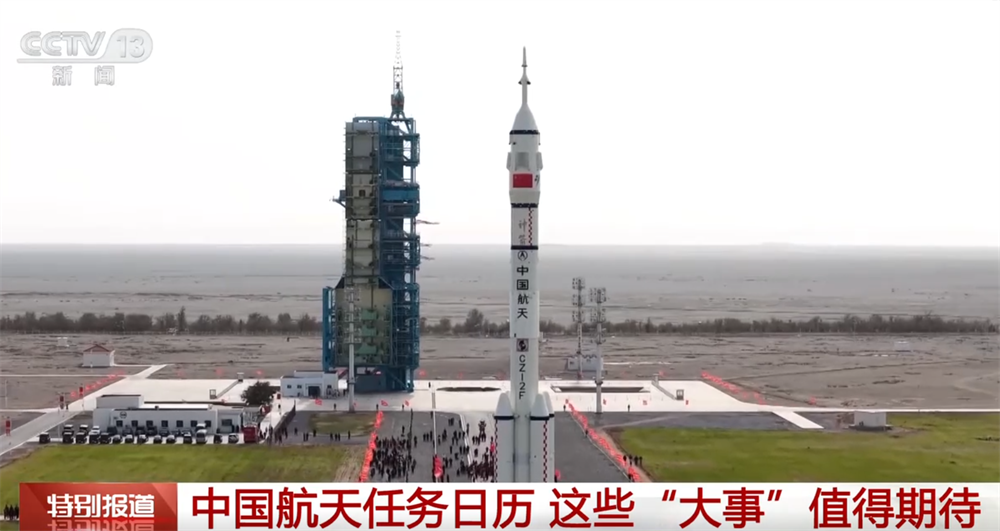
最新任务公布!代号MZ-1
Ren Min Ri Bao· 2025-11-01 11:14
Core Viewpoint - The China Manned Space Engineering Office has announced the basic situation of manned spaceflight missions for the year 2026, detailing various upcoming missions and their objectives [1]. Group 1: Tianzhou-10 Mission - Launch Location: Wenchang Space Launch Site [2] - Docking Method: Tianzhou-10 cargo spacecraft (code TZ-10) will dock at the rear port of the core module after launch [2]. - Main Tasks: The mission aims to transport supplies for astronauts, maintenance parts, propellants, various payloads, and samples for application tasks, as well as to dispose of space debris [2]. Group 2: Shenzhou-22 and Shenzhou-23 Manned Missions - Launch Location: Jiuquan Space Launch Site [3]. - Crew Composition: Each mission will consist of a crew of three astronauts [3]. - Docking Method: Shenzhou-22 (code SZ-22) will dock at the radial port of the core module, while Shenzhou-23 (code SZ-23) will dock at the forward port [3]. - Main Tasks: Shenzhou-22 will conduct a long-term stay experiment for over one year, perform extravehicular activities, continue space science experiments, and manage space station operations and astronaut support [3]. Group 3: Mengzhou-1 Mission - Launch Location: Wenchang Space Launch Site [4]. - Docking Method: Mengzhou-1 (code MZ-1, unmanned) will dock at the radial port of the core module after launch [4]. - Main Tasks: This mission will utilize the Long March 10A rocket (code CZ-10A) for the first flight of the Mengzhou manned spacecraft, which is a next-generation spacecraft based on the Shenzhou design. The mission will validate the overall system status and test various equipment and modules [4].

我国明年将发射梦舟一号等4艘飞船 航天员开展1年以上长期驻留试验
Xin Hua She· 2025-11-01 07:45
Core Points - China plans to conduct four space missions in 2024, including the first flights of the Mengtian-1 crewed spacecraft and the Long March 10A rocket [1][2] - The Shenzhou-22 and Shenzhou-23 crewed spacecraft will be launched from the Jiuquan Satellite Launch Center, each carrying a crew of three astronauts [1] - The main objectives of the Shenzhou-22 mission include a long-term stay experiment, extravehicular activities, and various scientific experiments [1] - The Tianzhou-10 cargo spacecraft will be launched from the Wenchang Space Launch Site, aimed at delivering supplies and equipment to the space station [1][2] - The Mengtian-1 spacecraft is a new generation of crewed spacecraft designed for transportation to and from the space station, featuring a modular design [2] Mission Details - The Shenzhou-22 spacecraft will dock at the radial port of the space station's core module, while the Shenzhou-23 will dock at the forward port [1] - The Tianzhou-10 cargo spacecraft will deliver supplies, maintenance parts, and various payloads to ensure the safe operation of the space station [1] - The Mengtian-1 spacecraft will validate the full system operational status and deliver environmental evaluation equipment and research modules [2] Public Engagement - The Chinese Manned Space Engineering Office has initiated a public call for mission insignia for the upcoming crewed spaceflight missions [1][2] - Since the Shenzhou-5 mission in 2003, each crewed flight has featured a designated mission insignia, with public participation encouraged annually [2]
1名航天员驻留1年以上 梦舟一号首飞……2026年载人航天飞行任务公布
Yang Shi Xin Wen· 2025-11-01 04:31
Core Points - The Chinese manned space program will conduct four missions in 2026, including Tianzhou-10, Shenzhou-22, Shenzhou-23, and Mengzhou-1 [1][2] Group 1: Tianzhou-10 Mission - Launch Site: Wenchang Space Launch Site [1] - Docking Method: Tianzhou-10 cargo spacecraft will dock at the rear port of the core module [1] - Main Tasks: The mission will transport supplies for astronauts, maintenance parts, propellants, and various payloads, while also disposing of waste in orbit [1] Group 2: Shenzhou-22 and Shenzhou-23 Missions - Launch Site: Jiuquan Space Launch Site [1] - Crew Composition: Each mission will consist of a crew of three astronauts [1] - Docking Method: Shenzhou-22 will dock at the radial port, while Shenzhou-23 will dock at the forward port of the core module [1] - Main Tasks: Shenzhou-22 will conduct a long-term stay experiment for over one year, perform extravehicular activities, and continue space science experiments and technical trials [1] Group 3: Mengzhou-1 Mission - Launch Site: Wenchang Space Launch Site [2] - Docking Method: Mengzhou-1 will dock at the radial port of the core module in an unmanned state [2] - Main Tasks: This mission will utilize the Long March 10A rocket for the first flight of the Mengzhou spacecraft, validating the full system's operational status and conducting various technology verifications [2]
中国新一代载人飞船“梦舟”将于2026年首飞
Zhong Guo Xin Wen Wang· 2025-11-01 04:23
Core Points - China is set to launch its new generation crewed spacecraft "Dream Boat" in 2026, with the first flight taking place at the Wenchang Space Launch Site using the Long March 10A rocket [1] - The 2026 mission will include four flight tasks: Tianzhou-10, Shenzhou-22, Shenzhou-23, and Dream Boat-1, focusing on various space operations [1] - The Dream Boat spacecraft is an upgraded version of the Shenzhou spacecraft, featuring a modular design consisting of a return capsule and a service module for transportation to and from the space station [1] Mission Details - The Tianzhou-10 cargo spacecraft will be responsible for transporting supplies for astronauts, including extravehicular suits, maintenance parts, propellants, and various payloads for application tasks, while also managing the disposal of waste in orbit [2] - The Shenzhou-22 and Shenzhou-23 missions will involve extravehicular activities by astronauts, cargo airlock operations, and continued space science experiments and technology tests [1] - Notably, one astronaut from the Shenzhou-22 crew will participate in a long-term stay experiment lasting over one year [1]
神舟二十一号载人飞船发射窗口确定
Jing Ji Ri Bao· 2025-10-30 22:13
Core Points - The Shenzhou-21 manned spacecraft is scheduled for launch on October 31 at 23:44 Beijing time, with a crew consisting of Zhang Lu, Wu Fei, and Zhang Hongzhang [1] - This mission marks the 6th manned flight during the space station application and development phase and the 37th flight of the manned space program [1] - The primary objectives include crew rotation with the Shenzhou-20 crew, a six-month stay at the space station, conducting space science and application work, extravehicular activities, cargo operations, and installation of space debris protection devices [1] Mission Details - The Shenzhou-21 spacecraft will utilize an autonomous rapid rendezvous and docking mode, expected to dock with the Tianhe core module approximately 3.5 hours after entering orbit [1] - During the stay, the Shenzhou-21 crew will receive visits from the Tianzhou-10 cargo spacecraft and the Shenzhou-22 manned spacecraft [1] - The current status of the spacecraft and crew is stable, with ground systems functioning normally, indicating readiness for the launch [2]