长时储能

Search documents
海辰储能生态日:三大新品全球首发,长时储能开启智慧未来
中国能源报· 2025-12-12 11:03
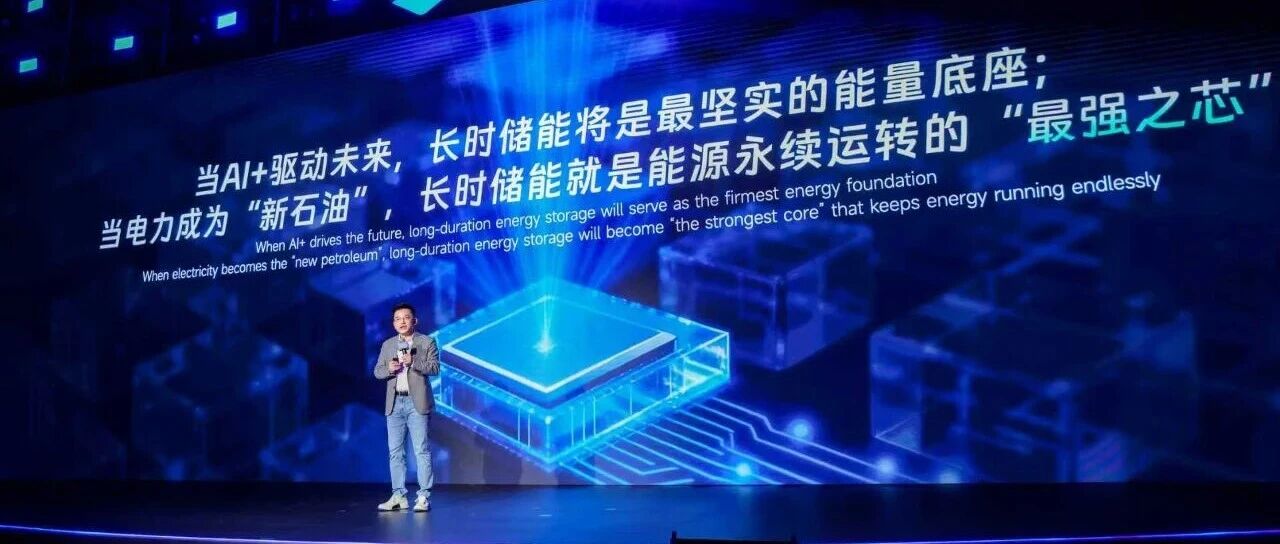
长时储能赋能千行百业 专家分享前沿洞见 海辰储能联合创始人、总裁王鹏程在活动致辞中表示,让绿电从"看天供应"转向"稳定好用",关键在于发展能够跨昼夜、跨周期的全天 候长时储能。为此,海辰储能正式启动 " '全天候绿电·135灯塔计划' " 。该计划以长时储能为引领,以"共创全天候绿色能源新世界"为 愿景,围绕绿色智算、全面储能、绿电枢纽三大行动方向,开启一个为期五年的战略周期,致力于让长时储能的"灯塔之光"照亮千行百 业,推动绿色能源惠及全人类。 当前,长时储能技术已成为破解新能源波动性难题、打造全天候绿电系统的核心支撑,而AIDC等高能耗行业也亟需依托长时储能的优 势破解能源困局。在此行业需求下,12月1 2日,以"能源觉醒·新世界暨长时储能开启智慧未来"为主题的第三届海辰储能生态日在厦门 成功举办。 在专家分享环节,知名能源行业研究咨询公司伍德麦肯兹(Wood Ma c k e nz i e)资深分析师Al e x Ci poll a 围绕长时储能的全球发展前 景、典型应用场景及核心技术路线展开深度分享;伊顿电源上海有限公司南区解决方案总监刘志华也分享了企业在高压直流、智能配电 等领域的创新方案。 全球首 ...

全球首发三大新品!海辰储能放大招
行家说储能· 2025-12-12 10:45
Core Viewpoint - The new energy storage industry is seizing opportunities from power market reforms and digitalization, with leading companies collaborating to compile the "2025 Power Market and Digital Energy Storage Research Report" to be released at the upcoming summit [2] Group 1: Energy Storage Market Trends - The energy supply and demand structure is undergoing rapid transformation, with long-duration energy storage entering a golden development period, driven by the explosive growth in electricity demand during the AIDC era [3] - Leading lithium battery companies are accelerating their strategic layouts in response to this historic opportunity [3] Group 2: Innovations in Long-Duration Energy Storage - The launch of the world's first native 8-hour long-duration energy storage solution, ∞Power 8 6.9MW/55.2MWh, aims to address the growing power demand from electric vehicles and data centers, enhancing grid stability and renewable energy absorption [6][8] - This solution features a high integration standard unit, significantly reducing on-site construction intensity and improving deployment efficiency by 18% while decreasing the footprint by 23% compared to previous models [6][8] Group 3: Advanced Battery Technology - The core of the 8-hour storage solution is the ∞Cell 1300Ah 8h battery cell, which boasts a capacity four times greater than mainstream products, reducing the number of system components by over 30% and lowering initial investment costs [12] - The new "super thick electrode technology" developed by the company addresses key challenges in battery performance, achieving over 50% cost reduction in power components compared to 2-hour cells [12] Group 4: AIDC Energy Solutions - The introduction of the world's first lithium-sodium collaborative AIDC all-time energy storage solution combines lithium battery backup with high-rate sodium batteries, providing a dual guarantee of instantaneous response and long-term backup [13] - This solution can significantly reduce backup costs by over 20% compared to traditional diesel generators, enabling "zero-carbon backup" for data centers [15] Group 5: Future Directions - The company plans to integrate AI technology across its research, manufacturing, and operational processes to enhance energy storage capabilities, positioning itself as a key player in supporting the rapid growth of AI computing power [16]
海辰储能吴祖钰:5年内将储能度电存储成本降至0.1元/度
Guan Cha Zhe Wang· 2025-12-12 10:27
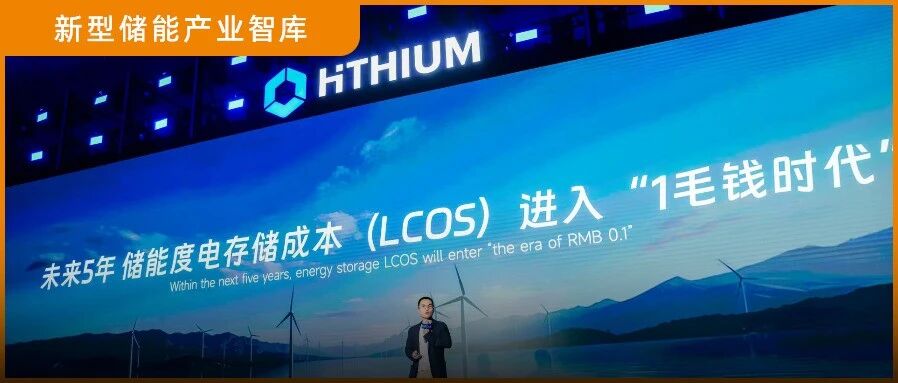
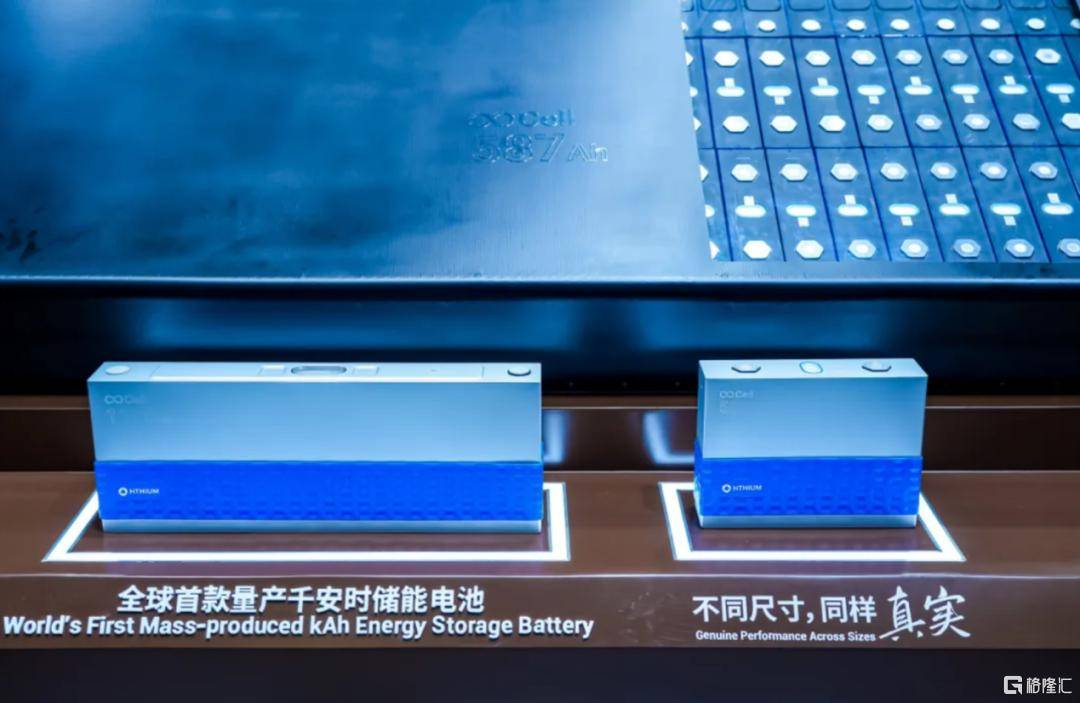
Core Insights - The event on December 12 marked the global launch of three innovative products by Haicheng Energy, alongside industry exchanges and the release of a blue paper [1] - The "All-Weather Green Power 135 Lighthouse Plan" was initiated, focusing on long-duration energy storage, green intelligent computing, comprehensive energy storage, and green power hubs over a five-year period [1] - The company aims to reduce the Levelized Cost of Storage (LCOS) to 0.1 yuan per kWh within five years by enhancing large-size battery cells, energy storage systems, extreme intelligent manufacturing, and integrated solutions [1] Group 1: Product Launches - The first product is the world's first native 8-hour long-duration energy storage solution, featuring a power output of 6.9 MW and an energy capacity of 55.2 MWh, with an 18% improvement in deployment efficiency and a 23% reduction in footprint compared to previous generations [2] - The second product is the 8-hour long-duration energy storage dedicated cell, with a capacity of 1300 Ah, which is over four times that of mainstream products, reducing the number of system components by more than 30% [4] - The third product is the lithium-sodium collaborative AIDC full-duration energy storage solution, which combines lithium battery backup with high-rate sodium batteries, improving overall system efficiency by over 3% [6] Group 2: Technical Innovations - The 8-hour long-duration energy storage solution features a high-strength steel banding technology and a dual pressure relief valve system, capable of withstanding extreme temperatures of 800°C and pressures of 300 kPa [3] - The dedicated cell employs "ultra-thick electrode technology," overcoming challenges related to electrode structure, electron and ion transport speed, and electrolyte wetting, leading to a 50% reduction in the cost of power components compared to 2-hour cells [4][5] - The lithium-sodium solution allows for a significant reduction in infrastructure construction time from 5-10 years to 1-2 years, with a 20% cost reduction in backup power compared to traditional solutions [6]

调研海辰储能:技术领跑长时储能赛道,锚定全球增长确定性
Sou Hu Cai Jing· 2025-12-11 12:19
Core Viewpoint - By 2030, global renewable energy generation capacity is expected to double, adding 4600 GW, with solar and wind energy as the main contributors. However, the rapid growth of these intermittent renewable sources poses significant challenges to the power grid, potentially leading to increased instances of "curtailed wind and solar" energy if effective balancing measures are not implemented [1][2]. Group 1: Industry Challenges and Innovations - The contradiction between the "power generation boom" and "absorption difficulties" highlights the need for long-duration energy storage to manage the volatility of renewable energy sources. Experts agree that once renewable energy generation exceeds 20%, long-duration storage solutions will become essential [2]. - The storage system prices have decreased by approximately 80% over the past three years, with some bids falling below 0.4 CNY/Wh, leading to a price war that has affected profit margins across the industry [3][4]. Group 2: Company Innovations and Strategies - Haicheng Energy has positioned itself as a leader in long-duration lithium battery storage, focusing on systematic innovation to break free from intense competition. The company has developed a comprehensive approach that includes advancements in materials, processes, systems, and services [3][5]. - Haicheng's innovative materials, such as high-pressure solid materials, have improved energy density and overall efficiency, with their ∞Cell 587Ah battery achieving a 6.5% increase in energy density compared to previous models [4][5]. Group 3: Safety and Testing - Safety is a critical concern in the energy storage industry, with the National Energy Administration emphasizing the importance of safety regulations. Haicheng has conducted extreme safety tests, including the world's first "open-door extreme combustion test," to ensure their systems can withstand real-world fire scenarios [10][12]. - The company has received UL Solutions certifications for its core products, indicating compliance with stringent North American safety standards, which enhances trust in their technology [15]. Group 4: Market Opportunities and Global Expansion - The demand for long-duration energy storage is expected to grow significantly, with projections indicating that by 2050, long-duration storage will account for 95% of global storage capacity. Haicheng aims to capitalize on this trend, with a focus on markets in China, Europe, the Middle East, and the United States [19][20]. - Haicheng has established a global presence, with projects in Europe and the Middle East, and is adapting its products to meet regional demands, such as developing heat-resistant designs for the Middle East [20][22]. Group 5: Conclusion - Haicheng Energy is not just providing technology but is actively participating in defining the operational rules of the new energy era. By converting unstable renewable sources into reliable power, the company is playing a crucial role in the success of energy transition [23].
调研海辰储能:技术领跑长时储能赛道,锚定全球增长确定性
格隆汇APP· 2025-12-11 11:07
Core Viewpoint - By 2030, global renewable energy generation capacity is expected to double, adding 4600 GW, with solar and wind energy as the main contributors. However, the rapid growth of these intermittent renewable sources poses significant challenges to the power grid, potentially leading to increased instances of "curtailment" if effective energy storage solutions are not implemented [2][3]. Group 1: Industry Challenges and Innovations - The contradiction between the surge in renewable energy generation and the challenges of energy consumption highlights the need for long-duration energy storage to manage volatility. Experts agree that once renewable energy generation exceeds 20%, long-duration storage solutions will become essential [3][4]. - The past three years have seen an approximately 80% decline in energy storage system prices, with some projects bidding below 0.4 CNY/Wh. While leading companies maintain profitability, many smaller firms face significant margin pressures [5][6]. - The industry's price war stems from a misunderstanding of the core attributes of energy storage, which is fundamentally an asset aimed at generating economic returns. This necessitates a focus on reducing capital and operational expenditures through technological innovation rather than mere price competition [6][7]. Group 2: Company Innovations and Strategies - Haicheng Energy has positioned itself as a leader in long-duration energy storage by initiating projects focused on this area as early as 2022, establishing a comprehensive innovation barrier across materials, processes, systems, and services [6][8]. - The company employs high-pressure solid material systems to enhance energy density and optimize materials, including electrolyte formulations, to improve overall efficiency and lifespan [7][8]. - Haicheng's innovative designs, such as the ∞Cell 587Ah battery, demonstrate significant improvements in energy density and efficiency, with a cycle life exceeding 10,000 cycles [8][9]. Group 3: Safety and Regulatory Compliance - Safety is a critical concern in the energy storage industry, with the National Energy Administration emphasizing the need for stringent safety regulations. The risk of thermal runaway incidents increases with larger battery cells, necessitating advanced safety designs [13][14]. - Haicheng has conducted extreme testing, including an open-door combustion test, to validate the safety of its systems under real-world conditions, achieving certifications that meet stringent North American safety standards [14][16]. - The company’s safety measures include high thermal stability materials and advanced battery management systems to ensure both functional and network safety [17][18]. Group 4: Market Opportunities and Growth - The long-duration energy storage market is projected to be a core revenue driver for Haicheng in the next 3-5 years, with significant demand emerging in China, Europe, and the Middle East [19][20]. - By 2050, long-duration storage is expected to account for 95% of global energy storage capacity, indicating substantial growth potential as current installations are only at 15.4% for 4-hour and above storage [20][21]. - Haicheng's global projects, including collaborations in Europe and the Middle East, showcase its ability to adapt to regional market demands and regulatory environments, enhancing its competitive edge [21][23]. Group 5: Long-term Vision and Impact - Haicheng aims to redefine the operational rules of the new energy era by transforming intermittent renewable sources into stable, reliable power, which is crucial for the success of energy transition [25][26]. - The company’s comprehensive approach, including extreme safety testing and lifecycle services, is designed to convert long-duration storage from an optional solution into a robust asset, attracting significant investment and accelerating infrastructure development [25][26].
中金 | 全球光储市场观察1:边际景气度延续,竞争格局加剧
中金点睛· 2025-12-10 23:51
Core Viewpoint - The energy storage industry is experiencing sustained demand growth, as indicated by recent data on battery production, project approvals, and system installations, suggesting a positive outlook for the sector in the short term [4][5]. Demand Side Analysis - In December, global battery production reached 172.59 GWh, with domestic production at 148.84 GWh, indicating strong demand despite the seasonal downturn [4][5]. - China saw a significant increase in energy storage installations, with 3.21 GW/8.82 GWh added in November, a month-on-month increase of 18% [4]. - North America is expected to see a substantial increase in large-scale storage installations, with projected growth of 61% year-on-year, reaching 18 GW in 2025 [4]. - In Europe, major markets like Germany, Italy, and the UK have sufficient approved and under-construction projects to support growth in installations next year [4]. Competitive Landscape - The competition among global energy storage system manufacturers is intensifying, leading to a dilution of market share among top players [5]. - The market concentration ratio (CR5) for large-scale storage systems is projected to decrease from 62% in 2023 to 45% in early 2025, indicating increased competition [5]. - Major manufacturers are expected to see significant growth in shipments in Q4 and next year, driven by high demand and large project backlogs [5]. Pricing Trends - Battery cell prices and energy storage system prices have shown an upward trend due to supply constraints and increased demand [41]. - The price of lithium carbonate has risen by 20% year-to-date, while the price of 314Ah battery cells has increased by approximately 7% [41]. - Despite rising prices, the overall trend in energy storage system pricing has been downward due to competitive pressures and cost reductions [46]. Regional Insights - In the U.S., large-scale storage projects are expected to continue growing, with a cumulative installed capacity of 39 GW by October 2025, and an anticipated addition of 10 GW in the first ten months of the year [19]. - In Europe, the market is shifting from residential storage to large-scale and commercial storage, with expectations of a 36% increase in overall storage installations in 2025 [26]. - Emerging markets are seeing a rise in storage demand driven by policy support and the need for reliable electricity supply, particularly in regions like the Middle East and Latin America [39]. Future Outlook - The energy storage sector is expected to maintain a high level of demand in 2026, supported by ongoing energy transition trends and significant project pipelines in major markets [88]. - The anticipated growth in AI data center projects is likely to further boost storage demand, particularly in North America [88].
昆工科技(920152):铝基铅炭电池25年开启量产,数据中心配储+集中式储能齐发力
Shenwan Hongyuan Securities· 2025-12-10 11:05
Investment Rating - The report assigns an "Accumulate" rating for the company, marking its first coverage [1][7]. Core Insights - The company is transitioning into a dual-driven growth phase with the launch of its large-capacity aluminum-lead-carbon battery, leveraging over 20 years of experience in the wet metallurgy industry [4][6]. - The company has initiated mass production of its aluminum-lead-carbon batteries in 2025, targeting the energy storage market, which is expected to grow significantly [6][18]. - The report anticipates a substantial increase in revenue and profitability from 2025 to 2027, with projected net profits of -70 million, 142 million, and 326 million yuan respectively [5][7]. Summary by Sections 1. Energy Storage Battery Industrialization - The company has developed a unique aluminum-lead-carbon battery technology, which is set to begin mass production in 2025, marking a significant technological advancement in the energy storage sector [6][18]. - The dual focus on electrode materials and energy storage batteries is expected to drive long-term growth for the company [18][21]. 2. Market Potential and Product Advantages - The aluminum-lead-carbon battery offers longer cycle life compared to traditional lead-carbon batteries and superior discharge duration and safety compared to lithium batteries, making it suitable for long-duration energy storage and peak shaving applications [6][44]. - The company estimates that by 2030, the new installation capacity of aluminum-lead-carbon batteries in China could reach 70 GWh, indicating a robust market opportunity [6][12]. 3. Financial Projections and Valuation - The company is expected to achieve a revenue of 618 million yuan in 2024, with a year-on-year growth rate of 26.3%, and is projected to reach 4.716 billion yuan by 2027 [5][7]. - The report estimates a target market value of 8.26 billion yuan based on mid-term profit projections, reflecting the anticipated growth trajectory of the energy storage segment [7][8]. 4. Production Capacity and Market Expansion - The company has established two production bases, with the Yunnan base already in operation and the Ningxia base expected to commence production in early 2026, facilitating market penetration in various energy storage applications [6][47]. - The company is actively pursuing projects in three main markets: centralized energy storage, commercial energy storage (data centers), and household storage, with initial projects already delivered [6][49].
云南首个全钒液流储能项目投产
Zhong Guo Dian Li Bao· 2025-12-09 06:24
Group 1 - The Yunnan Lu Feng All-Vanadium Flow Energy Storage Project has officially commenced operations, marking the province's first all-vanadium flow energy storage project, completed in just 232 days from construction to production [1] - The total investment for the project is 1.237 billion yuan, covering an area of 53.09 acres, and features a 100 MW/400 MWh all-vanadium flow energy storage system [1] - The project is designed for a 25-year operational period, with an annual charging capacity of approximately 240 million kWh and a discharging capacity of about 168 million kWh, generating an annual output value of 108 million yuan and tax revenue of 13 million yuan [1] Group 2 - After the project is operational, the Chuxiong region will have a total of 1.334 million kW/2.768 million kWh of new energy storage connected to the grid, indicating significant progress in diversified energy storage technology and long-duration energy storage development [2] - The establishment of a new power system demonstration area featuring a "10 million kW-level new energy base + 1 million kW-level energy storage base" has been reinforced and enhanced [2]
BNEF上海峰会亮点回顾:领袖洞见,解码2025能源变局
彭博Bloomberg· 2025-12-09 06:05
Core Viewpoint - The BNEF Shanghai Summit highlighted China's strategic transition towards a low-carbon energy system, emphasizing the importance of policy reform, market adaptation, and technological innovation in achieving energy transformation goals [2][16]. Group 1: Policy, Goals, and Electricity Market Reform - The summit focused on China's renewable energy strategy, aiming to increase total installed renewable energy capacity to 3.6 billion kilowatts as a national strategic deployment [3]. - Structural challenges in renewable energy development were identified, including mismatches in planning across various segments and the economic viability of long-distance transmission [3]. - The industry is shifting from a "project grabbing" phase to a "project selection" phase, emphasizing location, consumption, and economic factors [4]. - A wave-like market trend is expected, with a peak in 2025 followed by a decline, but a recovery is anticipated in 2026 as new mechanisms stabilize [4][6]. Group 2: New Energy System Elements - Key elements of the new energy system discussed include zero-carbon parks, energy storage, and AI data centers, which are crucial for China's energy transition and can serve as replicable models for global green development [7]. - Zero-carbon parks are emerging as engines of green development, with the potential to exceed climate goals by 2035 [9]. - The energy storage industry is transitioning from policy-driven to market-driven, with significant growth in demand and production [9]. - AI data centers are facing new energy and cooling challenges, with a shift towards lithium batteries and increased use of renewable energy [9]. Group 3: Oil and Gas Trade Restructuring and Clean Technology Expansion - Chinese enterprises are transitioning from passive participants to active shapers in the global oil and gas landscape, with a projected decline in crude oil imports by 2024 [11]. - The restructuring of the oil and gas value chain relies on diversified investment portfolios, simplified project management, and strategic supplier relationships [11]. - The challenges of clean technology expansion abroad have shifted from "hard" capabilities to "soft" financing adaptability, requiring a better understanding of local regulations and community engagement [13]. Group 4: Innovative Technologies - The energy sector is focusing on long-term technological breakthroughs, with long-duration energy storage and nuclear fusion seen as strategic reserves for deep decarbonization [14]. - Flow batteries are gaining attention for their cost advantages in long-duration storage applications [14]. - Solid-state batteries are viewed as the ultimate solution for high energy density and safety, but face challenges in scaling production [15]. - Nuclear fusion is at a critical development point, with advancements in high-temperature superconductors and AI for science accelerating progress [15].
国泰海通|电新:Fluence正洽谈超30GWh的AIDC配储,AIDC配储星辰大海
国泰海通证券研究· 2025-12-04 12:46
Core Viewpoint - The development of AIDC may exacerbate electricity shortages in the U.S., with data center energy storage serving as a potential solution. Fluence is negotiating over 30 GWh of AIDC energy storage projects, indicating a significant emerging market opportunity [2][3]. Group 1: AIDC Development and Energy Demand - AIDC's high energy consumption could lead to increased electricity shortages in the U.S. According to the DOE, U.S. data centers consumed 176 TWh in 2023, accounting for 4.4% of total electricity consumption. The demand for electricity from data centers is expected to grow annually by 13%-27% from 2023 to 2028, potentially reaching 325-580 TWh by 2028, which would increase their share of total U.S. electricity consumption to 6.7%-12% [2][3]. - If 50 GW of new data centers are added by 2030, the projected electricity gap in the U.S. could reach 23 GW, and this gap would be larger when considering the retirement of existing power plants [2]. Group 2: Short-term and Long-term Solutions - In the short term, energy storage can help data centers manage peak load and frequency regulation, which is crucial given the aging U.S. power grid. The interconnection process for data centers can take several years, with estimates of about 3 years in Chicago and 7 years in Virginia [3]. - Long-term, solar and storage solutions may evolve into self-sufficient power sources for data centers. Currently, gas turbines are the mainstream solution, but their supply chain can take over 3 years. In contrast, solar storage has already demonstrated economic viability and offers advantages in interconnection timelines compared to gas turbines [3].