AIDC配储

Search documents
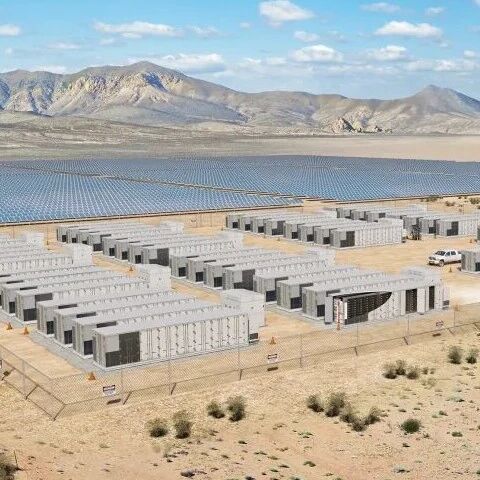
超2.6GWh!储能订单主力指向AIDC
行家说储能· 2026-03-18 04:11
Core Viewpoint - The article highlights the increasing demand for energy storage solutions in the AIDC (Artificial Intelligence Data Center) sector, emphasizing recent orders secured by companies like Canadian Solar and Nandu Power, which indicate a growing market opportunity in this field [2][3][5][6][7]. Group 1: Company Developments - Canadian Solar's subsidiary, e-STORAGE, signed a supply agreement for a 2.5GWh energy storage system for a data center project in the U.S., with delivery expected to start in March 2027 [3][5]. - Nandu Power announced a 117MWh energy storage project in Australia, utilizing its self-developed Center L Plus liquid-cooled storage system, which has been successfully applied in various large-scale projects globally [7][9]. - Nandu Power's total disclosed energy storage orders since 2026 amount to approximately 1.85GWh, including projects in Greece and Gansu [7][9]. Group 2: Market Trends and Predictions - The AIDC energy storage market is projected to experience explosive growth, with an expected addition of 20-30GWh in 2026, representing a year-on-year increase of 40%-50% [6]. - The global market for energy storage in the AIDC sector is anticipated to exceed 300GWh from 2026 to 2030, indicating significant growth potential [6]. - The competitive landscape in the U.S. AIDC energy storage market is currently dominated by 3-4 major players, with only a few leading Chinese companies making slow progress in order fulfillment due to performance and certification barriers [6]. Group 3: Industry Collaboration and Events - To enhance collaboration within the AIDC energy storage ecosystem, two forums are scheduled: one on April 10 focusing on the synergy between energy storage and third-generation semiconductors, and another on June 2 addressing multi-scenario applications [10]. - These forums aim to create a comprehensive closed-loop system for resource allocation, application needs, and commercialization within the AIDC supply chain [10].


国泰海通|电新:美国缺电,AIDC配储星辰大海
国泰海通证券研究· 2026-02-13 11:57
Core Viewpoint - The development of AIDC (Artificial Intelligence Data Centers) is expected to exacerbate the electricity shortage in the U.S. and significantly impact the U.S. power grid, leading to increased demand for energy storage solutions [1][2]. Group 1: Impact on U.S. Power Grid - AIDC's growth is projected to increase the electricity gap in the U.S., putting more pressure on the power grid. In 2023, U.S. data centers consumed 176 TWh, accounting for 4.4% of total electricity consumption. The IEA forecasts that by 2028, electricity consumption could rise to between 325-580 TWh, representing a CAGR of 26.9% and increasing its share of total U.S. electricity demand to 6.7%-12% [2]. - The rising demand from data centers is expected to lead to higher electricity prices, particularly capacity prices. For instance, total wholesale electricity prices in PJM are projected to increase from $55.46/MWh in 2024 to $80.67/MWh in 2025, reflecting a year-over-year increase of 45% [2]. - The average queue time for data centers to connect to the grid in the U.S. is currently 1-3 years, with some areas like Northern Virginia experiencing wait times of up to 7 years. Approximately 70% of transformers in the U.S. power grid are already in "overdue service" condition [2]. Group 2: Energy Storage Solutions - The 800V DC (Direct Current) architecture is emerging as the optimal solution for next-generation power distribution, minimizing conversion losses and wiring volume in data centers. This architecture is crucial for managing power fluctuations during high-demand periods [3]. - Short-term strategies include using energy storage for peak shaving and frequency regulation, which can alleviate grid pressure and reduce connection times for data centers. In the medium to long term, renewable energy storage is expected to become the mainstream self-supply form of power [3]. - The economic viability of energy storage solutions is highlighted, with a Levelized Cost of Storage (LCOS) of $52/MWh for a 6-hour solar storage system after subsidies, which is competitive with gas turbines and more favorable than Solid Oxide Fuel Cells (SOFC) at $82/MWh [3]. Group 3: Future Demand for Data Center Energy Storage - Initially, data center energy storage is expected to serve peak shaving functions, with a configuration duration of approximately 4 hours and a 20% capacity. However, as data centers' electricity demand grows, they are projected to account for over 10% of U.S. electricity demand, leading to a significant increase in storage capacity requirements [4]. - Future projections indicate that from 2026 to 2030, the demand for data center energy storage will grow from 10.1 GWh to 165.7 GWh, with a CAGR of 101%, resulting in a cumulative demand of 353.9 GWh over four years [4].

美国缺电系列专题1:美国缺电,AIDC配储星辰大海
GUOTAI HAITONG SECURITIES· 2026-02-12 08:55
Investment Rating - The report assigns an "Overweight" rating for the industry [4]. Core Insights - The development of AIDC (Artificial Intelligence Data Centers) is expected to exacerbate the electricity shortage in the U.S., putting significant pressure on the power grid. The report anticipates a substantial increase in energy storage demand due to AIDC, recommending companies such as Haibo Shichuang, Sungrow Power Supply, Canadian Solar, and Xidian New Energy [4][7]. - In 2023, U.S. data centers consumed 176 TWh, accounting for 4.4% of total electricity consumption. The IEA projects that by 2028, this consumption will rise to between 325-580 TWh, representing a CAGR of 26.9% over five years, increasing its share of total U.S. electricity demand to 6.7%-12% [7][26]. - The report highlights the aging U.S. power grid, with approximately 70% of transformers in "overdue service" condition, leading to long queue times for data center grid connections, averaging 1-3 years, and up to 7 years in Northern Virginia [7][38]. Summary by Sections 1. Investment Recommendations - The report emphasizes that the growth of AIDC is driving an electricity gap, increasing pressure on the U.S. power grid. The average queue time for data centers to connect to the grid is 1-3 years, with some areas experiencing delays of up to 7 years [7][10]. - AIDC's energy storage is seen as a short-term solution for peak shaving and frequency regulation, with a projected configuration ratio of 20% and a duration of 4 hours [7][46]. 2. AIDC's Impact on Electricity Demand - The report states that U.S. electricity sales are expected to reach 3975 TWh in 2024, with a year-on-year growth of 2.61%, driven by demand from commercial and industrial sectors, including data centers [10]. - The aging power grid and long queue times for data center connections are significant challenges, with many transformers exceeding their expected lifespan [38]. 3. Future of Energy Storage in AIDC - The report predicts that energy storage will become a mainstream self-supply form for data centers, with configurations expected to increase significantly as the demand for electricity rises [7][61]. - The projected demand for data center energy storage from 2026 to 2030 is expected to grow from 10.1 GWh to 165.7 GWh, with a CAGR of 101% [61]. 4. Key Companies in the Industry - **Sungrow Power Supply**: Recognized as a global leader in solar storage, with a significant market share in the U.S. and a projected revenue growth from 1.17 billion to 24.96 billion from 2020 to 2024 [63]. - **Haibo Shichuang**: A leading domestic energy storage system provider expanding into overseas markets, with successful project collaborations in the U.S. [67].



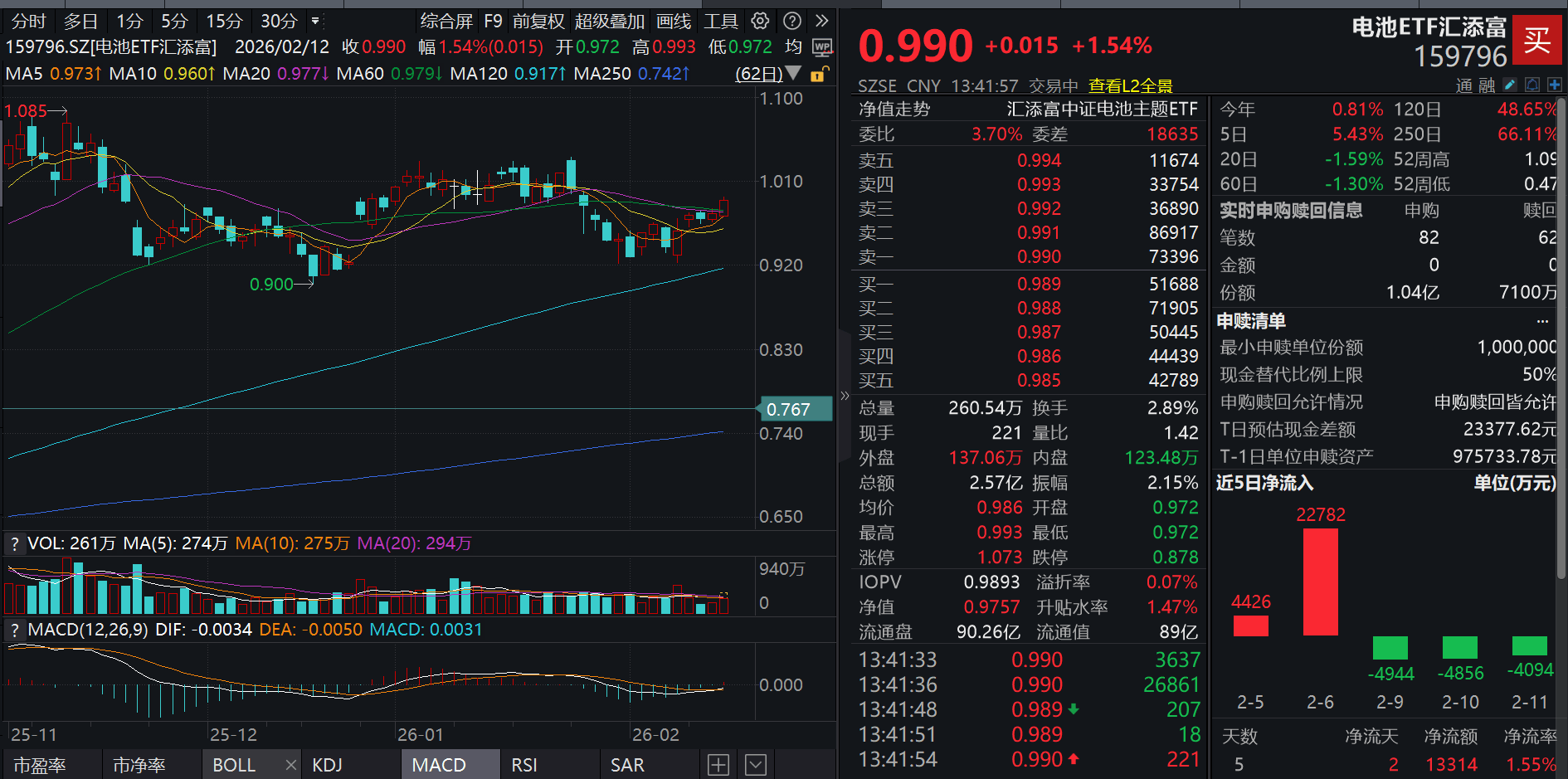
电池板块冲高!科士达涨停,电池ETF汇添富(159796)涨超1.5%,盘中获3300万净申购!AIDC配储需求爆发,确定性与成长性双重提升!
Sou Hu Cai Jing· 2026-02-12 06:07
Core Viewpoint - The battery sector is experiencing a significant surge driven by both domestic and international demand, with a clear improvement in business models and profitability expectations [3][4]. Group 1: Domestic Demand - The domestic demand certainty is attributed to the clarification of business models, with the 136 document establishing the market position for independent energy storage, leading to a "guaranteed + flexible" profit model that reduces investment risks and accelerates installation growth [4][6]. - The domestic energy storage projects are entering an accelerated construction phase, with an expected annual new installed capacity of 64.5 GW and a total capacity of 196.4 GWh, showing a significant year-end rush for installations [6]. Group 2: International Demand - In Europe, the large-scale energy storage market is entering a phase of explosive growth, with a projected 60% increase in power capacity and a staggering 280% increase in capacity scale for 2024 [6]. - The North American market faces a power supply shortage due to the non-linear growth of AI power demand and aging grid infrastructure, with projections indicating an average peak gap of over 20 GW from 2027 to 2030 [6]. Group 3: Investment Opportunities - The battery ETF Huatai (159796) is highlighted for its significant exposure to the energy storage sector, with a 19% allocation, and a 46% allocation to solid-state batteries, positioning it well to benefit from the ongoing technological advancements and market demand [7][9]. - The ETF's management fee is noted to be the lowest in its category at 0.15% per year, enhancing its attractiveness for investors looking to capitalize on the battery sector's growth [12].




不到4分钟,涨停!封单逾15万手
Xin Lang Cai Jing· 2026-01-13 08:41
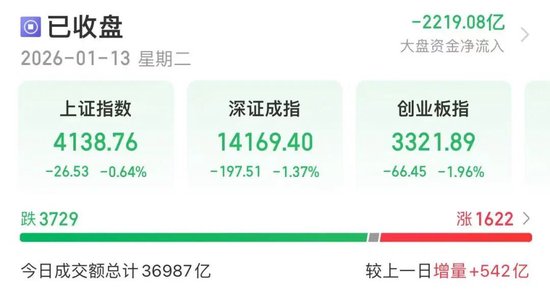
Market Overview - The market experienced a pullback today, with the Shanghai Composite Index down by 0.64%, the Shenzhen Component down by 1.37%, the ChiNext Index down by 1.96%, and the Northern Stock 50 Index down by 2.5% [1][15] - The total market turnover reached a record high of 36,987 billion yuan [1][15] Sector Performance - The medical industry chain was active, with the medical services sector showing strength. Notable stocks such as NuoSiGe, HongBo Pharmaceutical, and PuRuiSi hit the daily limit, while MeiNian Health achieved a three-day limit with a market value of 29.005 billion yuan [3][17] - The AI application sector continued its upward trend, with stocks like TongDaHai and TianLong Group also hitting the daily limit [3][18] - The precious metals sector saw significant gains, with stocks like XiaoCheng Technology and Hunan Silver leading the rise [5][20] Precious Metals Market - The precious metals sector was among the top gainers today, with gold prices fluctuating around 4,580 USD per ounce as the market awaited U.S. inflation data [6][21] - The main silver contract closed up nearly 6% [7][22] - The Chicago Mercantile Exchange announced changes to the margin requirements for gold, silver, platinum, and palladium contracts, which may lead to increased caution in market trading [9][24] - Recent geopolitical tensions have heightened market risk aversion, contributing to a strong performance in the precious metals market [9][24] Electric Power Sector - The electric power sector saw a surge in activity in the afternoon, particularly in the power transmission and transformation equipment sector, with stocks like YiNeng Electric and Shuangjie Electric showing significant gains [10][25] - SanBian Technology experienced a rapid increase, hitting the daily limit within four minutes, with a closing price of 17.48 yuan per share [10][25] Renewable Energy Initiatives - The National Energy Administration issued guidelines for the management of renewable energy green power certificates to promote high-quality market development [12][27] - A joint initiative by several government departments aims to expand the application of green electricity in industrial sectors and promote energy conservation and carbon reduction [12][27] Data Center Industry Growth - The data center industry in China is expected to enter a phase of explosive growth, with market size projected to exceed 318 billion yuan by 2025 and reach 1.2 trillion yuan by 2030, driven by increased AI computing demand [13][28]



阿特斯接待86家机构调研,包括淡水泉基金、安信基金、百年保险、博衍基金等
Jin Rong Jie· 2025-12-31 13:03
Core Viewpoint - The company is focusing on enhancing its market position through strategic adjustments in response to industry trends and regulatory changes, particularly in the energy storage sector and compliance with U.S. regulations. Group 1: Industry Trends and Market Dynamics - The integration of upstream polysilicon and strengthened industry self-discipline is expected to alleviate "involution" in the industry, promoting a return to rational pricing across the supply chain, which supports component pricing and accelerates the exit of inefficient capacities [1][3] - The global large-scale energy storage market is projected to ship 14-17 GWh in 2026, with non-U.S. markets contributing approximately two-thirds of the shipments, driven by strong demand in mature markets like Canada, Europe, and Australia [1][4] Group 2: Company Strategy and Operations - The company is innovating system solutions to enhance value-added services through its layout in components, energy storage, and power electronics, which is expected to improve profitability in the photovoltaic business [1][3] - The company has established a long-term stable cooperation mechanism with core suppliers to ensure the stability and cost competitiveness of battery cell supplies, incorporating reasonable price adjustment mechanisms in sales contracts to manage raw material price fluctuations [2][9] Group 3: Regulatory Environment and Compliance - The "Inflation Reduction Act" has created significant policy barriers for Chinese companies in the U.S. market, necessitating compliance adjustments to ensure long-term participation and protect interests in the A-share market [2][7] - The company is continuously evaluating the legal implications of the act and is prepared to respond to potential future regulatory details to maintain compliance [2][8]
中金:AIDC配储贡献新增量 风光储氢醇一体化项目或迎来放量
Zhi Tong Cai Jing· 2025-12-24 23:57
Group 1 - The global energy storage market is expected to see significant growth in demand from Europe, Asia, Africa, and Latin America by 2026, with AIDC contributing to new capacity [1][2] - In the U.S., AIDC demand is increasing rapidly, with projections suggesting that by 2030, AIDC storage demand could reach 100-200 GWh, driven by the need for enhanced flexibility and self-supply through solar storage [1] - The shipping industry is catalyzing green alcohol demand, with numerous domestic projects in wind, solar, and hydrogen alcohol expected to accelerate construction and drive storage demand [1] Group 2 - China's independent storage market is expected to thrive post-2H25 due to favorable capacity pricing policies, with a strong economic model based on peak-valley arbitrage, capacity pricing, and ancillary services [2] - The European market is experiencing positive storage demand due to energy shortages and a lack of flexible resources, shifting focus from household storage to large-scale and commercial storage [2] - The Australian electricity market is maturing, with large-scale storage projects accelerating and household storage being reinforced by high subsidies, ensuring medium to long-term demand [2] Group 3 - The strong demand for energy storage has led to a tight supply of storage cells since 2H25, with leading companies fully booked until Q1 2026, although relief is expected post-Q2 2026 as production capacity increases [3] - Companies are building competitive barriers through overseas factories and technology licensing in response to local policy trends in Europe and the U.S., capitalizing on high growth in overseas markets [3] - The global surge in storage demand presents investment opportunities, particularly in non-U.S. markets, focusing on both front-of-the-meter and behind-the-meter storage solutions [3]
狂飙的智算中心,打开了长时储能新剧本
3 6 Ke· 2025-12-18 09:42
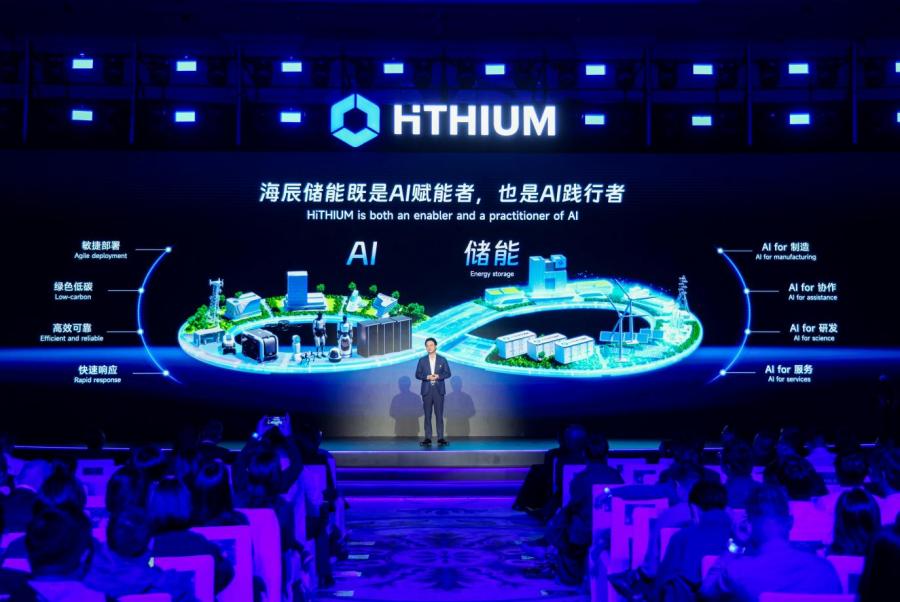
Core Insights - The article discusses the growing demand for long-duration energy storage (LDES) solutions driven by the rapid expansion of AI data centers (AIDC) and their significant electricity consumption, which is outpacing existing power grid capabilities [1][3][5]. Group 1: Power Supply Challenges - The high energy consumption of AI data centers has led to power outages and grid overloads in various regions of the U.S., highlighting a critical issue in power supply [2][3]. - Microsoft CEO Satya Nadella emphasized that the main challenge for the computing industry is not chip supply but the ability to provide sufficient power to data centers, indicating a bottleneck in infrastructure development [7][11]. Group 2: Long-Duration Energy Storage Solutions - Long-duration energy storage is identified as a necessary solution to stabilize power supply and support the expansion of AI data centers, transitioning from short-term to long-term storage solutions [5][13][14]. - The demand for LDES is expected to grow as renewable energy sources become more prevalent, with projections indicating that when renewable energy generation exceeds 20%, LDES will become essential [18][23]. Group 3: Industry Developments and Innovations - Companies like 海辰储能 (Haitian Energy Storage) are leading the way in LDES technology, having launched the world's first kilowatt-hour level long-duration energy storage battery and system [18][19]. - The company has also introduced innovative solutions such as the "sodium-lithium collaborative" energy storage system, which addresses the unique power demands of AIDC [21][30]. Group 4: Market Trends and Future Outlook - The market for long-duration energy storage is projected to grow significantly, with estimates suggesting that by 2050, LDES could account for 95% of total energy storage capacity [23]. - The advancements in large-capacity battery technology are crucial for the success of LDES, with companies focusing on improving energy density and reducing lifecycle costs [25][26][30].
中金:储能产业全球化进行时 AIDC配储贡献新增量
Zhi Tong Cai Jing· 2025-12-18 05:55
Group 1 - The core viewpoint is that after 2H25, China's provinces will successively implement capacity pricing policies, leading to excellent economic viability for independent energy storage under the "peak-valley arbitrage + capacity pricing + ancillary services" revenue model, with high demand expected to continue in the short term [1] - The European market is experiencing positive storage demand due to energy shortages and a lack of grid flexibility resources, with a shift in focus from household storage to large-scale and industrial storage [1] - The Australian electricity market is maturing, with large-scale storage projects accelerating, while household storage is being reinforced by high subsidies, ensuring medium to long-term demand [1] Group 2 - The AIDC (Automated Industrial Data Center) demand in the U.S. is expected to grow significantly, with projections indicating that by 2030, AIDC storage demand could reach 100-200 GWh, driven by the need for enhanced flexibility and interconnectivity [2] - The green methanol sector is seeing increased demand from the shipping industry, which is catalyzing the construction of numerous wind-solar-storage hydrogen-methanol integrated projects in China, thereby boosting storage demand [2] Group 3 - The strong demand for energy storage is leading to a tight supply of storage cells, with major companies experiencing full order books and production schedules extending into Q1 2026; however, relief is expected post-Q2 2026 as production capacity is released [3] - Major companies are building competitive barriers through overseas factories and technology licensing in response to local policy trends in Europe and the U.S., allowing them to benefit from high growth in overseas markets [3] Group 4 - Recommended companies for front-of-the-meter storage include CATL (300750.SZ, 03750), EVE Energy (300014.SZ), and Haibo Technology (688411.SH), while for behind-the-meter storage, recommended companies include Deye Technology (605117.SH), Airo Energy (688717.SH), and Pylon Technologies (688063.SH) [4]


中金 | 全球光储市场观察1:边际景气度延续,竞争格局加剧
中金点睛· 2025-12-10 23:51
Core Viewpoint - The energy storage industry is experiencing sustained demand growth, as indicated by recent data on battery production, project approvals, and system installations, suggesting a positive outlook for the sector in the short term [4][5]. Demand Side Analysis - In December, global battery production reached 172.59 GWh, with domestic production at 148.84 GWh, indicating strong demand despite the seasonal downturn [4][5]. - China saw a significant increase in energy storage installations, with 3.21 GW/8.82 GWh added in November, a month-on-month increase of 18% [4]. - North America is expected to see a substantial increase in large-scale storage installations, with projected growth of 61% year-on-year, reaching 18 GW in 2025 [4]. - In Europe, major markets like Germany, Italy, and the UK have sufficient approved and under-construction projects to support growth in installations next year [4]. Competitive Landscape - The competition among global energy storage system manufacturers is intensifying, leading to a dilution of market share among top players [5]. - The market concentration ratio (CR5) for large-scale storage systems is projected to decrease from 62% in 2023 to 45% in early 2025, indicating increased competition [5]. - Major manufacturers are expected to see significant growth in shipments in Q4 and next year, driven by high demand and large project backlogs [5]. Pricing Trends - Battery cell prices and energy storage system prices have shown an upward trend due to supply constraints and increased demand [41]. - The price of lithium carbonate has risen by 20% year-to-date, while the price of 314Ah battery cells has increased by approximately 7% [41]. - Despite rising prices, the overall trend in energy storage system pricing has been downward due to competitive pressures and cost reductions [46]. Regional Insights - In the U.S., large-scale storage projects are expected to continue growing, with a cumulative installed capacity of 39 GW by October 2025, and an anticipated addition of 10 GW in the first ten months of the year [19]. - In Europe, the market is shifting from residential storage to large-scale and commercial storage, with expectations of a 36% increase in overall storage installations in 2025 [26]. - Emerging markets are seeing a rise in storage demand driven by policy support and the need for reliable electricity supply, particularly in regions like the Middle East and Latin America [39]. Future Outlook - The energy storage sector is expected to maintain a high level of demand in 2026, supported by ongoing energy transition trends and significant project pipelines in major markets [88]. - The anticipated growth in AI data center projects is likely to further boost storage demand, particularly in North America [88].