
飞地经济

Search documents
小商品城: 关于全资子公司竞得土地使用权暨建设运营的公告
Zheng Quan Zhi Xing· 2025-05-29 09:13
Core Viewpoint - Zhejiang China Commodity City Group Co., Ltd. plans to develop a new project named Yiwu Market Hangzhou Outpost in Hangzhou, aiming to enhance its presence in the digital economy and international trade service sector [1][4]. Group 1: Land Acquisition and Project Overview - The company’s wholly-owned subsidiary, Hangzhou Shangbo Nanjing Real Estate Co., Ltd., won the land use rights for the JG1203-28 plot in Hangzhou for 568.71 million yuan, with a land area of 13,921 square meters and a total construction area of 69,273 square meters [1][2]. - The project will include two 14-story office buildings, with specific areas allocated for self-owned offices, sellable offices, commercial space, and public areas [2][4]. Group 2: Financial and Investment Details - The total estimated investment for the project is 1.099 billion yuan, which includes land costs of 586 million yuan, construction costs of approximately 437 million yuan, and financial costs of about 76 million yuan [2]. - The funding will come from the company's own funds and some bank loans [2]. Group 3: Strategic Importance and Development Goals - The project aligns with the company's goal of becoming a globally recognized international trade service provider, leveraging Hangzhou's advantages in digital economy and technology innovation [4]. - The company aims to create a closed-loop digital economy ecosystem by integrating technology research and industrial transformation, enhancing its core competitiveness [4].

深博(福田)产业园破土动工
Guang Zhou Ri Bao· 2025-05-28 19:03
Core Viewpoint - The establishment of the Shenbo (Futian) Industrial Park in Huizhou, a key project under the "Flying Economy" initiative in the Guangdong-Hong Kong-Macao Greater Bay Area, aims to create a collaborative model between Shenzhen's R&D capabilities and Huizhou's manufacturing advantages, with an expected operational date in March 2026 [1][2]. Group 1: Project Overview - The Shenbo (Futian) Industrial Park covers an area of 300 acres, with the first phase developing 100 acres and planning to construct 22 high-standard four-story factories [1]. - The park is strategically located with a well-developed transportation network, allowing for a 30-minute commute to Dongguan and Huizhou city centers, and a one-hour reach to Guangzhou and Shenzhen [1]. Group 2: Economic Model and Benefits - The park will implement a "headquarters R&D + production manufacturing" model, utilizing a "Flying Economy" approach that combines local and external resources, ensuring shared planning, policies, investment attraction, services, and benefits [1]. - Companies entering the park will receive dual policy support from both Futian District and Huizhou Borou County, including a rental subsidy of 1 million yuan per year and a 2 billion yuan industrial fund [1]. Group 3: Infrastructure and Community - The park will feature a "production-living-ecology" integrated space, including a multifunctional cafeteria, hotel-style apartments, and sports facilities, creating a 15-minute living circle for employees [2]. - A smart park system will enhance security management efficiency by three times, incorporating features like facial recognition and smart parking [2]. Group 4: Industry Synergy and Occupancy - The Huizhou Borou Industrial Park has developed clusters in new energy and new materials, facilitating industry linkage with Shenzhen and Dongguan, thus providing nearby support and market expansion opportunities [2]. - The first phase of factory occupancy has reached a 30% signing rate, with leading companies like Xinwangda New Energy already establishing a presence [2].
“反向飞地”招商引资新模式的经验做法及启示
Sou Hu Cai Jing· 2025-05-28 06:22
Group 1 - The concept of "reverse enclave" has emerged as a significant form of investment attraction, allowing underdeveloped regions to extend their reach into more developed areas for economic growth [2][3] - Regions like Quzhou in Zhejiang have established "reverse enclaves" in major cities such as Beijing, Shanghai, and Shenzhen to attract innovation resources and achieve rapid development [3][4] - The "reverse enclave" model facilitates a complete technology innovation chain from incubation to industrialization, leveraging resources from developed areas to support local economic growth [3][4] Group 2 - The "reverse enclave" park model is being utilized in the industrial real estate market, exemplified by the "Oriental Beauty Valley·Hongqiao Center" in Shanghai, which aims to attract multinational and large domestic enterprises [4][5] - The investment strategy includes purchasing properties in high-value areas to enhance asset appreciation while simultaneously attracting high-tech research and production bases to less developed regions [5][6] - Various cities from Zhejiang and Jiangsu are adopting this "reverse enclave" model to establish a presence in Shanghai, aiming for significant tax revenue and economic benefits [6] Group 3 - The traditional "enclave" model faces challenges such as inadequate infrastructure and high logistics costs, which hinder the growth of enterprises [7][8] - The "reverse enclave" model also encounters issues like land scarcity and conflicts over profit distribution, leading to potential stagnation in development [7][8] - To enhance the quality of "enclave" economies, innovative approaches combining traditional and reverse models are necessary, as demonstrated by initiatives in cities like Cixi and Wuhan [8]

2025年全球百强城市榜单出炉:上海和北京全球前十,苏州入围
Sou Hu Cai Jing· 2025-05-27 05:03
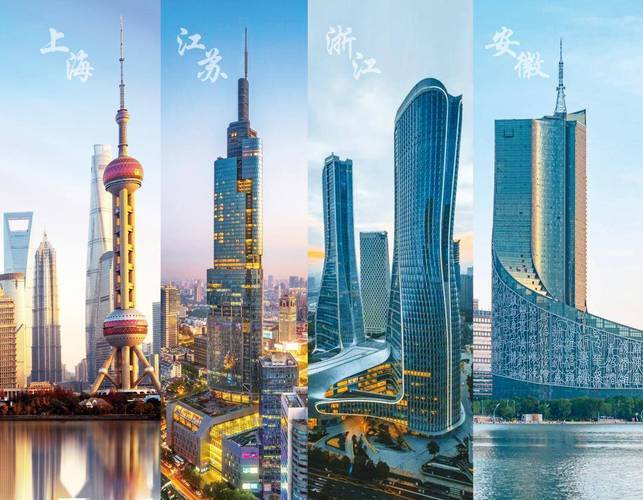
Core Insights - The 2025 Global Most Valuable Cities Top 100 list was released by GYBrand, evaluating cities based on economic strength, infrastructure, quality of life, business environment, international reputation, development potential, and global brand building [1][3] Group 1: Chinese Cities Performance - Fourteen Chinese cities made the list, ranking second globally, with Shanghai and Beijing securing spots in the top ten at 7th and 8th respectively [3][11] - Suzhou entered the top 100 for the first time at 78th, showcasing China's multidimensional breakthroughs in global competition [3][9] Group 2: Shanghai's Strengths and Challenges - Shanghai's core advantages lie in its dual engines of finance and technology, with the Sci-Tech Innovation Board accounting for 40% of the total market value of listed companies in China by 2024 [3][5] - The Shanghai-Suzhou tech cluster ranked fifth globally, with a 10.6% year-on-year increase in PCT international patent applications, totaling 6,185 in 2024 [5] - Challenges include air quality and high living costs affecting livability scores, leading to talent migration to surrounding cities [5][13] Group 3: Beijing's Development - Beijing ranked 8th globally, highlighting its hard power in technology innovation, with 30% of China's AI companies and 40% of quantum computing labs located in the city [7] - The city achieved a research and development intensity of 6.2% in 2024, surpassing Silicon Valley's average [7] - Cultural experiences in Beijing have improved, with the 798 Art District hosting more annual exhibitions than New York's MoMA [7][13] Group 4: Suzhou's Innovation and Growth - Suzhou's core competitiveness stems from the integration of manufacturing and innovation, with 240,000 effective invention patents in 2024, a 19.5% increase [9] - The city is home to the largest industrial internet platform, empowering 150,000 enterprises in digital transformation [9] - Suzhou's transformation from a "world factory" to an "innovation workshop" is marked by significant achievements in various sectors [9][15] Group 5: Emerging Cities and Regional Disparities - Shenzhen ranked 19th globally, surpassing Guangzhou (32nd), with a research and development intensity of 5.8% [11] - Chengdu entered the top 80 for the first time, driven by its "park city" concept and 6G technology development [11] - Regional imbalances are evident, with 11 of the 14 listed cities located in the eastern coastal region, while only Chengdu and Wuhan represent the central and western regions [13] Group 6: Recommendations for Improvement - Major cities should shift from "scale expansion" to "refined operations," with Shanghai exploring "flying economy" and resource sharing with neighboring cities [15] - Beijing needs to alleviate non-capital functions and foster collaborative innovation in the Tianjin-Hebei region [15] - Suzhou should focus on nurturing specialized and innovative enterprises to become champions in global niche markets [15]
宝兴:逐绿向新 绘就高质量发展新图景
Si Chuan Ri Bao· 2025-05-25 22:06
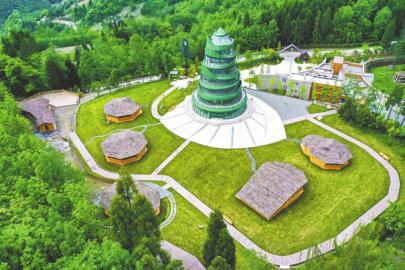
Group 1 - Baoxing County is focusing on ecological priority and green development, transforming its economy and enhancing the quality of life for its residents [2][4] - The county has established over 130,000 acres of ecological farms, forests, and pastures, achieving an agricultural output value of 1.13 billion yuan [4][6] - Baoxing's agricultural sector is thriving, with the area under loquat cultivation reaching over 13,000 acres and an annual production of 2,100 tons, benefiting over 1,300 households [3][4] Group 2 - The tourism sector in Baoxing is experiencing significant growth, with 4.2 million visitors expected in 2024 and a projected tourism revenue of 3.7 billion yuan [4][5] - During the recent May Day holiday, Baoxing County received over 270,000 visitors, a 50.17% increase year-on-year, generating ticket revenue of 3.2 million yuan [5] - The county is enhancing its tourism offerings with various cultural activities and new experiences, such as RV camping and live performances [5] Group 3 - Baoxing County is actively pursuing industrial development, with the Ya'an Economic Development Zone achieving a comprehensive output value of 15 billion yuan in 2024 [7] - The county is focusing on green transformation and has initiated multiple projects, including a high-precision aluminum plate production facility [7][8] - Baoxing aims for a GDP growth of 6.5% in 2024, aligning local budget revenues and per capita disposable income with economic growth [8]
潮汕三市“合体”
盐财经· 2025-05-24 10:00
Core Viewpoint - The article discusses the development of the Shantou-Chaozhou-Jieyang urban agglomeration, emphasizing the potential for economic growth and collaboration among the three cities while highlighting the challenges of administrative barriers and the complexities of city mergers [4][6][22]. Group 1: Urban Agglomeration Development - The Shantou-Chaozhou-Jieyang urban agglomeration has been initiated to enhance collaboration in transportation, healthcare, and tourism among the three cities [4]. - The urban agglomeration signifies a re-integration of the three cities, which historically were part of the same administrative region until the 1990s [5][9]. - The urban agglomeration aims to create a "one heart, two poles" spatial structure, with Shantou as the center and Chaozhou and Jieyang as growth poles, linking to the Guangdong-Hong Kong-Macao Greater Bay Area [28][30]. Group 2: Challenges of City Merger - Despite the push for urban agglomeration, the possibility of merging the three cities is complicated by existing administrative barriers and the current policy environment, which discourages city mergers [15][21]. - Historical attempts to merge cities have faced significant obstacles, and the current administrative structure is unlikely to change without a new policy window [15][21]. - Merging cities of the same administrative level is more complex than merging a provincial capital with a regular city, leading to potential disputes if administrative levels do not change post-merger [19][20]. Group 3: Economic Development Strategies - The article highlights the need for the three cities to break down barriers and form a collaborative development model, focusing on shared infrastructure and services [31]. - The "Hundred Counties, Thousand Towns, and Ten Thousand Villages" initiative aims to enhance economic development in the less developed regions of Guangdong, including the Shantou-Chaozhou-Jieyang area [41]. - The region's industrial transformation is crucial, with a focus on emerging industries such as renewable energy and green chemicals, which are expected to drive future growth [48][50].

他们出生在江苏,却生来就有上海户口
Hu Xiu· 2025-05-23 02:57
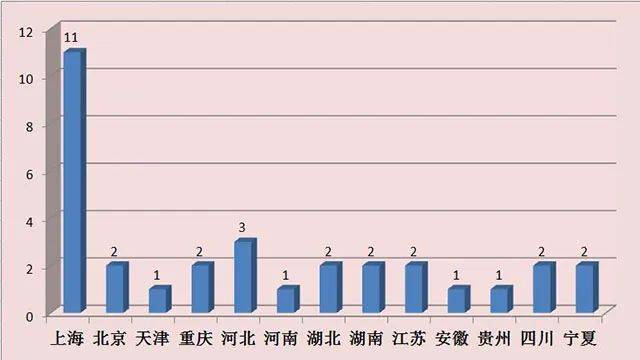
Group 1 - Shanghai household registration is one of the most sought-after in China, providing access to quality medical and educational resources, as well as more employment opportunities [1][2] - Obtaining a Shanghai household registration is notoriously difficult, often requiring high educational qualifications or employment in government institutions [3] - There exists a phenomenon where individuals from Jiangsu can easily obtain Shanghai household registration without ever residing in Shanghai, highlighting a complex "enclave" story [4][5] Group 2 - Shanghai has 11 "enclaves," accounting for one-third of the total enclaves in China, which is a unique geographical phenomenon where a piece of land is governed by an administrative district but is not connected to it [6][10] - The origins of Shanghai's enclaves date back to the early days of the People's Republic of China, when agricultural land was scarce, leading to the establishment of agricultural enclaves in Jiangsu to alleviate food shortages [8][9] Group 3 - The "Dafeng Farm," a significant agricultural enclave, has evolved into a crucial supplier of staple food products for Shanghai, with a total area of approximately 300 square kilometers [12][32] - The Dafeng Farm produces over 200,000 tons of grain annually, accounting for 20% of Shanghai's minimum grain reserve, and is a major source of pork and dairy products for the city [35][36][38] Group 4 - The relationship between Shanghai and Dafeng has transformed from a one-way supply of food to a mutually beneficial economic partnership, especially with the recent improvements in transportation connectivity [55][60] - Since the opening of the Saltong High-speed Railway in 2020, travel time between Shanghai and Dafeng has been reduced to about 2 hours, facilitating closer economic ties [53][55] Group 5 - The collaboration between Shanghai and Dafeng has led to the establishment of numerous industrial parks and projects, with over 600 Shanghai enterprises now operating in Dafeng [57][59] - The ongoing integration of the Yangtze River Delta region has positioned Dafeng as a key player in Shanghai's economic ecosystem, contributing to a new model of regional cooperation [61][63]
山东莱西城乡联建激活力
Jing Ji Ri Bao· 2025-05-12 01:52
Group 1 - The core idea of the news is the ongoing "Urban-Rural Joint Construction" initiative in Laixi City, Shandong, which aims to enhance agricultural product sales and promote rural revitalization through collaboration between urban and rural areas [1][2][4] - Laixi City has signed joint construction agreements between 11 towns and 24 urban districts, creating a new regional work pattern that emphasizes resource sharing, industrial cooperation, and cultural integration [1] - The initiative has led to the establishment of various projects, such as high-efficiency planting gardens and leisure areas, which are expected to attract over 30,000 visitors annually and generate additional income for local communities [2] Group 2 - Laixi City has developed a three-in-one model for production and sales, combining offline direct sales, online orders, and project interconnection, resulting in over 20,000 yuan in sales from community and supermarket activities since 2025 [3] - The city has launched various initiatives, including the "Laixi Weekend" tourism series, which has attracted over 250,000 visitors and generated direct consumption of over 8 million yuan this year [3] - The total sales of high-quality agricultural products through the Urban-Rural Joint Construction have exceeded 17 million yuan, with all village collective economic incomes reaching over 500,000 yuan [4]
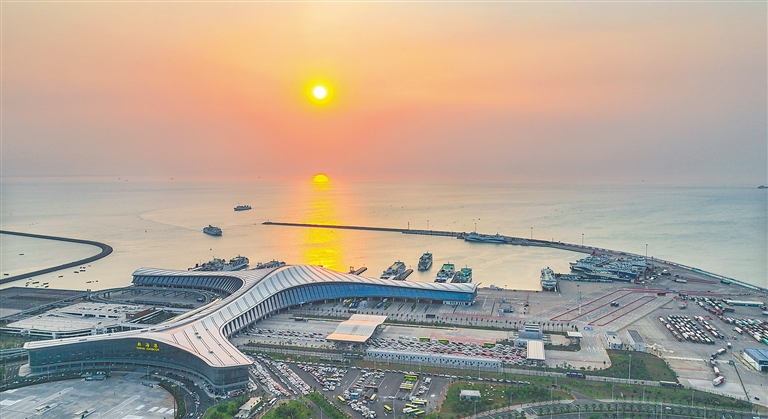
加快推动琼州海峡一体化高质量发展
Hai Nan Ri Bao· 2025-05-08 00:57
Core Viewpoint - The integration and high-quality development of the Qiongzhou Strait is crucial for the connection between Hainan Free Trade Port and the Guangdong-Hong Kong-Macao Greater Bay Area, enhancing its strategic importance in the coming years [2][9]. Group 1: Transportation Integration - The Qiongzhou Strait is under increasing pressure for passenger and cargo transport, with normal years seeing over 14 million passengers and over 5 million vehicles, necessitating the establishment of a unified port asset operation platform to improve efficiency [3][4]. - The goal is to achieve "five unifications" (planning, construction, operation, management, and standards) to optimize the functional division of ports like Xiuying Port, New Port, and Xuwen Port within 1-2 years [3][4]. Group 2: Infrastructure Development - A "half-hour transportation circle" will be developed through three major projects: upgrading ferry services, implementing multi-modal transport options, and constructing smart ports using 5G and IoT technologies to enhance efficiency [4][5]. - The establishment of a "Qiong-Greater Bay Area Combined Port" will facilitate integrated customs clearance and improve international competitiveness through the development of a bonded logistics center [5][6]. Group 3: Industrial Integration - Industrial integration is key to the high-quality development of the Qiongzhou Strait, with a focus on logistics cost reduction and the establishment of a material reserve center to support emergency supplies [6][7]. - Collaborative development of industries such as marine economy, offshore wind power, digital economy, and green energy will be prioritized to enhance regional cooperation [6][7]. Group 4: Management Integration - Addressing cross-administrative coordination challenges is essential, requiring the establishment of a management mechanism that promotes policy collaboration, shared benefits, and talent exchange [8][9]. - A high-level coordination mechanism and a balanced interest distribution system will be implemented to encourage participation from local governments and ensure effective policy execution [8][9].
华中师大教授罗静:推动鄂南湘北文旅融合,加快打造跨省合作样板区
Mei Ri Jing Ji Xin Wen· 2025-04-27 15:17
Core Viewpoint - The article discusses the development of the E'nan-Xiangbei cross-provincial cooperation demonstration zone as a key area for ecological protection and high-quality development within the Yangtze River Economic Belt, particularly focusing on the construction of the Dongting Lake Ecological Economic Zone [1][2]. Group 1: Regional Development and Cooperation - The E'nan-Xiangbei region is identified as an important node for the Yangtze River Economic Belt's industrial advancement and ecological protection [1]. - The State Council approved the "New Era Dongting Lake Ecological Economic Zone Plan," which aims to establish a "four cores and eight clusters" urbanization development pattern, including the E'nan-Xiangbei area [1]. - Hubei and Hunan provinces have shown strong support for the development of the E'nan-Xiangbei region, with five counties signing a framework agreement to promote integrated transportation and industry [1]. Group 2: Transportation and Infrastructure Challenges - The region faces significant transportation challenges, including sparse external passages and low-grade interprovincial routes, which hinder development [2]. - Current transportation infrastructure includes only one coal transport railway, with many shortcomings in the network; while there are navigable waterways, their low grade and lack of ports limit accessibility [2]. - Efforts are underway to enhance the integration of rail, road, and water transport, aiming to strengthen the regional transportation network [2]. Group 3: Strategic Recommendations for Development - Recommendations include establishing a cross-provincial cooperation sub-fund, promoting "flying economy" models, and creating a cross-provincial tax-sharing mechanism to facilitate collaboration [2][3]. - The article suggests allowing shared land use indicators for cultural and tourism purposes and exploring value-added tax distribution based on tourist spending to overcome administrative barriers [3]. - It emphasizes the need for interconnected data among regional attractions, transportation, and hospitality sectors to optimize tourism resource distribution [3].