甜瓜

Search documents
人生缓缓,自有答案
Yang Shi Xin Wen· 2026-01-31 16:27
Core Viewpoint - The article discusses the emerging trend of "old-fashioned humans" among young people, who embrace a slower lifestyle that contrasts with mainstream fast-paced culture, seeking deeper connections and experiences in everyday life [1][15]. Group 1: Slow Living Concept - Young individuals are identifying as "old-fashioned humans," indicating a desire to distance themselves from current trends and embrace a more traditional, slower way of living [1]. - The appeal of slow living lies in the ability to appreciate simple pleasures, such as the beauty of nature and the warmth of human interactions, which are often overlooked in a fast-paced environment [1][15]. Group 2: Nostalgic Reflections - The writings of various authors reflect on the charm of slower times, where life was more deliberate and meaningful, emphasizing the value of genuine interactions and experiences [1][15]. - The nostalgia for a slower pace is not about replicating the past but finding moments of tranquility in the current fast-paced lifestyle [15]. Group 3: Cultural Elements - The article highlights the significance of local street vendors and their calls, which contribute to the vibrant atmosphere of urban life, evoking joy and a sense of community [3][4]. - Traditional foods, such as pickled vegetables and local dishes, are tied to memories and cultural identity, reinforcing the connection to home and heritage [7][10].


河北“新农人”翟梦楠:屏里屏外助农路
Zhong Guo Qing Nian Bao· 2026-01-22 03:55
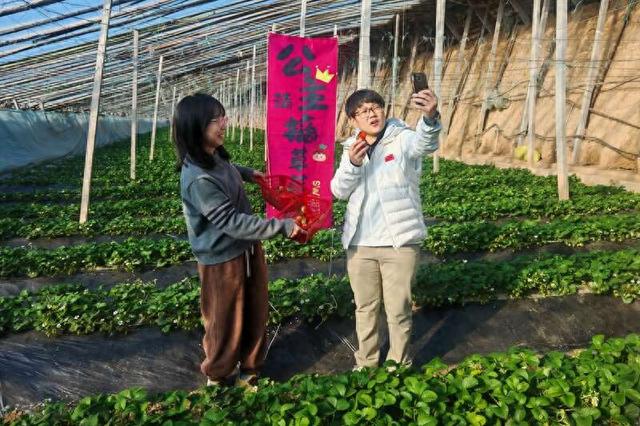
Core Insights - The article highlights the innovative approach of Zhai Mengnan in leveraging live streaming to enhance the sales of agricultural products in Beiguan Community, Hebei Province, leading to significant income increases for local farmers [1][2][3]. Group 1: Challenges and Solutions - Local farmers faced challenges with limited sales channels, leading to low profits from their produce, which prompted Zhai Mengnan to identify three main pain points: single sales channels, lack of consumer awareness, and absence of brand consciousness [2]. - Zhai Mengnan utilized her social media presence, particularly on Douyin, to promote local produce through live streaming, showcasing the natural qualities of the fruits and vegetables while providing information on pricing and booking for picking experiences [2][3]. Group 2: Impact of Live Streaming - The first live stream in February 2022 resulted in over 30 visitors to the greenhouse, generating an additional income of over 2,000 yuan in a single day, which encouraged more farmers to participate [3][5]. - The price of tomatoes increased from 2-3 yuan per kilogram to 8-10 yuan, and the income from strawberries rose by over 15,000 yuan per acre through the "live streaming pre-sale + on-site picking" model [5][6]. Group 3: Community and Brand Development - Zhai Mengnan's success has inspired other farmers to open their own Douyin accounts, leading to a broader community engagement in e-commerce and brand building [6]. - The "Beiguan Picking" brand has gained recognition, attracting nearly 30,000 visitors during the picking season in 2025, establishing it as a notable local attraction [5][6]. Group 4: Future Initiatives - In 2025, the establishment of the "Dingxing County Industry Promotion Alliance" and Zhai Mengnan's role as a public live streaming ambassador signify a strategic move towards integrating media with local industries [7]. - Plans for a "host incubation program" aim to train returning youth and entrepreneurial farmers in live streaming skills, fostering a network of local influencers to promote agricultural products [7][8].
农村实用人才达185.5万人,河南大力培育农业人才队伍 筑牢人才支撑 建设农业强省
Ren Min Ri Bao· 2026-01-21 22:25
Core Insights - The agricultural province of Henan has maintained a stable grain production of over 130 billion jin for nine consecutive years, emphasizing its significance in China's agricultural landscape [1] - The transformation of traditional agriculture to modern agriculture in Henan is driven by talent cultivation and innovative thinking, focusing on technology and industry innovation [1] - The province is investing in agricultural education reform to produce skilled professionals who are knowledgeable and passionate about agriculture, addressing the long-standing issue of insufficient specialized talent [2][3] Talent Development - Henan has 185.5 million practical rural talents, with a focus on training village leaders and new agricultural operators to enhance farmers' skills and knowledge [1] - The province's agricultural universities are reforming their education systems to emphasize practical experience, with over 7,000 students expected to engage in agricultural research and enterprises by 2025 [2] - The "Shennong Talent" program has recognized several individuals in Henan, highlighting the province's commitment to nurturing strategic scientists in agriculture [3] Infrastructure and Innovation - Henan is establishing high-level platforms for agricultural research and innovation, including the Central Plains Agricultural Valley, which integrates research, education, and application [7] - The province has created a comprehensive agricultural innovation system, with 67 provincial-level agricultural research platforms and 88 seed enterprises, enhancing the agricultural value chain [7] - The introduction of new agricultural technologies and practices, such as the successful hybridization of wheat with wild relatives, showcases the province's advancements in agricultural science [7] Skills Training - A systematic approach to agricultural skills training has been initiated, with a target of training 730,000 individuals by 2025, fostering a new generation of skilled farmers [9][11] - The training programs are designed to be comprehensive, covering various aspects of agriculture, including e-commerce and sustainable farming practices [9] - The success of these training initiatives is evident in the increased income of rural residents, with a projected growth rate of 6.0% in disposable income for rural households by 2025 [13] Economic Impact - The agricultural industry in Henan is evolving towards higher value chains, with the emergence of modern food industry clusters worth trillions [13] - The province's grain production is expected to reach 135 billion jin by 2025, reinforcing its role as a key player in national food security [12] - The continuous growth in rural residents' disposable income outpaces that of urban residents, indicating a positive trend in rural economic development [13]
【渭南】冬日大棚孕育增收希望
Shan Xi Ri Bao· 2026-01-19 23:17
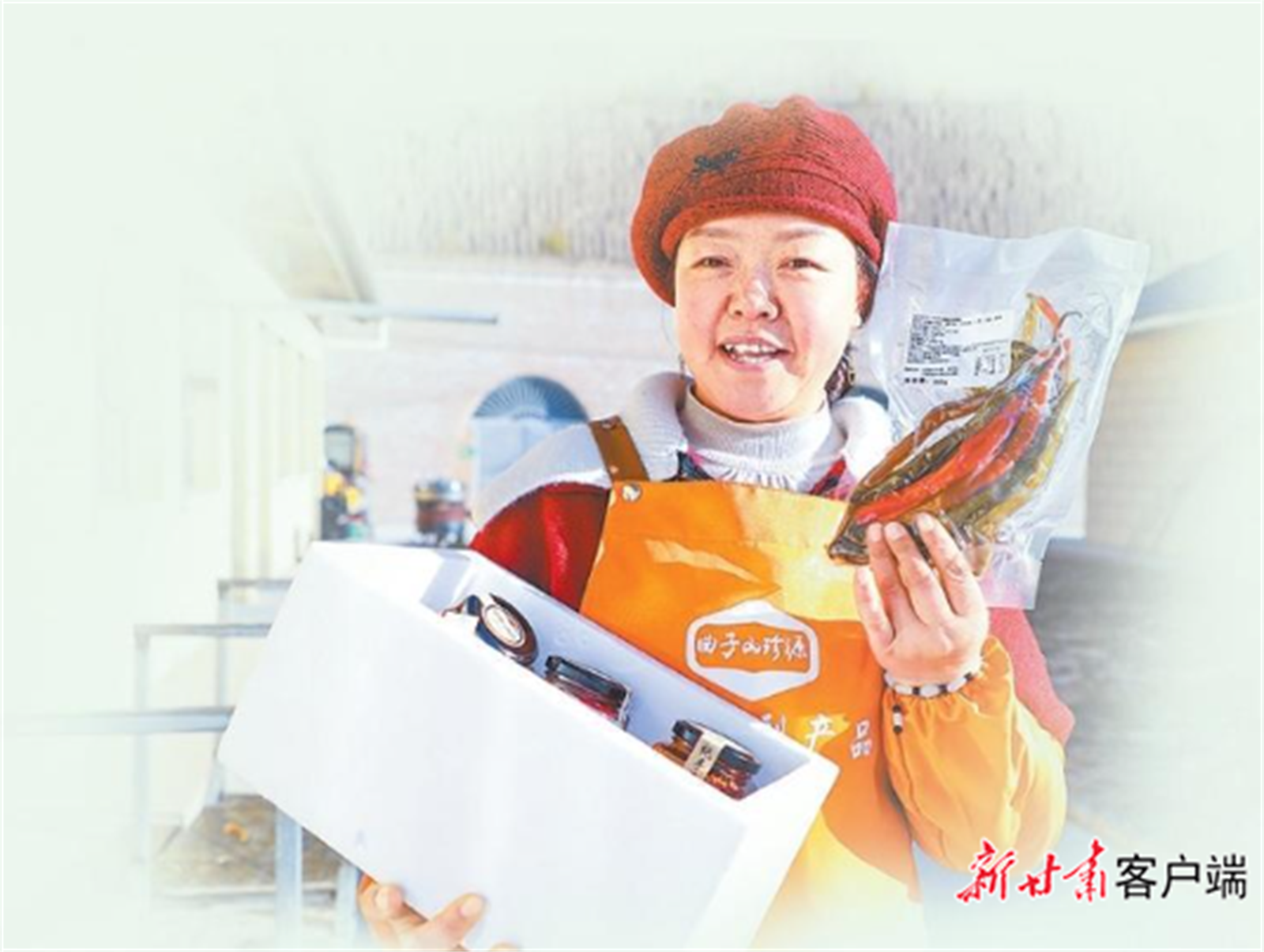
Core Viewpoint - The integration of smart agricultural technologies and modern farming practices is transforming traditional agricultural methods, leading to increased productivity and income for farmers in the region [1][2][3]. Group 1: Smart Agricultural Practices - The use of self-developed inflatable film in greenhouses significantly improves winter insulation, allowing for the successful cultivation of cherry tomatoes that are shipped to major cities [1]. - The implementation of an internal environment control system enables intelligent management of humidity, light, and carbon dioxide levels, enhancing crop growth [1]. - Farmers are utilizing mobile technology to remotely control greenhouse equipment, optimizing growing conditions and increasing yields [2]. Group 2: Collaborative Farming Models - The "Party Branch + Cooperative + Farmer" model in the region promotes collective farming efforts, improving technical support and market access for farmers [2]. - The introduction of multi-crop rotation systems, such as "Western Sweet Melon + Peach + Cherry," allows for year-round production and benefits over 200 local farmers [2]. Group 3: Market Expansion and Product Diversification - The rise of e-commerce and live streaming has expanded the market reach for local products like the fragrant tree shoots, with daily online orders exceeding a hundred [3]. - Plans to develop new products such as fragrant tree sauce and tea are underway, further diversifying the product offerings [3]. Group 4: Agricultural Modernization and Policy Support - The implementation of the "Billion-Level Facility Agriculture" project has led to the establishment of modern agricultural facilities, including seedling centers and cold storage [3]. - The region's agricultural transformation is characterized by a shift from scale expansion to quality enhancement, contributing to high-quality agricultural development [3].
【甘快看】从“穷山沟”到“幸福湾”——一个西北小山村的善治之路
Xin Lang Cai Jing· 2026-01-16 14:57
Core Viewpoint - The transformation of Xigou Village illustrates the importance of combining industrial development with effective governance in rural revitalization, emphasizing that community engagement and shared interests are crucial for sustainable growth [2][19]. Group 1: Governance and Community Engagement - The governance breakthrough in Xigou Village began in 2012 with the return of Liu Xiaobing, who recognized that community cohesion was essential for development [2][4]. - Liu Xiaobing initiated a change in mindset among villagers, leading to the successful cultivation of alfalfa, which increased income and encouraged others to participate in agricultural activities [4][5]. - The village adopted a "village-community integration" model, where all 675 farming households joined cooperatives, fostering a sense of collective responsibility and shared benefits [9][10]. Group 2: Economic Development and Industry - Xigou Village has established nine specialized cooperatives and one union, focusing on sheep farming, grass cultivation, and agricultural processing, which has significantly boosted local income [19][20]. - The village's sheep farming industry has reached a scale of 71,000 sheep, generating over 500 million yuan in output value, with per capita income exceeding 27,000 yuan [10][19]. - The rise of e-commerce and live streaming has allowed villagers to market their products directly, enhancing transparency and trust with consumers [10][21]. Group 3: Participatory Governance - Monthly "Sunshine Council" meetings allow villagers to discuss public services and revenue distribution, ensuring transparency and community involvement in decision-making [13][16]. - The participatory governance model has led to a reduction in conflicts and an increase in community cooperation, transforming the village's social dynamics [19][21]. - Liu Xiaobing emphasizes that genuine community participation is essential for effective governance, creating a positive feedback loop that benefits the entire village [19][21].
河南省方城县:寒冬移栽忙 蓄力待春归
Zhong Guo Jing Ji Wang· 2026-01-06 15:37
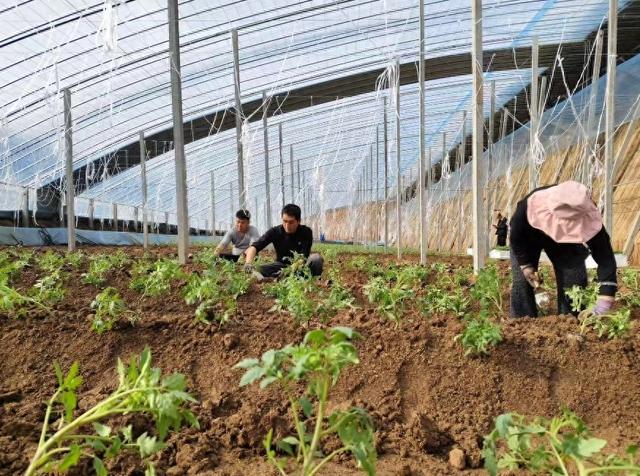
Core Insights - The article highlights the successful agricultural transformation in Sanjianfang Village, Henan Province, focusing on the establishment of a high-tech greenhouse vegetable planting base that has significantly improved local employment and income levels [1][2]. Group 1: Agricultural Development - The village has built a total of 13 greenhouses, including 9 warm greenhouses and 4 cold greenhouses, contributing to a stable income for the village collective from greenhouse rental fees, amounting to approximately 100,000 yuan annually [2]. - The introduction of modern agricultural techniques has enabled year-round continuous planting, enhancing agricultural quality and efficiency [1]. Group 2: Economic Impact on Residents - Local farmers benefit from land transfer payments and income from working at the greenhouse base, with long-term workers earning an additional 20,000 to 30,000 yuan per year, while short-term workers can earn around 15,000 yuan annually [2]. - The transformation of Sanjianfang Village from a "three-no" village (no industry, no projects, no collective income) to a thriving agricultural community illustrates the effectiveness of the "Party branch + cooperative + capable individuals + base + farmers" model [1].
陕西铜川市耀州区:从“经验种地”到“科学种地” 智慧大棚孕育乡村振兴新希望
Xin Lang Cai Jing· 2025-12-26 08:48
Core Viewpoint - The establishment of the Smart Agriculture Industry Demonstration Park in Xiaoqiu Town, Yaozhou District, represents a significant step towards rural revitalization through modern agricultural practices and technology integration [1][3]. Group 1: Project Overview - The Smart Agriculture Industry Demonstration Park covers an area of approximately 2,285 acres and includes the construction of 176 high-standard solar greenhouses, 5 column-free solar greenhouses, 2 thermal storage prefabricated solar greenhouses, and 1 glass greenhouse, with plans for completion within two years [3][4]. - The project is backed by Shouguang Agricultural Holding Group Co., Ltd., which focuses on integrating resources across the entire vegetable industry chain, including seed research, high-end vegetable cultivation, and processing [4][5]. Group 2: Technological Integration - The park utilizes IoT technology to monitor and automatically adjust key parameters such as temperature and humidity, allowing for efficient management of the growing environment via mobile devices [3][4]. - The time required for tomato planting has been reduced from 80-90 days to approximately 50 days until market readiness due to the application of new technologies and facilities [5]. Group 3: Community Engagement and Economic Impact - The project will implement a cooperative model involving state-owned enterprises, professional teams, and local farmer cooperatives, promoting a unified approach to planning, construction, and sales [4]. - Local farmers are encouraged to participate in greenhouse cultivation, with free technical guidance provided to transition from traditional farming to scientific methods [4][5]. - The establishment of the park is expected to ignite entrepreneurial enthusiasm among local villagers, with ongoing training and support to enhance agricultural practices and boost income [5].

农业农村部登记特色农作物新品种1048个
Xin Lang Cai Jing· 2025-12-20 19:01
Core Insights - The Ministry of Agriculture and Rural Affairs has announced the registration of 1,048 new varieties of specialty crops while canceling 226 "imitation seed" varieties, enhancing dynamic management of crop variety registration [1][2] Group 1: New Crop Varieties - The newly registered varieties include high-yield and high-oil rapeseed (50 varieties with oil content ≥48%), high-oleic peanuts (21 varieties with oleic acid content ≥75%), and high-starch potatoes (6 varieties with dry matter content ≥25%) [1] - The new varieties reflect a diverse development, covering 76 types, including cherry tomatoes, fruit cucumbers, cabbage, sweet melons, gift watermelons, and wine grapes, which will enrich the public's food options [1] - The proportion of independently bred varieties has steadily increased, with 99% of the newly registered varieties being self-bred, and 98.5% of these being domestically developed, enhancing the self-sufficiency rate of seed for sugar beets [1] Group 2: Market Regulation - The Ministry is actively pursuing the "imitation seed" rectification initiative to purify the seed industry market, which involves the cancellation of 226 "imitation seed" varieties from crops such as cucumbers, melons, watermelons, tomatoes, and peas [2] - This initiative aims to protect the legitimate rights of breeders and boost confidence in research and development investments by companies [2]
沉睡2200年的“地下粮仓”重见天日
Qi Lu Wan Bao· 2025-12-13 10:19
Core Insights - The discovery of well-preserved rice remains in a 2200-year-old tomb in Hubei's Yunmeng Zhengjiahu site represents the earliest and largest instance of grain burial in China, providing insights into ancient agricultural practices and beliefs [2][3] Archaeological Findings - Nearly 100,000 grains of rice from the Warring States period were uncovered, indicating a long-standing tradition of rice cultivation in the Jianghan Plain, dating back to the late Warring States period [3] - The tomb contained not only rice but also remains of various plants such as chestnuts, melons, and jujubes, reflecting the dietary preferences and biodiversity of the region during that era [3] Preservation Techniques - The rice grains were preserved in a waterlogged environment, which acted as a natural preservative, preventing oxidation and damage [5] - Scientific analysis, including carbon isotope studies, is being conducted to trace the irrigation sources and evolutionary paths of the rice varieties found [5] Cultural Significance - The intentional processing of some rice grains before burial suggests a symbolic role in ancient rituals, possibly representing a connection between the living and the afterlife [5] - The findings contribute to understanding the agricultural history and cultural practices of the Warring States period, highlighting the importance of grains in funerary customs [2][5] Broader Implications - The discovery of ancient seeds, like those from Yunmeng, emphasizes the resilience of life and the potential for ancient genetic traits to inform modern agricultural practices [6][8] - The preservation of ancient seeds serves as a vital resource for studying the origins of agriculture and the exchange of civilizations, underscoring the need for biodiversity conservation in agriculture [9]
秋风起时看“头雁” “金蟹”谱写共富经
Zhong Guo Xin Wen Wang· 2025-11-19 06:39
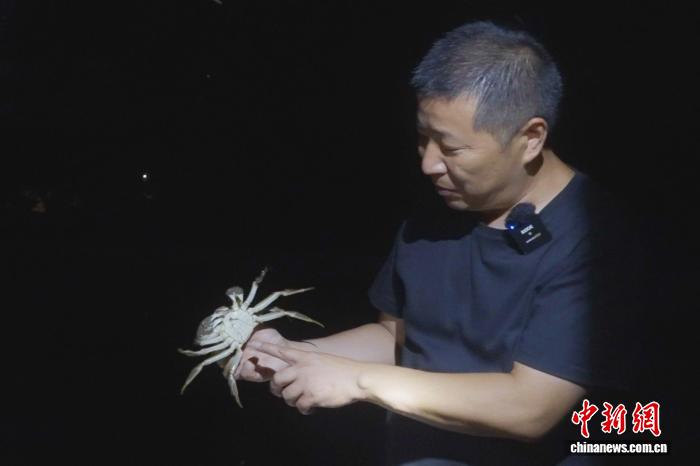
Core Insights - The article highlights the success of Shanghai Shengmiao Aquaculture Cooperative in crab farming, particularly the achievements of its chairman, Ma Yonghua, who has won multiple awards for the quality of his crabs [1][3][7] Group 1: Business Model and Innovations - The cooperative has shifted from a quantity-focused approach to a quality-driven model, implementing a unique "counting farming method" that limits the number of crab seedlings per acre to 600, resulting in higher quality crabs [3][4] - The cooperative's crabs are marketed as premium products, primarily sold in gift boxes, rather than entering the general market, which enhances their value [3][4] - The cooperative has achieved a green food certification, making it one of the few in Shanghai to do so, by utilizing an ecological farming model that includes water recycling and crop rotation [4][5] Group 2: Community Impact and Leadership - Ma Yonghua has taken on a leadership role in the community, participating in the "head goose" training program by the Ministry of Agriculture and Rural Affairs, and helping local farmers increase their income through ecological farming practices [5][6] - The cooperative's model allows for significant income increases for local farmers, with estimates suggesting an additional income of nearly 2000 yuan per acre through integrated farming [5][6] - The transformation of local farmers' attitudes from skepticism to active participation in the cooperative's practices demonstrates the positive impact of Ma's leadership [5][6] Group 3: Seasonal and Diversified Production - The cooperative has diversified its production, growing various crops throughout the year, including watermelons, peaches, and other aquatic products, which helps maintain year-round employment for workers [6][7] - The application of smart agricultural technologies, such as mechanization and drone usage, has revitalized traditional farming practices, contributing to the overall efficiency of the cooperative [6][7] - The article emphasizes the importance of modern agricultural management and the role of innovative leaders in driving rural revitalization [6][7]