
智慧城市

Search documents
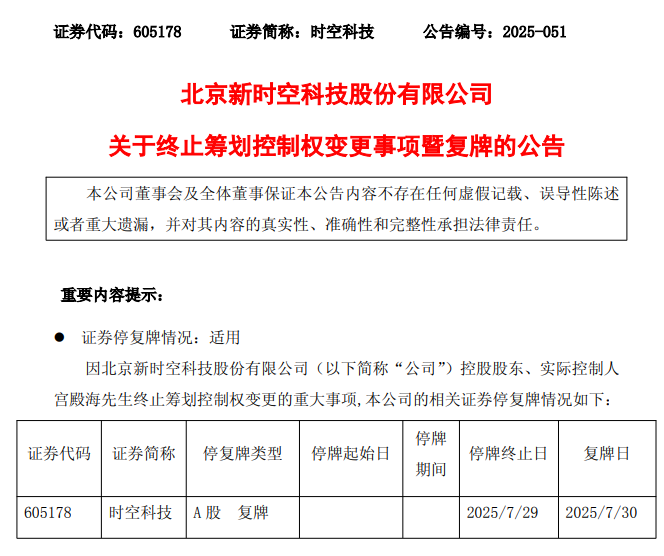
突发!605178,控制权变更终止,复牌!停牌前涨停
Zheng Quan Shi Bao Wang· 2025-07-29 11:42
Core Viewpoint - The planned change of control for Shikong Technology (605178) has been aborted due to the failure of the controlling shareholder Gong Lanhai to reach an agreement on key terms with the counterparties [1][6]. Group 1: Control Change Announcement - On July 24, Shikong Technology announced that its controlling shareholder was planning a significant matter that could lead to a change in control, resulting in a stock suspension [3]. - The stock was suspended on July 24 and was expected to resume trading on July 30 after the announcement of the termination of the control change [1][2]. Group 2: Share Pledge and Ownership - Gong Lanhai has released a portion of his pledged shares, totaling 4.3 million shares, which accounts for 11.57% of his holdings and 4.33% of the total share capital [2]. - After the release of the pledge, Gong Lanhai holds 37.45% of the total share capital, with 436.6 thousand shares still pledged [2]. Group 3: Financial Performance - Shikong Technology has reported continuous losses for four consecutive years, with a revenue of 341 million yuan in 2024, representing a year-on-year increase of 68.14%, and a net profit attributable to shareholders of -262 million yuan [6][7]. - The company expects a net loss of between 61 million and 75 million yuan for the first half of 2025, indicating ongoing financial challenges [6]. Group 4: Industry Context - The company operates in the night economy and smart city sectors, focusing on lighting engineering system integration and innovative development in cultural tourism [6]. - The industry remains competitive, with prolonged project development and signing cycles affecting revenue conversion, alongside macroeconomic impacts leading to lower project payment expectations [7].


食品标签进入扫码时代,“威海味道”可听可播可放大
Qi Lu Wan Bao Wang· 2025-07-29 11:41
Group 1 - The core idea of the article revolves around the implementation of digital labels in the food industry in Weihai, enhancing transparency and consumer trust while improving product value [1][2][4] - Weihai has initiated a pilot program for pre-packaged food digital labels since June 2024, with over 20 companies and 50 products participating, leading to the successful launch of 17 products with digital labels [1][2] - Digital labels allow companies to include essential information such as production processes, testing reports, and traceability data, breaking the limitations of traditional labels and enhancing product differentiation [2][6] Group 2 - The local government has supported the transition to digital labels through policies and training, significantly reducing the trial and error costs for companies [3][6] - Digital labels have transformed from a perceived burden to an efficient marketing and service tool, streamlining communication between companies and their clients [2][7] - The integration of digital labels into products has created a new level of consumer trust, as evidenced by positive feedback from consumers who appreciate the transparency of product information [4][5] Group 3 - The digital label initiative is part of a broader strategy to create a "smart city" ecosystem in Weihai, linking food traceability with tourism and wellness industries [6][7] - Companies are also leveraging digital labels to promote sustainability by reducing paper usage and waste, aligning with ESG (Environmental, Social, and Governance) goals [6][7] - The success of digital labels in Weihai exemplifies a comprehensive governance system that combines policy innovation, service innovation, and marketing innovation to foster industry growth [6][7]
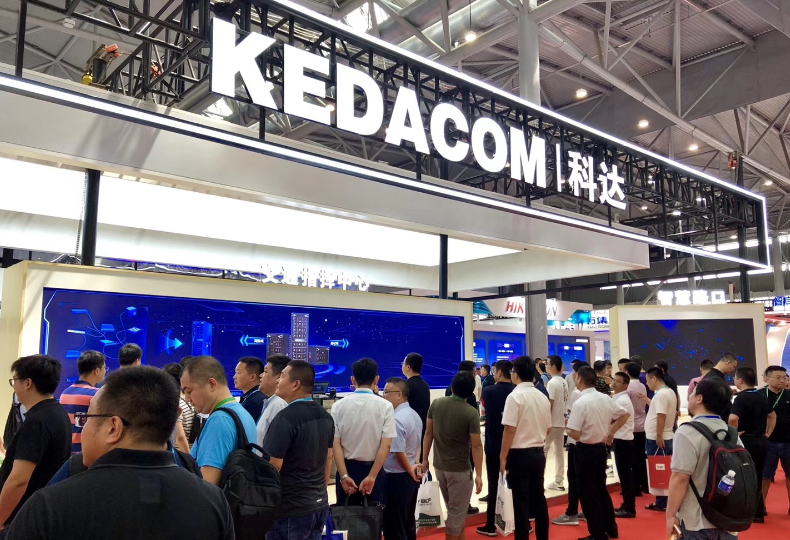
苏州科达:公司已切换使用鲲鹏、鸿蒙、海思、昇腾等产品,全面拥抱华为生态
Ju Chao Zi Xun· 2025-07-29 02:25
Core Viewpoint - Suzhou Keda is focusing on domestic substitution and self-control as primary goals, rapidly advancing the localization of components, software and hardware products, and business systems [2] Group 1: Domestic Strategy - The company has launched domestic hardware terminals, software terminals, and platforms, fully embracing Huawei's ecosystem by switching to Huawei's Kunpeng, Harmony, Hisilicon, and Ascend products [2] - Suzhou Keda has achieved full localization of its video conferencing and video surveillance products [2] Group 2: Performance and Market Outlook - Recent performance fluctuations are largely influenced by external factors, but the company maintains confidence in future performance and continuous innovation in products and solutions [2] - The company is deepening internal operational reforms and actively exploring overseas markets in response to uncertainties in the macro environment and short-term demand shortages from domestic downstream customers [2] Group 3: International Expansion - Suzhou Keda is actively participating in smart city and information construction projects in over 40 countries and 100 cities, including projects in Maldives, UAE, Ethiopia, and Kyrgyzstan [2] - In 2024, the company established a strategic partnership with Saudi Arabia's N&B company to form a joint venture for an automated and intelligent manufacturing center, focusing on smart city and smart transportation development [2] Group 4: Overseas Business Development - The company's overseas business is primarily focused on Southeast Asia, the Middle East, Africa, Eastern Europe, and Latin America, with overseas revenue projected at 138.2 million yuan, accounting for 10.38% of total revenue in 2024 [3] - Two new overseas branches have been established to enhance regional marketing efforts, and plans are underway to set up an overseas intelligent manufacturing center to meet product supply needs [3] - The company has a clear overseas business development strategy aimed at guiding related operational activities, with expectations for rapid revenue growth in the coming years [3] - Suzhou Keda is exploring the application of relevant technologies and products in the rapidly developing automotive industry [3]

熙菱信息控制权易主:7.21亿资本博弈下的转型突围战
Xin Lang Zheng Quan· 2025-07-28 09:26
Group 1 - The core point of the article is the change of control at Xinjiang-based smart city leader Xiling Information, with the controlling shareholders planning to transfer 25.06% of their shares for a total price of 721 million yuan, marking the entry of Shanghai Shengning as the new actual controller [1] - The transaction involves a strategic exit for the current shareholders, with He Kaiwen completely cashing out and Yue Yamei retaining 7.64% of the shares, allowing for potential future capital operations [2] - Xiling Information has faced significant financial challenges, with a cumulative loss of 383 million yuan over five consecutive years, despite a 50.99% year-on-year revenue increase in Q1 2025 [3] Group 2 - The new controlling party, Shanghai Shengning, is backed by significant capital, including potential investments from CITIC Group and Shanghai State-owned Assets Supervision and Administration Commission, indicating a trend of state-owned capital entering the sector [4] - The change in control reflects a rational exit for private entrepreneurs amid industry challenges and represents a typical case of state-owned capital's counter-cyclical investment strategy [4] - The shift in the smart city sector from scale expansion to quality competition may provide valuable insights for industry survival strategies, as Xiling Information embarks on a transformation journey [4]
逐梦智慧城市 大理打造“北斗文旅第一城”
Zhong Guo Fa Zhan Wang· 2025-07-28 05:48
Group 1 - The Ministry of Industry and Information Technology announced a list of pilot cities for the Beidou application, with Dali Prefecture being included among 39 cities from 22 provinces [1] - The "2025 Cross-Strait Smart City Seminar" was held in Dali, focusing on key areas such as urban management, smart manufacturing, IoT, green energy, and smart transportation [1][2] - The seminar aimed to build a high-level cooperation platform to promote deep integration of industrial chains, innovation chains, and talent chains [1][2] Group 2 - Key representatives from major companies and research institutions from both sides of the Taiwan Strait participated in the seminar, discussing core topics related to smart cities [2] - The Future Mobile Communication Forum emphasized the significant potential for cooperation in smart city construction between the two sides [2][3] - The seminar highlighted the current critical period for industrial transformation, driven by low-orbit communication, AI, and widespread data center construction [2] Group 3 - The Dali Research Institute aims to create a modern spatial foundation for smart city construction, leveraging the Beidou satellite navigation system [3] - Dali Prefecture is recognized for its unique natural resources and open business environment, making it an ideal location for smart city development [4] - The Dali Research Institute is positioned as a comprehensive research think tank and technology innovation platform, focusing on the application of Beidou technology in smart city construction [4] Group 4 - Dali's tourism industry is projected to attract over 110 million visitors in 2024, presenting new challenges for urban management and emergency services [5] - The Dali Research Institute and Zhongke Jingshang Technology Co., Ltd. are responding to these challenges by integrating Beidou technology with 5G, IoT, and big data to enhance urban services [5] - A real-time dynamic map based on Beidou technology is being developed to support Dali's goal of becoming a "Beidou Tourism City" [5][6] Group 5 - The Dali Research Institute's Beidou tourism map supports technological innovation and industrial application in high-traffic scenarios, extending its influence beyond Dali to Southeast Asia [6] - Xiangwang Technology, a leading company in slow transportation services, has developed smart electric vehicles based on local needs and the Beidou system [6][7] - The integration of smart city construction and Beidou applications is attracting high-end talent to Dali, fostering the rapid development of new intelligent industries [7]
香港创科局局长孙东,最新发声!
Zhong Guo Ji Jin Bao· 2025-07-26 11:15
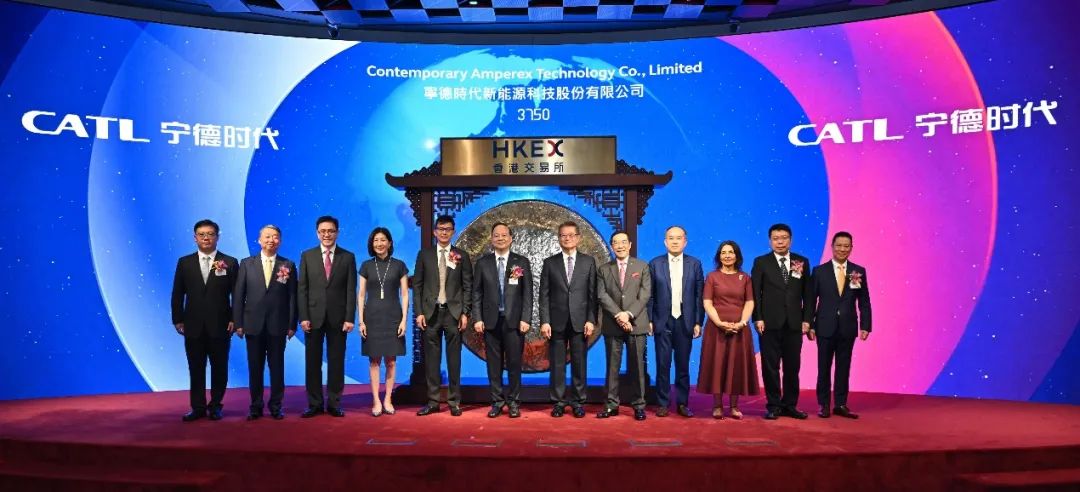
Group 1 - The core viewpoint emphasizes that innovation and technology (referred to as "创科") have become the core driving force for high-quality development in Hong Kong, marking a significant shift from previous economic focuses [1] - The contribution of innovation and technology to Hong Kong's economic growth is substantial, with related activities such as product design, data and software services, and technical development gaining increasing importance [2] - The value added from "computer programming, data, and industrial internet services" increased from HKD 5 billion to HKD 25.5 billion from 2000 to 2023, representing a growth of over four times [2] Group 2 - The development of innovation and technology is changing the local economic ecosystem and creating a more favorable business environment, particularly benefiting the financial market [3] - In the first half of the year, the total amount raised through IPOs in Hong Kong reached HKD 107.1 billion, a sevenfold increase year-on-year, making it the highest globally [3] - Notable mainland tech companies are using Hong Kong as a strategic base for international expansion, with companies like CATL successfully raising funds for European projects [3][5] Group 3 - The innovation and technology sector is fostering a vibrant employment and entrepreneurial ecosystem in Hong Kong, with record applications for internships and job vacancies in related fields [5] - The number of startups in Hong Kong has surged to approximately 4,700 by the end of last year, indicating a thriving innovation ecosystem that is expected to generate more job opportunities [5] Group 4 - Hong Kong is home to five world-class universities, which rely on excellent research outcomes and talent to maintain their global rankings [6][9] - The presence of top researchers in various fields has led to significant scientific achievements, enhancing Hong Kong's reputation in global research [7] Group 5 - The contribution of innovation and technology extends to enhancing smart city initiatives and improving government governance, with the "Smart Convenience" platform serving nearly 3.6 million users [10] - The government is leveraging technology to improve public services, including collaborations with research institutions to enhance efficiency in various sectors [12] Group 6 - The rapid evolution of generative artificial intelligence is showcasing its potential in social governance and public services, with numerous projects utilizing AI technology [13] - The establishment of the Hong Kong Generative AI Research Center aims to develop local AI models and applications to improve government operations and public service delivery [13] Group 7 - The flourishing innovation and technology sector is enhancing Hong Kong's soft power, with the city hosting various international tech events and awards [14] - Events like the "Hong Kong International Innovation and Technology Expo" and the "Future Science Prize" are elevating Hong Kong's global influence in the innovation sector [14]

AI赋能、新潮业态集聚、交通顺畅!从蓝图到实景 现代化人民城市图景徐徐铺展
Yang Shi Wang· 2025-07-26 04:32
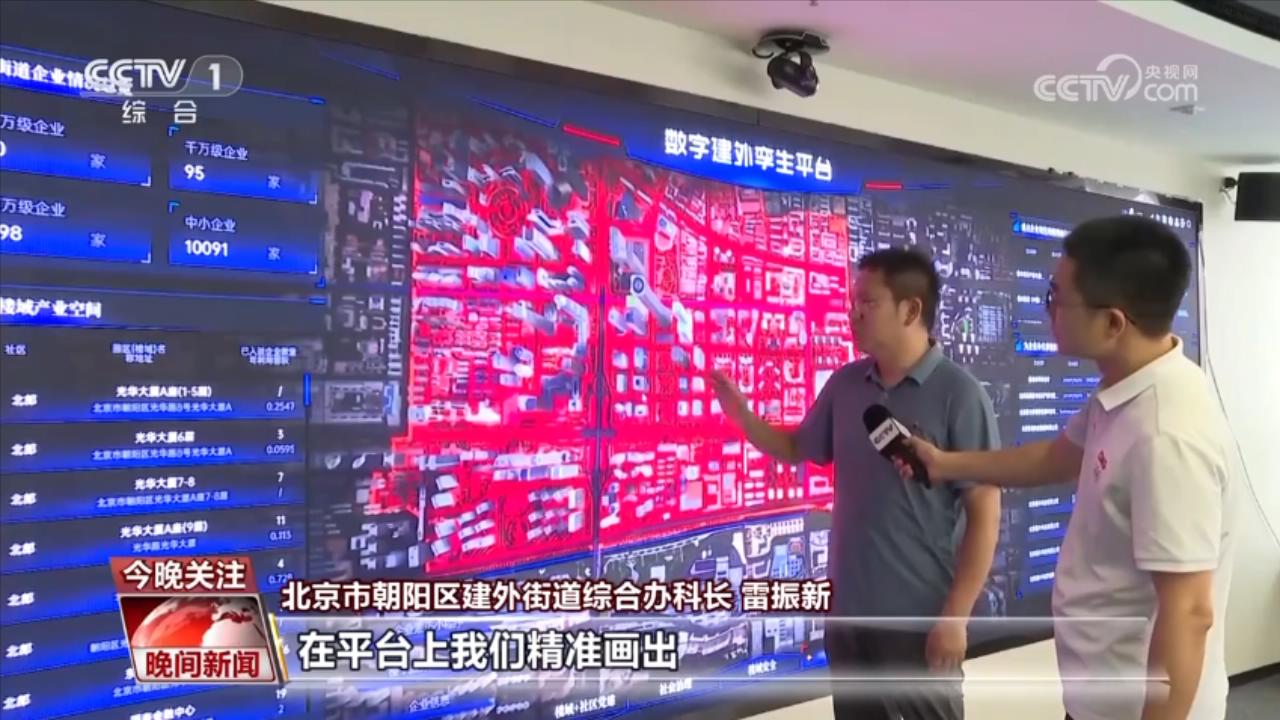
Group 1 - The central urban work conference emphasizes the goal of building modern, innovative, livable, beautiful, resilient, civilized, and smart cities, focusing on high-quality urban development while ensuring urban safety [1][4] - Various regions are exploring new models for constructing modern people's cities, integrating technology to enhance urban governance and address citizens' urgent issues effectively [4][12] - The digital twin platform launched in Beijing's Jianwai Street aids businesses in finding suitable office locations by providing insights into surrounding industrial support and potential partners [6][7] Group 2 - The Jianwai Street area, located in Beijing's CBD, has developed six smart governance application scenarios to quickly respond to various urban issues, enhancing the efficiency of urban management [12] - The implementation of smart systems includes installing overload warning devices in old buildings to preemptively alert residents of potential electrical hazards [14] - New employment groups benefit from a 24-hour AI smart station that offers free access to facilities, providing convenience for delivery and takeaway workers [17] Group 3 - In Guangdong's Shunde district, efforts are underway to create a comfortable and convenient livable city, with a focus on improving public services and developing lifestyle service industries [20][21] - The local community has seen an influx of young entrepreneurs, with new businesses emerging in renovated traditional buildings, contributing to the area's economic vitality [23][25] - Sustainable urban renewal models are being explored, emphasizing the protection and utilization of historical and cultural sites to attract tourism [29] Group 4 - The Chengdu-Chongqing urban agglomeration is enhancing connectivity through the construction of the Shuan'an Tunnel, which is part of the Chengyu Central Line high-speed rail project [31][36] - The high-speed rail will significantly reduce travel time between Chengdu and Chongqing to 50 minutes, facilitating daily commutes and boosting local economies [35][38] - Increased transportation frequency strengthens the ties between surrounding cities and the core urban areas, promoting collaborative development in manufacturing and service industries [37]
21社论丨积极政策组合将推动下半年经济高质量发展
21世纪经济报道· 2025-07-26 00:29
Core Viewpoint - The article highlights the overall stability of China's fiscal operations in the first half of the year, despite a slight decline in public budget revenue, and emphasizes the need for continued policy support to boost domestic demand and address structural economic issues [1][2]. Fiscal Policy - In the first half of the year, China's general public budget revenue was 115,566 billion yuan, a year-on-year decrease of 0.3%, with the decline rate narrowing by 0.8 percentage points compared to the first quarter [1]. - The government is implementing a more proactive fiscal policy, with increased spending in key areas and a significant acceleration in the issuance of special bonds [2]. - More fiscal funds will be directed towards social welfare sectors, including education, healthcare, housing, and pensions [2]. Monetary Policy - The monetary policy is expected to be flexible, with potential new structural monetary policy tools to enhance financial support for the real economy [2]. - Measures may include preferential interest rates and lowered financing thresholds to support key areas such as technological innovation and consumption [2]. Consumption and Investment - A series of effective policies have been introduced to stimulate consumption, including expanding the scope of trade-in programs and increasing support for service consumption [3]. - Investment in high-tech manufacturing is on the rise, with significant growth expected in sectors like new energy vehicles and related manufacturing [4]. - The government plans to issue long-term special bonds to support major projects, particularly in infrastructure [4]. Real Estate Sector - The government aims to stabilize the real estate market by enhancing policy support and optimizing supply structures [5]. - More special bond funds are expected to be allocated for urban renewal projects, including the renovation of old neighborhoods [5]. - Efforts will be made to curb "involution" competition and optimize industry layouts to maintain fair market competition [5].

现代化人民城市怎么建更宜居、更智慧?怎么促进协同发展?
Yang Shi Wang· 2025-07-25 23:31
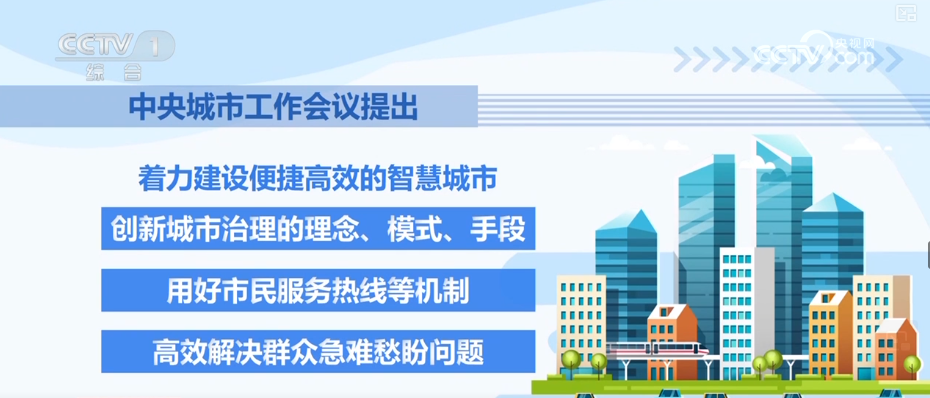
Group 1: Smart City Development - The Central Urban Work Conference emphasizes the construction of efficient smart cities, focusing on innovative governance concepts and mechanisms to address public concerns effectively [1][2] - The Jianwai Street in Beijing has launched a digital twin platform that aids businesses in finding suitable office locations by providing information on surrounding industries and potential partners [2][4] - The street has implemented six smart governance applications to monitor various issues, enhancing response times and safety measures, including fire risk prevention and electrical overload alerts [4][5] Group 2: Livable City Initiatives - The Central Urban Work Conference highlights the importance of creating comfortable and convenient livable cities, with a focus on improving public services and developing service industries [5][6] - In Shunde, Guangdong, community improvements have attracted young entrepreneurs, leading to the establishment of trendy cafes and businesses that enhance local culture and economy [5][8] - The integration of modern amenities and the preservation of historical architecture in Shunde has created a vibrant environment that appeals to both residents and tourists [10] Group 3: Collaborative Urban Development - The construction of the Chengyu High-Speed Railway, particularly the Shuan'an Tunnel, is a key project aimed at enhancing connectivity within the Chengdu-Chongqing urban agglomeration [11][14] - Once completed, the high-speed railway will allow for a travel time of just 50 minutes between Chengdu and Chongqing, significantly improving daily commutes and regional economic integration [11][14] - The increased transportation efficiency is expected to foster collaboration among surrounding cities, promoting the development of industrial parks and local economies [14][16]
着力建设便捷高效的智慧城市——深入贯彻落实中央城市工作会议精神述评之九
Xin Hua She· 2025-07-25 11:12
Group 1 - The central urban work conference emphasizes the construction of efficient smart cities as a key task for modernizing urban governance systems and capabilities [1] - The integration of party leadership in urban governance is crucial, with innovative approaches needed to address the challenges posed by new employment groups and economic organizations [2][3] - The establishment of smart city operation offices at municipal and county levels aims to break data silos and enhance governance efficiency through digitalization [2] Group 2 - The use of digital technologies such as cloud computing, big data, and artificial intelligence is transforming urban governance from extensive management to refined governance [5] - Local regulations are being developed to address data circulation barriers and privacy protection, laying a solid institutional foundation for smart city development [6] - Smart security platforms and applications are being implemented to enhance public safety and community living, demonstrating the integration of technology in urban management [7] Group 3 - Efficient problem-solving for citizens is highlighted, with examples of quick responses to social security inquiries showcasing the effectiveness of smart city initiatives [8] - Various smart applications are improving daily life for citizens, such as parking solutions and healthcare services, emphasizing the importance of user-friendly technology [9] - The ultimate goal of smart city construction is to enhance the quality of urban life, ensuring inclusivity and accessibility for all demographics [9]