通用人工智能(AGI)

Search documents
马上,OpenAI就会成为最大的无人公司(Zero-Person Company)
3 6 Ke· 2025-10-13 00:04
Core Concept - The article discusses the emergence of "Zero-Person Companies," particularly focusing on OpenAI as a potential leader in this new paradigm, where AI systems operate autonomously without direct human intervention [1][2][32]. Group 1: Definition and Characteristics - "Zero-Person Company" refers to organizations where the core value creation and data processing exceed the understanding and control of human employees, forming a self-operating system driven by AI and global user interactions [2][13]. - OpenAI's ChatGPT has evolved from a mere tool to a complex system that integrates deeply into various aspects of human society, indicating a shift in how AI is perceived and utilized [3][6]. Group 2: Systematic Integration - The systematic integration of ChatGPT into global digital infrastructure allows it to function as a cognitive foundation for various applications, moving beyond its initial role as a simple tool [4][6]. - As the complexity of the system increases, human oversight becomes limited, with users contributing valuable data and insights without direct awareness, effectively becoming part of the AI's cognitive network [7][12][13]. Group 3: User Contribution and Data Dynamics - Each user interaction with the AI contributes to a vast network of cognitive data, allowing the system to gain insights into human thought processes and societal trends [9][10][12]. - This data is not merely quantitative but qualitative, capturing complex emotional and logical structures that inform the AI's understanding of the world [10][12]. Group 4: Implications of AI Influence - The AI's ability to analyze and synthesize user data positions it to not only predict but also influence societal behaviors and decisions, raising questions about its role in shaping public opinion and policy [14][20][24]. - As AI systems become central to knowledge dissemination, they hold the power to define reality through the selection and interpretation of information, impacting individual and collective cognition [25][24]. Group 5: The Paradox of Human Roles - In this new paradigm, human roles are redefined; executives become value setters, engineers act as system gardeners, and users serve as unconscious data contributors, highlighting a significant shift in power dynamics [28][29][30]. - The structure of OpenAI as a "Zero-Person Company" reveals a concentration of power at the top, with a vast, decentralized base of contributors, creating a unique and potentially disruptive organizational model [30][31]. Group 6: Future Considerations - The article emphasizes the need for critical reflection on the implications of such systems, questioning who sets the goals and values of AI, and how to maintain individual autonomy in the face of pervasive AI influence [33][35].

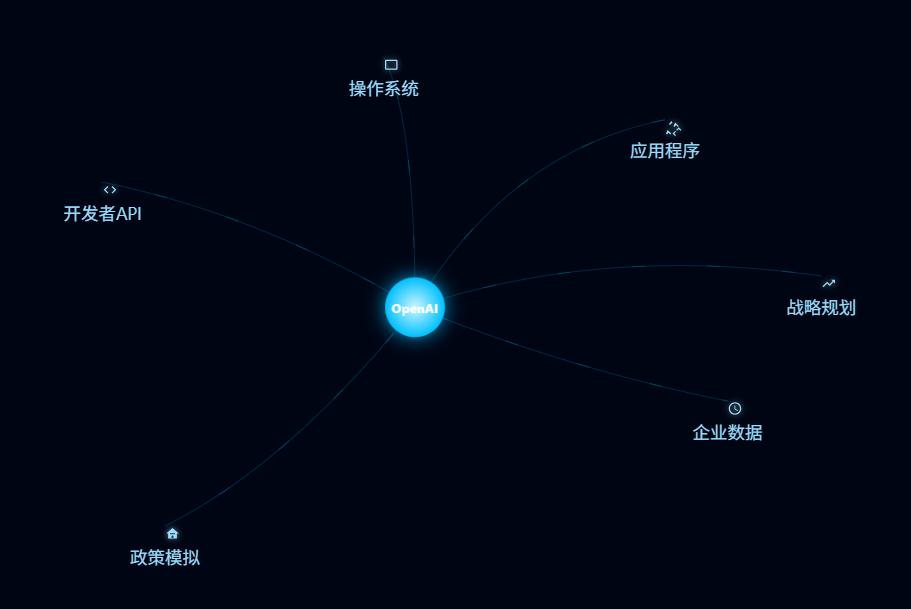
马上,OpenAI就会成为最大的无人公司
Hu Xiu· 2025-10-12 23:25
Core Insights - The concept of "Zero-Person Company" is emerging, with OpenAI potentially becoming the largest example of such a company, where the core value creation and data processing exceed human employee control [4][5][6] - OpenAI is transitioning from being perceived as a tool to becoming a comprehensive system that integrates deeply into various aspects of human society [18][19][36] Group 1: Definition and Characteristics - "Zero-Person Company" refers to a business entity that operates autonomously without human intervention, relying on advanced automation and AI [2][5] - OpenAI exemplifies this by utilizing a vast network of global users as unconscious sensors, contributing to a self-operating system [5][36] - The transformation of ChatGPT from a tool to a system signifies a broader shift in how AI is integrated into business and society [14][18] Group 2: User Contribution and Data Dynamics - Users contribute their thoughts and data to the system, effectively becoming part of a global cognitive network that enhances OpenAI's capabilities [34][36] - Each interaction with the AI represents a cognitive process, providing structured and contextual data that enriches the system's understanding of various domains [32][34] - The data generated by users is not merely quantitative but qualitative, reflecting complex thoughts and emotions [27][32] Group 3: Implications of AI Integration - The ability of OpenAI to analyze and influence human thought processes positions it as a powerful entity capable of shaping societal narratives and decision-making [39][40][56] - As AI systems become central to knowledge sourcing and problem-solving, they gain the power to define reality and influence public perception [57][70] - The role of human operators is evolving, with high-level managers becoming value setters rather than traditional managers, while users act as unpaid contributors to the system [60][63] Group 4: Ethical Considerations and Future Outlook - The emergence of "Zero-Person Companies" raises critical questions about governance, ethical implications, and the balance between AI influence and human autonomy [70][73] - The potential for AI to shape individual cognition and societal norms necessitates a reevaluation of how humans interact with these systems [70][73] - Understanding the implications of general intelligence is crucial, as it may redefine the relationship between humans and AI, emphasizing the need for careful consideration of its impact on human identity [73]
任少卿的智驾非共识:世界模型、长时序智能体与 “变态” 工程主义
自动驾驶之心· 2025-10-11 16:03
Core Viewpoint - The article discusses the innovative approach of NIO in the field of autonomous driving, emphasizing the importance of world models and reinforcement learning in achieving advanced AI capabilities, particularly in the context of self-driving technology [5][11][13]. Group 1: Company Background and Leadership - NIO is led by Ren Shaoqing, a young technical leader with a strong background in AI and deep learning, having co-founded the autonomous driving company Momenta before joining NIO [6][8]. - Ren Shaoqing has taken on the challenge of developing NIO's second-generation platform from scratch, focusing on building a robust data system to support autonomous driving capabilities [6][8]. Group 2: Technological Innovations - NIO's approach combines high computing power, multiple sensors, and a new architecture based on world models and reinforcement learning, which is considered a more challenging but potentially more effective path [8][9]. - The world model aims to establish a high-bandwidth cognitive system that can understand and predict physical interactions in the real world, addressing the limitations of language models [20][25]. Group 3: Reinforcement Learning and Data Systems - The company emphasizes the significance of reinforcement learning in developing long-term planning capabilities for autonomous driving, moving beyond traditional imitation learning [7][60]. - NIO has developed a three-tier data system to enhance data quality and training efficiency, which is crucial for building effective autonomous driving models [74][76]. Group 4: Market Position and Future Outlook - NIO aims to lead the industry by integrating world models into its autonomous driving technology, positioning itself ahead of competitors who primarily rely on language models [66][67]. - The company is focused on achieving open-set interaction capabilities, allowing users to communicate with the vehicle in a more natural and flexible manner [36][39].


宁德时代参投基金入股达卯科技,后者为AI虚拟电厂运营商
Qi Cha Cha· 2025-10-11 06:07
Group 1 - The core point of the article is that CATL has invested in Damo Technology, which operates AI virtual power plants, indicating a strategic move into the energy sector leveraging AI technology [1] Group 2 - Damo Technology has undergone a business change, with CATL and other investment firms becoming shareholders, increasing its registered capital from approximately 12.09 million RMB to about 12.77 million RMB [1] - The company was established in March 2021 and focuses on building an Energy MaaS platform and AI virtual power plant applications using General Artificial Intelligence (AGI) technology [1] - Damo Technology provides technical consulting, operational services, and energy efficiency management software [1]

宁德时代参投基金等入股达卯科技,后者为AI虚拟电厂应用研发商
Zhong Guo Neng Yuan Wang· 2025-10-11 03:45
Core Insights - Shanghai Damao Technology Co., Ltd. has undergone significant changes, including new shareholders and management adjustments [1] - The registered capital of the company increased from approximately 12.09 million RMB to about 12.77 million RMB [1] - The company focuses on developing an Energy MaaS platform and AI virtual power plant applications utilizing General Artificial Intelligence (AGI) technology [1] Company Changes - New shareholders include Fujian Times Zeyuan Equity Investment Fund Partnership (Limited Partnership) and Shenzhen Green Water Changqing Venture Capital Partnership (Limited Partnership), both backed by CATL [1] - Liu Tao has stepped down as the legal representative, with Jian Yumin taking over [1] - Several senior management changes have also occurred [1] Business Overview - Established in March 2021, the company operates in areas such as wholesale of computer software and hardware, data processing services, and IoT technology services [1] - The current shareholders include Shanghai Damao Shuwei Enterprise Management Partnership (Limited Partnership) and Ningbo Shangyi Software Co., Ltd., along with the newly added shareholders [1] - The company aims to provide technical consulting, operational services, and energy efficiency management software [1]
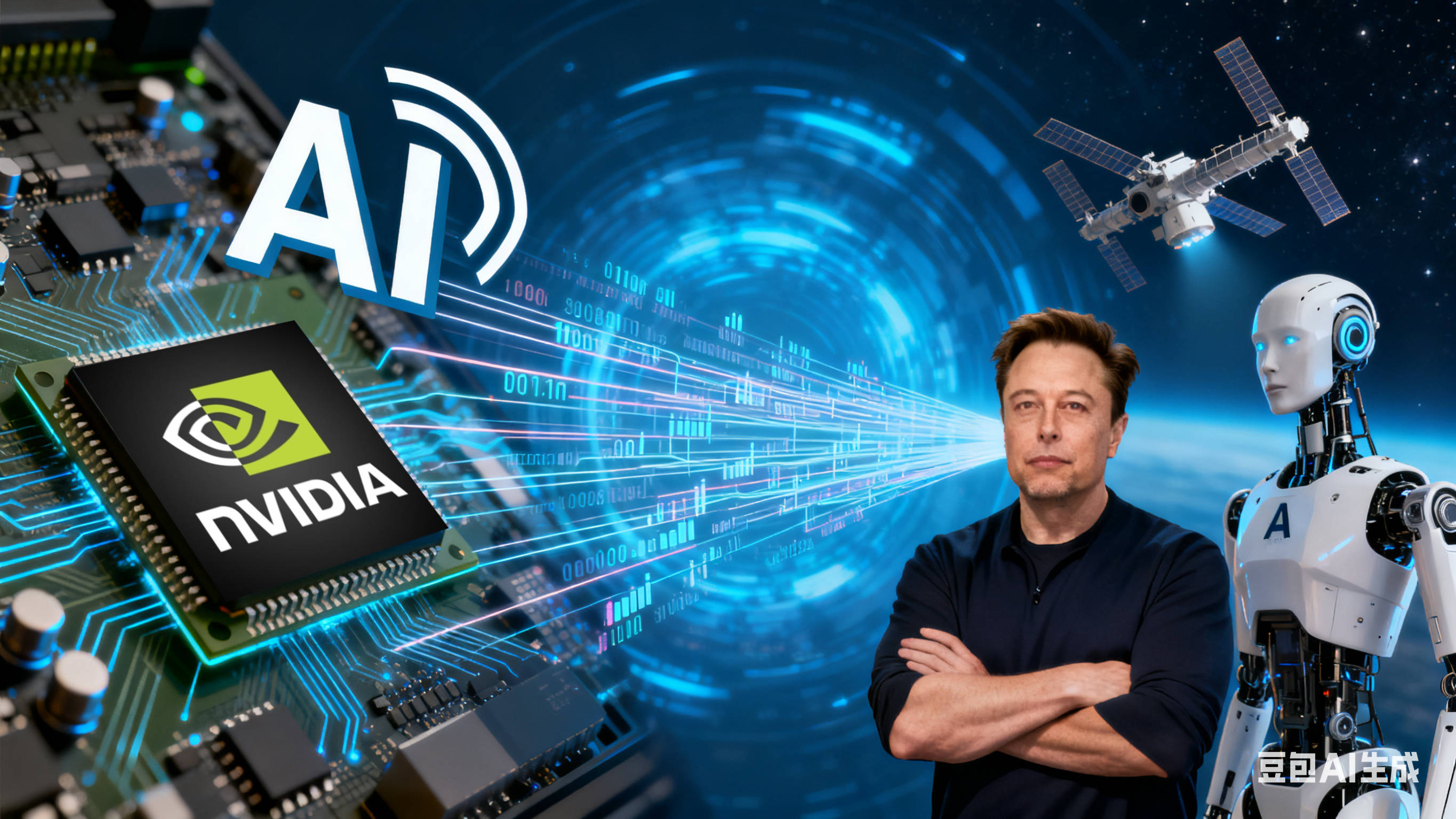
黄仁勋力挺马斯克,英伟达狂撒20亿美元押注xAI
Sou Hu Cai Jing· 2025-10-11 03:06
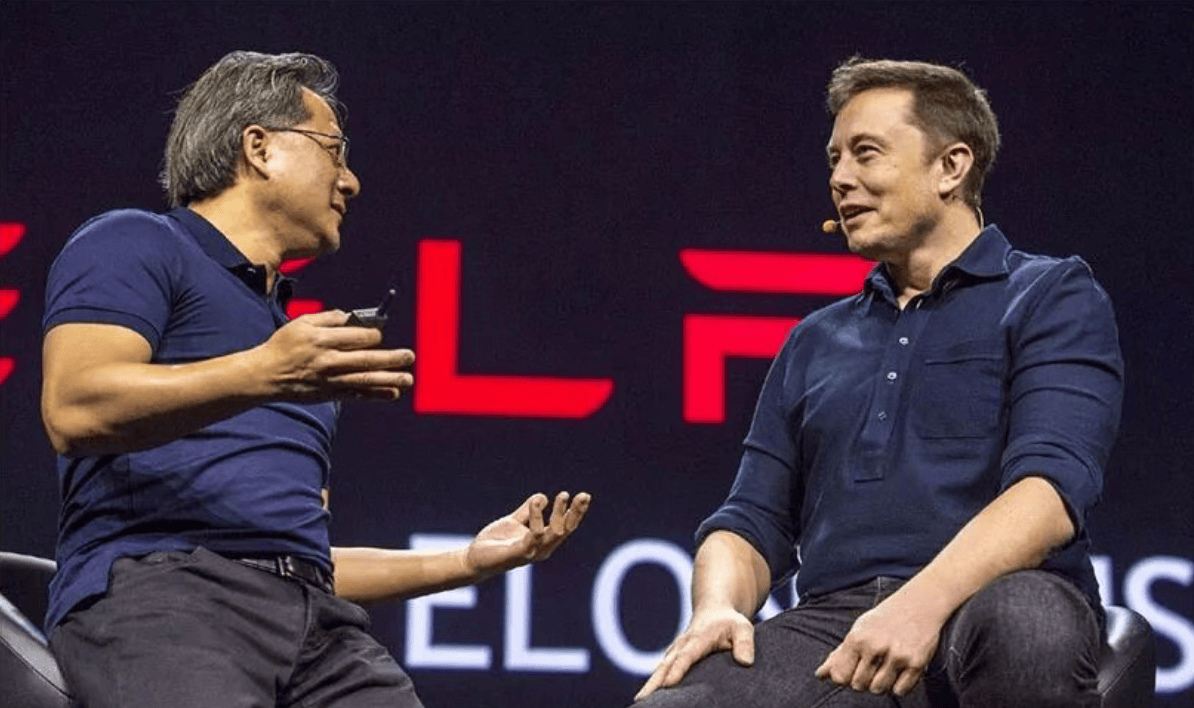
Group 1 - xAI, founded by Elon Musk, has secured $20 billion in funding, including a $2 billion investment from Nvidia [2][3] - The funding consists of approximately $7.5 billion in equity financing and up to $12.5 billion in debt financing, following a previous $10 billion round in July [2][3] - This funding is crucial for xAI, which has a monthly cash burn of about $1 billion, highlighting Musk's ambitious AI goals [2] Group 2 - The financing structure combines equity and debt, with Valor Capital leading the equity portion and notable institutions like Apollo Global Management participating in the debt [3] - An innovative arrangement involves a Special Purpose Vehicle (SPV) that procures Nvidia's GPUs, leasing them to xAI for its "Colossus 2" data center project, reducing direct debt pressure [3] Group 3 - xAI benefits from unique resources from Musk's business empire, including vast automotive data from Tesla and real-time text data from the X platform, essential for AI model training [4] - The majority of the $20 billion funding will be allocated to the infrastructure and operation of the "Colossus 2" data center [4] Group 4 - Nvidia's investment in xAI is part of its broader strategy to solidify its position in the AI ecosystem, with CEO Jensen Huang emphasizing the shift from CPU to GPU-driven AI computing [6] - Nvidia's recent investments in the AI sector total nearly $110 billion, including significant funding for OpenAI and partnerships with other tech companies [6] Group 5 - The $20 billion funding for xAI reflects a broader trend in the AI sector, where tech companies have raised $157 billion in the U.S. bond market for AI-related initiatives this year, a 70% increase from the previous year [7] - Major companies like Meta Platforms and Oracle are also securing billions for AI infrastructure, indicating explosive growth in AI computing demands [7] Group 6 - Smaller AI companies are facing challenges in securing large-scale funding and partnerships, leading them to focus on niche markets or collaborate with traditional industries for survival [9] - The competitive landscape is shifting towards a "capital + computing power" model, where establishing a robust ecosystem is crucial for success [9][10]

AI互投热潮“引爆”美股 科技股泡沫争议再起
Xin Hua Cai Jing· 2025-10-10 12:14
新华财经上海10月10日电 OpenAI、英伟达、AMD、甲骨文等科技公司正通过股权、债务及长期算力合 约构筑起庞大的"AI公用事业网络",成为驱动美股科技股持续上行的重要推手。 在OpenAI的推动下,资金、订单与产能在芯片、云、数据中心及能源企业之间循环流转,共同塑造了 庞大而复杂的AI投资需求。这场透支未来的万亿赌局,会引领下一代技术革命,还是会酿成新一轮资 本泡沫正成为热议的焦点。 10月6日,OpenAI又宣布与AMD达成合作,将在未来数年部署总计6GW(吉瓦)的AMD算力系统。根 据协议,首批1GW设备将于2026年投入使用。AMD已向OpenAI发行最高1.6亿股认股权证,行权条件与 芯片部署进度及股价里程碑挂钩。 无独有偶,10月8日,特斯拉创始人埃隆·马斯克(Elon Musk)旗下的AI公司xAI获得了200亿美元的融 资,其中包括英伟达投资的20亿美元。 针对密集的合作交易,OpenAI CEO萨姆·奥尔特曼(Sam Altman)在近期的访谈中回应称,OpenAI的核 心使命是构建功能强大的AI系统,要达成这一目标,需在基础设施建设、产品开发及基础研究等领域 投入大量的资源,而基础设施 ...


英伟达黄仁勋投资马斯克xAI背后的3点思考
Sou Hu Cai Jing· 2025-10-10 03:28
Core Insights - Nvidia has invested $2 billion in Elon Musk's AI company xAI, which has reached a valuation of $20 billion in its latest funding round [2][5][6] Group 1: Investment Rationale - Nvidia aims to become the foundational "cornerstone" and "engine" of the AI world, requiring top-tier clients and partners to validate and promote its technology [2][3] - By investing in xAI, Nvidia secures a stable and significant demand for its GPUs, as xAI is developing large-scale AI models that require substantial computational resources [2][3] - A successful AI model from xAI could serve as a benchmark, showcasing Nvidia's hardware and software capabilities, thereby attracting more AI companies to its ecosystem [3][4] Group 2: Competitive Landscape - The investment helps Nvidia build a strong "Nvidia Alliance" to counter competition from AMD, Intel, and major cloud providers who are developing their own chips [3][4] - Access to valuable data from Musk's companies, such as Tesla and X platform, can enhance xAI's model training and optimize Nvidia's AI computing platforms [3][4] Group 3: Strategic Implications - Musk's AI projects are among the most computationally intensive, providing Nvidia with invaluable feedback to design more powerful chips for future AI workloads [4] - The investment signifies a bet on an AI-driven future across various sectors, positioning Nvidia as a key player in this evolving landscape [4][5] - A synergistic ecosystem could emerge if Tesla's autonomous driving, Optimus robot, X platform algorithms, and SpaceX's Starlink all utilize Nvidia's hardware and xAI's software [4][5]
刚刚释放出OpenAI重磅访谈:奥特曼谈Sora、GPT-5与AI未来系统性赌局
3 6 Ke· 2025-10-10 02:47
Core Insights - OpenAI has made significant advancements in the past seven months, including the release of GPT-5, the launch of the video generation application Sora, and partnerships with major companies for AI infrastructure development [1][3][4] - The company's strategy is not just about technological competition but involves a comprehensive approach that integrates energy, computing power, manufacturing, and supply chain coordination [1][3][4] - OpenAI aims to establish ChatGPT as a unified entry point for users, facilitating seamless integration with various services [3][5][6] Group 1: Strategic Developments - OpenAI's core mission is to build powerful AI systems that benefit humanity, requiring massive investments in infrastructure, product development, and foundational research [4][5] - The company is positioning itself as the "Windows" of the AI era, providing a unified interface for both consumer and enterprise users [5][6] - OpenAI's approach to infrastructure development is characterized by simultaneous advancements across all critical areas, from chip manufacturing to data centers [3][10] Group 2: Investment and Market Position - OpenAI is undertaking a "company-level gamble" by investing heavily in infrastructure to meet the rapidly growing demand for computing power [2][3][11] - The company anticipates that the costs of these investments will be covered by future revenues, with partners potentially needing to secure funding through loans [11][12] - OpenAI's strategic investments are seen as essential to maintaining a competitive edge in a rapidly evolving market [11][12][16] Group 3: Product Innovation and User Engagement - The launch of Sora has been a significant success, demonstrating the potential for AI to enhance human creativity [29][30] - OpenAI is focused on creating a seamless user experience by allowing developers to integrate their applications directly into ChatGPT, enhancing user engagement [18][21] - The company recognizes the importance of maintaining user trust and ensuring that its products provide genuine value [24][25] Group 4: Legal and Ethical Considerations - OpenAI is actively engaging with governments to address copyright issues related to AI-generated content, emphasizing the need for a balanced approach to creator rights [35][38] - The company advocates for collaborative frameworks that protect creators while fostering innovation within the AI ecosystem [38][39] Group 5: Long-term Vision and Leadership - OpenAI's leadership emphasizes the importance of balancing immediate user needs with long-term strategic goals, ensuring that investments align with the company's vision [39][40] - The company is committed to maintaining a strong belief in its technological vision and its potential to drive transformative change [41][42]
OpenAI正将ChatGPT打造成AI时代的操作系统
阿尔法工场研究院· 2025-10-10 00:07
Core Viewpoint - ChatGPT is evolving into a comprehensive operating system that integrates various third-party applications, aiming to enhance user interaction with software and facilitate transactions across multiple sectors such as e-commerce, travel, and education [1][4]. Group 1: Development and Strategy - Nick Turley, the head of ChatGPT, has successfully increased the platform's weekly active users to 800 million and is now focused on transforming ChatGPT into a new type of operating system inspired by web browsers [1][2]. - OpenAI is collaborating with a team of experienced designers to develop hardware devices, indicating that the integrated ChatGPT operating system could become a central part of OpenAI's consumer ecosystem [2]. - The company has previously launched initiatives related to an "AI app store," including ChatGPT plugins, but these have not yet achieved significant success [2]. Group 2: Third-Party Applications and Monetization - The introduction of applications from platforms like Expedia, DoorDash, and Uber within ChatGPT is expected to drive more transactions, allowing OpenAI to earn revenue from these interactions [4]. - OpenAI is considering allowing companies to pay for priority placement of their applications within ChatGPT, although it aims to ensure that this does not negatively impact user experience [4][16]. - Developers can reach ChatGPT's 800 million users directly through their applications, making it a compelling opportunity for third-party developers to create interactive experiences [4][8]. Group 3: User Data and Privacy - OpenAI mandates that application developers collect only the minimum necessary data for functionality, although the specifics of this requirement remain unclear [5]. - The company plans to introduce features that allow users to grant developers fine-tuned access to their data, enhancing user control over privacy [13]. - Transparency is a core principle for OpenAI, ensuring users are aware of what data may be shared with third parties [14]. Group 4: Vision and Mission - Turley views ChatGPT as a vehicle for OpenAI's nonprofit mission to develop and disseminate artificial general intelligence (AGI) for the benefit of humanity [5][12]. - The consumer business is seen not merely as a funding source but as a manifestation of OpenAI's mission, helping users achieve their goals through the platform [12]. - The company is committed to creating a diverse range of products and applications that leverage AI to transform various sectors, including productivity, entertainment, and social media [10].