
元宇宙

Search documents
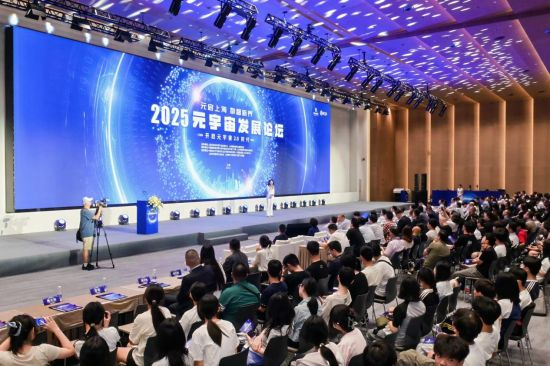
“元启上海·数智新界”2025元宇宙发展论坛举办
Zhong Guo Jing Ji Wang· 2025-09-29 07:28
Core Insights - The "2025 Metaverse Development Forum" was held in Shanghai, focusing on the city's strategy to become an "International Digital Capital" and showcasing the achievements of its Metaverse action plan [1] - Shanghai's Metaverse core industry and related sectors are projected to exceed 300 billion yuan by the end of 2024, demonstrating strong growth since the city began its Metaverse initiatives in 2022 [1] - The forum featured discussions on the integration of AI and Metaverse in healthcare, as well as the development of lightweight AR smart glasses, highlighting innovative applications in various fields [2] - A total of 40 innovative Metaverse products and solutions were launched, covering six tracks and four major sectors, showcasing Shanghai's comprehensive strength in the Metaverse industry [3] - The forum also marked the signing of 13 projects between districts and leading Metaverse companies, indicating a collaborative ecosystem is rapidly forming [3] - The first national standard for "Classification and Value Evaluation of Metaverse Achievements" was introduced, providing guidelines for sustainable industry development [3]
游戏ETF(159869)近5个交易日“吸金”近12亿元,规模突破100亿元,游戏产业正成为提振消费新引擎
Mei Ri Jing Ji Xin Wen· 2025-09-29 07:02
Group 1 - The gaming sector is experiencing fluctuations, with the gaming ETF (159869) showing a slight decline, but it has attracted significant capital inflow of 1.166 billion yuan over the past five trading days, reaching a new high in product scale of over 10 billion yuan [1] - In 2024, the domestic gaming market is projected to achieve actual sales revenue of 325.783 billion yuan, reflecting a year-on-year growth of 7.53%, with the user base reaching 674 million, an increase of 0.94% [1] - Shanghai's online gaming industry leads the nation with annual sales revenue of 155.8 billion yuan, marking a 7.8% year-on-year growth and maintaining positive growth for 13 consecutive years [1] Group 2 - The gaming industry is emerging as a new engine for consumer spending, with the integration of online and offline experiences creating immersive new scenarios, driven by Gen Z players and the explosive growth of the "game+" model [2] - Game IP is reshaping urban consumption spaces, unleashing dual economic vitality through "virtual + physical" interactions [2] - The gaming sector is catalyzed by transformations in AI, content, and commercialization models, with the gaming ETF (159869) tracking the performance of A-share listed companies in the animation and gaming industry [2]


“元启上海·数智新界”2025元宇宙发展论坛在沪开幕
Zhong Guo Xin Wen Wang· 2025-09-29 01:16
Core Insights - The 2025 Metaverse Development Forum, themed "Yuanqi Shanghai: Digital Intelligence New Realm," was held in Shanghai to showcase the city's achievements in the metaverse action plan and promote diverse applications [1][3] - Shanghai's metaverse industry has shown strong growth since its initial focus in 2022, with the core and related industries expected to exceed 300 billion yuan by the end of 2024 [3] Industry Developments - The forum featured a "virtual-physical integration" format for showcasing results, highlighting Shanghai's advancements in metaverse industry scale, technological breakthroughs, and platform development over the past three years [3] - A total of 40 innovative metaverse products and solutions were officially released, covering six tracks including digital content, XR glasses, service platforms, 3D engines, digital humans, and naked-eye 3D, across four sectors: industry, culture and tourism, education and training, and healthcare [4] Ecosystem Building - Multiple districts in Shanghai signed agreements with leading metaverse companies on 13 projects, indicating a collaborative ecosystem is rapidly forming between the city and enterprises [6] - Shanghai has implemented a "challenge-based" approach to scene applications since 2022, driving the transition of metaverse technology from concept to practical application [6] Standardization Efforts - An initiative for the standardization of extended reality and immersive experience was launched, along with a draft for the "Classification and Value Evaluation of Metaverse Achievements" to support the sustainable development of the industry [6] Future Outlook - Keynote speeches at the forum discussed AI's role in enhancing display imaging systems, showcasing breakthroughs in various imaging technologies [7] - The forum included multiple sub-forums focusing on commercial loops in the metaverse, application scenarios, standardization, and global competition strategies, providing a platform for diverse exchanges from technology to market [8]
王健林被限制高消费;贾国龙清空社交账号;小米SU7 Ultra首次在日本亮相;星河动力航天完成24亿元D轮融资丨邦早报
创业邦· 2025-09-29 00:08
Group 1 - Wanda Group and its legal representative Wang Jianlin have been restricted from high consumption due to forced execution of 186 million yuan related to economic disputes involving subsidiary companies [3] - Zero Run Auto's founder Zhu Jiangming responded to being restricted from high consumption, stating that the issue was resolved within three days and highlighted the need for team improvement [4] - The founder of Xibei Catering, Jia Guolong, has cleared his social media accounts, with the only remaining content being a video discussing the company's growth and annual revenue of 6.2 billion yuan [5] Group 2 - Zhejiang Wahaha's bottled water sales rights have been transferred to a subsidiary, with the implementation of this change expected by March 2025 [6] - Bear Electric is investigating an incident involving an exploding health pot that caused severe burns to a child, with the company expressing its commitment to support the affected family [6] - The domestic GPU company Moore Threads has passed its IPO review, potentially becoming the first domestic GPU stock if successful [6] Group 3 - The sales revenue of the retail group Pang Dong Lai exceeded 17.12 billion yuan in the first nine months of 2025, surpassing the total revenue of 16.9 billion yuan for the entire year of 2024 [8] - The UK government has agreed to provide a loan guarantee of up to 1.5 billion pounds to Jaguar Land Rover to stabilize its supply chain after a cyber attack [11] - Xiaomi showcased its high-end electric vehicle SU7 Ultra in Japan, with plans to expand its retail presence in the country [11] Group 4 - Huawei's CEO of the Smart Car Solutions BU stated that L3 level autonomous driving is expected to scale up by 2027, marking a significant transformation in the automotive industry [11] - Starry Sky Power Aerospace completed a D round financing of 2.4 billion yuan, with multiple investment funds participating [12] - The industrial robot company Weiyi Intelligent has submitted an IPO application in Hong Kong, positioning itself as a leading supplier in the AI visual industrial robot market [12]

多地公共数据共享应用取得新进展;上海元宇宙相关产业规模突破3000亿元
Mei Ri Jing Ji Xin Wen· 2025-09-28 23:24
Group 1: Public Data Sharing Progress - Multiple regions in China have made significant advancements in public data sharing applications, with Jiangsu launching an integrated public data authorization platform and developing 86 public data products across various sectors including financial services and low-altitude economy [1] - Shandong has conducted over 52 billion data sharing instances and created over 90 high-quality datasets focused on artificial intelligence in industrial manufacturing and transportation [1] - Guangdong has opened over 27 billion public data records to society, supporting efficient service delivery [1] Group 2: Investment in Robotics - Lexiang Technology has completed a 200 million yuan financing round, led by Zhongding Capital, with existing investor IDG Capital also participating [2] - The funds will be used for research and development of core components, robot body and motion control technology, and consciousness bionic model iteration, aiming to accelerate the large-scale deployment of consumer-grade intelligent products [2] - The financing reflects strong market confidence in the consumer robotics sector, although high R&D costs and technical bottlenecks may impact profitability [2] Group 3: Metaverse Industry Growth - The scale of Shanghai's metaverse-related industries has surpassed 300 billion yuan, with over 30 XR terminal manufacturing companies and a significant share of core component production [3] - Future efforts will focus on technological breakthroughs and application trials in areas such as physical AI, spatial computing, digital humans, and 3D digital content [3] - The local government's strong support for emerging industries is expected to facilitate the transition of the metaverse from concept to tangible economic impact, attracting more capital and enhancing company valuations [3]
多地公共数据共享应用取得新进展;上海元宇宙相关产业规模突破3000亿元|数智早参
Mei Ri Jing Ji Xin Wen· 2025-09-28 23:22
Group 1 - Multiple regions in China have made significant progress in public data sharing applications, with Jiangsu launching a unified public data authorization platform and developing 86 public data products across various sectors [1] - Shandong has conducted over 52 billion data sharing instances and created over 90 high-quality datasets focused on AI development in industrial manufacturing and transportation [1] - Guangdong has opened over 27 billion public data records to the public, supporting efficient service delivery [1] Group 2 - Lexiang Technology has completed a 200 million yuan financing round, led by Zhongding Capital, with existing investor IDG Capital also participating [2] - The funds will be used for R&D of core components, development of robotic body and motion control technology, and iteration of consciousness bionic models, aiming to accelerate the commercialization of consumer-grade intelligent products [2] - This financing indicates strong market confidence in the consumer robotics sector, although high R&D costs and technical bottlenecks may impact profitability [2] Group 3 - The scale of the metaverse-related industries in Shanghai has surpassed 300 billion yuan, with over 30 XR terminal manufacturing companies and a significant share of core component production [3] - Future initiatives will focus on technological breakthroughs in AI, spatial computing, and digital content, as well as promoting large-scale applications in various sectors [3] - Local government support for emerging industries is expected to facilitate the transition of the metaverse from concept to tangible economic impact, attracting more capital and enhancing company valuations [3]
晚报 | 9月29日主题前瞻
Xuan Gu Bao· 2025-09-28 14:27
Storage Industry - The DRAM and NAND flash memory market is facing a more severe shortage than previously predicted, with prices expected to rise further in Q4 2023 and 2026 [1] - Major companies like SanDisk, Micron, Samsung, and Western Digital have announced price increases, with Adata halting DDR4 pricing and prioritizing DDR5 and NAND flash for key customers [1] - The anticipated price increases for DDR5 contracts are 10%-15% and for spot prices 15%-25%, while DDR4 contracts are expected to rise over 10% and spot prices over 15% [1] - The demand for high-end products driven by AI and the traditional peak season for inventory replenishment are contributing to the expected recovery in DRAM and NAND Flash contract prices [1] Solid-State Batteries - A research team led by Tsinghua University has made significant progress in polymer electrolytes for lithium batteries, developing a new fluorinated polyether electrolyte that enhances ionic conductivity [2] - Solid-state batteries are accelerating from laboratory research to commercialization, with China expected to achieve small-scale production of all-solid-state batteries by around 2027 [2] Supernode Technology - The AICC2025 AI Computing Conference in Beijing saw the launch of the "Beijing Plan," aimed at developing supernode innovation coalitions to create industry-specific intelligent systems [3] - Supernode technology is identified as a core innovation in AI computing infrastructure, enhancing performance and efficiency through system-level architecture [3] Advanced Lithography - A collaborative research team from East China University of Science and Technology and Johns Hopkins University has developed a method for controllable deposition of amorphous zeolite imidazolate framework (aZIF) films, which are significant for advanced lithography processes [4][5] Real Estate Market - The People's Bank of China is focusing on enhancing monetary policy effectiveness to stabilize the real estate market, emphasizing the implementation of existing financial policies [6] - New first-tier cities are exploring policies to stimulate housing demand, with measures expected to be rolled out soon [6] Space AI Computing - The "Star Computing" constellation has completed commercial validation, marking the first operational phase of space-based AI computing services in China [7] - This constellation supports a processing capability of 5POPS and has significantly reduced response times for satellite data processing [7] Smart Logistics - The first national standard for logistics enterprise digitization has been released, aimed at accelerating the digital transformation of the logistics industry [8] - By 2025, the smart logistics market is projected to reach 2.5 trillion yuan, with AI technology penetration expected to exceed 50% [8] BeiDou System - The BeiDou satellite navigation system is increasingly integrated into daily life, with projections indicating over 400 million compatible devices by 2028 [9] - The system has significant potential in disaster prevention, precision agriculture, and public safety applications [9] Macro and Industry News - The National Development and Reform Commission is accelerating the construction of a national integrated computing network [10] - The Ministry of Industry and Information Technology is optimizing tax incentives for new energy vehicles [10]



马家堡路68号院2号楼“原拆原建”项目预计下月底回迁
Xin Jing Bao· 2025-09-27 12:56
记者从第三届丰台城市更新合作发展论坛上获悉,曾因"原拆原建"受到关注的马家堡路68号院2号楼危 旧楼房改建项目,在经过近两年的建设、摇号、选房等工作后,预计将于今年10月底回迁。 北京首个"原拆原建+平房上楼"改造项目已完成选房工作 活动现场展示了入选2025年"北京城市更新最佳实践"与"优秀项目"的5个丰台案例,其中包括马家堡路 68号院2号楼危旧楼房改建项目。2023年11月,该项目全楼停水停电并进行封闭管理,2024年3月正式开 工建设,2024年9月项目主体结构封顶,2025年5月完成居民摇号、选房工作,预计今年10月底回迁。 2023年11月9日,丰台马家堡路68号院即将改造的老旧危楼(图下)。资料图片/新京报记者 陶冉 摄 据了解,原址重建是将该楼从原有的4层扩建为地上6层,增加电梯、厨卫、无障碍通道等设施,确保每 户都有独立厨房、独立卫生间,改善居住条件。A、B、C三类户型中,C户型面积稍大一些,A、B户 型的套内面积均在30平方米左右,建筑面积约40平方米,较过去每户15.7平方米的使用面积明显增加。 除楼内原本的73户外,此次重建还将院内17户平房也纳入改建范围,解决了平房居民的居住难题,这 ...

东西问·北京文化论坛丨于克凌:香港出版界如何拥抱人工智能?
Zhong Guo Xin Wen Wang· 2025-09-27 10:14
2025北京文化论坛日前在北京举办,以"文化和科技融合发展"为年度主题。这令三联书店(香港)有限公 司总编辑于克凌打开了话匣子,近日在香港接受中新社"东西问"专访时,他谈起近年来香港出版界在应 用创新科技方面的诸多尝试与累累硕果。面向电子时代,香港出版界选择拥抱人工智能(AI),将冲击转 化为助力,也继续肩负着促进中外文化出版交流的重任。 现将访谈实录摘要如下: 中新社香港9月27日电 题:香港出版界如何拥抱人工智能? ——专访三联书店(香港)有限公司总编辑于克凌 中新社记者 韩星童 中新社记者:您如何看当今香港市民的阅读习惯?电子时代的到来对实体书店带来了哪些冲击? 于克凌:香港出版学会连续几年进行香港全民阅读调查,报告中可以看到一个趋势——纸质书阅读量逐 年渐趋下跌。2022年至2025年间,纸本书年均阅读量中位数从8本下降至5本。同时,电子阅读时间显著 增长。 但有趣的是,大部分受访者表示,平时使用电子阅读只是因为携带方便,可以利用碎片化时间阅读;当 遇到比较严肃或自己喜欢的内容,即便已阅读了电子书,也会再去买实体书。这对我们来说是一个可喜 的现象,说明香港读者没有抛弃实体书。 至于冲击,从销售层面而言 ...


中国经济信心说丨这些“黑科技”里,蕴藏着消费升级新密码
Yang Shi Xin Wen Ke Hu Duan· 2025-09-27 07:44
Core Viewpoint - The rapid development of China's digital economy is significantly enhancing digital consumption, making it more accessible to the public, as highlighted by the recent guidance from the Ministry of Commerce and other departments to further improve digital consumption infrastructure and environment [1] Group 1: Digital Consumption Growth - The scale of digital consumption in China is projected to reach 23.8 trillion yuan in 2024, accounting for 44.2% of total household consumption that year, indicating a strong momentum driven by the application of emerging technologies [1] - The evolution of mobile phones from basic communication devices to multifunctional smart terminals has played a crucial role in this transformation, facilitating various daily activities such as shopping, social interaction, and healthcare [1] Group 2: Technological Innovations and New Consumption Models - The emergence of technologies like virtual reality, artificial intelligence, and smart connected vehicles is expected to create new entry points for digital consumption, potentially transforming industries and consumer experiences [2] - Innovations in digital technology have led to the rise of new business models and consumption scenarios, such as the popularity of live-streaming sales and short videos, which have enabled even remote farmers to sell their products globally [2] Group 3: Enhanced Quality of Life - The integration of online and offline services is creating convenient living environments, allowing consumers to shop easily from home and access healthcare services remotely, thus improving overall quality of life [3] - The application of digital technologies in cultural and tourism sectors is revitalizing historical heritage, providing immersive experiences that enhance consumer engagement and satisfaction [2][3]