
新型储能

Search documents
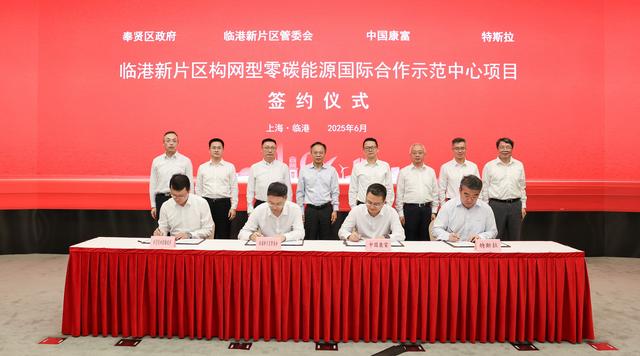
特斯拉储能项目迎大单,总投资40亿元储能项目落户上海临港
Guan Cha Zhe Wang· 2025-06-22 03:34
Core Points - The signing of the "Grid-type Zero Carbon Energy International Cooperation Demonstration Center" project took place on June 20, with a total investment of 4 billion yuan [1][3] - The project will be implemented by Kangfu International Leasing Co., Ltd. and Tesla (Shanghai) Co., Ltd., marking Tesla's first grid-side energy storage project in mainland China [3][5] - Tesla's Shanghai energy storage super factory is set to begin construction in May 2024, with an annual production capacity of 10,000 Megapacks, totaling nearly 40 GWh of energy storage [3][5] Company Overview - Kangfu International Leasing was established in June 1988 and went public on the New Third Board in 2015, focusing on clean energy investment and operation [5] - The project aims to create a "Lingang Zero Carbon Energy Solution" to support energy security and high-quality industrial development in Shanghai and the Lingang New Area [5][6] Industry Development - The Shanghai Lingang New Area has launched a plan to promote the large-scale and industrial development of new energy storage, targeting an application scale of 50,000 kWh and an industry scale of 50 billion yuan by 2025 [6] - By 2030, the goal is to achieve an application scale of 300,000 kWh and an industry scale reaching 100 billion yuan [6] - As of the end of 2024, the cumulative installed capacity of new energy storage projects in China is expected to exceed 73.76 million kW, with an energy scale of 168 million kWh, reflecting a growth of over 130% from the end of 2023 [6]


一线调研 | 从亏损到独角兽!液流电池突破“卡脖子”技术,迎来吉瓦时时代
中关村储能产业技术联盟· 2025-06-21 15:22
Core Viewpoint - The rapid growth of wind and solar energy has created a pressing demand for new energy storage solutions due to their inherent volatility and intermittency. A private company in Dalian, specializing in vanadium flow battery storage, has emerged as a global "unicorn" in the new energy storage sector despite years of operating losses [1][6]. Group 1: Company Development and Innovation - Dalian Rongke Energy Technology Development Co., Ltd. transitioned from purifying vanadium chemicals for aerospace and environmental applications to focusing on energy storage, recognizing the opportunity presented by China's shift towards green and low-carbon energy [4]. - The company has invested over 2 billion yuan in technology innovation and industrial development over the past decade, successfully overcoming challenges in electrochemical technology and core material technology, achieving full domestic production of its supply chain [17]. - The company has established itself as a leader in the industry, holding over 500 domestic and international patents and contributing to the formulation of industry standards [19]. Group 2: Technological Advancements - The vanadium flow battery technology developed by the company boasts a lifespan of over 20 years and high safety standards, but its high cost has limited widespread adoption [7]. - The company has made significant progress in localizing key materials, such as membrane and electrode materials, which were previously imported and expensive. This localization has improved performance and reduced costs [9][13]. - The company has successfully scaled its production from megawatt to gigawatt levels, with its products now accounting for 60% of the global vanadium battery market and 80% of the vanadium electrolyte market [19]. Group 3: Market Outlook and Future Prospects - As the demand for energy storage solutions grows alongside the increasing capacity of new energy installations, the company is poised to benefit from a broader market opportunity in the new energy storage sector [21]. - The company has completed the delivery of a 200 MW/1 GWh energy storage project, marking a significant milestone in the vanadium flow battery industry [19].
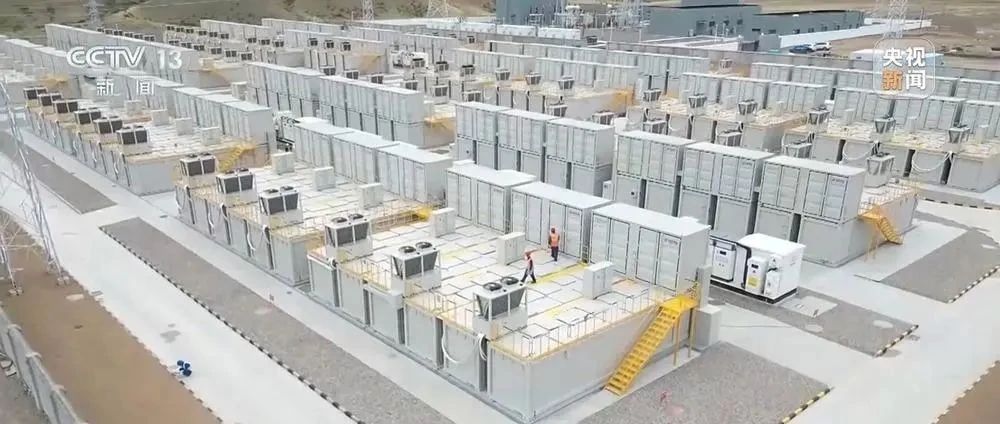
265个并网、149个储能项目在建!四川加快布局“超级充电宝”
中关村储能产业技术联盟· 2025-06-21 15:22
Core Viewpoint - The article highlights the rapid development of new energy storage systems in Sichuan, aiming to reach a total installed capacity of 5 million kilowatts by the end of 2027, with a significant portion located in Chengdu [1][8]. Group 1: Current Status and Future Goals - As of the end of May this year, Sichuan has established a new energy storage capacity of 847,000 kilowatts and 1.642 million kilowatt-hours [1]. - The goal is to achieve an installed capacity of 5 million kilowatts by the end of 2027, with at least 2 million kilowatts in Chengdu [1][8]. Group 2: Understanding New Energy Storage - New energy storage is likened to a "super power bank," essential for building a new energy system, allowing excess electricity to be stored during low demand periods and released during peak demand [2][4]. - The technology is crucial for alleviating power supply pressure during high consumption periods [2]. Group 3: User-side Energy Storage Projects - The Chengdu Steel and Vanadium Company is constructing a distributed energy storage station with a capacity of 12,500 kilowatts and 25,000 kilowatt-hours, expected to save over 4 million yuan in electricity costs annually [4]. - The project is anticipated to save the company approximately 50 million yuan over its 12-year lifecycle, with savings shared between investors and the company [4]. Group 4: Grid-side Energy Storage Projects - The Shuxiang Energy Storage Station, with a capacity of 100,000 kilowatts and 200,000 kilowatt-hours, can power 100,000 air conditioners for 2 hours and is expected to provide 58 million kilowatt-hours of peak-shaving electricity annually [5]. - The project is part of the first batch of new energy storage pilot projects in Sichuan, emphasizing the importance of energy storage in maintaining grid stability [5][6]. Group 5: Policy Support and Development - In 2024, the development of new energy storage was included in the government work report, with various policies introduced to accelerate the construction of demonstration projects [8]. - The Sichuan Development and Reform Commission has issued guidelines to enhance the pricing mechanism for new energy storage projects, further promoting their development [8].
对话大秦数能董秘刘鑫:新型储能破局在于服务与场景整合
2 1 Shi Ji Jing Ji Bao Dao· 2025-06-21 11:00
Core Insights - The domestic energy storage industry has reached a new scale after nearly two years of rapid growth, but intense competition has permeated various segments of the new energy storage supply chain [1] - The introduction of new policies, such as the cancellation of mandatory energy storage requirements, is expected to intensify the reshuffling of the energy storage industry while also enhancing its market position [1][2] - The industry is shifting from price-driven competition to value-driven competition, emphasizing product differentiation, service quality, and innovative application scenarios [1][3] Industry Developments - The Ministry of Industry and Information Technology and other departments have implemented the "High-Quality Development Action Plan for New Energy Storage Manufacturing Industry" to optimize supply-demand relationships and expand application scenarios [1] - The decline in upstream raw material prices, such as lithium battery cells, has made the business model for commercial energy storage more viable, marking 2023 as the "Year of Commercial Energy Storage" [2] - The competition has evolved from price wars to a focus on delivery and service capabilities, as energy storage products require high-quality lifecycle management and maintenance services [2][3] Competitive Landscape - The next phase of reshuffling in the energy storage industry will be driven by comprehensive capabilities in products, services, and application scenarios [3] - Companies must avoid product homogeneity and focus on clear product positioning and customer targeting to create value through maintenance services [3][4] - The emergence of AI and other new technologies is expected to reshape the product ecosystem and enhance service value in the energy storage sector [3][4]
第六届南博会开幕 昆明展现产业升级新动力
Yang Shi Wang· 2025-06-20 12:07
Group 1 - The 9th China-South Asia Expo and the 29th China Kunming Import and Export Commodities Fair opened on June 19, with a theme of "Unity and Cooperation for Development" [1] - The event spans from June 19 to June 24, featuring 16 exhibition halls and covering an area of 160,000 square meters, attracting participation from 73 countries, regions, and international organizations, with over 2,500 enterprises showcasing products [1] - Exhibits include green energy, advanced manufacturing, modern agriculture, and biomedicine, providing a platform for economic cooperation and cultural exchange [1] Group 2 - Yunnan Radio Company (Yunwu Company) made its debut at the expo, focusing on public safety business in areas such as personnel-intensive locations and emergency response, leveraging AI and information technology [3] - The company aims to integrate into the low-altitude economy development industry chain and showcase its technological innovation capabilities in public safety, emergency response, and health monitoring [3] - Kunming is strategically planning for future industries such as low-altitude economy, intelligent computing power, life sciences, and new energy storage, enhancing policy guidance to drive breakthroughs for high-quality development [3]

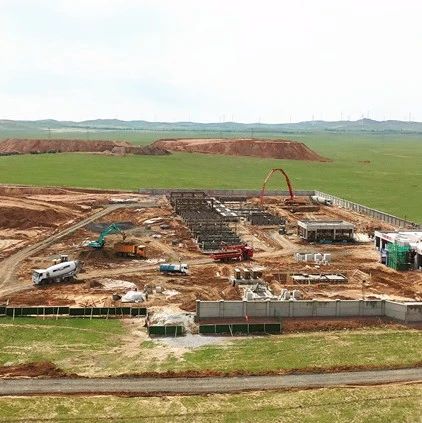
360MWh电化学+40MWh氢储能!内蒙古化德县打造电网侧储能示范项目
中关村储能产业技术联盟· 2025-06-20 07:57
Core Viewpoint - The article highlights the progress and significance of the independent energy storage demonstration project in Huade County, Inner Mongolia, which integrates both electrochemical and hydrogen storage technologies to enhance energy efficiency and grid stability [1][3]. Group 1: Project Overview - The Huade County energy storage project is set to achieve 90% completion by the end of June, featuring a total installed capacity of 100 MW and 400 MWh [1]. - The project includes 90 MW/360 MWh of electrochemical storage and 10 MW/40 MWh of hydrogen storage, making it the largest hydrogen storage demonstration project in China [1]. Group 2: Technological Innovation - The dual storage solution allows for efficient energy storage during low demand periods and rapid energy release during peak demand, optimizing power distribution and utilization [1]. - This innovative approach significantly enhances the efficiency of energy storage and allocation, providing robust support for stable grid operations [1]. Group 3: Economic and Social Impact - Upon commissioning, the project is expected to optimize the local energy structure, facilitate the absorption of renewable energy generation, and contribute to local fiscal revenue and employment [3].
中国电建(601669) - 中国电力建设股份有限公司2025年1月至5月主要经营情况公告
2025-06-20 07:45
证券代码:601669 股票简称:中国电建 公告编号:临 2025-034 中国电力建设股份有限公司 2025 年 1 月至 5 月主要经营情况公告 本公司董事会及全体董事保证本公告内容不存在任何虚假记载、误导性陈述或 者重大遗漏,并对其内容的真实性、准确性和完整性承担法律责任。 现将中国电力建设股份有限公司2025年1月至5月主要经营情况公布如下,供投 资者参阅。 一、按业务类型统计 | 业务类型 | 新签项目数量(个) | 新签合同金额 | 同比增减 | | --- | --- | --- | --- | | 能源电力 | 2408 | 3012.48 | 4.44% | | 水电 | 488 | 653.87 | 60.66% | | 其中:抽水蓄能 | 238 | 256.51 | 4.63% | | 风电 | 531 | 1018.01 | 67.33% | | 太阳能发电 | 482 | 854.81 | -32.61% | | 火电 | 224 | 146.99 | -62.28% | | 新型储能 | 65 | 107.50 | / | | 其他 | 618 | 231.30 | / | | ...

广信科技(920037):绝缘纤维材料及制品“小巨人”,助力超、特高压用绝缘纤维材料国产替代
Hua Yuan Zheng Quan· 2025-06-15 14:10
Investment Rating - The report suggests a "Focus" on the company, indicating potential investment interest due to its strategic position in the insulation materials market [3][4]. Core Viewpoints - The company, Guangxin Technology, is recognized as a national-level "Little Giant" in the field of insulation fiber materials, with a projected compound annual growth rate (CAGR) of 146% for net profit from 2021 to 2024 [14][24]. - The company plans to raise funds through an initial public offering (IPO) to invest in projects aimed at expanding its production capacity and enhancing research and development capabilities [11][12]. - The insulation materials market in China is expected to grow, with a projected market size of approximately 130.5 billion yuan in 2024, reflecting an 8.2% year-on-year increase [3][24]. Summary by Sections Initial Issuance - The company plans to issue 20 million shares at a price of 10 yuan per share, with an initial price-to-earnings (P/E) ratio of 7.61X [2][6]. - The total number of shares after issuance will be approximately 88.46 million, with the issuance accounting for 22.61% of the total shares before the exercise of the over-allotment option [2][6]. Business Overview - Guangxin Technology specializes in insulation fiber materials and related products, primarily used in various voltage level power transmission and transformation equipment [14][15]. - The company has developed a comprehensive product system that meets diverse customer needs in terms of thickness, shape, and electrical performance [15][19]. Financial Performance - In 2024, the company expects to achieve revenues of 578 million yuan, with a net profit of approximately 116.17 million yuan, reflecting year-on-year growth rates of 37.49% and 135.14%, respectively [7][24]. - The gross profit margin for insulation fiber materials is projected to reach over 30% in 2024, indicating improved profitability [15][25]. Market Dynamics - The domestic insulation materials market is experiencing steady growth, driven by increased demand in the power industry, with significant investments projected in power generation and grid infrastructure [3][24]. - The company has established a strong customer base, with major clients including TBEA Co., Ltd. and Shandong Taikai Transformer Co., Ltd., contributing to a stable revenue stream [32][34]. Competitive Position - Guangxin Technology has a competitive edge due to its proprietary technologies, having broken foreign monopolies in the ultra-high voltage insulation fiber materials sector [14][36]. - The company holds 67 valid patents, including 13 invention patents, underscoring its commitment to innovation and technological advancement [36].
宁夏擘画风光氢储新图景,引氢企锚定落子
势银能链· 2025-06-13 03:43
Core Viewpoint - The global energy storage market is experiencing explosive growth driven by the "dual carbon" goals, with significant advancements in new energy storage projects in China, particularly in Ningxia, which is becoming a benchmark for green hydrogen and energy storage development [3][4][6]. Group 1: Market Overview - By the end of 2024, China's newly built energy storage projects will have a cumulative installed capacity of 73.76 million kilowatts, approximately 20 times that of the end of the 13th Five-Year Plan, with a growth of over 130% compared to the end of 2023 [3]. - At least 11 provinces and municipalities have included new energy storage in their carbon peak plans, with various development plans and guidelines being issued [3]. Group 2: Regional Characteristics - China's energy storage market shows distinct regional characteristics, with the eastern coastal areas focusing on commercial storage and virtual power plants, while the northwest relies on wind and solar resources to create integrated "wind-solar-hydrogen" bases [4][6]. Group 3: Ningxia's Achievements - In 2024, Ningxia added 20 new energy storage stations, bringing the total to 47, with an installed capacity of 4.719 million kilowatts, ranking fifth in the country [7]. - Ningxia's solar energy resources rank third nationally, and its wind power potential exceeds 120 million kilowatts, making it a natural hub for green hydrogen production [7]. Group 4: Policy Innovations - Since 2021, Ningxia has implemented multiple policies to promote the energy storage industry, including the "Hydrogen Energy Industry Development Plan," which emphasizes the integration of hydrogen storage with renewable energy consumption and grid peak regulation [7][11]. Group 5: New Hydrogen Power - New Hydrogen Power Technology Co., Ltd. focuses on solid-state metal hydrogen storage systems and has established a subsidiary in Ningxia to develop large-scale safe solid-state hydrogen storage systems [15][16]. - The company plans to invest 350 million yuan in a production base for solid-state hydrogen storage systems and fuel cell systems in the SuYin Industrial Park [16]. Group 6: Upcoming Events - The 2025 TrendBank (Yinchuan) Long-Duration Energy Storage Industry Conference will be held on July 2-3, 2025, focusing on cutting-edge technologies such as flow batteries and hydrogen storage [22][25].
呼和浩特市颠覆性技术专项基金启动市场化投资
Nei Meng Gu Ri Bao· 2025-06-12 02:47
Core Viewpoint - The establishment of the Hohhot Disruptive Technology Special Fund aims to promote the transformation of cutting-edge disruptive technology achievements and foster new productive forces in the region [1] Fund Overview - The total scale of the fund is 200 million yuan, with an initial fundraising of 50 million yuan [1] - The fund is initiated by the Beijing-Tianjin-Hebei National Technology Innovation Center and the Hohhot Science and Technology Bureau [1] Investment Focus - The fund will focus on key future industry sectors such as artificial intelligence, new energy storage, computing chips, and cell and gene therapy [1] - It aims to create a comprehensive ecosystem involving "platform + fund + park + industry" to effectively promote technological innovation and industrial upgrading in Hohhot [1] Economic Impact - The fund is expected to support high-quality regional economic development by establishing a sustainable growth mechanism for future industry investments [1] - It will actively promote a virtuous cycle of "technology research and development - scenario application - future industry" to invigorate technological innovation in Hohhot [1]