氢储能

Search documents
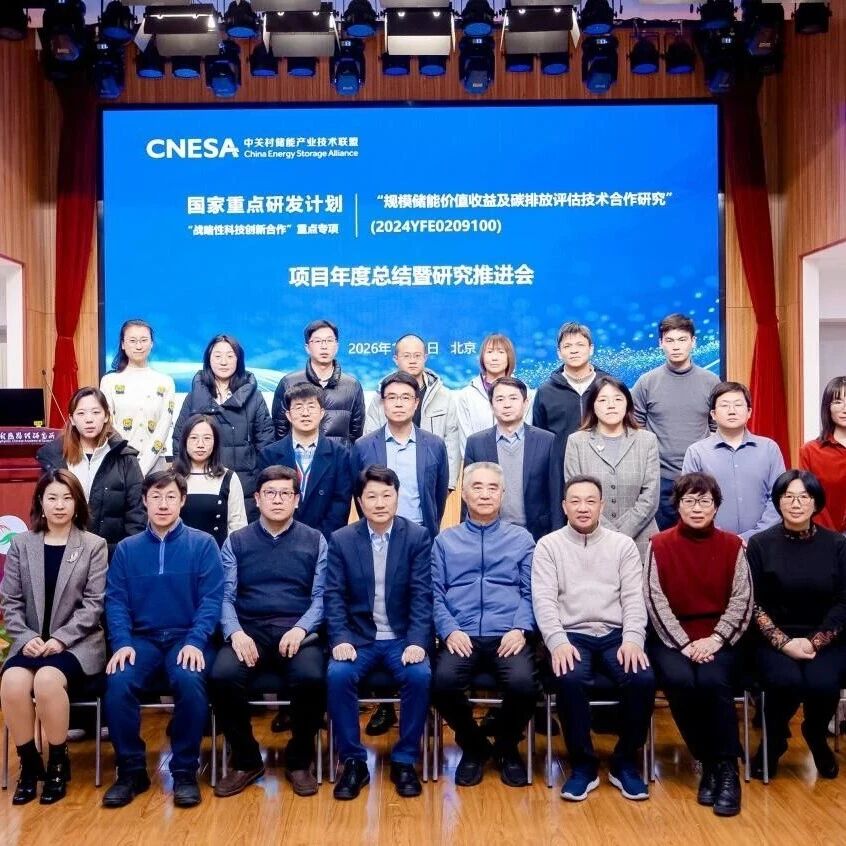
国家重点研发计划“规模储能价值收益及碳排放评估技术合作研究”项目年度总结暨研究推进会在京召开
中关村储能产业技术联盟· 2026-01-27 11:41
Core Viewpoint - The project aims to address key bottlenecks in the energy storage industry as it transitions from large-scale to market-oriented development, focusing on economic benefits and carbon emission accounting [4]. Group 1: Project Overview - The project is part of the National Key R&D Program "Strategic Technology Innovation Cooperation" and focuses on value yield and carbon emission assessment technologies for large-scale energy storage [1]. - The project is led by the Zhongguancun Energy Storage Industry Technology Alliance, with participation from various experts and representatives [1][4]. Group 2: Project Progress and Achievements - The project has made significant progress in 2025, completing all assessment indicators on schedule, developing a software platform for cost and carbon footprint accounting, and producing a report on market rules and business models [6]. - Three group standards have been initiated, and three software copyrights have been obtained, alongside active international collaboration [6]. Group 3: Expert Feedback and Future Directions - The project consulting expert group, led by Professor Xia Qing from Tsinghua University, acknowledged the solid work done by the project team and provided constructive feedback on research depth, result focus, and financial norms [10]. - The project team plans to incorporate expert suggestions to enhance collaborative research, deepen scenario studies, and ensure high-quality project completion [12].

2026年微电网迎来三大政策利好
中关村储能产业技术联盟· 2026-01-13 00:07
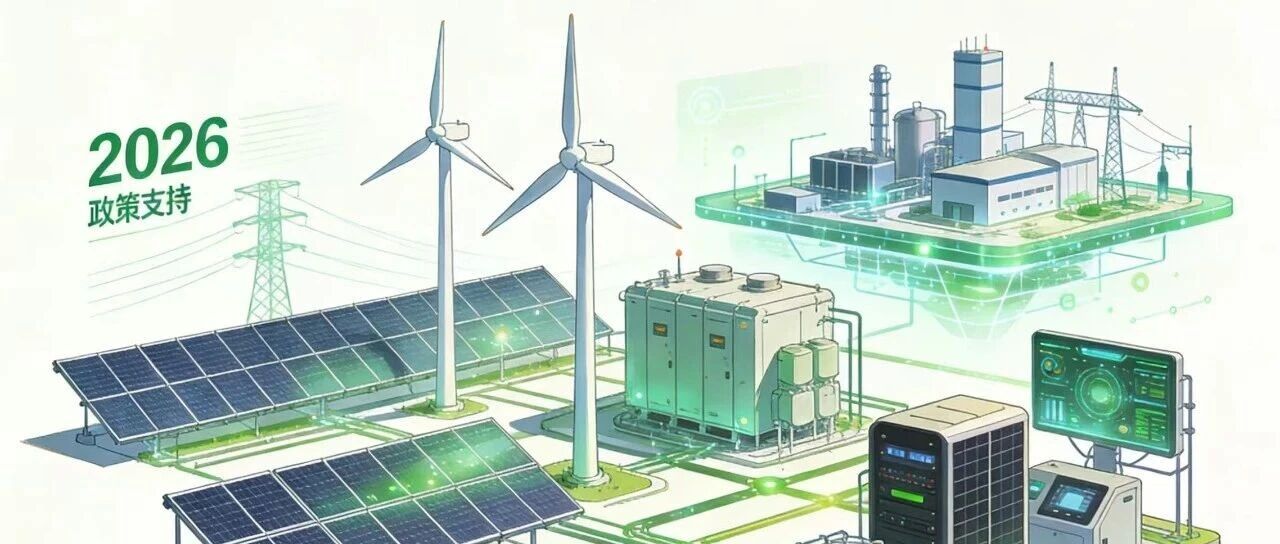
Policy Opportunities - The top-level design has clarified the direction for the microgrid industry, with the National Development and Reform Commission and the National Energy Administration issuing guidelines to promote high-quality development of the power grid, aiming to establish a new type of grid platform by 2030 that includes intelligent microgrids as a beneficial supplement [4][5] - The "Application Guidelines" provide a detailed roadmap for the implementation of industrial microgrids, setting a target for renewable energy self-consumption in new industrial solar and wind projects to be no less than 60% annually [4][5] - A series of pilot projects have been launched, with intelligent microgrids included as one of the seven key pilot directions, showcasing diverse application scenarios from industrial parks to ports [5][6] Definition of Microgrid - Microgrids are small-scale power systems composed of distributed energy sources, storage devices, and energy conversion systems, capable of operating both in grid-connected and island modes [7][8] - The industrial green microgrid aims to provide green electricity to industrial users, integrating various renewable energy sources and technologies to create a comprehensive energy system [8][9] Construction of Industrial Microgrids - The "Application Guidelines" outline six key construction components for industrial green microgrids, including renewable energy generation, utilization of industrial waste energy, and new energy storage applications [10][11] - New energy storage plays a critical role in microgrid systems, with various storage technologies recommended based on specific needs such as peak shaving, frequency support, and thermal load regulation [12][13] Application Scenarios - The guidelines identify four typical application scenarios for industrial microgrids, including high-energy-consuming industries like steel and petrochemicals, flexible application scenarios in sectors like textiles and automotive, scalable adjustable applications in industries like aluminum and polysilicon, and high-reliability applications in computing facilities [14][15][16] Future Development - The focus of the industry is shifting from "whether to build" to "how to build well" and "how to achieve win-win outcomes," requiring collaboration on technical standards and sustainable business models [17]
新能源发展从量的叠加转向系统协同
Zhong Guo Dian Li Bao· 2025-12-10 05:19
Core Viewpoint - The integration and fusion of renewable energy sources are essential for transforming them from auxiliary to primary energy sources, requiring a shift from mere capacity addition to system collaboration and efficiency improvement [1][7]. Group 1: Current Status and Challenges - As of September 2025, China's installed capacity of wind and solar power has exceeded 1.7 billion kilowatts, accounting for 46% of the national power generation structure, but their contribution to total electricity consumption remains around 20% [1]. - The rapid increase in installed capacity has not led to a corresponding rise in utilization efficiency, with regions like Northwest China experiencing wind and solar curtailment rates exceeding 5% [1]. - The transition to renewable energy as a primary power source depends on the deep integration of various energy types, including wind, solar, hydro, thermal, storage, and hydrogen [1]. Group 2: Key Challenges in Integration - Technical barriers exist in achieving multi-energy system collaboration, with safety, stability, and reliability issues becoming more pronounced as renewable penetration increases [2]. - Traditional industries face challenges in integrating with renewable energy, often remaining in self-consumption models, and slow adaptation to the volatility of renewable power [3]. - The policy and market mechanisms for integrating renewable energy into the electricity market need further refinement, with insufficient incentives for cross-regional projects and a lack of robust cost recovery mechanisms for flexible resources like storage [4]. Group 3: Solutions for Integration - To address these challenges, a comprehensive solution encompassing technology, industry, and institutional reforms is necessary, guided by recent policy recommendations [5]. - Innovations in technology are crucial for overcoming collaboration difficulties, including advancements in multi-energy complementary systems and the establishment of unified standards for energy integration [5]. - Industry restructuring is needed to enhance the coupling of high-energy industries with renewable sources, promoting zero-carbon manufacturing and optimizing energy use in traditional sectors [6]. - Institutional innovations should focus on activating market dynamics, transitioning from project subsidies to incentive mechanisms, and facilitating nationwide coordination in renewable energy trading [6]. Group 4: Future Outlook - The integration of renewable energy represents a systemic transformation of production methods, industrial structures, and development logic, aiming to create a safer, cleaner, and more efficient energy system that supports comprehensive green economic transformation [7].
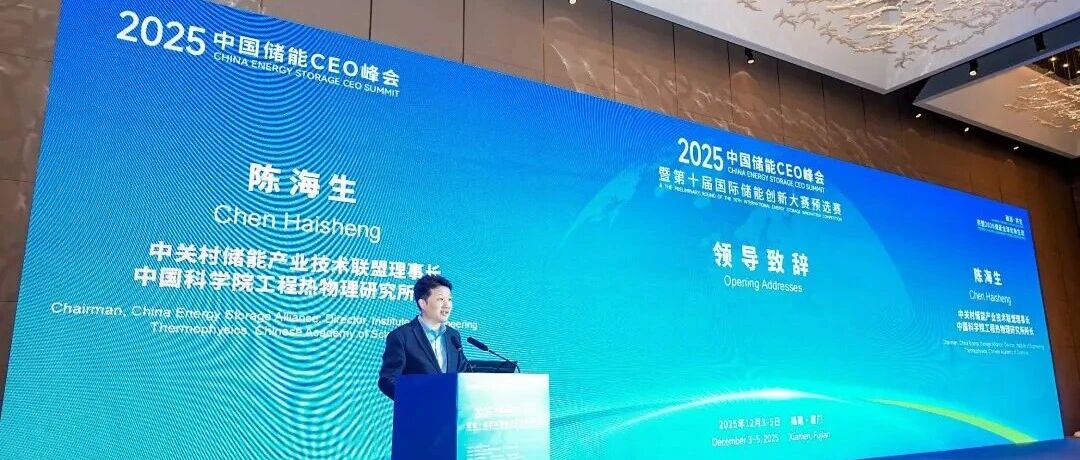
陈海生:储能应用场景从电力向全场景加速渗透,全球化合作成核心议题
中关村储能产业技术联盟· 2025-12-05 11:00
Core Viewpoint - The 2025 China Energy Storage CEO Summit highlighted China's leadership in energy storage, with significant growth in installed capacity and efficiency, marking a transition towards high-quality development in the industry [5][6]. Group 1: Industry Growth and Performance - By the third quarter of 2025, China's new energy storage projects reached an installed capacity of 112.4 GW and 270.4 GWh, with power and energy scale increasing by 103% and 116% year-on-year, respectively [5][6]. - Energy storage projects accounted for over 60% of the total installed capacity in power storage, positioning China as the global leader [5][6]. - The equivalent utilization hours for new energy storage in the first three quarters of 2025 were approximately 770 hours, an increase of about 120 hours year-on-year, significantly contributing to power supply stability [5][6]. Group 2: Technological Advancements - The industry is witnessing diverse technological advancements, with lithium-ion batteries undergoing continuous iteration and cost reduction, while long-duration storage technologies like compressed air and flow batteries are achieving scale breakthroughs [5][6]. - Emerging technologies such as solid-state batteries and hydrogen storage are accelerating development, creating a complementary and collaborative industrial ecosystem [5][6]. Group 3: Market Dynamics and Global Cooperation - The shift from mandatory storage policies to market-driven mechanisms is enhancing market vitality, with companies increasingly focusing on value creation [5][6]. - Energy storage applications are expanding from electricity to various sectors, including industrial parks, solar charging stations, and data centers, evolving into multi-faceted solutions [6]. - Global cooperation is becoming a core topic, with over 100 countries committing to net-zero carbon emissions, leading to an expanding market for new energy storage applications [6][7]. Group 4: Future Outlook and Strategic Initiatives - The summit aimed to create a high-end platform for resource linkage across the entire industry chain, focusing on practical experience sharing and precise business matching to support Chinese energy storage companies in international expansion [6][7]. - The alliance is committed to promoting the sustainable development of the energy storage industry and addressing global carbon neutrality challenges as opportunities for green economic growth in China [8].
熔盐储能:破局“以热定电”,助力煤电向调节性电源转型
Guotou Securities· 2025-11-30 15:32
Investment Rating - The report maintains an investment rating of "Outperform the Market - A" for the industry [5]. Core Insights - Molten salt energy storage is pivotal in transforming coal power from a base-load to a flexible power source, addressing the challenges posed by the increasing share of renewable energy and peak load pressures in the power system [1][16]. - The National Development and Reform Commission and the National Energy Administration have set requirements for coal power efficiency, including reducing minimum output for deep peak shaving to 20% and enhancing load change rates [1][16]. - The molten salt storage technology, particularly steam heating, is currently the mainstream approach due to its high compatibility with thermal power plants and engineering maturity [2][26]. Summary by Sections 1. Special Research - Molten salt energy storage aids in the transition of coal power to a flexible power source, overcoming the "heat determines electricity" dilemma [1][16]. - The technology's core is "thermal-electrical decoupling," allowing for energy storage during low demand and release during peak demand [1][16][22]. - The report highlights the successful operation of the Guoneng Suzhou power plant's molten salt storage project as a replicable model for coal power flexibility transformation [1][25]. 2. Market Information Tracking - Electricity prices in Jiangsu and Guangdong for December 2025 are reported at 339.58 RMB/MWh and 372.33 RMB/MWh, respectively, indicating a decrease in Jiangsu and a slight increase in Guangdong compared to benchmark prices [4][39]. - The average price of thermal coal in the Bohai Rim region is reported at 698 RMB/ton, remaining stable [41]. - The report notes a decline in natural gas prices, with Dutch TTF futures at 29 EUR/TWh and China's LNG at 11 USD/MMBtu [43][45]. 3. Industry Dynamics - The report emphasizes the significant growth in renewable energy installations, with a total capacity of 2.22 billion kW, accounting for nearly 60% of the national total [8]. - The introduction of new pricing mechanisms for electricity transmission and distribution aims to support the efficient utilization of renewable energy and reduce system operation costs [9]. - The ecological environment ministry's carbon emissions trading plan aims to incentivize advanced practices and penalize laggards in key industries [10]. 4. Investment Portfolio and Recommendations - The report suggests focusing on coal power companies with high price elasticity, such as Huaneng International and Huadian International, due to expected improvements in profitability [11]. - For hydropower, the report is optimistic about the fourth quarter outlook, recommending attention to companies like Yangtze Power and Sichuan Investment Energy [11]. - The report also highlights the potential for independent energy storage and virtual power plants under market-driven electricity pricing [12].
目标17GW、鼓励4小时以上长时储能!湖北印发《湖北省储能体系建设方案(2025—2030年)》
中关村储能产业技术联盟· 2025-11-27 08:36
Core Viewpoint - The article discusses the "Hubei Province Energy Storage System Construction Plan (2025-2030)", which aims to establish a phased development path for energy storage in Hubei, targeting a total installed capacity of 17GW by 2030, positioning the province as a significant power regulation center in the country [1][13]. Phase-wise Installed Capacity Goals - By 2027, the total installed energy storage capacity in Hubei is expected to reach 8 million kilowatts (8000MW) [2]. - New energy storage will primarily consist of new types of storage, targeting 5 million kilowatts [3]. - Pumped storage will reach 2.87 million kilowatts, focusing on small and medium-sized power stations [4]. - By 2030, the total installed capacity will increase to 17 million kilowatts, with new energy storage reaching 8 million kilowatts [5]. - Pumped storage capacity will expand to 9.12 million kilowatts, emphasizing large power stations [6]. Integration of New Energy Storage with Power Systems - The plan emphasizes the integration of new energy storage with the power system, encouraging the construction of "system-friendly" renewable energy power stations and the use of various storage technologies [8]. - It promotes the deployment of long-duration energy storage systems, such as compressed air and flow batteries, to replace some transmission and distribution facilities [8]. Diverse Technology and Industry Cluster Development - The plan outlines a detailed approach to diversify new energy storage technologies, including solid-state batteries, sodium-ion batteries, and compressed air storage, while also encouraging the application of advanced technologies like gravity storage and hydrogen storage [9]. - It aims to establish a distinctive energy storage industry cluster in Hubei, focusing on the development of lithium battery industrial parks and the construction of a super energy storage factory [9]. Capacity Compensation and Market Mechanisms - The plan proposes exploring a capacity compensation mechanism for grid-side energy storage, integrating capacity fees into system operating costs to stabilize revenue expectations for energy storage stations [10]. - It also aims to optimize time-of-use pricing mechanisms and gradually improve the pricing policies for pumped storage [10]. Management and Service Mechanisms for Energy Storage - The plan emphasizes the establishment of a management system for energy storage that aligns with the needs of sustainable development, including optimizing market and pricing mechanisms [20]. - It encourages the participation of new energy storage in market transactions and the development of a collaborative optimization model for energy sources, networks, loads, and storage [21].

佛山储能突围:开辟长时储能新赛道 制造业生态成竞争关键
2 1 Shi Ji Jing Ji Bao Dao· 2025-11-25 15:43
Core Insights - Guangdong Huanhua Hydrogen Energy Technology Co., Ltd. is shifting its focus from hydrogen fuel cell bipolar plates to flow battery bipolar plates, indicating a strategic pivot towards a more promising energy storage technology [1] - The company has secured approximately 60 million yuan in intended orders and anticipates generating an annual economic value of 150 million to 300 million yuan from its new flow battery production base, set to commence operations in March 2024 [1] - The transition reflects a broader industry trend towards diversified energy storage technologies beyond lithium batteries, as outlined in the "14th Five-Year Plan" which emphasizes the construction of a new energy system [1][2] Industry Trends - The demand for long-duration energy storage solutions is increasing due to the challenges posed by intermittent renewable energy sources like wind and solar, with flow batteries emerging as a key technology capable of discharging for over four hours [2] - The installed capacity of flow batteries in China is expected to grow tenfold in 2024 compared to 2023, marking a significant milestone in the industry [2] - Foshan is positioning itself as a competitive player in the new energy storage sector, leveraging its manufacturing base and growing regional energy demand to create a unique competitive advantage [2][3] Regional Developments - Foshan has established itself as a major hub for new energy storage, with over 50 related enterprises and more than 200 projects under construction or planned, totaling over 150 billion yuan in investment [3] - The city is expected to achieve an installed capacity of 564,000 kilowatts in new energy storage by 2024, leading the province of Guangdong [3] - The local manufacturing ecosystem supports rapid supply chain responses, enhancing Foshan's competitiveness in the energy storage market [8] Technological Innovations - The liquid flow battery sector is still in its early stages, providing opportunities for differentiation compared to the more monopolized lithium battery market [6] - A mixed storage model combining flow batteries with lithium batteries is being encouraged, aligning with the Guangdong Province's new energy storage technology innovation roadmap [6] - The integration of energy storage systems into local manufacturing processes is creating a feedback loop that enhances both energy storage technology and manufacturing competitiveness [9][10] Market Dynamics - The cessation of the "mandatory storage" policy by the National Development and Reform Commission and the Energy Administration is prompting a shift towards high-quality value adaptation in the new energy storage industry [4] - Global initiatives, such as the U.S. Department of Energy's long-duration storage program and the EU's battery innovation roadmap, are highlighting the importance of flow batteries and other technologies in national energy strategies [5] - The diverse energy storage needs of Foshan's manufacturing sector are driving innovation and creating substantial market potential, with an estimated demand of 8,000 megawatt-hours in the Nanhai District alone [9]
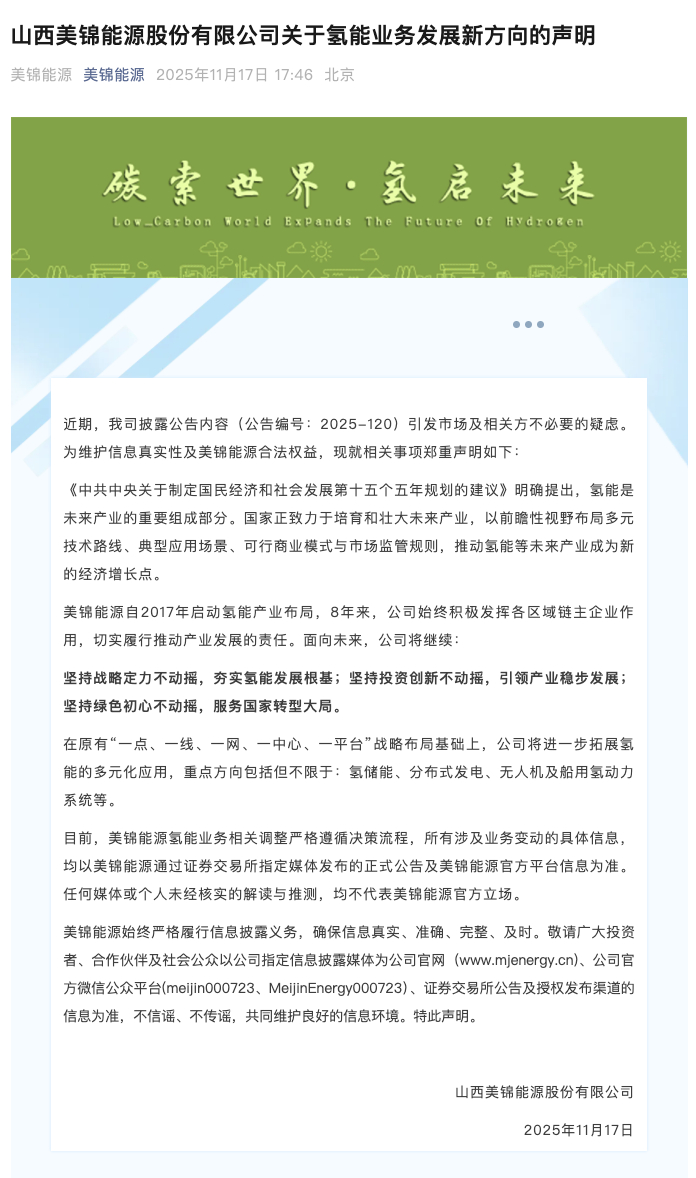
美锦能源终止部分氢能募投项目 聚焦多元应用坚定战略初心
Zheng Quan Ri Bao Zhi Sheng· 2025-11-17 13:06
Core Viewpoint - The company, Shanxi Meijin Energy Co., Ltd., reaffirms its commitment to the hydrogen energy industry despite recent project terminations, emphasizing its strategic focus on innovation and green development [1][6]. Group 1: Company Strategy - The company has been actively involved in the hydrogen energy sector since 2017, positioning itself as a regional leader and fulfilling its responsibility in industry development [1][6]. - The company will continue to adhere to three main principles: maintaining strategic determination, promoting investment innovation, and upholding its green mission [6][7]. - The company plans to expand its hydrogen energy applications, focusing on hydrogen storage, distributed power generation, and hydrogen-powered systems for drones and ships [1][6]. Group 2: Project Termination - The termination of the hydrogen fuel cell power system and commercial vehicle components production project was influenced by significant changes in the external environment, including the failure of Jinzhong City to become a national demonstration city for fuel cell vehicles [4][5]. - The project was initially planned to receive 600 million yuan from the funds raised through a convertible bond issuance, but this amount was later reduced to 250 million yuan due to multiple decision adjustments [4][5]. - The company has decided to permanently allocate the remaining raised funds to enhance liquidity and optimize resource allocation, ensuring that core business operations remain unaffected [5][6]. Group 3: Market Position and Future Outlook - The company aims to leverage its existing resources, such as completed assembly workshops and hydrogen stations, through a platform-based, integrated light asset operation model to attract partners for collaborative development [6][7]. - This strategic adjustment is seen as a way to mitigate risks associated with unclear technology routes in the commercial vehicle sector while seizing opportunities in energy storage and specialized equipment [6][7]. - Analysts suggest that the company's adaptability in a complex market environment, combined with its commitment to hydrogen energy, positions it well for future growth and value creation for investors [7].

“政策+产业”双轮驱动 算力设施绿色发展提速
Zheng Quan Ri Bao Zhi Sheng· 2025-11-11 16:08
Core Insights - The release of the "Guiding Opinions" by the National Development and Reform Commission and the National Energy Administration emphasizes the importance of integrating renewable energy with strategic emerging industries, such as information technology and high-end equipment manufacturing [1][2] - The rapid growth in computing power demand has raised energy consumption concerns, necessitating a shift towards greener infrastructure [1][2] - The new guidelines aim to enhance the synergy between renewable energy and computing facilities, promoting green development in the computing sector [1][2] Industry Developments - The storage system is identified as a key solution to address the mismatch between intermittent renewable energy and the continuous high-load operation of computing facilities, with a goal of achieving high proportions of green electricity usage [2] - As of September 2023, China's new energy storage installed capacity exceeded 100 million kilowatts, accounting for over 40% of the global total, positioning the country as a leader in this sector [2] - The diversification of storage technology, including advancements in solid-state batteries and hydrogen storage, is progressing from demonstration applications to large-scale development [2] Infrastructure Enhancements - The capacity of the power grid to accept renewable energy directly impacts the scale and quality of green computing development [2][3] - The "Guiding Opinions" propose accelerating the construction of a new type of power grid platform to enhance grid capacity and optimize national electricity flow [2] - The transition to a high proportion of renewable energy is entering a critical phase, with the total installed capacity of wind and solar power surpassing that of thermal power for the first time in Q1 2023 [3] Company Initiatives - Beijing Qinhuai Data Co., Ltd. is focusing on large-scale development and zero-carbon strategies, aligning its business with the national "East Data West Computing" initiative [3] - Qinhuai Data aims to explore new paths for "computing and electricity collaboration," emphasizing integrated solutions for energy sources, networks, loads, and storage [3] - Unisplendour Corporation Limited is accelerating the development of emerging liquid cooling technologies to meet the energy efficiency demands of high-density computing clusters and high-power chips [4]
双碳研究 | 领跑全球储能赛道中国装机容量突破亿千瓦
Sou Hu Cai Jing· 2025-11-09 16:06
Core Insights - China's new energy storage capacity has surpassed 100 million kilowatts, marking a significant step towards the transition to a new energy system and reinforcing its global leadership in renewable energy development [3][4]. Group 1: Industry Growth - As of the end of September, China's new energy storage capacity has exceeded 100 million kilowatts, accounting for over 40% of the global total installed capacity [3][4]. - Since the 13th Five-Year Plan, China's new energy storage capacity has grown more than 30 times, indicating a shift from early commercialization to large-scale development [4]. Group 2: Technological Advancements - New energy storage systems are characterized by flexible deployment, rapid response, and short construction cycles, making them key technologies for supporting new energy and power systems [4]. - Emerging technologies such as solid-state batteries and hydrogen storage are rapidly developing, providing strong support for the future energy system's diverse and high-security storage needs [4]. Group 3: Investment and Economic Impact - Since the 14th Five-Year Plan, investment in new energy storage projects in China has exceeded 200 billion yuan (approximately 28 billion USD), driving over 1 trillion yuan in investments across the industry chain [4]. - Chinese products are contributing to the acceleration of global energy transition, showcasing China's role in the global green transformation [4]. Group 4: International Collaboration - Nicaragua has expressed strong interest in collaborating with China in the renewable energy sector, highlighting the need to expand energy supply due to rapidly growing industrial demand [5]. - Nicaragua currently sources 70% of its energy from renewable sources such as solar, wind, and geothermal energy, and is looking to expand cooperation with Chinese enterprises on photovoltaic and hydropower projects [5].