数字金融

Search documents
金融与科技双向赋能,中泰证券书写“美美与共”的生动实践
券商中国· 2025-11-05 23:24
Core Viewpoint - The article emphasizes the role of the securities industry in supporting national strategies and deepening financial supply-side reforms, particularly through innovation in technology finance and digital finance [2]. Group 1: Company Initiatives - Zhongtai Securities has successfully sponsored the IPO of Haibo Sichuang, marking the first successful listing in China's new energy storage sector, which is crucial for achieving carbon neutrality goals [3]. - The company has adopted a proactive approach by engaging early with technology enterprises to understand their capital needs and enhance valuation capabilities, focusing on strategic emerging industries [4]. - Zhongtai Securities has facilitated equity financing of 6.745 billion yuan for 14 technology companies in 2024, ranking among the top ten in terms of IPO numbers and scale [5]. Group 2: Financial Technology Development - Zhongtai Securities is committed to digital finance as a means to enhance its development capabilities, establishing a financial technology system that emphasizes comprehensive empowerment [8]. - The company has invested over 1 billion yuan annually in information technology, leading to significant advancements in digital customer service and marketing systems [9]. - The launch of the "Shangyuan" platform in 2024 significantly improves comprehensive financial service capabilities for institutional clients, showcasing the company's commitment to digital transformation [9]. Group 3: Support for Innovation - Zhongtai Securities has established a comprehensive service system for specialized and innovative enterprises, focusing on nurturing and supporting their growth [6]. - The company has invested 3 billion yuan in over 40 technology enterprises in the past five years, contributing to the development of regional innovation hubs and emerging industry clusters [7]. - The establishment of the "Specialized and Innovative" board by Qilu Equity Trading Center has served over 2,300 enterprises, with a focus on supporting specialized and innovative companies [6].



中泰证券“自成其美”“成人之美” 以科技赋能服务科技创新
Zheng Quan Shi Bao· 2025-11-05 18:31
Core Viewpoint - The central financial work conference emphasizes the importance of financial services in supporting technological innovation, highlighting the roles of technology finance and digital finance in the national economy [1] Group 1: Company Initiatives - Zhongtai Securities has successfully sponsored the IPO of Haibosi Chuang, marking the first successful listing in China's new energy storage sector, which is crucial for achieving carbon neutrality goals [1][2] - The company has engaged in innovative work to support the listing of Haibosi Chuang, including in-depth industry research and analysis of national policies and market trends [2] - Zhongtai Securities has facilitated equity financing of 6.745 billion yuan for 14 technology enterprises since 2024, ranking among the top ten in the industry for IPOs on various boards [2] Group 2: Specialized Services - The Qilu Equity Exchange Center, a subsidiary of Zhongtai Securities, launched a specialized board for "specialized, refined, distinctive, and innovative" enterprises, serving over 2,300 companies with a focus on nurturing technology-driven firms [3] - The center has developed a comprehensive service system to support the growth and listing of specialized enterprises, including innovative financial products and services [3] Group 3: Investment Strategies - Zhongtai Securities emphasizes early, small, long-term, and hard technology investments as key strategies for supporting new productive forces [4] - Over the past five years, the company has invested 3 billion yuan in more than 40 technology enterprises, contributing to regional innovation and the development of emerging industry clusters [5] Group 4: Digital Transformation - The company is committed to digital finance as a means to enhance its operational capabilities, investing over 1 billion yuan annually in technology and establishing a dedicated fintech team [6] - Zhongtai Securities has achieved significant recognition for its digital transformation efforts, including awards from the State Council and the People's Bank of China [6] - The firm is focusing on the application of large model technologies across various business scenarios, enhancing its service offerings in wealth management, institutional business, and risk control [6]
直通进博会丨金融赋能农业贸易 路易达孚深耕中国市场共筑全球食品供应链安全
Xin Hua Cai Jing· 2025-11-05 16:30
Core Insights - Financial services play an irreplaceable role in the agricultural food supply chain, facilitating global trade and economic development [1][2] - Louis Dreyfus Company aims to deepen its presence in China and collaborate with various stakeholders to build an efficient and secure global food supply chain [1][2] Group 1: Role of Financial Services - Financial services provide capital and funding support, ensuring transparency in agricultural supply across continents and creating efficient bridges between producing and consuming countries [2][3] - Financial tools help stabilize pricing and mitigate market risks, contributing to the healthy development of global agriculture and food markets [2][3] - Long-term investments in logistics infrastructure, production technology, and research by the financial sector are crucial for the stable operation of the entire supply chain [2][3] Group 2: Strategic Investments in China - Strategic investments are a key driver for the company's development in China, supported by favorable government policies aimed at attracting foreign investment [3] - An example is the project in Qingdao, Shandong, which processes various seed oils into high-value products for East Asia, North Asia, and eastern China, benefiting from local government support [3] - Collaboration with financial institutions like Bank of China provides solid backing for operational needs [3] Group 3: Financial Innovation and Technology Integration - Recent financial innovations, such as offshore RMB trading and cross-border commodity trading, enhance the use of global financial tools, reducing market risks and improving trade resilience [3] - Digital finance, driven by technologies like cloud computing, big data, and artificial intelligence, is reshaping trade and financial operations, significantly improving process efficiency [3] - The company collaborates with Bank of China on three different transaction processes to enhance the efficiency, transparency, and security of cross-border trade operations through digital financial solutions [3] Group 4: China's Role in Global Trade - China plays an increasingly important role in the multilateral trading system, with ongoing reforms and openness driving the modernization of the financial sector [4] - The company, as an active participant in China's food industry development, aims to leverage financial tools to empower agricultural food trade and address industry challenges [4]
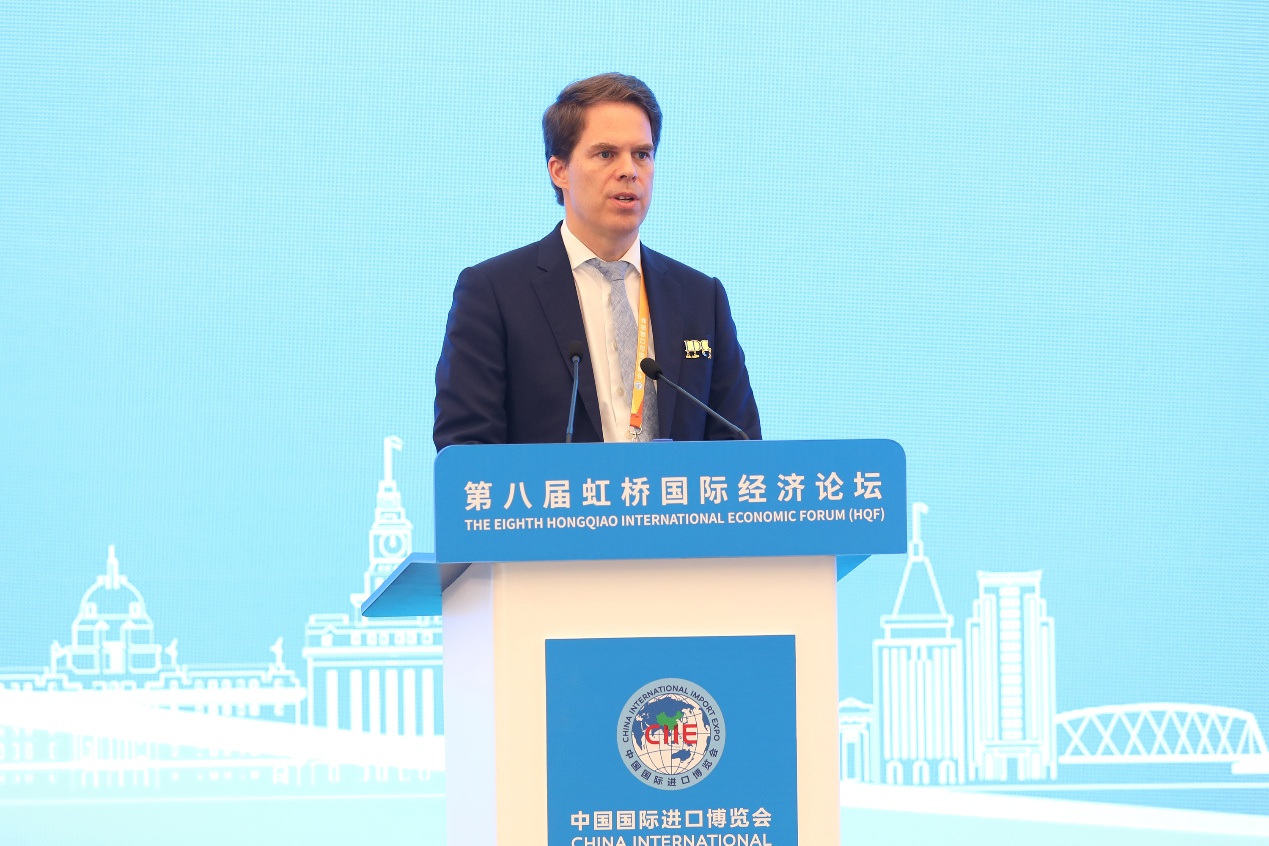
直击进博会|“全勤生”渣打银行以“超级连接器”角色共享中国机遇
Zhong Guo Jing Ying Bao· 2025-11-05 12:27
Core Insights - The eighth China International Import Expo (CIIE) opened on November 5, with Standard Chartered Bank participating for the eighth consecutive year, showcasing its commitment to supporting China's high-level opening and high-quality economic development [1][2] - Standard Chartered Bank emphasized its role as a "super connector" in the global trade landscape, highlighting China's importance as a strategic market and its ongoing investment in services and solutions tailored for international trade [2] Group 1: Event Participation and Themes - Standard Chartered Bank presented under the theme "Connecting to New Opportunities," demonstrating its innovative achievements in cross-border trade, sustainable finance, and digital finance [1] - The bank introduced upgraded products such as the "Outreach Pass" for SMEs and the "Global Chain" as a one-stop cross-border financial solution [1] Group 2: Strategic Collaborations - Standard Chartered Bank signed strategic cooperation memorandums with leading companies in sectors like food consumption, biomedicine, and new materials, focusing on trade financing and sustainable finance [1] - The bank plans to host roundtable discussions on topics such as SMEs going global, cross-border use of the Renminbi, and supply chain strategies, aiming to address industry challenges and opportunities [1]
《中国金融》|推动我国银行业供应链金融高质量发展
Sou Hu Cai Jing· 2025-11-05 10:35
Core Viewpoint - Supply chain finance plays a crucial role in enhancing financial services for the real economy and alleviating financing difficulties for small and medium-sized enterprises (SMEs) in China. The banking sector, as a key participant, reflects the transformation of industrial structure and the innovative vitality of financial technology. The development of supply chain finance in China's banking industry is progressing towards a more standardized, intelligent, green, and inclusive high-quality development direction [1] Development Stages of Supply Chain Finance in China's Banking Industry - Initial Development Stage (2001-2009): The emergence of inventory pledge loans and factoring services in the late 19th century laid the groundwork for supply chain finance in China. The first pilot practices began in 2001, leading to a systematic development of supply chain finance services by banks, with financing scales ranging from hundreds of millions to billions [2] - Rapid Development Stage (2010-2017): Following several risk events, banks began to shift their focus from front-end to back-end operations, collaborating with core enterprises to provide financing for their upstream and downstream suppliers. The trend of platformization emerged, integrating information, goods, funds, and logistics to mitigate risks [3][4] - High-Speed Development Stage (2018-2024): The issuance of various national policies and the rapid advancement of financial technology have propelled the growth of supply chain finance. By 2023, the industry scale reached approximately 41.3 trillion yuan, with a year-on-year growth of 11.9% and a five-year compound annual growth rate of 20.88% [5][6] Challenges Facing Supply Chain Finance in China's Banking Industry - The precision of supply chain finance services needs improvement, as banks often lack in-depth research on the characteristics of different industrial chains, leading to homogenized financial products [9] - Customer acquisition and marketing strategies require enhancement, as traditional supply chain finance heavily relies on the credit endorsement of core enterprises, limiting service scope and increasing customer acquisition costs [9] - The overall level of digital application in supply chain finance needs to be elevated, with many banks facing challenges in data integration and application [9] - Cross-departmental and cross-regional cooperation, as well as the development of specialized talent, need strengthening to improve service efficiency and effectiveness [9] Policy Guidance for High-Quality Development - Recent policies emphasize the need for standardized development of supply chain finance, promoting collaboration among enterprises along the industrial chain. The focus is on enhancing the resilience and security of supply chains, aligning with national strategies for long-term development [10][11] Future Directions for Supply Chain Finance - The industry should innovate financial products tailored to the characteristics of technology-driven SMEs, support green transformation, and enhance accessibility for micro and small enterprises [13] - Exploring decentralized models and leveraging data credit and asset value can broaden financing channels for SMEs [14] - Strengthening technical empowerment and optimizing organizational structures will enhance service quality and accelerate the digital transformation of supply chain finance [15][16] - Promoting internationalization of supply chain finance will better serve China's advantageous industries and enterprises expanding abroad, necessitating compliance with cross-border regulations and the development of diverse financial products [17]
数字人民币“暖”民生 山东中行“四进”服务零距离
Sou Hu Cai Jing· 2025-11-05 10:15
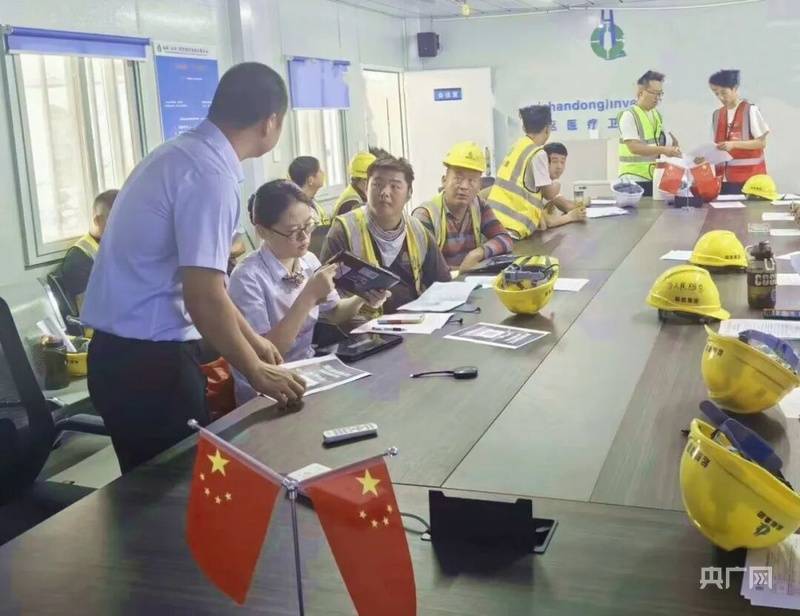
Core Viewpoint - Digital RMB is gradually changing payment habits in Shandong Province, with the Bank of China focusing on scenario-based services to promote digital financial knowledge among the public [1] Group 1: Promotion in Enterprises - The Bank of China in Jinan is providing customized services for construction companies, focusing on wage distribution for migrant workers and offering face-to-face explanations of digital RMB usage and anti-fraud techniques [2] - A "full-process follow-up" service model is introduced for large enterprises, helping employees quickly master the use of digital wallets through on-site demonstrations [2] Group 2: Promotion in Schools - The Bank of China in Jinan conducted a "Payment First Lesson" for new students at Shandong University, explaining the concept and safety of digital RMB in an engaging manner [3] - A campaign combining campus card services and anti-fraud education is also underway, aiming to enhance students' awareness of financial safety and protect personal information [3] Group 3: Promotion in Commercial Areas and Communities - The Bank of China Laiwu branch is promoting digital RMB in the core shopping area of Lai Steel Department Store through various promotional materials and direct engagement with citizens [5] - In community settings, the Jinan Licheng branch is conducting "Smart Assistance for the Elderly" lectures, helping older adults learn digital payment methods and internet safety [5] Group 4: Future Plans - The Bank of China plans to continue deepening the application of digital RMB with more diverse products and improved service experiences to support the high-quality development of the local digital economy [7]


招商银行南昌分行:为江西提供高质量金融服务
Zhong Guo Jin Rong Xin Xi Wang· 2025-11-05 09:21
Core Insights - The article highlights the commitment of China Merchants Bank Nanchang Branch to serve the local economy and community in Jiangxi, emphasizing a high-quality development model driven by strict management and innovation [1][2] Financial Performance - As of September 2025, the bank aims to exceed 100 billion yuan in loans and 140 billion yuan in deposits, contributing nearly 7.5 billion yuan in taxes and serving over 4.34 million personal clients and nearly 70,000 corporate clients [1] Sector-Specific Initiatives - The bank has established a "six specialized" mechanism to provide differentiated financial services to technology enterprises, achieving a technology finance loan balance of over 11.6 billion yuan, with an annual increase of nearly 3.2 billion yuan [2] - In green finance, the bank promotes various green loan products, achieving a green loan balance of over 8 billion yuan, with an annual increase of nearly 1.8 billion yuan [2] - The inclusive finance sector has seen a loan balance exceeding 23.3 billion yuan, with an annual increase of nearly 1.1 billion yuan [2] - The bank has enhanced its pension finance services, adding 15 corporate pension clients and over 70,000 individual pension clients [2] Support for Key Industries - The bank focuses on supporting five key industries: non-ferrous metals, electronic information, equipment manufacturing, new energy, and pharmaceuticals, with a target loan growth rate exceeding the average growth rate of corporate loans by 13.5 percentage points [3] - By 2025, the bank plans to provide over 10.7 billion yuan in loans to 12 key industrial chains, with a 17.6% year-on-year increase in loans to private enterprises [3] Rural Revitalization Efforts - The bank is actively supporting rural revitalization by addressing financing needs for energy projects in rural areas, with nearly 100 million yuan allocated for rural infrastructure loans and over 3 billion yuan for agriculture-related loans by 2025 [4] - The bank has established partnerships with several renewable energy companies and is involved in various community support projects, enhancing local economic development [4]

传统金融和数字金融加速融合 HashKey联手上海商业银行推信用卡
Zheng Quan Shi Bao Wang· 2025-11-05 08:31
Core Insights - HashKey Group launched a one-stop service platform called HashKey Crypto-as-a-Service (CaaS) to lower the entry barriers for Web3 and connect traditional finance with digital finance [1] - The collaboration with Shanghai Commercial Bank aims to create a Visa credit card that integrates traditional regulated financial systems with compliant digital asset exchanges [2] Group 1 - The HashKey CaaS platform will leverage HashKey Chain and its core capabilities, including asset tokenization and institutional-grade custody, to help financial institutions efficiently enter the digital asset space [1] - The platform addresses challenges faced by traditional institutions, such as regulatory complexity and high technical barriers, by providing a systematic solution for seamless integration [1] Group 2 - The partnership with Shanghai Commercial Bank is not limited to the credit card; it aims to facilitate new paradigms in wealth management and settlement through digital assets [2] - A dual rewards program will be implemented for credit card holders, integrating digital asset services into everyday consumer spending [2] - The collaboration signifies a significant step towards the integration of traditional banking with the digital asset ecosystem within a regulatory framework [2]
加快建设金融强国,积极参与国际金融治理
2 1 Shi Ji Jing Ji Bao Dao· 2025-11-04 23:21
Core Viewpoint - The article emphasizes the importance of accelerating the construction of a financial powerhouse in China as outlined in the "15th Five-Year Plan" proposal, highlighting the need for enhanced competitiveness and influence in the global financial landscape [1] Group 1: Financial System Development - The proposal mentions the need to improve the central bank system and establish a robust monetary policy framework alongside a comprehensive macro-prudential management system to ensure effective monetary policy transmission [2] - It highlights the importance of balancing monetary policy's intensity, timing, and rhythm to avoid excessive liquidity while maintaining sufficient market liquidity through various tools [2] - The focus is on enhancing the financial support for technological innovation and industrial transformation through structural monetary policy tools [3] Group 2: Financial Services and Inclusion - The "five major financial initiatives" aim to support national strategies and optimize financial resource allocation, including technology finance, green finance, inclusive finance, pension finance, and digital finance [4] - The proposal emphasizes the need for a more inclusive and adaptable capital market system to better serve the real economy and promote high-quality economic development [5] Group 3: Financial Institution Optimization - The proposal calls for optimizing the financial institution system, encouraging institutions to focus on their core businesses and improve governance [6] - It stresses the importance of enhancing the global competitiveness of large financial institutions while supporting the development of small and medium-sized financial institutions [6] Group 4: Financial Regulation and Openness - The proposal advocates for comprehensive financial regulation, emphasizing proactive risk prevention and the use of technology in regulatory practices [7] - It outlines the need for a safe and efficient financial infrastructure to support the stable operation of the financial system and enhance China's voice in global financial governance [8] - The proposal also discusses the transition from market-access-based openness to institutional openness, aiming for a comprehensive open financial ecosystem [9]
21评论丨加快建设金融强国,积极参与国际金融治理
2 1 Shi Ji Jing Ji Bao Dao· 2025-11-04 22:43
Core Viewpoint - The recent release of the "Suggestions on Formulating the 15th Five-Year Plan for National Economic and Social Development" emphasizes the importance of accelerating the construction of a financial powerhouse, highlighting the need for enhanced competitiveness and influence in the global financial landscape [2] Group 1: Financial Development Goals - The 15th Five-Year Plan sets the overarching requirement of building a financial powerhouse, with a focus on enhancing China's global financial competitiveness and participation in international financial governance reform [2] - The plan identifies the construction of a modern industrial system and technological innovation as key strategic tasks that require robust financial support [2] Group 2: Monetary Policy and Macro-Prudential Management - The plan calls for the improvement of the central bank system and the establishment of a comprehensive macro-prudential management framework to ensure effective monetary policy transmission [3] - Emphasis is placed on balancing the timing and intensity of monetary policy, avoiding excessive liquidity while ensuring sufficient support for economic recovery [3] - The plan advocates for enhanced coordination between monetary and fiscal policies to support major projects and maintain financial stability [3] Group 3: Macro-Prudential Management System - A comprehensive macro-prudential management system will be developed to monitor systemic risks more accurately and maintain financial market stability [4] - The plan includes optimizing the macro-prudential assessment framework and enhancing the regulatory focus on systemically important financial institutions [4] - The toolbox for macro-prudential policies will be expanded to address potential liquidity risks and ensure coordinated efforts among various regulatory frameworks [4] Group 4: Financial Sector Innovations - The plan outlines the development of five key areas: technology finance, green finance, inclusive finance, pension finance, and digital finance, which are essential for supporting national strategies and optimizing financial resource allocation [5] - Technology finance aims to create a robust support system for technological innovation, while green finance focuses on facilitating the transition to a low-carbon economy [5] - Inclusive finance seeks to provide targeted financial support to small and micro enterprises and rural sectors, contributing to common prosperity [5] Group 5: Capital Market Development - The plan emphasizes enhancing the inclusiveness and adaptability of capital market systems, promoting direct financing through equity and bond markets [6] - It aims to shift the focus from financing-led to balanced investment and financing, encouraging long-term capital to enter the market [6] - The development of various financial products, including futures and asset securitization, will be prioritized to support the real economy [6] Group 6: Financial Institution Optimization - The plan proposes optimizing the financial institution system to ensure that various financial entities focus on their core businesses and improve governance [7] - It highlights the importance of small and medium-sized financial institutions and encourages policies to support their development [7] - Large financial institutions are urged to enhance their global competitiveness and adapt to international markets [7] Group 7: Financial Regulation and Risk Management - The plan calls for strengthening financial regulation and enhancing collaboration between central and local regulatory bodies to build a comprehensive risk prevention and resolution system [8] - It emphasizes the need for proactive risk monitoring and the application of regulatory technology to improve risk management capabilities [8] - The legal framework for financial regulation will be updated to address the challenges posed by digital finance and complex financial products [8] Group 8: Financial Infrastructure Development - The plan stresses the importance of building a secure and efficient financial infrastructure to support the stable operation of the financial system [9] - A robust financial infrastructure will enhance service delivery to the modern industrial system and improve China's influence in global financial governance [9] Group 9: Financial Openness and International Cooperation - The plan outlines a strategy for deepening financial openness, transitioning from market access to institutional openness [10] - It aims to create a comprehensive open ecosystem that includes the development of the Shanghai International Financial Center and the promotion of digital currency [10] - The plan emphasizes the need to balance openness with security, using macro-prudential management and regulatory measures to mitigate risks [10]