
耐心资本

Search documents
解码“耐心资本”赋能,如何把握市场机遇?
Sou Hu Cai Jing· 2025-06-11 01:29
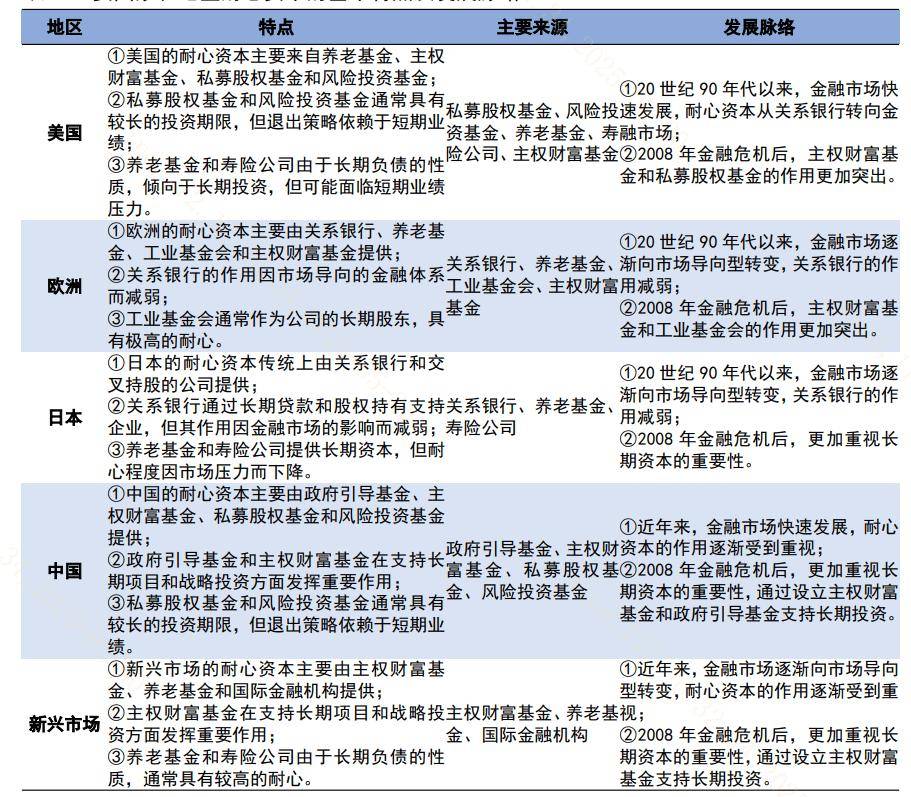
Group 1 - The concept of "Patient Capital" refers to capital that has a long-term investment perspective, can withstand higher risks, and seeks stable long-term returns, distinguishing it from capital that focuses solely on short-term profits [1][2] - Patient Capital emphasizes a longer investment cycle, rationally views short-term price fluctuations, and is characterized by a commitment to value investing and a higher risk tolerance [2][3] - In China, Patient Capital primarily comes from government-guided funds, sovereign wealth funds, private equity funds, and venture capital, with a focus on low-risk investments [3][4] Group 2 - The development of Patient Capital in the secondary market has seen a continuous increase in the market value held by Patient Capital entities such as central Huijin and social security funds, playing a crucial role in market stability [5] - In the first quarter of 2025, Patient Capital appeared in 874 instances across 696 companies, reflecting a growth of 2.10% from the previous quarter, with significant holdings in sectors like pharmaceuticals and basic chemicals [5][8] - The A500ETF (159339) is highlighted as a representative tool for Patient Capital, covering a wide range of industries and aligning with the long-term investment preferences of Patient Capital [8]

发展创业投资支撑创新创造
Jing Ji Ri Bao· 2025-06-08 22:07
近期,科技部、中国人民银行等7部门联合印发《加快构建科技金融体制有力支撑高水平科技自立自强 的若干政策举措》,明确提出发挥创业投资支持科技创新生力军作用,拓宽创业投资资金来源、优化国 有创业投资考核评价机制等。 发展创业投资是促进科技、产业、金融良性循环的重要举措。凭借较长时间投资周期特性,创业投资 (VC)和私募股权基金(PE)成为耐心资本的关键力量。同时,VC和PE的高风险偏好,也高度契合 科技创新企业的高风险属性。因此,积极培育以VC和PE为主体的耐心资本,对做好科技金融大文章、 支撑高水平科技自立自强、塑造发展新动能新优势意义重大。 在投资考核和管理上,要优化投资评价体系,让各类资本更有耐心。例如,可适当延长政府引导基金和 其他长期资本的考核周期,以适应科技创新和创业投资的长周期特性;采用整体投资组合的方式来评估 投资成效,改变现有逐个项目考核模式,容忍必要的失败;建立容错机制,设立合理的容错免责机制, 减少投资人因担心政策和责任风险而规避早期和技术创新项目的现象;逐步优化税收政策,激励长期持 有;等等。 在退出端,要畅通多元化退出渠道,提高市场流动性。发达国家经验表明,私募股权二级市场基金(S 基金 ...

前润控股集团董事长向阳:“鹿尔花园”项目将于近期启动武汉选址工作
Sou Hu Cai Jing· 2025-06-08 09:28
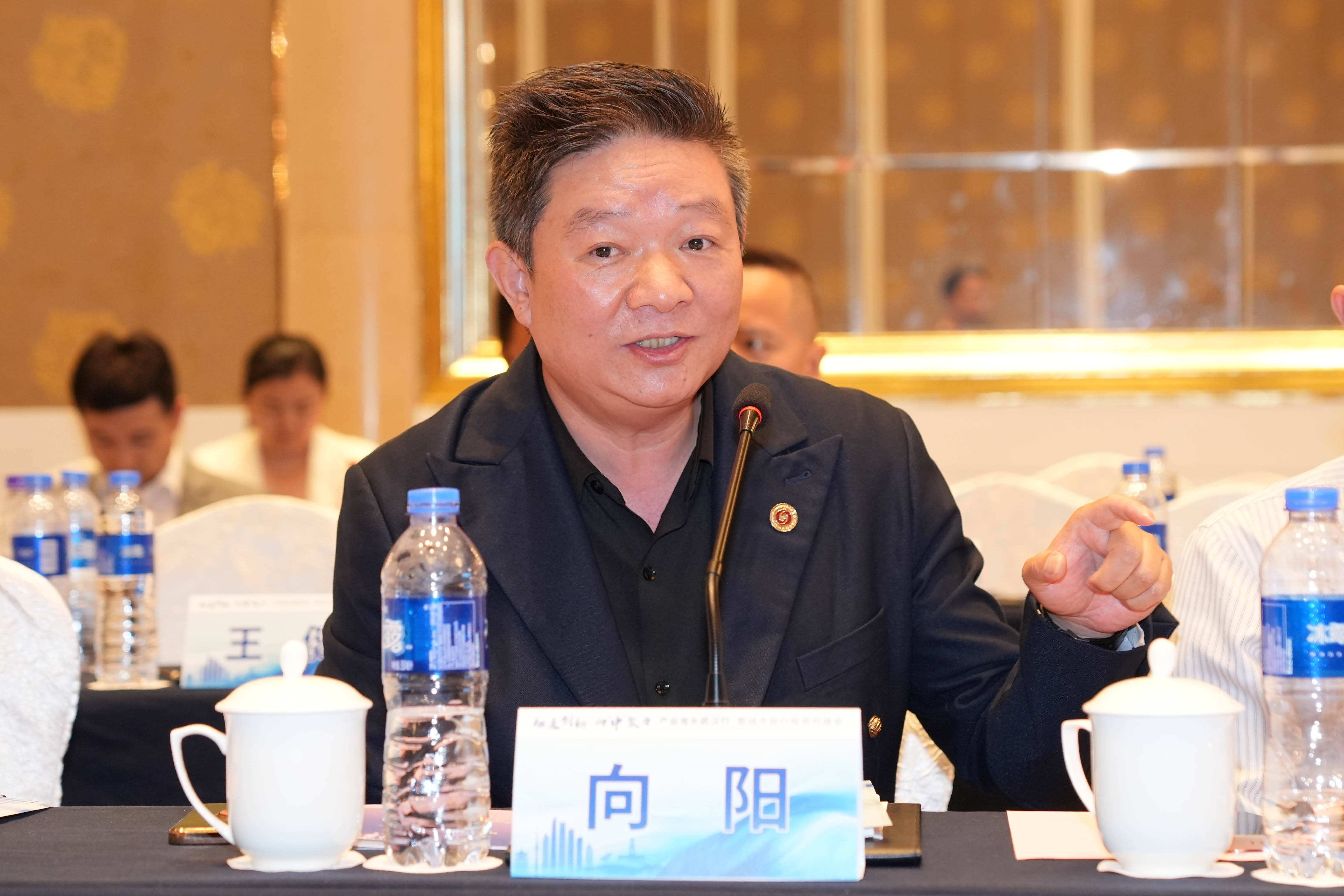
上证报中国证券网讯 "在当前复杂的经济形势下,产业发展与投资需要坚定的信念与'耐心资本'的长期支持。"6月6日,在"融通创新,向'中'聚力"——产业 龙头武汉行暨城市投行投资对接会上,前润控股集团有限公司董事长向阳博士表示,具备长远视野的"耐心资本"模式,最契合当下经济高质量发展和产业转 型升级的内在需求。 向阳进一步表示,当前AI产业竞争已进入以人才为核心驱动力的关键阶段。武汉作为科教重镇,拥有90余所高等院校和超过130万在校大学生,其丰沛的人 才资源为AI项目落地提供了得天独厚的沃土。前润集团期待将其在AI领域的深厚积累与武汉的人才优势相结合,积极推动相关项目在武汉乃至湖北省落地 生根,为区域经济创新发展注入强劲动能。 在扩大内需、提振消费的政策导向下,符合消费者深度体验需求的文旅产业迎来快速发展机遇。向阳特别对上证报和湖北省驻沪办去年组织的襄阳考察活动 表示感谢。得益于良好的营商环境与合作契机,前润旗下文旅项目"鹿尔花园"在襄阳的进展顺利且迅速,即将迎来阶段性成果。向阳同时宣布,"鹿尔花 园"项目将于近期正式启动在武汉的选址工作,致力于早日为武汉市民打造高品质的休闲体验空间,为这座英雄城市增添新的活力 ...
建行广西区分行:做护佑江河安澜的“耐心资本”
Zhong Guo Jin Rong Xin Xi Wang· 2025-06-06 06:37
Group 1 - The primary task of water management in Guangxi is flood control, emphasizing that water safety is the top priority [1] - The completion of the Datiangxia Water Conservancy Hub has effectively controlled water levels in the Xijiang and Xunjiang rivers during typhoon "Mojia," preventing flooding in downstream areas [1][3] - Historical flooding issues in Guangxi have been mitigated through the construction of 11 key flood control projects, transforming past experiences into memories for the local population [1] Group 2 - The Guilin government has prioritized flood control and water supply for the Lijiang River, leading to the development of innovative financing products like the "Lijiang Ecological Protection Loan" [2] - The Lijiang flood control and water supply project has a long construction period of 12 years, highlighting the need for "patient capital" to support such long-term infrastructure projects [2][3] - The flood control standards in Guilin have improved significantly, with the river's dry season flow rate increased from 42 cubic meters per second to 60 cubic meters per second, enhancing ecological conditions and navigation [3] Group 3 - The Wuzhou Xijiang flood control project has utilized green credit products from a major state-owned bank, showcasing the integration of ecological protection in financing [4] - The bank's commitment to long-term, low-interest financing has been crucial for the successful completion of large-scale flood control projects [5] - The bank's approach focuses on transforming invisible market forces into visible support for key livelihood projects, demonstrating a strong commitment to public welfare [5][6] Group 4 - The bank's specialized research teams integrate various business lines to ensure project financing meets the needs of key infrastructure projects, emphasizing a customer-centric approach [6] - The collaboration between the bank and local governments in addressing water safety challenges reflects a commitment to providing continuous "patient capital" for water management initiatives in Guangxi [6]

站在创投历史性变革的前夜,收获一场时间的玫瑰
3 6 Ke· 2025-06-06 00:49
Group 1 - The current capital winter is seen as a precursor to future prosperity, emphasizing that failures in the venture capital industry provide valuable lessons for growth [1] - Since 2018, China's venture capital industry has faced challenges, with a decline in financing activities, marking a shift towards more cautious investment behavior [1][2] - The shift from "short-term profit-seeking" to "long-term value creation" is essential for fostering innovation and enhancing the quality of investment opportunities [2] Group 2 - The establishment of a "carrier-level" national venture capital guidance fund aims to mobilize nearly 1 trillion yuan in social capital, focusing on strategic industries such as AI and quantum technology [3] - The fund will operate under a "mother-child fund" model with a 20-year lifespan, targeting early-stage and small to medium enterprises to address financing challenges [3][4] - State-owned capital is increasingly playing a significant role in guiding investments in key sectors, with substantial growth in strategic emerging industry investments [4][5] Group 3 - Local governments are evolving from mere financial supporters to active builders of innovation ecosystems, with cities like Hefei, Hangzhou, and Shenzhen showcasing distinct development models [7][8] - Hefei's approach emphasizes "industry-investment linkage," successfully attracting significant investments in display technology and electric vehicles [7][8] - Hangzhou focuses on creating a collaborative ecosystem through institutional innovation and talent policies, leading to a thriving tech environment [9][10] Group 4 - Shenzhen's private equity and venture capital funds have seen substantial growth, with a focus on early-stage investments in high-tech sectors [11][12] - The city has established a unique operational model combining state capital with market mechanisms, allowing for effective resource allocation [12][13] - The shift towards "flexible exits" in investment strategies reflects a growing understanding of the long-term nature of hard technology development [14][15] Group 5 - The venture capital industry is undergoing a transformation, moving away from traditional rapid exit strategies towards a focus on nurturing long-term value [14][15] - This change is driven by the need for patience in funding hard technology projects, which often require extended periods for development and commercialization [15][16] - The ultimate goal of this transformation is to align capital with the realities of technological innovation, supporting the construction of a robust innovation ecosystem in China [16]
北京这个区,正在打造“LGC”特色新模式
母基金研究中心· 2025-06-05 01:32
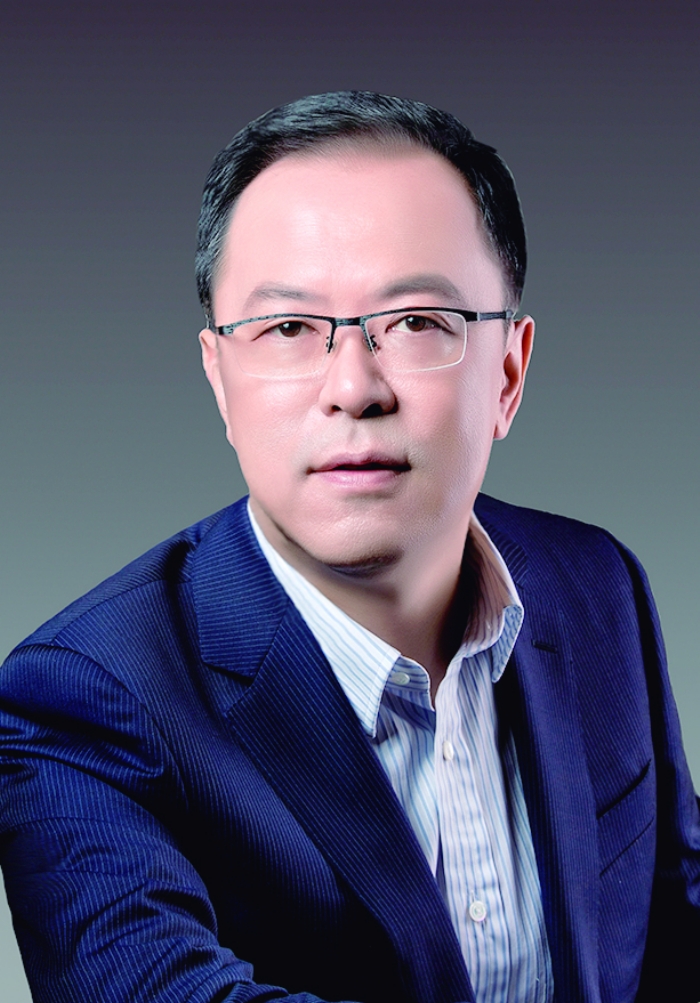
Core Viewpoint - The article discusses the innovative "LGC model" developed by Shunyi District in Beijing, aiming to address the alignment of interests between General Partners (GP) and Limited Partners (LP) in government investment funds, especially in the context of uncertain capital market exit environments [1][2]. Group 1: LGC Model and Its Features - The LGC model integrates both GP and LP roles within the government, leveraging state-owned financial licenses for credit financing, thus creating a unified investment and lending mechanism [1][2]. - The Shunyi model is characterized by a focus on enhancing capital efficiency and fostering collaboration between different financial entities within the same system, avoiding fragmentation seen in other regions [17][18]. Group 2: Background of Key Personnel - Lyu Yajun, the General Manager of Shunyi State-owned Assets Company, has a diverse background, including experience in international finance and government negotiations, which positions him uniquely to lead the district's investment initiatives [2][5][9]. - His previous roles include significant positions in major financial institutions, where he managed large-scale investment banking teams and participated in high-profile transactions exceeding $20 billion [5][9]. Group 3: Economic Development and Investment Strategy - Shunyi District is transitioning from an industrial zone to an investment-driven area, focusing on developing a modern industrial system with key sectors including new energy vehicles, third-generation semiconductors, and aerospace [10][11]. - In 2023, Shunyi's GDP reached 220.3 billion yuan, with a year-on-year growth of 7%, indicating a strong economic performance [10][11]. Group 4: Investment Fund Development - The Shunyi government initiated its first guiding fund in 2017, with a subscribed scale of 10 billion yuan, and has since established multiple sub-funds, attracting over 350 billion yuan in management scale [11][12]. - The second phase of the guiding fund, with a total scale of 10 billion yuan, is set to be established in 2024, focusing on direct investments managed by local teams [13][20]. Group 5: Market Trends and Future Outlook - The article emphasizes the importance of "patient capital" in the current investment landscape, where long-term investments are becoming more critical due to increased uncertainty in exit strategies [23][24]. - Shunyi aims to redefine investment returns by considering various factors such as financial returns, regional economic contributions, and industry development impacts, with a goal to elevate the district's investment capabilities within 2-3 years [28][29].
“国家队”耐心资本撬动产业突围
Zhong Guo Qing Nian Bao· 2025-06-04 22:00
Core Insights - BYD has surpassed Tesla in electric vehicle sales across 28 European countries in April, marking a significant milestone in China's electric vehicle export growth [1] - The National Investment Group (Guotou Group) has injected substantial capital into various sectors, including electric vehicles, AI chips, and biotechnology, supporting the development of competitive domestic enterprises [1][2] - Guotou Group manages over 50 funds with a total asset size exceeding 270 billion yuan, with 11 national-level government investment funds accounting for 84% of this total [1][2] Investment Focus - Guotou Group's funds have strategically invested in BYD, leading to the establishment of a 6GWh battery production line, contributing to BYD's position as a leader in the global electric vehicle market with 4.27 million units sold in 2024 [2] - The group emphasizes early-stage investments in hard technology, with over one-third of its investments in A-round and earlier stages, and 56% in B-round and earlier, surpassing industry averages [2] - Guotou Group has heavily invested 27.8 billion yuan in the integrated circuit industry, supporting 336 projects to accelerate domestic technology breakthroughs [2] Sector Development - The group aims to cultivate internationally competitive enterprises within the semiconductor and biotechnology sectors, enhancing supply chain security and promoting high-quality development [3] - The introduction of the "LP026-2" corn chip by Longping Biotechnology, supported by Guotou Group, has significantly increased farmers' income and improved domestic corn self-sufficiency [3] - Guotou Group has invested in 1,175 projects, aiding 296 companies in going public, including 143 on the Sci-Tech Innovation Board, and has facilitated breakthroughs in 323 key technologies [4] Economic Impact - Guotou Group's investment strategy demonstrates a high leverage effect, with every 1 yuan of central government funding resulting in over 5 yuan in project impact [4] - The group has directed over two-thirds of its funding towards private enterprises, fostering a collaborative development model between state-owned and private sectors [3][4]
商业航天迈向星辰大海
Jing Ji Ri Bao· 2025-06-03 22:11
Core Viewpoint - The commercial aerospace industry in China is rapidly developing, driven by strategic opportunities, technological innovation, and market potential, as highlighted in the government work report [1][2]. Industry Scale Expansion - The commercial aerospace sector is expected to grow quickly, aligning with national development strategies and showcasing high-quality development and technological innovation [1]. - The industry chain includes satellite manufacturing, rocket launching, ground stations, and application services, with significant advancements in satellite manufacturing capacity [1]. - Tianjin has established a production line with an annual capacity of over 100 satellites, aiming to produce 30 satellites in 2024, while Hainan's super factory will enable standardized satellite production with a capacity of 1,000 satellites per year [1]. Rocket Launch Developments - The commercial rocket launch sector is transitioning to reusable, low-cost, and high-capacity solutions, with successful tests of liquid oxygen-methane engines [2]. - By 2025, China plans to deploy two low-orbit internet constellations to meet global communication and IoT needs, with the market expected to exceed 1 trillion yuan by 2030 [2]. Collaborative Innovation in the Industry Chain - Hainan Wenchang is planning to establish a national-level commercial aerospace industry collaborative innovation center to attract leading companies and create a competitive aerospace industry cluster [3]. - Strengthening upstream and downstream collaboration is crucial for optimizing resource allocation and reducing redundant R&D efforts [3]. Recommendations for Promoting Innovation - Establishing cross-sector industry alliances and online collaborative innovation platforms is recommended to enhance information sharing and project cooperation [4]. - Encouraging leading companies to open application scenarios and data resources can foster innovation among SMEs and research institutions [4]. Sustaining Corporate Vitality - The commercial aerospace sector has moved from the experimental phase to large-scale application, but challenges remain in core technologies, cost control, and ecosystem development [5][6]. Investment and Policy Support - Increased R&D investment is necessary to overcome key technological bottlenecks and enhance market competitiveness [6]. - The introduction of patient capital and supportive policies for private enterprises in major aerospace projects is essential for the industry's growth [6].
国投创合总经理刘伟:壮大耐心资本还需吸引社会资本参与
Shang Hai Zheng Quan Bao· 2025-06-03 18:31
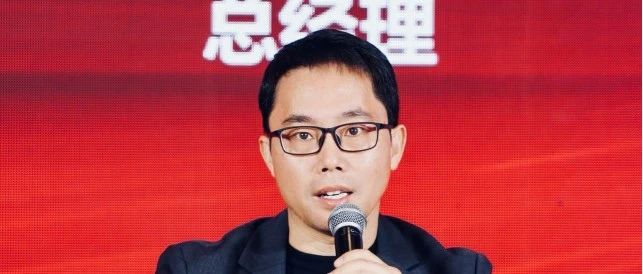
刘伟 ◎记者 韩宋辉 10年前,刘伟带队组建了国投创合,该公司成为国务院批复设立的国家新兴产业创业投资引导基金管理 机构之一。如今,国投创合直接管理规模400亿元,支持了4000多家创新型科技企业。 近几年,股权投资行业处于波动调整期。作为30年股权投资老将,国投创合总经理刘伟近日在接受上海 证券报记者专访时表示,在这种时候,国家基金、国资创投更应该发挥好行业压舱石、稳定器和引导带 动作用。 过去10多年,国投创合参与管理了新兴产业创投计划、新兴产业创业投资引导基金,发挥中央财政资金 和国有资本的引导带动作用,通过母子基金两级放大,形成1200亿元子基金规模,带动万亿资金支持新 兴产业科技企业发展。这一案例,为发挥引导基金"四两拨千斤"的杠杆放大效应提供了实践参考。 三大投资路径背后的投资逻辑 如何管好引导基金?国投创合选择子基金管理机构的路径可以总结为三条:一是围绕科研院校投资,已 投资十余家具有科研院校背景的创投基金;二是联合产业链龙头发起具有CVC特性的创投基金;三是 选择具有较好行业口碑的知名创投机构、在某一地区长期深耕的投资机构等进行合作。 这些路径背后,贯穿着国投创合十余年来摸索出的"投早、投创新 ...
创心之路创业数据研究报告(2024)
创业基金会· 2025-06-03 09:10
Investment Rating - The report indicates a positive investment outlook for the entrepreneurial investment market in 2024, highlighting a stable growth trend and increased confidence in early-stage investments [8][9][10]. Core Insights - The entrepreneurial investment market in 2024 is characterized by a steady increase in investment activities, with a projected total of 8,221 projects, reflecting a year-on-year growth of approximately 3.17% compared to 2023 [9][10]. - Key investment hotspots include intelligent manufacturing, artificial intelligence, new materials, and green energy, which align with national policy directions and global technological trends [19][21][26]. - The report emphasizes the importance of early-stage investments, which have seen significant growth, indicating a shift towards supporting sustainable and innovative projects [8][46]. Summary by Sections 1. Overview of 2024 Entrepreneurial Investment - The entrepreneurial investment market shows a positive trend, with a focus on several core sectors driven by technology, particularly intelligent manufacturing and artificial intelligence [8][19]. - The number of active investment institutions remains stable, with a diversified structure reflecting a mix of industrial and commercial capital [4][46]. 2. Changes in Hot Investment Areas - Intelligent manufacturing leads the investment landscape, accounting for 41.58% of total investments, followed by healthcare and artificial intelligence, which are also gaining traction [21][22][31]. - The report notes a concentration of resources in these key sectors, indicating a high demand for technological innovation and market adaptability [19][21]. 3. Distribution of Entrepreneurial Investments - Early-stage investments, particularly seed and A-round financing, have increased significantly, comprising 77.45% of total investments, showcasing a trend towards nurturing startups [46][47]. - The report highlights the importance of government policies in facilitating early-stage financing and supporting high-quality projects [46]. 4. Changes in Investment Institutions - The number of active investment institutions has stabilized, with a notable increase in the diversity of investment strategies and a focus on long-term returns rather than short-term gains [4][46]. - The report identifies leading investment institutions and their evolving roles in the entrepreneurial ecosystem, emphasizing the importance of strategic alignment with emerging technologies [52][55]. 5. Analysis of Funded Enterprises - Funded enterprises by the entrepreneurial foundation have shown better operational performance compared to market averages, with a significant number of projects receiving early-stage financing [62][64]. - The foundation's support has been crucial in expanding financing avenues for startups, demonstrating a commitment to inclusive financial practices [64].