
双碳目标

Search documents
《电力中长期市场基本规则》解读:新型电力系统下的电力中长期市场“定心丸” 加速用户用电“三化”提升
Zhong Guo Dian Li Bao· 2026-01-12 00:23
加速用户用电"三化"提升 ——《电力中长期市场基本规则》解读 四川宜宾天原集团股份有限公司董事长 邓敏 相关阅读 两部门发布《电力中长期市场基本规则》 不再人为规定分时电价水平和时段! 国家发展改革委、国家能源局近日印发的《电力中长期市场基本规则》(以下简称《基本规则》)作为 我国电力市场化改革的顶层设计文件,在电力体制改革关键的10周年之际,强化了电力市场四大维度核 心价值,分别通过市场化机制重构、新型主体融合、跨区域协同、风险防控等几个方面推动电力用户 从"被动用电"向"主动参与"转型,推动电力市场向更高效、更稳定、更包容、更可持续的方向发展,为 构建全国统一电力市场和新型电力系统提供制度基石。 一、强化稳定作用,用户吃上"定心丸" 新型电力系统下的电力中长期市场"定心丸" 四、健全风险防控体系,保障市场稳健运行 电力市场涉及"发-输-配-用"全链条,风险防控是核心底线。《基本规则》通过"分类分级防控""事 前预警-事中防范-事后处置"三防体系,实现对风险的全流程管理,采取"安全校核、偏差考核、信用 风险防控"等三重机制,保障用户用电稳定。电力终端用户对电力系统的信息及专业掌握不够,在风险 判断中存在不足 ...
《电力中长期市场基本规则》解读:筑统一市场之基,行绿色发展之实
Zhong Guo Dian Li Bao· 2026-01-12 00:23
筑统一市场之基,行绿色发展之实 ——《电力中长期市场基本规则》解读 山西风行测控股份有限公司董事长 梁耀军 相关阅读 两部门发布《电力中长期市场基本规则》 不再人为规定分时电价水平和时段! 一、前言:新阶段、新规则、新格局 为深入贯彻落实党中央、国务院关于加快建设全国统一电力市场体系的决策部署,国家发展改革委、国 家能源局于近期正式印发《电力中长期市场基本规则》(以下简称"新规则"),自2026年3月1日起施 行,有效期5年。新规则全面替代了2020年发布的《电力中长期交易基本规则》及2024年发布的《绿色 电力交易专章》,是我国电力市场体系建设进入全面深化、提质增效新阶段的标志性文件。新规则不仅 是对原有规则的简单修订,更是站在构建新型电力系统、服务"双碳"目标的战略高度,对电力中长期市 场进行的一次系统性、前瞻性的顶层设计,旨在为未来五年乃至更长时期电力市场中长期交易的健康、 有序、高效发展绘制清晰的蓝图。 二、核心突破与重大改进:对比旧规则与专章的全面升级 (一)体系性重构:从"交易"到"市场"的维度跃升 改进点:新规则的名称从《电力中长期交易基本规则》变为《电力中长期市场基本规则》,虽仅一词之 差,但 ...
加速!新能源重卡跑向中长途
Xin Hua Wang· 2026-01-11 23:32
Core Insights - The rapid growth of the new energy heavy truck market is driven by policy support, cost advantages, and expanded application scenarios, with sales reaching over 180,000 units in the first 11 months of 2025, a nearly twofold increase year-on-year [1][2]. Group 1: Market Dynamics - The market focus has shifted towards new energy vehicles, with traditional fuel heavy truck sales declining as old vehicles are replaced due to policy incentives [2]. - New energy heavy truck sales by China National Heavy Duty Truck Group increased by 233% in 2025, with total production and sales exceeding 300,000 units [2]. - The application scenarios for new energy heavy trucks have expanded beyond fixed routes to include diverse logistics needs, with significant penetration in short-distance and medium-distance transport [2][3]. Group 2: Cost and Infrastructure Advantages - The cost per kilometer for new energy heavy trucks is approximately 1 yuan, compared to 2.5-3 yuan for diesel trucks, leading to annual savings of around 270,000 yuan based on average mileage [3]. - Government policies, including subsidies for scrapping old vehicles and incentives for purchasing new energy trucks, are effectively driving market growth [3][4]. - Infrastructure improvements, such as the deployment of charging stations and battery swap stations, are enhancing refueling efficiency, with super-fast charging capabilities allowing for 400 kilometers of range in just 15 minutes [4]. Group 3: Challenges and Future Outlook - Despite the growth, challenges remain in scaling up new energy heavy trucks for long-distance transport, with current applications primarily limited to short-distance scenarios [5]. - The Ministry of Transport is committed to promoting the large-scale development of new energy transport equipment, emphasizing the importance of transitioning from older vehicles to low-emission options [6]. - Companies are increasing R&D efforts and forming partnerships to advance technology in new energy heavy trucks, focusing on battery innovations and hydrogen fuel cell applications [7].
加速!新能源重卡跑向中长途(经济聚焦)
Ren Min Wang· 2026-01-11 22:43
Core Viewpoint - The rapid growth of the new energy heavy truck market in China is driven by policy support, cost advantages, and expanding application scenarios, with sales expected to continue increasing significantly by 2025 [5][6][7]. Market Dynamics - In the first 11 months of 2025, cumulative sales of new energy heavy trucks exceeded 180,000 units, representing a nearly twofold year-on-year increase, with a market penetration rate reaching 20% [5]. - The market focus has shifted from traditional fuel trucks to new energy vehicles, with significant sales growth reported by manufacturers [6]. Application Scenarios - New energy heavy trucks are increasingly being used in diverse applications beyond fixed routes, including logistics for various goods and long-distance transportation within 500 kilometers [6][7]. - The penetration rate of new energy heavy trucks in short-distance transportation scenarios has reached 74% [7]. Cost Advantages - The cost per kilometer for new energy heavy trucks is approximately 1 yuan, compared to 2.5-3 yuan for diesel trucks, leading to substantial savings in operational costs [7]. - Policies such as subsidies for replacing old vehicles with new energy trucks are enhancing the financial attractiveness of these vehicles [7]. Infrastructure Development - The establishment of charging stations and battery swap stations along logistics routes has improved refueling efficiency, with rapid charging capabilities being implemented [8]. - The government is actively promoting the development of infrastructure to support the scaling of new energy transportation [10]. Challenges and Future Outlook - Current limitations include the need for new energy heavy trucks to expand their use in medium to long-distance transportation and improve the network of charging facilities [9]. - The Ministry of Transport is committed to promoting the large-scale development of new energy transportation equipment, with a focus on supporting the transition to low-emission vehicles [10][11]. - Companies are increasing their R&D efforts and collaborating with academic and industry partners to advance technology in the new energy heavy truck sector [11].


荔波茂兰大样地工作站正式揭牌成立
Xin Lang Cai Jing· 2026-01-11 22:25
Core Viewpoint - The establishment of the Maolan Large Sample Plot Workstation marks a significant step in biodiversity monitoring and research within China's karst forest ecosystems, contributing to the "dual carbon" goals and the creation of national parks in Southwest China [1] Group 1: Establishment and Purpose - The Maolan Large Sample Plot Workstation was inaugurated on January 4 in Libo County, Qiannan Prefecture [1] - It serves as a key platform for research on karst forest ecosystems and biodiversity dynamic monitoring, functioning as a "natural laboratory" [1] - The workstation is part of China's forest biodiversity monitoring network, aimed at supporting ecological protection and sustainable development [1] Group 2: Operational Responsibilities - The workstation will be located at the Weng'ang Management Station within the protected area, responsible for daily inspections, facility maintenance, and management of research activities [1] - It will also manage research materials and equipment, ensuring the continuous and stable operation of the large sample plot [1] Group 3: Collaboration and Impact - The establishment of the workstation facilitates communication and collaboration among co-construction units, local governments, and management bureaus of protected areas [1] - This initiative transitions the large sample plot from resource baseline surveys to regular monitoring, laying a solid foundation for in-depth research and ongoing ecological protection efforts in the Maolan Protected Area [1]
政策助力、优势凸显、场景拓宽 加速!新能源重卡跑向中长途(经济聚焦)
Ren Min Ri Bao· 2026-01-11 21:59
Core Insights - The rapid growth of the new energy heavy truck market is driven by the replacement of old fuel trucks and supportive government policies, with sales reaching over 180,000 units in the first 11 months of 2025, a nearly twofold increase year-on-year [1][2]. Market Dynamics - The market focus has shifted towards new energy vehicles, with traditional fuel truck sales declining. In 2025, a heavy truck dealer reported selling over 200 new energy trucks, while traditional fuel truck sales decreased [2]. - The sales volume of new energy heavy trucks from China National Heavy Duty Truck Group increased by 233% year-on-year, surpassing 300,000 units [2]. Application Scenarios - New energy heavy trucks are expanding beyond fixed routes in ports and mines to more diverse applications, including logistics and freight transport over distances up to 500 kilometers [2]. - The penetration rate of new energy heavy trucks in short-distance transport scenarios has reached 74% [2]. Cost Advantages - The cost of operating new energy heavy trucks is significantly lower, with energy costs around 1 yuan per kilometer compared to 2.5-3 yuan for diesel trucks. This translates to annual savings of approximately 270,000 yuan based on average annual mileage [3]. - Government incentives, such as subsidies for scrapping old vehicles and purchasing new energy trucks, further enhance the cost-effectiveness of new energy heavy trucks [3]. Infrastructure Development - The establishment of charging stations and battery swap stations along logistics routes has improved refueling efficiency, with super-fast charging capabilities allowing for 400 kilometers of range in just 15 minutes [4]. - The current infrastructure still faces challenges, particularly in expanding the use of new energy heavy trucks for medium to long-distance transport [5]. Future Outlook - The Ministry of Transport is committed to promoting the large-scale development of new energy transport equipment, with policies supporting the replacement of older trucks with low-emission vehicles [6]. - Technological advancements are needed in battery systems and hydrogen fuel cells to support the growth of new energy heavy trucks [6][7]. - Leading manufacturers are increasing R&D efforts and collaborating with academic and industry partners to drive innovation in new energy heavy truck technology [7].
【走在前 挑大梁 非凡“十四五”·品质滨州建设的生动实践】五年“蝶变”惠民生 滨州住建书写“十四五”高质量答卷
Xin Lang Cai Jing· 2026-01-11 15:08
Core Viewpoint - The construction and housing system in Binzhou has made significant progress during the "14th Five-Year Plan" period, focusing on improving the quality of life for residents through various initiatives and projects aimed at enhancing living conditions and urban infrastructure [1][2]. Group 1: Urban Development and Housing - The housing market in Binzhou has stabilized, with a total of 1,741 million square meters of pre-sale residential area and 962 billion yuan in development investment during the "14th Five-Year Plan" [3]. - The average housing area per person reached 44.5 square meters, maintaining a basic balance between supply and demand [3]. - The city has implemented policies to promote the healthy development of the real estate market, resulting in a gradual recovery of buyer confidence [3]. Group 2: Infrastructure and Urban Renewal - A total of 176 billion yuan has been invested in municipal infrastructure, including the construction of 141 kilometers of new urban roads and 7 bridges, significantly improving road capacity and travel conditions [6][7]. - The city has established a comprehensive urban renewal plan, investing 155 billion yuan to enhance urban functionality and aesthetics [5]. - The "city health check" system has been implemented to identify and address urban weaknesses, covering 100% of streets and 75% of communities [5]. Group 3: Quality of Life Improvements - Over the past five years, 832 old residential communities have been renovated, benefiting 98,000 households, and 296 elevators have been added to existing multi-story buildings [10]. - The city has focused on creating child-friendly spaces and improving accessibility for the elderly and disabled, achieving 100% coverage for wheelchair ramps and blind paths [10]. - Housing safety in rural areas has been enhanced through the completion of safety inspections and renovations for over 104,000 rural homes [11][12]. Group 4: Green and Smart Development - The city has made strides in green building practices, with 3,373 million square meters of new green buildings and a 100% coverage rate for smart construction sites [9]. - The implementation of energy-saving standards and the promotion of prefabricated buildings have contributed to the city's sustainability goals [9]. - The construction industry has seen a total output value of 1,281 billion yuan, with a focus on industrialization, digitalization, and green transformation [8].
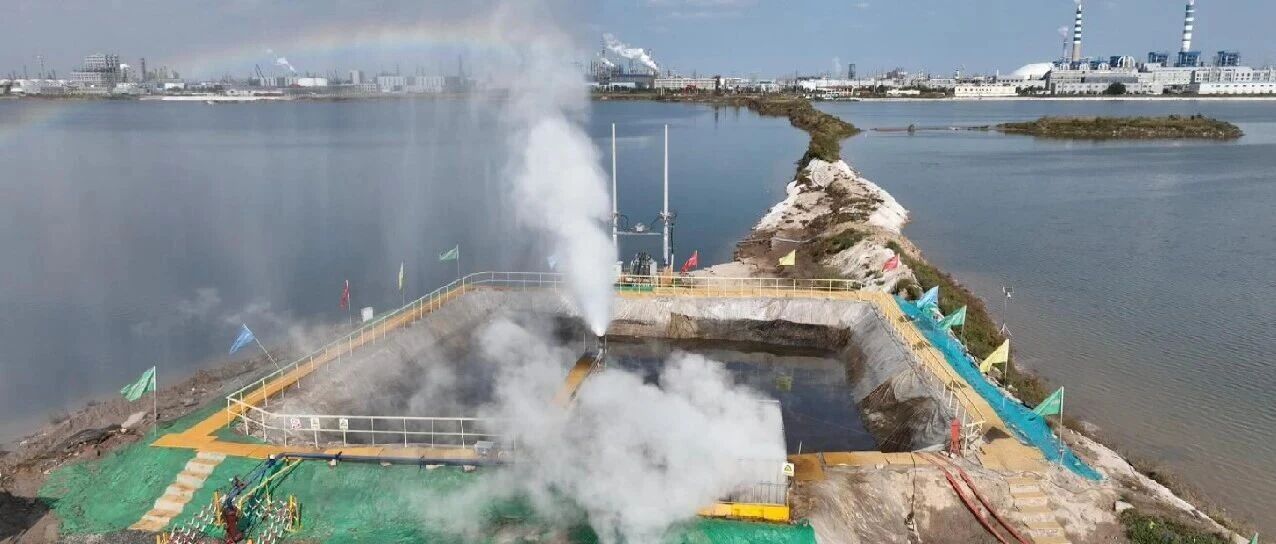
东营钻出162℃“能源锅炉” 巨量地热如何变现?
经济观察报· 2026-01-11 05:59
Core Viewpoint - The "Donggao Hot 1" well breaks the traditional pattern of geothermal resources in China, which is characterized by "strong in the west, weak in the east," and provides a new path for energy diversification in Dongying, while also serving as a practical example for alleviating structural energy contradictions at the national level [1][3]. Geothermal Resource Development - The "Donggao Hot 1" well, located in Dongying, Shandong Province, reaches a depth of 4002.17 meters with a bottom temperature of 162℃ and a wellhead water temperature of 138℃, producing a flow rate of 101.3 cubic meters per hour [2][3]. - The well's breakthrough is based on a geological survey covering approximately 4000 square kilometers and introduces a new theory of "sedimentary basin potential mountain hydrothermal type" for high-temperature geothermal formation [5][6]. Technical Innovations - To address the "hot but no flow" issue, the Shandong Geological and Mineral Exploration Bureau developed a "high-temperature acid fracturing technology" that enhances the flow capacity of geothermal reservoirs by 12 times and increases wellhead temperature by 18℃ [6]. - The principle of "balanced extraction and reinjection, taking heat without depleting water" is emphasized to ensure sustainable geothermal resource development [7][8]. Economic Benefits - The use of geothermal heating in agricultural settings, such as the Shandong Shuangfu Flower Company, has significantly reduced heating costs from 40 yuan per square meter to 15 yuan per square meter, saving approximately 5 million yuan annually [10][11]. - The "Donggao Hot 1" well is estimated to release 679,000 GJ of heat annually, equivalent to about 27,000 tons of standard coal, with potential applications in electricity generation and industrial steam production, contributing to a projected annual economic benefit of around 450 million yuan [12][13]. Future Potential - The geological conditions in regions like Dezhou and Binzhou in Shandong are believed to have similar potential for discovering deep high-temperature geothermal resources, which could further activate the geothermal economy on a larger scale [13].
分布式光伏就此没落?“十五五”时期有望呈现这三大趋势
Xin Lang Cai Jing· 2026-01-11 05:02
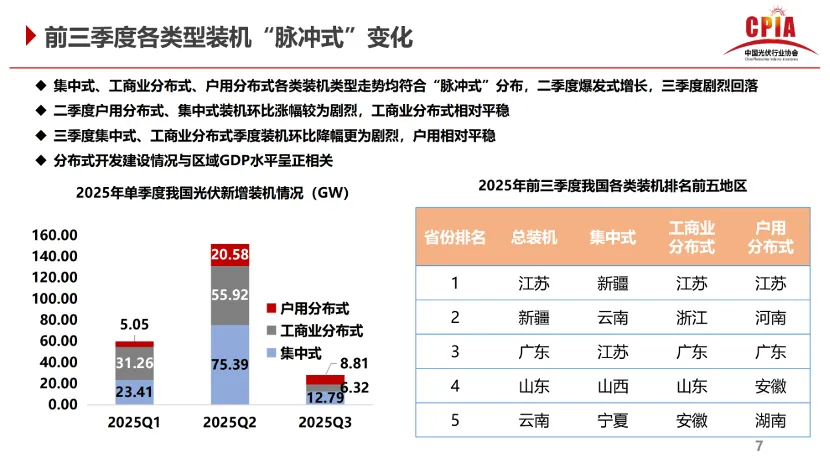
Core Viewpoint - The announcement by Southern Power Grid Energy indicates a significant shift in strategy, moving away from new investments in photovoltaic projects, reflecting broader changes in the solar energy market [1] Group 1: Company Strategy - Southern Power Grid Energy has decided not to add new photovoltaic projects, focusing instead on optimizing strategies in response to the full market entry of renewable energy [1] - This marks a 180-degree turn from the previous year when the company was actively promoting household photovoltaic business in Guangdong, Guangxi, and Hainan, expecting it to be a key growth driver [1] Group 2: Market Changes - The release of important documents like the "Distributed Photovoltaic Power Generation Development Management Measures" and the "136 Document" has reshaped the photovoltaic industry, particularly the development logic of distributed solar energy [2] - The implementation of these regulations has led to a new phase for distributed photovoltaic development, with expectations for new trends and dynamics [2] Group 3: Installation Trends - By the end of 2020, China's total installed wind power was 280 million kW, and photovoltaic power was 250 million kW, with distributed photovoltaic installations at only 78.31 million kW, accounting for 31% of total photovoltaic installations [3] - During the "14th Five-Year Plan" period (2021-2025), distributed photovoltaic installations surged, with 2024 alone adding 120 million kW, bringing the total to 370 million kW by the end of 2024, representing 42% of total photovoltaic installations [4] Group 4: Performance Decline - Since the introduction of new management regulations and the "136 Document," the growth of distributed photovoltaic installations has sharply declined, with significant drops in new installations reported in Q3 2025 [5][10] - The overall trend shows a rapid decrease in new installations across all types of photovoltaic systems, with expectations that the gap between distributed and centralized photovoltaic installations will widen [10] Group 5: Regional Development - The focus of distributed photovoltaic installations is shifting towards economically developed provinces such as Jiangsu, Guangdong, Anhui, Fujian, and Zhejiang, which have strong power consumption capabilities [11][12] - The new regulations have led to a regional shift in installations, with areas previously strong in distributed photovoltaic installations now seeing a decline [12] Group 6: New Business Models - The "136 Document" has prompted distributed photovoltaic systems to participate in the electricity spot market, increasing revenue uncertainty due to market price fluctuations [14] - To adapt, the industry is exploring new business models, including energy storage integration and virtual power plants, which are gaining policy support [15][16]

前华为员工创业,在资源回收领域应用AI多模态智能分选,拿下千万元融资|硬氪首发
3 6 Ke· 2026-01-11 04:37
Financing Information - Guangzhou JiuZhua Intelligent Technology Co., Ltd. recently completed a Pre-A round financing of tens of millions of RMB, with investments from Baiyun Financial Holdings and Baiyun Construction Technology [1] - The funds will primarily be used for core algorithm and equipment iteration, as well as scaling applications in more real-world scenarios [1] Company Overview - Established in 2021 and registered in Guangzhou, the company integrates AI vision with hyperspectral and near-infrared multi-modal sensing to create a self-developed hardware-software sorting system [2] - This system allows for continuous binding of algorithms with real complex scenarios, resulting in differentiated advantages in sorting accuracy, stability, and labor replacement capability [2] Market Analysis - The Chinese recycling industry is transitioning from extensive processing to refined, large-scale recycling, driven by "dual carbon" goals and normalized waste sorting [3] - The sorting stage is critical for recycling efficiency and resource value, facing structural issues such as rising costs, insufficient stability, and limited sorting accuracy, which hinder industry upgrades [3] Technology and Competitive Advantage - Intelligent sorting equipment is becoming a "rigid configuration" in resource recovery, capable of reducing labor costs while improving resource recovery efficiency [5] - The AI multi-modal composite recognition system developed by the company addresses challenges in real waste sorting scenarios, such as high pollution and mixed materials, by integrating various sensing technologies with proprietary algorithms [8] Business Model - The company provides comprehensive sorting solutions rather than just equipment, ensuring that processed materials meet recycling standards [10] - It serves three main customer types: local governments, urban sanitation and resource recovery operators, and recycling enterprises, helping them achieve sorting needs through equipment upgrades or new facilities [10] Challenges and Future Plans - The company faces challenges in adapting to local sorting needs due to the variability of waste materials in different regions and the integration of new sorting centers with existing recycling systems [11] - The financing will prioritize technology investment, including model iteration and core algorithm upgrades, and will promote technology application in more recycling categories [12] Investor Insights - Investors recognize that efficient utilization of renewable resources and intelligent sorting are crucial for promoting green low-carbon development and upgrading the circular economy [13] - The company has demonstrated significant advantages in practical applications of its technology and has the potential for broader replication in various scenarios [13]

