
生物医药

Search documents
诺诚健华跌2.02%,成交额3810.49万元,主力资金净流出491.39万元
Xin Lang Cai Jing· 2025-10-21 02:16
Core Viewpoint - Nuo Cheng Jian Hua's stock price has seen a significant increase of 93.24% year-to-date, but has recently experienced a decline of 2.94% over the past five trading days and 20.66% over the past 60 days [2][3] Company Overview - Nuo Cheng Jian Hua, established on November 3, 2015, and listed on September 21, 2022, is based in Beijing and focuses on the research, production, and commercialization of biopharmaceuticals, particularly in oncology and autoimmune diseases [2] - The company's revenue composition includes 87.67% from drug sales, 12.04% from technology licensing, and 0.15% each from testing and research services [2] Financial Performance - For the first half of 2025, Nuo Cheng Jian Hua reported a revenue of 731 million yuan, representing a year-on-year growth of 74.26%, while the net profit attributable to shareholders was -30.09 million yuan, an increase of 88.51% year-on-year [3] Shareholder Information - As of June 30, 2025, the number of shareholders increased by 13.80% to 15,200, with an average of 0 circulating shares per person [3] - Notable institutional shareholders include China Europe Medical Health Mixed A and others, with changes in their holdings reflecting market dynamics [3]

辰欣药业跌2.01%,成交额3.34亿元,主力资金净流出1758.07万元
Xin Lang Cai Jing· 2025-10-21 02:09
Core Viewpoint - Chenxin Pharmaceutical experienced a stock price decline of 2.01% on October 21, 2023, with a current price of 21.97 CNY per share and a total market capitalization of 9.947 billion CNY [1] Group 1: Financial Performance - Year-to-date, Chenxin Pharmaceutical's stock price has increased by 64.79%, with a 10.02% rise over the last five trading days and a 23.14% increase over the last 60 days [1] - For the first half of 2025, the company reported a revenue of 1.740 billion CNY, a year-on-year decrease of 15.97%, and a net profit attributable to shareholders of 229 million CNY, down 15.23% year-on-year [2] Group 2: Shareholder Information - As of June 30, 2025, the number of shareholders for Chenxin Pharmaceutical was 35,900, an increase of 68.07% from the previous period, with an average of 12,602 circulating shares per shareholder, a decrease of 40.50% [2] - The company has distributed a total of 1.197 billion CNY in dividends since its A-share listing, with 633 million CNY distributed over the last three years [3] Group 3: Business Overview - Chenxin Pharmaceutical, established on November 6, 1998, and listed on September 29, 2017, specializes in the research, development, and production of chemical drug formulations [2] - The company's main revenue sources include large-volume injections (42.66%), small-volume injections (29.80%), and oral solid preparations (13.98%) [2]

盘前必读丨苹果股价创历史新高;宁德时代第三季度净利同比增41%
Di Yi Cai Jing Zi Xun· 2025-10-20 23:59
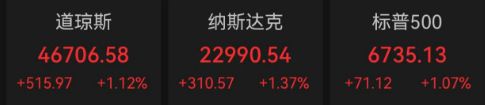
Market Performance - US stock indices collectively rose, with the Dow Jones up 1.12%, S&P 500 up 1.07%, and Nasdaq up 1.37% [1] - Major tech stocks saw significant gains, with Apple rising nearly 4% to reach a historical high, while Google, Amazon, and Meta increased over 1% [1] - The Nasdaq Golden Dragon Index, which tracks Chinese companies listed in the US, rose over 2%, with Alibaba up over 3% and Pinduoduo up over 2% [1] Financial Sector Updates - The Ministry of Finance and the State Administration of Taxation announced a pilot program for joint regulation of accounting agencies in three provinces, considering local conditions [1] - The Ministry of Finance's Treasury Department plans to implement a central treasury cash management deposit operation with a planned deposit amount of 120 billion yuan for a one-month term [1] Technology and E-commerce Developments - Douyin e-commerce reported significant growth during the first phase of the "Double 11" sales event, with over 41,000 merchants achieving a 500% year-on-year sales increase through live streaming [2] - Amazon Web Services experienced operational issues, affecting hundreds of websites and applications, including popular gaming and entertainment services [3] Company Earnings Reports - China Mobile reported a net profit of 115.4 billion yuan for the first three quarters, a year-on-year increase of 4% [4] - CATL reported a third-quarter net profit of 18.549 billion yuan, up 41.21% year-on-year [5] - Keda Xunfei's third-quarter net profit increased by 202.4% year-on-year, while Jinli Permanent Magnet's net profit rose by 172.65% [4] Market Trends and Insights - Jianghai Securities noted a clear shift in market funds, while Caitong Securities emphasized the importance of the innovation index as a gauge for tech stocks [4] - Shenzhen Qianhai indicated that the main theme for the fourth quarter will revolve around technology, particularly in artificial intelligence and semiconductor sectors [4]



八大券商聚焦“十五五”规划前瞻:特殊历史节点的传承与超越
Xin Lang Zheng Quan· 2025-10-20 23:22
Core Insights - The "15th Five-Year Plan" (2026-2030) is expected to focus on economic, technological, reform, and livelihood aspects, emphasizing green low-carbon development and addressing "involution" governance [1][8][11] - The upcoming plan will likely support strategic emerging industries such as AI, quantum technology, and renewable energy, aiming to enhance China's global competitiveness [2][3][8] - The plan is anticipated to address the modernization of the industrial system and improve the efficiency of the economy, with a potential GDP growth target of 4.5%-5% [7][11] Industry Opportunities - The wind power sector is projected to add no less than 120 million kilowatts of new installed capacity during the "15th Five-Year Plan" period [1] - The AI industry is expected to see significant investment and development support, driven by the rapid growth of global AI demand [2][3] - Emerging industries such as low-altitude economy, commercial aerospace, and advanced manufacturing are likely to receive policy backing, leading to mass production of related products [3][8] Market Dynamics - The upcoming Fourth Plenary Session of the 20th Central Committee is expected to influence market sentiment positively, with a focus on the "15th Five-Year Plan" [4][7] - Short-term market fluctuations may present investment opportunities, particularly in sectors with strong policy support and earnings certainty [4][6] - The restructuring of economic drivers is anticipated to place future industry development in a more prominent strategic position [10]
“羊城邀约”粤港澳大湾区专场招聘活动在广州举办 400余家企业供岗上万个
Nan Fang Ri Bao Wang Luo Ban· 2025-10-20 08:02
Group 1 - The "Yangcheng Invitation" recruitment event for the Guangdong-Hong Kong-Macao Greater Bay Area was held at Jinan University, integrating online and offline modes to provide comprehensive employment and entrepreneurship services for youth from Guangdong, Hong Kong, and Macao [1] - Over 400 quality enterprises participated in the event, including major companies like GAC Group, Guangzhou Pharmaceutical Group, and HSBC Global, offering more than 10,000 job positions across key sectors such as advanced manufacturing and technology innovation [1] - The event featured five specialized recruitment zones to enhance job matching efficiency, attracting nearly 10,000 online viewers during the live broadcast [1] Group 2 - Graduates expressed interest in competitive salaries, with a master's graduate from Jinan University noting an annual salary of approximately 500,000 yuan offered by Guangzhou Pharmaceutical Group [1] - Companies emphasized the importance of career advancement opportunities for "post-00s" job seekers, with a focus on attracting high-caliber talent [2] - Innovative employee benefits were introduced by companies, such as special leave policies, reflecting a people-oriented approach to talent acquisition in Guangzhou [2] Group 3 - The event also included a youth innovation and entrepreneurship expo, showcasing over 120 entrepreneurial projects in fields like artificial intelligence and biomedicine, highlighting the vibrant entrepreneurial spirit among youth [2]
金花股份涨2.01%,成交额3456.10万元,主力资金净流出62.69万元
Xin Lang Cai Jing· 2025-10-20 06:35
Core Viewpoint - Jinhua Co., Ltd. has experienced a slight increase in stock price recently, with a year-to-date decline, indicating potential volatility in the market [1][2]. Company Overview - Jinhua Co., Ltd. is located in Xi'an, Shaanxi Province, established on February 14, 1996, and listed on June 12, 1997. The company primarily engages in the research, production, and sales of pharmaceuticals, with 99.71% of its revenue coming from drug sales [2]. - The company operates within the pharmaceutical and biotechnology sector, specifically in traditional Chinese medicine [2]. Financial Performance - For the first half of 2025, Jinhua Co., Ltd. reported a revenue of 241 million yuan, a year-on-year decrease of 1.90%, and a net profit attributable to shareholders of 6.195 million yuan, down 34.53% year-on-year [2]. - The company has distributed a total of 118 million yuan in dividends since its A-share listing, with 10.5814 million yuan distributed over the past three years [3]. Stock Performance - The stock price of Jinhua Co., Ltd. has decreased by 1.95% year-to-date, but has seen a recent uptick of 4.95% over the last five trading days [2]. - As of October 20, the stock was trading at 7.63 yuan per share, with a market capitalization of 2.848 billion yuan [1].

康弘药业跌2.01%,成交额1.19亿元,主力资金净流出338.59万元
Xin Lang Zheng Quan· 2025-10-20 05:39
Core Viewpoint - Kanghong Pharmaceutical's stock has experienced a significant increase of 79.79% year-to-date, but has recently seen a decline in the short term, with a drop of 2.62% over the last five trading days and 13.01% over the last twenty days [1] Financial Performance - For the first half of 2025, Kanghong Pharmaceutical reported a revenue of 2.454 billion yuan, representing a year-on-year growth of 6.95%, and a net profit attributable to shareholders of 730 million yuan, which is a 5.41% increase compared to the previous year [2] Shareholder Information - As of October 10, 2025, the number of shareholders for Kanghong Pharmaceutical increased to 24,000, with an average of 28,565 circulating shares per person, a slight decrease of 0.20% [2] - The company has distributed a total of 2.038 billion yuan in dividends since its A-share listing, with 1.04 billion yuan distributed over the last three years [3] Stock Performance and Trading Activity - On October 20, Kanghong Pharmaceutical's stock price was 34.16 yuan per share, with a market capitalization of 31.472 billion yuan. The stock saw a net outflow of 3.3859 million yuan in principal funds, with large orders accounting for 12.28% of purchases and 15.13% of sales [1] - The company has appeared on the "Dragon and Tiger List" once this year, with the most recent occurrence on July 21 [1] Business Segmentation - Kanghong Pharmaceutical's main business revenue composition includes: biopharmaceuticals at 54.83%, traditional Chinese medicine at 32.49%, chemical drugs at 12.50%, and other segments at 0.18% [1] - The company operates within the pharmaceutical and biotechnology industry, focusing on innovative drugs, biomedicine, traditional Chinese medicine, Alzheimer's disease, and ophthalmology concepts [1]

港股科技强劲反弹,零跑汽车涨逾7%,阿里巴巴-W涨4.99%
Mei Ri Jing Ji Xin Wen· 2025-10-20 05:37
Core Viewpoint - The Hong Kong stock market, particularly the technology sector, is showing significant investment value due to a combination of policy benefits, technological breakthroughs, and improved liquidity, with the Hang Seng Index rising by 2.41% to 25,854.98 points and the Hang Seng Technology Index increasing by 3.21% [1] Market Performance - The half-day trading volume in the Hong Kong market reached HKD 1,454.20 million [1] - Notable stock performances include: - Li Auto rising over 7% - Alibaba-W increasing by 4.99% - Hua Hong Semiconductor up by 4.62% - SMIC rising by 4.27% [1] Investment Opportunities - The Hong Kong technology sector is characterized by leading companies in artificial intelligence, biomedicine, semiconductor chips, and new energy vehicles, indicating a strong competitive edge [1] - The potential for performance improvement and value reassessment in the technology sector is supported by the onset of a Federal Reserve rate cut cycle and continuous inflow of southbound capital [1] ETF Investment Strategy - For ordinary investors, investing directly in individual stocks may be challenging and risky; thus, participating through related ETFs is recommended [1] - The Hong Kong Stock Connect Technology ETF (159101) closely tracks the CSI Hong Kong Stock Connect Technology Index, selecting 30 high market capitalization and high R&D investment technology leaders, with the top ten weighted stocks accounting for 77% [1] - The ETF covers major players like Tencent and Alibaba, as well as emerging forces like Li Auto and BeiGene, spanning popular sectors such as "software and hardware + new consumption + innovative drugs + new energy vehicles" [1]

赤天化涨2.11%,成交额4148.22万元,主力资金净流出362.76万元
Xin Lang Zheng Quan· 2025-10-20 05:30
Group 1 - The core viewpoint of the news is that Chitianhua's stock performance has shown fluctuations, with a recent increase of 2.11% and a total market capitalization of 4.087 billion yuan [1] - As of October 20, Chitianhua's stock price is 2.42 yuan per share, with a trading volume of 41.4822 million yuan and a turnover rate of 1.36% [1] - The company has experienced a net outflow of main funds amounting to 3.6276 million yuan, with significant selling pressure observed [1] Group 2 - Chitianhua's main business segments include nitrogen fertilizer (55.06% of revenue), methanol (28.10%), compound fertilizer (7.61%), and medical services (4.31%) [1] - As of June 30, the number of shareholders increased to 67,800, with an average of 18,843 circulating shares per person [2] - For the first half of 2025, Chitianhua reported operating revenue of 1.13 billion yuan, a year-on-year increase of 5.86%, but a net profit loss of 48.9489 million yuan, a decrease of 33.22% year-on-year [2] Group 3 - Chitianhua has distributed a total of 377 million yuan in dividends since its A-share listing, with no dividends paid in the last three years [3]

就市论市丨双创指数领涨 科技股仍是市场主线?
Di Yi Cai Jing· 2025-10-20 04:22
Group 1 - The dual innovation index serves as a "thermometer" and "collective" for technology stocks, indicating that the core driving force of the current market and the main battleground for funds lie within the technology sector [1] - Investors should deeply understand the underlying policy logic and industry trends while seizing mainline opportunities and being mindful of volatility risks [1] - The third-quarter report acts as a "touchstone" for assessing the quality of companies' annual performance, with industries and stocks that exceed expectations likely to experience valuation recovery opportunities [1] Group 2 - Focus should be on directions with clear policy support and high industry prosperity, such as artificial intelligence, semiconductors, domestic software, new energy technologies, and biomedicine [1]